
Islamic Cairo Photography: Al Muizz Street and the Citadel
Islamic Cairo for photographers: Al Muizz Street at first light, Mamluk mosques, the Citadel and the Muhammad Ali Mosque.
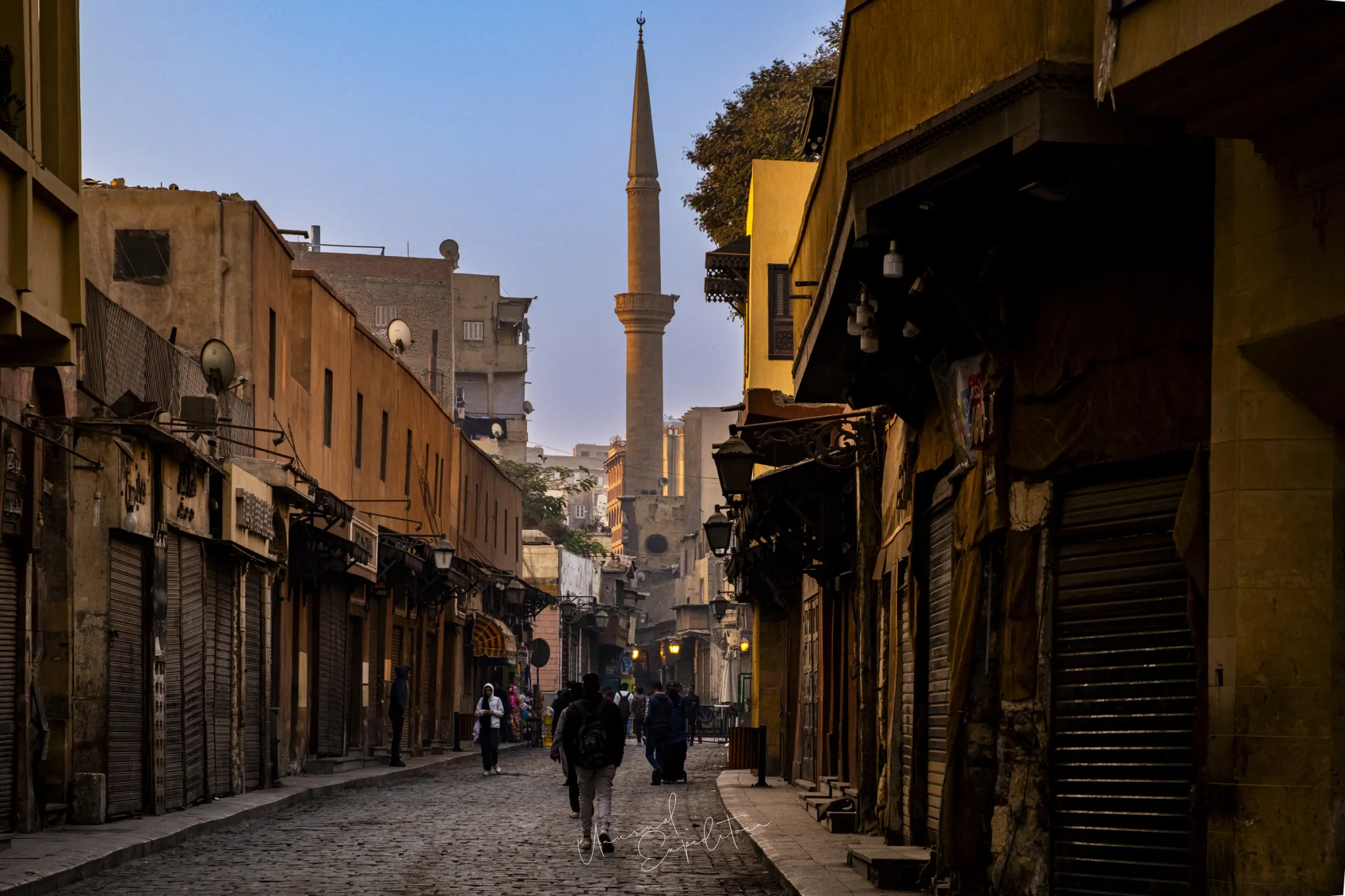
Islamic Cairo is the best place in Egypt for architecture and street photography in one walk: Al Muizz Street with its Mamluk domes, minarets and carved facades, the gates of the old Fatimid city, the lanes around Khan el Khalili, and, on its hill to the south, the Citadel with the Mosque of Muhammad Ali. Go at first light, when the street is almost empty and the sun reaches down between the buildings. Dress modestly, and keep photography out of prayer times in the mosques.
This is the old-city chapter of our Cairo and Giza photography guide. The street life of the same district has its own guide, on Cairo street photography.
Islamic Cairo: what it is and why it photographs so well
Islamic Cairo is the name visitors give to the medieval city east of downtown, founded by the Fatimid dynasty in the tenth century and filled over the next eight hundred years with mosques, madrasas, mausoleums, caravanserais and public fountains. UNESCO lists it as Historic Cairo, a World Heritage site, and calls it one of the world's oldest Islamic cities. For a photographer the attraction is density. Within a few hundred metres you have stone facades carved like lace, wooden window screens, domes and minarets of every period, and a working neighbourhood all around them, with workshops, cafes and market stalls in the ground floors of buildings centuries old. The light is the other gift: the streets are narrow and tall, so the sun reaches the ground only in places, and the reflected light between the walls is soft and warm.
Al Muizz Street Cairo: the main street of the old city
Al Muizz Street Cairo runs north to south through the heart of the Fatimid city, from the gate of Bab al-Futuh down to Bab Zuweila. Its northern stretch has been restored and largely closed to traffic, and it holds the finest group of Mamluk buildings in the city, including the complexes of Sultan Qalawun and Sultan Barquq at Bayn al-Qasrayn, the old palace quarter. The facades face the street, so the classic frame looks along the curve of the paving with domes and minarets rising one behind the other. A 24-70mm covers most of it; a wider lens helps in the tightest stretches. At night the street is lit and crowded with families, which makes a lively but very different picture from the quiet morning.
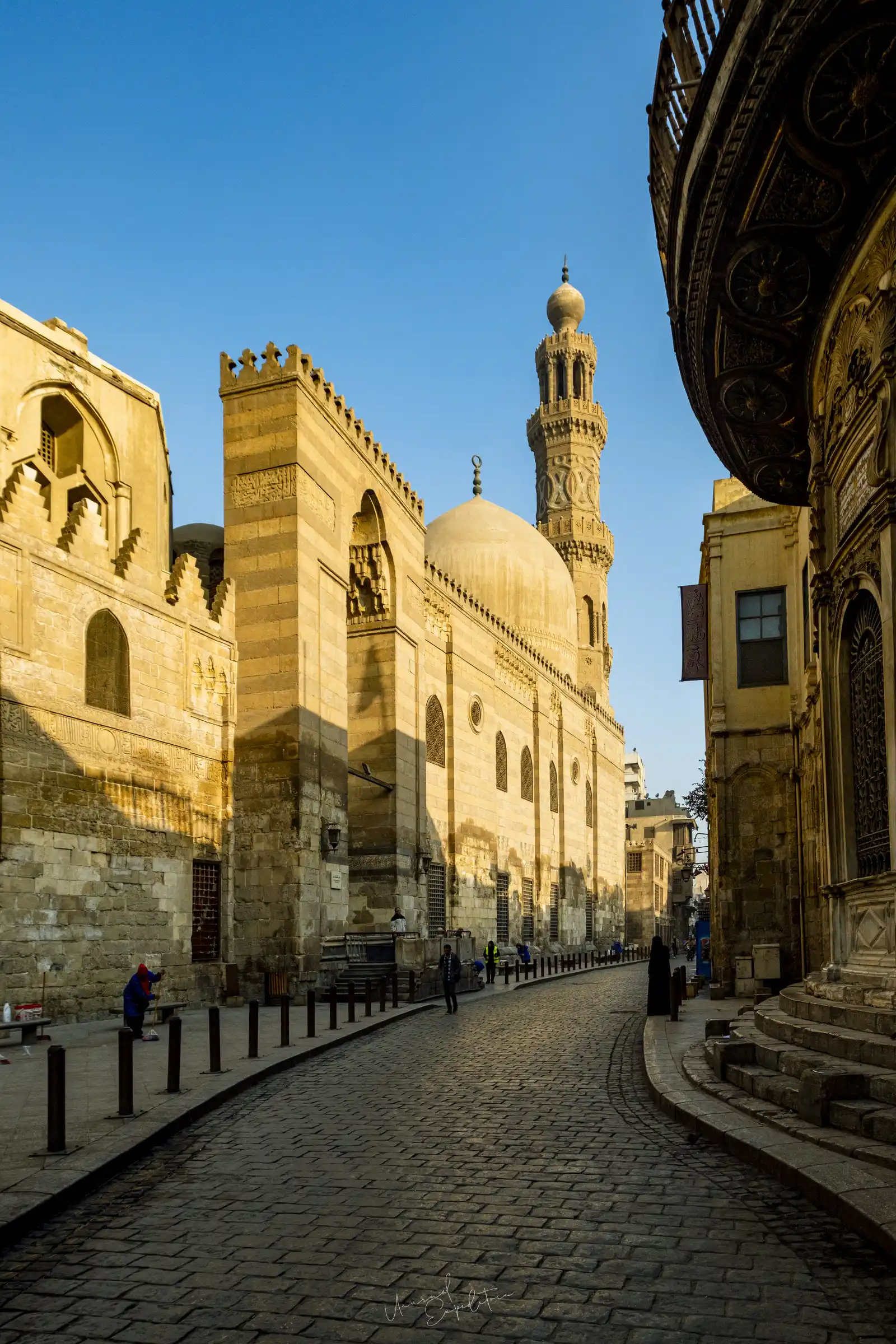
First light in the lanes of the old city
Early morning is when Islamic Cairo belongs to the people who live there. Shops are still shuttered, a few men walk to work, a vendor sets out bread, and the minarets catch the first sun while the street below stays blue. This is when we prefer to photograph the district: the architecture is clean of crowds, and the scenes of daily life are calm enough to ask people, quietly, if they mind a photograph. Look for a minaret at the end of a lane, framed by balconies and hanging signs, and wait for one figure to walk into the light. By mid morning the lanes fill with shoppers, carts and motorbikes, and the street photography becomes busier and more interesting in a different way.
"Al Muizz before the shops open is one of my favourite places in Egypt. You hear brooms on the stone, you smell bread and coffee, and the minarets light up one by one above you."
Joseph Mak, tour leader, Unusual Expedition
Cairo Citadel: the fortress on the hill
The Cairo Citadel stands on a spur of the Muqattam hills, south-east of the old city. Salah al-Din, known in the West as Saladin, began it in the twelfth century, and it was the seat of Egypt's rulers for some seven hundred years. Today it holds several mosques and museums, but the building that dominates the skyline is the Mosque of Muhammad Ali, whose domes and pencil minarets can be seen from much of Cairo. From the Citadel terraces, on a clear day, the view runs across the minarets of the old city; in the haze that often hangs over Cairo it becomes a layered, atmospheric picture. Opening hours and tickets are on Egypt's official monuments site.
Muhammad Ali Mosque Cairo: lamps, domes and alabaster
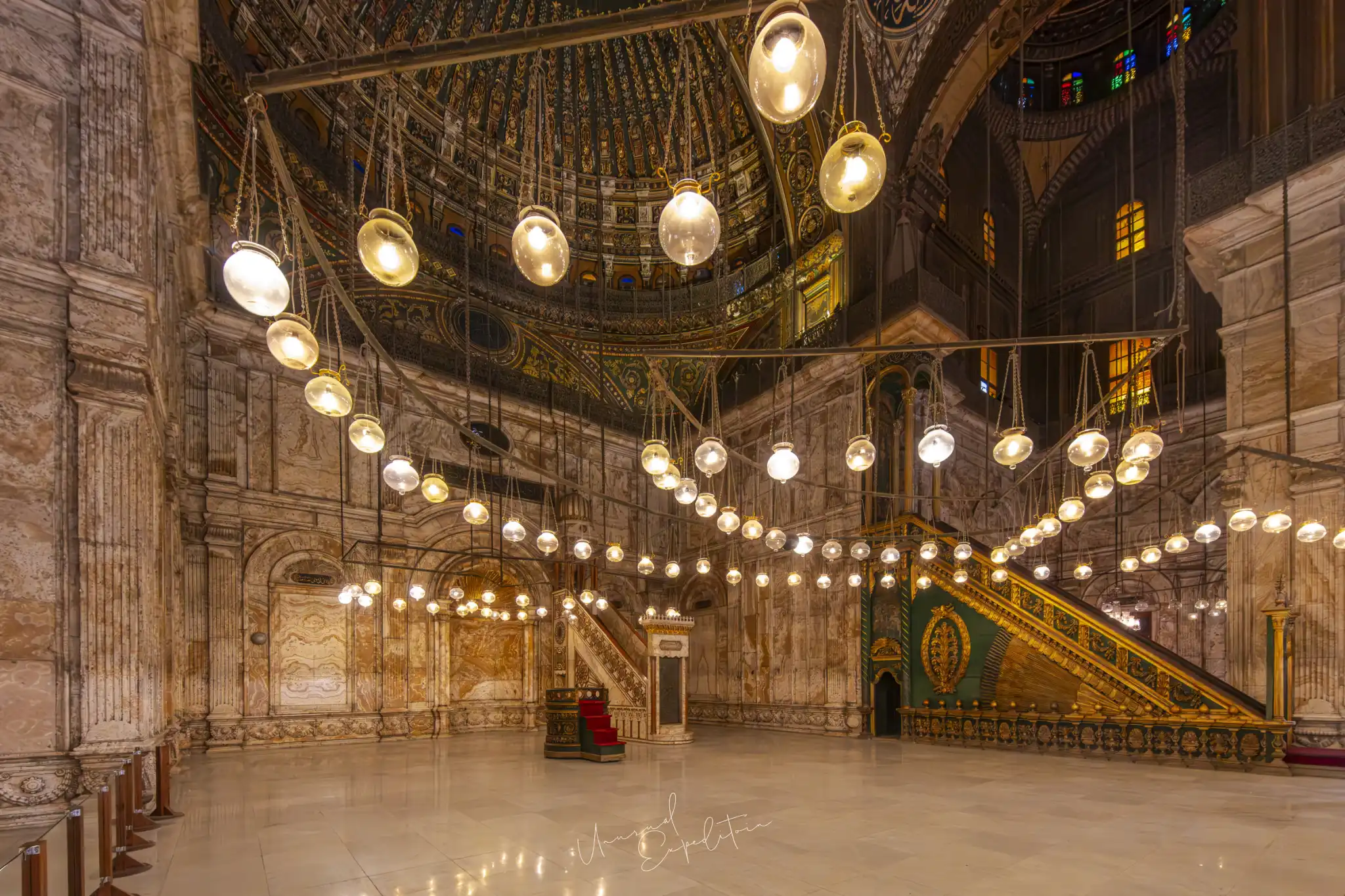
The Muhammad Ali Mosque in Cairo was built for the Ottoman governor Muhammad Ali Pasha in the first half of the nineteenth century, in the style of the great imperial mosques of Istanbul, and its walls are faced with alabaster, which is why many people call it the Alabaster Mosque. Inside, the prayer hall is a single great space under a central dome and four half domes, painted and gilded, with rings of glass lamps hanging low on long cords. Look straight up for the dome, or stand back from the lamp rings and let them lead the eye toward the minbar. Muhammad Ali's tomb lies inside. Shoes come off or are covered, women cover their hair, and visitors keep to the areas outside the prayer rows.
Photographing mosques and the old city with respect
| Place | Best time | Dress and conduct | Lens |
|---|---|---|---|
| Al Muizz Street | First light, or after dark for crowds | Covered shoulders and knees | 24-70mm, wider for tight lanes |
| Mamluk mosques and madrasas | Outside prayer times | Shoes off, quiet, no photos of worshippers | 16-35mm |
| Citadel terraces | Clear mornings | Normal modest dress | 70-200mm for the skyline |
| Mosque of Muhammad Ali | Outside prayer times | Shoes off or covered, hair covered for women | 16-35mm or wider |
The common thread is simple courtesy: these are places of worship first and monuments second.
Islamic Cairo walking tour or guided visit?
An Islamic Cairo walking tour on your own is possible, and Al Muizz Street is easy to follow, but a local guide makes a real difference. Some interiors open only at certain hours, and a guide often knows who holds the key, and a guide who knows the neighbourhood makes it easier to ask people for photographs. The Citadel is a separate visit, as it sits apart from the old city on its hill. For entry, money and safety in Egypt, see our guide to planning a photography trip to Egypt, and for the evening on the other side of the river, the Giza pyramids at night guide.
Walk the old city with us
Our Egypt Photo Tour includes Al Muizz Street in the early light, as well as Giza, Aswan, Abu Simbel and Luxor. The current departure is on the Egypt photography tours page.
Join the Cairo and Giza photography tour
Egypt Photo Tour – Egypt departs 12 Dec 2026 To 20 Dec 2026, led by Joseph Mak. Small group, photography first. All Cairo and Giza photography tours.
Explore Cairo and Giza in depth
- Cairo and Giza Photography Tour Guide: Pyramids, the Old City and the NileEgypt
- Giza Pyramids Photos: Viewpoints, Camels and CameleersEgypt
- Giza Pyramids at Night: Sunset, Dusk and the Sound and Light ShowEgypt
- Cairo Street Photography: Coffeehouses, Markets and FacesEgypt
Upcoming Photo Tours
- Egypt Photo Tour – EgyptEgypt 12 Dec 2026 To 20 Dec 2026
- Inner Mongolia Winter Owl Photo Tour – ChinaChina 01 Jan 2027 To 04 Jan 2027
- Inner Mongolia Winter Photo Tour – ChinaChina 05 Jan 2027 To 11 Jan 2027
- Mekong And Central Highland Vietnam Photo Tour - VietnamVietnam 16 Jan 2027 To 24 Jan 2027