
Miao Silver and Embroidery in Guizhou: A Photographer's Guide
Miao silver headdresses and Guizhou Miao embroidery: what you will see, where, how to photograph silver and stitching, and etiquette.
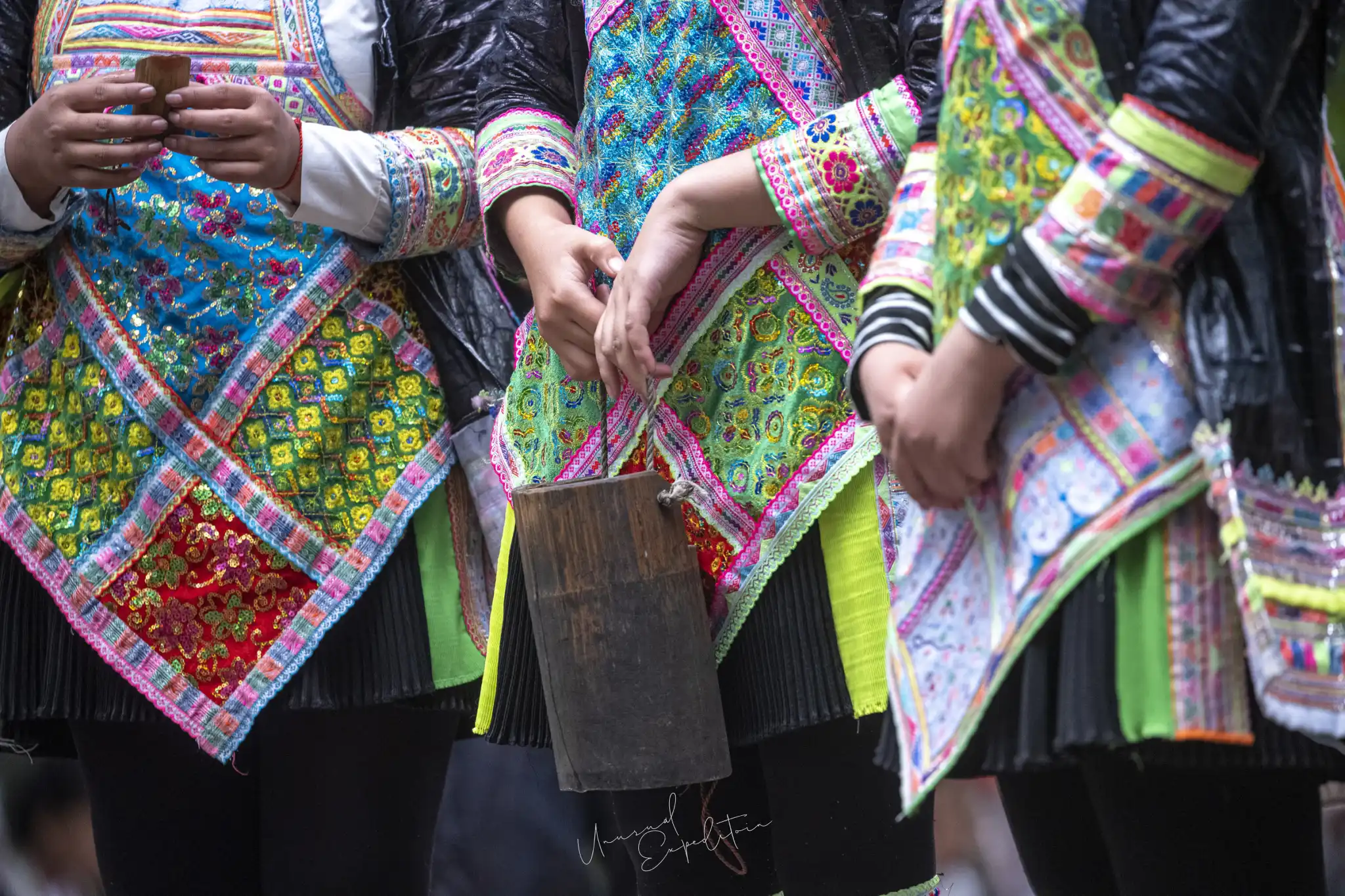
Miao silver and embroidery are the visual heart of Guizhou's Miao culture: tall silver headdresses and collars worn at festivals, and jackets, aprons and skirts covered in hand embroidery passed down from mother to daughter. For photographers they offer some of the richest colour and detail in China, from a full silver crown to the stitches on a sleeve. Here is what you will see, where, how to photograph it well and how to do so with respect.
Miao culture runs through our Guizhou photography tour guide, which covers the villages, the terraces and the karst.
Guizhou Miao people and their dress
The Guizhou Miao people live mostly in the south east of the province, in Qiandongnan and around Leigong Mountain, and they are divided into many groups, each with its own dress. Some wear indigo and black, some red, some pleated skirts so dense they stand out from the waist, and the patterns differ from valley to valley. In daily life most people wear ordinary clothes, and full dress with silver comes out for festivals, weddings and welcomes for guests. That is why a visit around a festival, or a village performance, is the time you will see the dress at its fullest.
Guizhou Miao embroidery
Guizhou Miao embroidery is listed as a national intangible cultural heritage item, as the Guizhou provincial government notes, and it is one of the finest needlework traditions in China. A Minzu University museum exhibition on Google Arts and Culture describes girls learning from their mothers and aunts from a young age, and the best split thread garments taking years to make. Designs show birds, butterflies, dragons, fish and geometric patterns, often with meanings tied to the Miao story of their origins. Photograph embroidery close and in soft light, so the texture of the stitches shows. A frame of several aprons side by side, without faces, often says more than a portrait.
Miao silver headdress and ornaments
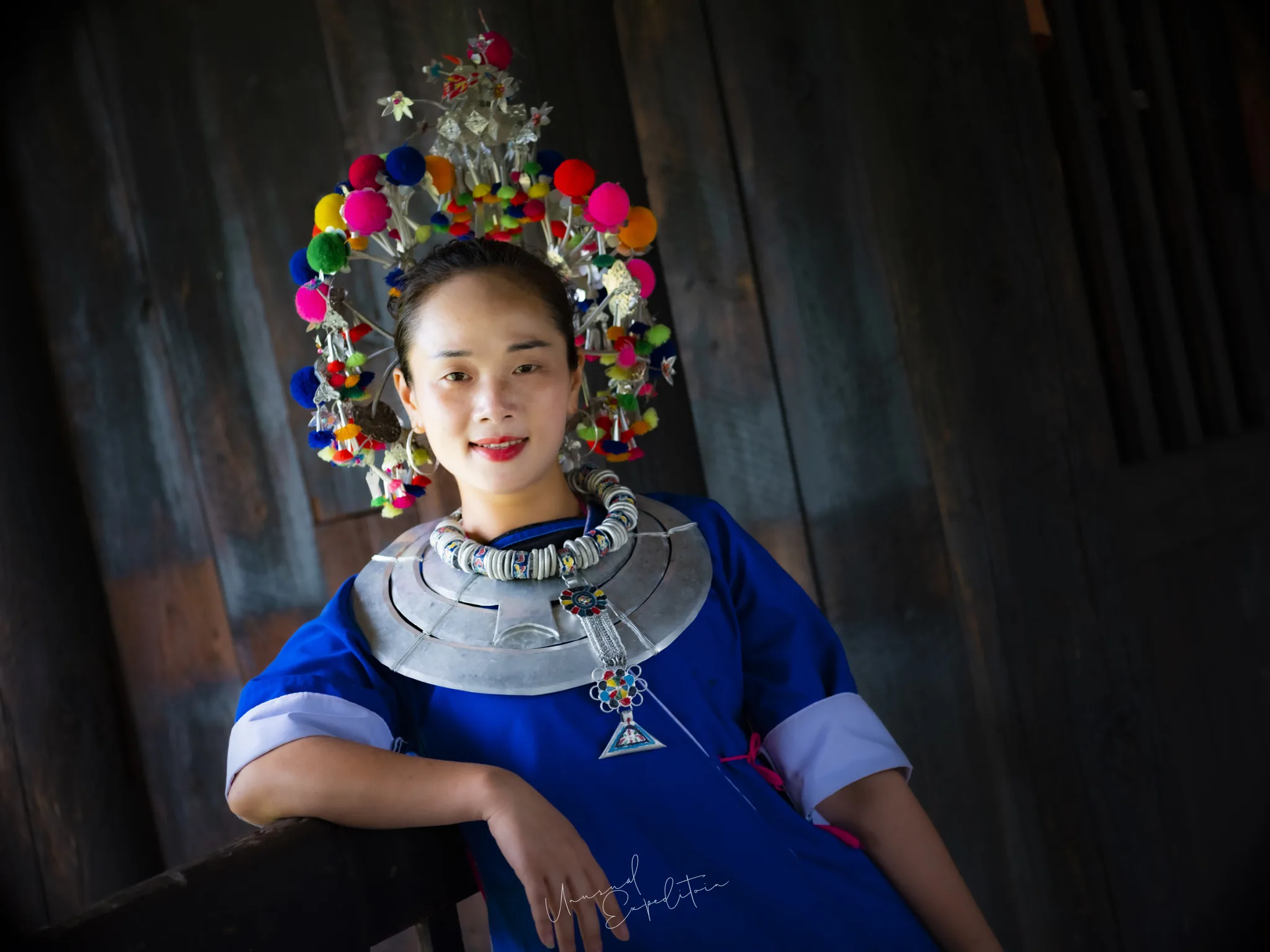
The Miao silver headdress is the most photographed object in Guizhou. Some are tall crowns of silver flowers, birds and butterflies; some are wide silver horns; most are worn with heavy collars, necklaces and bracelets, and a full festival set weighs several kilograms. Silver is wealth and protection in Miao tradition, and a family collects it over generations for its daughters. Miao silver is made by village silversmiths, and the workshops in Xijiang and other villages welcome visitors who want to watch. For pictures, silver is difficult: in bright sun it throws hard highlights. Shoot in open shade, under eaves or on an overcast day, and expose for the silver rather than the face.
Lusheng and festival dress
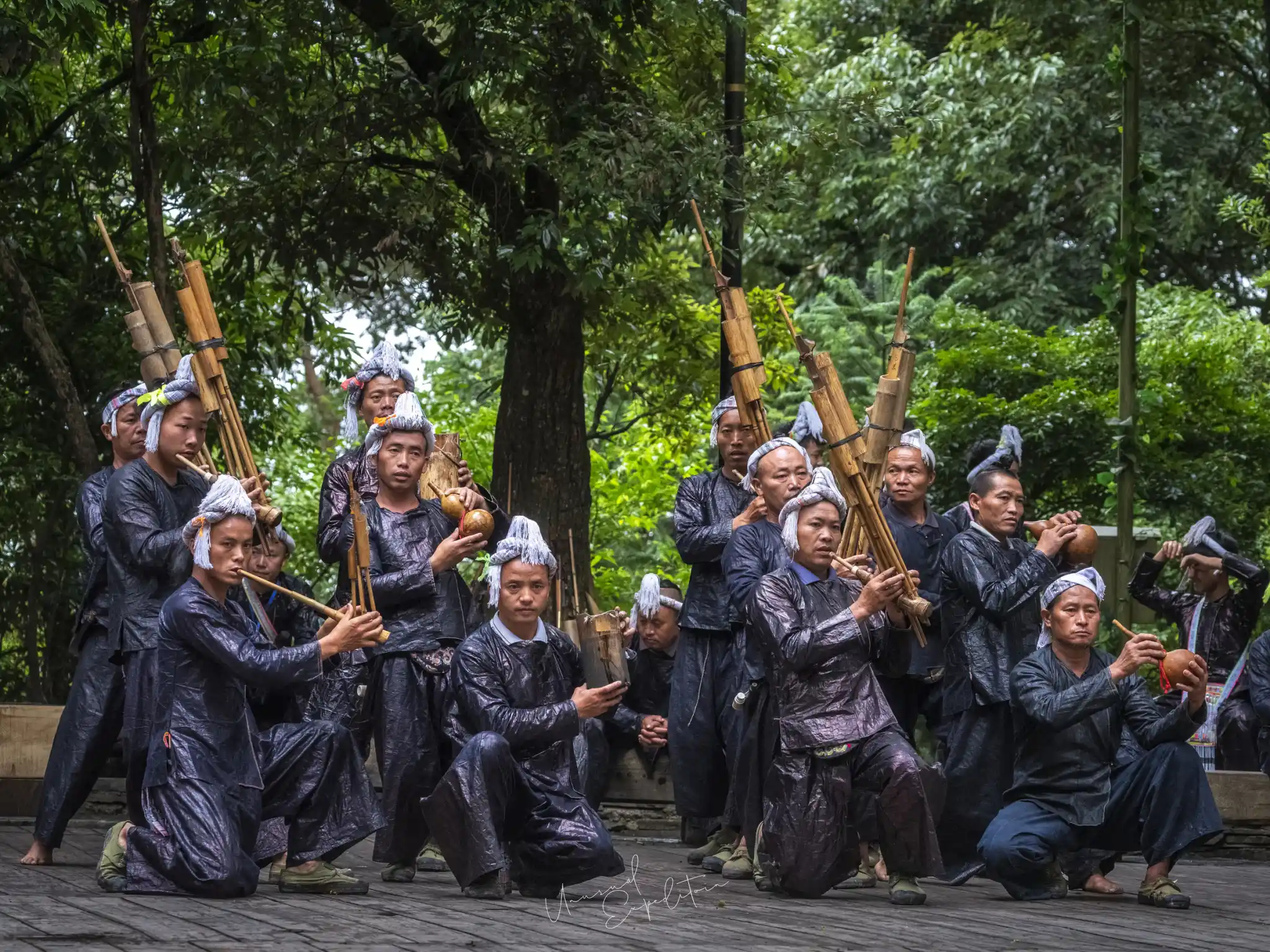
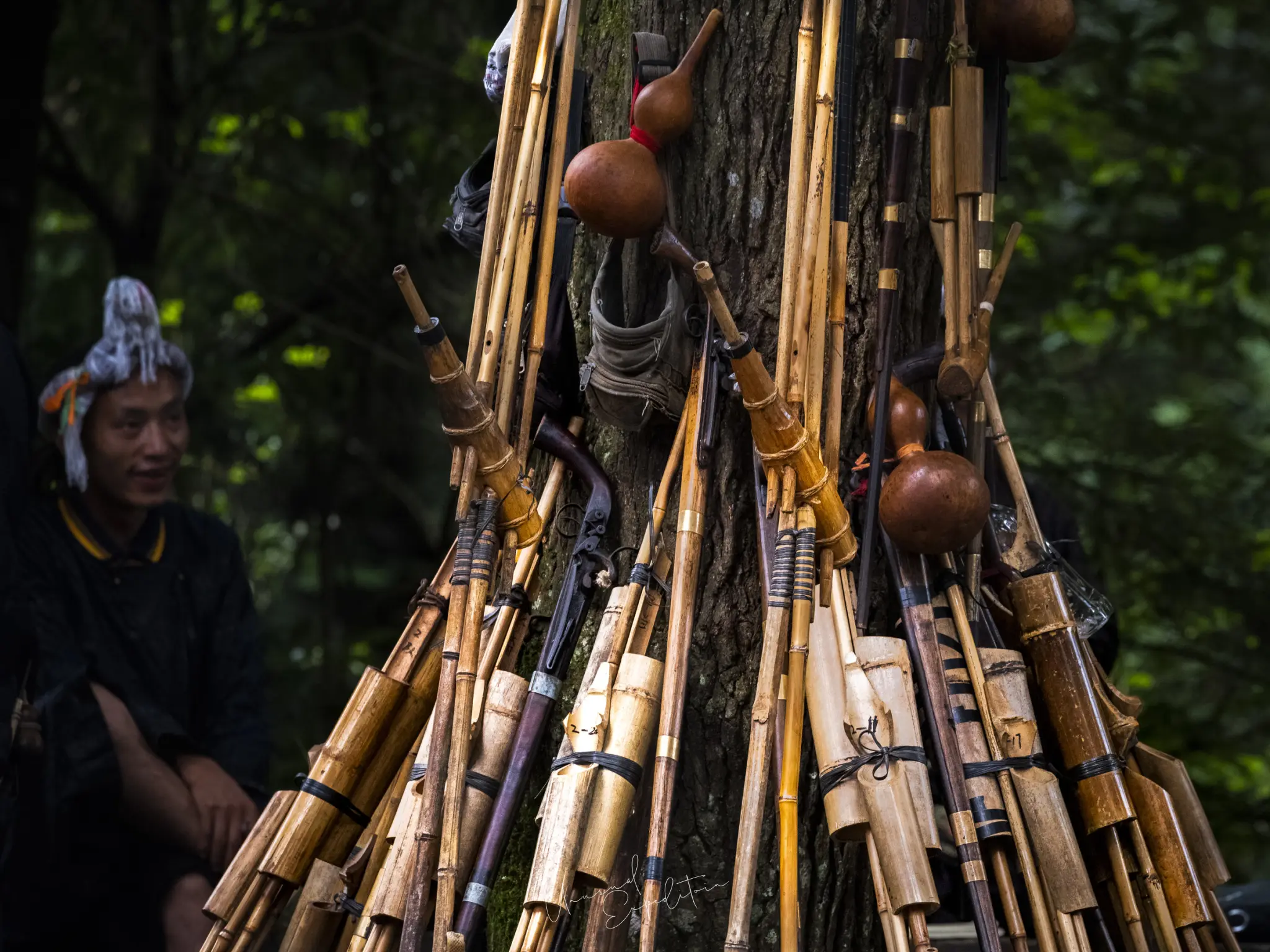
Festivals bring the dress and the music together. The lusheng, a reed pipe made of bamboo with a wooden wind chest, leads the dances in Miao villages, and men play while women in full silver circle around them. At smaller welcomes, a line of lusheng players kneels or dances at the village gate. Photograph the movement with a shutter fast enough to freeze the pipes, or slow it down to let the skirts blur. Our Basha Miao village photography article covers the welcome in one of the most traditional villages.
I spent more time on embroidered aprons than on faces in Guizhou. The colour and the stitching tell you which village someone comes from, and the hands holding the cloth are often the best part of the picture.
Joseph Mak, tour leader, Unusual Expedition
Photographing Miao silver and embroidery
| Subject | Lens | Light and tips |
|---|---|---|
| Full dress portrait | 85mm or 70-200mm | Open shade, expose for the silver |
| Embroidery detail | Macro or 85mm | Soft side light for texture |
| Groups at a festival | 24-70mm | Find height, shoot over the crowd |
| Lusheng dancers | 70-200mm | Fast shutter, or slow for motion |
| Silversmith at work | 24-70mm | Raise ISO, window light |
Real dress and costume for visitors
Real dress and costume for visitors exist side by side in Guizhou. In tourist villages, some women in silver are performers, and some portraits you see online are of models or of visitors in rented outfits. That is fine to photograph, but the caption should say what it is. In villages away from the main routes, the dress you see at a festival is worn by families for themselves, and those are the moments to be most careful: ask, keep your distance during rituals, and never step into a dance unless invited.
Composing Miao dress in the village
Miao dress looks best in its own setting. Dark timber walls and covered corridors give a plain background that makes blue, red and silver stand out, and a doorway gives soft light on a face. Keep the background simple and step back to include a little of the house or the lane, so the picture says where it was made. For groups, find a slope or a balcony and shoot from slightly above, so faces do not hide behind each other. For detail, fill the frame with one apron, one sleeve or one ornament, and let the pattern carry the picture.
Respect and buying
Respect matters when the subject is someone's heritage. Ask before photographing people close, show them the picture, and accept a refusal. Pay or buy where that is the custom, and if you want a piece of embroidery or silver to take home, buy from the makers in the villages, not from shops selling machine copies. Old pieces are family property, and many are no longer sold, so do not push. Keep children's portraits brief and only with a parent's agreement.
Where to see Miao dress in Guizhou
Xijiang, the largest Miao village in China, has silver workshops, embroidery shops and daily performances, described in Xijiang Miao village photos. Basha keeps its men's dress and rituals. Smaller villages around Kaili and Leishan show festival dress at their own celebrations. Singapore passport holders can currently enter mainland China visa free for short stays under the mutual exemption in force since February 2024, as Singapore's ICA sets out; check before you travel.
Photograph Miao Guizhou with us
Our Guizhou Blossom Photo Tour in spring visits Xijiang, Basha and the Dong villages, indicatively S$3,950 to S$4,500 per person depending on the room. See the China photography tours page for details.
Join the Guizhou photography tour
Inner Mongolia Winter Owl Photo Tour – China departs 01 Jan 2027 To 04 Jan 2027, led by Joseph Mak. Small group, photography first. All Guizhou photography tours.
Explore Guizhou in depth
- Guizhou Photography Tour: The Complete Guide to Miao Villages, Terraces and KarstChina
- Guizhou Tour From Singapore: Flights, Season and What to ExpectChina
- Guizhou Rice Terraces Photography: Cloud, Villages and the SeasonsChina
- Xijiang Miao Village Photos: Photographing the Thousand Household VillageChina
- Xijiang Miao Village Night View: How to Photograph the Lit ValleyChina
- Best Time to Visit Guizhou for Photography: Blossom, Terraces and MistChina
- Basha Miao Village Photography: The Gunmen of GuizhouChina
Upcoming Photo Tours
- Egypt Photo Tour – EgyptEgypt 12 Dec 2026 To 20 Dec 2026
- Inner Mongolia Winter Owl Photo Tour – ChinaChina 01 Jan 2027 To 04 Jan 2027
- Inner Mongolia Winter Photo Tour – ChinaChina 05 Jan 2027 To 11 Jan 2027
- Mekong And Central Highland Vietnam Photo Tour - VietnamVietnam 16 Jan 2027 To 24 Jan 2027