
Icelandic Horses Photos: How to Photograph Iceland's Horses, Gaits and Colours
Icelandic horses photos: the breed, its five gaits and colours, where the horses live, courtesy at the fence and lens settings.
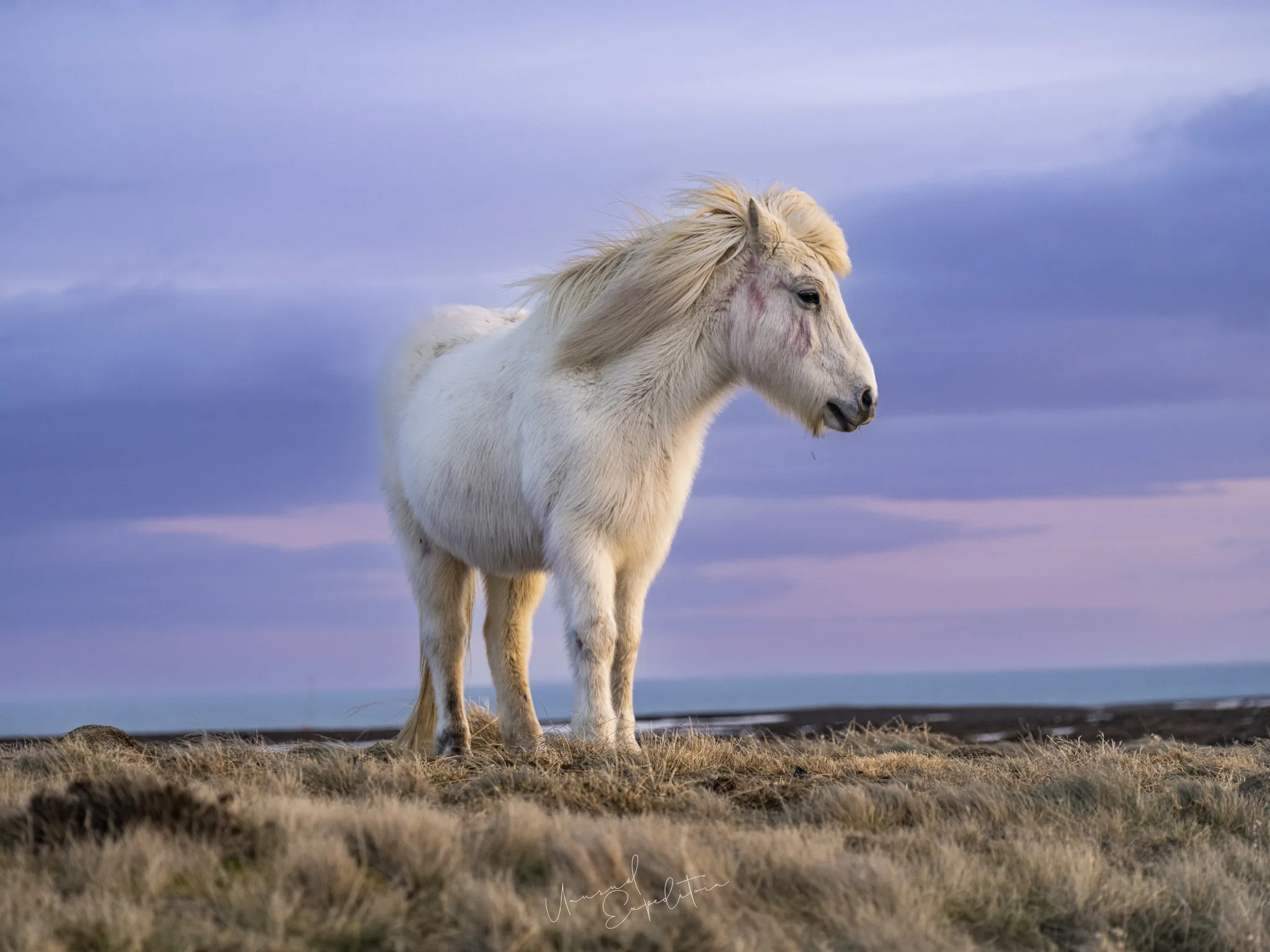
Icelandic horses photos work best when you treat the horses as portraits: get low, use side light, let the long mane and the thick winter coat fill the frame, and photograph from the fence line rather than in the field. The breed is everywhere in rural Iceland, and the northern valleys, Skagafjordur above all, are its heartland. These are our own pictures from the north, the south and the west, with what we have learned about photographing the horses and treating their owners well.
This guide is part of our North Iceland photography tour guide. The photographs in this guide are our own, taken on our winter and autumn trips around Iceland; we hold the rights to them, and each caption says where the horses were.
Icelandic horses photos: what makes the breed different
Icelandic horses are small and sturdy, with heavy manes and, in winter, a shaggy double coat that makes them look rounder still. They descend from the horses the Norse settlers brought, and Iceland has kept the breed pure by banning the import of horses; a horse that leaves the country cannot come back. Iceland's food and veterinary authority, MAST, keeps strict import rules to protect a horse population that has not been exposed to many diseases common elsewhere. For a photographer the result is a horse with real character in the face, a huge variety of colours and a calm, curious temperament.
Are Icelandic horses ponies?
By height many would count as ponies, but Icelanders call them horses, and the breed societies do too. The difference matters to owners, so in captions and conversation say horse. The build is compact and the legs are short and strong, which reads well in a low-angle photograph: shoot from the height of the horse's chest, not from standing height, and they look as powerful as they are.
Icelandic horses 5 gaits
Most horse breeds walk, trot and canter or gallop. Many Icelandic horses add two more gaits: the tolt, a smooth four-beat running walk that the rider barely feels, and for some horses the flying pace, a fast two-beat gait used in racing. The International Federation of Icelandic Horse Associations, FEIF, sets the breeding and competition standards worldwide. Photographing the tolt needs a rider and a farm that offers riding; with a 70-200mm and a fast shutter you can freeze the high front legs that make the gait so recognisable.
Colors of Icelandic horses
The breed comes in a remarkable range of colours: chestnut, black, bay, grey, dun, palomino, pinto and silver dapple among them, often with a mane lighter than the body. In winter the coat thickens and softens the colour. For pictures, the pale horses stand out against dark lava and dark skies, while chestnut and dun horses glow against snow. A white horse in the north, standing alone on a winter pasture in the soft light before sunrise, gave us one of our favourite horse frames.
Where do Icelandic horses live?
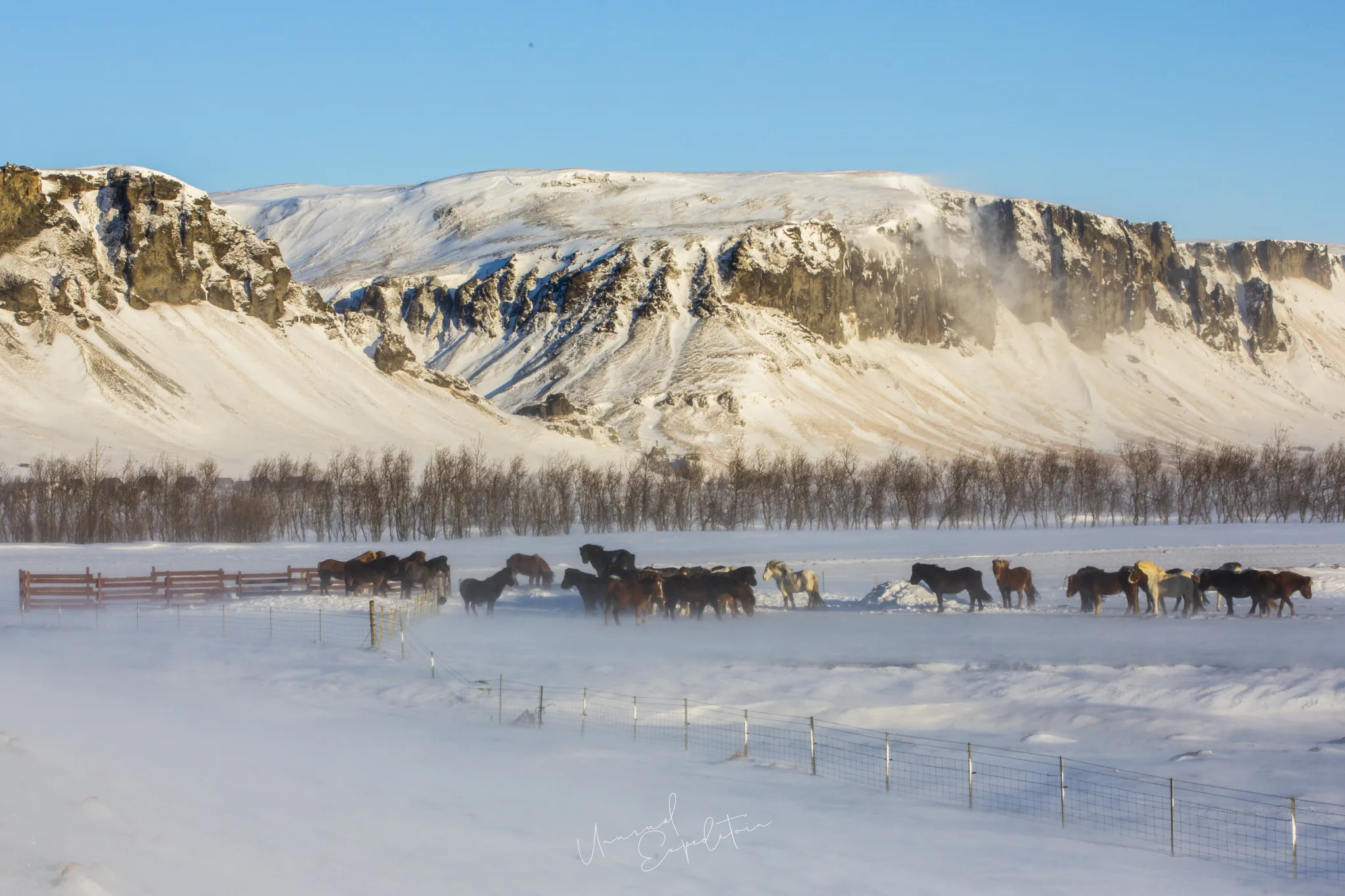
Icelandic horses live on farms all over the country, and many spend much of the year outdoors in herds, even in winter. Skagafjordur in the north is famous for breeding and has many horse farms. You will see horses beside the Ring Road almost anywhere, in the south, the west and the north. They are not wild: every horse has an owner, even when a herd is grazing a large pasture far from the farmhouse.
| Picture | Lens | Settings | Tip |
|---|---|---|---|
| Whole horse in landscape | 24-70mm | f/8, low angle | Put the horse against open sky or snow |
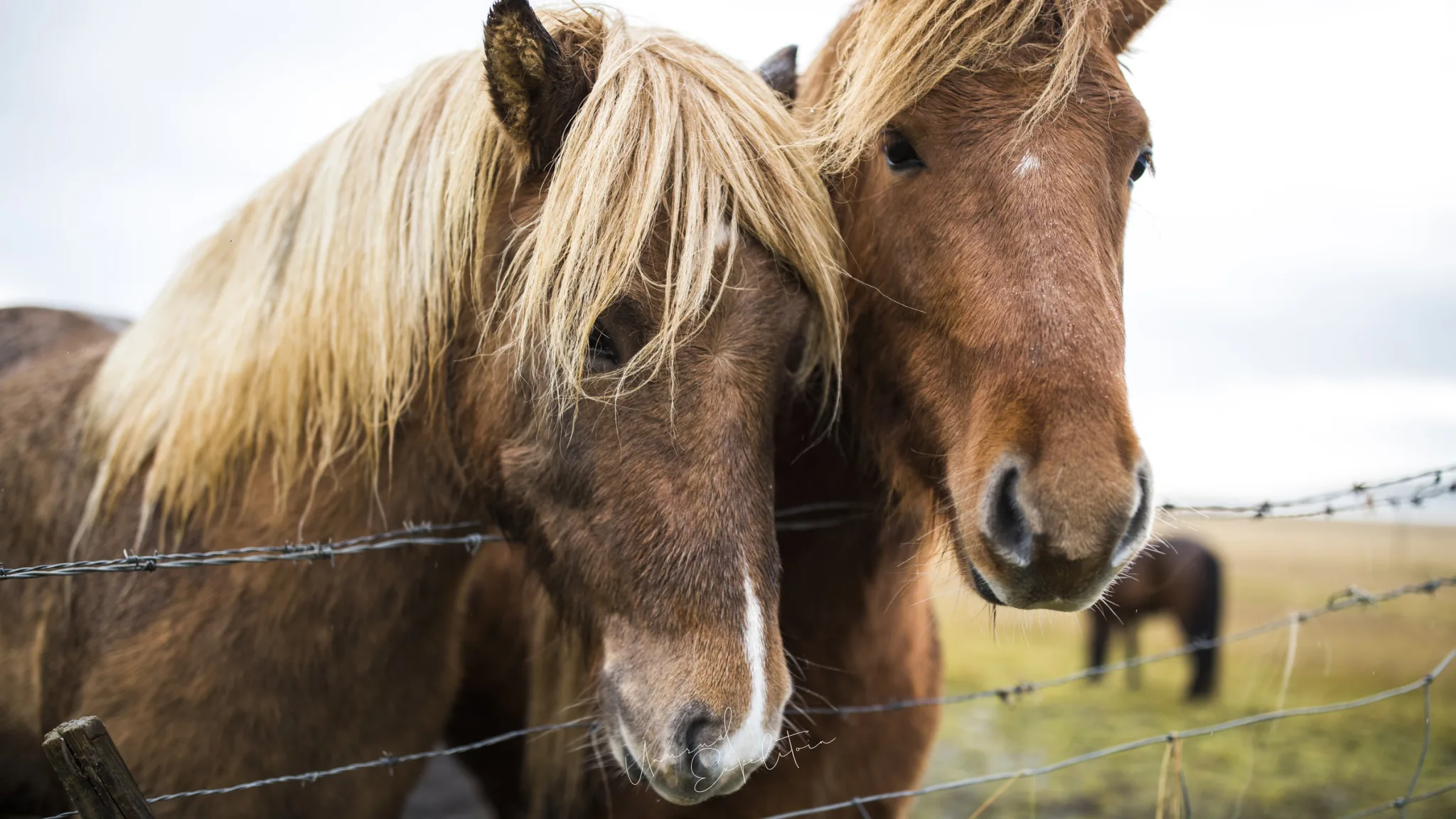
| Head and mane portrait | 70-200mm | f/4, fast shutter in wind | Focus on the eye |
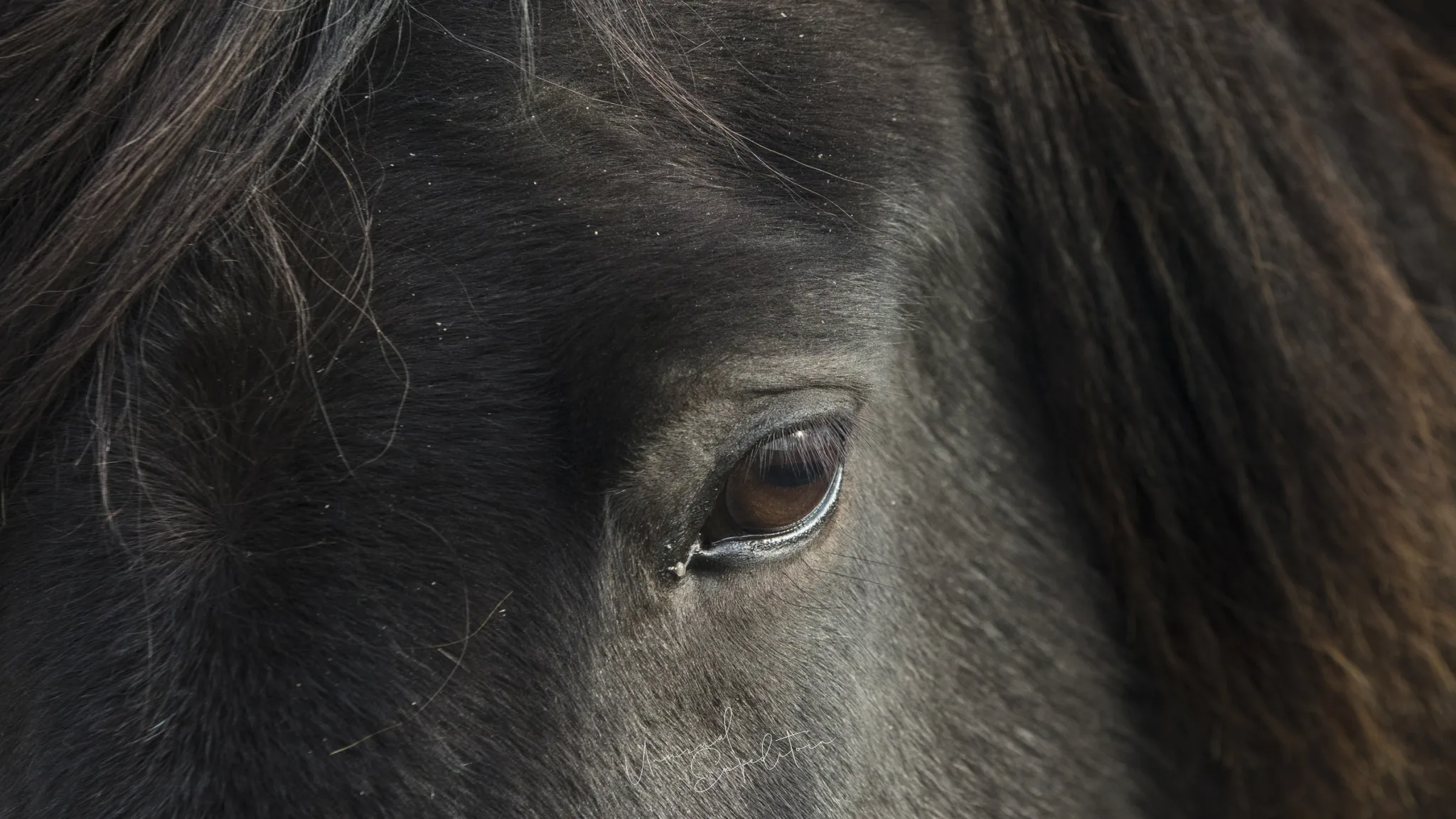
| Detail of mane or eye | 70-200mm or macro | Wide aperture | Side light shows texture |
| Herd at the fence | 24-70mm | f/8 | Wait for the heads to turn |
| Riders and tolt | 70-200mm | Fast shutter, continuous focus | Book a ride with a farm |
Most of our best horse pictures came from the 70-200mm, which keeps you at the fence.
Horses in Iceland come to the fence to look at you. Give them a minute, keep your hands to yourself, and the portrait comes to you.
Joseph Mak, tour leader, Unusual Expedition
Iceland horse photography: courtesy and safety
The horses belong to farmers, and the fields are private land. Stop only where it is safe to pull off the road, never on a bend or a narrow bridge, and stay on the road side of the fence unless the owner invites you in. Do not feed the horses: bread and snacks can make them ill, and feeding teaches them to crowd and nip. Most farmers are happy to see photographers who keep to these simple rules.
Light, weather and the winter coat
Side light brings out the texture of the mane and coat, so the low sun of winter suits horse pictures well. Overcast light is kind to faces and avoids harsh shadows under the forelock. In strong wind the manes lift and blow, which makes dramatic portraits, but you need a fast shutter to keep the eye sharp. A dark background, a lava field or a stormy sky, makes pale horses stand out; snow does the same for dark ones.
Horses on a North Iceland trip
Horses are the subject you can always find in the north between the big sights, from the farms around Godafoss to the valleys of Skagafjordur. Our Godafoss waterfall Iceland guide covers the falls themselves, and our guide to North Iceland in winter explains the light and the weather in the cold months.
Photograph Icelandic horses with us
Our Iceland Midnight Sun Photo Tour spends time in Skagafjordur, Iceland's best-known horse valley, with an optional ride for those who want to feel the tolt; see the current departure on our Iceland photography tours page. Winter horse photography can be arranged as one of our private tours.
Ask us about photographing Icelandic horses
Join the North Iceland photography tour
Iceland Midnight Sun Photo Tour departs 05 Jul 2027 To 18 Jul 2027, led by Joseph Mak. Small group, photography first. All North Iceland photography tours.
Explore North Iceland in depth
- North Iceland Photography Tour Guide: Godafoss, Hvitserkur, Myvatn, Arctic Henge and HorsesIceland
- North Iceland in Winter: Weather, Light, Akureyri and the Northern LightsIceland
- Hvitserkur, Iceland: Photographing the Troll Sea Stack at Low Tide and DawnIceland
- Godafoss Waterfall, Iceland: East or West Bank, Winter Light and the LegendIceland
Upcoming Photo Tours
- Egypt Photo Tour – EgyptEgypt 12 Dec 2026 To 20 Dec 2026
- Inner Mongolia Winter Owl Photo Tour – ChinaChina 01 Jan 2027 To 04 Jan 2027
- Inner Mongolia Winter Photo Tour – ChinaChina 05 Jan 2027 To 11 Jan 2027
- Mekong And Central Highland Vietnam Photo Tour - VietnamVietnam 16 Jan 2027 To 24 Jan 2027