
Rice Paper Village, Brick Kilns and Fish Sauce: Craft Photography in the Mekong Delta
Rice paper village workshops, the Mang Thit brick kilns and fish sauce yards: how to photograph the crafts of the Mekong Delta.
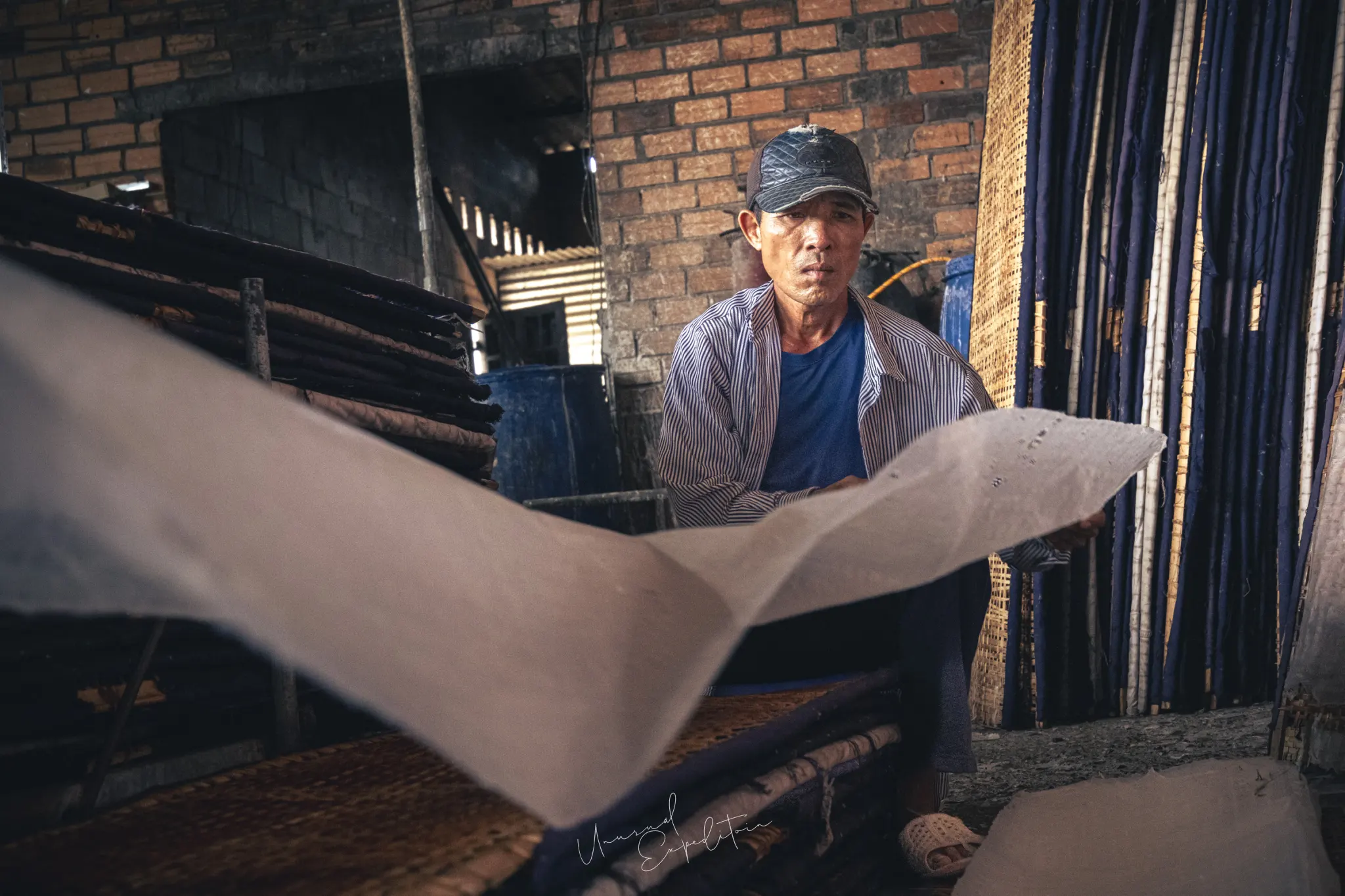
A rice paper village in the Mekong Delta is a cluster of family workshops where rice batter is steamed into thin sheets over wood or rice husk fires and dried on woven bamboo racks in the sun. Thuan Hung in Can Tho is the best known. Together with the beehive brick kilns of Mang Thit in Vinh Long and the fish sauce yards of the wider south, these crafts give the delta its best subjects for the bright middle hours of the day.
The crafts fill the gap between the morning river and the evening light; our Mekong Delta photography tour guide shows how they fit with the floating market and the lily harvest.
Rice paper village: what happens inside
In a rice paper village the work begins before dawn. Rice is soaked and ground into a thin batter, and a maker ladles it onto a cloth stretched over a pot of simmering water, covers it for a moment, then lifts the cooked sheet off on a bamboo stick and lays it on a woven rack. The racks go outside to dry in the sun, leaning in rows along the lanes and in the yards, and later the dry sheets are peeled, stacked and packed. Thuan Hung in the Thot Not area of Can Tho has made rice paper since the middle of the nineteenth century, VnExpress reports, and Quan Doi Nhan Dan, the army newspaper, notes that the craft was recognised as national intangible cultural heritage in 2023. The Can Tho city government lists Thuan Hung rice paper among the city's specialities.
How to photograph a rice paper workshop
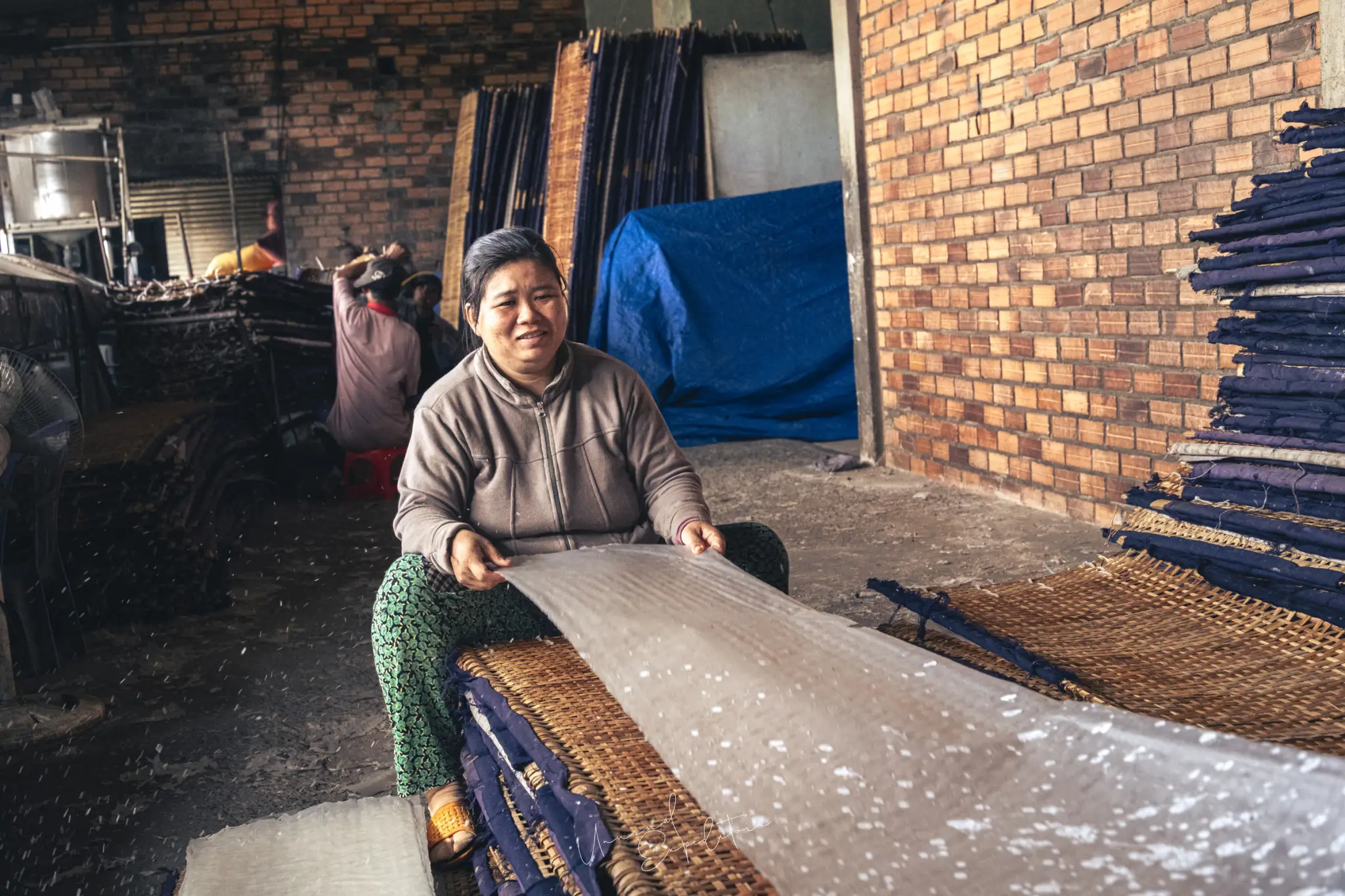
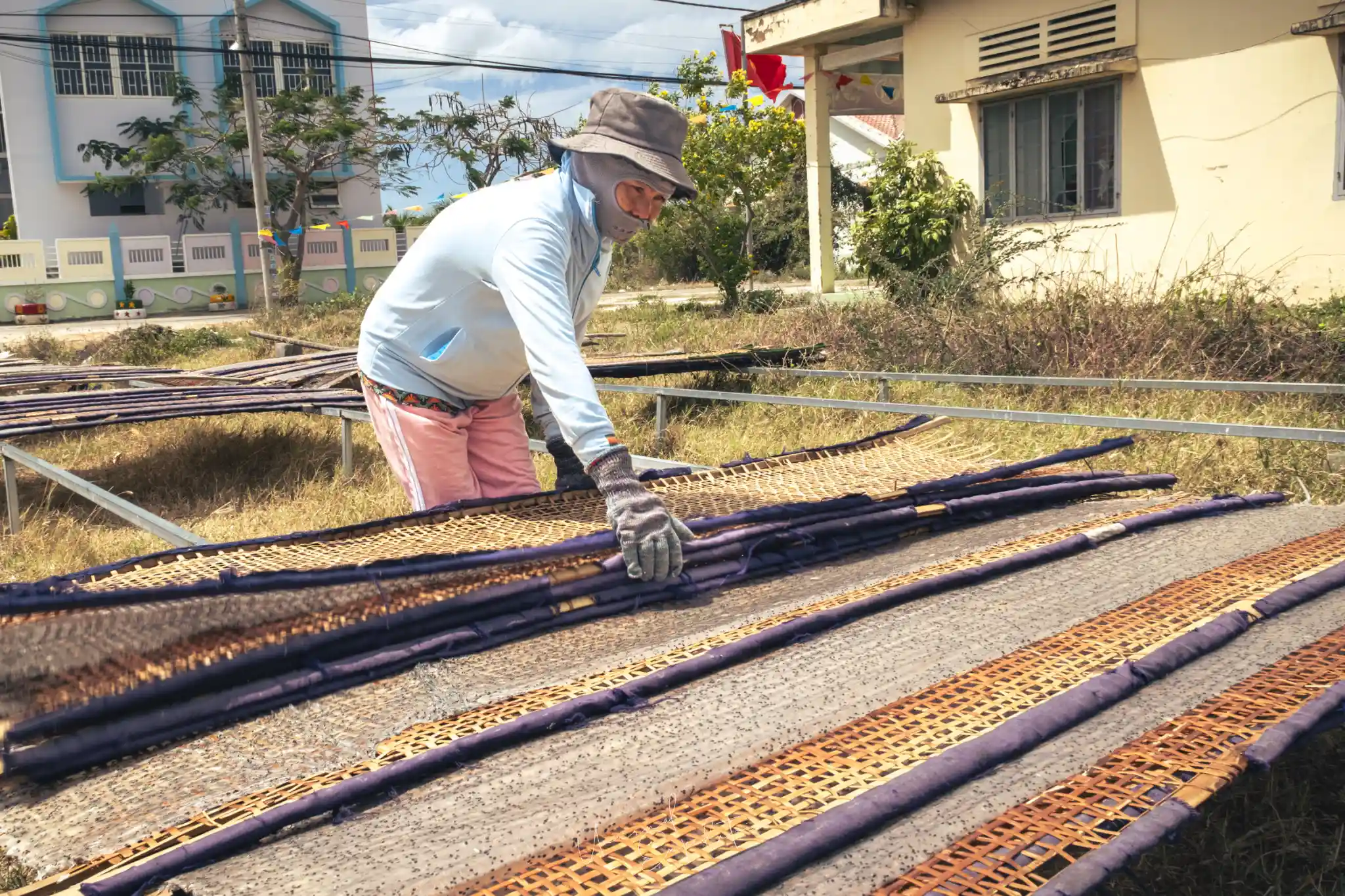
A rice paper workshop is dark, steamy and full of repetition, which is a gift for a photographer. Work with the light from the door or a gap in the roof: a sheet lifted against that light glows like fabric, and the steam from the pot catches the light behind the maker. Expose for the bright sheet and let the room fall into shadow. Raise the ISO and keep the shutter fast enough for the hands, which move in a quick, practised rhythm. Outside, the drying racks give pattern: rows of woven squares, each holding a pale disc, and a worker moving between them with a stack of racks on her arm. The frames on this page come from a family workshop in southern Vietnam; the same steps happen in the delta villages. Ask the family before you go in, buy a packet on the way out, and keep clear of the fire.
Mang Thit brick kilns, the kingdom of red bricks
Along the Co Chien River and the Mang Thit canal in Vinh Long, hundreds of beehive-shaped brick kilns rise above the palms, many of them tall enough to dominate the riverbank. Vietnamese newspapers call the area the kingdom of red bricks, and the craft goes back more than a century. Clay from the river was moulded into bricks and pottery, fired with rice husk and shipped out by boat. Demand has fallen and many kilns stand cold and overgrown, as Saigoneer and the local press have reported, but Vinh Long has drawn up a heritage plan for the area, and some kilns still fire. The best pictures are of the kilns as landscape, red domes among green palms beside brown water, and of the workers who still stack bricks in the working yards.
Photographing the kilns
The Mang Thit kilns work best in the morning and late afternoon, when side light gives the curved walls shape and the red bricks glow. From the river, a boat lets you frame the domes over the water with their reflections. From the bank, look for a kiln mouth with a worker in the doorway, or the texture of the old brick with grass and ferns growing from it. A drone shows the pattern of kilns, canals and palms, but check permissions first and keep away from homes. Inside a working kiln the heat and the smoke are real: stay back, follow the workers' lead and protect your lens from the dust.
How is Vietnamese fish sauce made
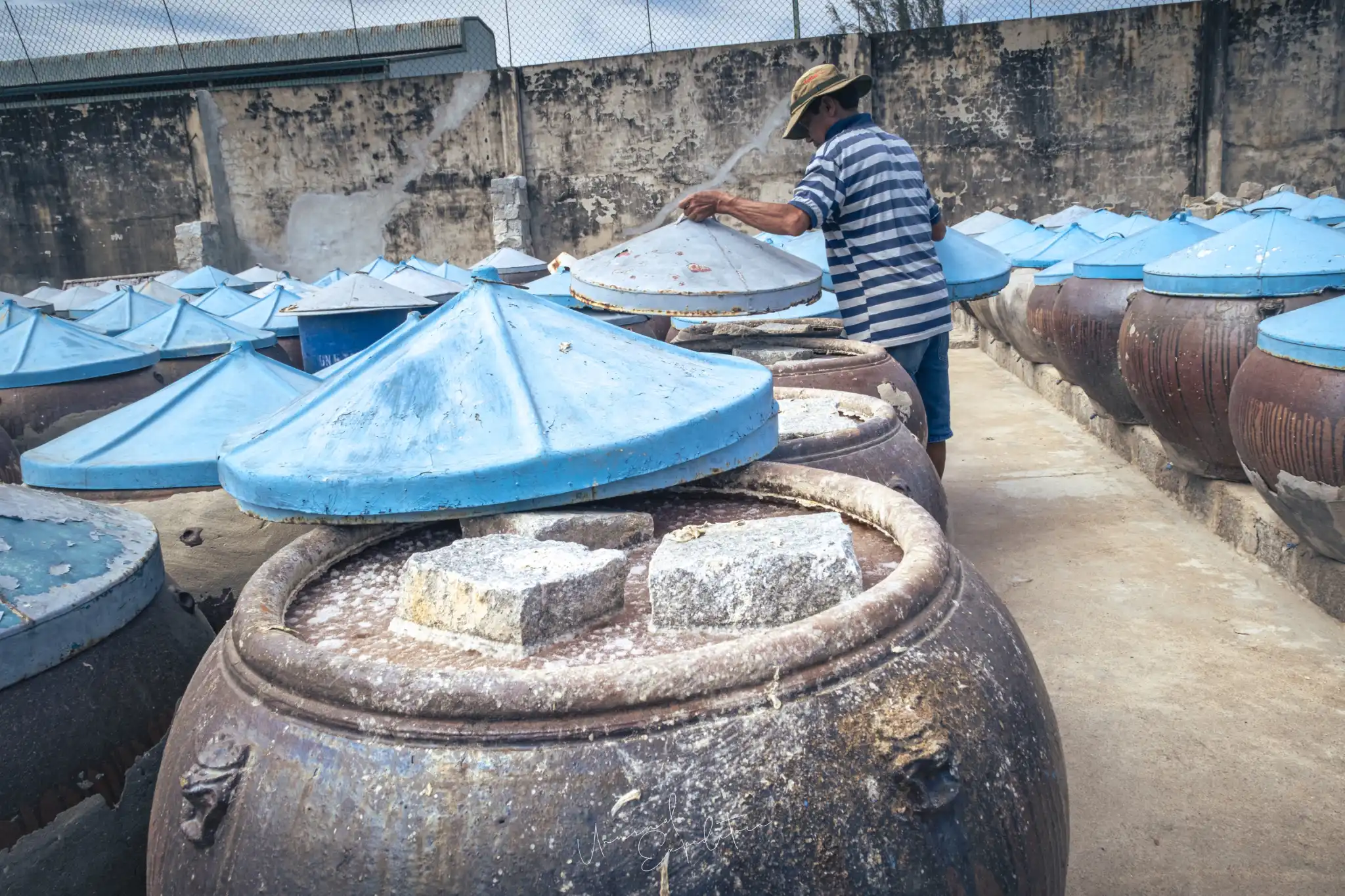
Vietnamese fish sauce is made by layering small fish, usually anchovies, with salt in large jars or wooden vats and leaving them to ferment for many months before the liquid is drawn off. Phu Quoc and Phan Thiet are the famous producing areas, and smaller works operate along the southern coast. For a photographer the fish sauce yard is a field of round shapes: rows of glazed jars under conical lids, a worker lifting a lid to check the brew, the salt crust on the rims. The smell is strong. Go in the soft light of the morning, keep your bag off the ground, and ask before you lift a lid yourself.
Craft subjects compared
| Craft | Where | Best light | Key frame |
|---|---|---|---|
| Rice paper making | Thuan Hung, Can Tho, and other delta villages | Door light inside, sun on the racks outside | A sheet lifted against the light |
| Rice paper drying | Lanes and yards of the villages | Mid morning sun | Rows of racks with a worker |
| Brick kilns | Mang Thit, Vinh Long | Morning and late afternoon | Red domes among palms by the river |
| Fish sauce | Phu Quoc, Phan Thiet and the south coast | Soft morning light | Rows of jars under conical lids |
All four suit the hours when the light on the water has gone hard, which is why we put them in the middle of the day.
"I go into a rice paper workshop for one moment: the maker lifting a sheet off the steamer with the light from the door coming through it. It lasts a second, and then she does it again a hundred times, so you get your chance."
Joseph Mak, tour leader, Unusual Expedition
Fitting the crafts into a delta trip
The craft villages pair naturally with the river. A morning at the Can Tho floating market leaves the bright part of the day for Thuan Hung or a kiln yard, and the evening for the light over the fields. If you are deciding when to go, our best time to visit the Mekong Delta article notes that the drying racks look their best in the sunny dry season, and is the Mekong Delta worth visiting explains why the crafts are reason enough to stay overnight.
Photograph the craft villages with us
Our January departure includes a rice paper workshop, fish sauce works and the Mekong Delta, and we run private delta trips on request. The Vietnam photography tours page has the details.
Join the Mekong Delta photography tour
Mekong And Central Highland Vietnam Photo Tour - Vietnam departs 16 Jan 2027 To 24 Jan 2027, led by Joseph Mak. Small group, photography first. All Mekong Delta photography tours.
Explore Mekong Delta in depth
- Mekong Delta Vietnam Photography Tour Guide: Can Tho, Lilies, Kilns and MarketsVietnam
- Is the Mekong Delta Worth Visiting? Day Trip, Can Tho or LongerVietnam
- Harvesting Water Lilies in the Mekong Delta: Where, When and How to Photograph ItVietnam
- Best Time to Visit the Mekong Delta: Dry Season, Flood Season and Can ThoVietnam
- Mekong Delta Photography Tour: the Can Tho Floating Market and the WaterwaysVietnam
- Can Tho Market Photos: Land Markets, the Floating Market and the CanalsVietnam
Upcoming Photo Tours
- Egypt Photo Tour – EgyptEgypt 12 Dec 2026 To 20 Dec 2026
- Inner Mongolia Winter Owl Photo Tour – ChinaChina 01 Jan 2027 To 04 Jan 2027
- Inner Mongolia Winter Photo Tour – ChinaChina 05 Jan 2027 To 11 Jan 2027
- Mekong And Central Highland Vietnam Photo Tour - VietnamVietnam 16 Jan 2027 To 24 Jan 2027