
Mekong Delta Photography Tour: the Can Tho Floating Market and the Waterways
Photographing the Mekong Delta: the Cai Rang floating market at Can Tho before dawn, the Dong Thap lily harvest, brick kilns and workshops.
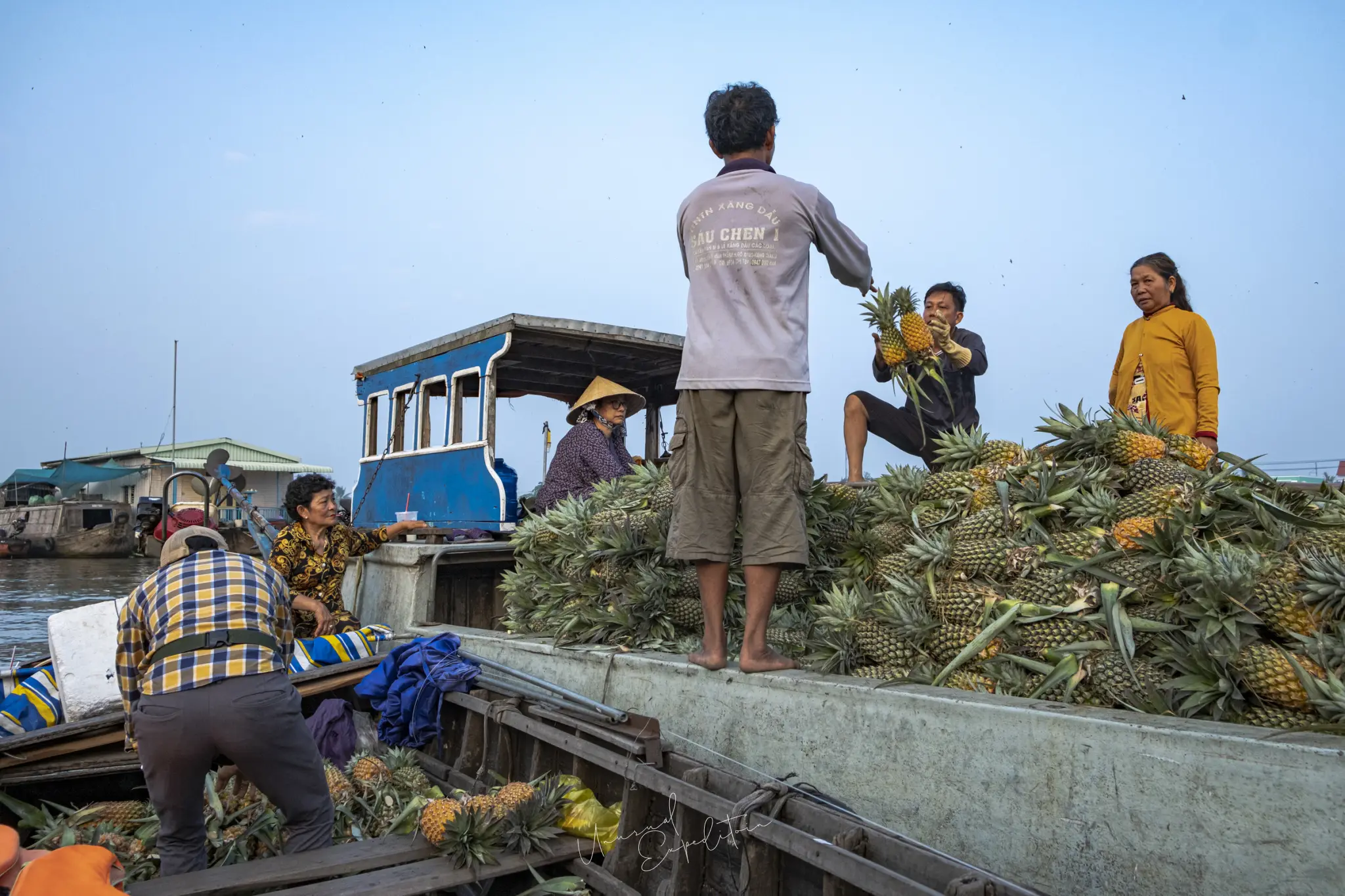
A Mekong Delta photography tour is about water and the work that happens on it: the Cai Rang floating market at Can Tho where wholesale boats trade fruit at first light, the water lily harvest in the flooded fields of Dong Thap, brick kilns smoking beside the canals, and the small craft that are still the way most people here get to work. This is the first leg of our January Vietnam photography tour, and this page explains what the delta looks like, when each subject is at its best, and how to photograph it from a boat.
Mekong Delta photography tour: what the delta is
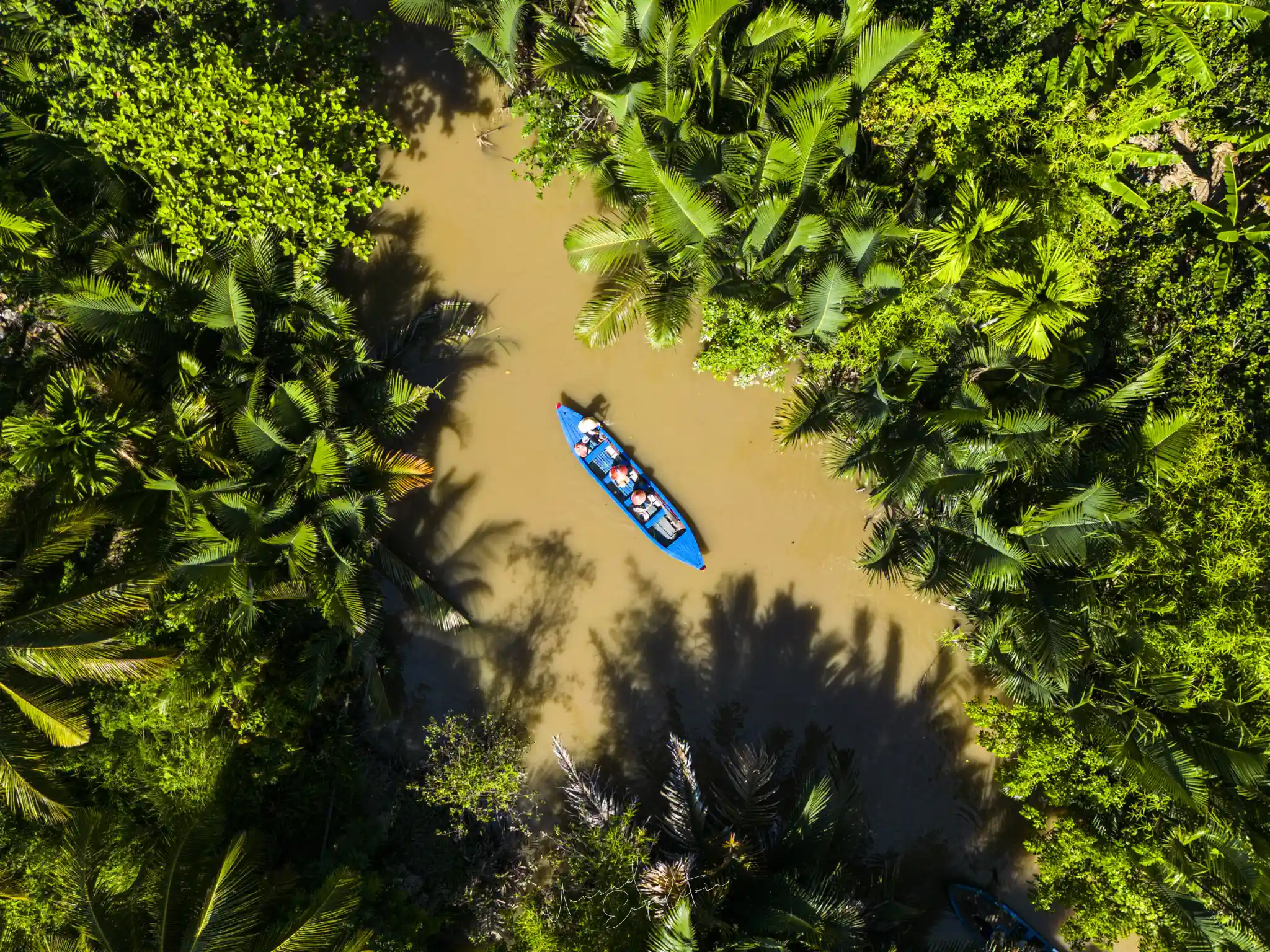
The Mekong reaches the sea through nine channels south-west of Saigon, and the land between them is a flat green grid of rice, orchards and canals that feeds most of Vietnam. Can Tho is its main city, and the obvious base. From there the subjects fan out: floating markets on the rivers, fruit orchards and coconut country around Ben Tre, brick and pottery kilns along the Co Chien near Vinh Long, and in the flood season the lily and lotus fields of Dong Thap towards the Cambodian border. Everything is low, wide and wet, which makes the delta a drone photographer's landscape as much as a street photographer's. Our older note on Can Tho's river markets covers the town itself.
The Can Tho floating market at first light
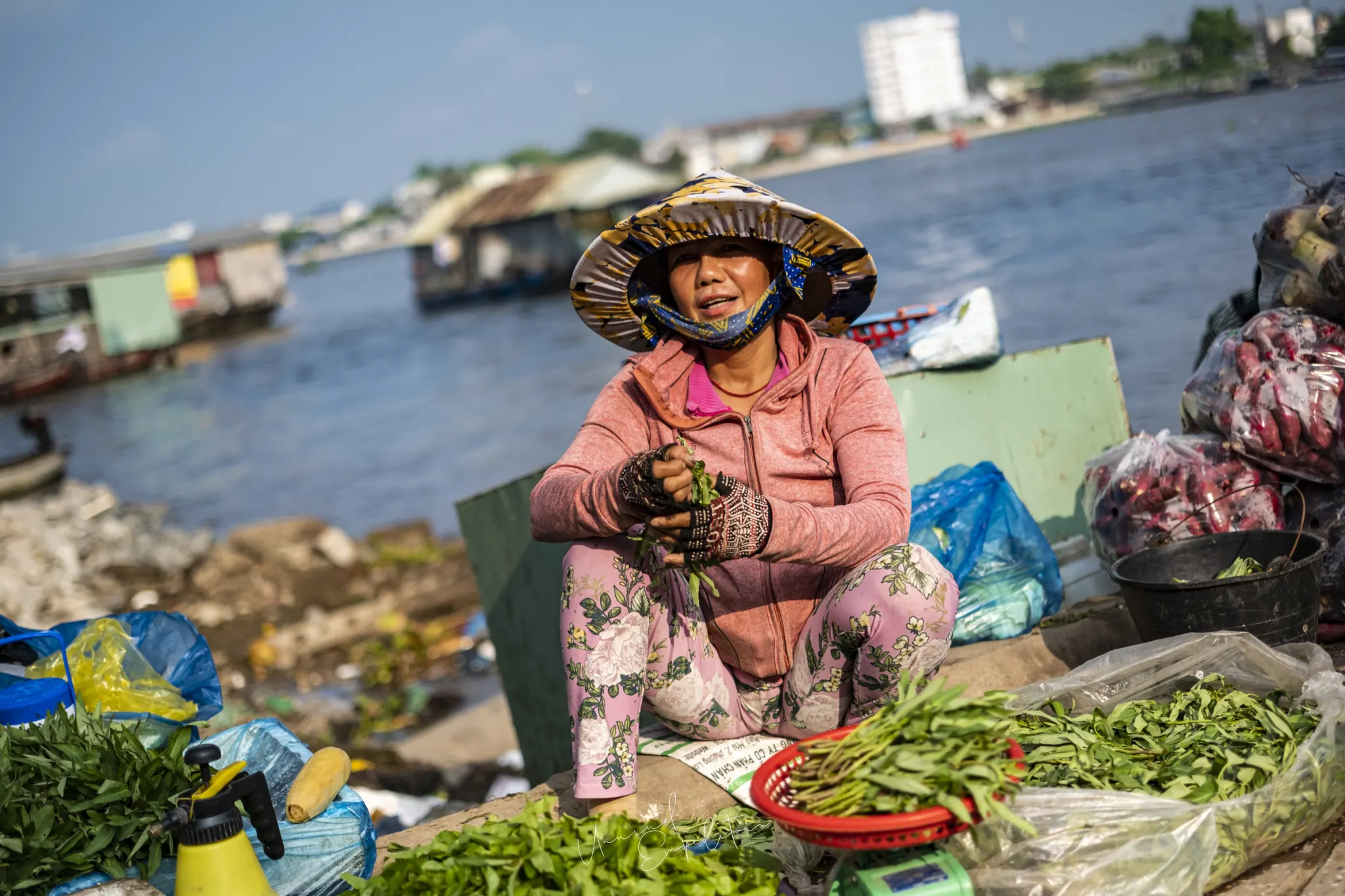
Cai Rang is the largest floating market left in the delta and it is a wholesale market: big wooden boats loaded with pineapples, pumpkins, sweet potatoes or watermelons, each advertising its cargo on a tall bamboo pole, and smaller boats coming alongside to buy. It starts before dawn and is thinning by mid morning, so you are on the water in the dark and shooting as the light comes up. Hire a small boat, not a tour launch; the low gunwale puts the camera at the level of the trade. Frames to look for: a seller handing fruit across to a buyer, the poles against the sky, a coffee boat threading between the hulls, the steam from a noodle boat at sunrise. The market has shrunk as roads and supermarkets arrived, and the smaller markets at Phong Dien and Nga Nam are quieter still; go expecting a working market, not a spectacle.
Photos of the Mekong Delta from the air
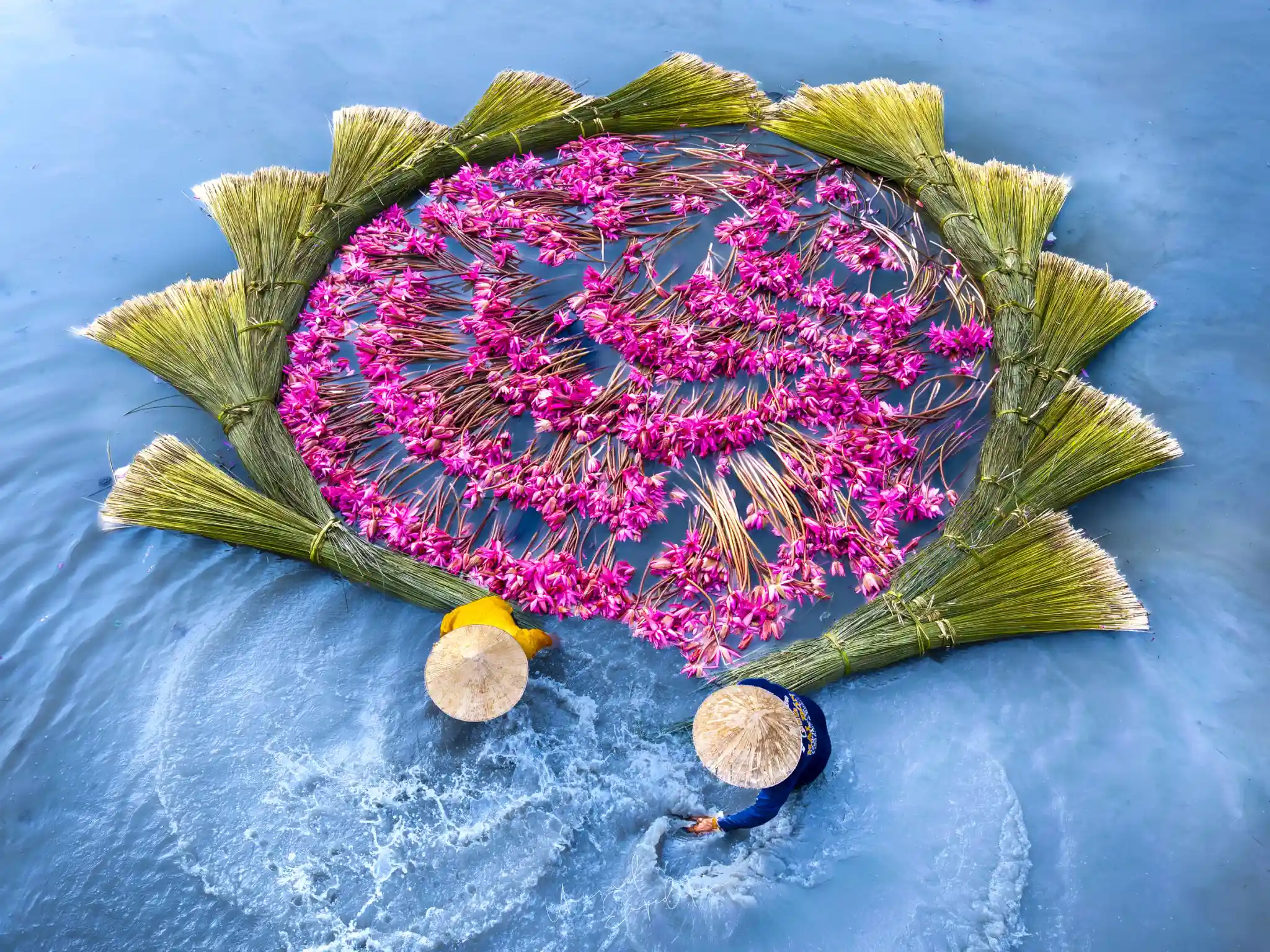
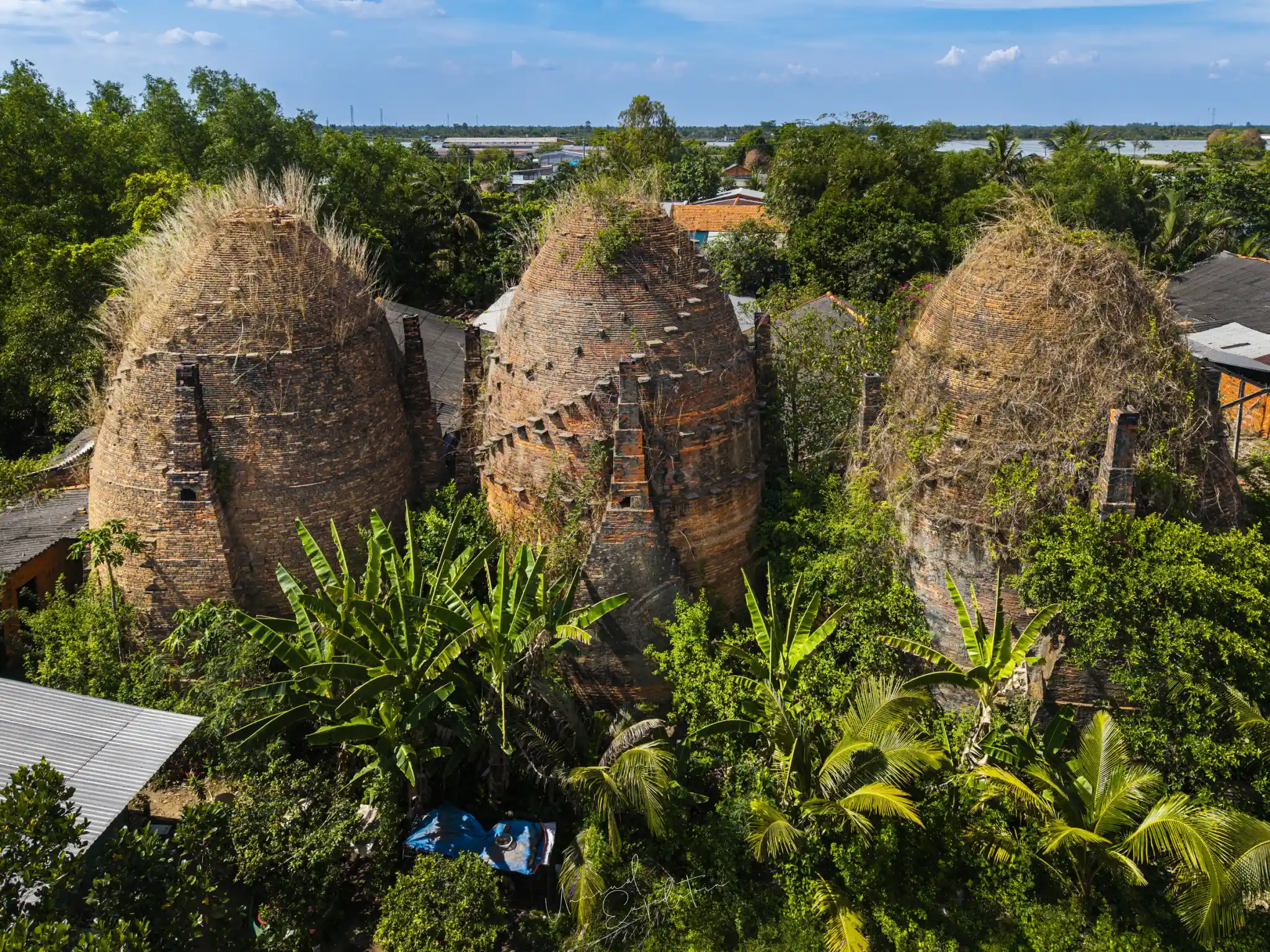
From a drone the delta becomes geometry. The lily harvest in Dong Thap, seen from above, is women in conical hats standing waist deep among pink flowers in a sheet of water, with the long stems laid out in fans on the surface around them. Brick kilns along the river appear as rows of beehive domes with their chimneys smoking into the morning. Canals cut the orchards into strips, and sampans leave V-shaped wakes on brown water. Vietnam requires drone registration and permits, and some areas near the border and military sites are closed; we handle the paperwork for the group and fly where it is allowed. If you are travelling alone, ask before you launch.
The water lily harvest in Dong Thap
In the flood season, roughly from September into December, the fields of Dong Thap fill with water and with water lilies, and the harvest is done by women who wade or paddle out before sunrise, pull the long stems, wash them and bundle them in the boats. The pink flowers, the brown water and the reflections make it one of the most photographed subjects in southern Vietnam, and the harvesters know it; some villages now arrange the work for photographers in the dry months as well, which is why our January tour can include it. From a boat at water level the frames are portraits with flowers; from above they are patterns. Both need to be done early, before the wind ruffles the water and the light goes flat.
Brick kilns, rice paper and the small industries
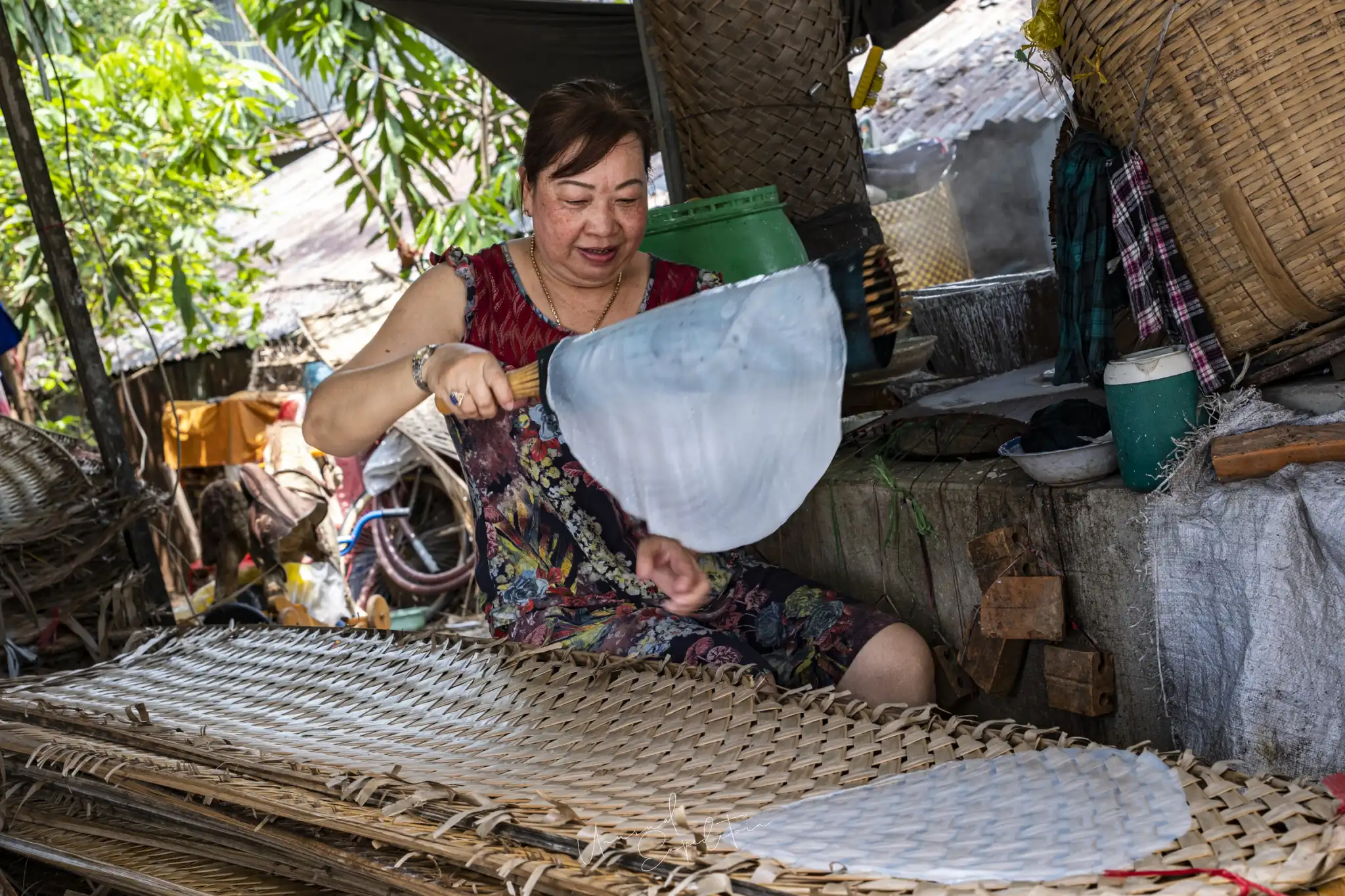
Between the big set pieces the delta is full of small workshops that photograph well in the available light: brick kilns where workers stack and unstack by hand in the orange dust, rice paper makers steaming sheets over a wood fire and drying them on bamboo racks in the sun, coconut candy kitchens, noodle factories where the strands hang like curtains. These are family businesses, used to visitors, and a few minutes of conversation through the guide gets you inside. Shoot into the steam with the light behind it, keep the ISO up and the shutter fast enough for hands at work.
How to photograph from a boat
Sit low and forward, keep the strap on and the lens hood off, and set the shutter to at least a five-hundredth because the boat is never still. Autofocus on faces and let the background go. A 24-70mm covers most of a floating market; the 70-200mm pulls in a seller three boats away. Take a dry bag and a cloth; the morning on the river is humid and the spray from passing engines is constant. For the lily fields, waders or old shoes you do not mind losing.
Mekong Delta subjects by season
| Subject | Best months | Light |
|---|---|---|
| Cai Rang floating market | All year, busiest before Tet | Pre-dawn to early morning |
| Water lily harvest | September to December, arranged sessions in the dry season | Sunrise |
| Lotus fields | June to August | Early morning |
| Brick kilns and workshops | All year | Mid morning, interiors any time |
| Orchards and fruit | May to August | Morning |
January gives the market and the arranged lily sessions in dry weather, which is why the tour goes then.
"Cai Rang is smaller than it was and everyone says so. I still go, because a man handing a watermelon across two boats in the first light is a picture that does not exist anywhere else."
Joseph Mak, tour leader, Unusual Expedition
Where the delta sits in the tour
The January departure goes from Saigon to Can Tho and Dong Thap first, then turns east to the salt fields of the coast, covered in Vietnam salt fields and fishing villages, and north to Dalat and the Central Highlands. The delta is flat, hot and humid, and the mornings start in the dark; the reward is the richest set of working-life pictures in southern Vietnam.
Come to the delta with us
The Vietnam photography tour page lists the January departure that opens on the Mekong. Fares are indicatively S$2,700 to S$3,300 per person depending on the room, with the boats, guides and drone permits arranged.
Join the Vietnam photography tour
Mekong And Central Highland Vietnam Photo Tour - Vietnam departs 16 Jan 2027 To 24 Jan 2027, led by Joseph Mak. Small group, photography first. All Vietnam photography tours.
Explore Vietnam in depth
- Vietnam Photography Tour: The Complete GuideVietnam
- Vietnam Photography Trip FAQVietnam
- The Best Time to Visit Vietnam for Photography, Region by RegionVietnam
- Vietnam Tour from Singapore: Flights, Visa and What to ExpectVietnam
- Sapa, Mu Cang Chai or Ha Giang: Which Northern Mountains to PhotographVietnam
- Mu Cang Chai Rice Terraces: Photography, Best Time and How to Get ThereVietnam
- Ninh Binh Photos: Is It Worth Visiting and How to Get There from HanoiVietnam
- Hue Photo Tour: the Citadel, the Tombs and the LagoonVietnam
- Dalat and the Central Highlands: Photos of Mist, Farms and the Elephant VillagesVietnam
- Vietnam Salt Fields and Fishing Villages: Photos from the South Central CoastVietnam
- Saigon Photos: Markets, the River and the City at NightVietnam
- Saigon Photo Tour: Where We Shoot in Ho Chi Minh CityVietnam
Upcoming Photo Tours
- Egypt Photo Tour – EgyptEgypt 12 Dec 2026 To 20 Dec 2026
- Inner Mongolia Winter Owl Photo Tour – ChinaChina 01 Jan 2027 To 04 Jan 2027
- Inner Mongolia Winter Photo Tour – ChinaChina 05 Jan 2027 To 11 Jan 2027
- Mekong And Central Highland Vietnam Photo Tour - VietnamVietnam 16 Jan 2027 To 24 Jan 2027