
Mongolia Wildlife: Red Deer, Vultures and Yaks on the Winter Steppe
Mongolia wildlife on the winter steppe: red deer, cinereous vultures, yaks and horses in the snow, and how to photograph them.
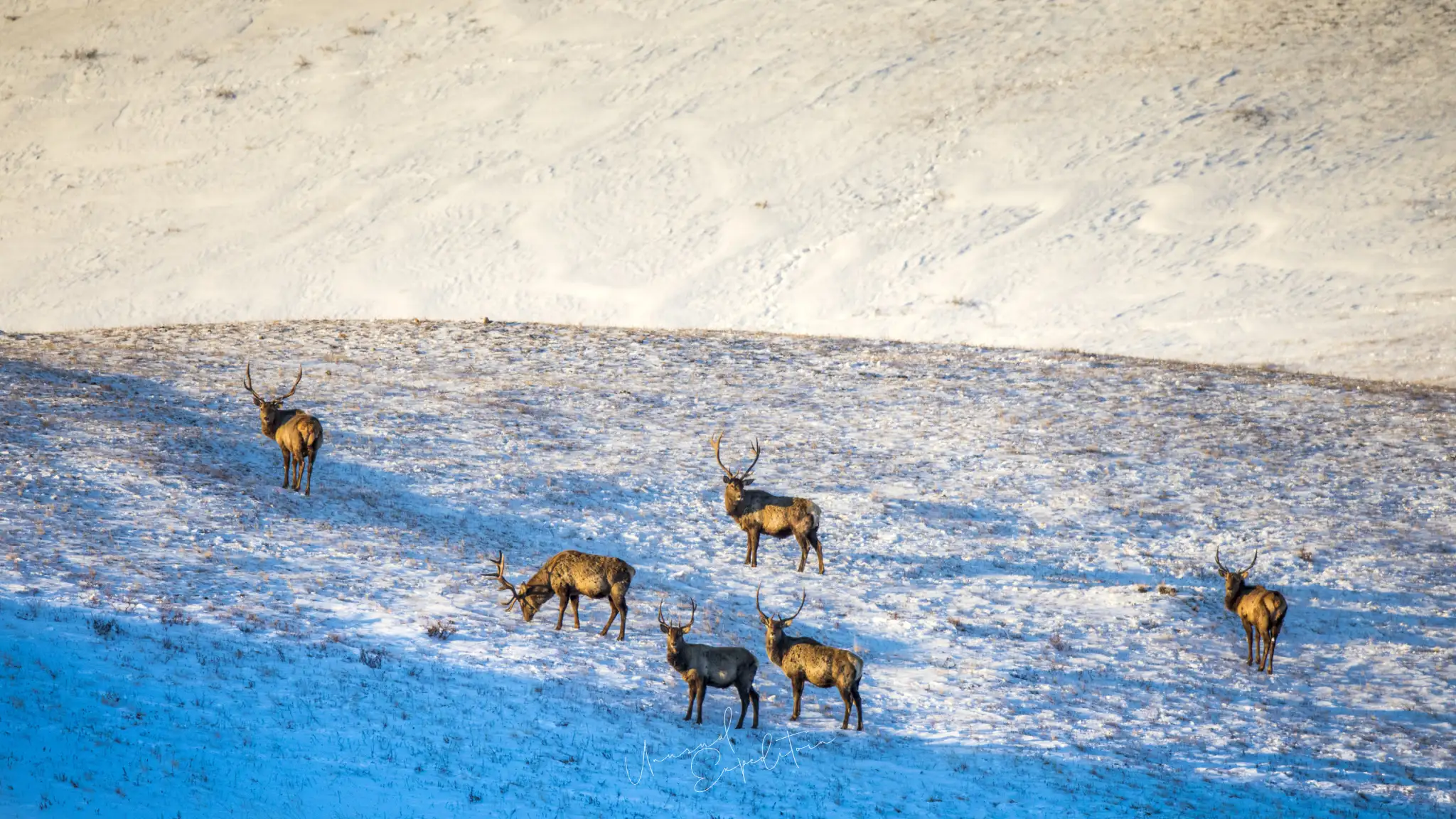
Mongolia wildlife on the central steppe in winter means red deer on snowy slopes, cinereous vultures, the largest vultures in the world, gliding low over the grass, and, among the herds, the yaks and horses that live outside all year. Snow makes every animal stand out, and the low sun lights them from the side. You need a long lens, patience, warm clothes and a driver who knows where the animals feed. Here is what we photographed and how.
This article is part of our Central Mongolia photography tour guide. It covers the wild animals of the steppe and the hardy livestock that share it with them.
Mongolia wildlife: what lives on the central steppe
The central steppe looks empty from a car window, but it is not. Red deer graze the hills where rock outcrops and scrub give them cover. Raptors work the open ground, the cinereous vulture largest of all, and foxes and wolves live here too, though you see them far less often. Among the wild animals the herding families' livestock graze freely, and the yaks and horses, hardy and half wild in their habits, are as much a part of the steppe's wildlife photography as anything truly wild. In winter the snow simplifies the backgrounds and the animals come lower, which is why we photographed them then.
Mongolia steppe wildlife: red deer in the snow
Red deer were the surprise of our winter trip. On snowy hills topped with granite outcrops we found small herds of hinds and stags feeding on the slopes, alert but not shy at a distance. In the early morning the sun lights one side of a slope while the other stays blue in shadow, and a group of deer crossing that line makes a frame that needs no help. Use a 200-400mm or a 100-400mm, stay in or beside the vehicle at first, and let your driver approach slowly and stop well short. Deer that are left calm keep feeding, and you get natural behaviour, not a line of rumps disappearing over the ridge.
Cinereous vultures
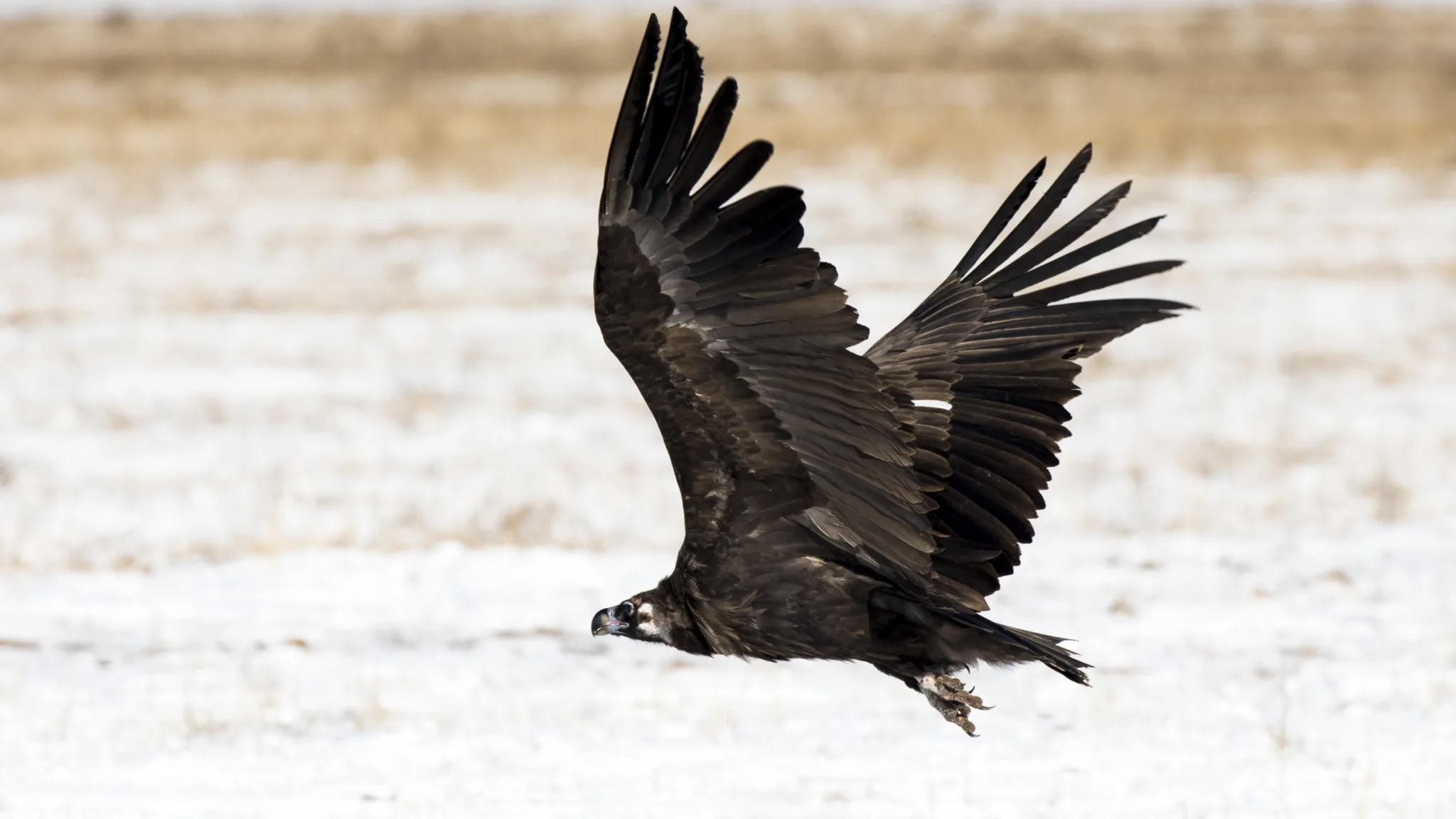
The cinereous vulture is the largest vulture in the world, with a wingspan of about three metres, as The Nature Conservancy notes, and Mongolia holds the world's largest remaining breeding population, according to research reported by Earthwatch. On the winter steppe they gather where an animal has died, landing in the snow one after another, then lifting off again with slow, heavy beats. They are wary, so stay in the vehicle, use your longest lens, and wait. The moment to aim for is the landing, wings fully spread over the snow, or a bird low against the dry grass, where its dark plumage stands out against the white.
Mongolia yaks and wildlife on the same hills
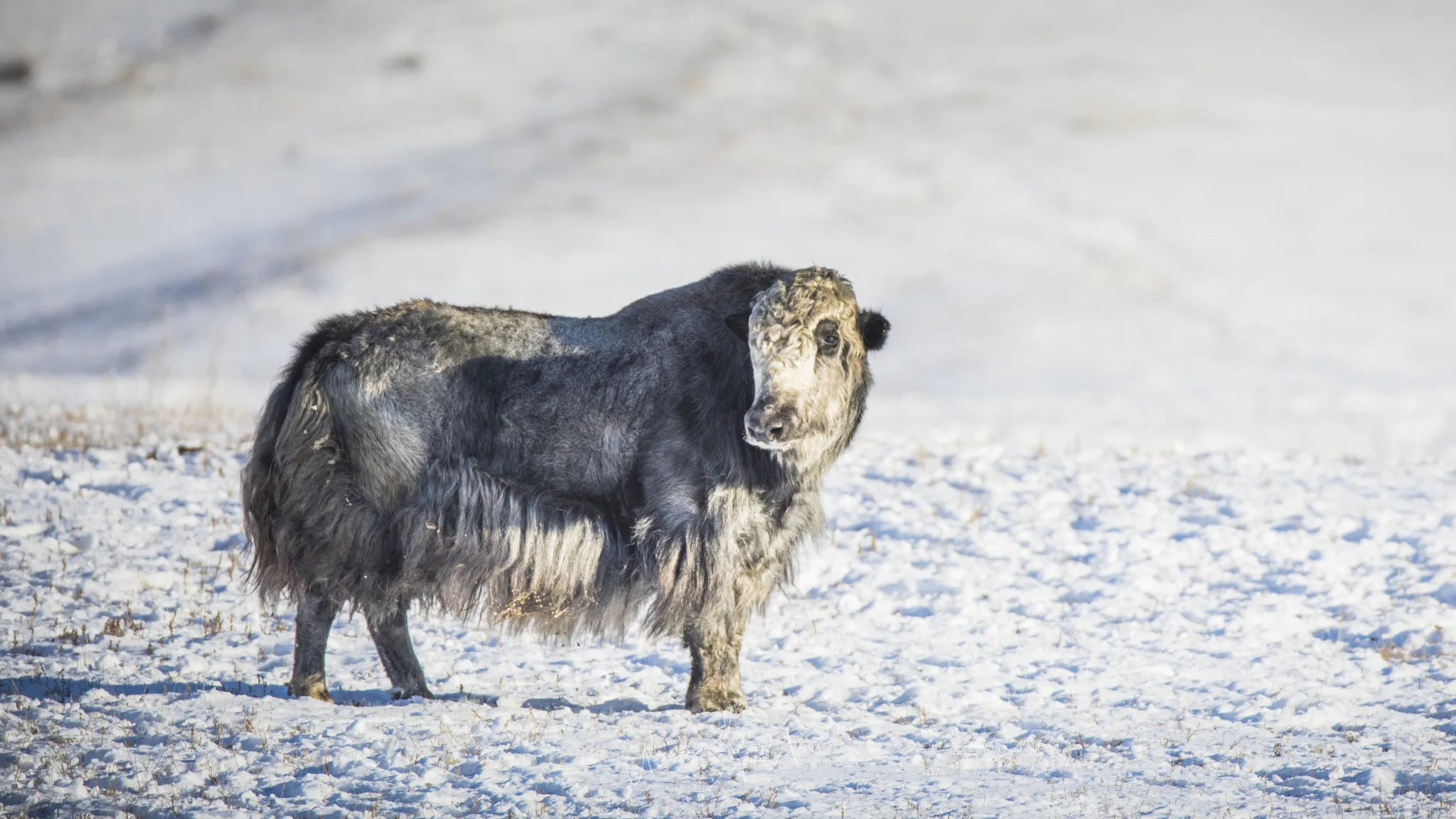
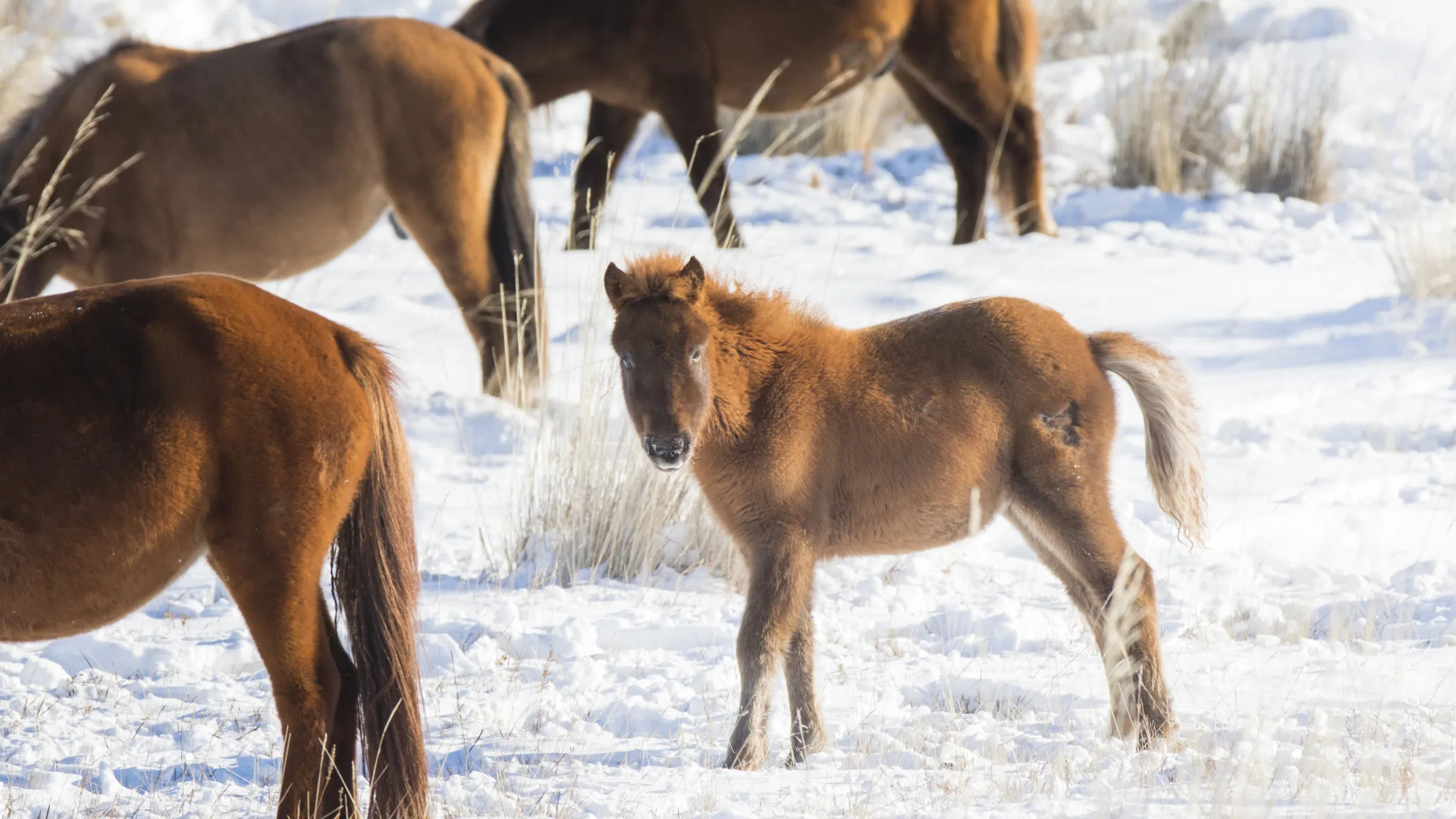
Yaks are domestic animals in Mongolia, kept by herding families especially in the colder, higher areas, but in winter they look as wild as anything on the steppe. Their long shaggy coats collect frost and snow, and a yak standing side-on in the snow with the low sun on its fur is one of the great winter portraits. Horses are the same: herding families' horses graze loose on the hills all winter, and a foal with snow on its back among the adults makes a gentle frame. Be clear in your captions that these are livestock. For more on herding, see Mongolia winter tour.
Mongolia fauna and wildlife: what to expect by season
| Animal | Wild or domestic | Best season to photograph | Lens |
|---|---|---|---|
| Red deer | Wild | Winter, against snow | 200-400mm |
| Cinereous vulture | Wild | All year; winter for snow backgrounds | 200-400mm or longer |
| Yaks | Domestic | Winter for frost on the coat | 70-200mm |
| Horses and foals | Domestic | Winter for snow, early summer for foals | 70-200mm |
| Bactrian camels | Domestic | Autumn and winter | 16-35mm and 70-200mm |
The domestic animals are easier to approach and often give the stronger frames; the wild ones need more time.
"We drove for an hour seeing nothing, and then the driver stopped and pointed. A small herd of red deer on the snow below the rocks, standing in the first light. I learned to trust the drivers on the steppe. They see everything."
Joseph Mak, tour leader, Unusual Expedition
Mongolia wildlife tours: how to plan for animals
If wildlife is your main aim, choose an operator who works with drivers and rangers who know the animals' feeding areas, and plan for early mornings and late afternoons in the field. Protected areas near Ulaanbaatar have their own rules and entry arrangements; check with the park before you go. Keep a respectful distance from all animals, never chase them with a vehicle, and do not leave the tracks in protected areas. Winter wildlife photography is mostly waiting in the cold, so dress for it; Mongolian nomads covers the families who share the hills with the animals.
Working from the vehicle
On the open steppe the vehicle is your hide. Animals that would run from a person on foot often ignore a car that stops and stays still, so most of our wildlife frames were taken from the window or from beside an open door. Ask the driver to turn off the engine to stop the vibration, rest the lens on a beanbag, and keep talking quiet. Open the window early so the glass and lens settle to the outside temperature; opening it at the last moment brings a rush of warm air that blurs the image. If you get out, move slowly and stay close to the vehicle.
Camera settings in snow
Snow fools the meter into underexposing, so add a stop or more of exposure compensation and watch the histogram. Dark animals such as vultures and yaks against bright snow need care: expose for the animal and let the snow go almost white. Use a fast shutter speed for birds in flight, 1/2000 second or more, and a beanbag on the vehicle window for the long lens. Keep spare batteries warm. For the camels in the dunes, a different kind of animal photography, see camels in Mongolia.
Photograph Mongolia's wildlife with us
We run central Mongolia as a private trip on request and plan the days around the animals' early and late hours. See private tours and the Mongolia photography tours page.
Ask us about wildlife in Mongolia
Central Mongolia photography tours
The next Central Mongolia departure is announced on the Central Mongolia photography tours page, with previous expeditions and all the planning guides.
Explore Central Mongolia in depth
- Central Mongolia Photography Tour Guide: Steppe, Herders and Dunes near UlaanbaatarMongolia
- Ulaanbaatar in Winter: Photographing the Coldest CapitalMongolia
- Mongolian Nomads Today: Photographing a Herding FamilyMongolia
- Mongolian Ger: Inside and Outside the Nomad's HomeMongolia
- Mongolia Winter Tour: Herding, Snow and Cold on the SteppeMongolia
- Is Mongolia Mostly Desert? Sand Dunes, Snow and FirelightMongolia
- Camels in Mongolia: Photographing Bactrian Camels in WinterMongolia
Upcoming Photo Tours
- Egypt Photo Tour – EgyptEgypt 12 Dec 2026 To 20 Dec 2026
- Inner Mongolia Winter Owl Photo Tour – ChinaChina 01 Jan 2027 To 04 Jan 2027
- Inner Mongolia Winter Photo Tour – ChinaChina 05 Jan 2027 To 11 Jan 2027
- Mekong And Central Highland Vietnam Photo Tour - VietnamVietnam 16 Jan 2027 To 24 Jan 2027