
New Zealand Photography Tour Guide: Lakes, Fiords, Mountains and Night Skies
New Zealand photography by region: Lake Tekapo, Queenstown and Wanaka, Milford Sound, the West Coast, Moeraki and Taranaki.
New Zealand photography rewards anyone who likes mountains, still water and weather that changes the picture every few minutes. On the South Island you can photograph turquoise glacial lakes under the Southern Alps, fiords with waterfalls falling into the sea, gold autumn willows, beaches of round stone boulders and some of the darkest night skies in the world. The North Island adds a volcano that stands alone above farmland and steaming geothermal ground. This page is the overview of our New Zealand destination guides.
The photographs in this guide are our own, taken on our trips here; we hold the rights to them, and the notes come from knowing these places first hand. Two areas have their own sets of articles: the Lake Tekapo photography tour guide for the Mackenzie Basin and its night sky, and the Queenstown and Wanaka photography tour guide for the Southern Lakes, Glenorchy and Arrowtown.
New Zealand photography: what the country gives a photographer
New Zealand photography is mostly landscape, and the landscape is unusually compact. The Southern Alps run down the spine of the South Island, so glaciers, high-country tussock, rainforest and coast are never far apart. Lakes fed by glaciers carry rock flour that turns the water an opaque blue, and when the wind drops the smaller lakes become mirrors. Autumn brings planted poplars, willows and larches into gold against fresh snow; winter brings snow down to the lakeshores and long clear nights. Wildlife is part of it too, from fur seals on the rocks of the east coast to birds in the beech forest. A 24-70mm covers most of the work, a 16-35mm earns its place for night skies and fiord walls, and a 70-200mm pulls a peak or a seal out of a wide scene. Bring a tripod and filters: still water and moving water are both everywhere.
New Zealand landscape photography, region by region
New Zealand landscape photography divides into regions with very different characters, and the best light is not the same in each.
| Region | What you photograph | Best light |
|---|---|---|
| Lake Tekapo and the Mackenzie Basin | The Church of the Good Shepherd, turquoise lakes, willows, tussock, the Milky Way | Dawn on the lakeshore, clear moonless nights |
| Queenstown, Wanaka and Glenorchy | The Remarkables over Lake Wakatipu, That Wanaka Tree, Glenorchy's boatshed, Arrowtown in autumn | Sunrise mist and the last light on the ranges |
| Fiordland and Milford Sound | Mitre Peak, waterfalls, rainforest on the Milford Road, Lake Te Anau | Still mornings, and rain for the waterfalls |
| The West Coast | Aoraki/Mount Cook and Mount Tasman reflected in Lake Matheson, river valleys | Calm early mornings and clear evenings |
| The Otago coast | The Moeraki Boulders, fur seals | Low tide at sunrise |
| North Island | Taranaki Maunga, the Taranaki coast, Rotorua's geothermal parks | Clear mornings for the mountain, cool air for steam |
Most photographers start with the South Island, where the first four regions sit close enough to combine on one trip.
Lake Tekapo and the Mackenzie Basin
Lake Tekapo is the reason many people book the South Island. The little stone Church of the Good Shepherd stands on its shore, the lake is the colour of a gemstone, and the whole basin lies inside the Aoraki Mackenzie International Dark Sky Reserve, designated in 2012 according to DarkSky International. In autumn the willows and poplars around the lakes and rivers turn gold; in winter snow covers the ranges behind the church. Our Lake Tekapo photography tour guide leads to eight articles on the church, stargazing, autumn, the Mackenzie Basin from above and the best time to go.
Queenstown, Wanaka and Glenorchy
Queenstown sits on Lake Wakatipu facing the jagged ridge of The Remarkables, and it is the base for most South Island trips. Wanaka, over the Crown Range, has the lone willow in the lake that everyone knows as That Wanaka Tree. Glenorchy, at the head of Lake Wakatipu, has a red boatshed, a wooden jetty and mornings when mist lies on the water under snow peaks. In autumn Arrowtown and the hills around it go orange and gold. The Queenstown and Wanaka photography tour guide covers photography locations, sunsets, That Wanaka Tree, Glenorchy, autumn colour and the best time to visit.
Milford Sound and Fiordland
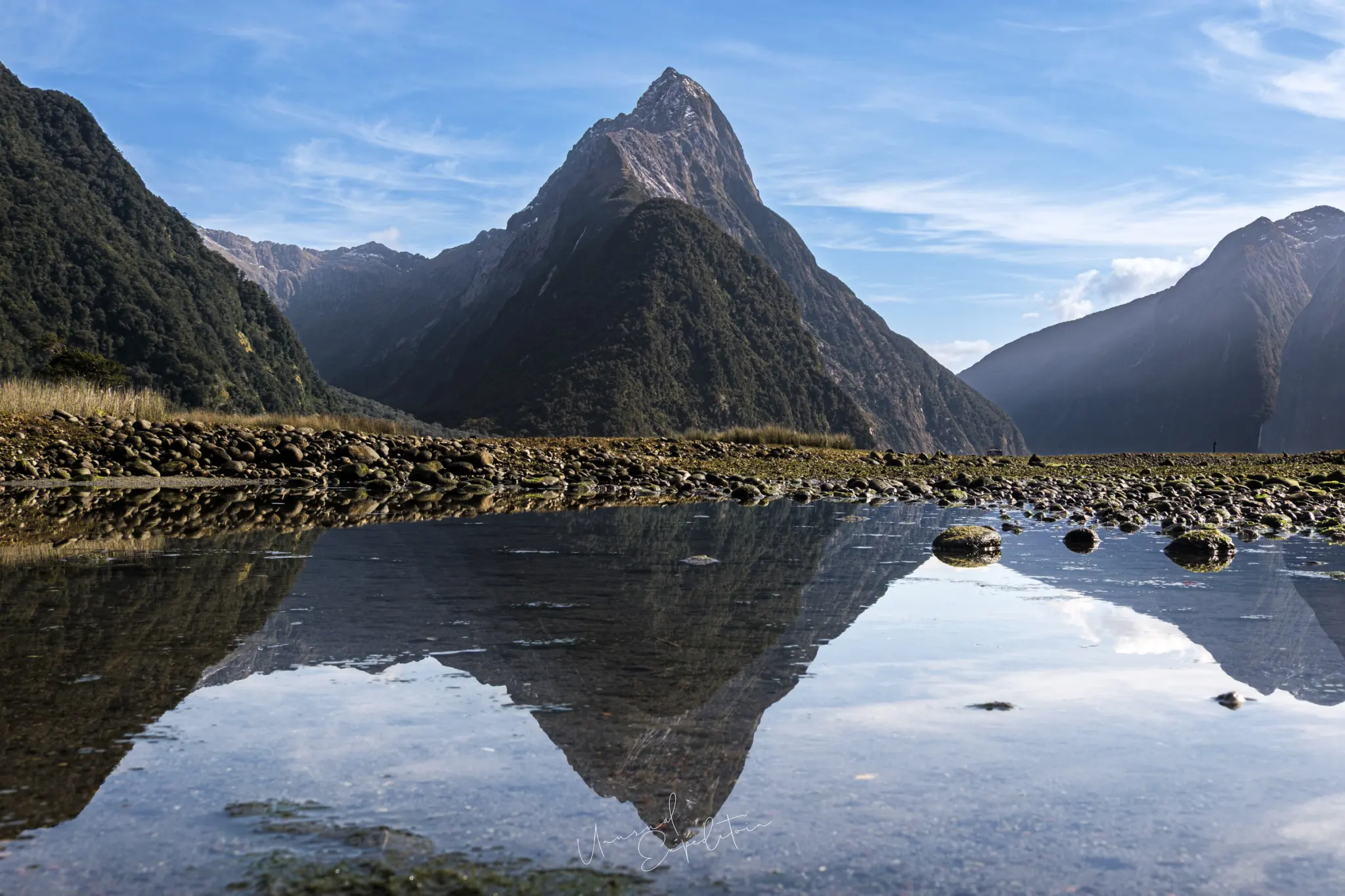
Milford Sound, or Piopiotahi, lies in Fiordland National Park, part of the Te Wahipounamu World Heritage Area. Mitre Peak rises about 1,690 metres straight out of the water, a height Te Ara, the Encyclopedia of New Zealand, gives for the peak. The classic picture is from the foreshore near the visitor terminal, where low tide leaves pools that reflect the mountain on a calm morning. On the water, waterfalls drop from the cliffs after rain, and rain is common, so a wet day is a good day here. The road in passes beech forest, mirror lakes and small cascades; the Department of Conservation publishes its status, which can close in snow or after slips. Lake Te Anau, the gateway town's lake, has a jetty that is lovely at dusk.
The West Coast and Lake Matheson
The West Coast is the wettest part of the country, and when it clears it is extraordinary. Lake Matheson, near Fox Glacier, is famous for its reflection of Aoraki/Mount Cook and Mount Tasman; the Department of Conservation describes a gentle loop walk with several viewpoints, and the mirror is best early in the morning before any wind. The drive over Haast Pass to Wanaka follows river valleys of braided gravel and green pasture under forested mountains.
The Otago coast: the Moeraki Boulders
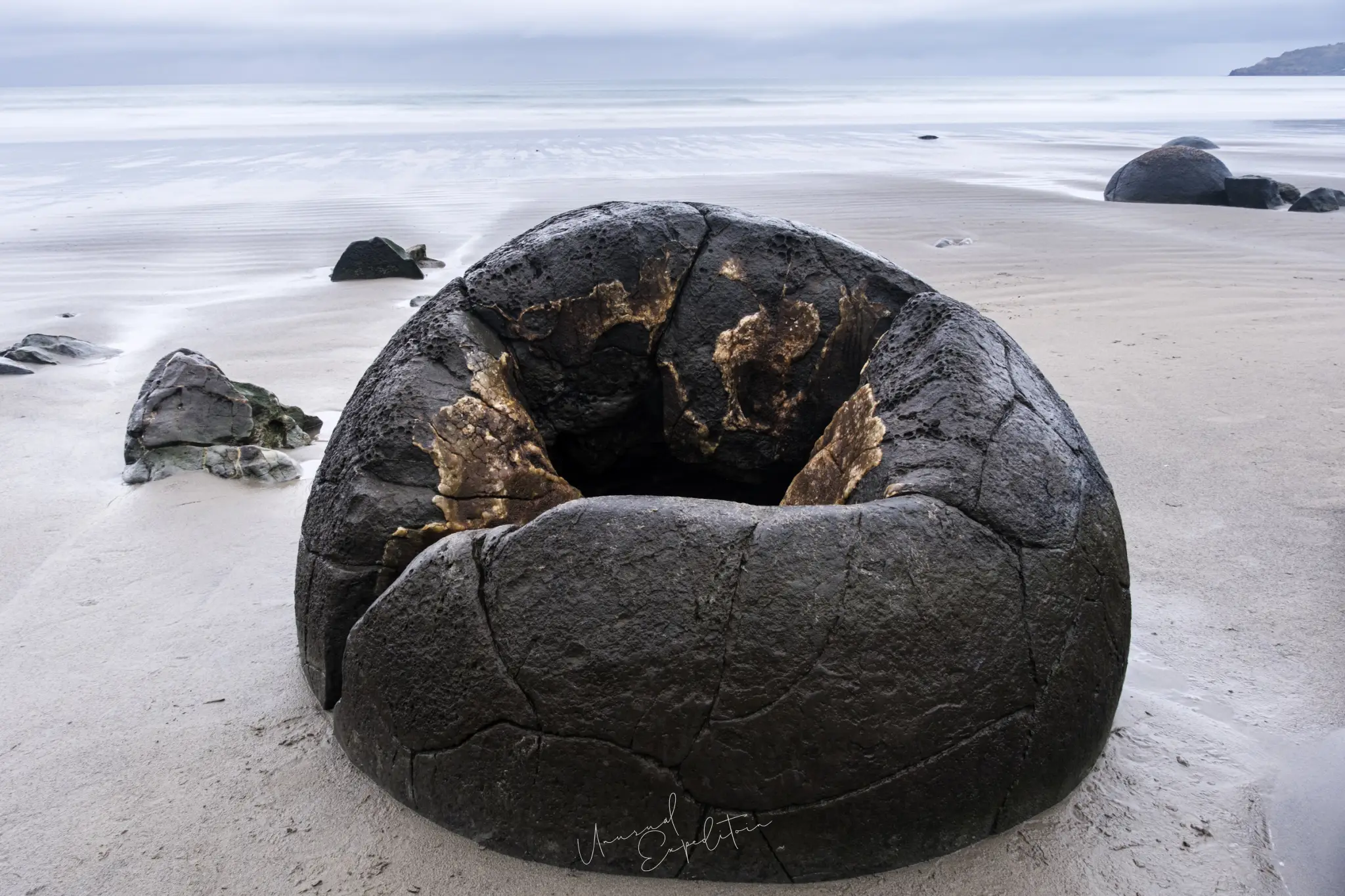
On Koekohe Beach in North Otago, large round concretions lie scattered along the sand, some whole, some split open like shells. The Moeraki Boulders are best at low tide around sunrise, when the sea washes between them and a long exposure smooths the water into mist. They draw crowds later in the day, so the early light is worth the effort. Fur seals haul out on rocks and grass along parts of this coast; give them space.
The North Island: Taranaki and Rotorua
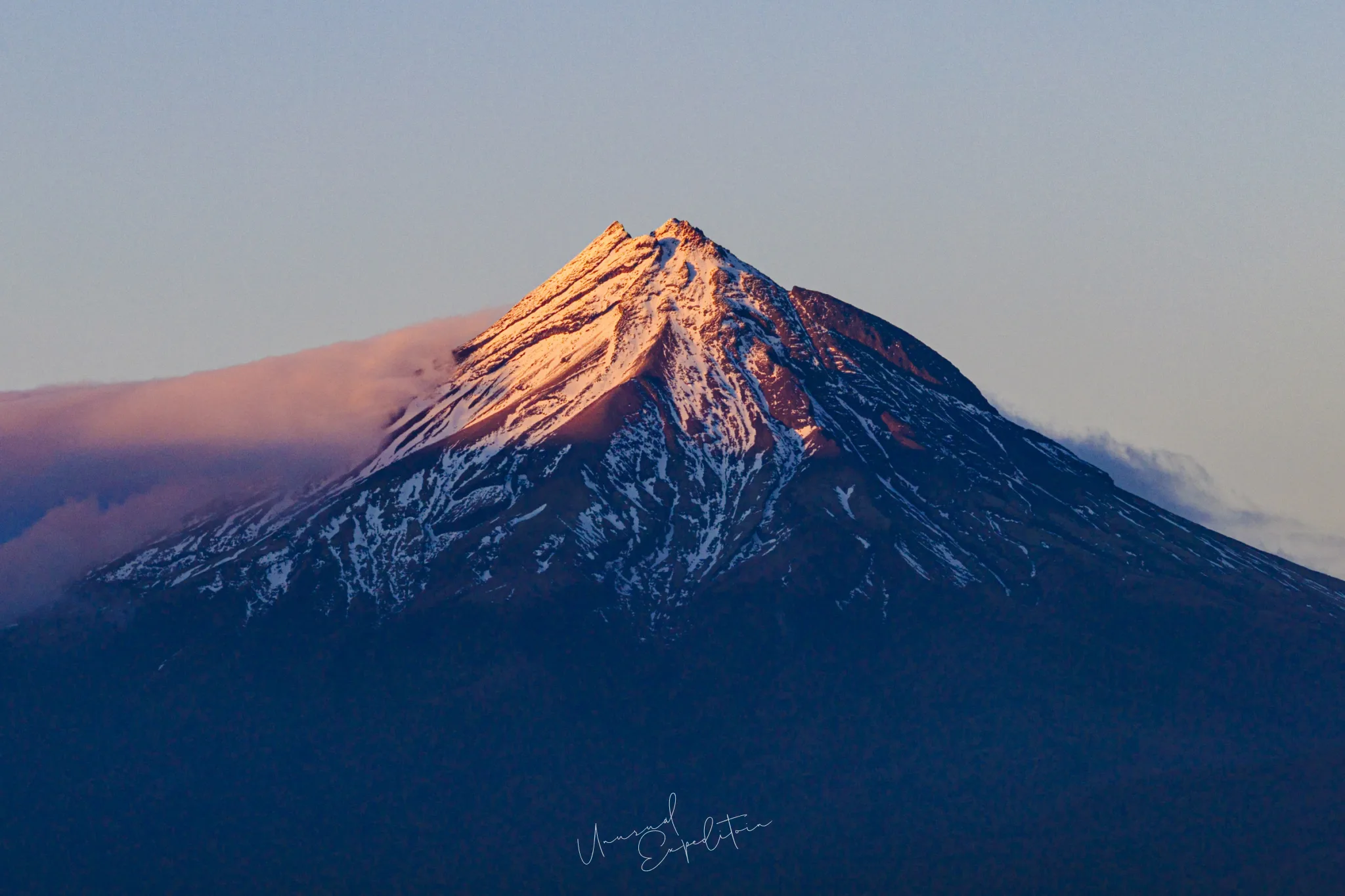
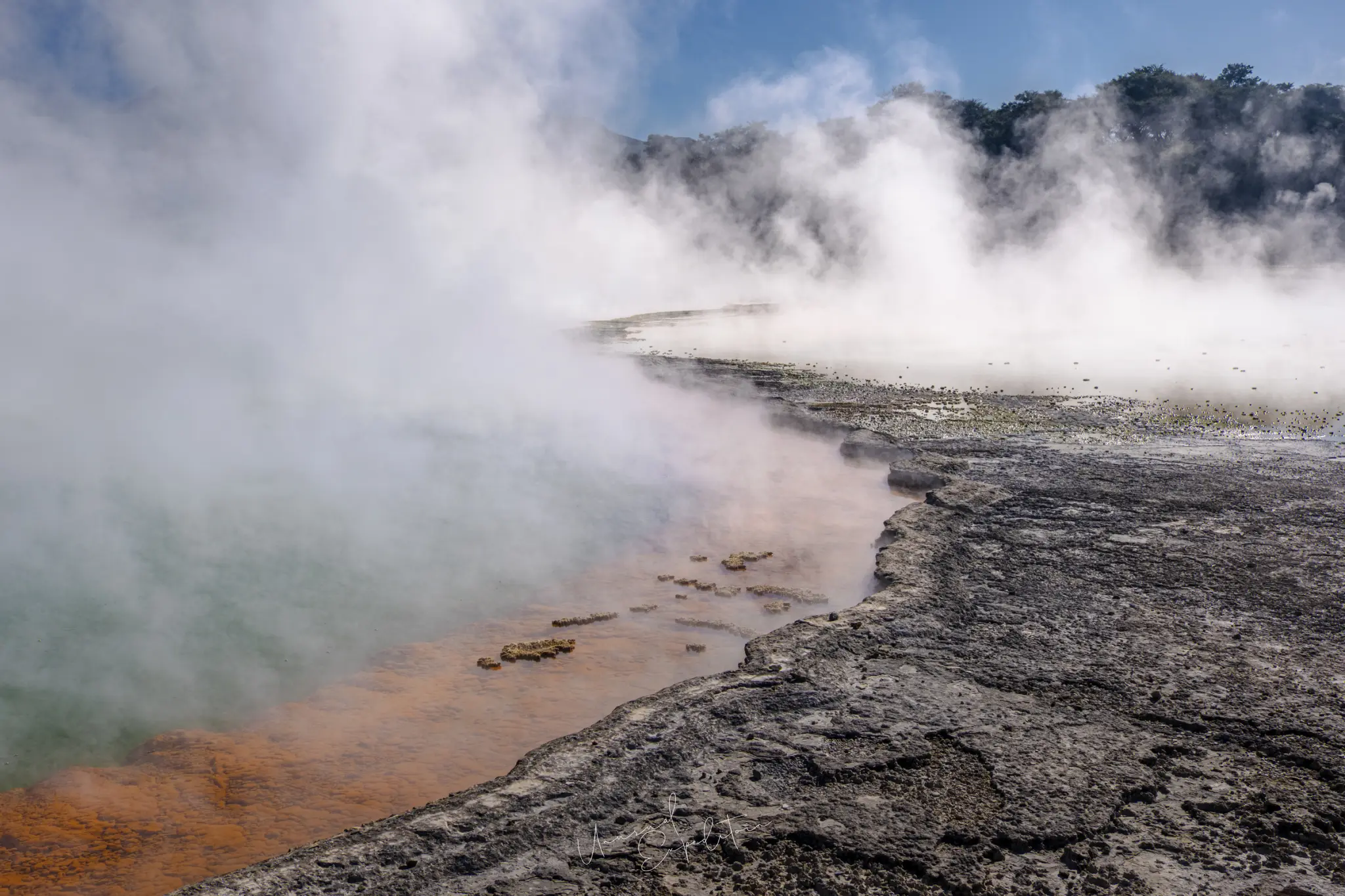
Taranaki Maunga is a near-perfect volcanic cone above the dairy farms of the west coast of the North Island. In 2025 the mountain was recognised in law as a legal person, and the surrounding national park took the name Te Papa-Kura-o-Taranaki, as RNZ reported when the settlement passed. Early morning gives the best chance of a clear summit, and alpenglow on its snow is the picture to wait for. The coast to the north has sandstone cliffs and sea stacks called the Three Sisters. Inland, Rotorua's geothermal parks steam and bubble; at Wai-O-Tapu the Champagne Pool has an orange mineral rim that glows against the white steam on a cool morning.
"New Zealand teaches patience. A lake that is grey and wind-ruffled when you arrive can turn to glass while you are packing up, and the mountain you came for appears out of cloud for a few minutes and is gone again. I tell people to stay put, keep the camera on the tripod and let the weather do its work."
Joseph Mak, tour leader, Unusual Expedition
Entry, flights and money
Many nationalities can visit New Zealand without a visa for a holiday, but Immigration New Zealand requires travellers from its visa waiver countries to hold a New Zealand Electronic Travel Authority, the NZeTA, before they travel; others need a visitor visa, so check your own passport on the Immigration New Zealand site. International flights arrive mainly at Auckland and Christchurch, and Queenstown is served from Australia and by domestic connections. The currency is the New Zealand dollar and cards are accepted almost everywhere. Biosecurity is strict: clean your boots and tripod feet before you pack and declare outdoor gear on arrival. The month by month picture is in the best time to photograph New Zealand, and the practical questions are in the New Zealand photography trip FAQ. Travellers starting in Singapore, where we are based, will find non-stop flights and the details in our New Zealand tour from Singapore article.
Explore New Zealand by region
- Lake Tekapo photography tour guide
- Queenstown and Wanaka photography tour guide
- Best time to photograph New Zealand
- New Zealand photography trip FAQ
- New Zealand tour from Singapore
Photograph New Zealand with us
Photographers join us from any country. Our New Zealand South Island Winter Photography Tour 2027 is built around snow on the ranges and quiet lakeshores: Queenstown and Glenorchy, Wanaka, the Lindis Pass, two dark-sky nights at Lake Tekapo, Lake Pukaki and Aoraki/Mount Cook, and Arrowtown. The current rate is on the New Zealand photography tours page. Families and photographers who want their own dates can travel with us privately: see private tours.
Join the New Zealand photography tour
New Zealand South Island Winter Photography Tour 2027 departs 07 Aug 2027 To 16 Aug 2027, led by Joseph Mak. Small group, photography first. All New Zealand photography tours.
Explore New Zealand in depth
- New Zealand Tour from Singapore: Flights, NZeTA, Biosecurity and PlanningNew Zealand
- New Zealand Photography Trip FAQ: NZeTA, Gear, Drones, Winter and BiosecurityNew Zealand
- Best Time to Photograph New Zealand, Month by MonthNew Zealand
Upcoming Photo Tours
- Egypt Photo Tour – EgyptEgypt 12 Dec 2026 To 20 Dec 2026
- Inner Mongolia Winter Owl Photo Tour – ChinaChina 01 Jan 2027 To 04 Jan 2027
- Inner Mongolia Winter Photo Tour – ChinaChina 05 Jan 2027 To 11 Jan 2027
- Mekong And Central Highland Vietnam Photo Tour - VietnamVietnam 16 Jan 2027 To 24 Jan 2027