
Nubian Village, Aswan: Photographing Colour and People with Respect
Nubian village Aswan: what a Nubian village is, what to photograph, how to photograph people with respect and how to get there.
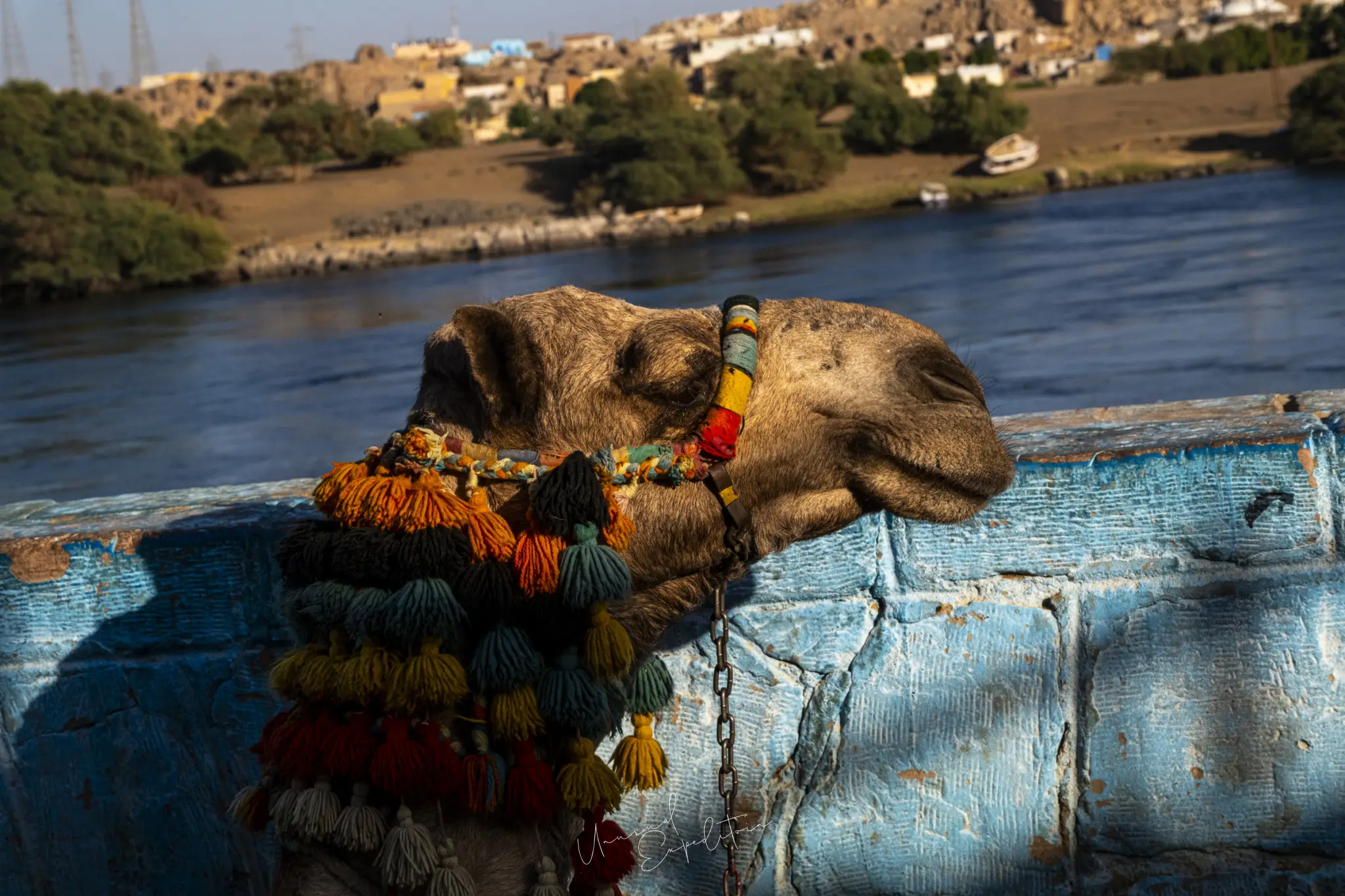
A Nubian village, Aswan's most colourful subject, is a riverside community of the Nubian people, whose homeland stretched along the Nile south of Aswan into Sudan, and for a photographer it means colour: houses painted sky blue, yellow and pink with geometric patterns, domed roofs, craft stalls, camels in tasselled harness and the Nile below. The villages most visitors see sit on the West Bank opposite the town, reached by boat, and they are best photographed in the soft light of morning or late afternoon, with patience and permission.
The villages are one of the subjects in our Aswan and Abu Simbel photography tour guide. Below: who the Nubians are, what you will see, and how we photograph people in the villages with respect.
What is a Nubian village?
A Nubian village is a settlement of the Nubians, a people with their own languages, music and building traditions who have lived along this stretch of the Nile for thousands of years. When the Aswan High Dam was built and Lake Nasser filled in the 1960s, much of old Nubia went under the water, and many Nubian communities were moved to new villages; UNESCO's own account of the Nubia campaign records the scale of the flooding, and the story of the people is told in Aswan's Nubian Museum. The villages around Aswan, Gharb Soheil being the best known to visitors, keep the traditional style: thick walls, courtyards, vaulted or domed roofs, and facades painted in bright colours and patterns that each family chooses. Nubian languages are still spoken at home, alongside Arabic, and many villagers work in tourism, boats and crafts.
Nubian village Aswan: what you photograph
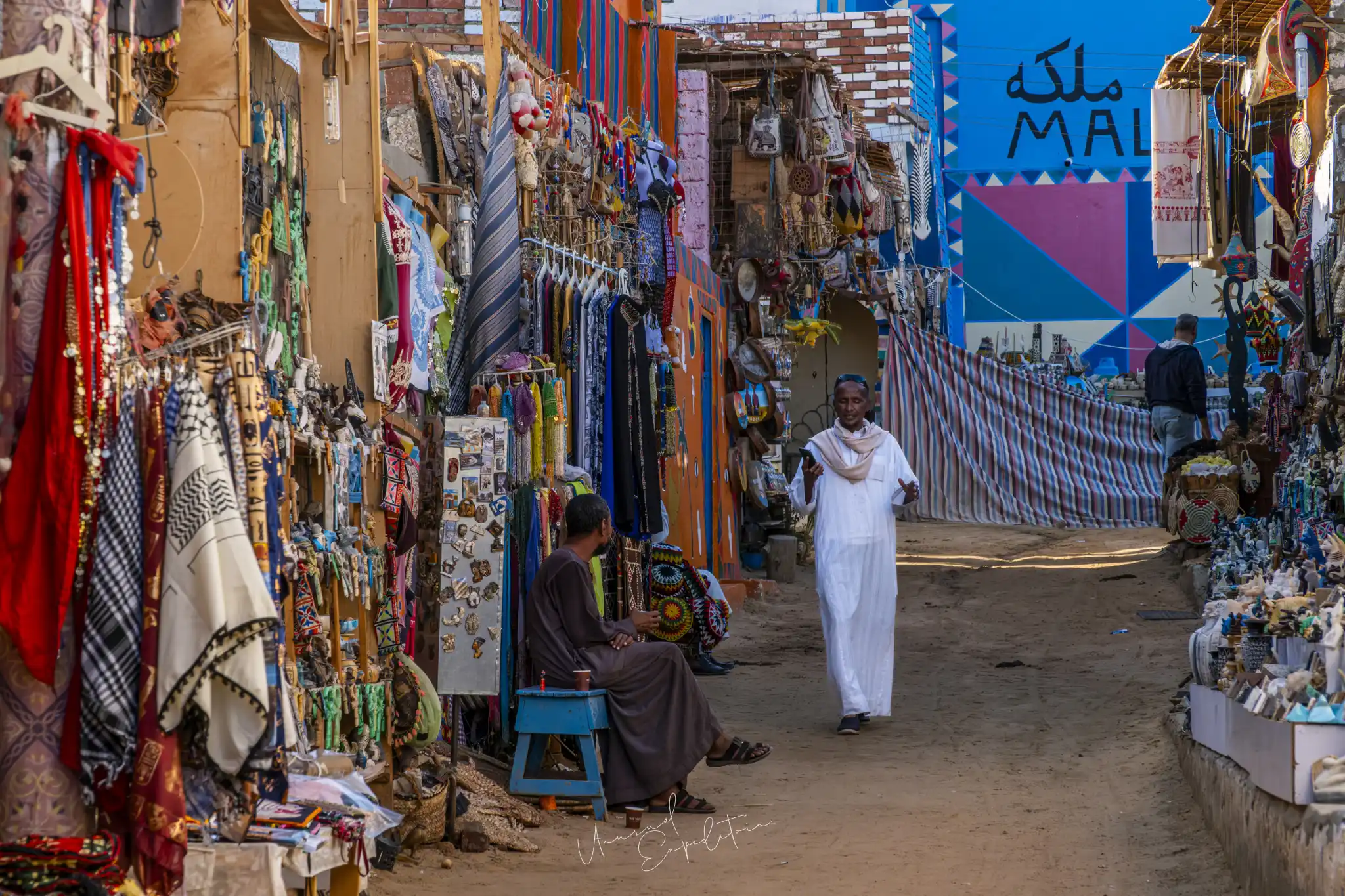
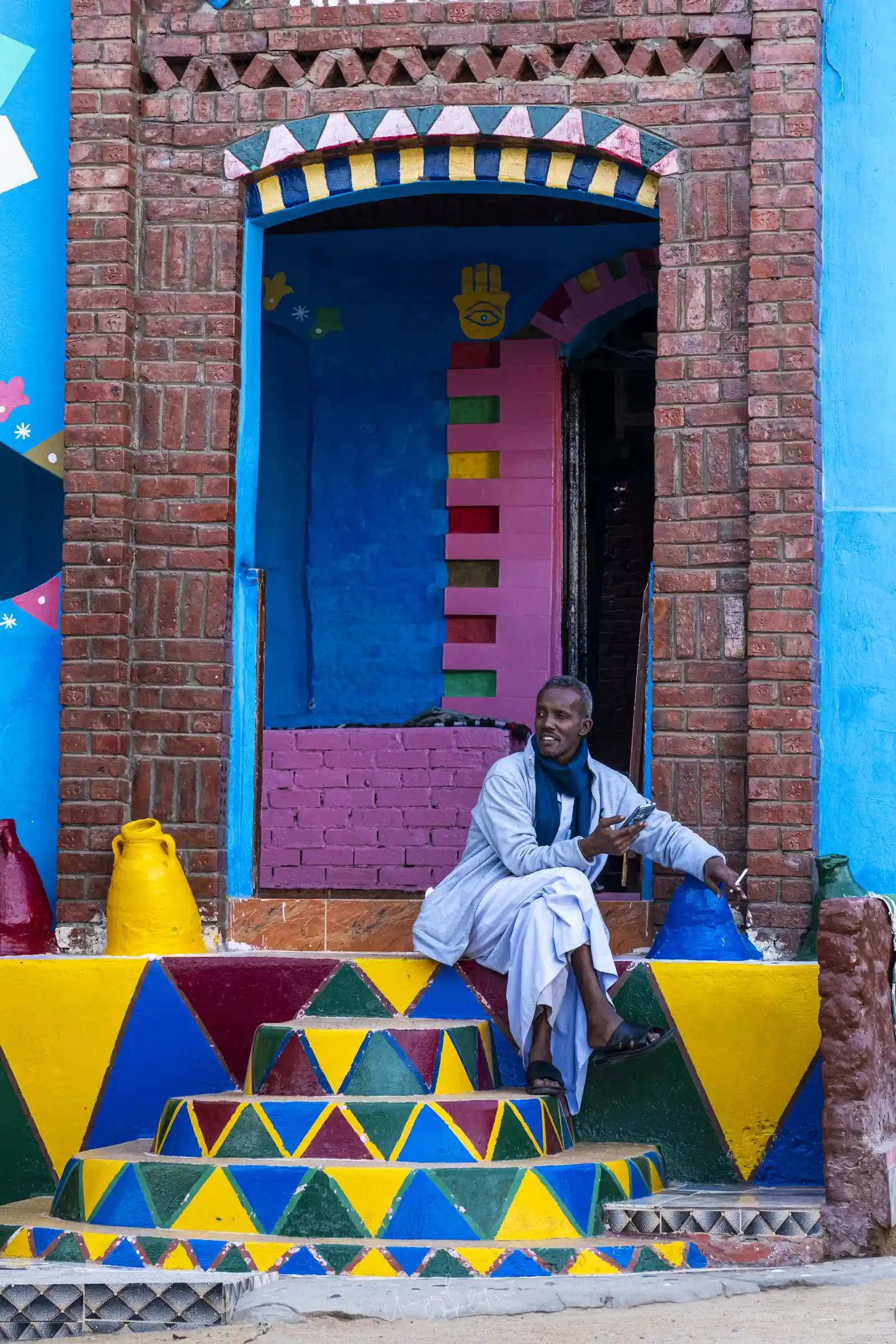
In a Nubian village near Aswan the pictures come in three kinds. First, the architecture: painted walls, doorways framed in triangles and stripes, steps tiled in colour, and blue walls against an even bluer sky. Second, the life of the lanes: craft stalls hung with scarves and baskets, men in galabiyas and turbans, camels resting by the river or waiting for riders. Third, the river itself, seen over the village walls, with sails passing and the dunes of the West Bank behind. A 24-70mm covers almost all of it. The colours are strong enough that midday light is not the end of the world here, but the lanes are prettiest when the sun is low and part of the street is in shade.
Photographing people with respect
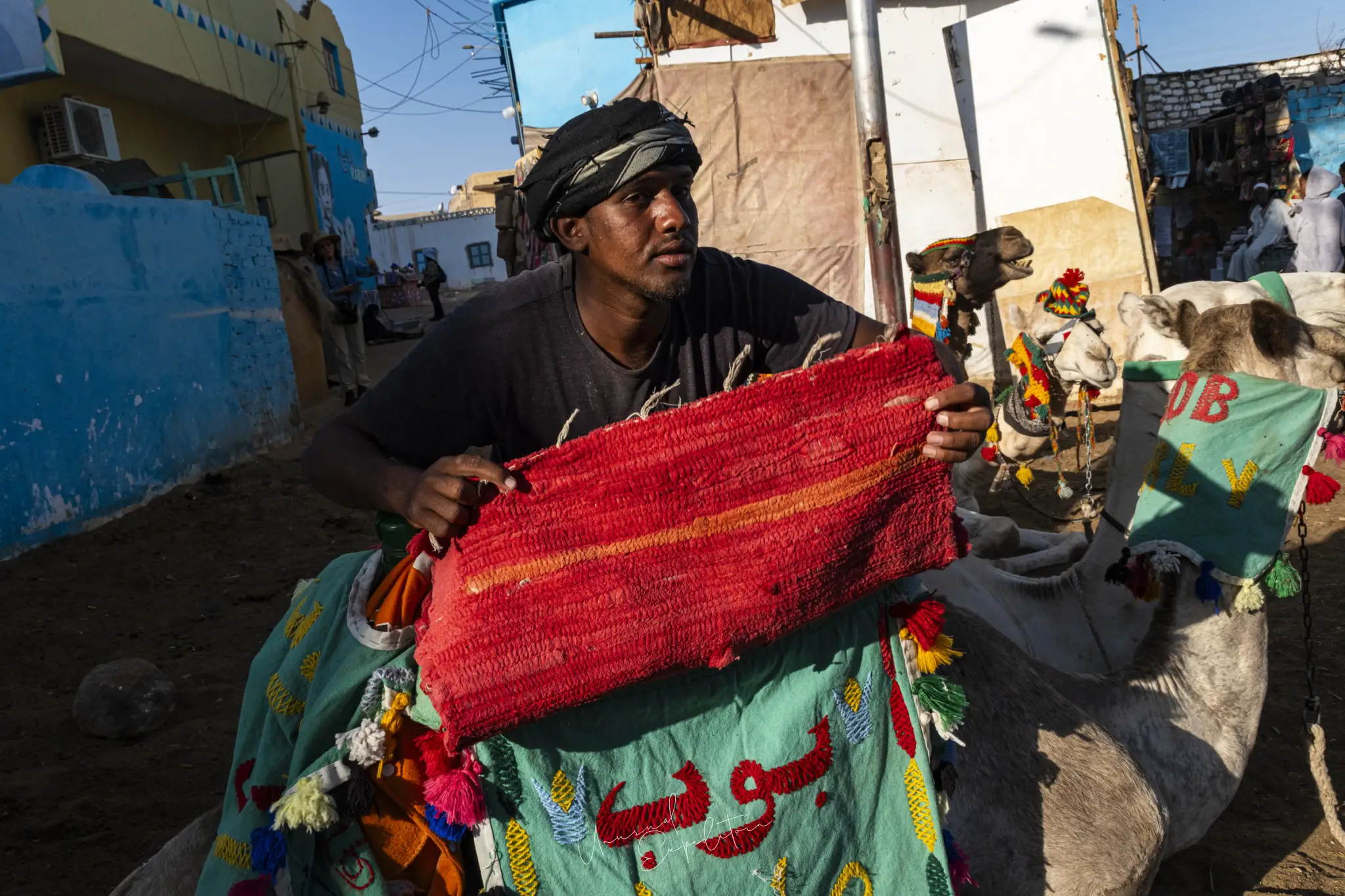
The villages are homes first and a visitor stop second, and how you photograph there matters. Ask before you photograph anyone, by gesture if you share no language, and accept a no. Many men working with camels or in the craft stalls are happy to be photographed, and some will pose; a small tip or buying something from a stall is the natural thanks. Women and children are a different matter: we do not photograph children, and we photograph women only when they clearly invite it. Show people the picture on the screen. Keep away from doorways and courtyards unless you are invited in. And remember that a family's painted house is their home, not a set; photograph the wall from the lane, not by walking up to the door.
| Subject | Approach | Light |
|---|---|---|
| Painted houses and doorways | From the lane, no people needed | Morning or late afternoon side light |
| Camels and their owners | Ask first, tip or ride | Shade of the lanes |
| Craft stalls | Buy something, then ask | Open shade |
| River view over the walls | From the riverside terraces | Late afternoon |
The pictures we value most from the villages came after a conversation, not before it.
Nubian village Aswan tour: how to get there
The Nubian villages on the West Bank are reached by boat from the Aswan Corniche, either a motorboat or, on a calm afternoon, a felucca, which makes the crossing part of the experience. The river trip passes Elephantine Island and the granite boulders of the cataract, and the dunes rise behind the village as you land. Visits are easy to arrange in Aswan with a boatman or a local guide. Our Aswan felucca guide covers the river, and the town's museum is the place to learn the history before you go: the Nubian Museum's galleries on the flooding of Nubia make the villages read very differently.
Colour and composition in the villages
The colour in a Nubian village is loud, and the best pictures simplify it. Look for one painted wall and a single figure, or a doorway framed by triangles and stripes with deep shade inside, rather than a whole lane of colour. Blue walls against the desert or the river give clean, strong contrasts. Shade is your friend: a lane half in sun and half in shadow lets the painted wall glow while the people stay in soft light. Keep the white balance neutral, because the colours do not need help, and watch the highlights on white galabiyas and walls in strong sun.
"In the Nubian villages I put the long lens away. You photograph people there from the distance of a handshake, after you have said hello, and the pictures are better for it."
Joseph Mak, tour leader, Unusual Expedition
Is a Nubian village worth visiting?
A visit to a Nubian village is worth it for the colour and for a side of Egypt that has nothing to do with pharaohs. Parts of the most visited villages are geared to tourists, with camel rides and stalls along the landing, but walk a few lanes back and you find painted houses, quiet courtyards and people going about their day. Go with time to talk and wander, not to tick off a stop. Afterwards, the Philae temple evening show is a short ride away, and the season is in the best time to visit Aswan.
Visit the Nubian villages with us
Our Egypt Photo Tour includes a boat to a Nubian village near Aswan, with Philae, Abu Simbel, Luxor, Cairo and Giza. The current departure is on the Egypt photography tours page.
Ask us about Aswan's Nubian villages
Join the Aswan and Abu Simbel photography tour
Egypt Photo Tour – Egypt departs 12 Dec 2026 To 20 Dec 2026, led by Joseph Mak. Small group, photography first. All Aswan and Abu Simbel photography tours.
Explore Aswan and Abu Simbel in depth
- Aswan and Abu Simbel Photography Tour Guide: Temples, Sails and VillagesEgypt
- Philae Temple, Aswan: Photographing the Temple of Isis by Day and NightEgypt
- Inside Abu Simbel Temple: The Great Hall, the Sanctuary and the CustodiansEgypt
- Best Time to Visit Aswan and Abu Simbel: Weather, Winter and the Sun FestivalEgypt
- Aswan Felucca: Photographing the Sails of the Nile and Elephantine IslandEgypt
- Abu Simbel Photos: Photographing the Great Temple and the Temple of NefertariEgypt
- Abu Simbel Sound and Light Show: Photographing the Temples at NightEgypt
Upcoming Photo Tours
- Egypt Photo Tour – EgyptEgypt 12 Dec 2026 To 20 Dec 2026
- Inner Mongolia Winter Owl Photo Tour – ChinaChina 01 Jan 2027 To 04 Jan 2027
- Inner Mongolia Winter Photo Tour – ChinaChina 05 Jan 2027 To 11 Jan 2027
- Mekong And Central Highland Vietnam Photo Tour - VietnamVietnam 16 Jan 2027 To 24 Jan 2027