
Aswan and Abu Simbel Photography Tour Guide: Temples, Sails and Villages
Aswan and Abu Simbel for photographers: the temples at sunrise and night, Philae, feluccas, Nubian villages, rules and gear.
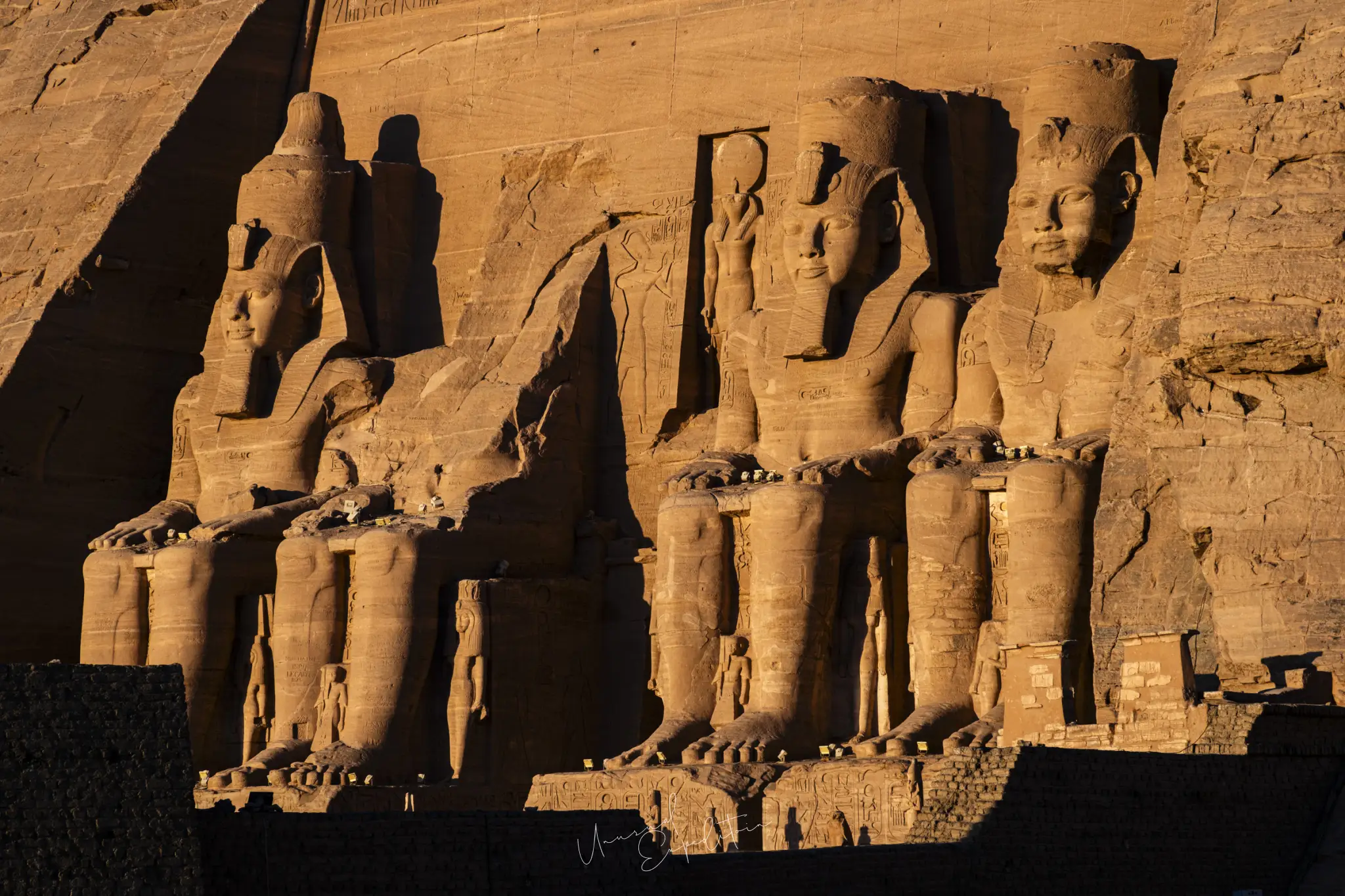
Aswan, Abu Simbel and the Nile between them make the softest and most varied stretch of Egypt to photograph: white felucca sails on dark water among granite islands, Nubian villages painted blue and yellow, the island temple of Philae, and, far to the south on Lake Nasser, the two rock temples of Ramesses II at Abu Simbel, whose colossi turn gold at sunrise. Where Luxor is monumental, Aswan is about the river, the people and the light.
This area guide is part of our Egypt photography tour guide, which covers entry, money, flights and the rest of the country. The photographs in this guide are our own, taken on our trips here; we hold the rights to them, and the notes come from knowing these places first hand. The seven destination guides linked below go into each subject in detail.
Aswan photos: what the area looks like
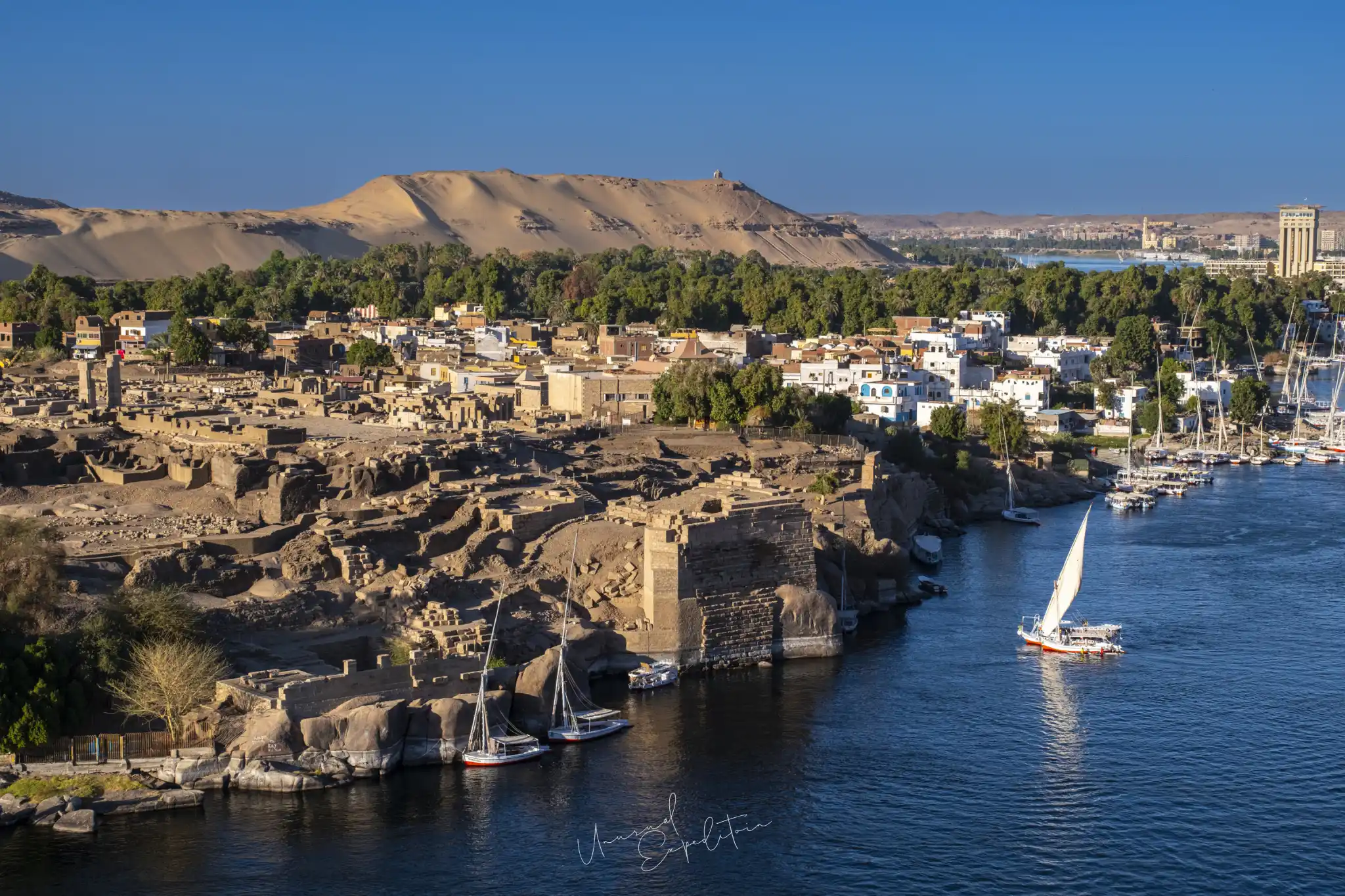
Aswan photos are mostly about the Nile at its most beautiful. Here the river runs through the First Cataract, a broken stretch of granite boulders and islands, with the golden dunes of the Western Desert rising straight from the far bank. Elephantine Island sits in the middle of the town, covered in the ruins of ancient Yebu and palm groves, and feluccas cross back and forth all day. On the West Bank, Nubian villages climb the slope in painted houses. South of the town the old Aswan Dam holds the reservoir around Philae, and the High Dam beyond it holds back Lake Nasser, on whose shore, near the border with Sudan, stand the temples of Abu Simbel. UNESCO lists the whole chain as the Nubian Monuments from Abu Simbel to Philae, a World Heritage Site. For a photographer the range is wide: architecture at sunrise, sails and water in the afternoon, people and colour in the villages and temples lit after dark.
Abu Simbel: the temples Ramesses II cut into the rock
Abu Simbel is two temples cut into a sandstone hill: the Great Temple of Ramesses II, fronted by four seated colossi about 20 metres high, and the smaller temple of his queen Nefertari, dedicated to Hathor, with six standing statues. In the 1960s an international campaign led by UNESCO cut both temples into blocks and rebuilt them on higher ground, out of reach of the rising Lake Nasser; UNESCO records the new site opening in 1968. The facades face east, so sunrise is the time for them. Our Abu Simbel photos guide covers the facades, inside Abu Simbel temple the halls and their custodians, and the Abu Simbel sound and light show guide the temples at night.
Philae, the felucca and the Nubian villages
Around Aswan itself the subjects are close together. Philae, the temple of Isis, was moved stone by stone to the island of Agilkia in the 1970s and is reached by boat; read Philae temple for the island by day and its evening show. The felucca, the lateen-sailed boat of the Nile, is the picture of Aswan, from the water or from above, in our Aswan felucca guide. And the Nubian villages on the West Bank, with their painted walls and camels, are covered with notes on photographing people with respect in Nubian village Aswan.
| Subject | Where | Best light |
|---|---|---|
| Colossi of Ramesses II | Abu Simbel, Lake Nasser | Sunrise on the east-facing facades |
| Temples floodlit | Abu Simbel and Philae | After dark, during the shows |
| Feluccas and islands | The Nile at Aswan, Elephantine | Late afternoon |
| Painted houses and people | Nubian villages, West Bank | Morning or late afternoon |
| Sunset over water | Lake Nasser at Abu Simbel | Sunset |
Abu Simbel wants a sunrise and a night of its own, and Aswan fills the rest of the time with water and colour.
Luxor vs Aswan
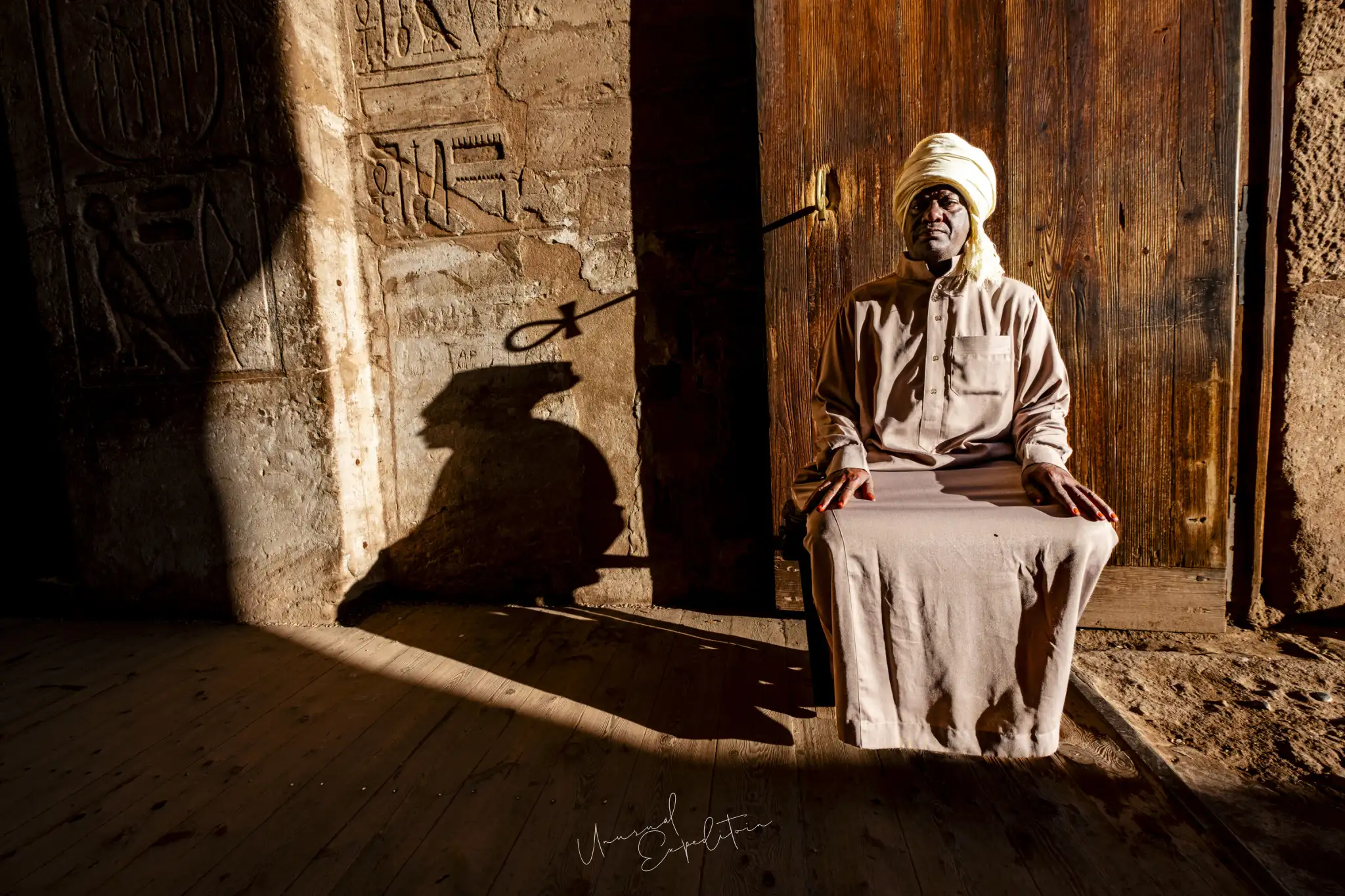
Luxor vs Aswan is a common question, and for photographers the answer is both, because they give different pictures. Luxor is temples on a grand scale, Karnak, Luxor Temple and the West Bank, and its light is about stone. Aswan is gentler and more varied, with the river, the sails, the villages and the islands, plus Abu Simbel as the great temple subject of the south. Many travellers sail between them on a Nile cruise; others fly or take the train. Our Luxor photography tour guide covers the northern half, the Cairo and Giza photography tour guide the capital and the pyramids, and the season for both is in the best time to visit Aswan.
Aswan, Abu Simbel and the photography rules
Egypt's Supreme Council of Antiquities allows personal photography with phones and cameras, without flash, at the sites run by the Ministry of Tourism and Antiquities, including inside the temples at Abu Simbel. The UK Foreign, Commonwealth and Development Office says professional photography or film equipment needs a permit, and as at November 2026 its advice names Aswan and Abu Simbel among the places it does not advise against. Singapore's Ministry of Foreign Affairs describes the security situation in Egypt as stable and reminds visitors that drones need prior permission from the Egyptian Civil Aviation Authority and that security personnel and checkpoints must not be photographed. The country pillar has the full entry and advisory notes.
"Aswan is where a trip slows down. After the temples of Luxor, people put the wide lens away, sit on a terrace above the river and photograph sails for an hour, and those are often the pictures they love most."
Joseph Mak, tour leader, Unusual Expedition
Camera gear for Aswan and Abu Simbel
A 24-70mm covers the villages, Philae and most of the river. A wide zoom such as a 16-35mm is for the facades and the halls at Abu Simbel, where you stand close below the colossi. A 70-200mm is the felucca lens, picking single sails out of the river from a terrace or the bank. For the night shows, bring a fast lens and expect to work at high ISO; a small tripod or beanbag helps where the crowd allows. Dust and fine sand get everywhere, so change lenses with care.
Explore Aswan and Abu Simbel in depth
- Abu Simbel photos: the two temples
- Inside Abu Simbel temple
- Abu Simbel sound and light show
- Philae temple, Aswan
- Aswan felucca and Elephantine Island
- Nubian village, Aswan
- Best time to visit Aswan and the Abu Simbel sun festival
Photograph Aswan and Abu Simbel with us
Our Egypt Photo Tour covers Abu Simbel and its evening sound and light show, Aswan's Nubian villages and Philae, then Luxor, Cairo and Giza. Fares are indicatively S$8,800 to S$10,500 per person depending on the room; the current rate and departure are on the Egypt photography tours page. We also arrange private tours for individuals, couples, families and photographers who want their own pace.
Ask us about Aswan and Abu Simbel
Join the Aswan and Abu Simbel photography tour
Egypt Photo Tour – Egypt departs 12 Dec 2026 To 20 Dec 2026, led by Joseph Mak. Small group, photography first. All Aswan and Abu Simbel photography tours.
Explore Aswan and Abu Simbel in depth
- Philae Temple, Aswan: Photographing the Temple of Isis by Day and NightEgypt
- Nubian Village, Aswan: Photographing Colour and People with RespectEgypt
- Inside Abu Simbel Temple: The Great Hall, the Sanctuary and the CustodiansEgypt
- Best Time to Visit Aswan and Abu Simbel: Weather, Winter and the Sun FestivalEgypt
- Aswan Felucca: Photographing the Sails of the Nile and Elephantine IslandEgypt
- Abu Simbel Photos: Photographing the Great Temple and the Temple of NefertariEgypt
- Abu Simbel Sound and Light Show: Photographing the Temples at NightEgypt
Upcoming Photo Tours
- Egypt Photo Tour – EgyptEgypt 12 Dec 2026 To 20 Dec 2026
- Inner Mongolia Winter Owl Photo Tour – ChinaChina 01 Jan 2027 To 04 Jan 2027
- Inner Mongolia Winter Photo Tour – ChinaChina 05 Jan 2027 To 11 Jan 2027
- Mekong And Central Highland Vietnam Photo Tour - VietnamVietnam 16 Jan 2027 To 24 Jan 2027