
Jordan Photography Tour Guide: Petra, Wadi Rum, the Dead Sea and Amman
Jordan photography tour guide: Petra, Wadi Rum, the Dead Sea, Amman and Jerash, the best light for each, entry and advisories.
A Jordan photography tour puts some of the Middle East's strongest pictures within one small country: the rock-cut city of Petra, the red sand and sandstone towers of Wadi Rum, the salt shore of the Dead Sea, the Roman streets of Jerash and the hills of Amman. Distances are short, the light is clean for much of the year and the Bedouin hospitality is real. This page is the overview of our Jordan destination guides, with Petra covered in depth in its own set of articles.
The photographs in this guide are our own, taken on our trips to Jordan; we hold the rights to them, and the notes come from knowing these places first hand. For the rose city itself, start with the Petra photography tour guide, which links eight articles on the Siq, the Treasury, the Monastery, Little Petra and the people who live around them.
Jordan photography: what the country gives a photographer
Jordan photography is mostly about stone and light. Nabataean facades cut into pink and orange sandstone at Petra, desert jebels that turn red in the last half hour of the day at Wadi Rum, white salt crusts on the shore of the Dead Sea and pale Roman columns at Jerash all respond to low, warm sun. Between them sit the people: Bedouin camel herders, tea makers and musicians, market traders in downtown Amman. In practice that means two kinds of work on every day of a trip. Wide landscapes and architecture at the edges of the day, and portraits and street pictures in the softer hours when the sun is high and the canyons are in shade. A 24-70mm covers most of it; a 16-35mm earns its place in the Siq and inside the tombs, and a 70-200mm is the lens for camels on a ridge and for portraits.
Photography in Jordan, region by region
Photography in Jordan divides neatly into five regions, each with its own character and its own best light.
| Region | What you photograph | Best light |
|---|---|---|
| Petra and Little Petra | The Siq, the Treasury, the Monastery, royal tombs, Bedouin life | Morning in the Siq, afternoon at the Monastery, Petra by Night |
| Wadi Rum | Sandstone jebels, red dunes, rock bridges, camel caravans, desert camps | The last hour before sunset and blue hour |
| Dead Sea | Salt formations, mirror-calm water, the hills of the far shore | Sunset and dusk |
| Amman and Jerash | The Citadel, the Roman Theatre, downtown souqs, Jerash's arch and colonnades | Sunset on the Citadel, golden hour at Jerash |
| Kerak, Dana and the King's Highway | Crusader castle, stone village above a canyon reserve | Late afternoon |
Petra is the only region with enough material for a long stay on its own; the others reward one or two well-timed sessions each.
Petra, the rose city
Petra was the capital of the Nabataeans and has been a UNESCO World Heritage Site since 1985, according to Jordan's Department of Antiquities. You walk in through the Siq, a narrow gorge of about 1.2 kilometres, and arrive at the Treasury, the facade every visitor has seen in pictures. Beyond it the valley opens into the Street of Facades, the theatre, the royal tombs and the Colonnaded Street, and a long stair climbs to the Monastery. Our Petra photo spots article lists where to stand, and the best time to visit Petra explains why the Treasury is a morning picture and the Monastery an afternoon one.
Wadi Rum: the desert of red sand
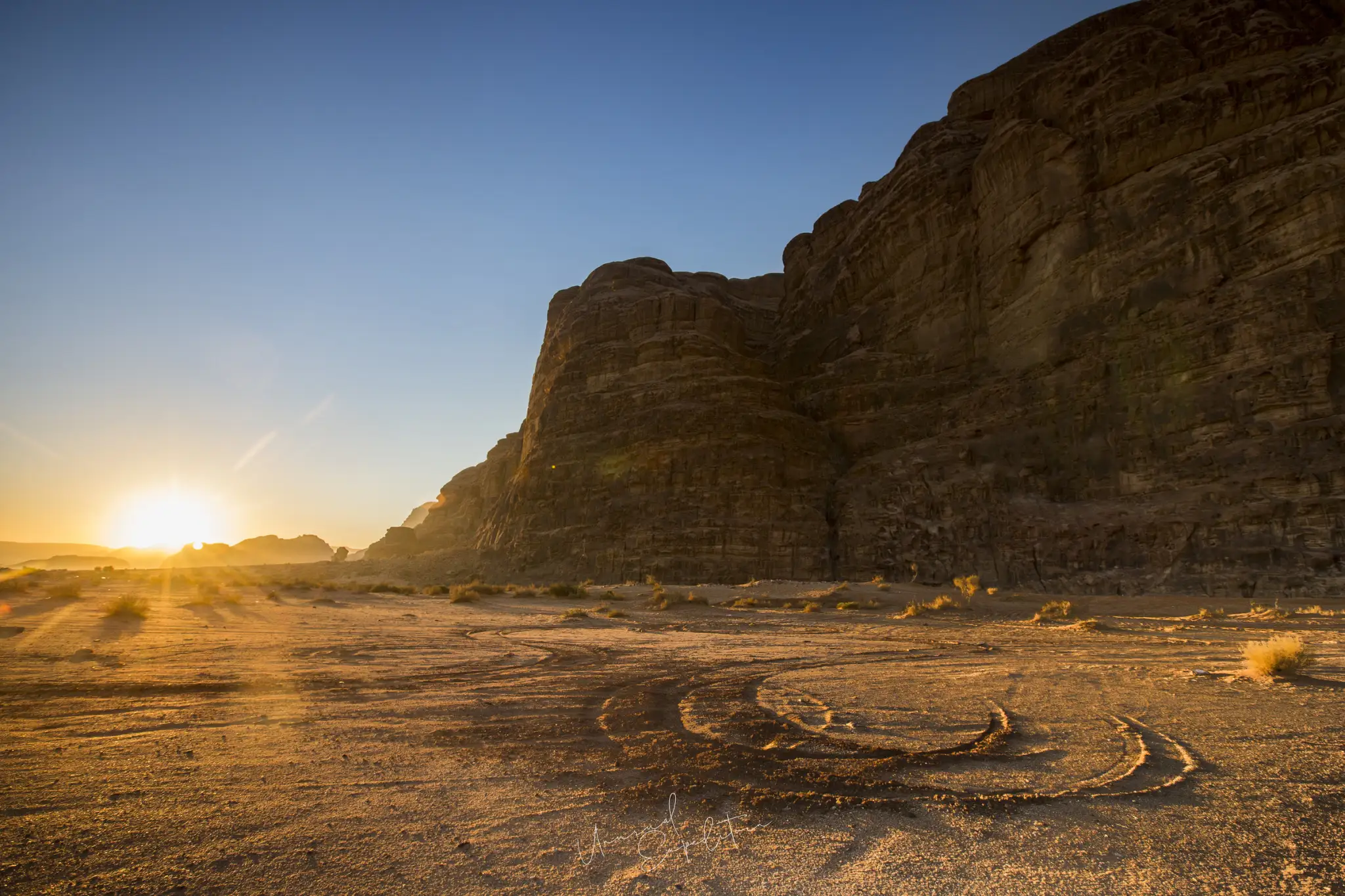
Wadi Rum is a protected desert of sandstone and granite mountains in the south of Jordan, listed by UNESCO in 2011 as a mixed natural and cultural site. For a photographer it is a place of scale and colour: sheer jebels rising from red sand, natural rock bridges, carved inscriptions and camels moving slowly across open valleys. The light is flat at midday and extraordinary at the end of the day, when the cliffs glow and the shadows stretch across the sand. Nights are dark enough for stars when the moon is down. Wadi Rum will get its own cluster of destination guides; until then the Jordan articles here cover it in outline. Wadi Rum now has its own area guide, the Wadi Rum photography tour guide, with separate articles on its sunsets, night skies, Bedouin camps, camels and jeep tours.
The Dead Sea, more than 400 metres below sea level
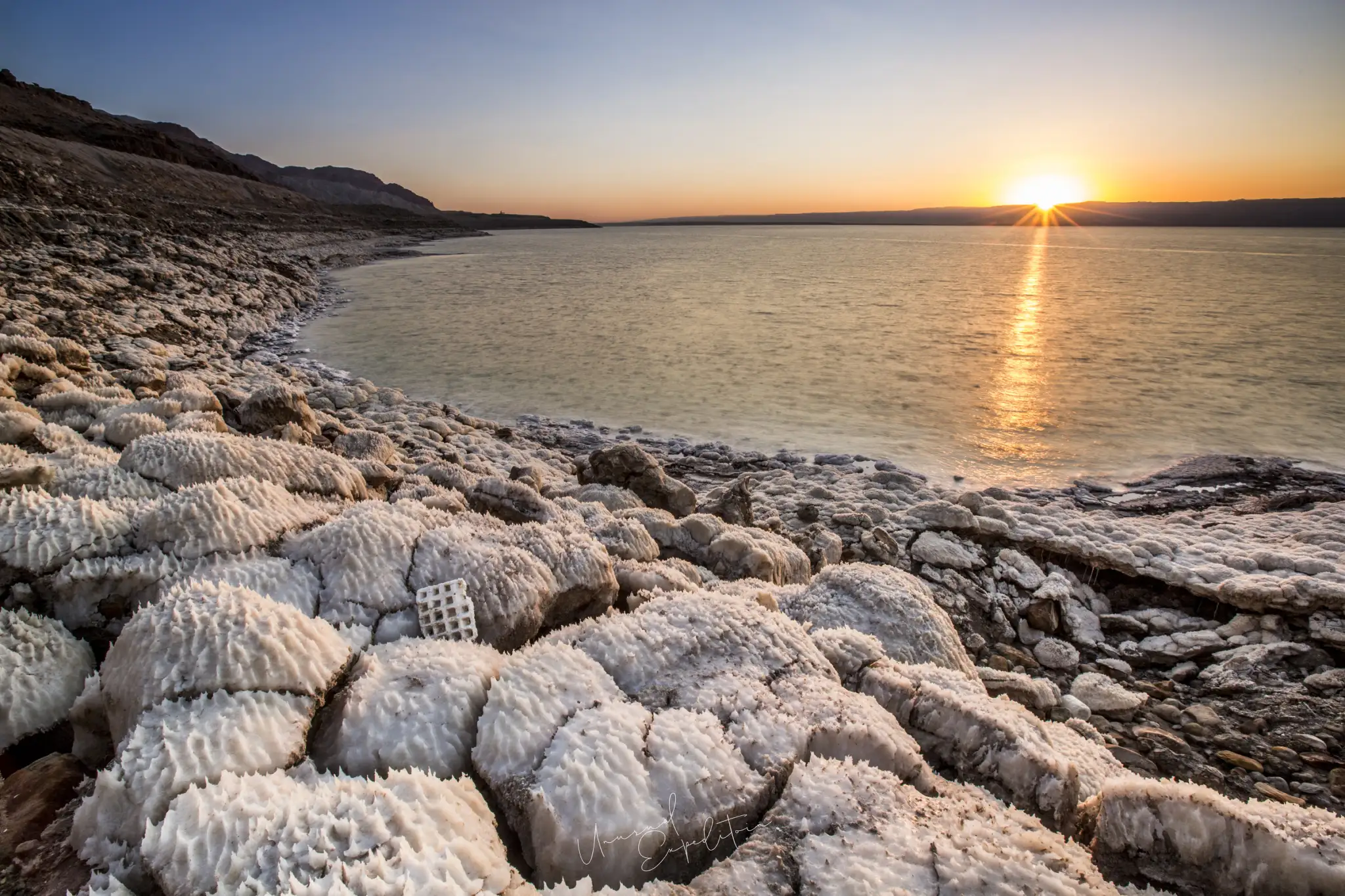
The Dead Sea shore is the lowest land on earth, more than 400 metres below sea level. On the Jordanian side the falling water has left terraces and cauliflower-like crusts of white salt along the beach, and at sunset the water often goes still, so the salt, the sky and the hills of the far shore come together in soft pastel colour. It is one of the few places where the best picture is often after the sun has gone. Bring a tripod for the long exposures and something to rinse your shoes and tripod legs: the salt is sharp and it corrodes. Our Dead Sea photography tour guide covers the salt formations, sunset over the water, the falling shore and how to get there from Amman.
Jordan pictures from Amman and the north
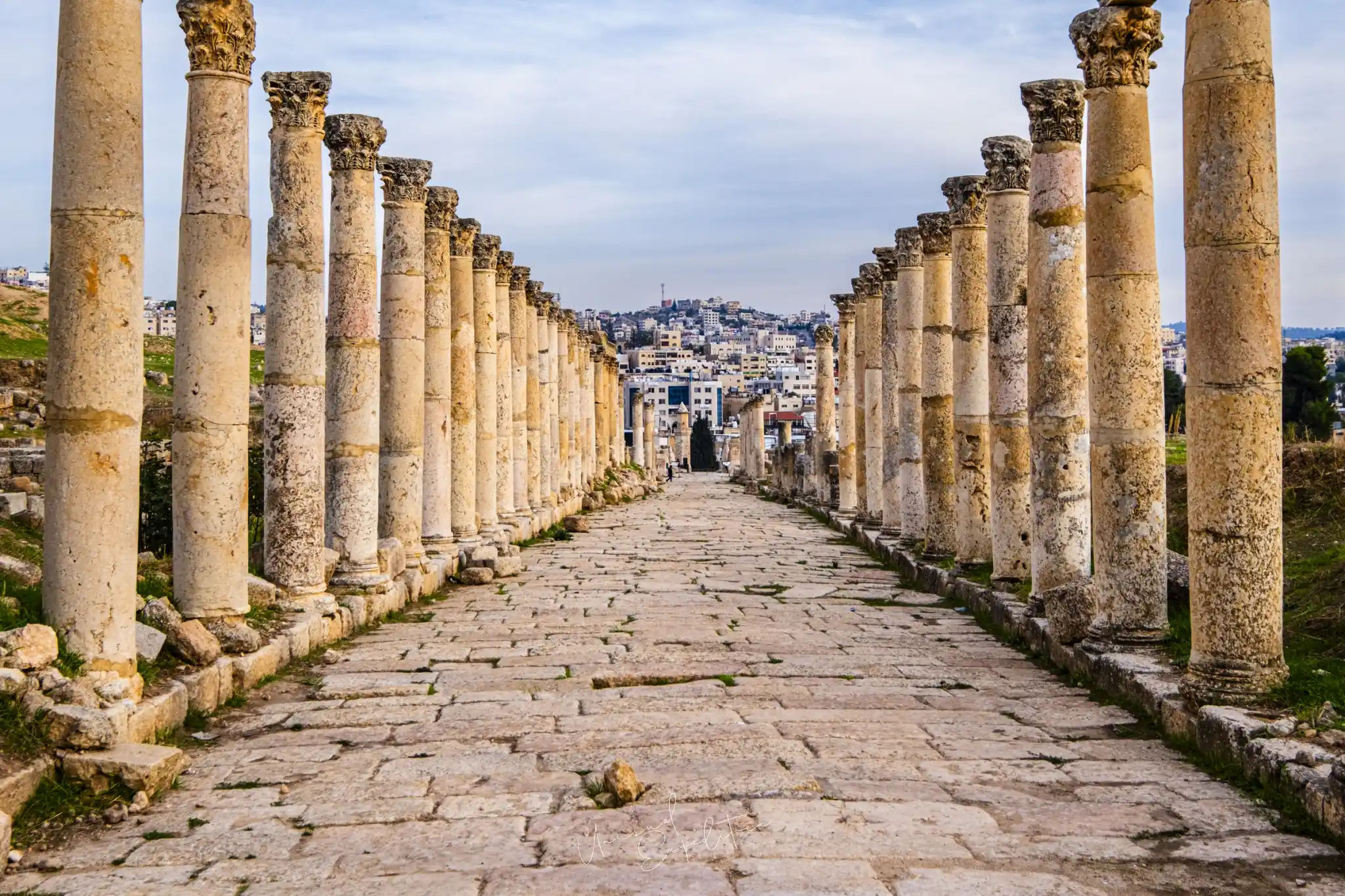
Amman is where most trips begin and end, and it deserves more than a night in transit. The Citadel hill gives a view over the Roman Theatre and the white houses that cover the surrounding hills, best at sunset and into blue hour, and the downtown souq around the theatre is full of fruit stalls, spice sellers and people happy to talk. North of the capital, Jerash is one of the best preserved Roman provincial cities anywhere, with Hadrian's Arch, the Oval Plaza and a long colonnaded street that glows in late light. Our best time to photograph Jordan article has a month by month table across all these regions. Our Amman and Jerash photography tour guide covers the Citadel at sunset, the Roman Theatre at blue hour, the downtown souqs and the Roman city of Jerash in detail.
Kerak, Dana and the King's Highway
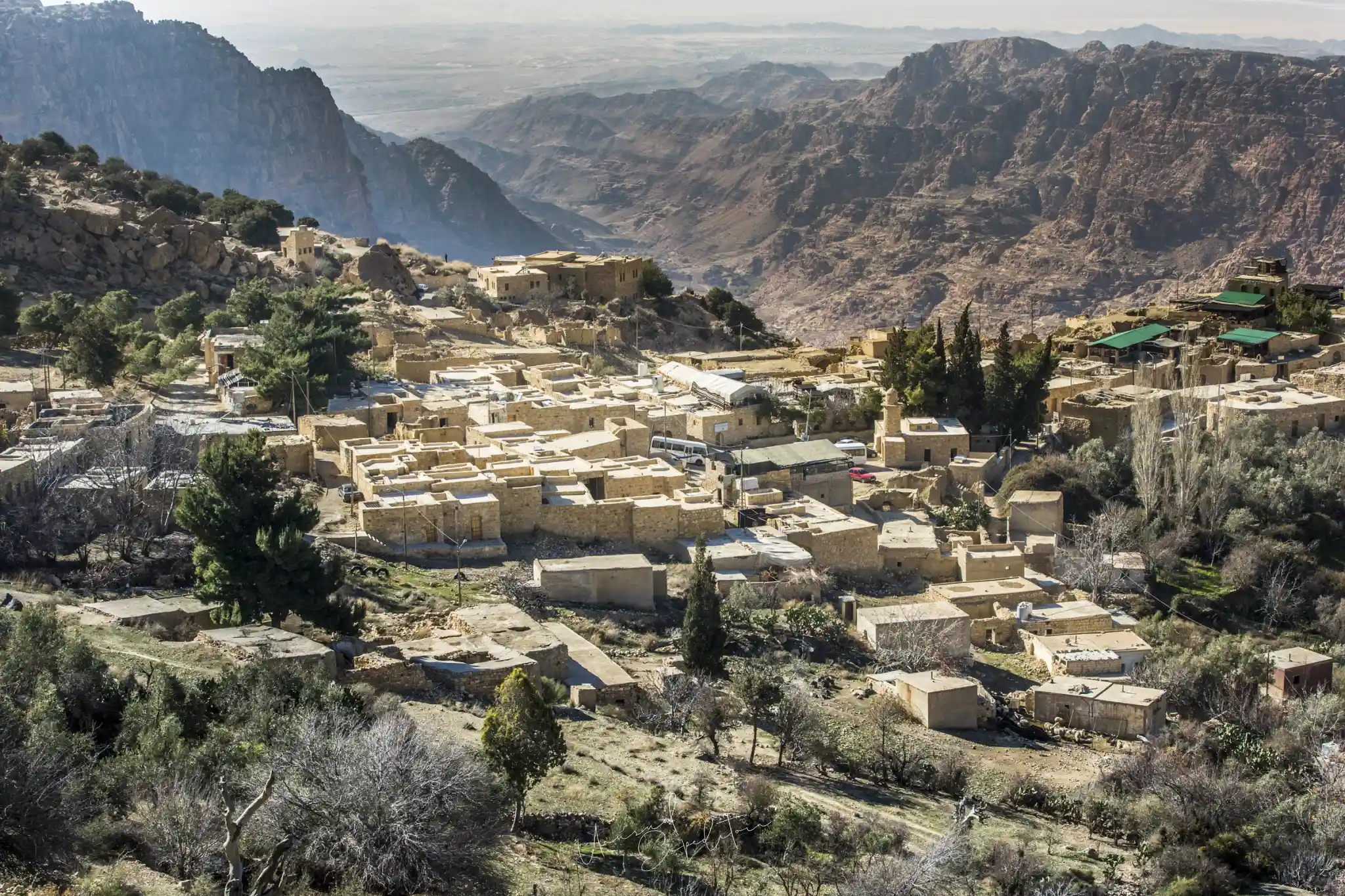
The King's Highway runs south from Amman along the edge of the plateau, past Madaba's mosaics, the Crusader castle at Kerak and the stone village of Dana above the Dana Biosphere Reserve, before it reaches Petra. It is slower than the Desert Highway and far more photogenic. Kerak Castle sits on a spur above the town and the valley, with vaulted halls you can walk through; Dana is an old village of stone houses on a ridge, looking down a canyon that falls towards the Wadi Araba.
"Jordan surprised me with how much it gives in a small space. You can photograph Roman columns in the morning and salt at dusk the same week you sit with a Bedouin family in Wadi Rum, and none of it feels staged."
Joseph Mak, tour leader, Unusual Expedition
Entry, money and the Jordan Pass
Singapore passport holders can get a visa on arrival in Jordan, according to Singapore's Ministry of Foreign Affairs, which also advises checking with the Embassy of Jordan because requirements change. Most visitors buy the Jordan Pass before they fly: it includes entry to Petra and many other sites and waives the visa fee if you stay a minimum number of nights, which the pass website sets out. The currency is the Jordanian dinar; cards work in hotels and larger shops, but carry cash for Bedouin camps, tea stops and small purchases. The full detail for Singapore travellers, including flights and the current travel advisories, is in our Jordan entry and visa guide, and the practical questions are answered in the Jordan photography trip FAQ.
Is Jordan safe to visit right now?
Read the official advice before you plan. As at November 2026, Singapore's Ministry of Foreign Affairs still shows its advisory of March 2026 asking Singaporeans to defer travel to the Middle East region, while the UK Foreign, Commonwealth and Development Office advises against travel only within three kilometres of the Syrian border. Both change, so we check them again before every departure and adjust plans with our local partners when needed.
Explore Jordan by region
- Petra photography tour guide
- Petra photo spots
- Best time to visit Petra
- Petra by Night
- Petra Monastery (Ad Deir)
- Little Petra (Siq al-Barid)
- Petra Bedouin
- How to get to Petra
- Wadi Rum photography tour guide: Jordan's desert of red sand and stone
- Amman and Jerash photography tour guide
- Dead Sea photography tour guide
- Best time to photograph Jordan
- Jordan photography trip FAQ
- Do you need a visa for Jordan?
Photograph Jordan with us
We do not have a scheduled Jordan departure at the moment, so we run Jordan as a private trip on request: for individuals, couples, families and photographers who want to travel at their own pace. We arrange all the logistics to your needs, the cost can be lower than our group tours because no tour leader travels, and a photographer or photography coaching can be added at extra cost. Ask at least two months ahead if you can, though last-minute trips can be arranged. See our private tours and the Jordan photography tours page for any departure we announce.
Jordan photography tours
The next Jordan departure is announced on the Jordan photography tours page, with previous expeditions and all the planning guides.
Explore Jordan in depth
- Do You Need a Visa for Jordan? Entry, Jordan Pass, Flights and Travel AdviceJordan
- Jordan Photography Trip FAQ: Safety, Jordan Pass, Days and GearJordan
- Best Time to Visit Jordan for Photography: A Month by Month GuideJordan
Upcoming Photo Tours
- Egypt Photo Tour – EgyptEgypt 12 Dec 2026 To 20 Dec 2026
- Inner Mongolia Winter Owl Photo Tour – ChinaChina 01 Jan 2027 To 04 Jan 2027
- Inner Mongolia Winter Photo Tour – ChinaChina 05 Jan 2027 To 11 Jan 2027
- Mekong And Central Highland Vietnam Photo Tour - VietnamVietnam 16 Jan 2027 To 24 Jan 2027