
Places to See in Kyrgyzstan: Photo Spots Around Issyk-Kul
Places to see in Kyrgyzstan with a camera: Issyk-Kul beaches, Karakol's cathedral and mosque, Jeti-Oguz, gorges, eagles, Skazka.
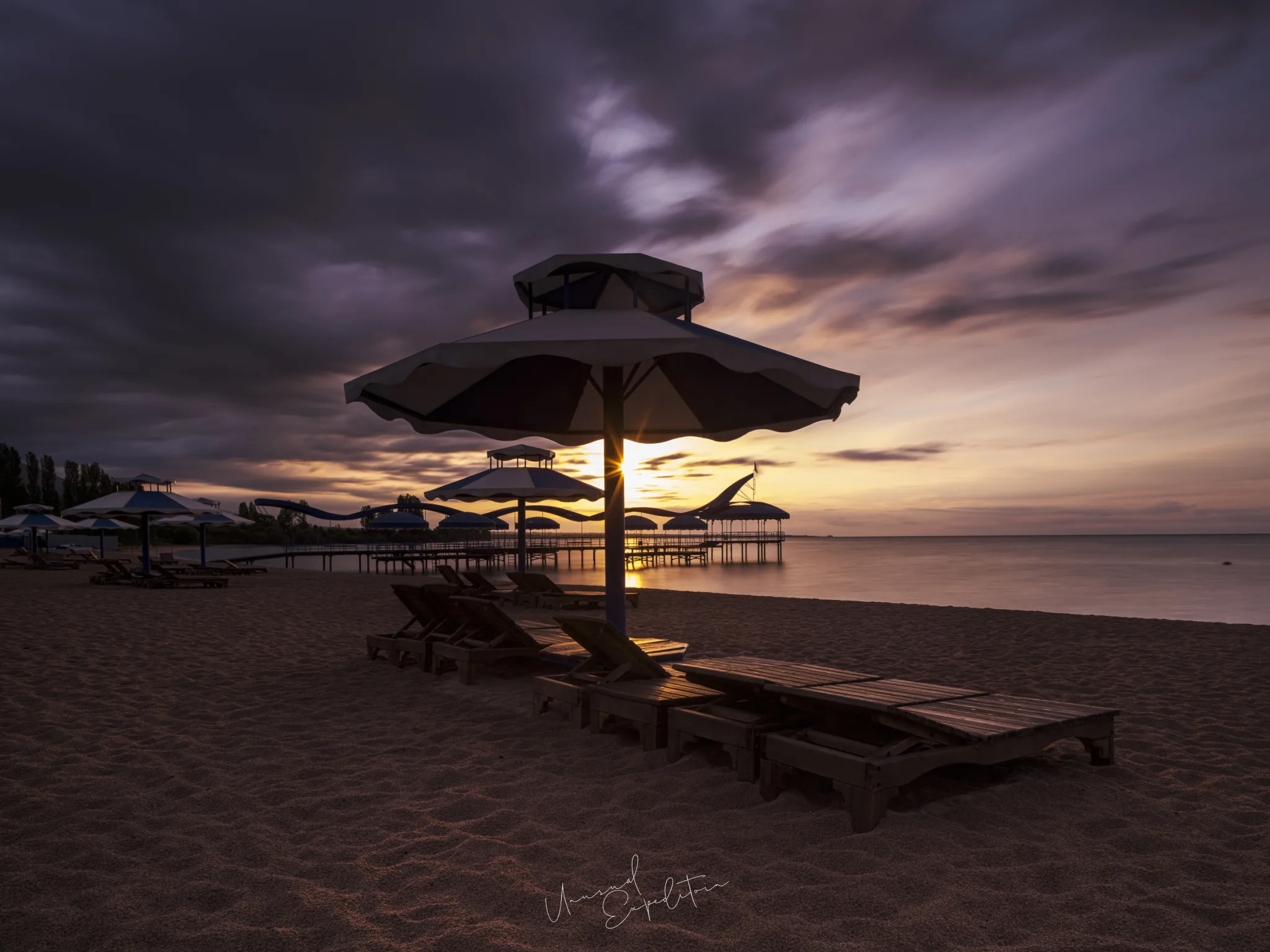
The places to see in Kyrgyzstan with a camera cluster around Issyk-Kul: the lake's beaches in the first and last light, the wooden Holy Trinity Cathedral and the Dungan Mosque in Karakol, the red sandstone of Jeti-Oguz, the gorges where horsemen ride down to the shore, the eagle hunters' demonstration grounds and the eroded clay of Skazka canyon. They sit close enough together that you can wait for the right light at each one instead of rushing past.
This spot guide is part of our Kyrgyzstan photography tour guide. It covers where to stand, which way the light falls, the lens, and the rules at each place. Spots we photographed on our late-summer trip lead; the rest are described from public sources and say so.
Places to see in Kyrgyzstan around Issyk-Kul
Issyk-Kul fills a basin in the northern Tien Shan, and Britannica counts it among the largest mountain lakes in the world; its Kyrgyz name means "hot lake" because it does not freeze in winter. Karakol, at the eastern end, is the town most visitors use as a base for the mountains and gorges of the south shore. For a photographer the region works because so many different subjects are close together: water, wooden churches, red rock, horses and eagles. The table compares the spots.
| Spot | Subject | Best light | Lens | We photographed it |
|---|---|---|---|---|
| Issyk-Kul beaches | Piers, umbrellas, water, sky | Before sunrise and after sunset | 24-70mm on a tripod | Yes |
| Holy Trinity Cathedral, Karakol | Wooden walls, green domes, roses | Morning and late afternoon | 24-70mm | Yes |
| Dungan Mosque, Karakol | Carved timber, pagoda roof | Soft or side light | 24-70mm | No |
| Jeti-Oguz | Red cliffs, farmhouses | Late afternoon | 24-70mm and 70-200mm | Yes |
| Gorges above the lake | Horsemen, green valleys | Morning | 24-70mm | Yes |
| Eagle demonstrations | Berkutchi and golden eagle | Clear sky, sun behind you | 24-70mm and 100-400mm | Yes |
| Skazka canyon | Eroded clay ridges, lake view | Late afternoon | 24-70mm | No |
Two of the seven are in Karakol itself, which makes the town the natural base.
The Issyk-Kul beaches at either end of the day
The resort beaches of Issyk-Kul are crowded and bright in the middle of a summer day and almost empty before sunrise and after sunset, which is when they become a photo spot. Wooden piers running into flat water, rows of sun loungers and wide beach umbrellas make strong shapes against a coloured sky. Put the camera on a tripod, use a dark filter and a long exposure so the water turns to glass and the clouds streak, and keep the horizon level. A 24-70mm covers both a single umbrella in silhouette and the long line of the pier. Resorts are private ground, so ask at the gate before you walk in with a tripod. Our best time to photograph Kyrgyzstan guide explains how the seasons change the lake.
Holy Trinity Cathedral, Karakol
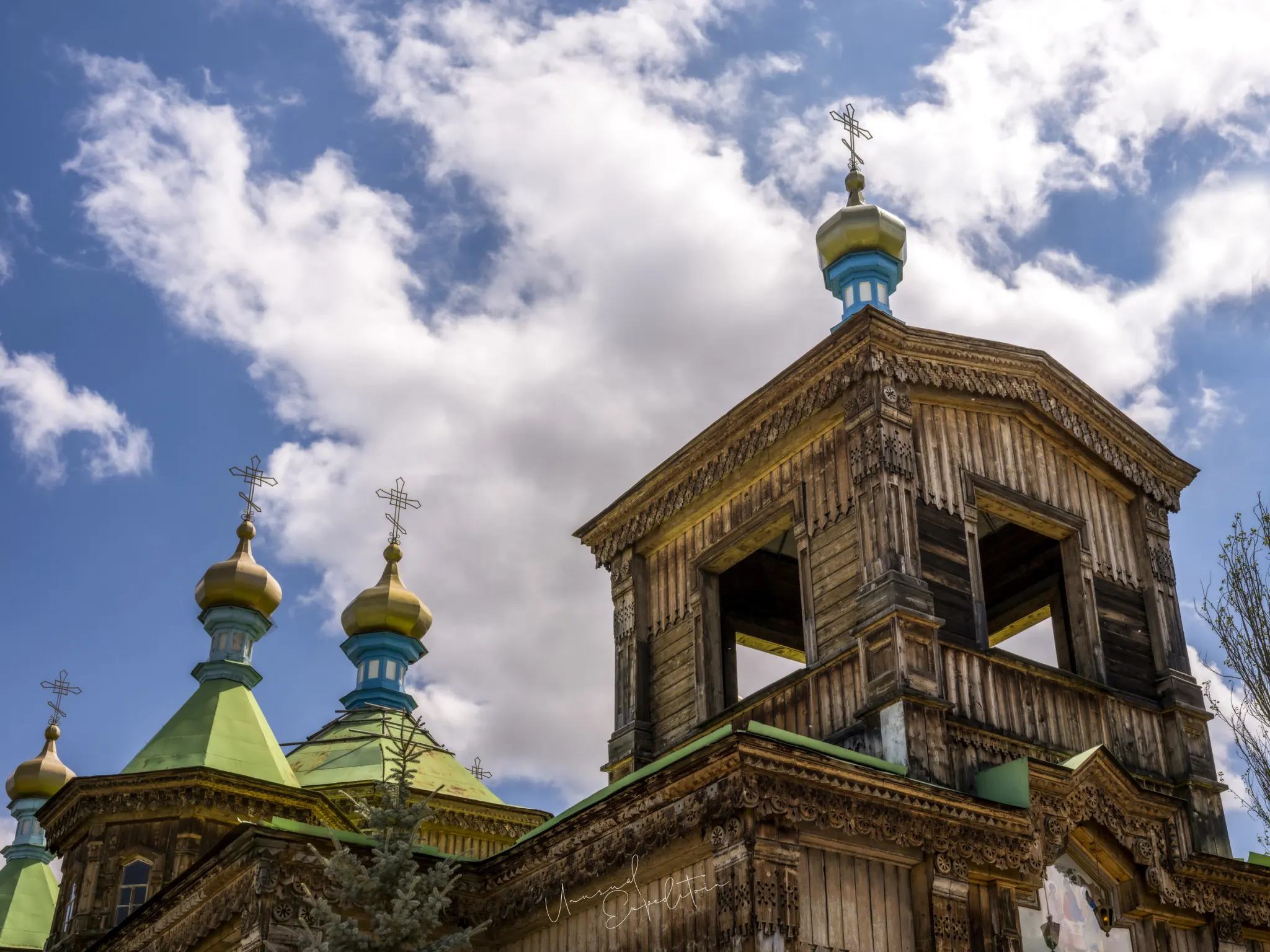
Holy Trinity Cathedral is a wooden Orthodox church on a brick base in the middle of Karakol, completed in 1895 after an earthquake destroyed the earlier stone church, according to Lonely Planet. Its green onion domes and carved wooden walls stand in a churchyard full of roses in summer. The strongest frames come from low down with a 24-70mm, looking up so the domes sit against the sky, in morning or late-afternoon side light that brings out the grain of the wood. It is a working church: dress modestly, and ask before photographing inside or during a service.
The Dungan Mosque in Karakol
A short walk from the cathedral, the Dungan Mosque was built by Karakol's Dungan community and completed in 1910. Lonely Planet describes its tip-tilted triple roof, carved layered eaves and wooden pillars, which make it look more like a Chinese temple than a mosque, and several sources say it was assembled without nails. We did not photograph it, but the carving rewards a 24-70mm at close range in soft light. It is an active mosque: visit outside prayer times, dress modestly and ask before you photograph people.
Jeti-Oguz and the Seven Bulls
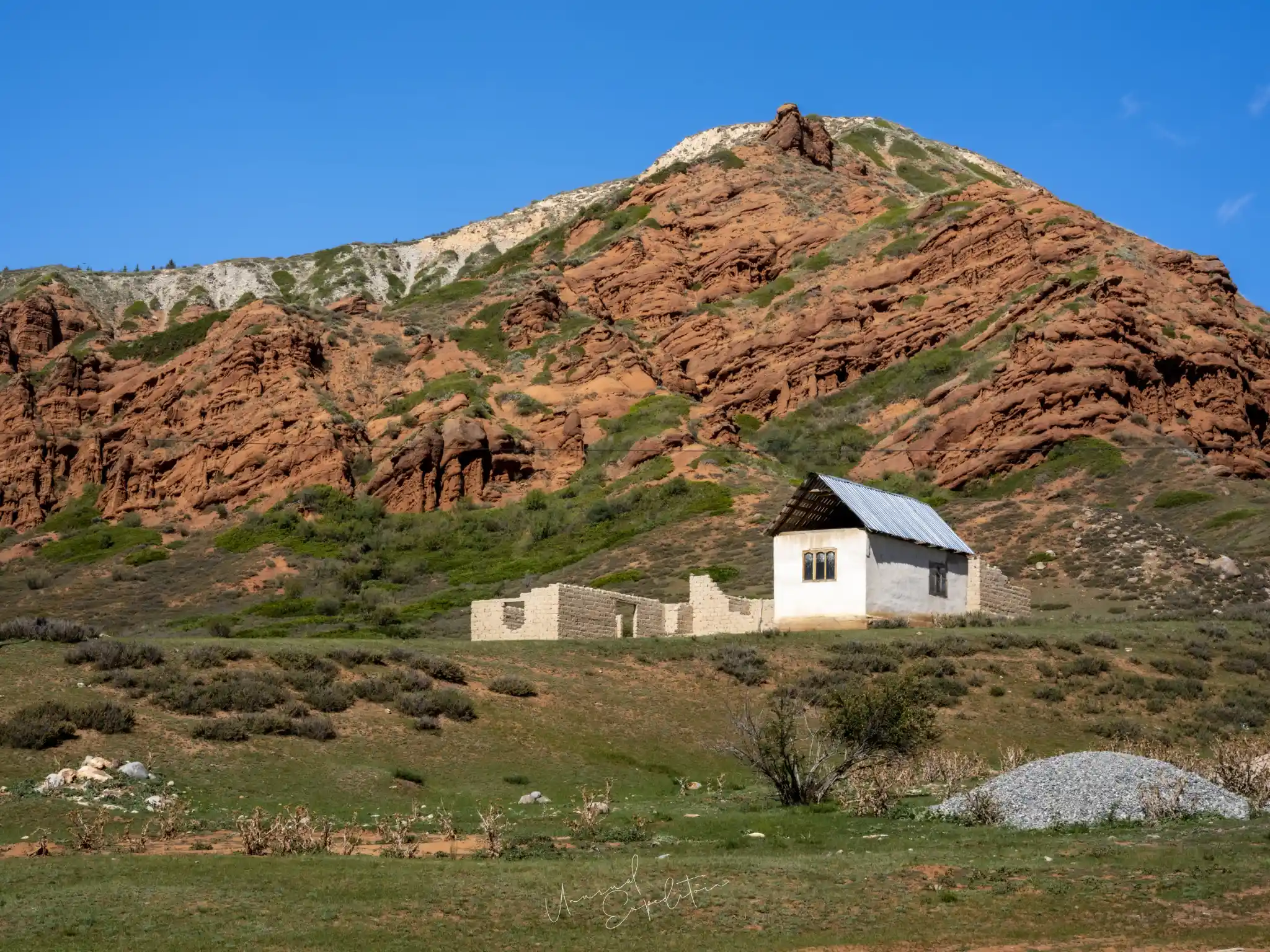
Jeti-Oguz, south-west of Karakol, is what Lonely Planet calls one of the most photographed natural features in Kyrgyzstan: a serrated ridge of red sandstone cliffs, the "Seven Bulls", above a green valley. Below the cliffs there are farmhouses, fences and grazing animals, which give the red rock its scale. Late in the afternoon the sun lights the cliffs from the west and the red deepens. Use a 24-70mm to put a white house or a horse in front of the rock, or a 70-200mm to pick out the ridges. The village is lived in, so ask before photographing people or stepping into a yard.
The gorges and side roads above the lake
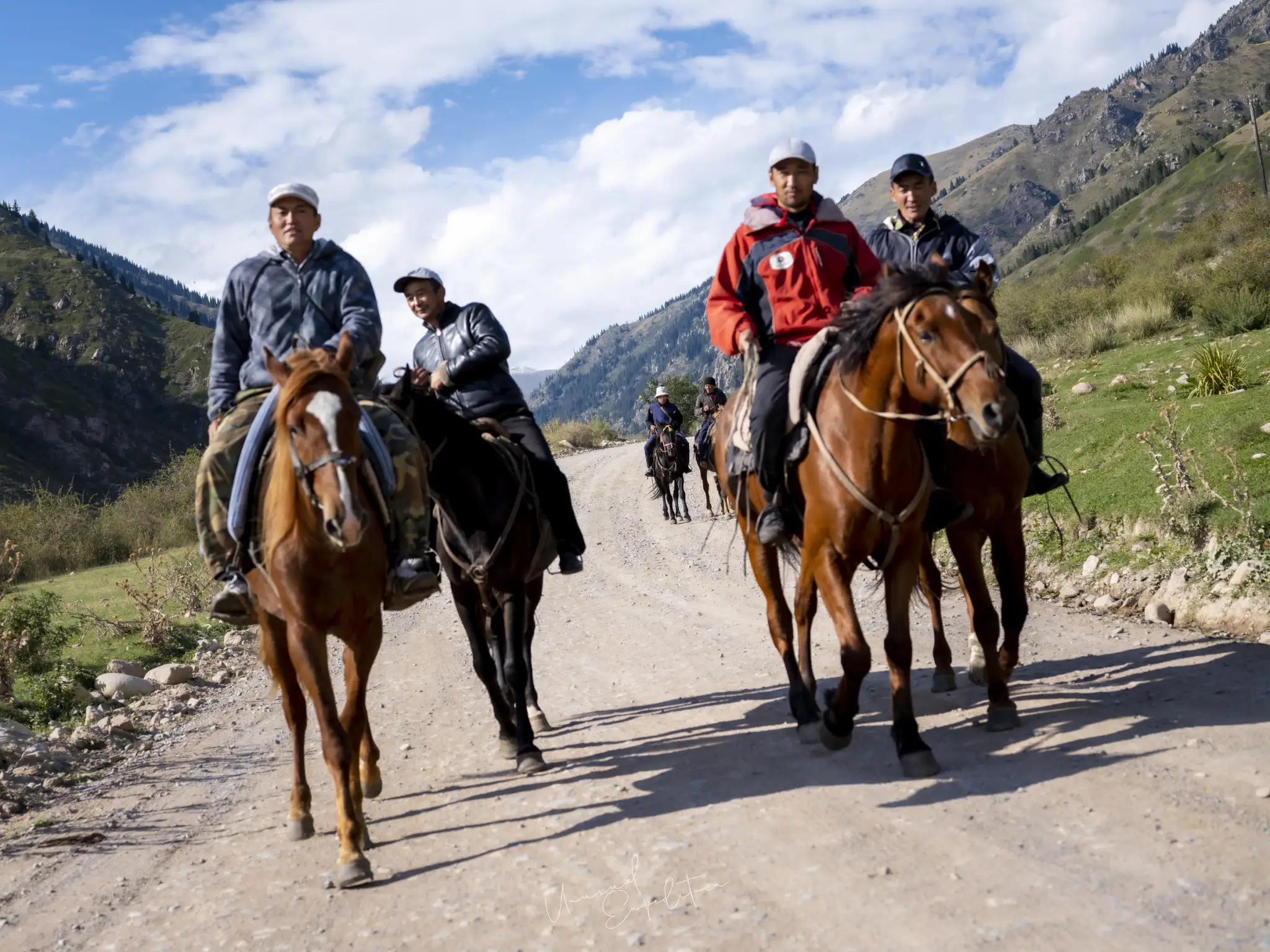
The gorges that run from the mountains down to Issyk-Kul are where you meet rural Kyrgyzstan on horseback. Men ride down gravel roads to and from the summer pastures, often in loose groups that stop to talk, and in late summer beekeepers set up their hive trailers in the meadows. Here the spot is the road itself: pull over where the valley opens, stand to the side, and let the riders come to you with the green slopes behind. A 24-70mm is right for this distance. A nod and a question before you raise the camera matter more than any setting. Horse games such as kok boru are played on the pastures in summer; our kok boru guide covers where and how to photograph them.
"Around Issyk-Kul I could photograph a wooden church in the morning, red cliffs in the afternoon and a lake turning violet at night. Few places put that much variety within reach of one town."
Joseph Mak, tour leader, Unusual Expedition
Eagle hunters near the lake
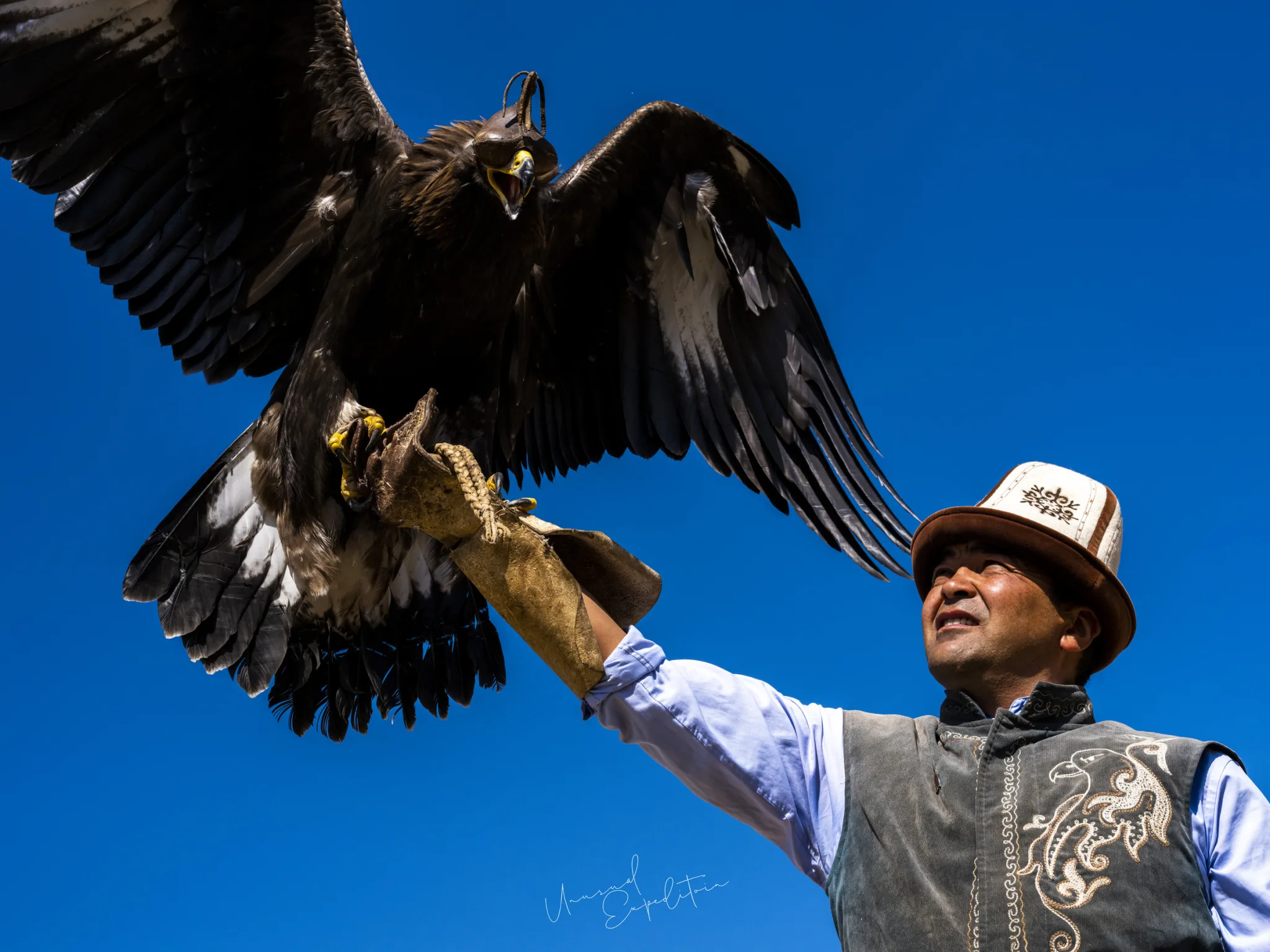
The berkutchi, Kyrgyz eagle hunters, show their golden eagles to visitors on open ground near the lake; Bradt Guides describes the practice as fragile, with demonstrations arranged for visitors, and the Salbuurun festival with eagles and horseback games is reported to be held in summer near Bokonbaevo on the south shore. For the eagle on the glove with its wings open, stand low and close with a 24-70mm against a clear blue sky, with the sun behind you. A 100-400mm follows the flight. Ask the hunter where the bird will land and stay out of its line. Our eagle hunting in Kyrgyzstan guide goes into the hunters and the ethics of these demonstrations.
Skazka canyon
Skazka canyon, the "Fairy Tale" canyon, lies on the south shore of Issyk-Kul beside the road between Karakol and Balykchy. Wind and water have carved its soft red and ochre sandstone and clay into ridges, spires and narrow passages, and short paths climb to viewpoints with the lake behind, as Advantour and other Kyrgyz travel guides describe it. We have not photographed it. The colours are richest in late-afternoon light, and a 24-70mm handles both the formations and the lake view. Stay on the paths: the clay crumbles easily.
Photograph Issyk-Kul with us
There is no scheduled Kyrgyzstan departure at the moment. We run it as a private trip on request, timed for the light at each of these places. See private tours and the Kyrgyzstan photography tours page.
Kyrgyzstan photography tours
The next Kyrgyzstan departure is announced on the Kyrgyzstan photography tours page, with previous expeditions and all the planning guides.
Explore Kyrgyzstan in depth
- Kyrgyzstan Photography Tour: Issyk-Kul, Karakol, Red Rocks, Eagle Hunters and Kok BoruKyrgyzstan
- Kok Boru in Kyrgyzstan: How to Photograph the Horseback GameKyrgyzstan
- How to Plan a Photography Trip to Kyrgyzstan: Entry, Flights, Money and SafetyKyrgyzstan
- Kyrgyzstan Eagle Hunter: Photographing a Berkutchi and His Golden EagleKyrgyzstan
- Best Time to Visit Kyrgyzstan for Photography, Season by SeasonKyrgyzstan
Upcoming Photo Tours
- Egypt Photo Tour – EgyptEgypt 12 Dec 2026 To 20 Dec 2026
- Inner Mongolia Winter Owl Photo Tour – ChinaChina 01 Jan 2027 To 04 Jan 2027
- Inner Mongolia Winter Photo Tour – ChinaChina 05 Jan 2027 To 11 Jan 2027
- Mekong And Central Highland Vietnam Photo Tour - VietnamVietnam 16 Jan 2027 To 24 Jan 2027