
Puglia Photography Tour Guide: Trulli, White Towns and Matera at Dusk
Photos of Puglia: the trulli of Alberobello, the Valle d'Itria countryside, Matera in Basilicata, the best time and camera kit.
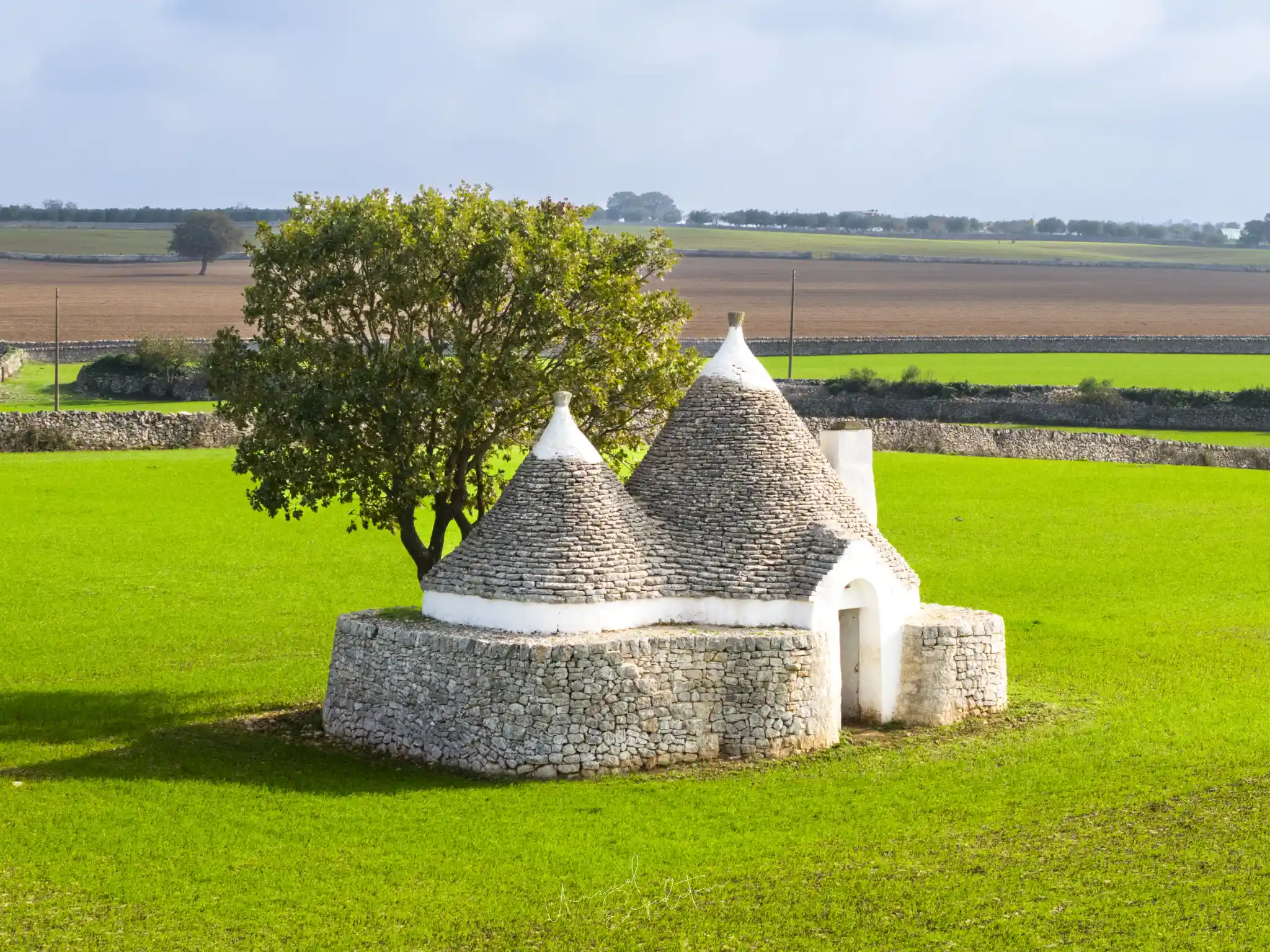
Photos of Puglia are mostly photos of stone: the white trulli of Alberobello with their grey conical roofs, dry-stone walls across red earth and olive groves, and, just over the border in Basilicata, the cave town of Matera glowing on its ravine at dusk. Puglia is the heel of Italy, flat and bright, with soft autumn and spring light that suits whitewashed walls. What to photograph, where Matera fits and when to go are below, from two autumn trips of our own.
Puglia is the region in the far southeast of Italy, on the Adriatic and Ionian seas. Our Italy photography tour guide covers the country as a whole, from entry to the other regions we photograph; this destination guide is the hub for our Puglia articles. The photographs in this guide are our own, taken on our trips here; we hold the rights to them, and the notes come from knowing these places first hand.
Photos of Puglia: what the region looks like
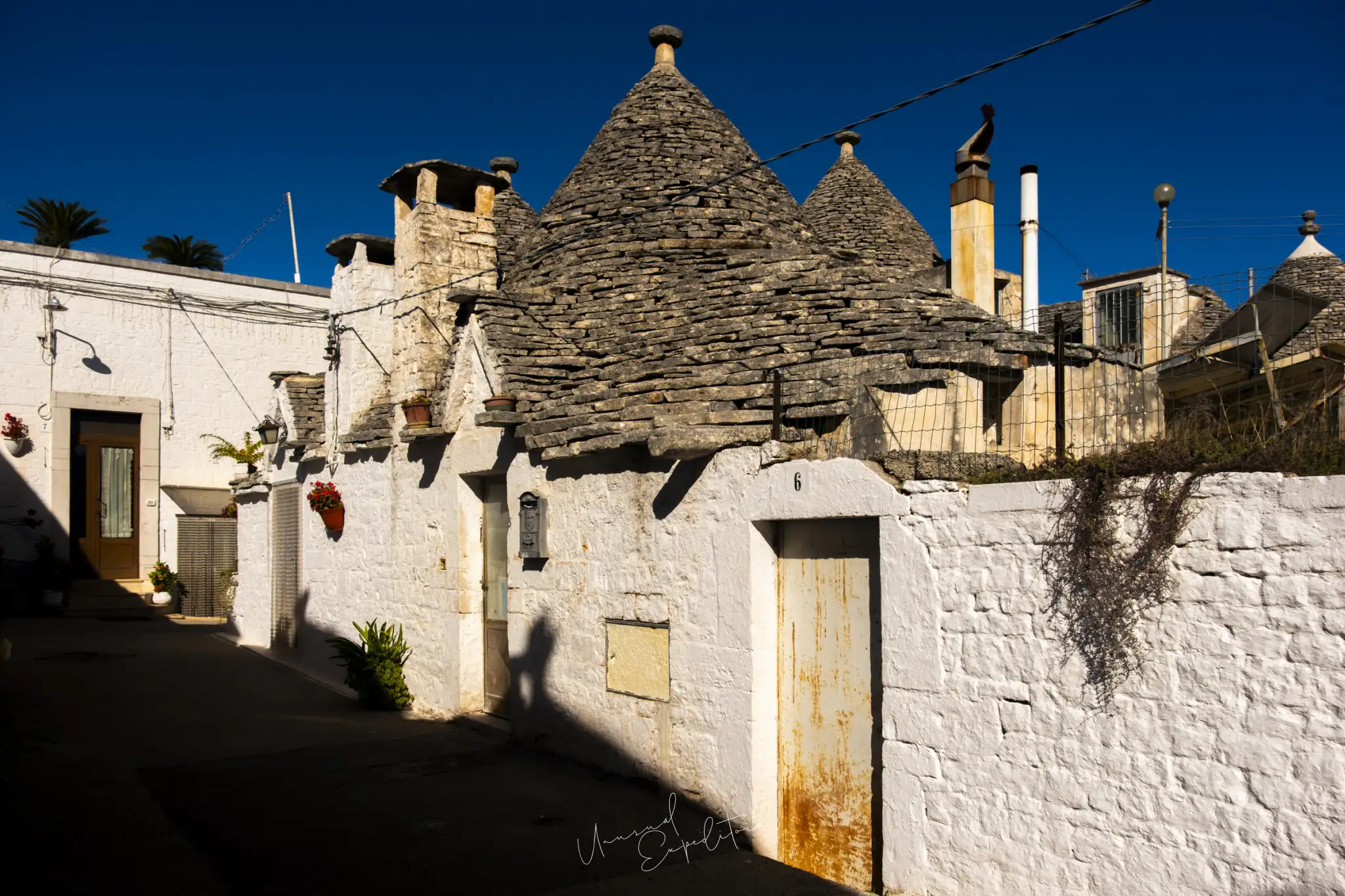
Photos of Puglia tell you quickly that this is a different Italy from Tuscany or the Dolomites. The land is low and open, a limestone plateau covered with olive trees, vineyards and fields divided by long dry-stone walls. In the Valle d'Itria, the hilly heart of the region between Alberobello, Locorotondo, Cisternino and Martina Franca, the countryside is scattered with trulli: small round stone buildings with cone-shaped roofs, some still used as farm stores, some restored as houses. The towns are whitewashed, with narrow lanes and baroque churches. Puglia also has a long coastline, with cliff towns such as Polignano a Mare and the white hill town of Ostuni; we have not shown those here, because our own frames are of the trulli country and of Matera. For a photographer the subjects are shape, texture and light: white walls against a hard blue sky, grey stone cones in rows, and the red earth of a ploughed field.
Alberobello and the trulli
Alberobello is the town of the trulli. Two whole districts, Rione Monti and Aia Piccola, are made of them, and UNESCO has listed the Trulli of Alberobello as World Heritage since 1996. The buildings are made of local limestone laid dry, without mortar, with roofs of stone slabs built up in rings into a cone, often topped by a carved pinnacle and painted with a white symbol. Rione Monti, on the hill, is the busier quarter, its lanes lined with shops and terraces; Aia Piccola, across the main road, is quieter and still mostly lived in. Our trulli of Alberobello article covers both quarters, the Trullo Sovrano, the best light in the lanes and the trulli in the fields outside town.
Matera, across the border in Basilicata
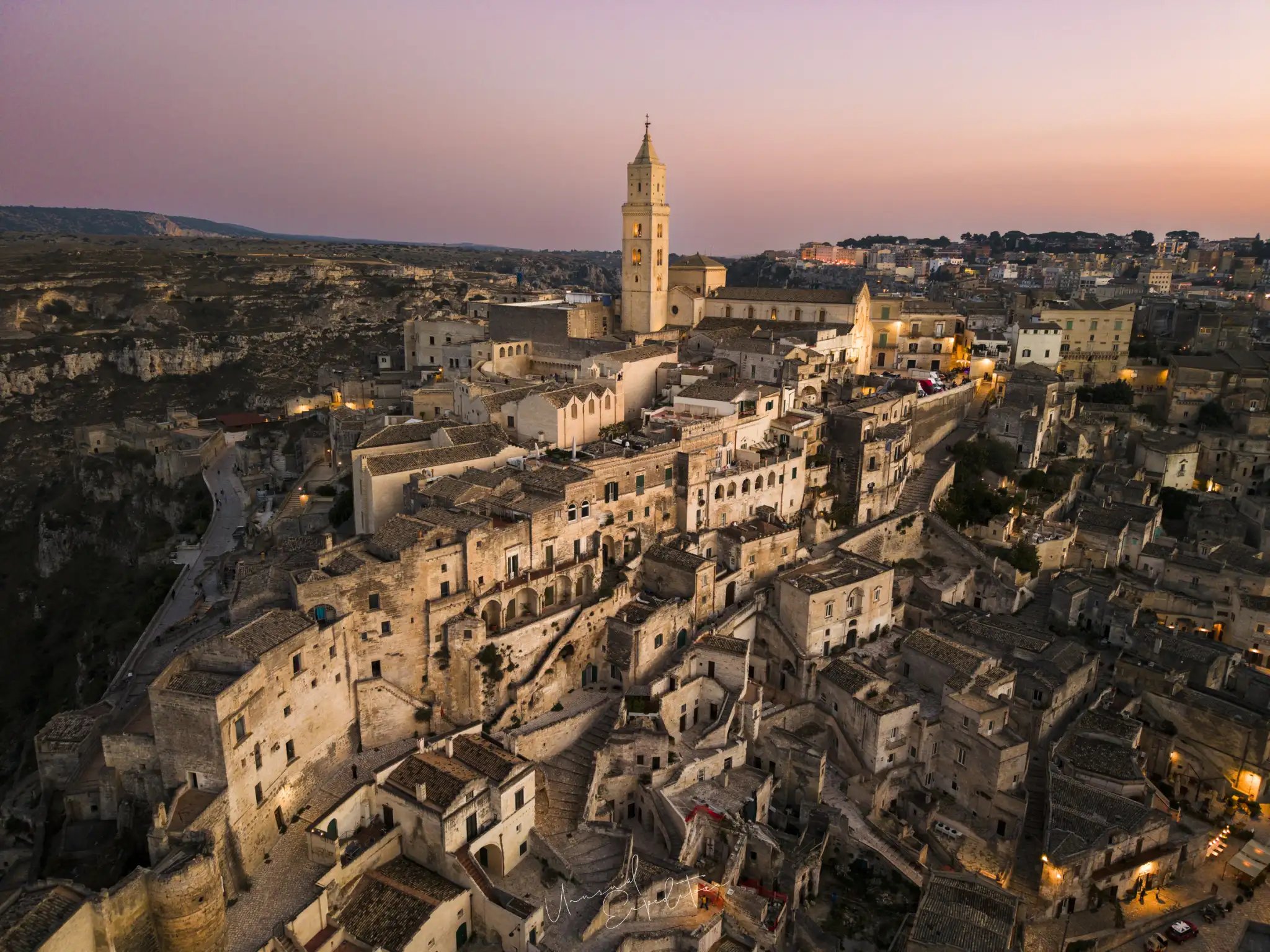
Matera is not in Puglia but in Basilicata, the neighbouring region, though it lies close to the border and most visitors combine the two. The old town, the Sassi, is a maze of houses and churches cut into and built against the limestone wall of a ravine, inhabited for thousands of years, emptied in the twentieth century and brought back to life since. UNESCO listed the Sassi and the park of rock churches in 1993. For photography Matera is an evening place. The stone turns gold at sunset, the lights come on in the alleys and the cathedral bell tower on the ridge holds the frame together. Our Sassi di Matera article covers the viewpoints, the night and how to photograph it.
"Puglia rewards the middle of the day more than most places. The white walls and the blue sky make a hard, graphic light that would ruin a landscape elsewhere. Then go to Matera for the evening."
Joseph Mak, tour leader, Unusual Expedition
Best time to visit Puglia for photography
The best time to visit Puglia for photography is spring, from April to early June, or autumn, from September to early November. Both trips we made here were in mid-autumn: the light was clear and warm, the summer crowds had gone, and on one trip the fields around Alberobello were bright green and on the other they were freshly ploughed, red-brown and bare. Summer is hot, bright and busy on the coast, good for beaches and the long evenings, harder for the inland towns at midday. Winter is quiet and cool, with short days and some places closed, though the trulli under a winter sky can still make good pictures.
| Season | Light and landscape | Crowds | Best subjects |
|---|---|---|---|
| Spring | Green fields, wildflowers, soft light | Moderate, busy at Easter | Trulli in the countryside, olive groves |
| Summer | Hard light, heat, long evenings | Busy, especially on the coast | Coast towns, evenings in Matera |
| Autumn | Clear, warm light, green or ploughed fields | Thinning | Alberobello lanes, Matera at dusk |
| Winter | Low sun, short days, cool | Quiet | Empty lanes, moody skies |
If you can choose, go in autumn or spring and plan at least one evening in Matera.
Is Puglia worth visiting for photographers?
Is Puglia worth visiting if you travel for photography? Yes, especially if you like architecture and simple, graphic compositions. The trulli are unlike anything else in Europe, and Matera is one of the most striking old towns in Italy. Puglia is also easier going than the classic Italian circuit: the towns are compact, the countryside is open and the light is generous most of the year. It suits a slower trip that mixes the trulli, the white towns and the coast with an evening or two in Matera. What it does not have is high mountains or the layered hills of Tuscany; the landscape is flat and the interest is in the built heritage and the light on it.
Getting to Puglia from Singapore
There is no direct flight from Singapore to Puglia. Most travellers fly to Bari or Brindisi through a hub such as Rome, Milan or a Gulf or European connection, and continue by car, train or bus. A car makes the trulli countryside and Matera much easier to reach at the right light; regional trains and buses link Bari with Alberobello and Matera, but less often. Singapore passport holders do not need a visa for a short tourist stay in the Schengen area; the entry rules, the EU Entry/Exit System and money are covered in the Italy guide.
Camera kit for Puglia
A 24-70mm covers most of Puglia: whole lanes of trulli, a single cone against the sky, and Matera's Sassi from the viewpoints. A 16-35mm helps in the tight lanes of Alberobello and for interiors, and a 70-200mm picks out the bell tower and individual houses in Matera, or a lone trullo far across a field. A polarising filter deepens the blue sky behind white walls, which is the signature look here. Bring a tripod for Matera at blue hour. If you fly a drone, Italy follows the EU drone rules: the aviation authority ENAC requires operators to register on its D-Flight portal, which also shows restricted zones, and pilots from outside the EU need the EU open-category certificate. Check both before you fly over the Sassi or the towns.
Explore Puglia in depth
- Trulli of Alberobello: the lanes, the districts and the trulli in the fields
- Sassi di Matera: the viewpoints, sunset and Matera at night
- Italy photography tour guide
Photograph Puglia and Matera with us
We run Puglia and Matera as a private trip on request, for individuals, couples, families or a few friends, at your own pace, with the logistics arranged around the light. It can cost less than a group tour because no tour leader travels with you, and a photographer or photography coaching can be added at extra cost. Ask at least two months ahead if you can. See private tours and our Italy photography tours page.
Puglia photography tours
The next Puglia departure is announced on the Puglia photography tours page, with previous expeditions and all the planning guides.
Explore Puglia in depth
- Trulli of Alberobello: The Lanes, the Districts and the Trulli in the FieldsItaly
- Sassi di Matera: The Viewpoints, Sunset and Matera at NightItaly
Upcoming Photo Tours
- Egypt Photo Tour – EgyptEgypt 12 Dec 2026 To 20 Dec 2026
- Inner Mongolia Winter Owl Photo Tour – ChinaChina 01 Jan 2027 To 04 Jan 2027
- Inner Mongolia Winter Photo Tour – ChinaChina 05 Jan 2027 To 11 Jan 2027
- Mekong And Central Highland Vietnam Photo Tour - VietnamVietnam 16 Jan 2027 To 24 Jan 2027