
Trulli of Alberobello: The Lanes, the Districts and the Trulli in the Fields
Trulli of Alberobello: Rione Monti and Aia Piccola, the Trullo Sovrano, trulli in the fields and the best light for photos.
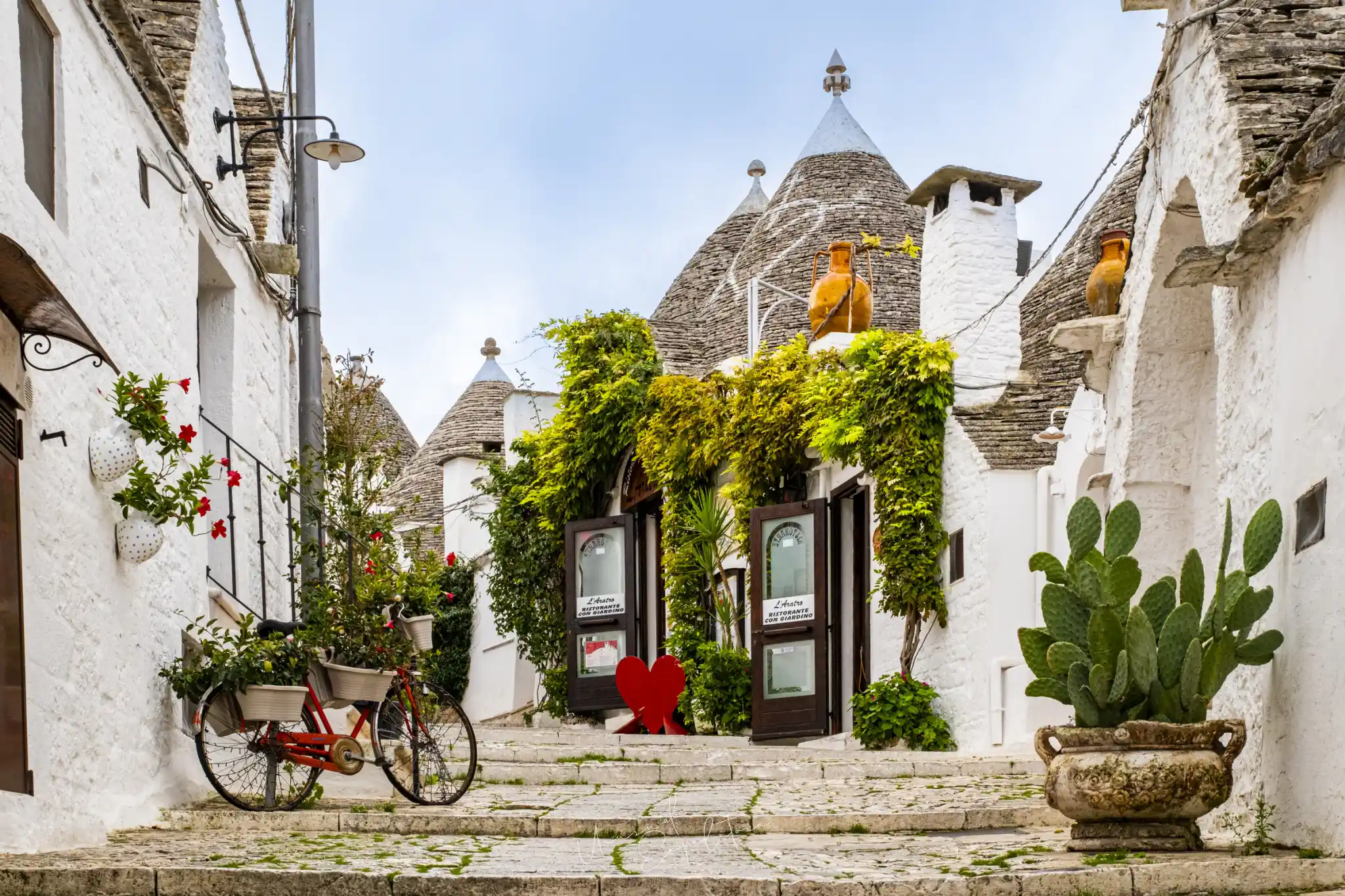
The trulli of Alberobello are round stone houses with cone-shaped roofs, built without mortar from the limestone of the Puglia plateau and gathered in two whole districts of the town, Rione Monti and Aia Piccola. Whitewashed walls, grey stone cones and a hard blue sky make some of the most graphic street photography in Italy. Where to walk, what light the lanes need and where to find trulli in open country are below, from two autumn visits of our own.
Alberobello sits in the Valle d'Itria, the inland heart of Puglia, south of Bari. For the region as a whole, Matera next door and when to go, start with our Puglia photography tour guide; for Italy's other regions, our Italy photography tour guide.
Trulli of Alberobello: what they are
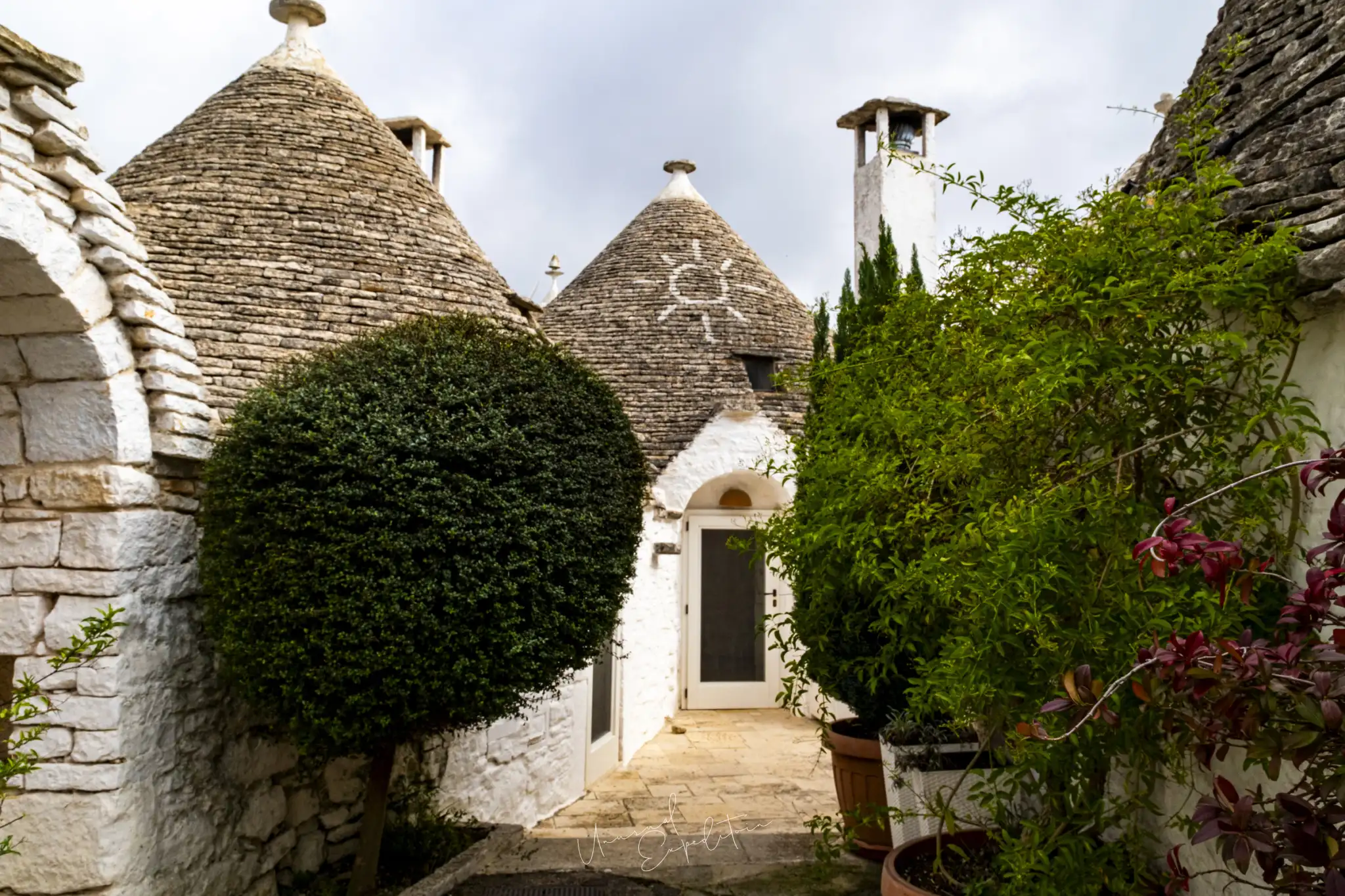
The trulli of Alberobello are dry-stone buildings: thick whitewashed walls of local limestone and a roof built up from rings of flat stone slabs, each ring set slightly inward, until the cone closes at the top. UNESCO, which listed the town's trulli as World Heritage in 1996, describes them as an outstanding example of this corbelled, mortarless way of building, a technique much older than the town itself. Most cones end in a carved stone pinnacle, and many carry a symbol painted in white lime on the grey stone: a cross, a heart, a sun or a sign whose meaning is now argued about. Inside, a single trullo is a small, cool room; larger houses join several cones together. In the countryside around Alberobello, trulli stand alone in fields and olive groves as stores and shelters, which is where some of the most simple and striking frames are.
Alberobello trulli: Rione Monti and Aia Piccola
The Alberobello trulli are concentrated in two quarters on either side of the main road. Rione Monti climbs the hill to the south and is the one most people see: its lanes are packed with trulli turned into shops, cafés and guest houses, and in the middle of the day it is busy. That busy-ness has its own pictures, with pots of geraniums, cacti, old bicycles and painted signs against the white walls, as in our feature photograph. Aia Piccola, to the east, is quieter and still mostly residential, with plain lanes of trulli where people live. For clean frames of walls, doors and roofs without crowds, Aia Piccola early in the morning is the better choice. Walk both, in different light, and look up: the roofs are the subject as much as the street.
Alberobello photos: light and composition
Alberobello photos depend more on light than on viewpoint, because there is no single classic view. On a clear day, strong side light in the morning or late afternoon carves the stone slabs of the roofs into texture and throws long shadows of chimneys and lamps across the whitewash, while the sky turns deep blue behind the cones, especially with a polarising filter. Overcast days are kinder to the details: doors, pots, painted symbols and flowers. Midday under a high sun flattens the white walls, so use it for the interiors and the Trullo Sovrano. Look for repetition, a row of cones receding along a lane, and for the single cone against plain sky. Keep verticals straight with a level or by stepping back; the slight lean of the walls is enough without adding lens distortion.
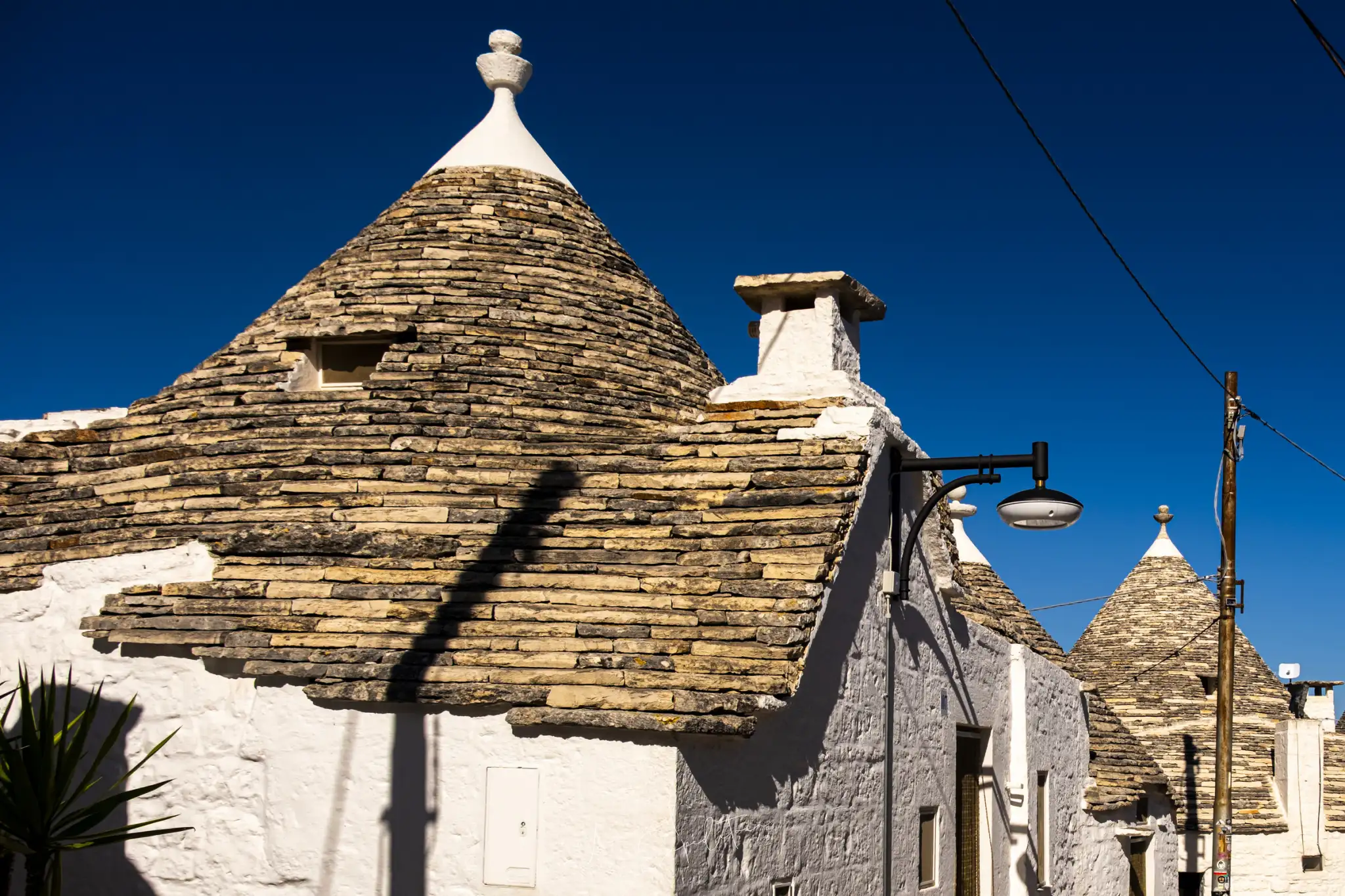
"In Alberobello I look up more than ahead. The lanes are pretty, but the roofs are the real picture: grey stone, white tips, and that blue sky behind them."
Joseph Mak, tour leader, Unusual Expedition
Trullo Sovrano
The Trullo Sovrano, near the church of Saints Cosmas and Damian, is the only trullo in Alberobello with two storeys, and is said to have been built for a well-off local family. Today it is a small museum furnished as a traditional home, and it is the best place to see how a trullo works inside: the thick walls, the alcoves, the cone rising overhead. Check the opening hours locally. Photograph the outside in morning or late light, when the stacked cones show their shape, and inside use a wide lens and a steady hand, as the rooms are small and dim.
Trulli in the countryside around Alberobello
The trulli in the countryside around Alberobello make a different, quieter picture. Outside town, single trulli and small clusters stand in fields and olive groves, joined by dry-stone walls, some restored, many still used for tools and storage. On one of our autumn visits the fields around a lone trullo were bright green; on the next, the fields nearby had been ploughed into rich brown earth, and the white stone stood out even more against the soil. Our Puglia guide opens with one of these lone trulli. These are private land: photograph from the road, ask before walking into a field and close any gate behind you. Light low across the fields, in the morning or late afternoon, brings out the texture of both the stone and the soil.
Is Alberobello worth visiting?
Is Alberobello worth visiting? For photographers, yes, even with the souvenir shops. There is nowhere else with whole streets of trulli, and the light on the roofs is worth more than one walk. The trick is timing. Arrive early, before the day visitors from Bari and the coast, and you will have the lanes almost to yourself; stay into the late afternoon and the light becomes warm and raking again. Combine the town with the countryside outside it, where the trulli stand alone, and with Matera for an evening. Our Sassi di Matera article covers that side of the trip.
How to get to Alberobello
How to get to Alberobello depends on how much countryside you want to see. Regional trains and buses run from Bari, but services are limited, and the lone trulli in the fields are only really reachable by car. Most visitors stay in the Valle d'Itria and drive between the towns. Parking is outside the historic districts, which are pedestrian. If you want to photograph the lanes at first light, staying in or close to Alberobello helps. For the rest of Puglia, Matera and the seasons, see our Puglia guide.
Camera settings for the trulli
White walls fool the camera meter into underexposing, so add exposure compensation or watch the histogram and keep the whites just short of clipping. A polarising filter deepens the blue sky and cuts glare from the stone, but use it with care on wide shots, where it darkens one side of the sky more than the other. A 24-70mm covers most lanes; a 16-35mm helps in tight courtyards and for the Trullo Sovrano inside. Shoot at f/8 for sharpness from the nearest wall to the farthest cone. For the countryside, a 70-200mm isolates a single trullo against a field, and if you fly a drone, check the Italian rules in our Puglia guide first.
Walk the trulli with us
We run Puglia and Matera as a private trip on request, timed for the morning light in the lanes and the evenings in Matera. See private tours and our Italy photography tours page.
Puglia photography tours
The next Puglia departure is announced on the Puglia photography tours page, with previous expeditions and all the planning guides.
Explore Puglia in depth
- Puglia Photography Tour Guide: Trulli, White Towns and Matera at DuskItaly
- Sassi di Matera: The Viewpoints, Sunset and Matera at NightItaly
Upcoming Photo Tours
- Egypt Photo Tour – EgyptEgypt 12 Dec 2026 To 20 Dec 2026
- Inner Mongolia Winter Owl Photo Tour – ChinaChina 01 Jan 2027 To 04 Jan 2027
- Inner Mongolia Winter Photo Tour – ChinaChina 05 Jan 2027 To 11 Jan 2027
- Mekong And Central Highland Vietnam Photo Tour - VietnamVietnam 16 Jan 2027 To 24 Jan 2027