
Carnival in Rio Travel Guide: Flights, Visa, Tickets and Safety
Carnival in Rio travel guide: flights to Rio, do you need a visa for Brazil, yellow fever, Rio carnival tickets and staying safe.
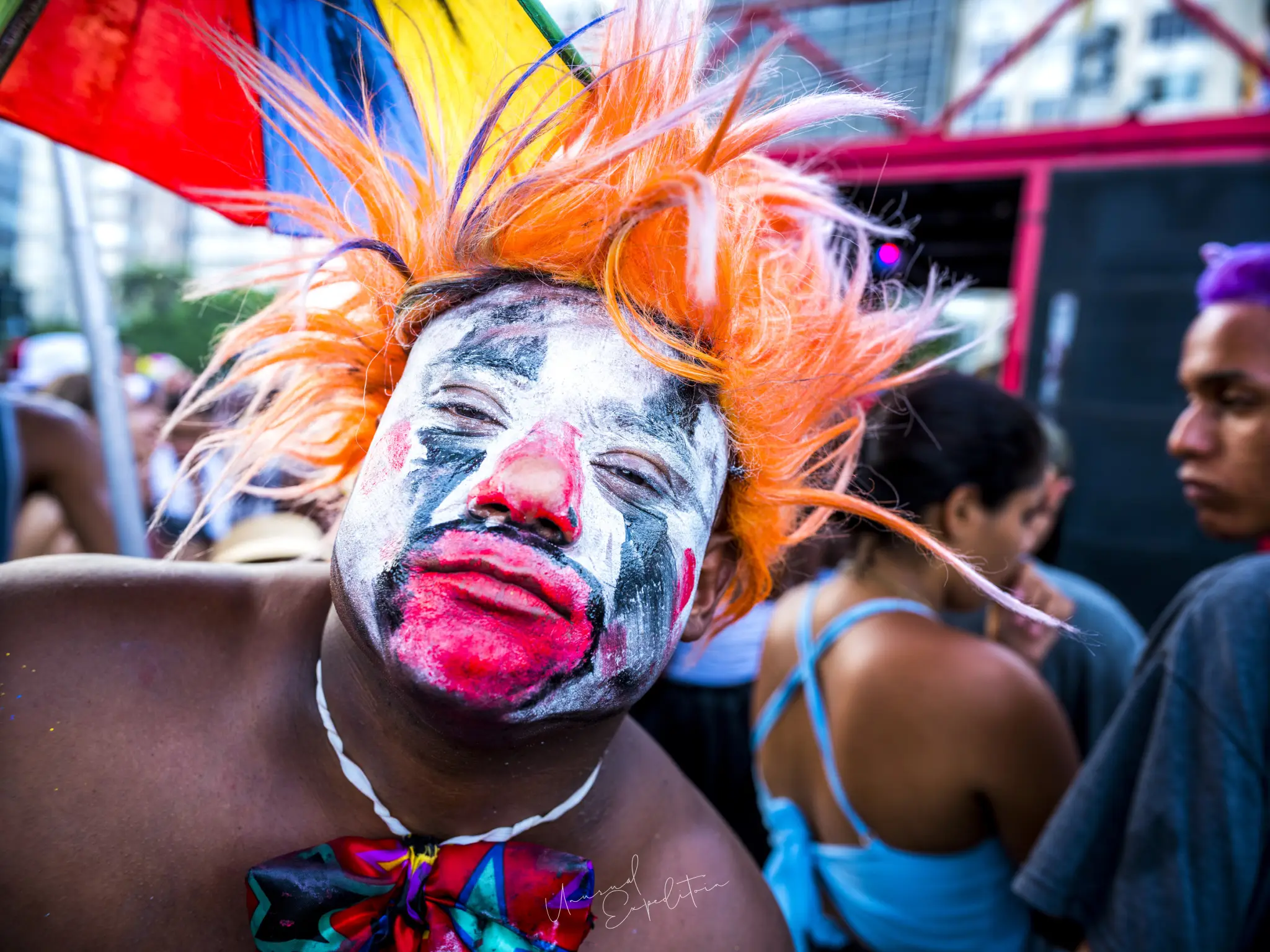
This carnival in Rio travel guide answers the practical questions first: you fly into Rio de Janeiro's international airport, Galeão, usually with a connection unless you start in South America or one of the hubs with a nonstop service; whether you need a visa depends on your passport, and since April 2025 US, Canadian and Australian citizens need an e-Visa; and the Sambadrome seats, flights and rooms should be booked as soon as the carnival dates are fixed. Arrive a day or two early.
This is the practical side of our Rio de Janeiro photography tour guide, written for travellers from any country. Entry, money and health for Brazil as a whole are in our Brazil photography trip FAQ.
Carnival in Rio travel guide: getting to Rio de Janeiro
Long-haul flights land at Galeão, Rio's international airport, while Santos Dumont, close to the centre, mainly handles domestic flights. From elsewhere in South America there are many direct routes, and São Paulo, Brazil's largest hub, has frequent connections to Rio. From North America and Europe some cities have nonstop services to Rio and others connect through São Paulo or a hub at home. From Asia, Africa and Australia every routing has at least one stop, through the Gulf, Europe, North America or South Africa, and each transit point has its own visa rules to check. It is a long way from most of the world, so choose the connection with the most comfortable layover, not only the cheapest fare. Carnival is peak season for flights into Rio, so book as early as you can.
Rio de Janeiro time and jet lag
Brazil no longer uses daylight saving time, so Rio de Janeiro is on Brasília time all year, three hours behind UTC. For visitors from Europe the shift is modest; from Asia or Australia your body clock is turned almost upside down, and the Sambadrome parades run through the night in Rio. Arriving a day or two before the first parade night gives you time to adjust, find your way around and check your kit.
Do I need a visa for Brazil?
It depends on your passport, and the rules changed recently. Brazil's Ministry of Foreign Affairs reinstated the visitor visa for citizens of the United States, Canada and Australia from 10 April 2025; they apply online for an electronic visa before travelling, and it covers tourism for stays of up to 90 days. The UK government's travel advice says British citizens can visit Brazil without a visa for up to 90 days for tourism, and most EU passports are also visa-exempt for short tourist visits. Singapore passport holders can visit for up to 30 days without a visa. Other nationalities may need a consular visa. Check Brazil's consular pages and your own government's advice for your passport before you book, because this is a rule that has moved more than once.
Health and insurance
Health is the other point to plan. Brazil is a country with a risk of yellow fever transmission, and some countries, including several in Asia, ask travellers arriving from Brazil to show a valid yellow fever vaccination certificate, which becomes valid ten days after vaccination. If your route home passes through such a country, see a travel clinic well before you go and check the current rules of every country on your route. Travel insurance that covers medical care, theft and camera equipment is worth having for a carnival trip.
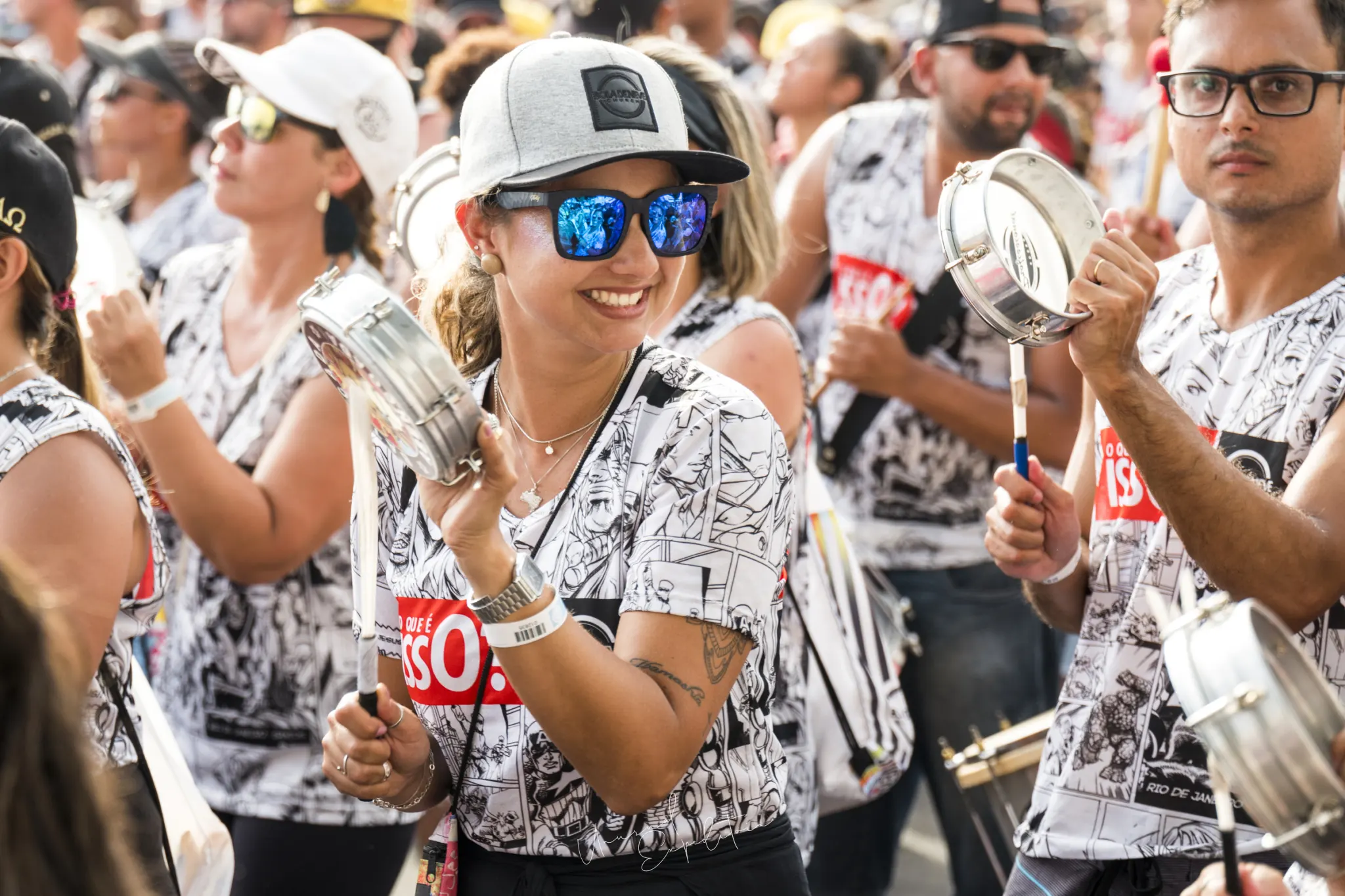
Rio carnival tickets
The street blocos are free. You need tickets only for the Sambadrome, where seats for the top division are sold by Liesa, the league of the leading samba schools, and through authorised resellers. Choose the nights first, then the kind of seat: open grandstands, front-row boxes called frisas, or hospitality boxes called camarotes. For photography the frisas are the best; our Sambadrome parade guide explains why. Buy only from official channels, check prices on the official site, and keep the tickets on paper as well as on your phone.
For most of our guests, Rio is about as far as you can go. That is a reason to plan it properly once, with the right nights, the right seats and a few blocos chosen in advance, so that the long journey pays off.
Joseph Mak, tour leader, Unusual Expedition
Is Rio carnival safe?
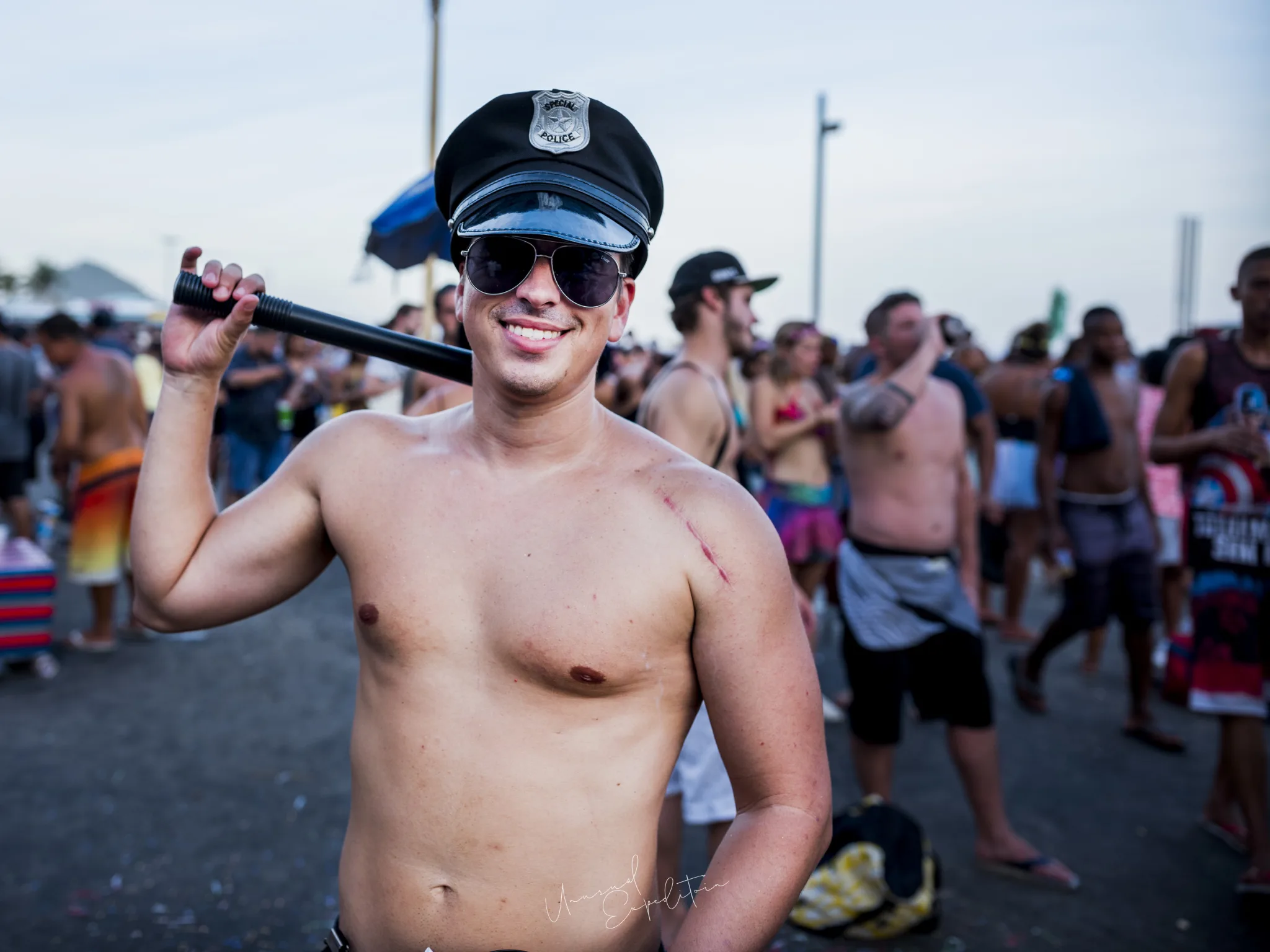
Rio carnival is a huge crowd in a city where petty crime is common, and a few habits keep most visitors out of trouble. The UK Foreign, Commonwealth and Development Office warns that criminals target large celebrations such as carnival, that pickpocketing is common, and that visitors should avoid using a mobile phone in the street and stay off city beaches after dark. For photographers that means one camera and one lens in the blocos, a strap across the body, a copy of your passport instead of the original, and a car rather than a walk back at night. The Copacabana seafront at dusk, where we photographed a reveller in a police officer's cap and mirrored glasses, is a good place to work, as long as you leave the sand before dark.
Rio de Janeiro safe for tourists: daily habits
| Situation | What we do |
|---|---|
| Blocos | One camera, one lens, no bag, phone in a zipped front pocket |
| Sambadrome | Full kit is fine, kept on you; plan the ride back before the last school |
| Beaches | Little kit, nothing left on the towel, off the sand by dark |
| Getting around | Licensed taxis or ride-hailing cars, especially at night |
| Favelas | Not visited; the FCDO advises against all favela visits, including tours |
None of this is unusual for a big city; it simply matters more when you are carrying a camera.
What to pack for Rio carnival
Pack light clothes for heat and humidity, a rain jacket for summer storms, comfortable shoes for crowds and cobbles, and something to wear in the blocos: a costume is half the fun and makes people warmer to your camera. For photography, one body, a 24-70mm, a 70-200mm for the Sambadrome, a small wide or normal prime for the streets, spare batteries and plenty of cards. Brazil uses its own plug type, so bring an adapter that fits. A woman in a nurse's cap lowering her sunglasses at the camera on the Copacabana seafront reminded us that costumes do the talking. Our Rio carnival photos show what the week can give you.

Plan Rio carnival with us
We run Rio carnival as a private trip on request: you join from any country and meet us in Rio, and we arrange the logistics to your needs, from rooms and Sambadrome seats to transfers and the blocos around the subjects you want. A photographer or coaching can be added at extra cost. Because no tour leader travels, the cost can be lower than a group tour. Ask at least two months ahead, and earlier for carnival. Read more on our private tours page and find every Brazil guide on the Brazil photography tours page.
Rio de Janeiro photography tours
The next Rio de Janeiro departure is announced on the Rio de Janeiro photography tours page, with previous expeditions and all the planning guides.
Explore Rio de Janeiro in depth
- Rio de Janeiro Photography Tour Guide: Carnival, Blocos and BeachesBrazil
- Santa Teresa, Rio de Janeiro: Street Art, Tram Tracks and BlocosBrazil
- Sambadrome Parade: How to Photograph Rio Carnival's Samba SchoolsBrazil
- Rio de Janeiro Beach Photos: Copacabana, Ipanema and the SurfBrazil
- Rio Carnival Photos: Pictures from the Sambadrome and the StreetsBrazil
- Rio Carnival Blocos: Photographing Rio's Street PartiesBrazil
- Best Time to Visit Rio de Janeiro: Carnival, Seasons and LightBrazil
Upcoming Photo Tours
- Egypt Photo Tour – EgyptEgypt 12 Dec 2026 To 20 Dec 2026
- Inner Mongolia Winter Owl Photo Tour – ChinaChina 01 Jan 2027 To 04 Jan 2027
- Inner Mongolia Winter Photo Tour – ChinaChina 05 Jan 2027 To 11 Jan 2027
- Mekong And Central Highland Vietnam Photo Tour - VietnamVietnam 16 Jan 2027 To 24 Jan 2027