
Rio de Janeiro Photography Tour Guide: Carnival, Blocos and Beaches
Rio de Janeiro photography guide: the Sambadrome, street blocos, Santa Teresa, the beaches, safety and when to go.
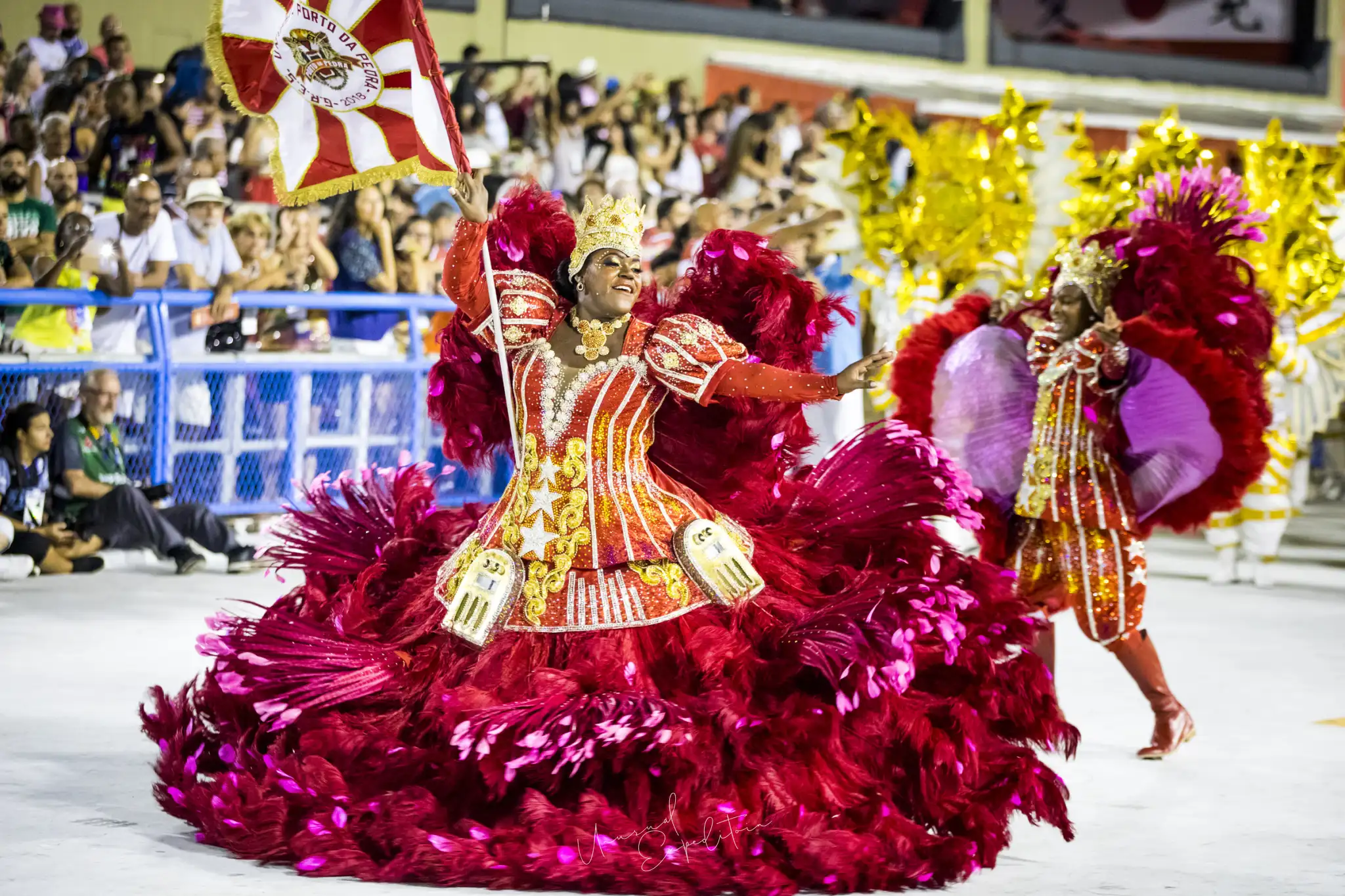
Rio de Janeiro photography is at its best during carnival, when the whole city turns into a stage: samba schools parade through the Sambadrome at night, and by day hundreds of street parties called blocos fill the old centre, Santa Teresa and the seafront. Outside carnival week the subjects are the beaches, the hills and the people on them. Come for carnival if you can, pack a 24-70mm and a fast prime, and plan around crowds and heat.
This is the guide to Rio as a whole, and it sits under our Brazil photography tour guide, which covers entry, money, flights and the rest of the country, including Iguazu Falls. The photographs in this guide are our own, taken on our trip to Rio during carnival; we hold the rights to them, and the notes come from knowing these places first hand.
Rio de Janeiro photography: what you actually photograph
Most visitors arrive with Christ the Redeemer and Sugarloaf Mountain in mind, and both are worth a look. For a photographer, though, Rio de Janeiro is mainly a city of people. Carnival gives you costumes, face paint, brass bands and drummers, and revellers who usually love a camera. The beaches give you the daily life of the city in swimwear: vendors, footvolley, families under umbrellas, surfers in the backlight. The hillside neighbourhoods give you colour, graffiti and the old tram tracks of Santa Teresa. We spent our time in Rio on carnival, the street parties and the beaches, and those are the subjects of the destination guides linked below. We do not cover the viewpoints, the favelas or the forest here, because we have not photographed them for these guides.
The Sambadrome parades
The Sambadrome is the purpose-built parade avenue where the samba schools compete, each with floats, hundreds of costumed members in wings called alas, a drum section and the flag-bearing couple. Our feature photograph shows that couple, the porta-bandeira and the mestre-sala, the dancers who carry and guard the school's flag. Shooting from the stands, you work with long lenses, high ISO and very fast-moving subjects under floodlights. Our Sambadrome parade guide explains how a parade is built, where to sit and what to bring, and our Rio carnival photos show what a night in the stands can give you.
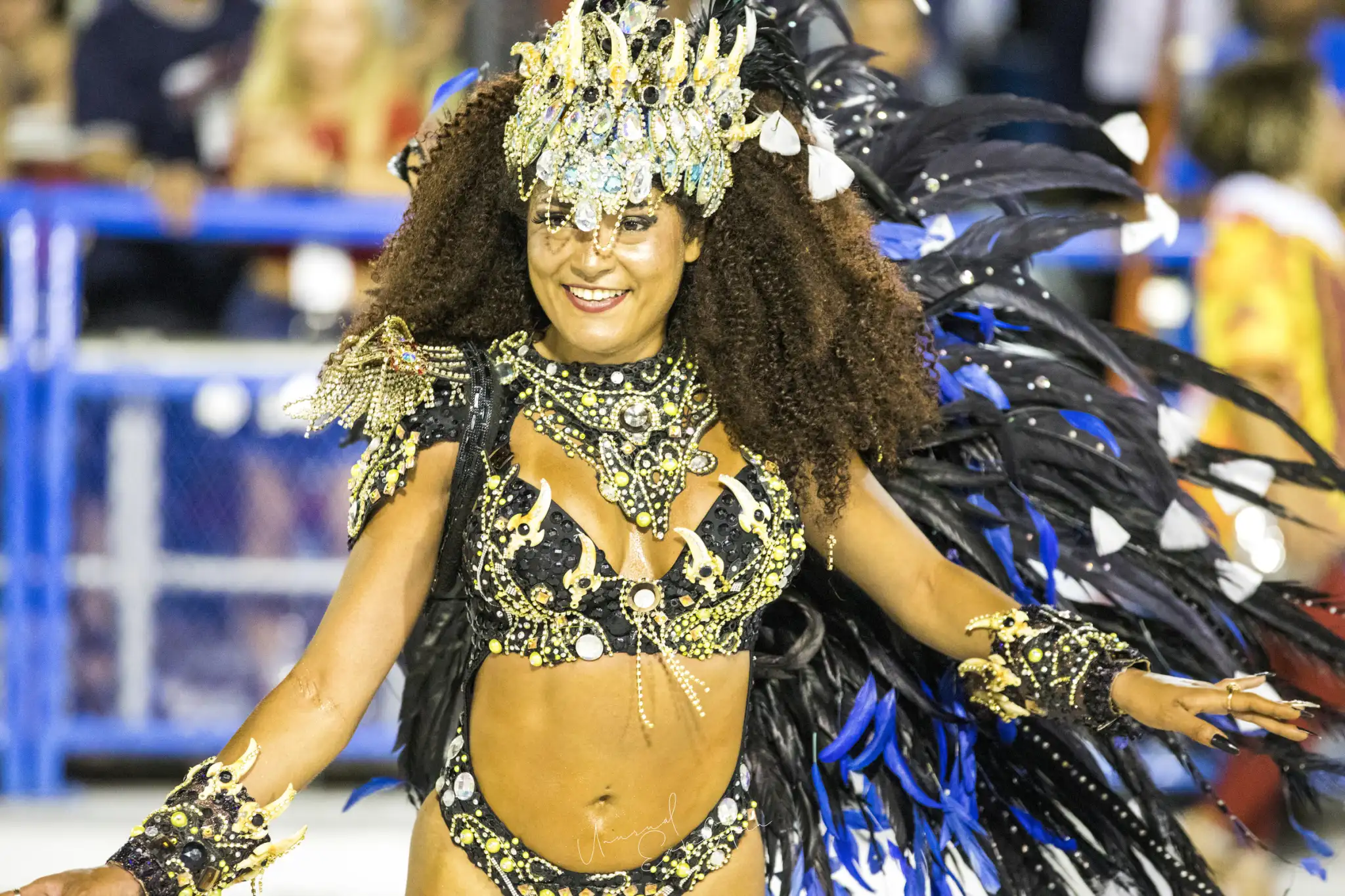
Blocos: carnival in the streets
The street carnival is where you get closest. A bloco is a neighbourhood parade, a band or a sound truck followed by thousands of people in costume, and in carnival season they run from morning to night all over the city. In the old centre the blocos move between office towers and colonial facades; in Santa Teresa they wind along the tram tracks; on the Copacabana seafront they follow trucks with speakers. Riotur, the city's tourism company, authorised more than 460 bloco parades for the 2026 carnival, Agência Brasil reported, so you will never run out of subjects. Our Rio carnival blocos article covers how to find them and how to work in the crowd.
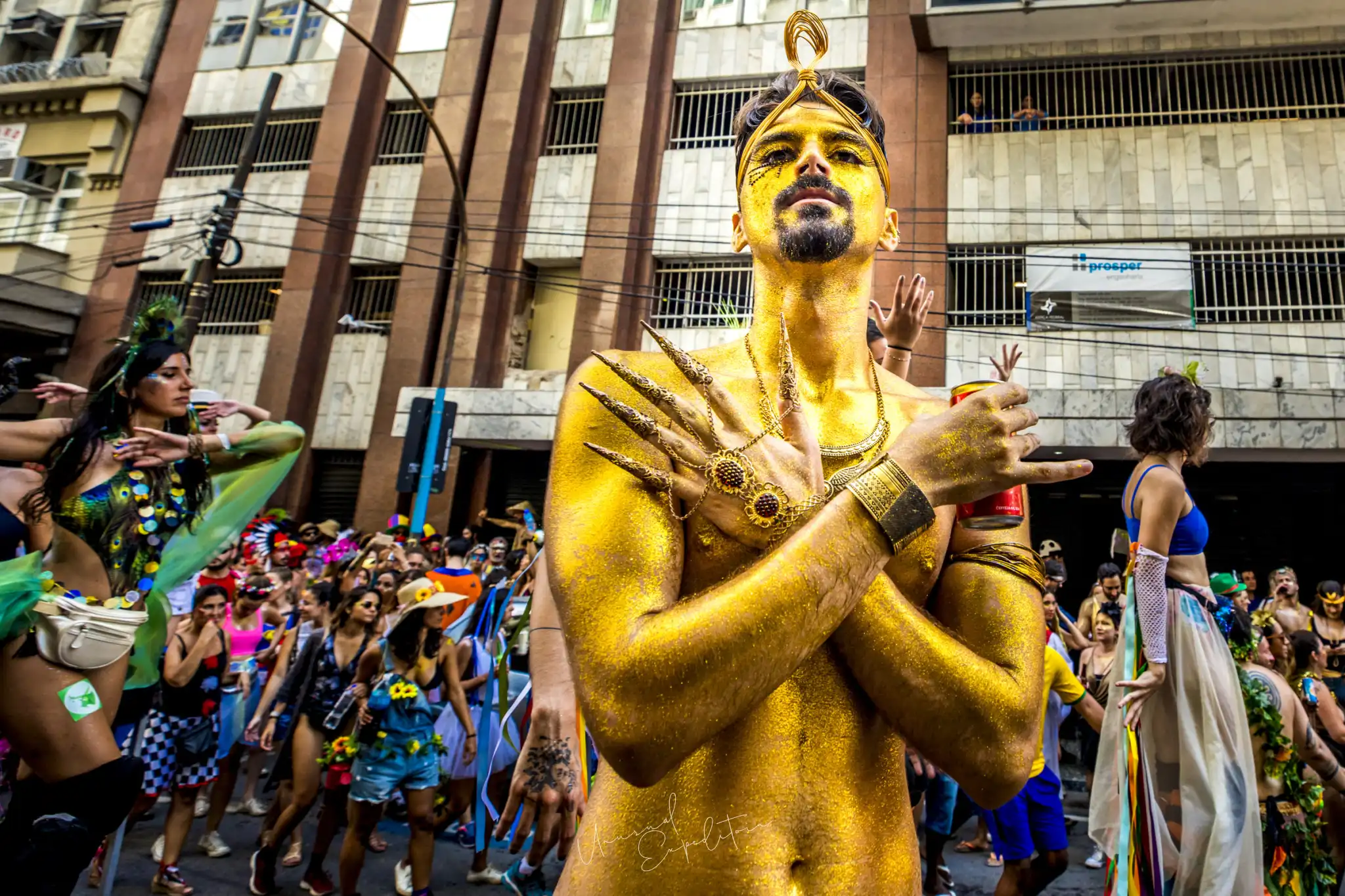
Rio de Janeiro things to do with a camera
Between parades, these are the places we would send a photographer first.
| Place | What you photograph | Best light | Lens |
|---|---|---|---|
| Sambadrome | Floats, alas, passistas, the flag-bearing couple | Night, under floodlights | 70-200mm and 24-70mm |
| Downtown blocos (Centro) | Costumes, face paint, brass bands | Morning, before the sun is overhead | 16-35mm or 24-70mm |
| Santa Teresa | Blocos on the tram tracks, graffiti, old houses | Morning and late afternoon | 35mm or 24-70mm |
| Copacabana seafront | Evening blocos, beach kiosks, Sugarloaf on the skyline | Late afternoon and dusk | 24-70mm |
| South zone beaches | Bathers in the surf, umbrellas, the hills behind | Late afternoon backlight | 70-200mm |
The seafront and the beaches are also the places to slow down after a night at the Sambadrome.
Is Rio de Janeiro worth visiting outside carnival?
Yes, but it is a different trip. Without carnival, Rio de Janeiro is a beach city with mountains in the middle of it, and the photography moves to the sand, the promenades and the neighbourhoods. Our Rio de Janeiro beach photos show Copacabana and the south zone beachfront, and our Santa Teresa guide covers the hillside district above the centre. The weather matters as much as the calendar: summer is hot, humid and stormy, winter is drier and milder, and our best time to visit Rio de Janeiro guide sets the months side by side, with the carnival calendar.
At the Sambadrome you are a spectator with a long lens. In a bloco you are part of the party, and people pull you in. I came home with more keepers from the streets than from the stands.
Joseph Mak, tour leader, Unusual Expedition
Gospel blocos and the Copacabana seafront
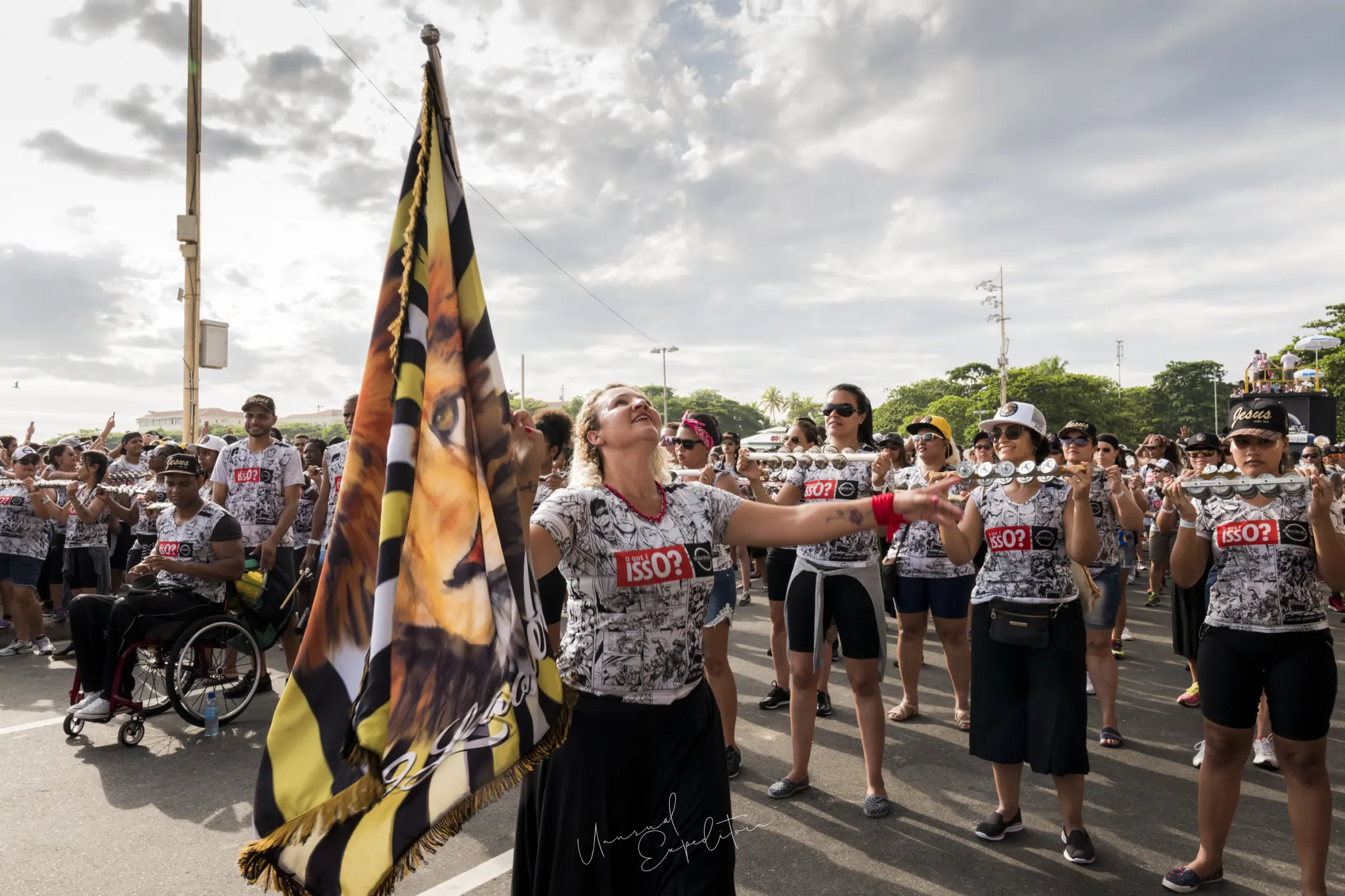
Not every bloco is a drinking party. On the Copacabana seafront we photographed a gospel bloco, hundreds of members in matching shirts playing tambourines and drums, flags with lions and superhero logos, and coloured smoke rising over Avenida Atlântica with the hills of Leme behind. It was one of the most photogenic parades of the week because the members were organised, proud of their costumes and happy to be photographed. Look for these smaller, themed blocos in the official list: they give you cleaner backgrounds and room to move.
Safety and the camera in Rio de Janeiro
Rio de Janeiro has a reputation, and the UK Foreign, Commonwealth and Development Office is direct about it: pickpocketing is common, thefts are particularly common on public beaches, criminals target big celebrations such as carnival, and visitors should not use a mobile phone in the street. None of that stopped us working, but it changed how we worked. Carry one body and one lens into a bloco, keep the phone in a front pocket, leave the bag at the hotel, and stay off the city beaches after dark. In the Sambadrome stands the risk is lower and you can bring more kit. Our Rio carnival travel guide covers the practical side in more detail.
Explore Rio de Janeiro in depth
- Rio carnival photos: costumes, faces and colour from the Sambadrome and the streets.
- Sambadrome parade: how the samba school parades work and how to photograph them.
- Rio carnival blocos: the street parties, from the centre to Copacabana.
- Best time to visit Rio de Janeiro: carnival dates, seasons and light.
- Rio de Janeiro beach photos: Copacabana and the south zone beachfront.
- Santa Teresa, Rio de Janeiro: the hillside neighbourhood, its tram tracks and its blocos.
- Carnival in Rio travel guide: flights, entry, tickets and safety.
Photograph Rio de Janeiro with us
We run Rio de Janeiro as a private trip on request, for individuals, couples, families and photographers who want to work at their own pace, with carnival or without it. We arrange all the logistics to your needs, and a photographer or photography coaching can be added at extra cost. Because no tour leader travels, the cost can be lower than a group tour. Ask at least two months ahead, and earlier for carnival, though last-minute trips can be arranged. Read how it works on our private tours page, and see the Brazil photography tours page for every Brazil destination guide.
Rio de Janeiro photography tours
The next Rio de Janeiro departure is announced on the Rio de Janeiro photography tours page, with previous expeditions and all the planning guides.
Explore Rio de Janeiro in depth
- Santa Teresa, Rio de Janeiro: Street Art, Tram Tracks and BlocosBrazil
- Sambadrome Parade: How to Photograph Rio Carnival's Samba SchoolsBrazil
- Rio de Janeiro Beach Photos: Copacabana, Ipanema and the SurfBrazil
- Carnival in Rio Travel Guide: Flights, Visa, Tickets and SafetyBrazil
- Rio Carnival Photos: Pictures from the Sambadrome and the StreetsBrazil
- Rio Carnival Blocos: Photographing Rio's Street PartiesBrazil
- Best Time to Visit Rio de Janeiro: Carnival, Seasons and LightBrazil
Upcoming Photo Tours
- Egypt Photo Tour – EgyptEgypt 12 Dec 2026 To 20 Dec 2026
- Inner Mongolia Winter Owl Photo Tour – ChinaChina 01 Jan 2027 To 04 Jan 2027
- Inner Mongolia Winter Photo Tour – ChinaChina 05 Jan 2027 To 11 Jan 2027
- Mekong And Central Highland Vietnam Photo Tour - VietnamVietnam 16 Jan 2027 To 24 Jan 2027