
Western Sichuan Tour: A Photography Guide to Tibetan Sichuan
A western Sichuan tour for photographers: Litang, Tagong, snow ranges, Danba blossom, Chengdu teahouses, altitude, permits.
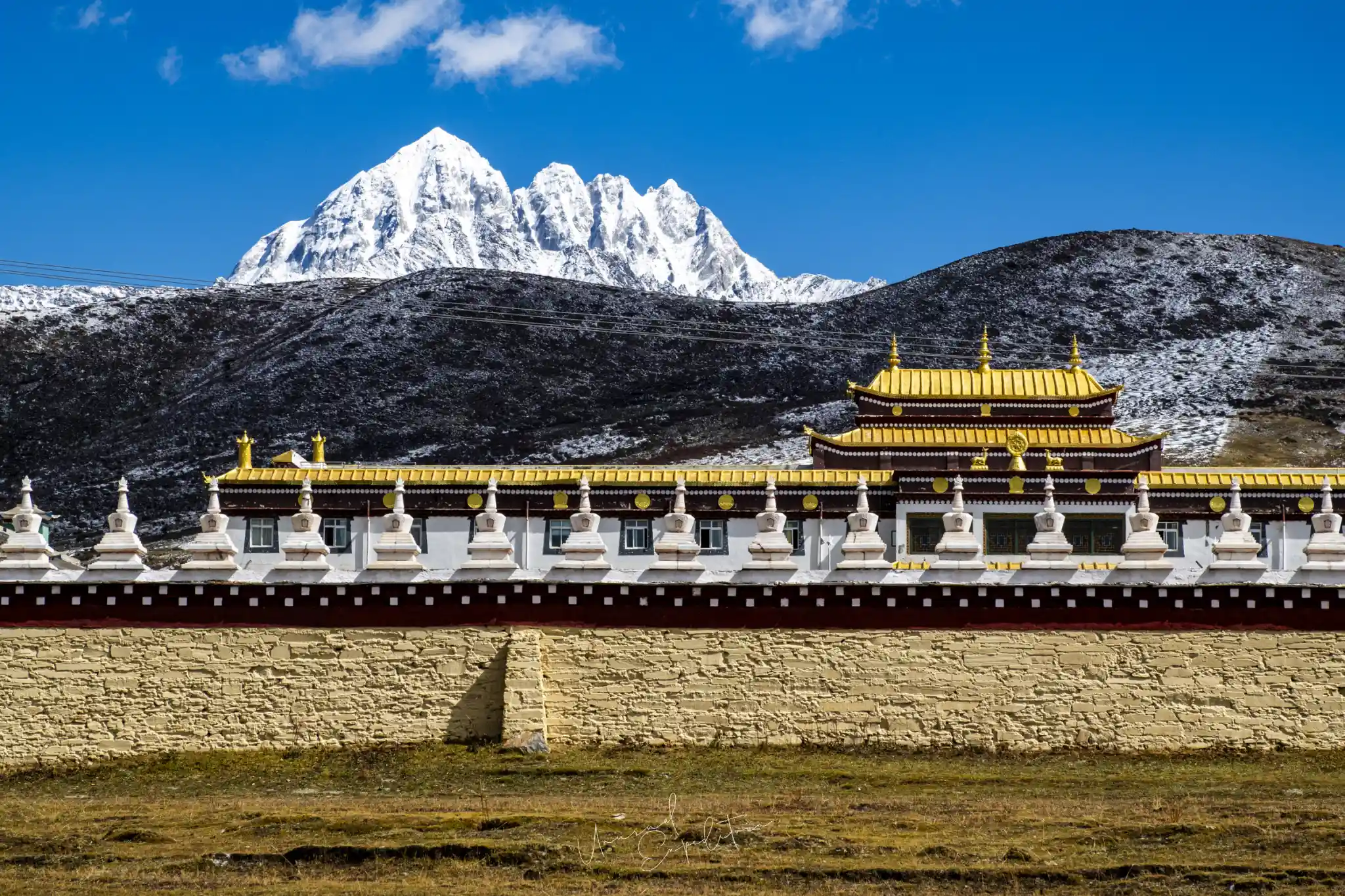
A western Sichuan tour is the easiest way into Tibetan China for a photographer: Garze prefecture, west of Chengdu, has monastery towns, grassland, snow ranges and Tibetan villages, and unlike the Tibet Autonomous Region it needs no Tibet Travel Permit. We have photographed it in spring blossom, in autumn colour and in early snow since 2015. Here is what the region holds for a camera, where the pictures are, when to go and what to plan around, from the teahouses of Chengdu to the high plateau.
Sichuan is one region in our wider China photography tour guide. Yading, the reserve with the three sacred peaks in the far south of Garze, has its own set of articles, starting with the Yading photography tour guide.
Western Sichuan tour: what you photograph
Western Sichuan rises from the Chengdu plain onto the eastern edge of the Tibetan plateau, and most of the towns we work in sit between 3,500 and 4,000 metres. The pictures fall into four groups. There are the monastery towns: Litang with its golden roofs above the grassland, Tagong with its white chortens under a snow peak, and the great Buddhist encampments of Larung Gar and Yarchen Gar, now closed to foreign visitors. There are the mountains: long snow ranges at sunrise, alpine lakes, prayer flags on the passes. There are the valleys: Tibetan villages with stone watchtowers along the Dadu river, pear blossom in spring, golden larch in autumn. And there is Chengdu itself, where old teahouses and Sichuan opera give you a different kind of light and a slower kind of picture.
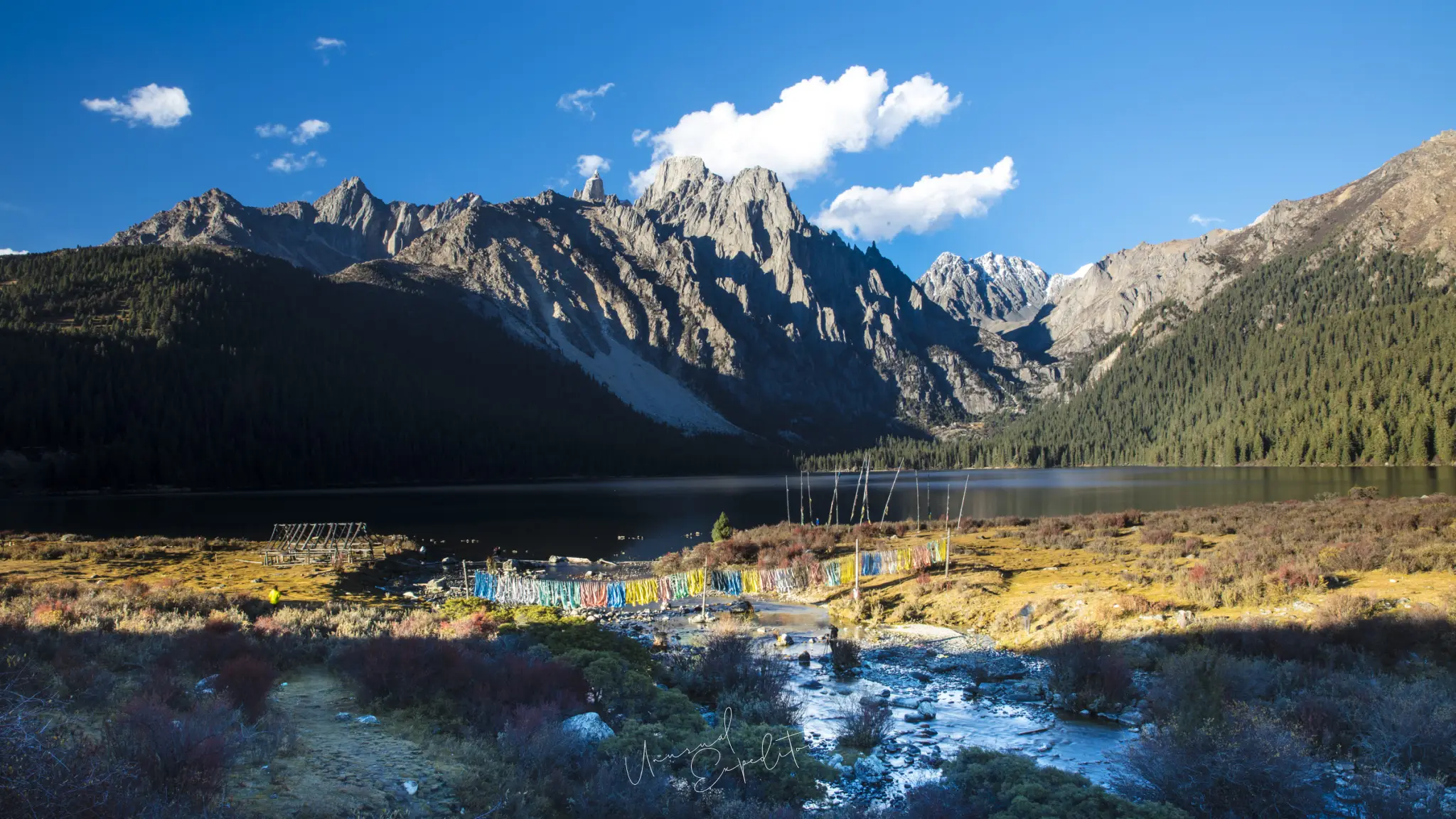
Western Sichuan mountains and grassland
The mountains are the reason most photographers come. On a clear autumn morning from a high pass you can see a whole snow range turn pink, then gold, with prayer flags snapping in the foreground. Lower down, rivers run through larch and birch that turn yellow in October, and lakes sit below walls of rock and ice. The grassland between the passes is wide and open, with black yak tents in summer and herders moving animals at the edges of the day. Our western Sichuan photo spots article goes place by place: Litang, Tagong, the passes and the Dadu valley.
Larung Gar and Yarchen Gar: can you still go?
Larung Gar, the Buddhist academy at Seda in northern Garze, was for years the most photographed place in western Sichuan: thousands of red wooden houses filling a valley at around 4,000 metres. We photographed it in March 2015, and Yarchen Gar, the nuns' encampment in a river bend in Palyul county, in October 2016. Both have been closed to foreign visitors for years, according to Lonely Planet and reporting by Radio Free Asia, and we do not take groups there now. Our Larung Gar photos article shows what we saw and explains the current position.
Chengdu teahouses and Sichuan opera
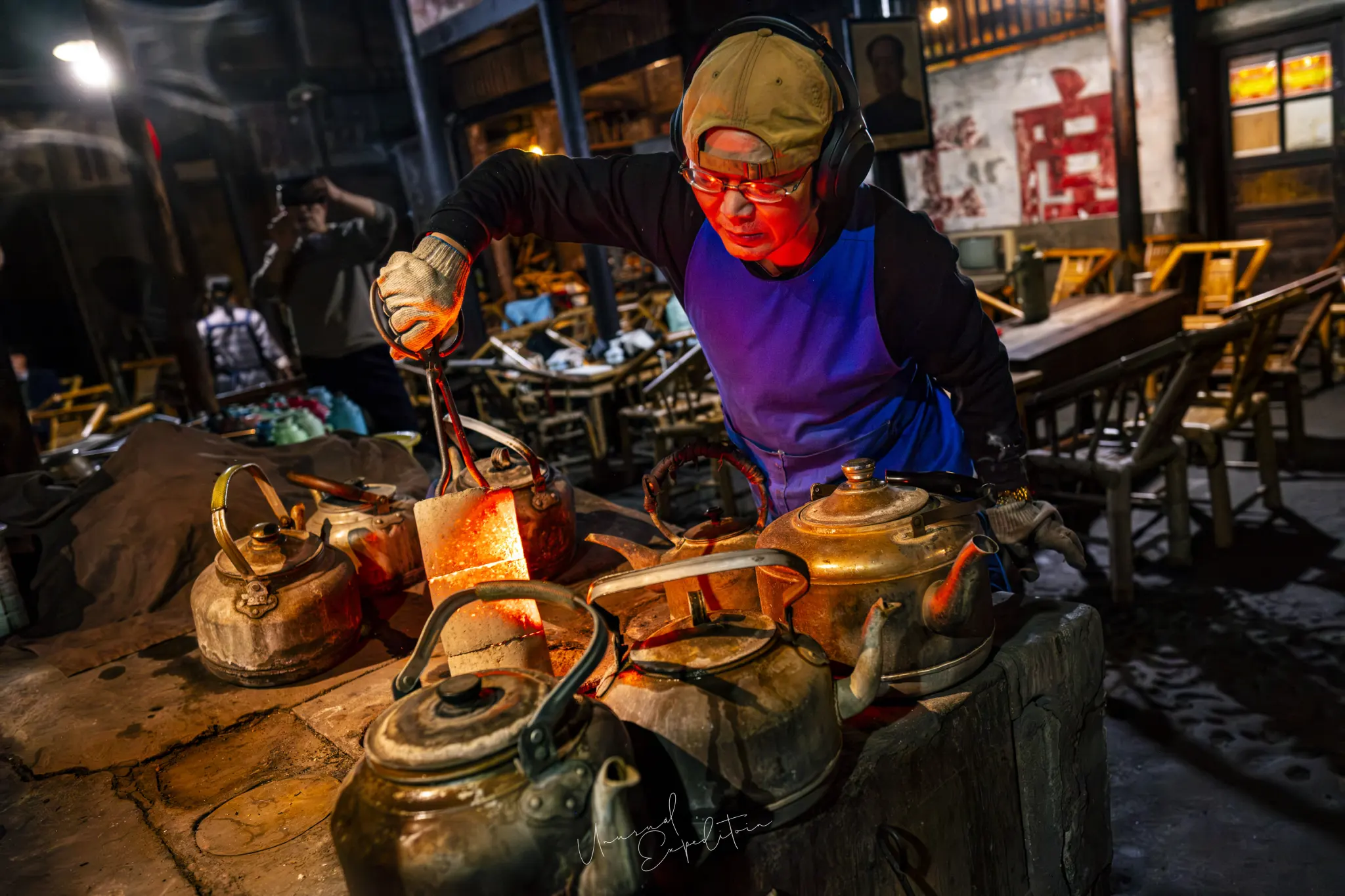
Chengdu is where every western Sichuan trip starts and ends, and it is worth a session of its own. In the old teahouses on the edge of the city, kettle masters pour from copper spouts while regulars play cards and read the paper under a tiled roof. Light comes in through gaps in the walls and catches the steam. In the evening, Sichuan opera performers paint their faces in hand mirrors before face-changing and fire-spitting acts. The Chengdu teahouse photography guide covers how to work in a teahouse without becoming a nuisance.
Best time to visit western Sichuan
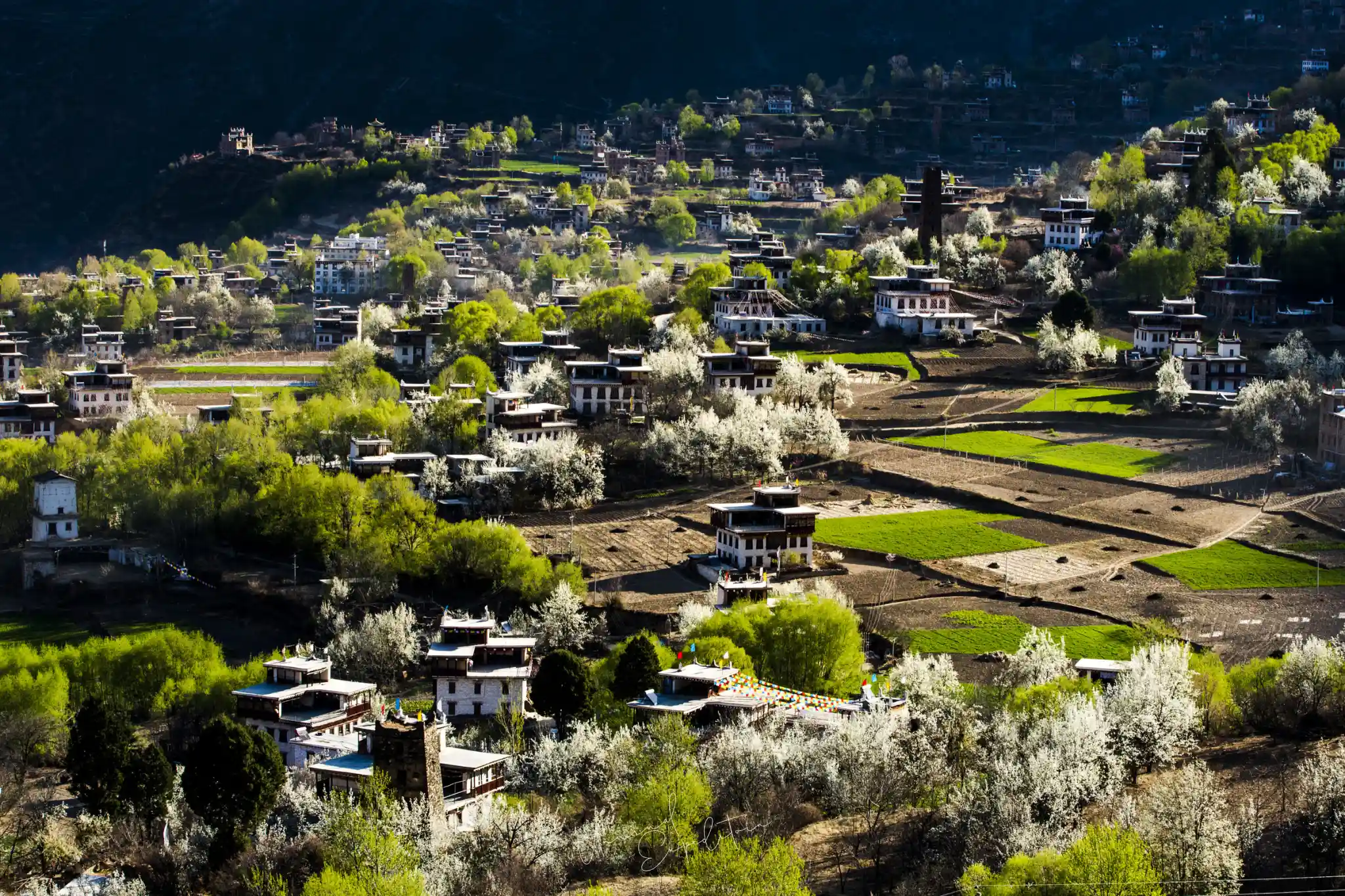
There are two seasons we plan around. Mid March to early April brings pear blossom to the Dadu river valley around Danba and Jinchuan, with snow still on the passes. Late September to October brings the clearest skies of the year, golden larch, red grass on the Daocheng plateau and the first snow on the peaks. Summer is green and festive but wet, with cloud hiding the ranges; winter is cold and clear, though snow can close the high roads. The best time to visit western Sichuan article has the month-by-month view.
| Subject | Where | Best season |
|---|---|---|
| Snow ranges at sunrise | High passes in Garze | October to early winter |
| Monastery towns | Litang, Tagong | All year, clearest in autumn |
| Pear blossom and watchtowers | Dadu river valley, Danba area | Mid March to early April |
| Golden larch and rivers | Valleys of Garze | October |
| Teahouses and opera | Chengdu | All year |
Most groups pick autumn for the mountains; blossom season suits those who want villages and softer light.
Altitude in western Sichuan
Altitude shapes every plan here. Litang sits at about 4,014 metres according to Wikipedia, Tagong grassland at 3,700 to 3,900 metres, and the passes between them go higher. Coming straight from Singapore, the first nights at that height are hard on sleep and on breath. We climb gradually, keep the first days easy and avoid walking uphill with a full bag on arrival. Drink plenty, skip alcohol early on, and talk to your doctor before the trip about whether altitude medication suits you. If symptoms get worse rather than better, the answer is to go down.
Do you need a permit for western Sichuan?
No Tibet Travel Permit is needed for Garze, which is part of Sichuan province. That permit is for the Tibet Autonomous Region. Singapore passport holders can enter China visa-free for up to 30 days under the mutual exemption that started on 9 February 2024, according to Singapore's Immigration and Checkpoints Authority. Some monastery areas can close to foreigners at short notice, especially around sensitive dates, so we confirm access locally before each trip and keep a fallback ready.
The first time I saw Litang monastery in the morning, the gold roofs were the only warm thing on the plateau. Everything else was frost and blue shadow. That contrast is western Sichuan for me: hard country, and then colour you do not expect.
Joseph Mak, tour leader, Unusual Expedition
Photographing people respectfully
Western Sichuan is a living Tibetan region, and the monks, nuns and pilgrims are not a show. We photograph wide, or from behind, unless someone clearly welcomes a portrait, and we ask with a gesture before raising the camera close. Inside assembly halls, photography is often not allowed; look for signs and ask. In villages, buying a cup of butter tea or showing the picture on the back of the camera does more than any long lens.
Camera gear for a western Sichuan tour
A 24-70mm covers towns, monasteries and most portraits. A 70-200mm or 100-400mm pulls single peaks out of a range and isolates prayer flags against snow. A 16-35mm earns its place in teahouses and assembly halls where you work close. Bring more batteries than you think: cold mornings at 4,000 metres drain them quickly, so keep spares in an inside pocket. A light tripod helps for blue hour over the monasteries and for long exposures of rivers. Dust is constant on the plateau roads, so change lenses inside the vehicle.
Western Sichuan tour from Singapore
There are direct flights from Singapore to Chengdu, and Chengdu is the gateway for the whole region. From there you either fly to a plateau airport such as Daocheng Yading or go overland west through the mountains. We prefer overland for the photography and the gradual climb. Payment in China runs on Alipay and WeChat Pay, both of which accept foreign cards now; set them up before you fly. Google services do not work in China without a roaming plan that routes outside, which most Singapore SIMs on roaming do.
Explore Sichuan in depth
- Larung Gar photos, and whether foreigners can visit now
- Western Sichuan photo spots: Litang, Tagong and the passes
- Chengdu teahouse photos and Sichuan opera
- Best time to visit western Sichuan
- Yading photography tour guide
Join us in western Sichuan
We run western Sichuan as autumn departures and as private trips on request. See the current China departures and every China guide on our China photography tours page, or write to us with the season you have in mind.
Join the Sichuan photography tour
Inner Mongolia Winter Owl Photo Tour – China departs 01 Jan 2027 To 04 Jan 2027, led by Joseph Mak. Small group, photography first. All Sichuan photography tours.
Explore Sichuan in depth
- Western Sichuan Photo Spots: Litang, Tagong, the Passes and DanbaChina
- Larung Gar Photos: The Buddhist Academy at Seda, and Whether You Can Go NowChina
- Chengdu Teahouse Photos: Old Teahouses and Sichuan OperaChina
- Best Time to Visit Western Sichuan for PhotographyChina
Upcoming Photo Tours
- Egypt Photo Tour – EgyptEgypt 12 Dec 2026 To 20 Dec 2026
- Inner Mongolia Winter Owl Photo Tour – ChinaChina 01 Jan 2027 To 04 Jan 2027
- Inner Mongolia Winter Photo Tour – ChinaChina 05 Jan 2027 To 11 Jan 2027
- Mekong And Central Highland Vietnam Photo Tour - VietnamVietnam 16 Jan 2027 To 24 Jan 2027