
Snaefellsnes Peninsula in Winter: Snow, Aurora and the Best Time to Visit
Snaefellsnes peninsula in winter for photographers: frozen Kirkjufellsfoss, aurora, daylight, roads and the seasons compared.
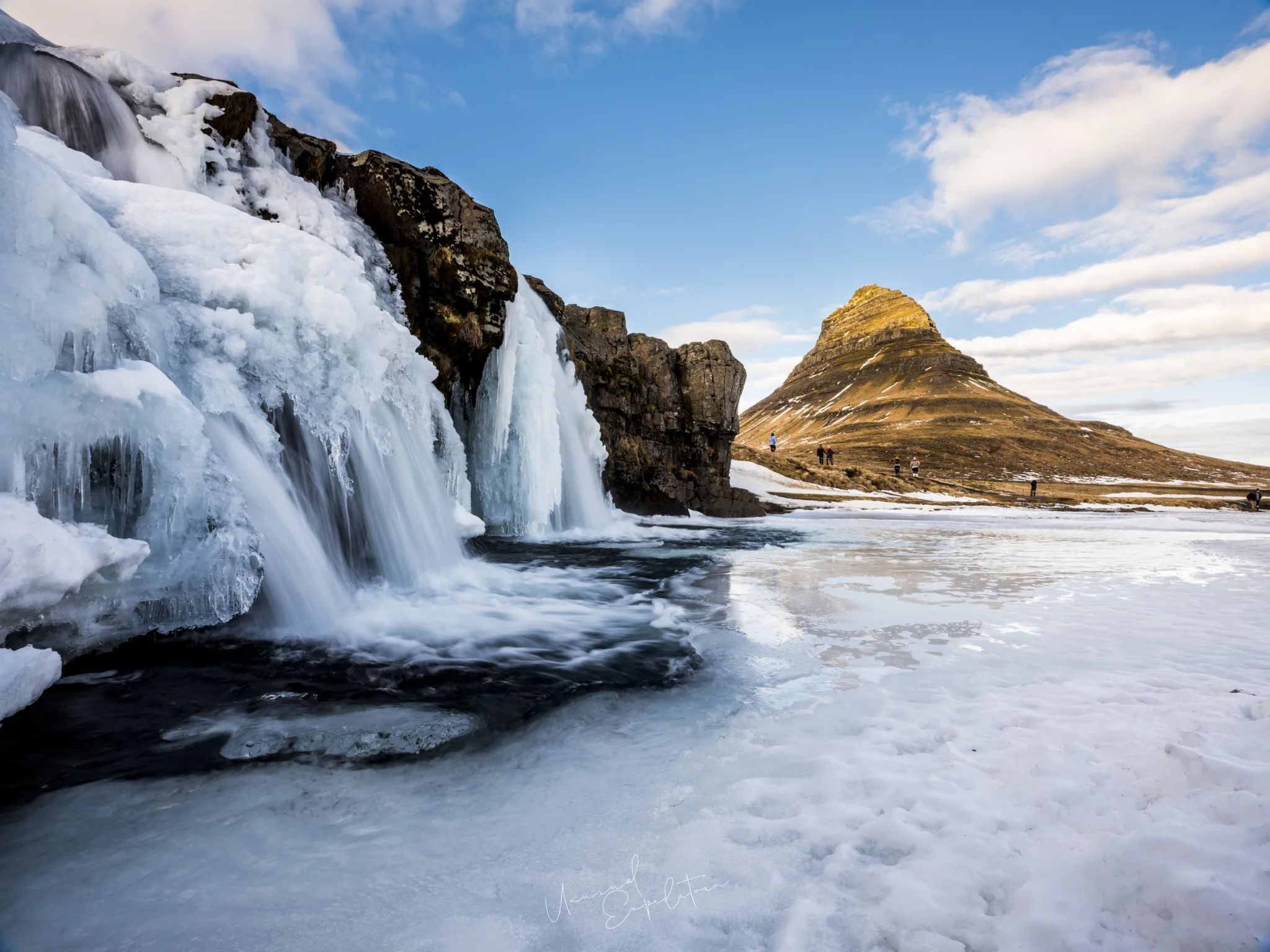
The Snaefellsnes peninsula in winter is one of the best places in Iceland to photograph snow, ice and the aurora within a short distance of each other: Kirkjufell turns white, the cascades of Kirkjufellsfoss freeze into blue columns, Budir church stands black on a white lava field and long nights give the northern lights plenty of time. The trade-off is short daylight, icy paths and Atlantic storms that can close roads, so a winter visit needs slack in the plan and a close eye on the forecast.
Winter is our favourite season on the peninsula, though autumn and summer each have a strong case, and the notes below come from our own autumn and winter trips here. The main places are introduced in our Snaefellsnes photography tour guide.
Snaefellsnes peninsula in winter: what you get
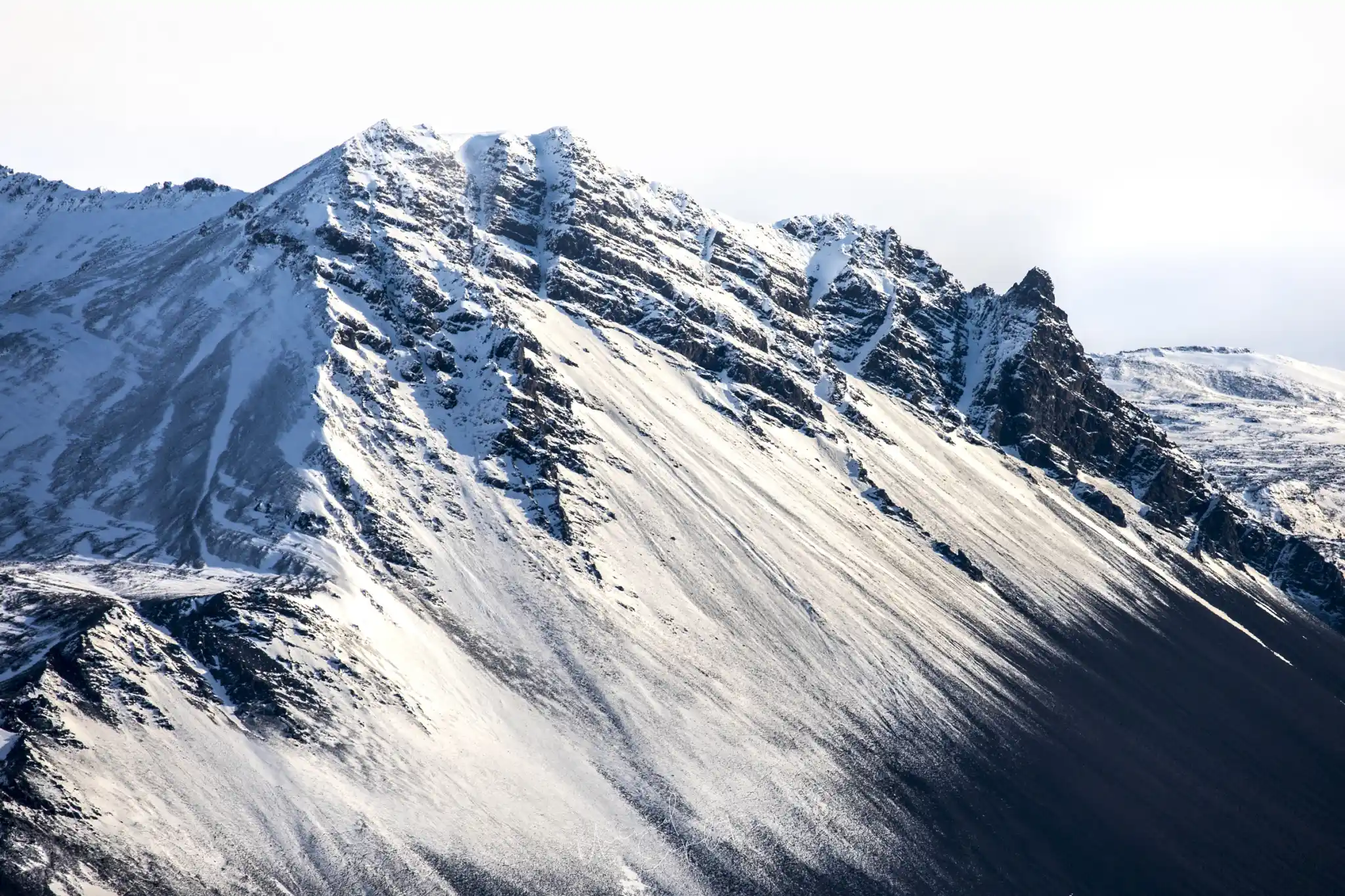
Winter on Snaefellsnes runs roughly from November to March, with snow possible from autumn into April. The sun stays low all day, so the light is warm and raking even around midday, and sunrise and sunset colours last far longer than they do further south in Europe. Perlan notes that Reykjavik gets only four or five hours of daylight at midwinter, and the peninsula is much the same. Snow simplifies the landscape: the bands of rock on Kirkjufell stand out, the lava fields around Budir become clean white planes, and the black cliffs at Londrangar and Arnarstapi look darker against the snow. Our Kirkjufell photography guide shows how the mountain changes under snow.
Kirkjufell winter
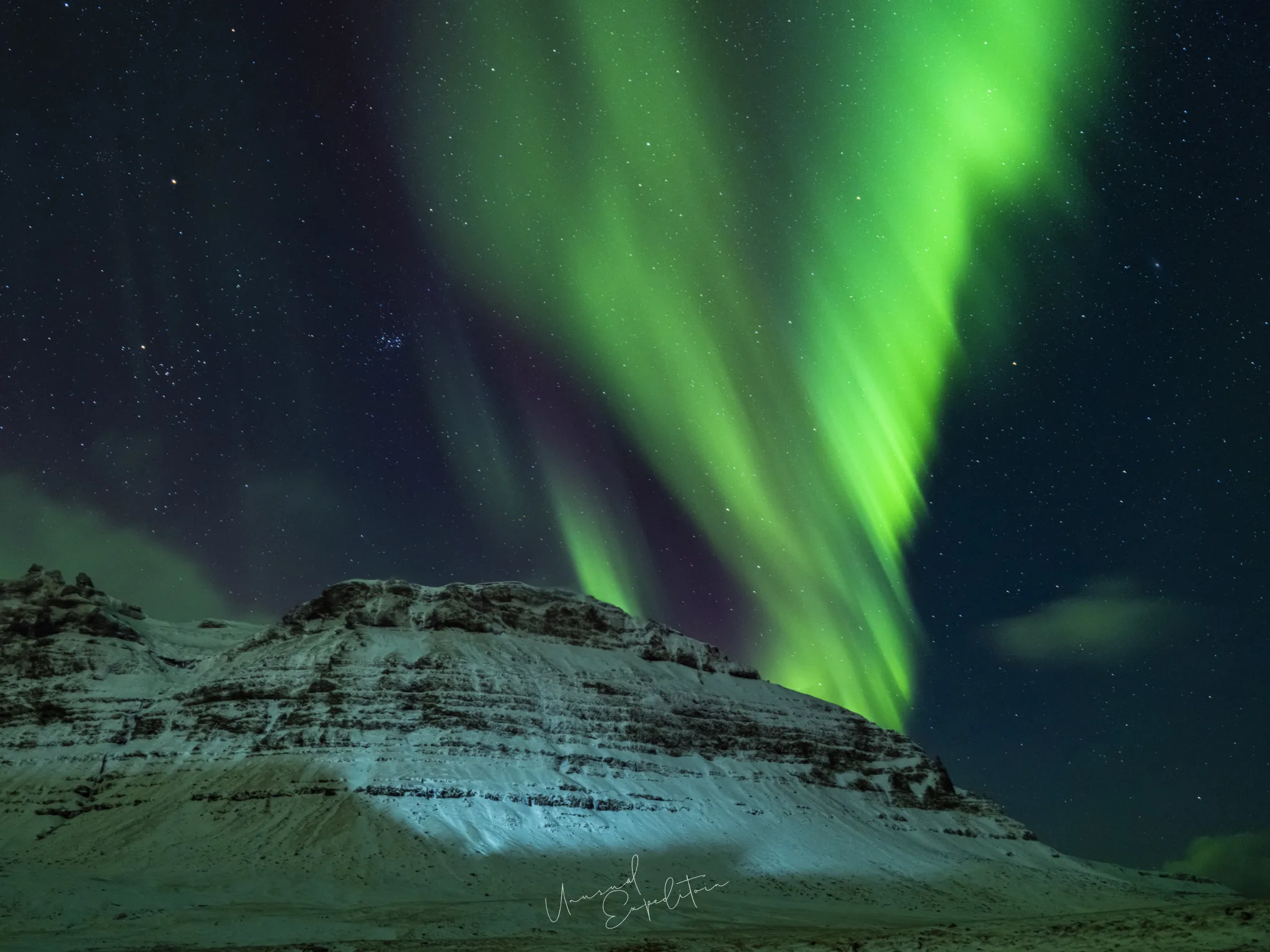
Kirkjufell in winter is the image many people have in mind when they plan Iceland. The falls freeze from the edges inwards, and in a cold spell the whole cascade can turn to ice with water still running behind it. The paths above Kirkjufellsfoss become glazed, and a fall there ends in the river, so microspikes go on before you leave the car. Daylight is precious, so we use the low sun for the mountain and the long night for the aurora at the same spot.
Best time to visit Snaefellsnes for photography
| Season | Landscape | Light | Aurora | Watch out for |
|---|---|---|---|---|
| Autumn, September to October | Gold grass, first snow on peaks | Normal days, long sunsets | Yes, on dark nights | Rain, early storms |
| Winter, November to February | Snow, frozen falls | Low sun all day, short days | Long nights | Ice, wind, road closures |
| Late winter, March to early April | Snow lingering, longer days | Good balance of day and night | Yes | Spring storms |
| Summer, May to August | Green slopes, seabirds | Midnight sun, soft light at night | No, too bright | Crowds at Kirkjufellsfoss |
For a mix of snow, daylight and aurora, late winter is the season we come back to most.
Snaefellsnes in autumn
Autumn is the underrated season. In September and October the grass on the lava fields turns gold and rust, the first snow lands on the mountain tops, and the nights are already dark enough for the aurora. The weather is milder than in midwinter and the roads are usually clear. On our autumn trip we photographed Kirkjufellsfoss in golden evening light and, after dark, the aurora over Budir: a golden evening and an aurora night in one trip, which midwinter rarely allows.
Snaefellsnes in summer
Summer is the opposite of winter on the peninsula. From late spring the nights never get properly dark, the slopes turn green, seabirds nest on the cliffs at Arnarstapi and Londrangar, and the low sun moves round the north of the sky, lighting Kirkjufell late into the evening. There is no aurora and Kirkjufellsfoss is busy by day, so the best summer sessions happen late, after the day visitors have gone. Our scheduled tour comes in summer for exactly that light.
Driving the peninsula in winter
The main road round Snaefellsnes is kept open in winter, but storms close it at times, and the mountain roads across the middle of the peninsula are more exposed. The Icelandic Road and Coastal Administration posts conditions and closures at road.is, and Safetravel.is carries alerts; check both every morning and again before a night shoot. Rent a four-wheel-drive car with studded winter tyres, keep the fuel tank topped up, and never stop on the road to take a picture. Wind is the hazard visitors underestimate: on this coast a gust can rip a car door from your hand.
Winter light on the south coast
The south coast faces the low winter sun, which suits Londrangar and Arnarstapi. On bright days the sea stacks catch side light for much of the short day; on stormy days spray and mist hang over the coast and turn the rocks into soft grey shapes. Both are worth photographing. The Londrangar and Arnarstapi cliffs guide covers the viewpoints, and the Kirkjufell northern lights guide covers the nights.
In winter you plan the day around a few hours of light and the whole night around the sky. If the aurora comes out, sleep in. If it does not, you are up for the sunrise anyway.
Joseph Mak, tour leader, Unusual Expedition
What to wear and carry
Dress in layers: thermal base layers, a fleece or down mid layer, and a windproof, waterproof shell, with insulated boots and microspikes. Thin liner gloves under warmer mittens let you work the camera without exposing bare skin. Keep spare batteries in an inside pocket, wipe salt spray from the lens often on the south coast, and let the camera warm slowly inside a closed bag when you come in from the cold so condensation does not form inside it.
Winter towns and harbours
The fishing towns of the north coast, Grundarfjordur, Olafsvik, Rif and Hellissandur, are where you will find fuel, food and shelter in winter, and they are subjects too: harbours in snow, boats hauled out on the shore and fish drying on racks. From the air, Grundarfjordur at sunrise shows the whole setting, the town on its bay with Kirkjufell standing across the water.
Photograph Snaefellsnes in winter with us
Our scheduled Iceland departure runs in summer and is listed on our Iceland photography tours page. For Snaefellsnes in winter or autumn we arrange private tours with time on the peninsula for the weather to turn your way.
Ask us about Snaefellsnes in winter
Join the Snaefellsnes photography tour
Iceland Midnight Sun Photo Tour departs 05 Jul 2027 To 18 Jul 2027, led by Joseph Mak. Small group, photography first. All Snaefellsnes photography tours.
Explore Snaefellsnes in depth
- Snaefellsnes Peninsula Photography Tour Guide: Kirkjufell, Budir, Londrangar and the AuroraIceland
- What to See in Snaefellsnes Peninsula: Photo Spots from Kirkjufell to BudirIceland
- Snaefellsnes Day Trip from Reykjavik: Is One Day Enough for Photographers?Iceland
- Londrangar Sea Stacks and Arnarstapi Cliffs: Viewpoints, Gatklettur and the Hellnar PathIceland
- Kirkjufell Photography: Viewpoints, Light, Parking and the WaterfallIceland
- Kirkjufell Northern Lights: When to Go, Where to Stand and SettingsIceland
- Budir Black Church: History, Angles and the Aurora at BudakirkjaIceland
Upcoming Photo Tours
- Egypt Photo Tour – EgyptEgypt 12 Dec 2026 To 20 Dec 2026
- Inner Mongolia Winter Owl Photo Tour – ChinaChina 01 Jan 2027 To 04 Jan 2027
- Inner Mongolia Winter Photo Tour – ChinaChina 05 Jan 2027 To 11 Jan 2027
- Mekong And Central Highland Vietnam Photo Tour - VietnamVietnam 16 Jan 2027 To 24 Jan 2027