
Snaefellsnes Peninsula Photography Tour Guide: Kirkjufell, Budir, Londrangar and the Aurora
Snaefellsnes peninsula for photographers: Kirkjufell, Budir church, Londrangar, Arnarstapi, the aurora and the seasons.
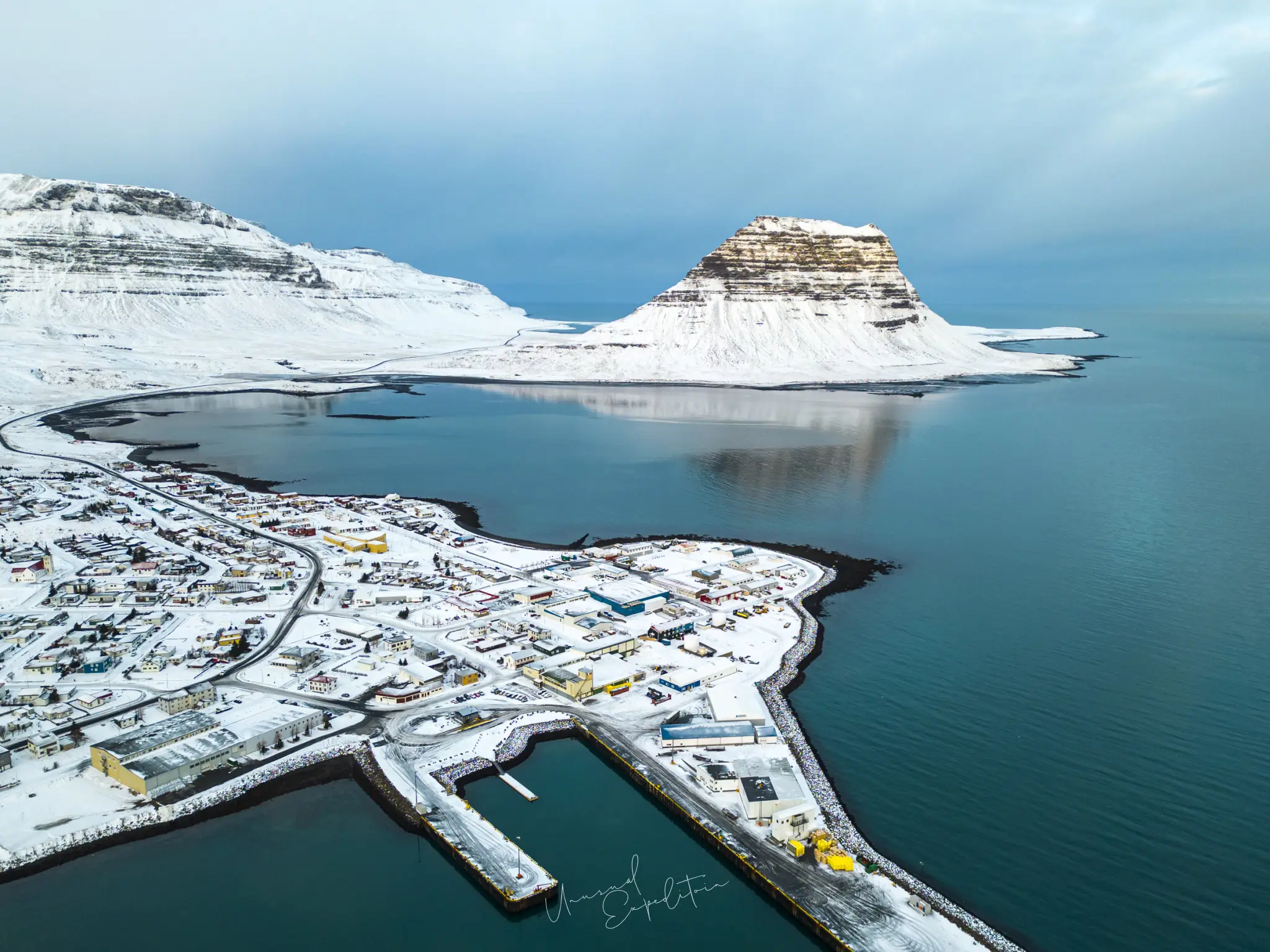
The Snaefellsnes peninsula is the long arm of land in west Iceland that ends under the Snaefellsjokull glacier, and for a photographer it packs a surprising amount into one coastline: Kirkjufell and its waterfall at Grundarfjordur on the north shore, the black church at Budir in its lava field, the sea stacks of Londrangar and the arches of Arnarstapi in the south, and lighthouses on black cliffs at the western tip. It is the region people call Iceland in miniature, and it rewards slow, repeated visits.
Snaefellsnes is one region in our Iceland photography tour guide, which covers entry, money, flights from Singapore and driving conditions once for the whole country. The photographs in this guide are our own, taken on our trips here in autumn and in winter; we hold the rights to them, and the notes come from knowing the peninsula first hand.
Snaefellsnes peninsula: what you are photographing
The Snaefellsnes peninsula runs west from Borgarnes into the Atlantic, with a spine of mountains down the middle and the sea on three sides. The north shore is fishing country: Grundarfjordur, Olafsvik, Rif and Hellissandur, with harbours, drying racks and boats hauled out on the shingle. The south shore is open lava and beach, with Budir, Arnarstapi and Hellnar strung along it. The far west belongs to Snaefellsjokull National Park, set up in 2001 around the glacier-capped volcano that Jules Verne chose as the entrance in Journey to the Centre of the Earth. Because the subjects sit close together and face every direction, you can usually find light somewhere on the peninsula, whichever way the weather is moving.
Kirkjufell and Kirkjufellsfoss
Kirkjufell, the 463 metre peak across the bay from Grundarfjordur, is the reason most photographers come to Snaefellsnes. The classic frame puts the mountain behind the small triple cascade of Kirkjufellsfoss, shot from the bank above the falls, and it works in every season: gold grass in autumn, white snow and blue ice in winter, and a long glow late into the night in summer. The mountain has other sides too. From the lagoon shore below it the mountain doubles in still water, and from the air it sits at the end of Grundarfjordur's bay like a full stop. Our Kirkjufell photography guide covers the viewpoints, the light, the parking and why the mountain is not a casual climb.
Snaefellsnes highlights for photographers
| Place | Subject | Best light | Lens |
|---|---|---|---|
| Kirkjufell and Kirkjufellsfoss | Mountain and waterfall | Sunset, aurora nights | 16-35mm |
| Budir | Black church on a lava field | Overcast day, aurora nights | 16-35mm, 24-70mm |
| Londrangar | Basalt sea stacks | Late afternoon, stormy surf | 24-70mm |
| Arnarstapi | Gatklettur arch, sea cliffs | Overcast, high surf | 16-35mm |
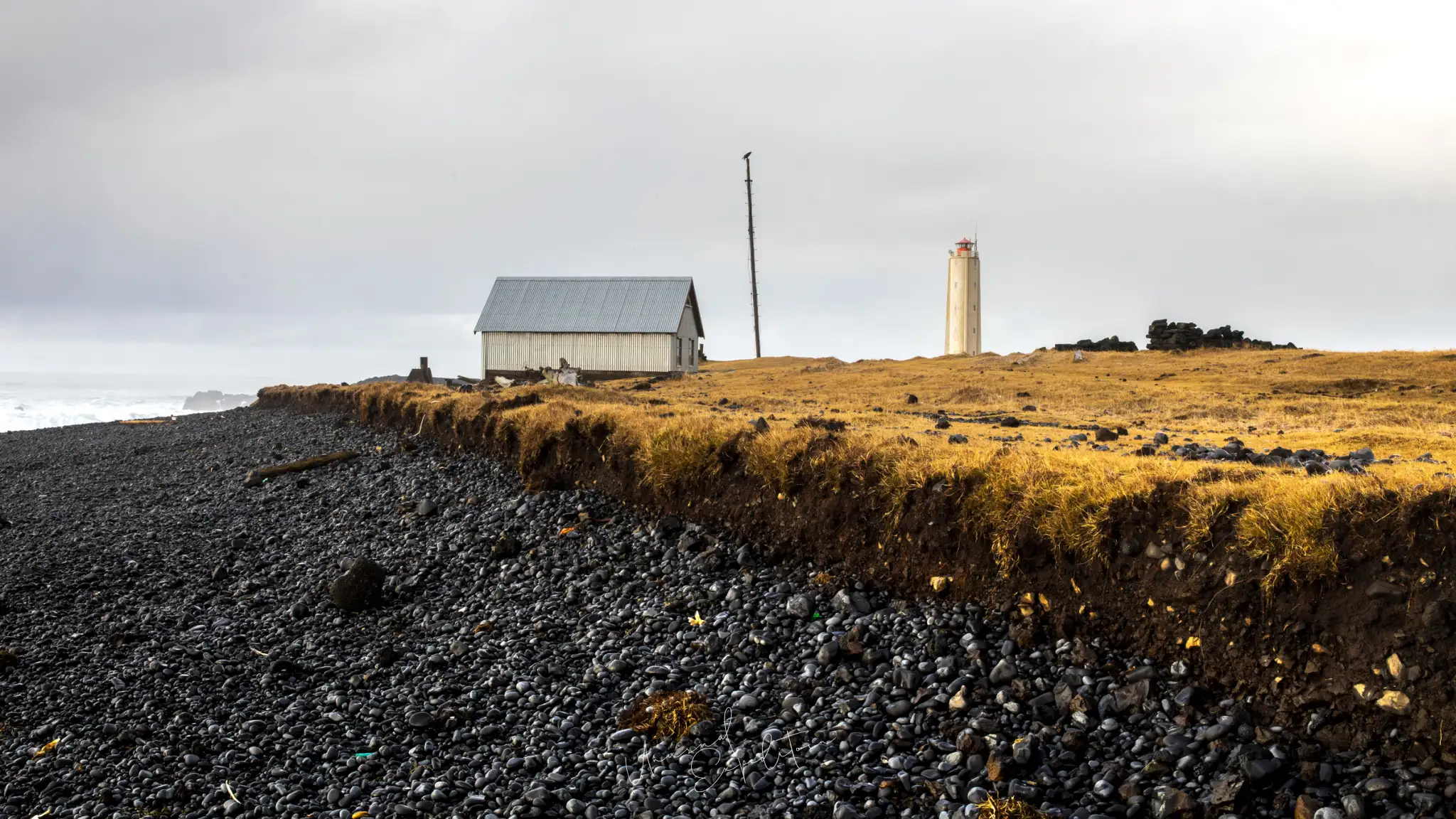
| Svortuloft | Orange lighthouse on black cliffs | Late day | 24-70mm |
| Grundarfjordur | Town, harbour and Kirkjufell from the air | Low winter sun | Drone, 70-200mm |
Most of these sit within one coastline, which is why a few nights on the peninsula beat a single pass through it.
The what to see in Snaefellsnes peninsula guide goes round the coast place by place, and Londrangar and Arnarstapi cliffs takes the south coast sea stacks and arches in detail.
Budir and the black church
Budakirkja at Budir is a small timber church painted black with pitch, standing alone on the edge of the Budahraun lava field with mountains behind it. Perlan's history of the church dates the present building to 1848, with a reconstruction in 1987 that brought it back close to its original form. It is still a working parish church, so the cemetery and the paths deserve respect. By day it is a study in black against grey sky; on a clear winter night, with the aurora overhead and the church door lit by starlight, it becomes one of the strongest night subjects in Iceland. Our Budir black church guide goes through angles, light and etiquette.
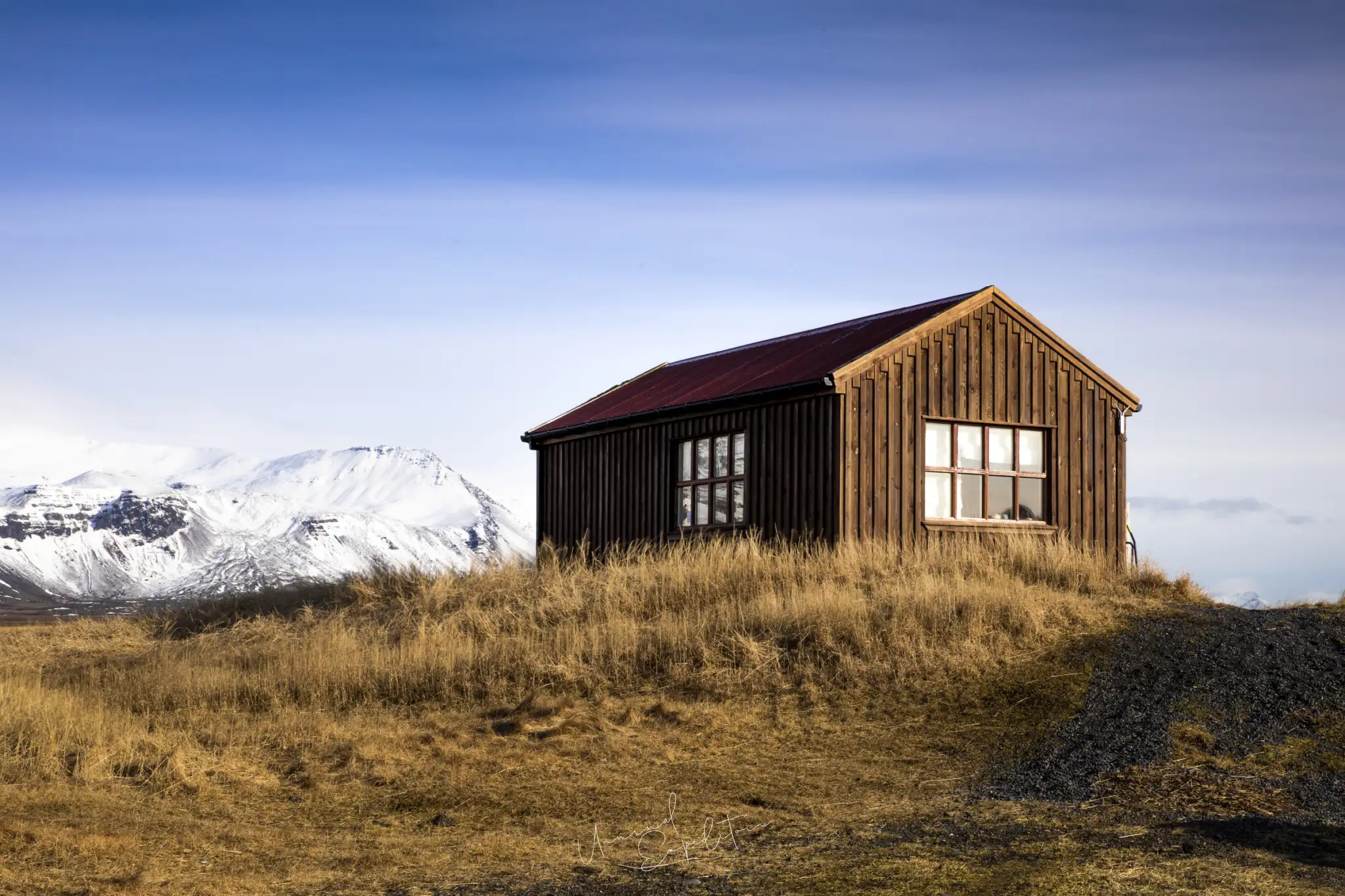
Northern lights on the Snaefellsnes peninsula
From September to April the peninsula is good aurora country: there is little artificial light outside the towns, and Kirkjufell and Budir give the sky a foreground that is instantly recognisable. Cloud is the real enemy on this exposed coast, so we watch the Icelandic Met Office aurora and cloud forecast through the evening and move to whichever side of the mountains is clearing. The Kirkjufell northern lights guide covers settings, where to stand and how to handle the crowds at the falls on a strong night.
Londrangar, Arnarstapi and the south coast
On the south shore the rock does the work. Londrangar, two basalt stacks about 75 and 61 metres tall according to Guide to Iceland, rise from the sea near the Malarrif lighthouse, and you can photograph them from the cliff top or from the shore with the surf running between the rocks. Further east, Arnarstapi has the Gatklettur arch and a cliff path to the hamlet of Hellnar. On stormy days the waves here are huge, which is good for pictures and a reason to keep well back from the edge.
People drive round Snaefellsnes in a day and leave with one Kirkjufell picture. Give it a few nights and the peninsula keeps offering you something new: the church in the snow, the surf at Londrangar, the mountain under the aurora.
Joseph Mak, tour leader, Unusual Expedition
Snaefellsnes in winter, autumn and summer
Each season gives Snaefellsnes a different palette. Autumn brings gold and rust grass, the first dark nights and the first auroras. Winter brings snow on Kirkjufell, frozen cascades at Kirkjufellsfoss, low sun all day and the longest aurora nights, along with storms that can close roads. Summer brings the midnight sun, green slopes and soft light deep into the night, but no aurora. Our Snaefellsnes peninsula in winter guide compares the seasons and explains what winter driving here involves. If you are short of time, the Snaefellsnes day trip from Reykjavik guide sets out what a day can and cannot give a photographer.
Other regions of Iceland
Snaefellsnes pairs well with the glacier country of the south-east. Our Jokulsarlon photography tour guide covers the glacier lagoon, Diamond Beach and the ice caves, and the best time to photograph Iceland guide sets the regions side by side month by month.
Safety on the peninsula
Snaefellsnes is exposed to the Atlantic on three sides. Wind is the main hazard for drivers in winter, and the cliffs at Londrangar, Arnarstapi and Svortuloft have no fences. Check road conditions with the Icelandic Road and Coastal Administration at road.is and alerts on Safetravel.is before you set out, and keep a safe distance from cliff edges and the surf line.
Explore Snaefellsnes in depth
- Kirkjufell photography: viewpoints, light and the waterfall
- Kirkjufell northern lights
- Budir black church
- Londrangar and Arnarstapi cliffs
- What to see in Snaefellsnes peninsula
- Snaefellsnes peninsula in winter
- Snaefellsnes day trip from Reykjavik
Photograph Snaefellsnes with us
Our Iceland Midnight Sun Photo Tour includes a stay on Snaefellsnes, with evening sessions at Kirkjufell and an afternoon along the south coast at Budir, Arnarstapi, Londrangar and Djupalonssandur. The fare is indicatively S$15,500 to S$19,250 per person depending on the room; the current departure and rate are on our Iceland photography tours page. For the peninsula in autumn or winter, with the aurora, we arrange private tours planned around your dates and pace.
Join the Snaefellsnes photography tour
Iceland Midnight Sun Photo Tour departs 05 Jul 2027 To 18 Jul 2027, led by Joseph Mak. Small group, photography first. All Snaefellsnes photography tours.
Explore Snaefellsnes in depth
- What to See in Snaefellsnes Peninsula: Photo Spots from Kirkjufell to BudirIceland
- Snaefellsnes Peninsula in Winter: Snow, Aurora and the Best Time to VisitIceland
- Snaefellsnes Day Trip from Reykjavik: Is One Day Enough for Photographers?Iceland
- Londrangar Sea Stacks and Arnarstapi Cliffs: Viewpoints, Gatklettur and the Hellnar PathIceland
- Kirkjufell Photography: Viewpoints, Light, Parking and the WaterfallIceland
- Kirkjufell Northern Lights: When to Go, Where to Stand and SettingsIceland
- Budir Black Church: History, Angles and the Aurora at BudakirkjaIceland
Upcoming Photo Tours
- Egypt Photo Tour – EgyptEgypt 12 Dec 2026 To 20 Dec 2026
- Inner Mongolia Winter Owl Photo Tour – ChinaChina 01 Jan 2027 To 04 Jan 2027
- Inner Mongolia Winter Photo Tour – ChinaChina 05 Jan 2027 To 11 Jan 2027
- Mekong And Central Highland Vietnam Photo Tour - VietnamVietnam 16 Jan 2027 To 24 Jan 2027