
Sossusvlei Dunes Photography: Dune 45, Big Daddy and Dune Light
Sossusvlei dunes photography: Dune 45, Big Daddy dune, crest lines, shadow and footprints, and how to expose orange sand.
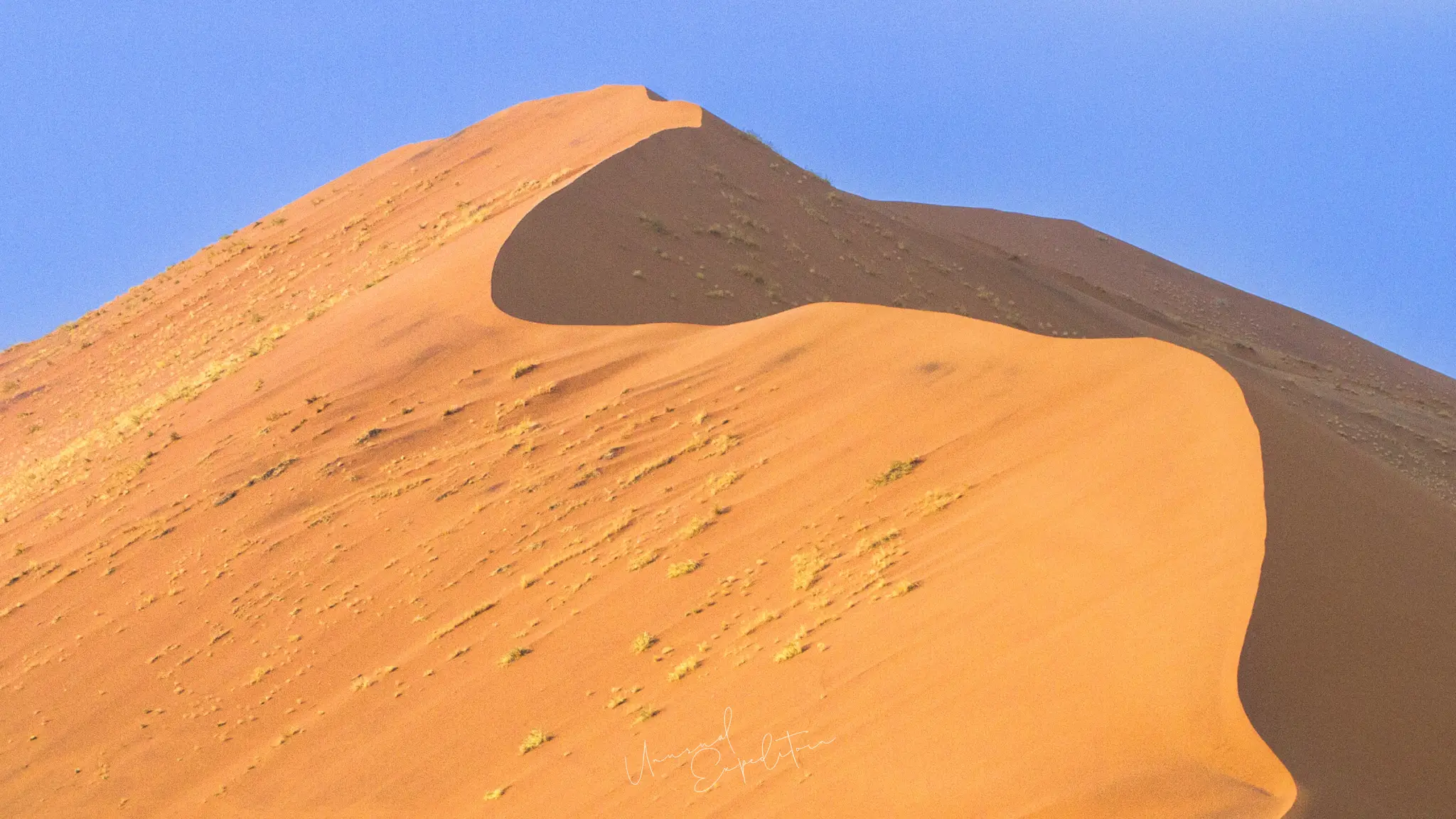
Sossusvlei dunes photography comes down to one thing: a line where sunlit orange sand meets shadow. Dune 45, Big Daddy and the high dunes beside the road all work on that principle. Shoot them from the side, early or late, with the sun low, and a ridge becomes a sharp curve against the sky. At midday the same dunes go flat and pale, and there is little to do except wait.
The dunes are one part of the area covered in our Sossusvlei photography tour guide, and the country overview is the Namibia photography tour guide. The photographs here are our own, taken on our trips to the dunes; we hold the rights to them, and the advice comes from knowing the place first hand.
Which dunes should you photograph: Dune 45, Big Daddy or others?
Dune 45 is the one beside the road, which makes it the easiest to reach and the most visited. Big Daddy is the tall dune near the pans, reached on foot beyond the end of the sand road. Both are star-shaped dunes, the Namib form with several arms meeting at a high point, and that is what gives them their long crests. For a photographer the choice is less about the name than the angle of the sun. Pick the dune whose ridge runs away from you into the light, because that is the one that will throw a clean shadow.
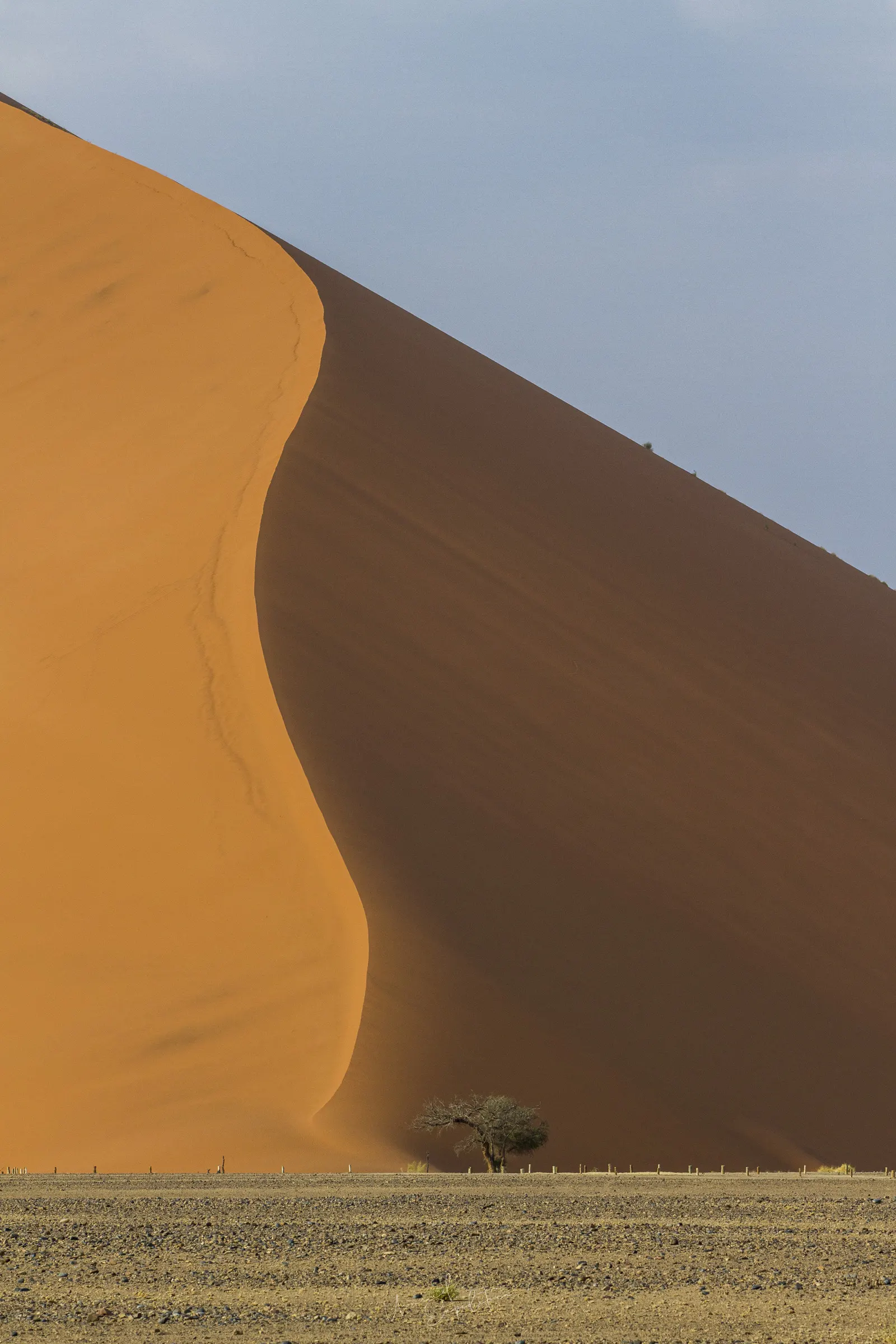
Sossusvlei dunes: how do you shoot a ridge line?
Use a longer lens and stay back. A 70-200mm flattens the dune and turns the crest into an S curve, with the light edge and the dark edge forming two simple shapes. Keep the horizon out of the frame if you can, or put the crest low in the picture against a clear sky. Look for the moment when the shadow side is a deep, even tone and the lit side has no hot spots. A small change in position will move the line across the frame, so walk a few steps in both directions before you set up.
How do you expose orange sand?
Orange sand fools a meter. In full sun the lit side clips into a flat yellow while the shadow side goes black. Shoot raw and expose so that the brightest sand is just below clipping on the histogram; you can lift the shadows in processing. Spot metering on the lit sand and then dialling back a stop usually works. A polariser deepens a blue sky and helps with the contrast, but check a wide frame for uneven darkening. When the sun is low and the sky is clear, a graduated filter is rarely needed if you expose carefully.
Should you climb the dune, and what about footprints?
Climbing is part of the experience, and the view from a crest of the dune sea is worth the effort in soft sand. A line of footprints can also be a picture in itself: it shows the scale of the dune, and it leads the eye up to the crest, as in the frame above. The problem is that tracks ruin clean slopes. Walk on the ridge crests, not up the faces you plan to shoot, and photograph before you climb. Follow the rules of the park for where you may walk, and keep to them.
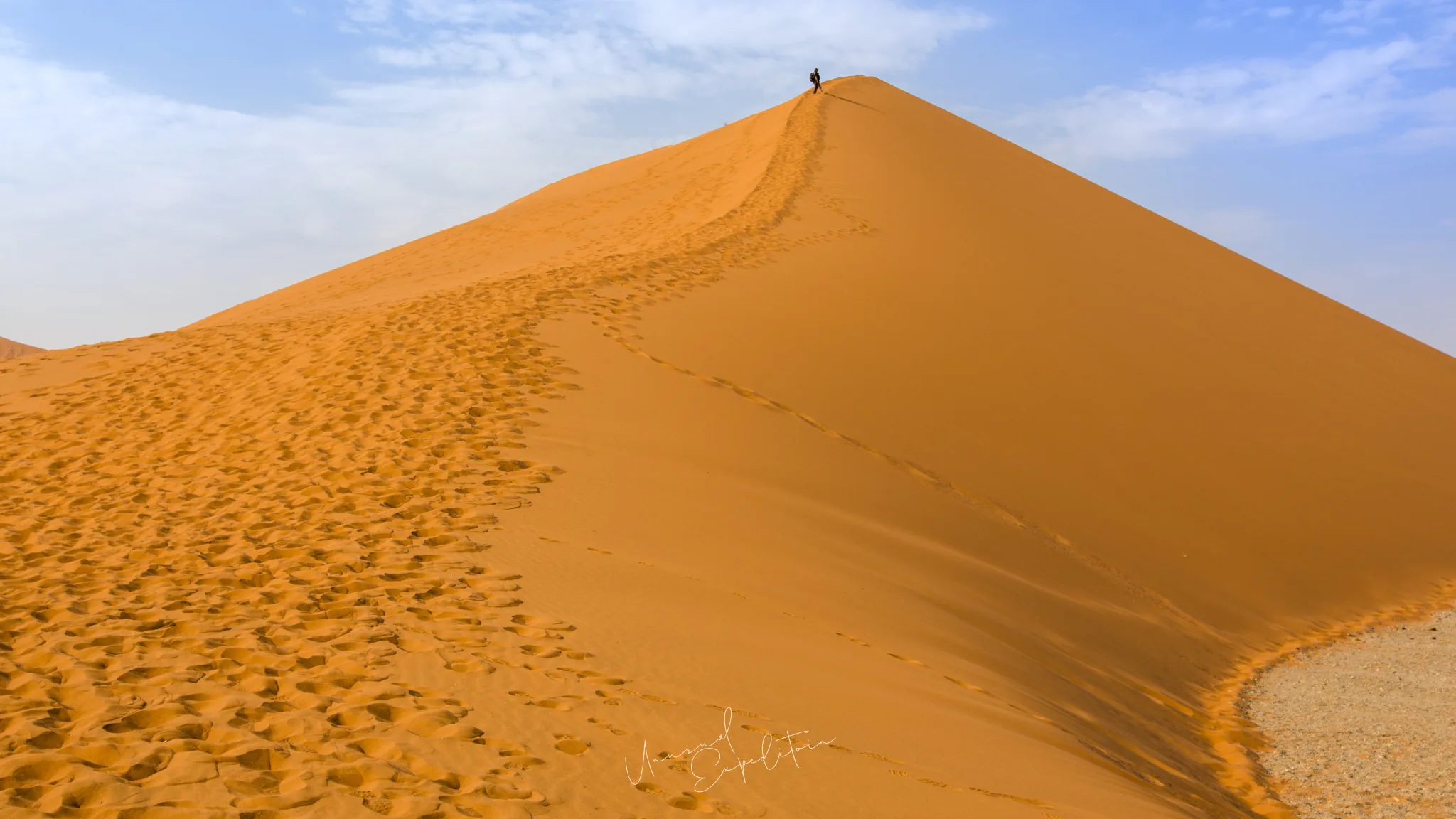
People climb the dune to look down. I go up to see which slopes are still clean, then I come back down and shoot those from the side. The best picture is usually the one nobody has walked on.
Joseph Mak, tour leader, Unusual Expedition
Dunes with trees, pans and sky
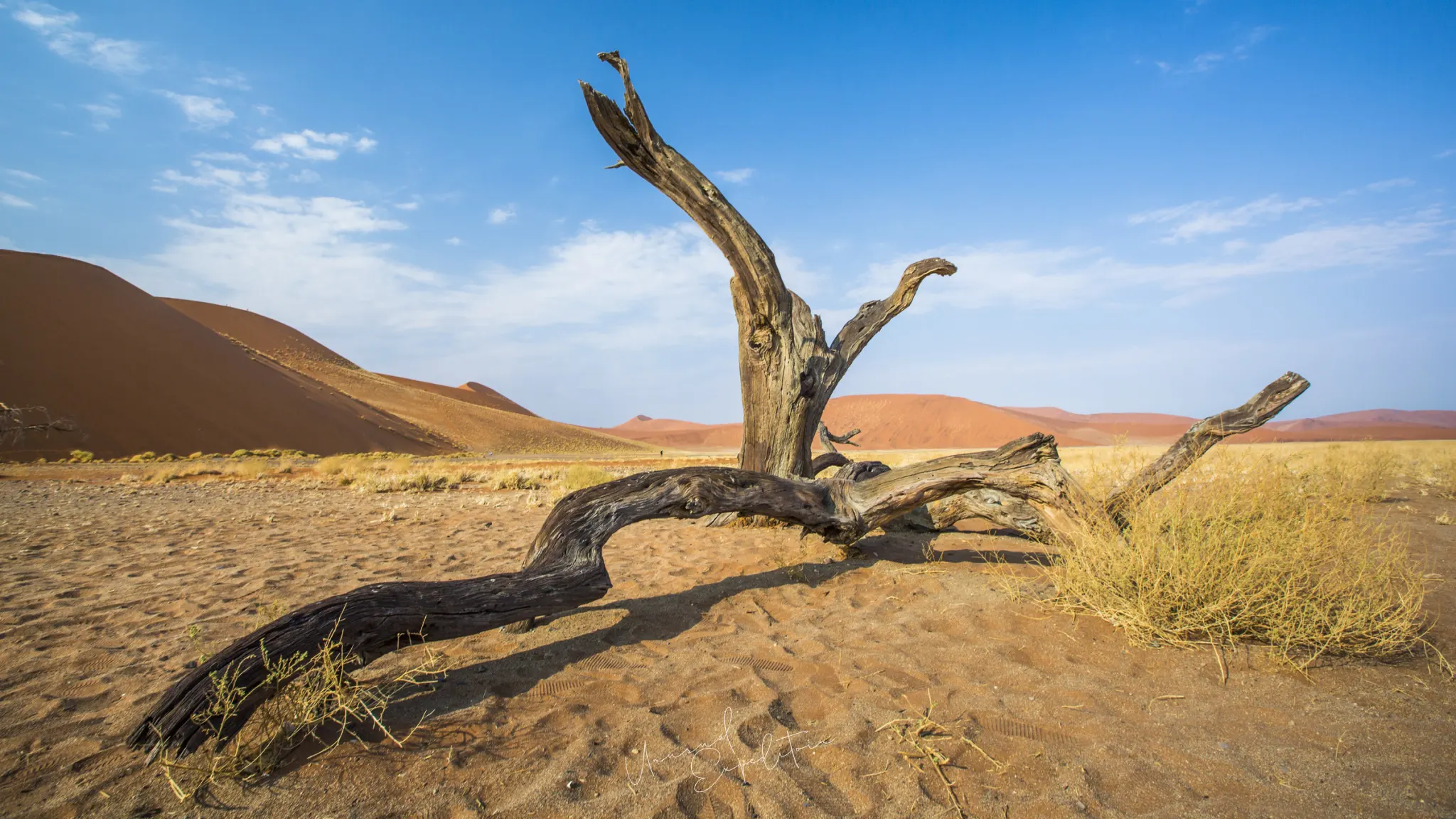
A dune alone is a strong picture, and a dune with something in front of it is a stronger one. Dead trees on the pan, a shrub on rippled sand, or a gap of white clay between two dunes give you a foreground and a sense of scale. Cloud adds depth: scattered cumulus throws moving shadows across the sand, and thin cirrus gives a delicate sky behind a sharp crest. On clear days the dune itself is the only subject, and a minimal frame with just sand and blue works best.
What do you do at midday on the dunes?
The light is at its worst between the early and late sessions, and a smart plan uses that time for something else. Rest, eat and look through the morning's frames on the screen, so that you can fix what did not work before the evening. If you do shoot, look for subjects that do not need low sun: the pans, the dead trees under thin cloud, the sand patterns in the shade of a dune. Dune faces in full sun are pale and flat, and a bright sky behind them makes it worse. Save your energy and your battery for the late session, when the dunes come alive again.
What kit works best on the dunes?
A 24-70mm, a 70-200mm and a tripod for the low light cover nearly everything here. Bring a spare lens cap, a blower and a soft cloth. Keep the camera in a bag when you climb, and change lenses out of the wind. Sand finds its way into everything, so keep the sensor clean with careful, infrequent lens changes rather than trying to change fast. Gloves and a light jacket make the early start bearable, and water is more important than another lens.
When and how do you get there?
Access is through the Sesriem gate of the Namib-Naukluft Park, and gate hours follow sunrise and sunset. Dune 45 is beside the tarred road, and the last stretch to Big Daddy and the pans is soft sand that needs a 4x4 or the park shuttle. Rules and shuttle arrangements have been reported as changing, so check with Namibia Wildlife Resorts or your lodge before you plan around them. See the best time to visit Sossusvlei for the seasons, and Deadvlei photography for the trees behind the big dune.
Photograph the dunes with us
We run Namibia as a private trip on request and can plan the dune shooting around the light. The pace and dates are yours, we arrange the logistics, and a photographer or photography coaching can be added at extra cost. Ask at least two months ahead. See private tours and the Namibia photography tours page.
Ask us about the Sossusvlei dunes
Sossusvlei photography tours
The next Sossusvlei departure is announced on the Sossusvlei photography tours page, with previous expeditions and all the planning guides.
Explore Sossusvlei in depth
- Sossusvlei Photography Tour: Dunes, Deadvlei and the PansNamibia
- Sossusvlei Clay Pan Photography: Cracks, Patterns and Cloud ShadowNamibia
- Deadvlei Photography: Dead Trees, White Clay and Orange DunesNamibia
- Best Time to Visit Sossusvlei for PhotographyNamibia
Upcoming Photo Tours
- Egypt Photo Tour – EgyptEgypt 12 Dec 2026 To 20 Dec 2026
- Inner Mongolia Winter Owl Photo Tour – ChinaChina 01 Jan 2027 To 04 Jan 2027
- Inner Mongolia Winter Photo Tour – ChinaChina 05 Jan 2027 To 11 Jan 2027
- Mekong And Central Highland Vietnam Photo Tour - VietnamVietnam 16 Jan 2027 To 24 Jan 2027