
Shirakawa-go Viewpoint and Takayama Photo Spots: Where to Stand and When
Shirakawa-go viewpoint and Takayama photos: Sanmachi lanes, the Miyagawa, sake breweries, Ogimachi farmhouses and ponds, with light.
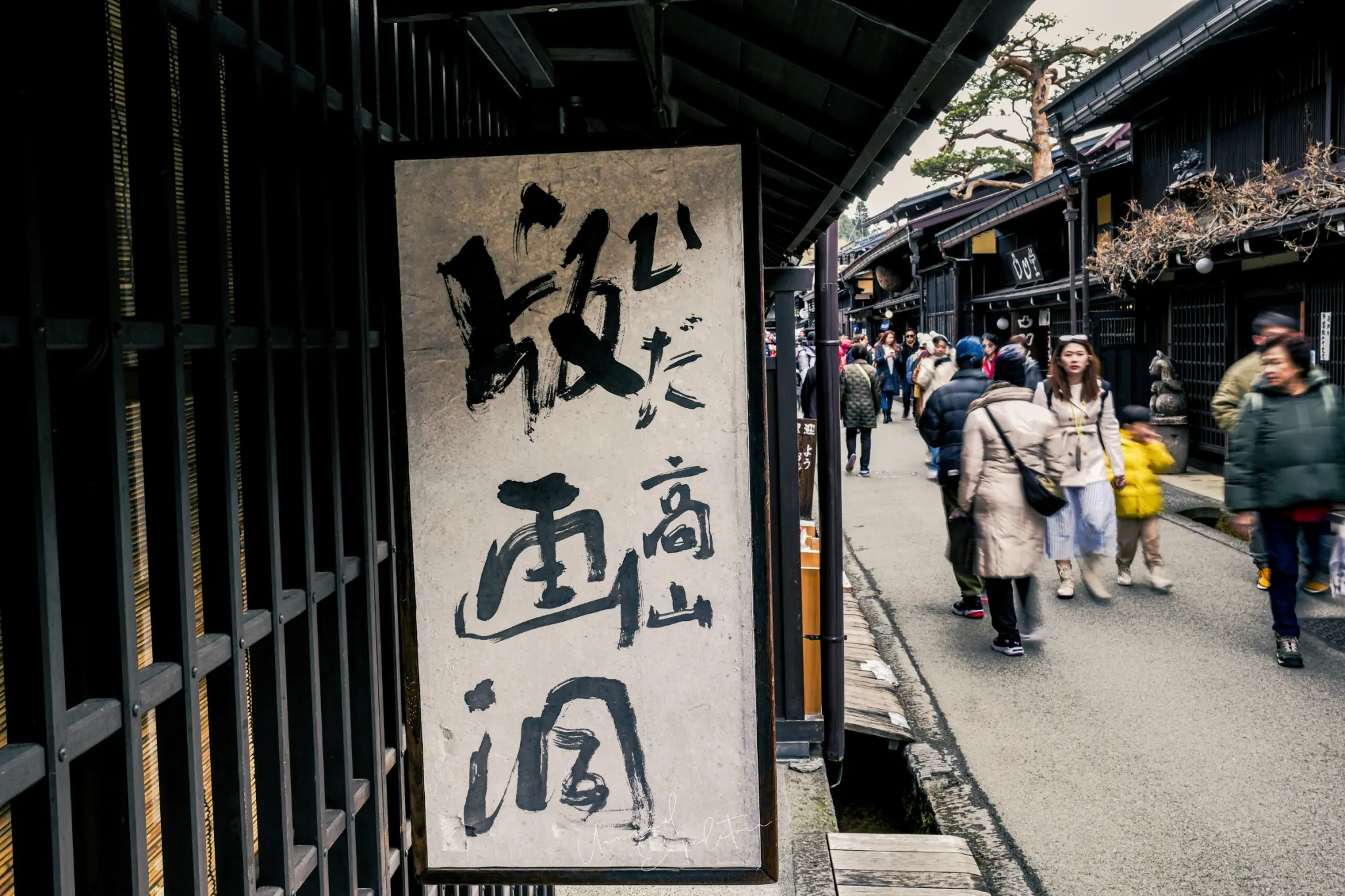
The Shirakawa-go viewpoint on the hill above Ogimachi and the old merchant lanes of Takayama's Sanmachi are the two photo spots that define this corner of the Japan Alps, and around them sit the Miyagawa river, the sake breweries with their cedar balls, Ogimachi's thatched farmhouses and its ponds and water channels. Takayama is a morning town, before the lanes fill; Shirakawa-go is a daytime village, because it does not receive sightseers at night.
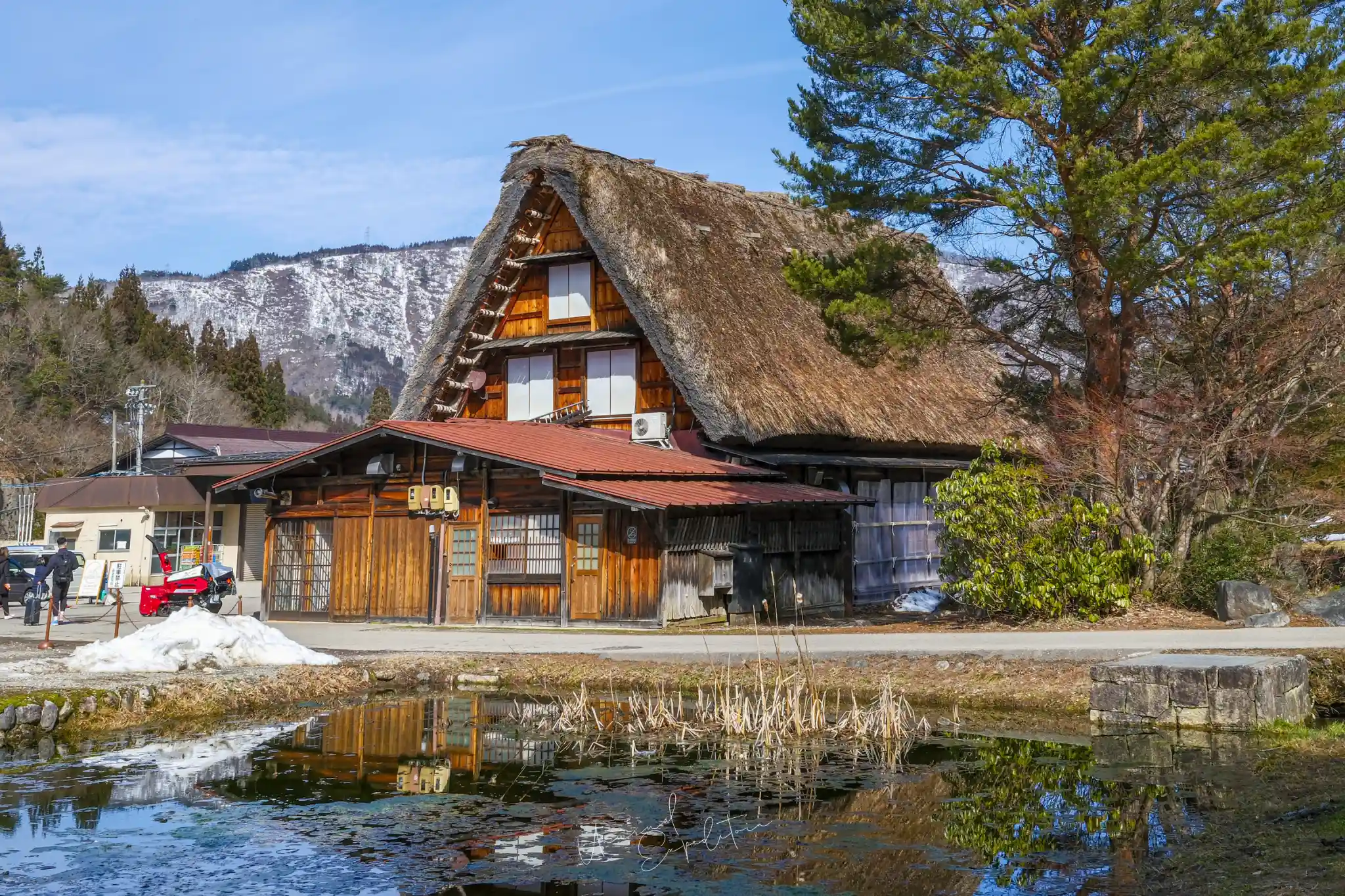
This guide belongs to our Takayama and Shirakawa-go photography tour guide, which covers the area as a whole. The photographs are our own, from our late-winter trip, with snow still on the ground and the paddies thawing, and the notes on where to stand come from working these places with a camera.
Takayama photos and Shirakawa-go spots at a glance
| Spot | What you photograph | Best light | Lens |
|---|---|---|---|
| Sanmachi lanes, Takayama | Dark timber merchant houses, shop signs, breweries | Early morning, before the shops open | 24-70mm |
| Miyagawa river and bridges | The river, its banks of old houses, the morning market | Morning | 24-70mm |
| Sake breweries | Cedar balls, barrels, noren curtains | Overcast, or slow shutter in the crowd | 24-70mm |
| Shirakawa-go viewpoint | The whole village of Ogimachi from above | Morning, clear days | 24-70mm, 70-200mm |
| Ogimachi lanes and fields | Thatched farmhouses, storehouses, rice paddies | Soft daylight, snow | 24-70mm |
| Ponds and water channels | Houses reflected in still water | Still mornings | 24-70mm |
Shirakawa-go fills with day visitors from late morning, so its viewpoint and lanes reward an early bus.
Takayama photos: the Sanmachi lanes
Sanmachi, the old merchant quarter on the east bank of the Miyagawa, has been protected as a preservation district since 1979, and most of it was rebuilt on the same plots in the same style after the great fire of 1832, according to Takayama City. The lanes of dark timber houses, latticed windows and hanging shop signs are the picture. Stand at one end of a lane with a 24-70mm and let the eaves lead into the distance; the best time is the first hour of the morning, before the shops open and the lanes fill with visitors. Doorways, signboards and the small water channels at the edge of the street give the details. Our Takayama old town guide covers the district in more depth.
The Miyagawa river and the morning market
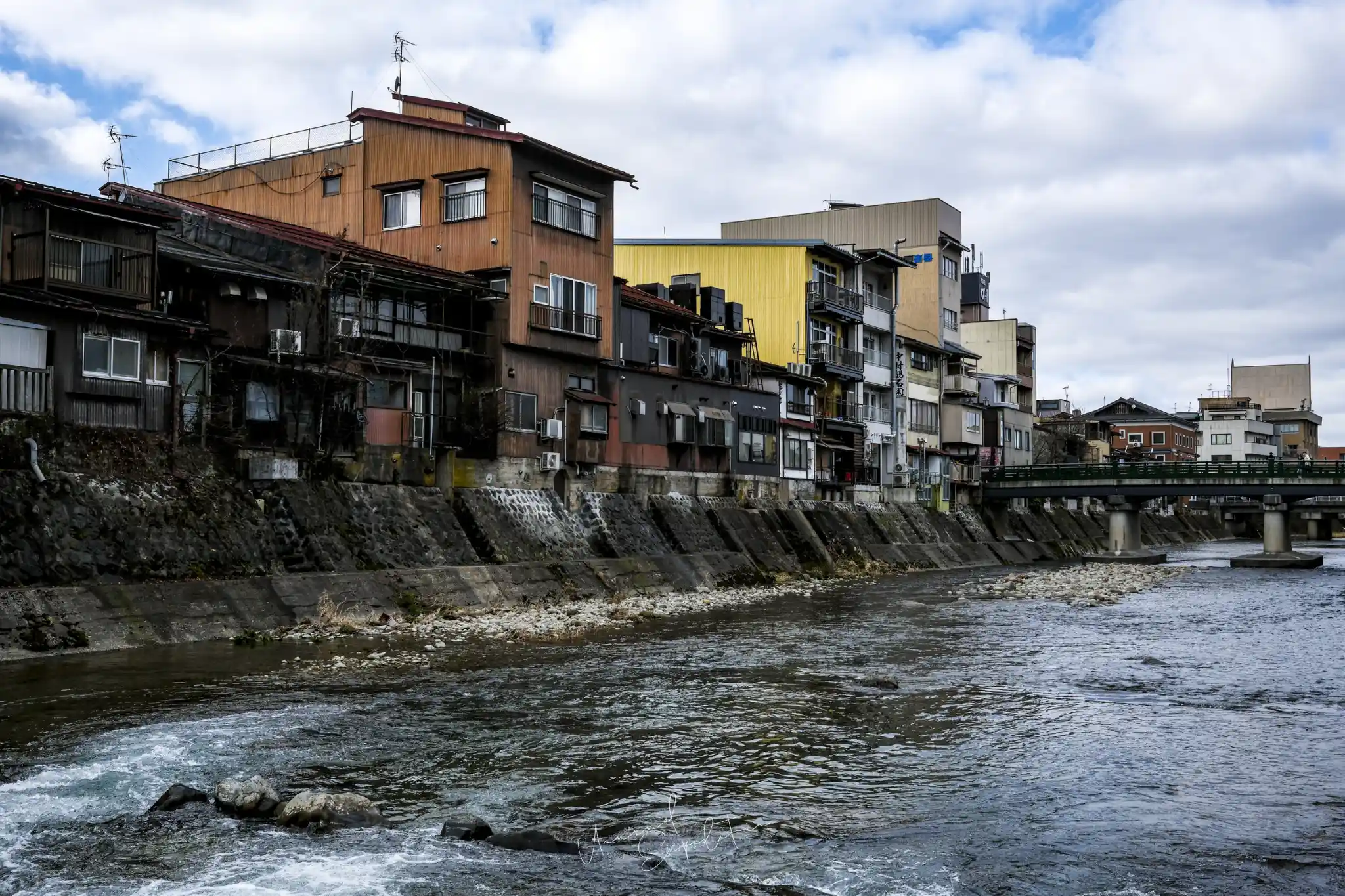
The Miyagawa runs north through central Takayama on the western edge of Sanmachi, with old houses along its banks and red-railed bridges across it. The river is the frame for the town: from the bridges you can line up the water, the stone banks and the rooflines. In the morning the Miyagawa morning market sets up along the river, which JNTO says has existed in one form or another for more than two centuries; there is a second one in front of Takayama Jinya. Ask before photographing stallholders closely.
Sake breweries and cedar balls
JNTO counts seven sake breweries in Takayama with histories of over 100 years, many of them in Sanmachi, and each hangs a sugidama, a ball of cedar leaves, outside its door. The barrels, the noren curtains and the cedar balls make strong frames, but the brewery fronts are among the busiest spots in town. Use that: a slow shutter turns the passing crowd into a blur and leaves the brewery front sharp. Some breweries offer tastings; photograph inside only where you are invited to.
Shirakawa-go viewpoint: the village from above
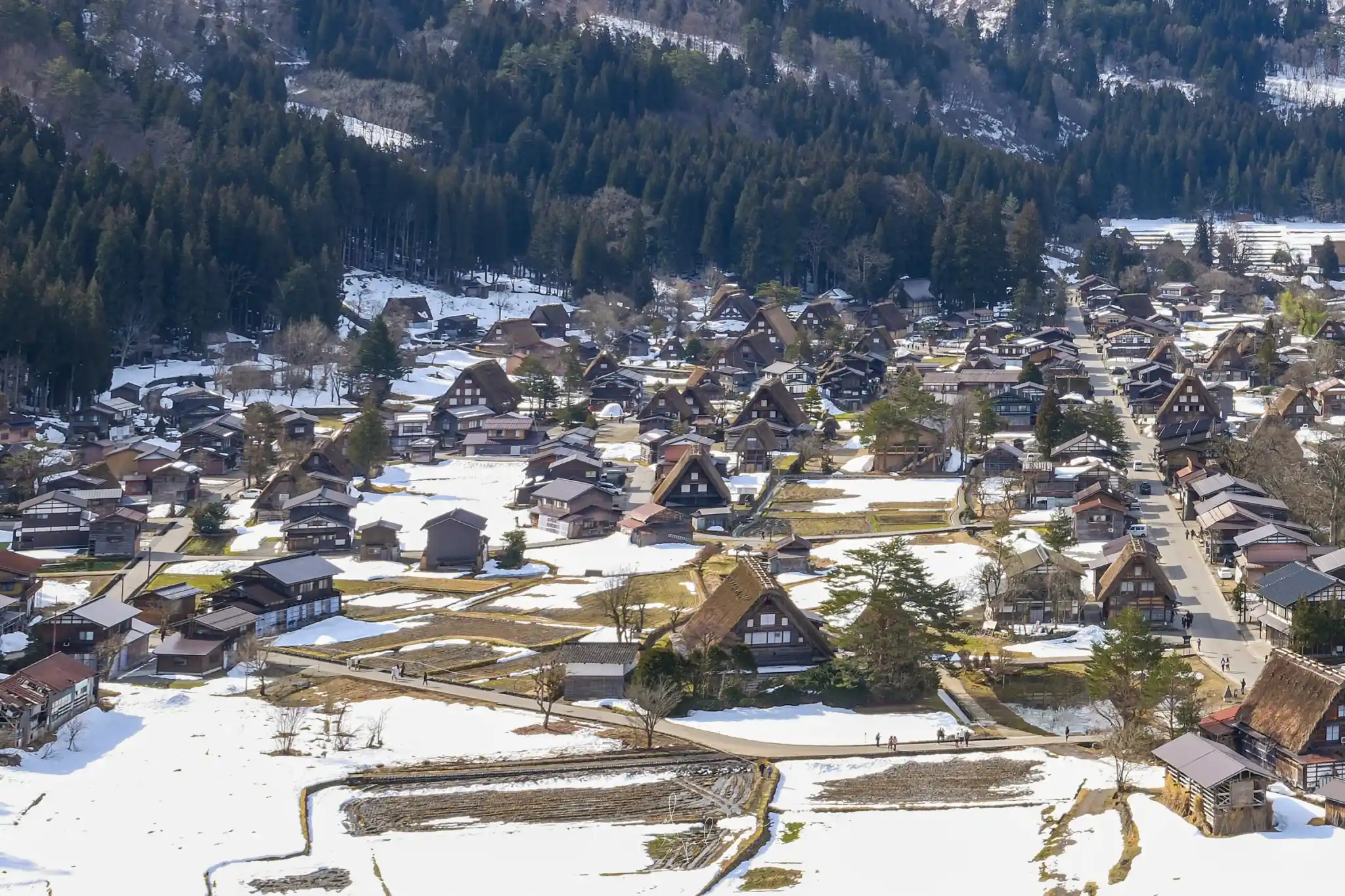
The Shirakawa-go viewpoint, the Shiroyama observation deck above Ogimachi, is where the classic picture of the village is made: dozens of steep thatched roofs set among rice fields, with the mountains and the Sho River around them. Ogimachi is one of the three villages of the UNESCO World Heritage site "Historic Villages of Shirakawa-go and Gokayama", inscribed in 1995. The village bans drones, and the official tourist association points visitors to the observation deck for the view instead. A 24-70mm takes in the village; a 70-200mm picks out roofs and patterns. The view is at its best on a clear morning, and in snow the roofs read as white triangles against the dark forest.
Ogimachi: farmhouses, storehouses and fields
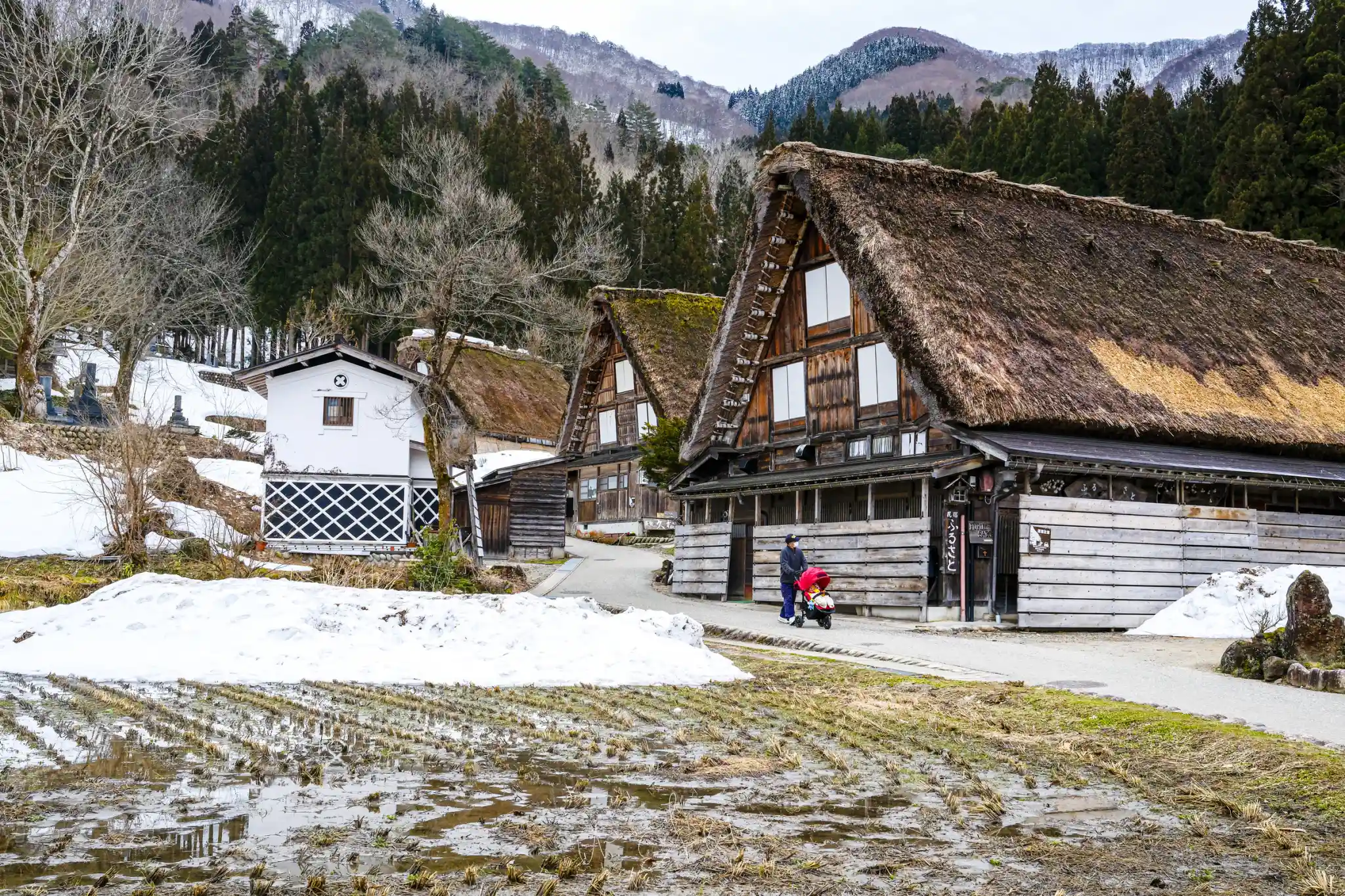
Down in the village, the gassho-zukuri houses stand among their rice paddies, storehouses and gardens. The pictures here are about the steep roofs against the slopes, the thawing paddies in late winter, and the small thatched huts and storehouses at the village edge. These are homes, not museums: stay on the lanes, do not enter gardens or fields, and do not photograph into houses. Shirakawa-go's tourist association says the village does not accept sightseers at night except guests of its lodgings, and on the few winter light-up evenings entry is by reservation only. Our Shirakawa-go in winter guide covers the snow season.
Ponds and water channels
Water runs through Ogimachi in channels and collects in small ponds beside the houses, and on a still morning those ponds give the cleanest reflections in the village. Get low, frame a house with its reflection, and wait for the breeze to drop. Fire is the great danger to the thatch, and the village is built around fire prevention, with water cannons, patrols and signs that ask visitors not to smoke except in designated areas, as Japan's Tourism Agency describes it.
"Shirakawa-go is a village before it is a view. Photograph it the way you would want your own street photographed: from the lane, quietly, and gone before people need to step around you."
Joseph Mak, tour leader, Unusual Expedition
Seasons and access
Snow is heaviest in February, cherry blossom comes from mid April to early May, and autumn colour runs from the end of October into early or mid November, varying by year, according to the Shirakawa-go Tourist Association. Takayama's festival floats come out on 14 and 15 April and 9 and 10 October. Express buses link Shirakawa-go with Takayama, Kanazawa, Toyama and Nagoya; drivers use the village car park, which closes in the late afternoon. The Japan photography trip FAQ covers entry and travel in Japan.
Photograph Takayama and Shirakawa-go with us
We run Takayama and Shirakawa-go as a private trip on request, in snow, blossom or autumn colour; see our private tours page, and our scheduled Japan departures on the Japan photography tours page.
Ask us about a Takayama and Shirakawa-go trip
Join the Takayama and Shirakawa-go photography tour
Kyushu, Shikoku And Setouchi Photography Journey departs 25 Sep 2027 To 05 Oct 2027, led by Joseph Mak. Small group, photography first. All Takayama and Shirakawa-go photography tours.
Explore Takayama and Shirakawa-go in depth
- Takayama and Shirakawa-go Photography Tour Guide: Old Town, Thatched Village and SnowJapan
- Where to Eat in Takayama, Japan: Hida Beef, Ramen and Old-Town CoffeeJapan
- Takayama Old Town: Photographing Sanmachi Suji, the Sake Breweries and the MiyagawaJapan
- Shirakawa-go in Winter: Snow, the Light-Up, Viewpoints and the Best Time to VisitJapan
Upcoming Photo Tours
- Egypt Photo Tour – EgyptEgypt 12 Dec 2026 To 20 Dec 2026
- Inner Mongolia Winter Owl Photo Tour – ChinaChina 01 Jan 2027 To 04 Jan 2027
- Inner Mongolia Winter Photo Tour – ChinaChina 05 Jan 2027 To 11 Jan 2027
- Mekong And Central Highland Vietnam Photo Tour - VietnamVietnam 16 Jan 2027 To 24 Jan 2027