
Takayama and Shirakawa-go Photography Tour Guide: Old Town, Thatched Village and Snow
Takayama and Shirakawa-go for photographers: the old town, the thatched village, seasons, access and the rules.
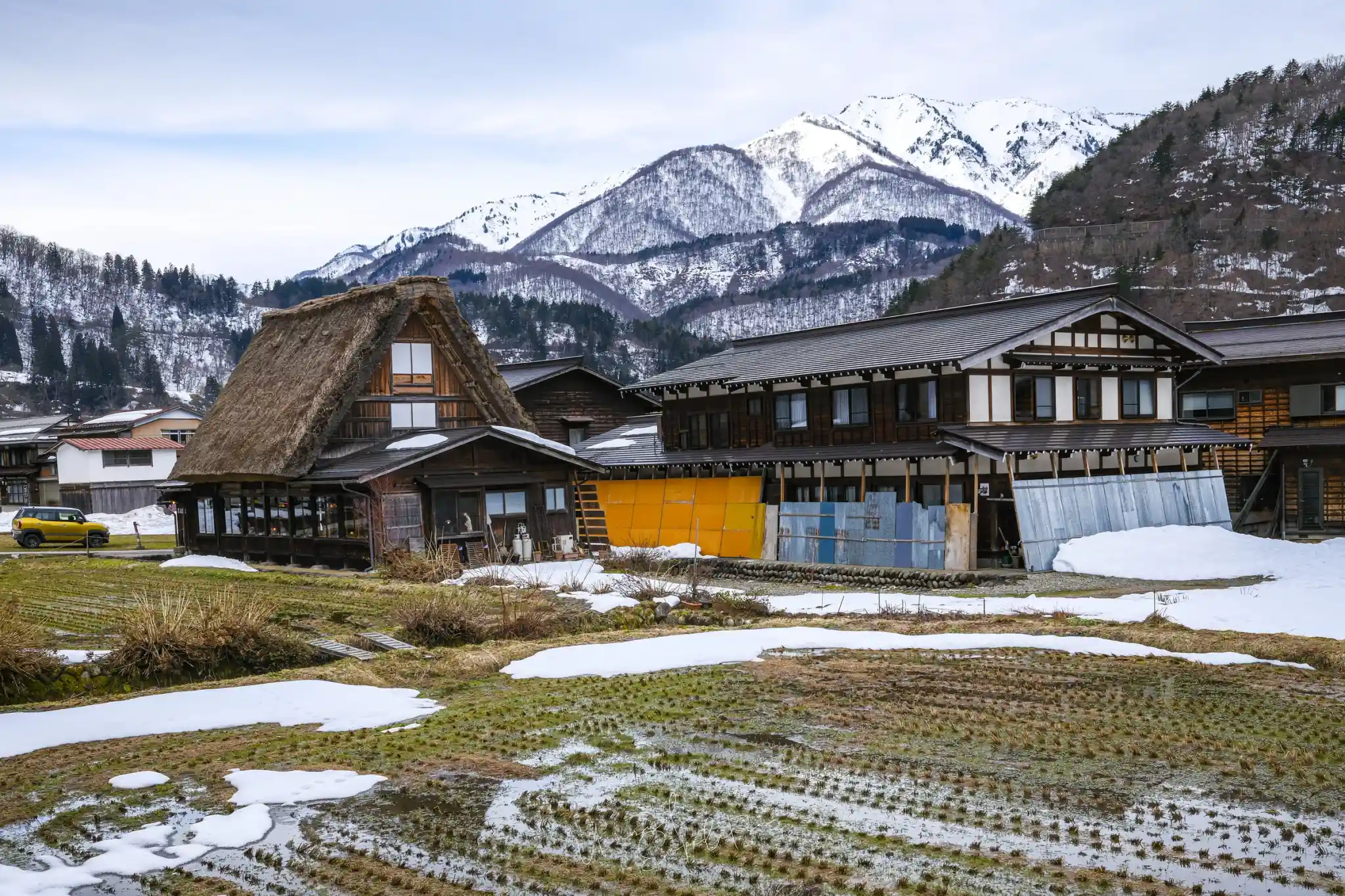
A Takayama and Shirakawa-go photography trip pairs two very different subjects in the mountains of Gifu Prefecture, central Japan. Hida Takayama gives you dark timber merchant streets, sake breweries and a clear mountain river; Shirakawa-go gives you the steep thatched gassho-zukuri farmhouses of a UNESCO World Heritage village. Winter brings snow on the thatch, and late winter, as the snow thins over the rice paddies, brings softer colour and quieter lanes. Here is how the two places differ, when to go and the rules that protect them.
The photographs in this guide are our own, taken on our Takayama and Shirakawa-go trip; we hold the rights to them, and the notes come from knowing these places first hand. For entry, money and flights, start with the Japan photography tour guide, which covers the whole country and its other regions.
Takayama and Shirakawa-go: what are you photographing?
Takayama and Shirakawa-go are usually visited together, and for a photographer they complement each other well. Takayama is a working town with an Edo-period core: low two-storey merchant houses in near-black timber, lattice fronts, sake barrels and cedar balls hanging over brewery doors, and the Miyagawa river running through the town along the western edge of the old quarter. It is a street photography subject, full of people, signs and texture. Shirakawa-go is a farming village in a narrow river valley, and its subject is architecture in landscape: huge thatched roofs, water channels and ponds, storehouses, paddies and the snowy mountains behind. One gives you life at street level, the other gives you shape and season.
Where is Shirakawa-go located?
Shirakawa-go is in the village of Shirakawa, in the far north-west of Gifu Prefecture, along the Sho River. UNESCO inscribed the "Historic Villages of Shirakawa-go and Gokayama" in 1995. The listing covers three villages: Ogimachi in the Shirakawa-go area, and Ainokura and Suganuma in the Gokayama area of Toyama Prefecture, further down the same river. When people say Shirakawa-go they almost always mean Ogimachi, the village with the bus terminal, the observation deck and the famous view, and that is where our photographs were made. Takayama is the nearest town on the Gifu side and the usual base for the village, together with Kanazawa on the Sea of Japan coast.
Takayama old town: merchant houses, sake and the Miyagawa
Takayama's old merchant quarter, Sanmachi, has been protected as a preservation district for traditional buildings since 1979. According to Takayama City, most of it burned in the great fire of 1832 and was rebuilt on the same plots in the same style, which is why the streets look so uniform. The Japan National Tourism Organization says the town has seven sake breweries, each with more than 100 years of history; Takayama City counts five of them inside the Sanmachi district, and their cedar balls and barrels are among the best details on the street. Along the Miyagawa, a morning market sets up every day. Our Takayama old town guide covers the streets, the breweries, the river and the busy hours to avoid.
Shirakawa-go village: the gassho-zukuri farmhouses
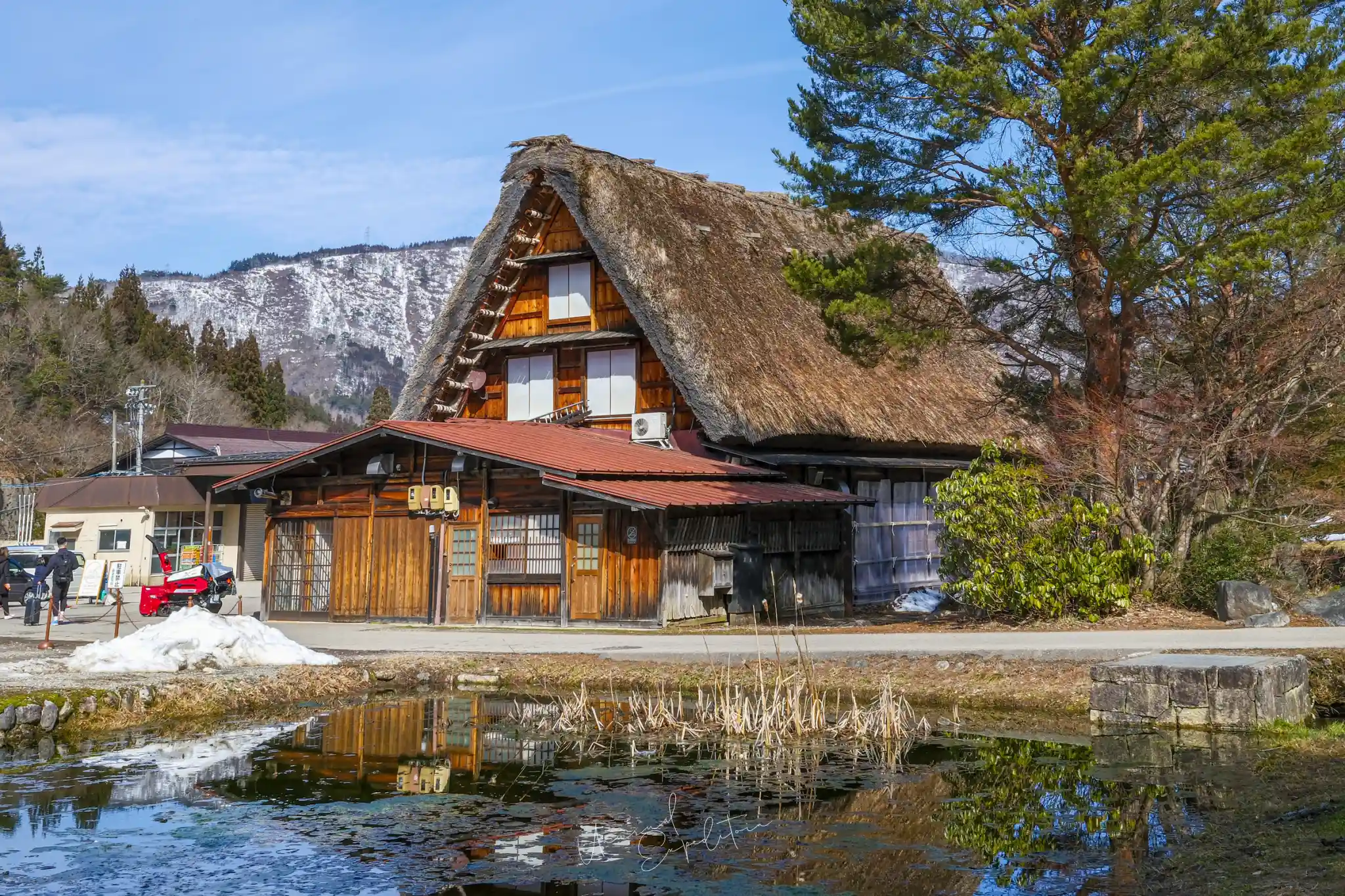
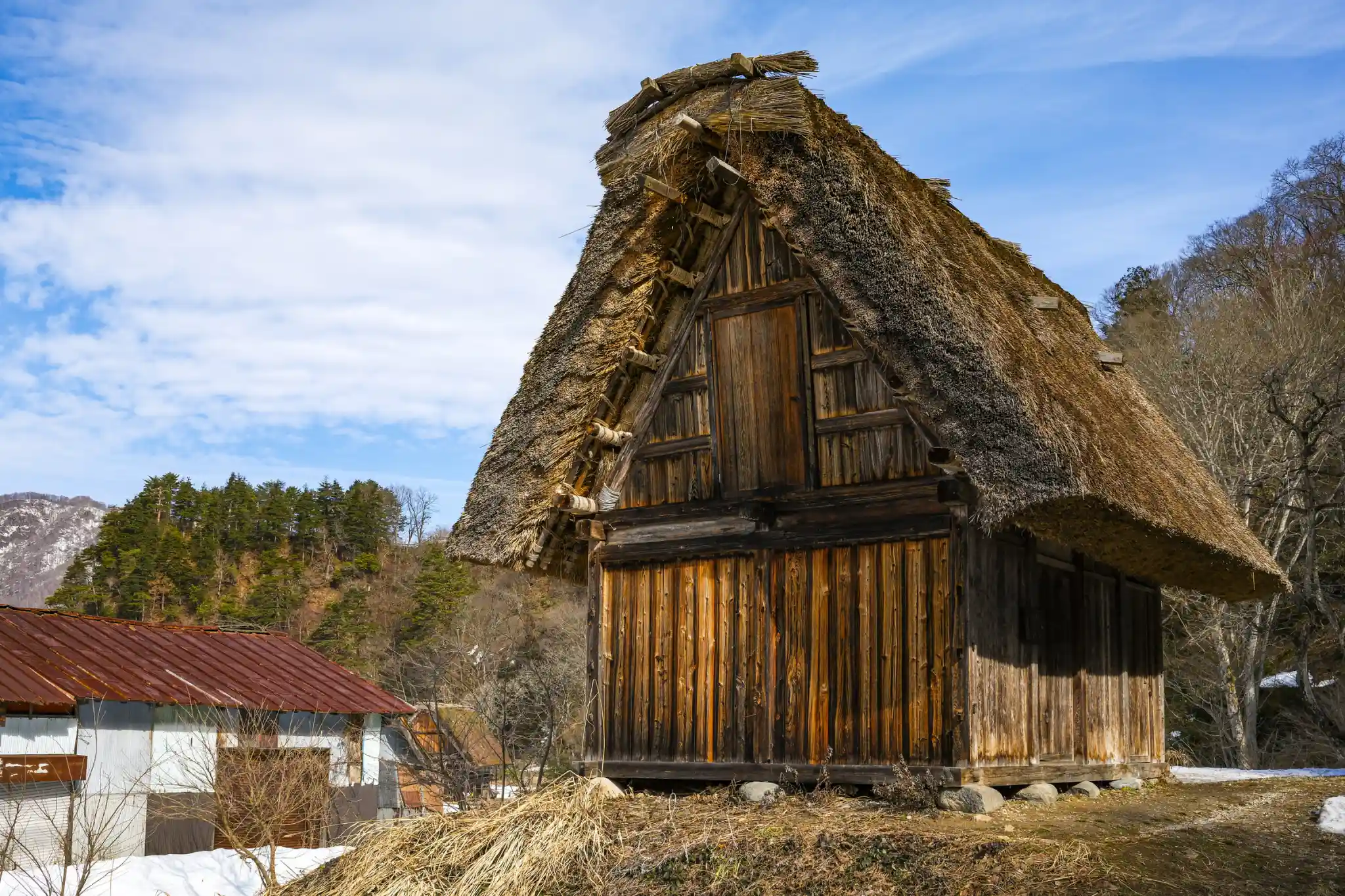
The gassho-zukuri houses of Shirakawa-go have steeply pitched thatched roofs, shaped, in UNESCO's words, by the environment and by the local economy of mulberry growing and silkworm rearing, which used the big attic floors. They survive in groups, with their storehouses, ponds and fields around them, so the village still reads as a farming landscape and not a row of monuments. For photographs that matters: the best frames show a house with its setting, a pond reflection, a paddy in front, a mountain behind. Residents maintain the thatch together. The Shirakawa-go in winter guide goes through where to stand, from the observation deck above the village to the water channels at its edge.
Is Shirakawago worth visiting?
Yes, if you plan for the crowds and for the fact that people live there. Shirakawa-go is one of the most visited villages in Japan, and the middle of the day, when the tour buses are in, is the hardest time to photograph it. Early and late in the day the lanes empty and the light comes in low across the roofs. The village does not admit visitors after dark, except guests staying at its inns, so evening light is something you plan for, not something you can wait out. It is worth it because nowhere else in Japan shows so many thatched houses together in a living valley.
Best time to visit Takayama and Shirakawa-go
The Shirakawa-go Tourist Association gives the village's seasons: snow is deepest in February, cherry blossom opens from mid April into early May, and autumn colour runs from the end of October into November, moving a little each year with the temperature. Takayama follows a similar calendar and adds its two festivals.
| Season | Shirakawa-go | Takayama | For the camera |
|---|---|---|---|
| Winter | Deep snow on the thatch; light-up evenings in January and February, by reservation | Snow on dark roofs, quiet streets | The classic image; cold, short days |
| Late winter | Snow thinning, paddies and ponds opening | Clear, crisp mornings | Softer colour, fewer people |
| Spring | Blossom from mid April into early May | Spring festival, 14 and 15 April | Festival crowds in Takayama |
| Summer | Green paddies | Green hills, river light | Lush, but the most humid months |
| Autumn | Colour from the end of October | Autumn festival, 9 and 10 October | Warm tones on the thatch |
Snow is the reason most photographers come, and the winter guide linked above covers it in detail, including the light-up and the viewpoints in snow.
How to go to Shirakawago from Takayama
From Takayama, express buses run from the bus terminal next to the railway station to the Shirakawago Bus Terminal, a short walk from the village. The Shirakawa-go Tourist Association lists the same kind of service from Kanazawa, Toyama and Nagoya, so the village can also be reached from the coast. Drivers use the Seseragi Park car park across the river; it closes in the late afternoon, and roadside parking for sightseeing in the evening is banned. On light-up days every vehicle needs a parking reservation. In winter the Tourist Association advises winter tyres and four-wheel drive. Book buses ahead in the busy seasons, and check the operator before you travel.
Rules that matter: drones, homes and the night
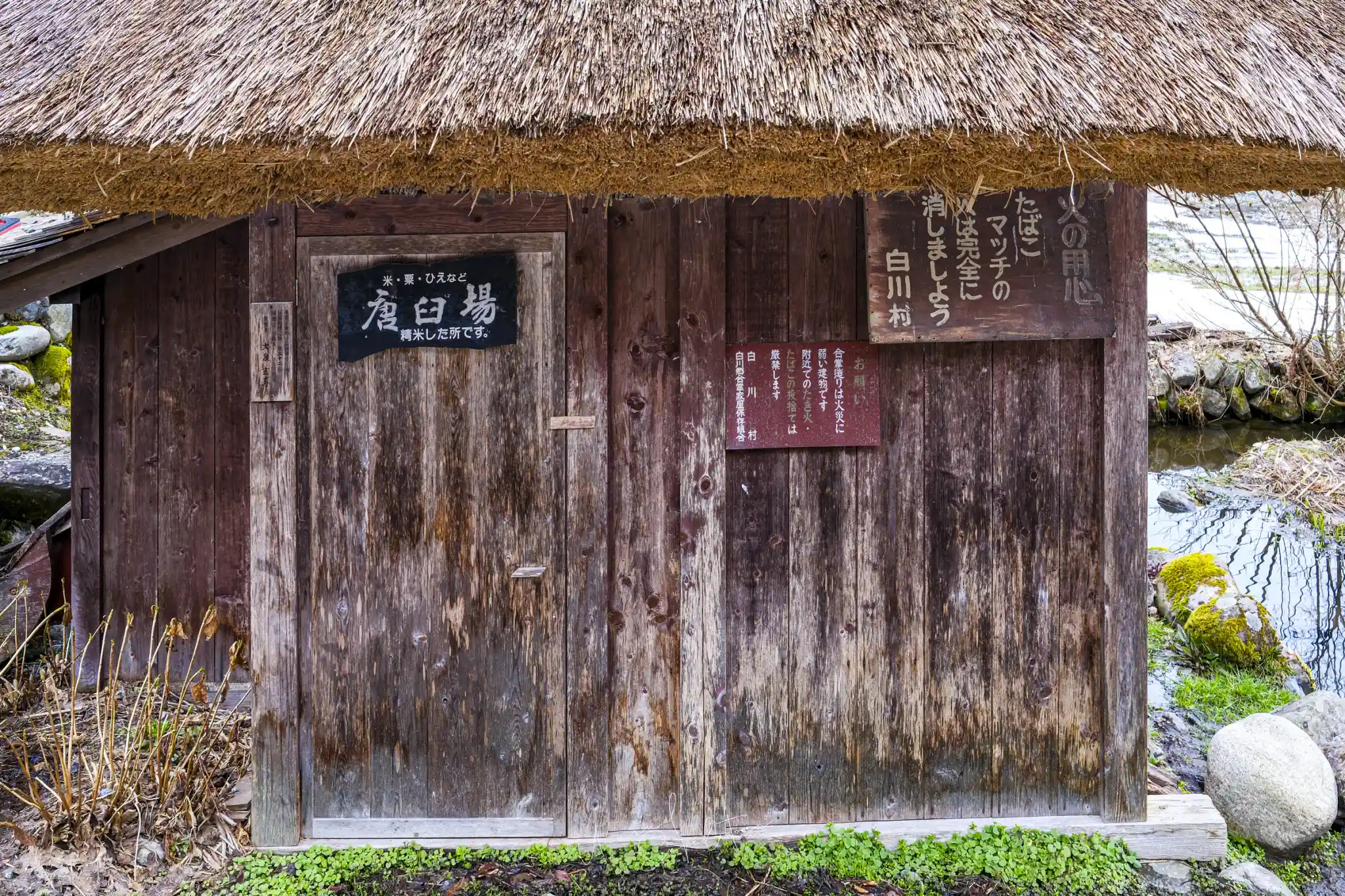
The Shirakawa-go Tourist Association states plainly that drones are prohibited within the World Heritage village; the observation deck is where it sends people for the overview. Japan's national drone rules apply everywhere else, and the Japan photography trip FAQ covers them. The houses are homes and working farms. Stay on the lanes, keep out of gardens, paddies and snowbanks, and do not photograph into windows or open doors. Fire is the great danger to thatch: according to Japan's Tourism Agency, smoking is banned outside designated areas, patrols check for hazards several times a day, and the village's water cannons are tested in drills. In Takayama, Sanmachi's lanes are narrow and busy, so keep a tripod folded when the street is full.
Camera gear for Takayama and Shirakawa-go
A 24-70mm does most of the work in both places: street scenes and shopfronts in Takayama, whole houses with their ponds in Shirakawa-go. A 70-200mm earns its place on the Shirakawa-go observation deck, where it pulls single roofs and lanes out of the village below, and in Takayama it picks out signs and faces from across the street without pushing into anyone's space. A polariser deepens a blue sky behind the thatch and controls glare on wet snow. In winter, carry spare batteries in an inner pocket.
Shirakawa-go looks like a postcard from the deck, and that picture is worth taking once. Then go down into the lanes and find one house, one pond and one mountain that line up. That is the photograph nobody else on the bus has.
Joseph Mak, tour leader, Unusual Expedition
Explore Takayama and Shirakawa-go in depth
Elsewhere in Japan, the Mount Fuji photography tour guide and the Kyoto and Osaka photography tour guide cover the other regions of central and western Honshu.
Photograph Takayama and Shirakawa-go with us
We have no scheduled departure for Takayama and Shirakawa-go, so we run them as a private trip on request, for individuals, couples, families and photographers, at your own pace and with every arrangement made to your needs. A private trip can cost less than our group tours because no tour leader travels, and a photographer or photography coaching can be added at extra cost. Ask at least two months ahead, and earlier still for the winter light-up, whose bookings open months before the season; last-minute trips can often be arranged too. See private tours and our Japan photography tours page.
Ask us about Takayama and Shirakawa-go
Join the Takayama and Shirakawa-go photography tour
Kyushu, Shikoku And Setouchi Photography Journey departs 25 Sep 2027 To 05 Oct 2027, led by Joseph Mak. Small group, photography first. All Takayama and Shirakawa-go photography tours.
Explore Takayama and Shirakawa-go in depth
- Takayama Old Town: Photographing Sanmachi Suji, the Sake Breweries and the MiyagawaJapan
- Shirakawa-go in Winter: Snow, the Light-Up, Viewpoints and the Best Time to VisitJapan
Upcoming Photo Tours
- Egypt Photo Tour – EgyptEgypt 12 Dec 2026 To 20 Dec 2026
- Inner Mongolia Winter Owl Photo Tour – ChinaChina 01 Jan 2027 To 04 Jan 2027
- Inner Mongolia Winter Photo Tour – ChinaChina 05 Jan 2027 To 11 Jan 2027
- Mekong And Central Highland Vietnam Photo Tour - VietnamVietnam 16 Jan 2027 To 24 Jan 2027