
Torres del Paine Photo Spots: Where to Stand for Every Classic View
The best Torres del Paine photo spots: Lago Pehoe, Salto Grande, the Cuernos trail, Rio Serrano and lakeshore long exposures.
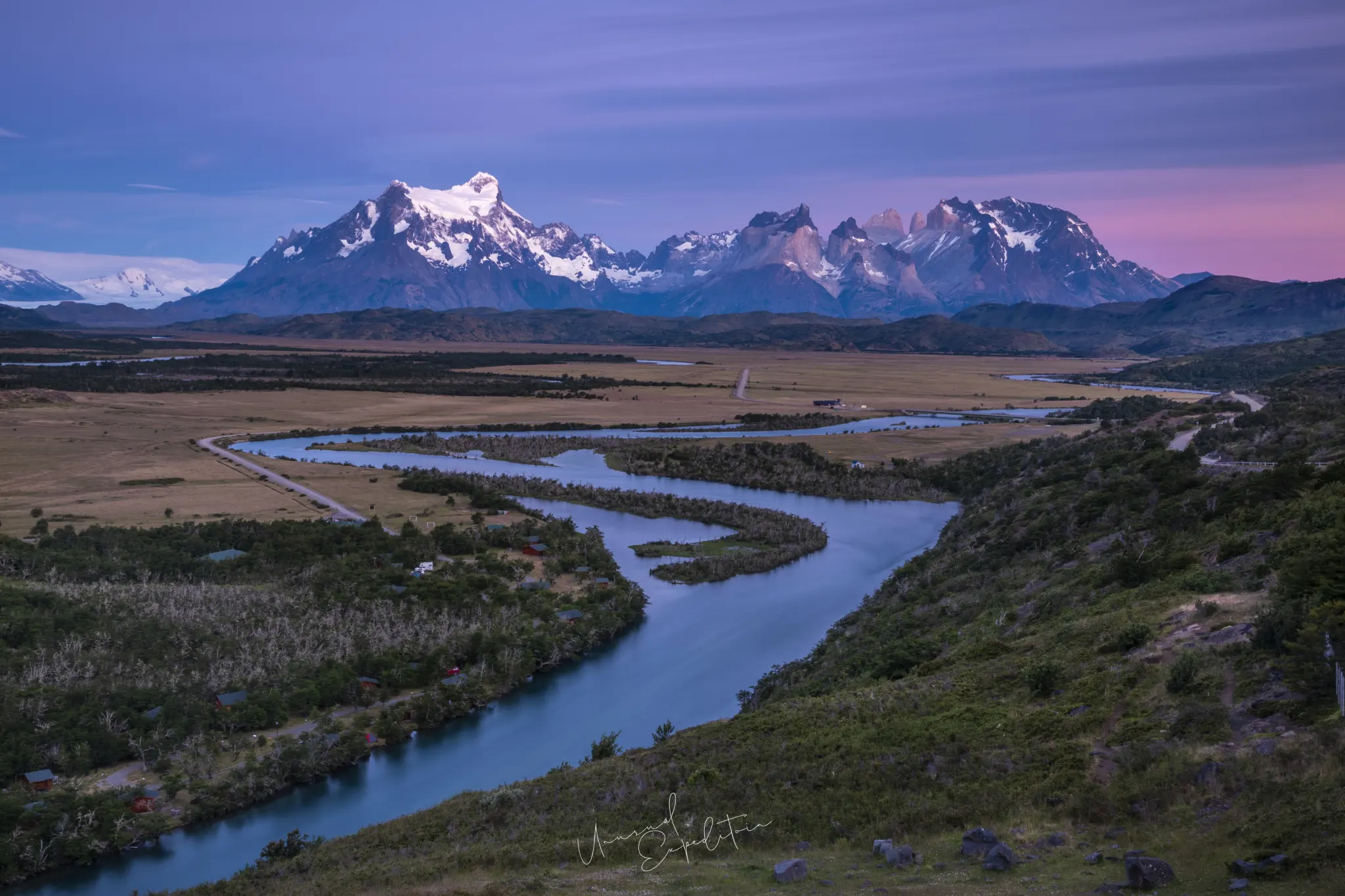
The best Torres del Paine photo spots are the Lago Pehoé shore with the Cuernos del Paine behind the island hostería, the Salto Grande waterfall, the trail of silver burnt trees toward the Cuernos viewpoint, the lakeshore rocks where long exposures turn the water to mist, and the Río Serrano viewpoint where the river winds below the whole Paine massif. Each works best in a particular light, and the wind decides how many of them you get in one day.
The park and the rest of the region are introduced in our Patagonia photography tour guide. The photographs here are our own, taken when we photographed Torres del Paine; we hold the rights to them, and the notes come from knowing these places first hand.
Torres del Paine photo spots at a glance
| Spot | Main subject | Best light | Lens |
|---|---|---|---|
| Río Serrano viewpoint | River curves below the Paine massif | Dawn and dusk colour | 24-70mm |
| Lago Pehoé shore | Cuernos above the lake and island hostería | Sunrise, blue hour | 16-35mm, 24-70mm |
| Salto Grande | Waterfall with the Cuernos behind | Morning or overcast | 16-35mm |
| Cuernos viewpoint trail | Burnt silver trees, the Cuernos face | Side light, broken cloud | 16-35mm, 24-70mm |
| Lakeshore rocks | Long exposures of water and peaks | Dawn, windy days | 16-35mm with ND filters |
| Laguna Amarga | The three towers across the water | Sunrise | 70-200mm |
Pehoé and the Serrano viewpoint carry the most famous frames; Salto Grande and the trail fill the middle of the day.
Mirador Río Serrano
The Río Serrano viewpoint sits on a slope by the road at the southern side of Torres del Paine, and from it you look across a flat valley to the whole Paine massif, with the river looping through the foreground. It is the widest single view of the range in the park and needs no walking. A 24-70mm frames the curves and the peaks together; go wider and the mountains shrink. Dawn and dusk colour suit it best, and on a still evening the river picks up the pink of the sky. Wind ruffles the water but rarely spoils the frame, because the river is narrow and far below. A tripod and a long exposure smooth the surface and the clouds together.
Lago Pehoé and the Cuernos
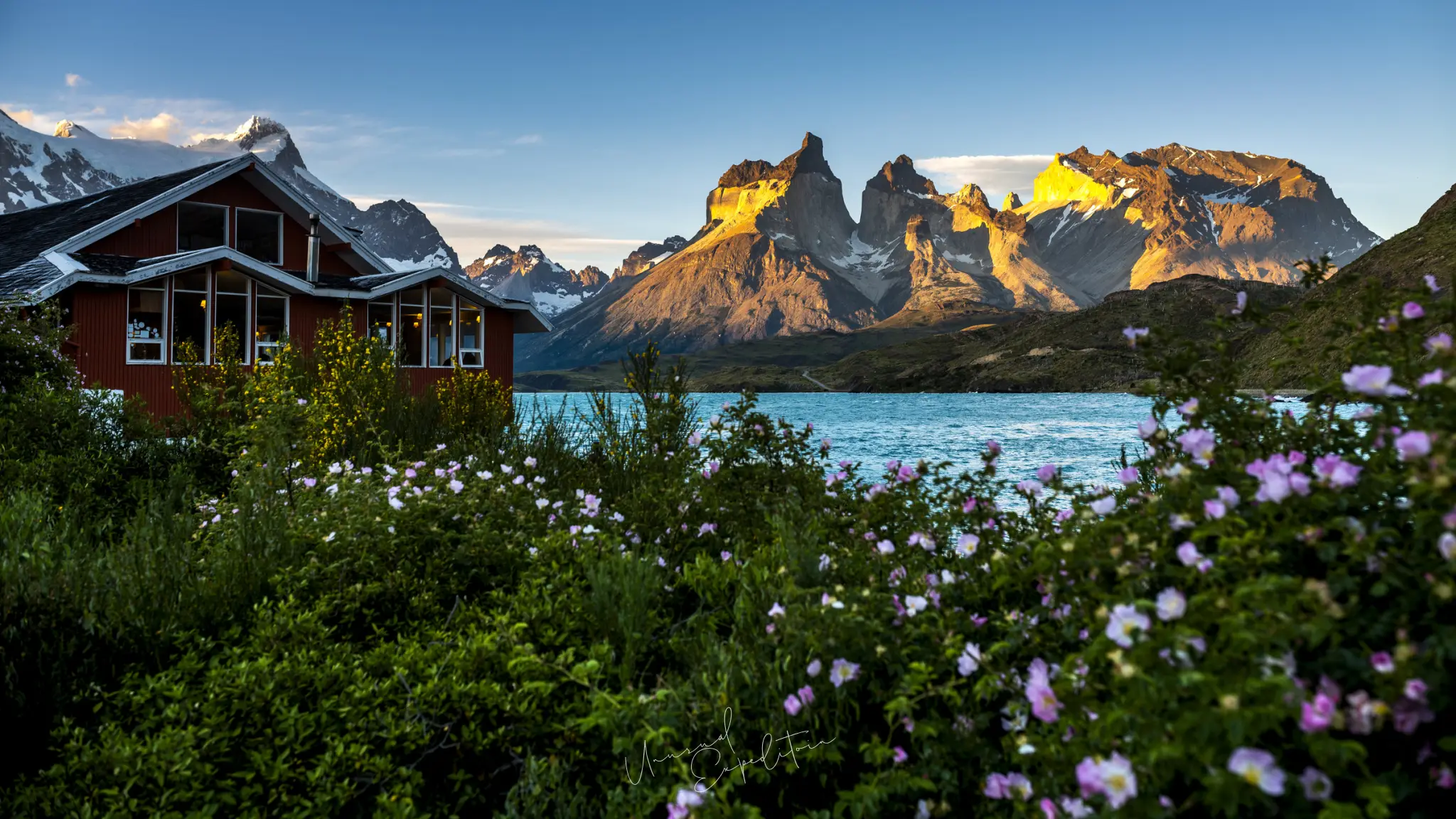
Lago Pehoé is the lake most people picture when they think of Torres del Paine: milky turquoise water, a small island with a hostería joined to the shore by a footbridge, and the dark-capped Cuernos del Paine rising behind. Several viewpoints along the road and the short trails above the shore give slightly different angles. The classic frame includes the island for scale, and at blue hour the lit windows add a warm point in a cold scene. The torresdelpaine.com visitor site lists the Pehoé viewpoint among the park's main lookouts, and it is busy at the obvious spots, so walk a little along the shore for your own foreground. A red house on the lakeshore with summer flowers in front makes another good frame when the low sun warms the peaks.
Salto Grande waterfall
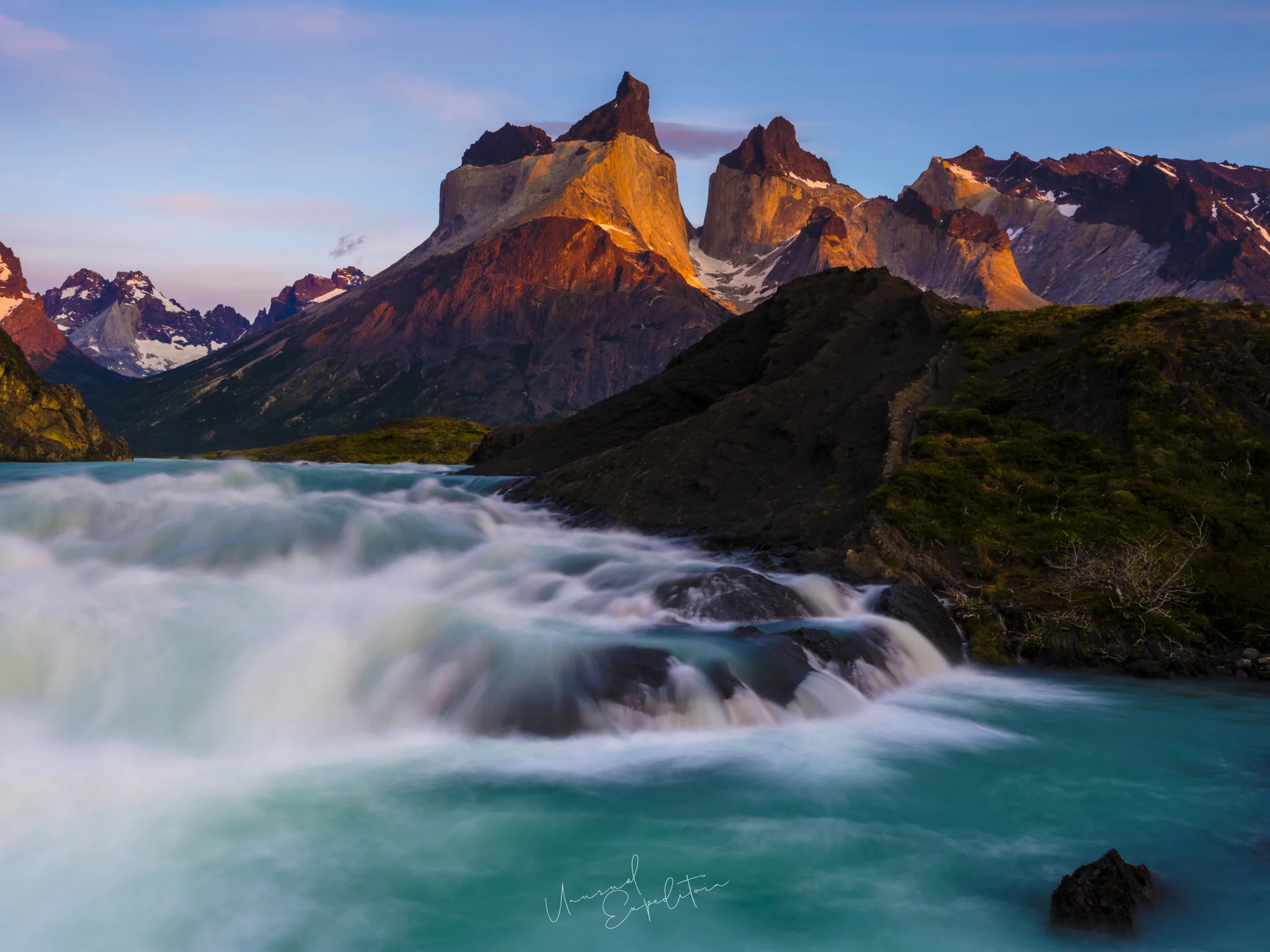
Salto Grande is the main waterfall in Torres del Paine, where the Paine river drops between Lago Nordenskjöld and Lago Pehoé. A short path from the road brings you to the rocks beside it, with the Cuernos standing directly above the falls. The power of the water is the subject: a fast shutter freezes the spray, a slower one turns the river into a white ribbon that leads the eye to the peaks. The rocks are often wet and the wind can be ferocious here, strong enough to make you crouch, so keep a hand on the tripod and the strap round your wrist. Spray reaches the lens on most days; bring cloths.
The trail toward the Cuernos viewpoint
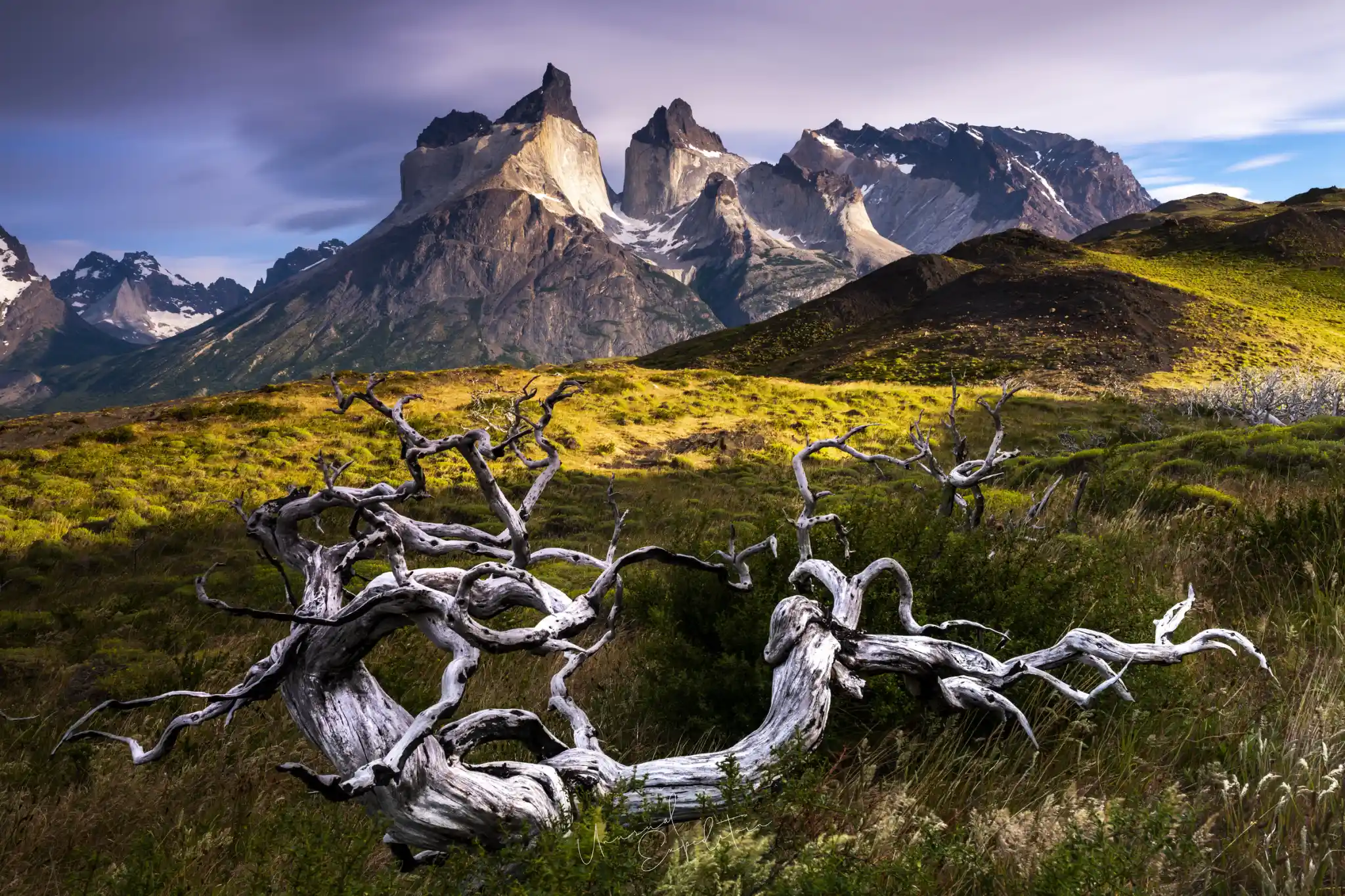
Beyond Salto Grande the path continues across open ground toward a viewpoint facing the Cuernos. Fires in past decades left stands of dead trees along this part of Torres del Paine, bleached silver and twisted by the wind, and they make strong foregrounds against the dark granite. Look for one tree with a clean outline, get low with a 16-35mm and let the mountain fill the top of the frame. Broken cloud and side light give the most texture; flat midday sun makes the scene look grey. The trail is exposed, and on windy days the gusts can stop you walking, so turn back if it gets dangerous.
Lakeshore rocks for long exposures
The lakes of Torres del Paine have rocky shores that suit the slow, smoothed look many photographers want from Patagonia. Put a rock in the foreground, add a neutral density filter, and exposures of many seconds turn the waves into a soft mist while the peaks stay sharp behind. The wind that ruins other pictures helps here, because it keeps the clouds moving. Dawn colour on the water is the best of it; the Torres del Paine sunrise article covers where to be for it. Be careful on wet rock and keep the tripod legs low and wide.
Laguna Amarga and the towers
The three granite towers that give Torres del Paine its name are hidden from most of the road. Laguna Amarga, near the eastern entrance, gives a distant view of them across the water at sunrise, best with a 70-200mm. The close view at the base of the towers is a long, steep hike, and many photographers choose the lakes instead. We have no frames from the base, so we leave that one to the trekking guides.
Everyone wants the island at Pehoé, and it deserves the fuss. But some of my favourite frames in Torres del Paine came from a dead tree on the trail, or a rock on a beach nobody else stopped at. Walk a few minutes from the car park and the park is yours.
Joseph Mak, tour leader, Unusual Expedition
Planning a day around the spots
Torres del Paine is large and the roads are gravel, so plan by light rather than by distance. Put the lake views and the Río Serrano viewpoint at the ends of the day, the waterfall and the trail in the middle, and keep a free slot for wildlife: guanacos graze close to the roads. The best time to visit Torres del Paine article explains how the season changes the light, and the Torres del Paine photography FAQ covers park passes and rules.
Photograph these spots with us
We run Patagonia as a private trip on request, planned around the light at these spots and at your own pace, with all the logistics arranged for you. A photographer or coaching can be added at extra cost. Read how private tours work, or see every Chile destination guide on the Chile photography tours page.
Patagonia photography tours
The next Patagonia departure is announced on the Patagonia photography tours page, with previous expeditions and all the planning guides.
Explore Patagonia in depth
- Patagonia Photography Tour Guide: Torres del Paine, Penguins and GauchosChile
- Torres del Paine Photography FAQ: Tickets, Drones, Wind and WildlifeChile
- How to Get to Torres del Paine: From Santiago, Punta Arenas and OverseasChile
- Patagonia Gauchos: Photographing the Horsemen of Chile's EstanciasChile
- King Penguins in Chile: The King Penguin Park in Tierra del FuegoChile
- Torres del Paine Sunrise and Sunset: Where to Be for the LightChile
- Best Time to Visit Torres del Paine for Photography, Month by MonthChile
Upcoming Photo Tours
- Egypt Photo Tour – EgyptEgypt 12 Dec 2026 To 20 Dec 2026
- Inner Mongolia Winter Owl Photo Tour – ChinaChina 01 Jan 2027 To 04 Jan 2027
- Inner Mongolia Winter Photo Tour – ChinaChina 05 Jan 2027 To 11 Jan 2027
- Mekong And Central Highland Vietnam Photo Tour - VietnamVietnam 16 Jan 2027 To 24 Jan 2027