
How to Get to Torres del Paine: From Santiago, Punta Arenas and Overseas
How to get to Torres del Paine: flights to Puerto Natales or Punta Arenas, the road in, El Calafate and getting to Patagonia from abroad.
How to get to Torres del Paine: fly from Santiago to Puerto Natales or to Punta Arenas, then continue by road into the park, by scheduled bus, hire car or private transfer. Puerto Natales is the closest town and the usual base; Punta Arenas has more flights and is the gateway to the king penguins in Tierra del Fuego. From overseas you first fly into Santiago, the country's international gateway, so most trips start with one connection on the way to Chile.
The wider region is introduced in our Patagonia photography tour guide, and entry rules for Chile in the Chile photography tour guide. Here we set out each way in, and what to expect once you are inside the park.
Ways into Torres del Paine at a glance
| From | How | Notes |
|---|---|---|
| Santiago | Domestic flight to Puerto Natales or Punta Arenas | LATAM and Sky fly both routes |
| Punta Arenas | Road north through Puerto Natales | Buses, hire cars and transfers; more flights |
| Puerto Natales | Road to the park entrances | The usual base; buses in season |
| El Calafate, Argentina | Road across the border | Border formalities, Argentine entry rules |
| Overseas | International flight to Santiago, then domestic | Connections via North America, Europe, South America or the Pacific |
For most visitors the simplest route is Santiago to Puerto Natales and then the road.
How to get to Torres del Paine from Santiago
From Santiago, the capital, you fly south to Patagonia; there is no practical overland route for a short trip. LATAM and Sky Airline both fly to Puerto Natales and to Punta Arenas, and JetSMART also serves Punta Arenas. Flights to Puerto Natales are the more convenient for the park, but there are fewer of them, so check schedules before you fix anything else. Punta Arenas has many more flights. On a clear day sit on the left side flying south for the Andes and the ice fields.
Puerto Natales to Torres del Paine
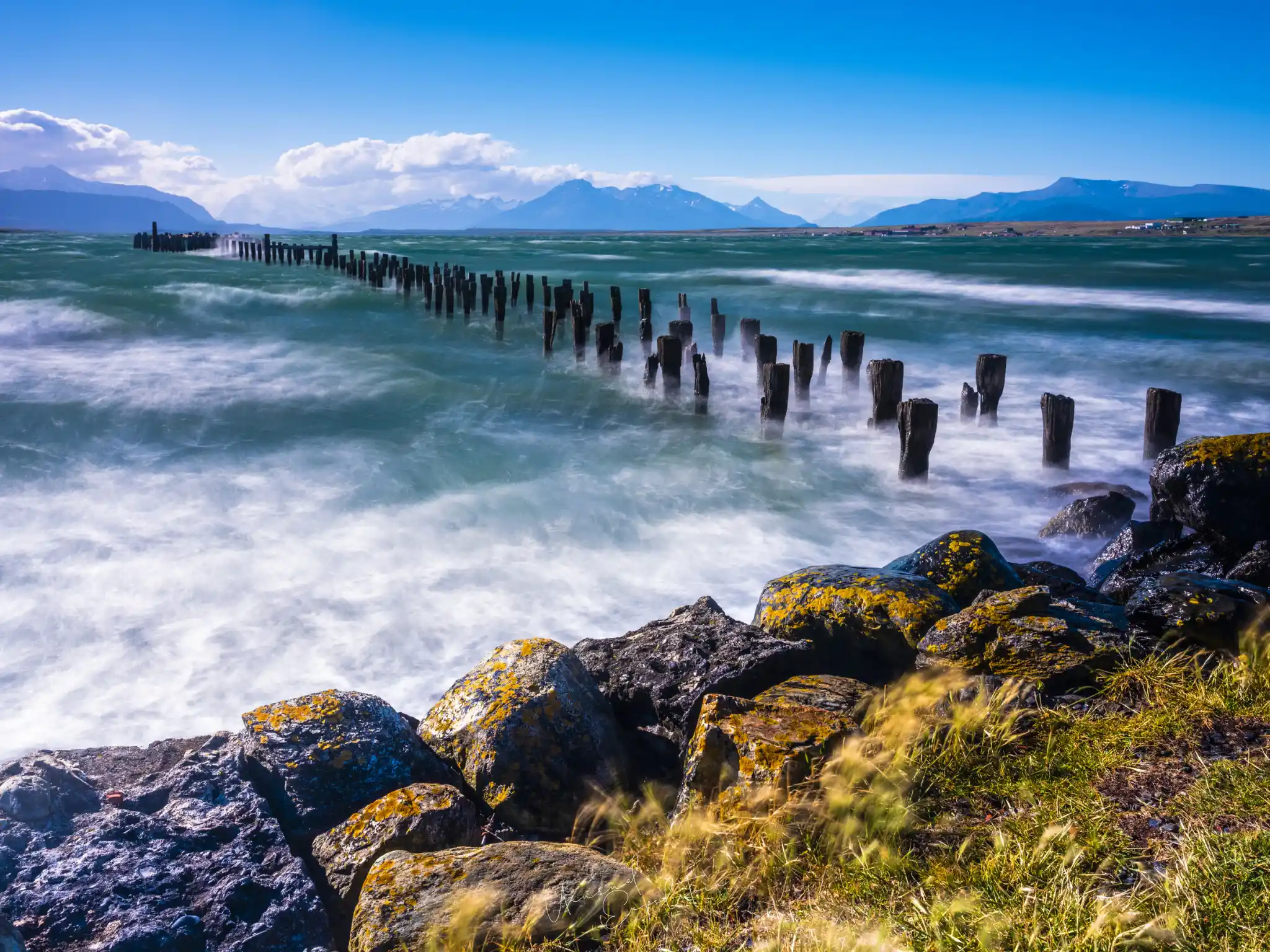
Puerto Natales sits on the Señoret Channel and is the town nearest to Torres del Paine, with supermarkets, outdoor shops, guides and transport. Scheduled buses run from the town to the park entrances in season, timed for the trekkers, and hire cars and private transfers give more freedom to stop for the light. Inside the park most roads are gravel. Before you leave, walk down to the waterfront: the wooden posts of the old pier standing in the channel are one of the best subjects in Patagonia at either end of the day.
How to get to Torres del Paine from Punta Arenas
Punta Arenas, the capital of the Magallanes region on the Strait of Magellan, has the bigger airport. From there the road runs north across the steppe to Puerto Natales and on to the park; buses connect the two towns, or you can drive. Starting in Punta Arenas makes sense if you want to visit the king penguins in Chile, because the ferry to Tierra del Fuego leaves from the city, or if the Puerto Natales flights do not suit your dates. The steppe on the way has its own subjects: rheas, guanacos, estancias and enormous skies.
How to get to Torres del Paine from El Calafate
Many travellers combine Torres del Paine with El Calafate and the Perito Moreno glacier on the Argentine side. Buses and private transfers cross the border between the two, and the crossing involves leaving one country and entering the other, with customs checks on food and plants. Argentina has its own entry rules, which differ by passport, so check your own government's advice for both countries before you plan a two-country trip. Our frames and this destination guide cover the Chilean side only.
Getting around inside Torres del Paine
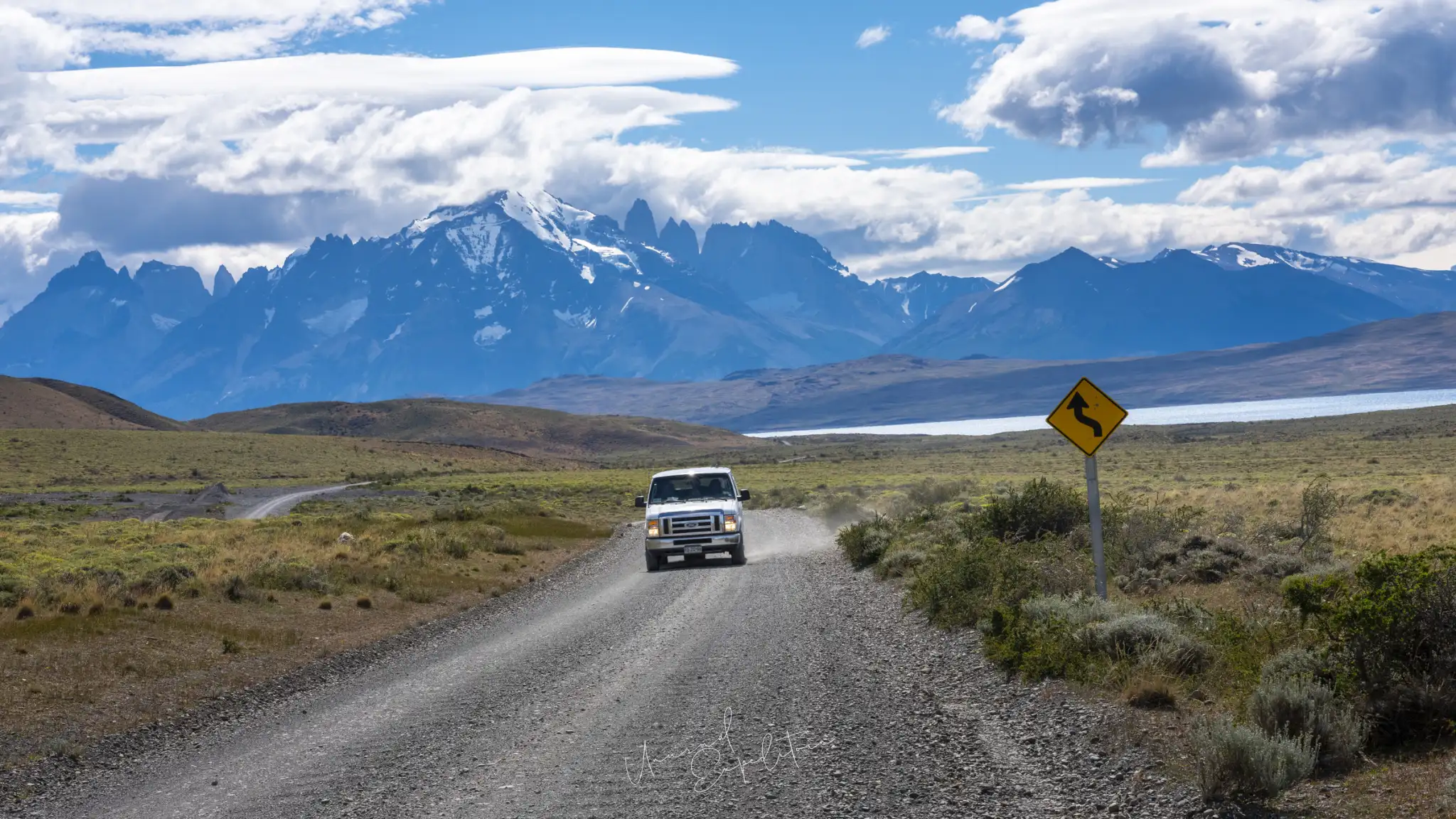
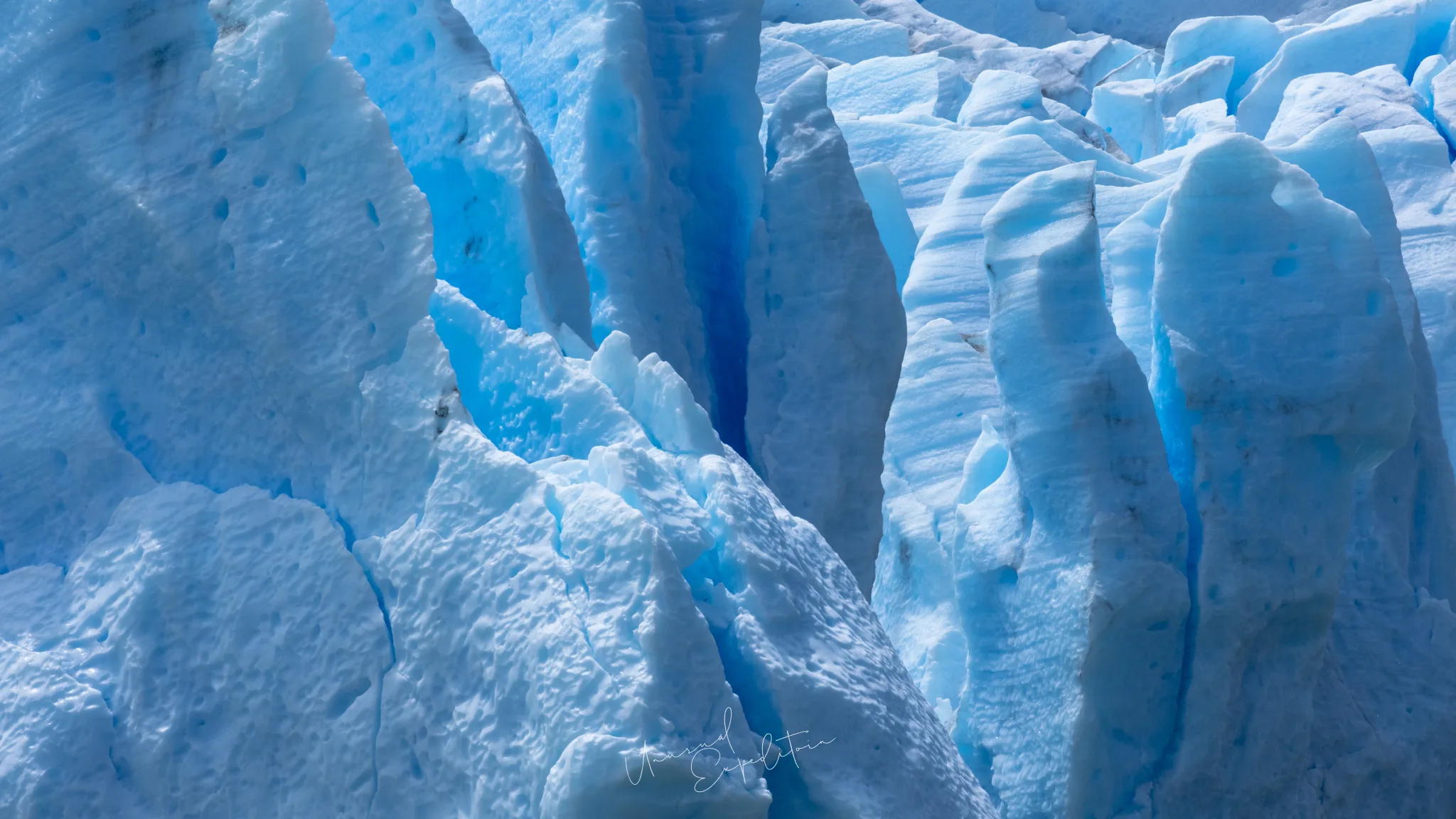
Torres del Paine is large, and its gravel roads link the lakes, viewpoints and lodges. With a car or a driver you can follow the weather, which is the single biggest advantage for a photographer. A catamaran crosses Lago Pehoé to the Paine Grande side for trekkers, and boats on Lago Grey sail to the face of Grey Glacier among floating ice; both depend on the wind. Drive slowly: guanacos step onto the road, gravel is loose, and gusts can push a car sideways. Entrance passes are bought online in advance through CONAF; the Torres del Paine photography FAQ covers the rules.
How to get to Chilean Patagonia from overseas
How to get to Chilean Patagonia from overseas comes down to two flights: an international flight into Santiago, then a domestic flight south to Puerto Natales or Punta Arenas. From North America and Europe the long-haul flights reach Santiago through the major hubs on each side of the Atlantic; from Asia and the Pacific the usual routings cross the Pacific through Australia or New Zealand, or come the other way through Europe or the Middle East; within South America, regional hubs such as Lima, Buenos Aires and Sao Paulo connect to Santiago. Leave a comfortable gap between the international arrival and the flight south, because a missed connection can cost a day in the park. Many passports, including British ones, need no visa for a short tourist stay in Chile, while the allowed length varies: the UK Foreign, Commonwealth and Development Office gives British citizens up to 90 days, and Singapore's Ministry of Foreign Affairs gives Singaporeans 30. Check your own government's advice for your passport before you book. The Chile trip planning guide has the entry details, the agriculture declaration and Chile's time zones.
Getting to Torres del Paine from Singapore takes a long time, there is no way round that. But the first time you see the Paine massif across the steppe from the road, the flights stop mattering. Give yourself enough days in the park that one bad weather day does not cost you the trip.
Joseph Mak, tour leader, Unusual Expedition
Is Torres del Paine worth it?
For a landscape photographer, Torres del Paine is worth visiting, as long as you plan for its weather. The scenery is some of the most dramatic in the Americas, packed into a compact park you can explore by road without trekking, and the light at the ends of the long summer days is extraordinary. The costs are real: a long trip to get there, high prices in season, crowds at the classic viewpoints, and wind that can wipe out a day. Allow several days so the weather has room to change. If you can, add the king penguins or a ranch visit for variety; see Torres del Paine photo spots for what to put first.
Let us handle the travel to Torres del Paine
We run Patagonia as a private trip on request, for travellers joining from any country, and arrange every flight, transfer and park pass around what you want to photograph, at your own pace. Ask at least two months ahead if you can; last-minute trips can be arranged. See how private tours work, and every Chile destination guide on the Chile photography tours page.
Ask us about getting to Torres del Paine
Patagonia photography tours
The next Patagonia departure is announced on the Patagonia photography tours page, with previous expeditions and all the planning guides.
Explore Patagonia in depth
- Patagonia Photography Tour Guide: Torres del Paine, Penguins and GauchosChile
- Torres del Paine Photography FAQ: Tickets, Drones, Wind and WildlifeChile
- Patagonia Gauchos: Photographing the Horsemen of Chile's EstanciasChile
- King Penguins in Chile: The King Penguin Park in Tierra del FuegoChile
- Torres del Paine Sunrise and Sunset: Where to Be for the LightChile
- Best Time to Visit Torres del Paine for Photography, Month by MonthChile
- Torres del Paine Photo Spots: Where to Stand for Every Classic ViewChile
Upcoming Photo Tours
- Egypt Photo Tour – EgyptEgypt 12 Dec 2026 To 20 Dec 2026
- Inner Mongolia Winter Owl Photo Tour – ChinaChina 01 Jan 2027 To 04 Jan 2027
- Inner Mongolia Winter Photo Tour – ChinaChina 05 Jan 2027 To 11 Jan 2027
- Mekong And Central Highland Vietnam Photo Tour - VietnamVietnam 16 Jan 2027 To 24 Jan 2027