
Volga Manor Harbin: Photographing the Russian-Style Park and the City's Russian Architecture
Volga Manor Harbin: the St Nicholas Church replica, brick palaces and tower, best light, and Harbin's real Russian architecture.
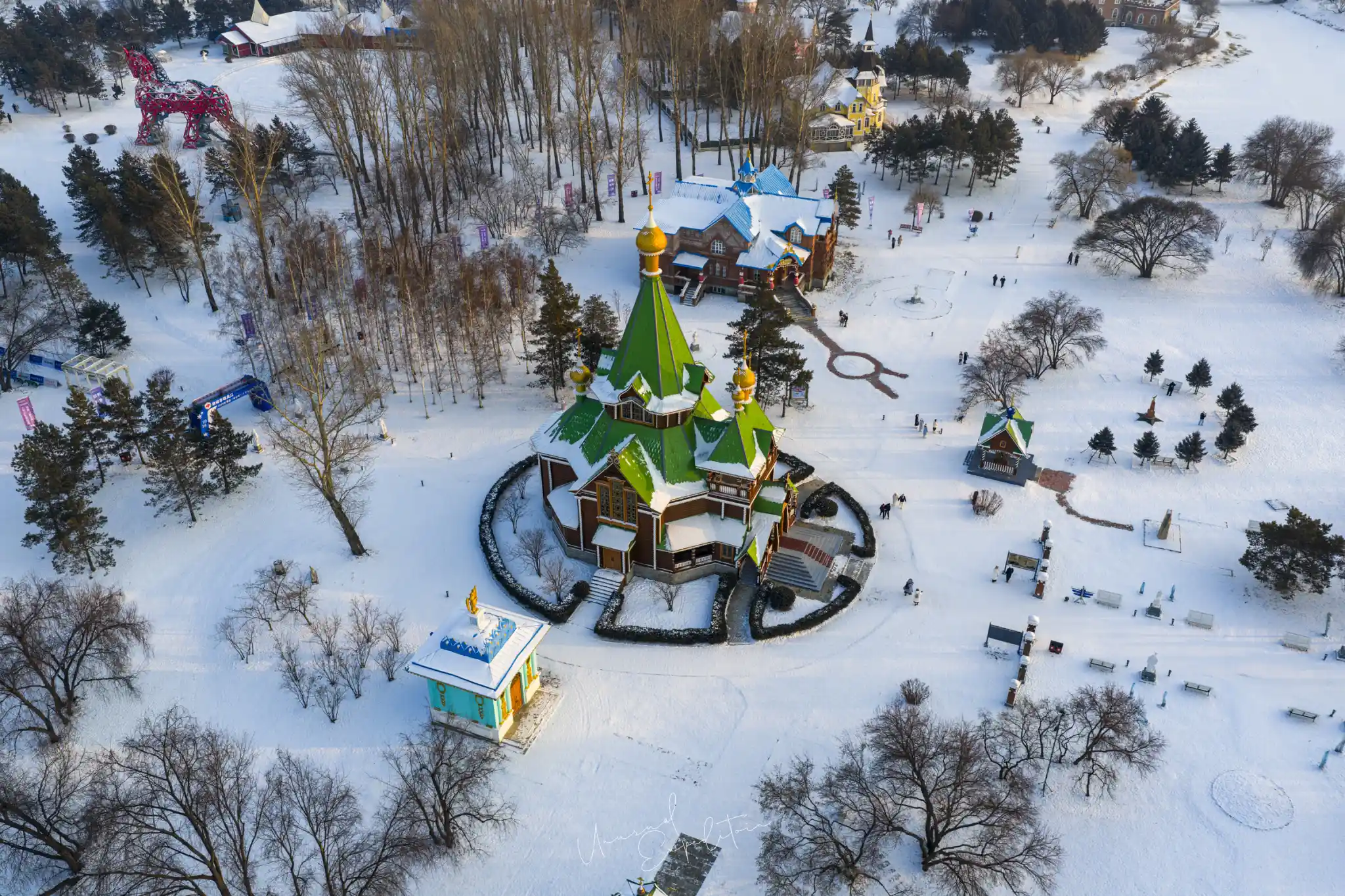
Volga Manor is a Russian-style park on the Ashi River in the suburbs of Harbin, with brick palaces, towers, wooden houses and a replica of the city's lost St Nicholas Church set in birch woods. In winter, under snow and low sun, it is one of the most photogenic places around Harbin, and it shows the Russian side of the city's history in a way the busy streets downtown cannot. Below: what the park is, what to photograph there and how it compares with Harbin's real Russian buildings.
Volga Manor is one stop on the winter route described in our Harbin photography tour guide, usually on the way back into the city after the tiger and deer parks.
What is Volga Manor in Harbin
Volga Manor Harbin is a theme park built around Russian culture and architecture, on the banks of the Ashi River southeast of the city centre. China Daily has described it as a place where imitation is flattering: a large estate of Russian-style buildings built with Russian designers, including palaces, towers, wooden cottages and a church. Its best-known building is the wooden St Nicholas Church, a reproduction of the Orthodox church that once stood at the heart of Harbin. According to Wikipedia's article on the park, the replica was built in 2007 from original design drawings, using pine logs brought from Russia. In winter the grounds are deep in snow and the red brick and green domes stand out sharply against white.
St Nicholas Church: the replica and the original
The original St Nicholas Church was a wooden Orthodox church built in the late nineteenth century, when Russian engineers were laying out Harbin as a railway city. China Daily notes that it stood as the city's main landmark until it was torn down in 1966, during the Cultural Revolution. The Volga Manor replica brings back its shape: a wooden body with steep roofs and green onion domes topped with gold crosses. From the ground the church is best photographed with a 24-70mm from the front, with birch trunks framing it. From above, the round plaza around it and the white woods make a strong graphic pattern, best in the late afternoon when the trees throw long shadows across the snow.
Volga Manor photos: the brick palaces and the tower
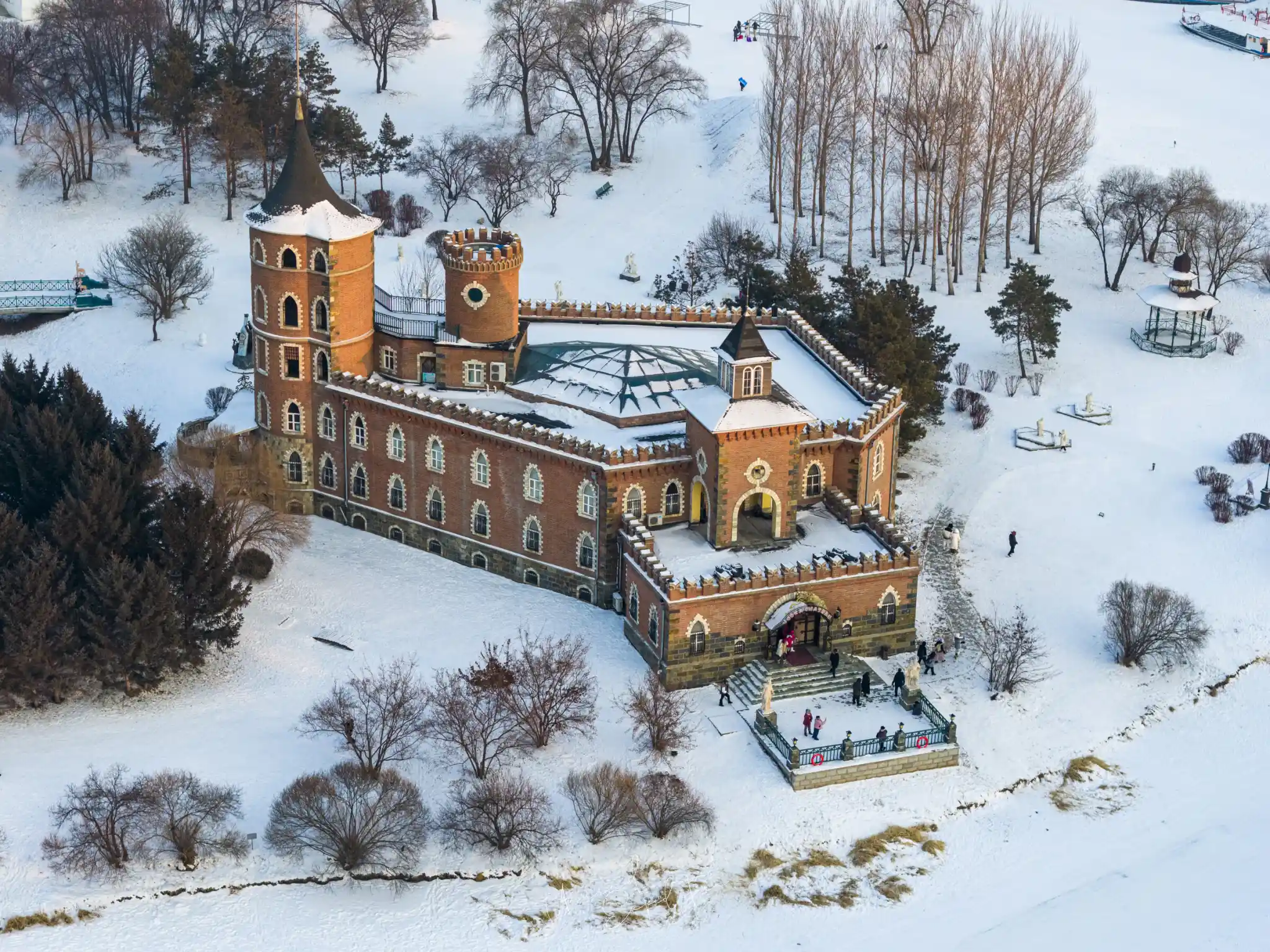
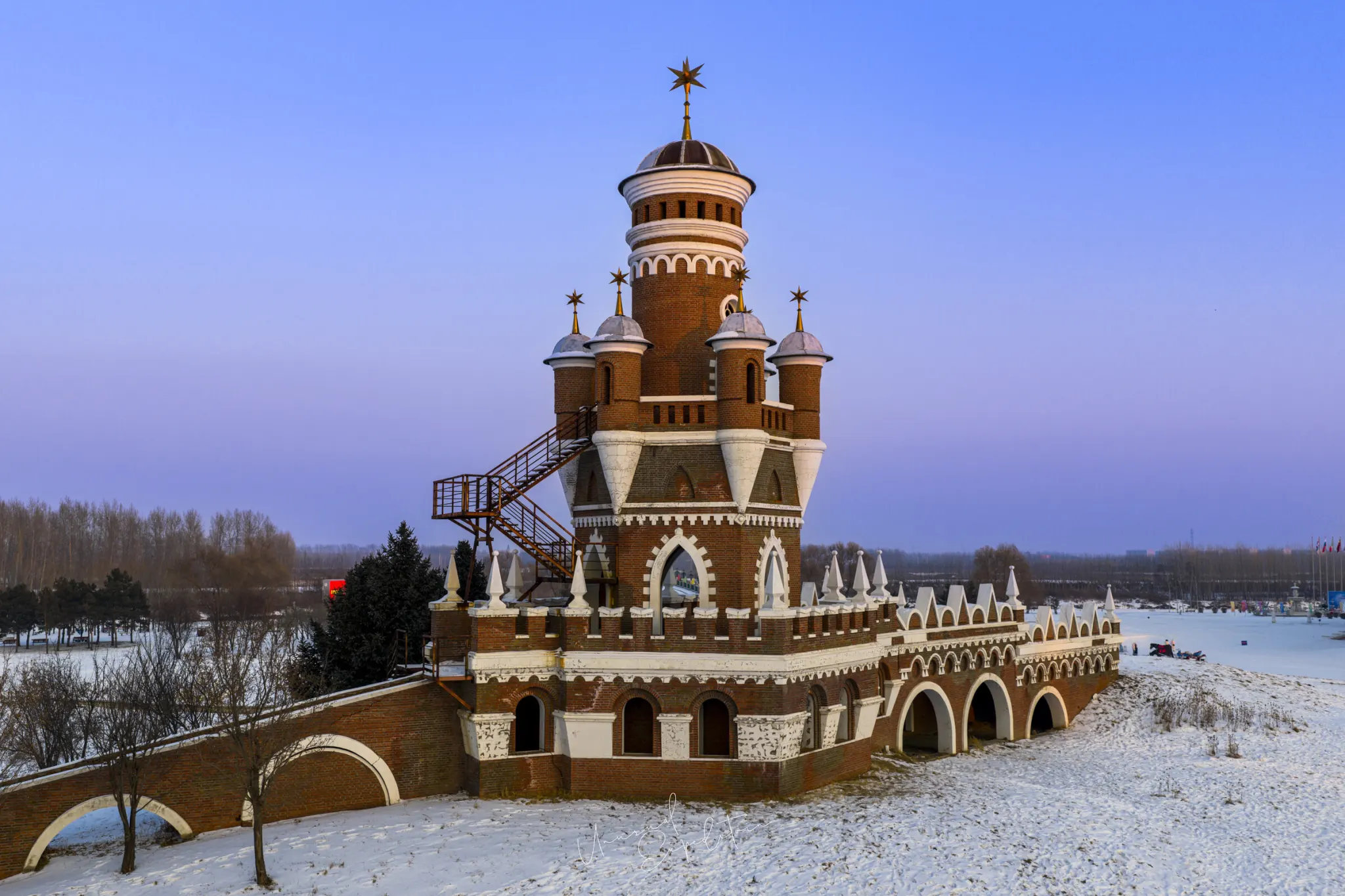
Most Volga Manor photos are of the red and white brick buildings. The largest is a long palace with towers and decorative white trim, which in winter sits in open snow with the woods behind. A tall tower building with an outside staircase and an arcade makes a strong subject at blue hour, when its warm brick glows against a violet sky. Smaller manor houses with pitched roofs stand among the trees. The buildings face different directions, so the light suits different ones at different times: the long palace looks best in the last sun, the tower after sunset. A 70-200mm helps isolate details such as window frames, domes and the ornate brick patterns.
Harbin Russian architecture in the city
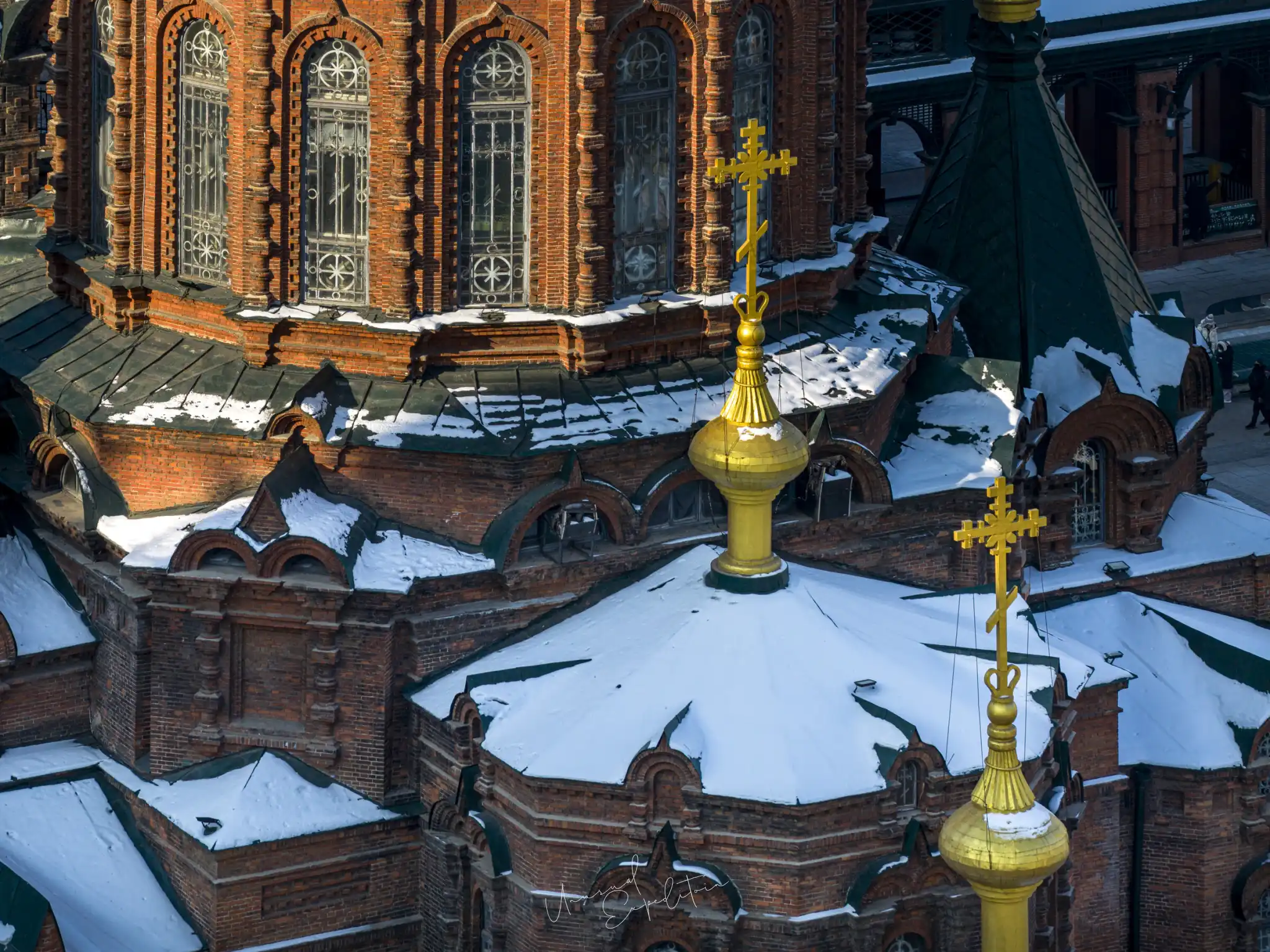
Harbin Russian architecture is the real thing the park imitates. The city grew from a small settlement into a railway hub after the Chinese Eastern Railway arrived around the turn of the twentieth century, and Russian, Jewish and other European communities built churches, shops, banks and homes in Russian, Art Nouveau and Baroque styles. The most famous survivor is St Sophia Cathedral, a red-brick Orthodox church with a great green onion dome, built in its present form in 1932 and now a museum. Central Street, the long pedestrian street of old European facades, is a short walk away. Our best time to visit Harbin guide covers the winter light on these streets.
Where to stand and when to go
| Subject | Best light | Lens |
|---|---|---|
| St Nicholas Church replica | Late afternoon, low side light | 24-70mm |
| Long brick palace | Last sun and sunset | 24-70mm or 70-200mm |
| Tower building | Blue hour after sunset | 24-70mm, tripod |
| Details: domes, windows, brickwork | Any clear light | 70-200mm |
| St Sophia Cathedral in the city | Morning and blue hour | 16-35mm or 24-70mm |
Volga Manor is quietest outside the Chinese holidays; check the park's current opening hours before you go, because they change with the season. Inside the buildings, follow staff instructions on photography.
I came to Volga Manor expecting a theme park and stayed until dark. The tower at blue hour, with the snow going violet around it, is one of my favourite frames from the whole Harbin trip.
Joseph Mak, tour leader, Unusual Expedition
Volga Manor in Chinese and getting there
Volga Manor in Chinese is 伏尔加庄园, read Fuerjia Zhuangyuan, and that is the name to show a taxi driver or type into a Chinese map app, since the English name is not widely recognised. The park lies outside the city on the road toward Acheng, beside the Ashi River, so it is a separate outing rather than something you can walk to from Central Street. Taxis and ride-hailing apps reach it, and some winter day tours from Harbin include it; on our trips we stop there with our own vehicle on the way back into the city. Entry is ticketed, and ticket prices and opening hours change with the season, so check them on the day. Wear proper winter boots: the grounds are large, the paths between buildings are snowy, and the best viewpoints are a walk from the gate.
Is Volga Manor worth visiting
Volga Manor is worth visiting for photographers in winter, as long as you know what it is: a modern park with reproduced buildings, not a historic site. Its value is space and setting. Unlike the city's real Russian buildings, which stand among traffic, shop signs and crowds, the manor gives clean snow, birch woods and open sky around every building, and late light that the city streets rarely get. It works best as an afternoon stop after the morning's wildlife, finishing at sunset and blue hour. Pair it with the Harbin ice festival at night for a full winter day.
Photograph Harbin with us
Volga Manor is part of our Harbin winter route, which we run as a group trip in some winters and as a private trip on request. Current dates are on our China photography tours page.
Join the Harbin photography tour
Inner Mongolia Winter Owl Photo Tour – China departs 01 Jan 2027 To 04 Jan 2027, led by Joseph Mak. Small group, photography first. All Harbin photography tours.
Explore Harbin in depth
- Harbin Photography Tour: The Complete GuideChina
- Hengdaohezi: Photographing the Railway Town, Russian Buildings and Siberian TigersChina
- Wusong Island Rime: Photographing Jilin's Frosted Trees on the Songhua RiverChina
- Harbin Tour from Singapore: Flights, Visa, What to WearChina
- Harbin Ice Festival Photography: Harbin Ice and Snow World at NightChina
- China Snow Town Photos: Xuexiang at Night, Lanterns and SnowChina
- Best Time to Visit Harbin: Ice Festival, Snow and Rime Month by MonthChina
Upcoming Photo Tours
- Egypt Photo Tour – EgyptEgypt 12 Dec 2026 To 20 Dec 2026
- Inner Mongolia Winter Owl Photo Tour – ChinaChina 01 Jan 2027 To 04 Jan 2027
- Inner Mongolia Winter Photo Tour – ChinaChina 05 Jan 2027 To 11 Jan 2027
- Mekong And Central Highland Vietnam Photo Tour - VietnamVietnam 16 Jan 2027 To 24 Jan 2027