
Xiapu Fishermen and She Village Photography
Photographing Xiapu fishermen, oyster shuckers and She village women: real work, arranged scenes, how to ask and what to pay.
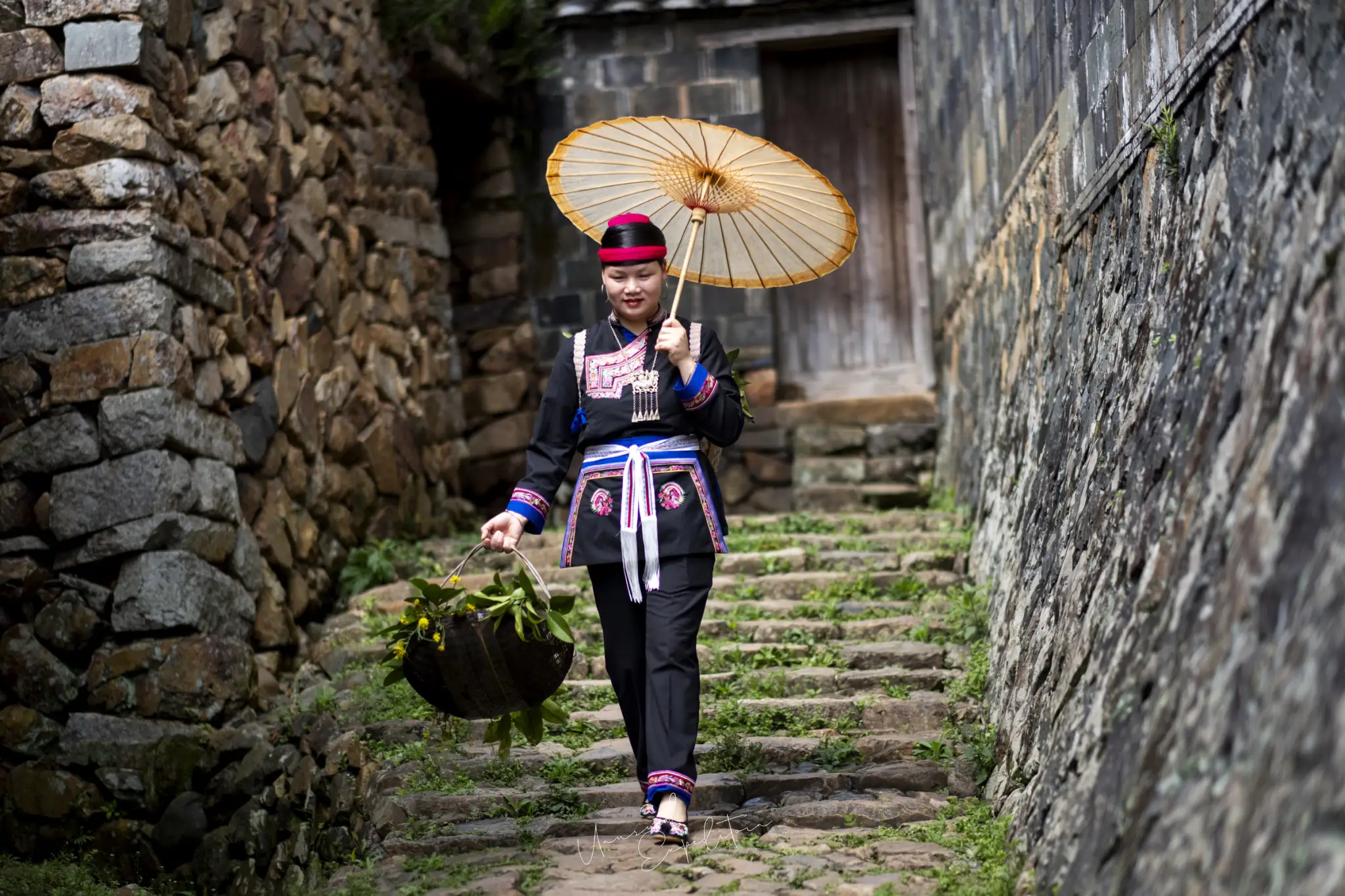
Xiapu fishermen and She village photography means two kinds of people pictures on the same trip: the farmers and fishers of the coast, at work on the mudflats, rafts and beaches, and the She people of the hill villages, in their dark embroidered costume and red headwear. Some of what you see is everyday work and some is arranged for photographers, and the difference matters for how you shoot it. This article is part of our Xiapu photography tour guide.
Who works the Xiapu coast
The Xiapu coast is farmed as intensively as any rice valley. Families tend laver nets on the mudflats, kelp lines and oyster rafts further out, and fish and abalone cages on floating platforms in the deeper bays. In the villages along the shore, older women shuck oysters in sheds and doorways, men repair boats hauled up on the sand, and the beaches fill with drying seaweed and nets in the harvest seasons. None of this is staged, and most people are friendly to a photographer who is patient, polite and not in the way.
The shrimp fishers and the hand nets
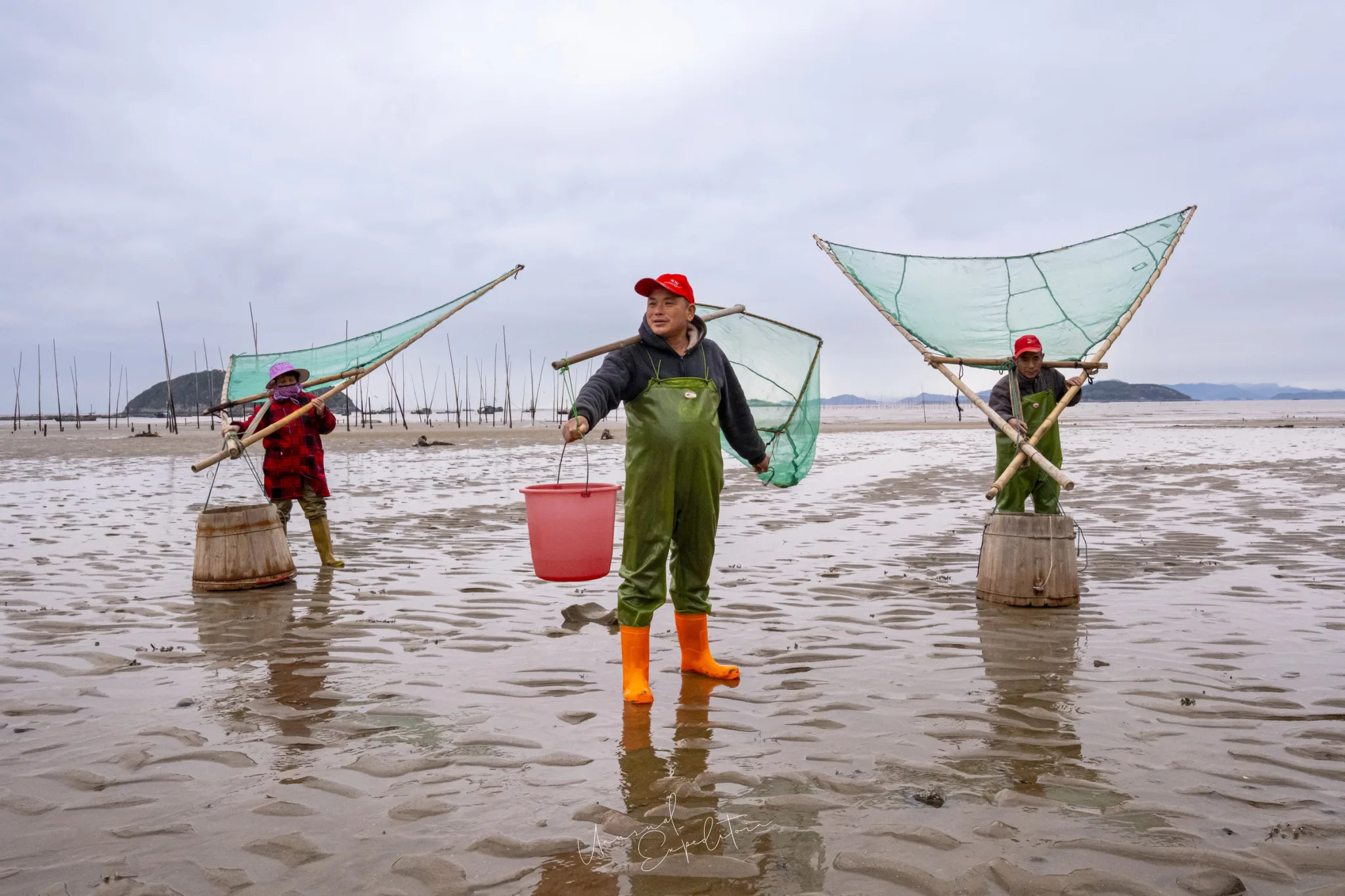
The fishers who wade across the flats with triangular push nets on bamboo frames are one of the best-known Xiapu subjects. Some are working, especially at low tide in the channels, where the nets are pushed through shallow water for small shrimp and fish. Others are arranged: a group walks in line across a reflective patch of mud on request, with buckets and wooden tubs, for a photography group standing on the sea wall. Both make good pictures. With the arranged ones, agree the fee and the number of passes in advance; with the real ones, keep your distance, use a long lens and do not slow anyone down.
Oyster shuckers and boat repairers
Some of the most rewarding portraits in Xiapu are in the least scenic places: an oyster shed with a heap of shells and a row of women with knives, a boatyard where men are painting a hull, a lane where nets are being mended. The light is usually soft and directional from a doorway or the open side of a shed. Ask first, with a gesture if your Mandarin will not stretch, and accept a no. Buying something, or simply chatting for a few minutes before you lift the camera, makes a difference.

Who are the She people of Xiapu?
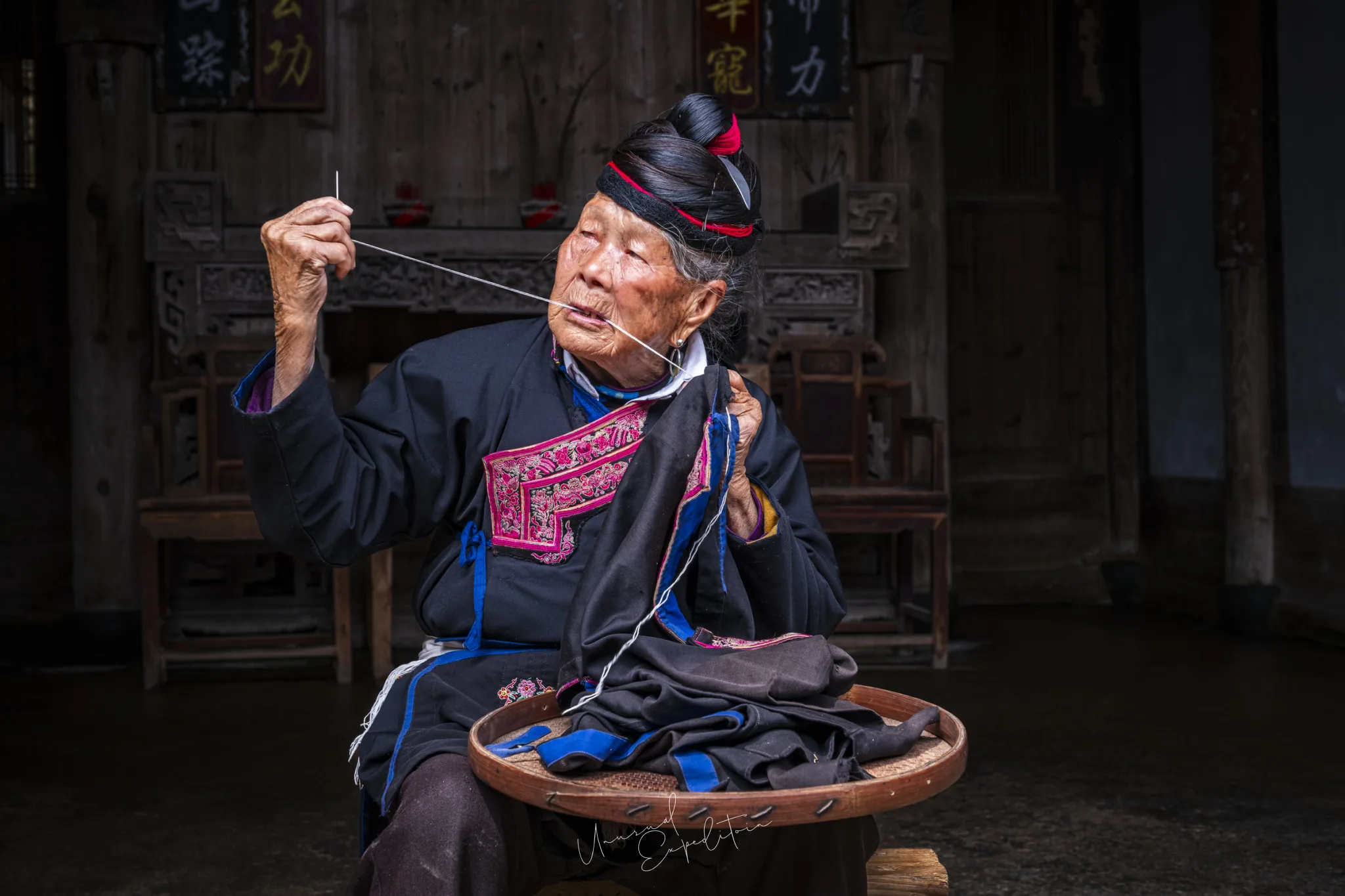
The She are one of China's officially recognised ethnic minorities, and Fujian, with neighbouring Zhejiang, is where most of them live. In the hills around Xiapu there are She villages of grey stone houses built up steep slopes, linked by stone steps and lanes. Banyueli is the best known and is often visited by photography groups. The traditional costume is dark, with embroidered borders in pink, blue and white at the collar and front, and a red and black headdress worn by married women. Older women still sew and weave at home, and some villages keep looms in the old houses.
Photographing in a She village
In the villages that receive photography groups, portrait sessions are usually arranged through a local contact: a few women in costume pose in a doorway, on the stone steps, at a loom or by a wood-fired stove, and are paid for their time. This is the respectful way to make close portraits, and it is how most of the costume pictures you have seen were made. Outside these sessions, people are going about their day; ask before you photograph anyone, keep out of houses unless invited, and be especially careful with older people and children. The light inside the old houses is low and warm, from small windows and open doors, so a fast prime lens at 35mm or 56mm and a high ISO are more use than a tripod.
"The She grandmothers are the best part of Xiapu for me. They have sat for photographers for years and they know exactly where the window light falls. You learn more about light in an hour in one of those kitchens than in a week of reading."
Joseph Mak, tour leader, Unusual Expedition
Staged scenes: how we handle them
Xiapu has an industry of arranged pictures: the ox in the banyan grove, the nets blowing on poles, the bonfire on the beach at dusk, models in costume on the rafts. We are open about which scenes are arranged, we make sure the people involved are paid fairly, and we caption these pictures as what they are. We also leave time for the coast as it is, because the real work on the bays is the reason Xiapu exists and, in our experience, gives the pictures people remember. The viewpoints for the landscape side are in Xiapu mudflats photo spots.
| Subject | Real or arranged | How to shoot it |
|---|---|---|
| Farmers on the laver nets and kelp rafts | Real work | Long lens from the shore or a boat |
| Shrimp fishers with hand nets | Both | Agree the walk if arranged; keep distance if not |
| Oyster shuckers and boat repairs | Real work | Ask, then a 24-70mm in doorway light |
| She women in costume at home | Arranged sessions | Fast prime, window light, paid sitting |
| Ox and farmer in the banyan grove | Arranged | Agree the fee, tripod, expose for the beams |
Knowing which is which changes how you caption the pictures and how you treat the people in them.
Language and tipping
Little English is spoken in Xiapu. A few words of Mandarin, a smile and a translation app go a long way. In arranged sessions the fee is agreed by the local contact; in everyday encounters, a small payment or buying something is a courteous thank-you if you have taken a lot of someone's time, but it is not expected for a passing picture.
More about planning a Xiapu trip
When the different kinds of work happen through the year is in the best time for Xiapu photography, and practical questions are answered in our Xiapu photography trip FAQ.
Meet the people of Xiapu with us
Our private Xiapu trips include arranged She portrait sessions and time with working families on the coast. See our China photography tours page to plan one.
Join the Xiapu photography tour
Inner Mongolia Winter Owl Photo Tour – China departs 01 Jan 2027 To 04 Jan 2027, led by Joseph Mak. Small group, photography first. All Xiapu photography tours.
Explore Xiapu in depth
- Xiapu Photography Tour: The Complete GuideChina
- Xiapu Photography Trip FAQ: Getting There, Visas, Drones, TidesChina
- Xiapu Mudflats Photo Spots: Sunrise, Sunset and the Pole BaysChina
- Best Time for Xiapu Photography: Laver, Kelp, Mist and TidesChina
Upcoming Photo Tours
- Egypt Photo Tour – EgyptEgypt 12 Dec 2026 To 20 Dec 2026
- Inner Mongolia Winter Owl Photo Tour – ChinaChina 01 Jan 2027 To 04 Jan 2027
- Inner Mongolia Winter Photo Tour – ChinaChina 05 Jan 2027 To 11 Jan 2027
- Mekong And Central Highland Vietnam Photo Tour - VietnamVietnam 16 Jan 2027 To 24 Jan 2027