
Antananarivo Market Photography: Analakely and the Street Stalls
Antananarivo market photography at Analakely: what to shoot, koba and street food, asking for portraits, lenses and camera safety.
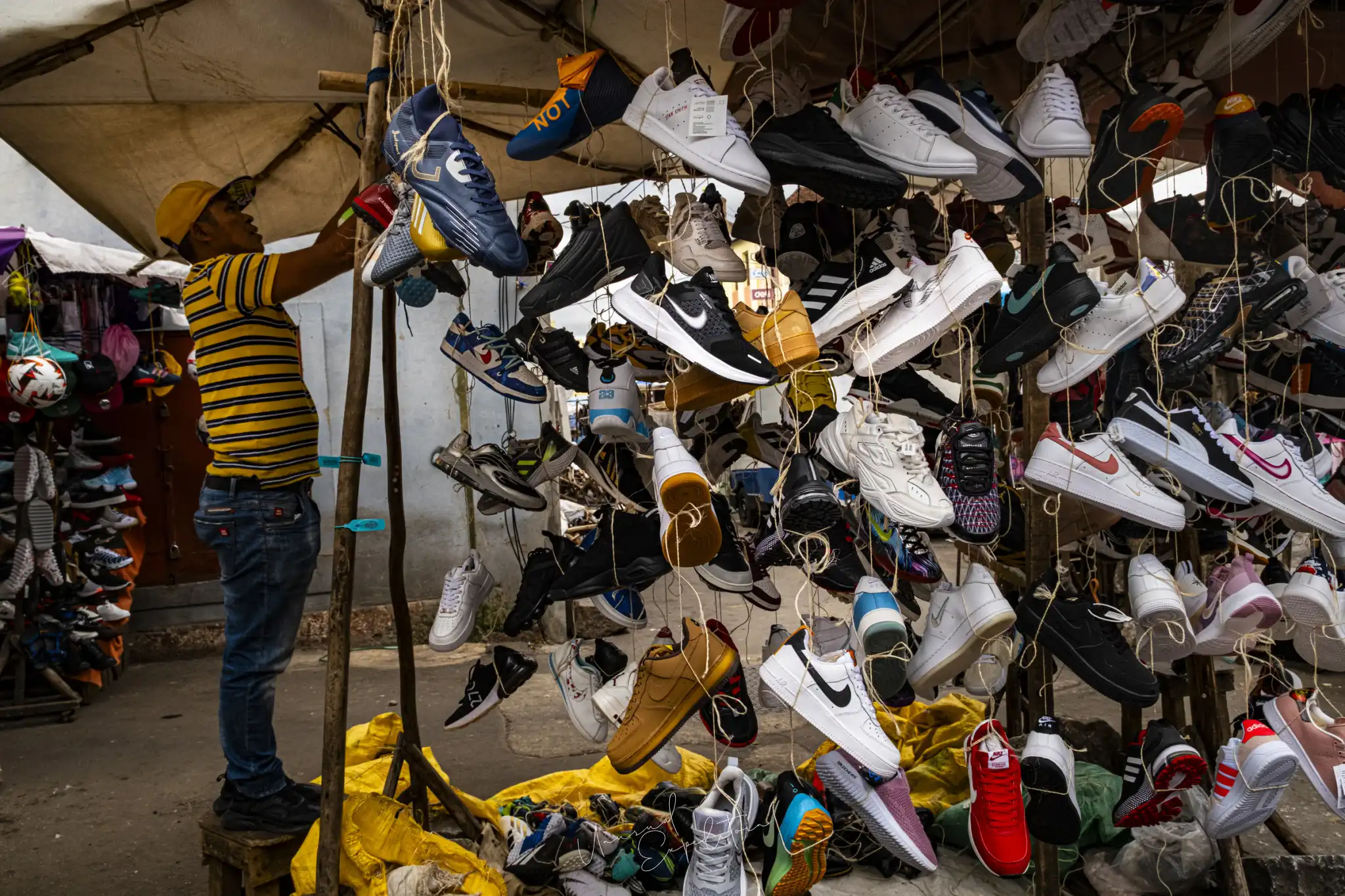
Antananarivo market photography means Analakely: the big market in the lower town of the capital, its covered halls and the streets around them packed with stalls of shoes, clothes, crabs, fruit and street food. It is busiest in the morning, it is where the city's best people pictures are, and it rewards a small camera, a 24-70mm or 35mm, a few words of Malagasy or French and the habit of buying before you shoot. Ask, smile, and keep moving.
The market is one stop of the city day described in our Antananarivo photography tour guide, which covers the Rova hill, Lemur Park and blue hour as well.
Antananarivo market: where Analakely is and what it was
Analakely lies in the valley at the foot of the Avenue de l'Independance, below the upper town. For generations the capital's great Friday market, the Zoma, named after the Malagasy word for Friday, spread across this ground with white umbrellas from one side of the valley to the other. The authorities broke the Zoma up in 1997 and spread the Friday trade across other districts, and Lonely Planet now describes the Analakely market as a shadow of the old Zoma. A shadow of the Zoma is still the largest market in the city. The covered pavilions with their tiled roofs hold food and household goods; the streets and stairways around them carry everything else.
Antananarivo pictures of markets: what to look for
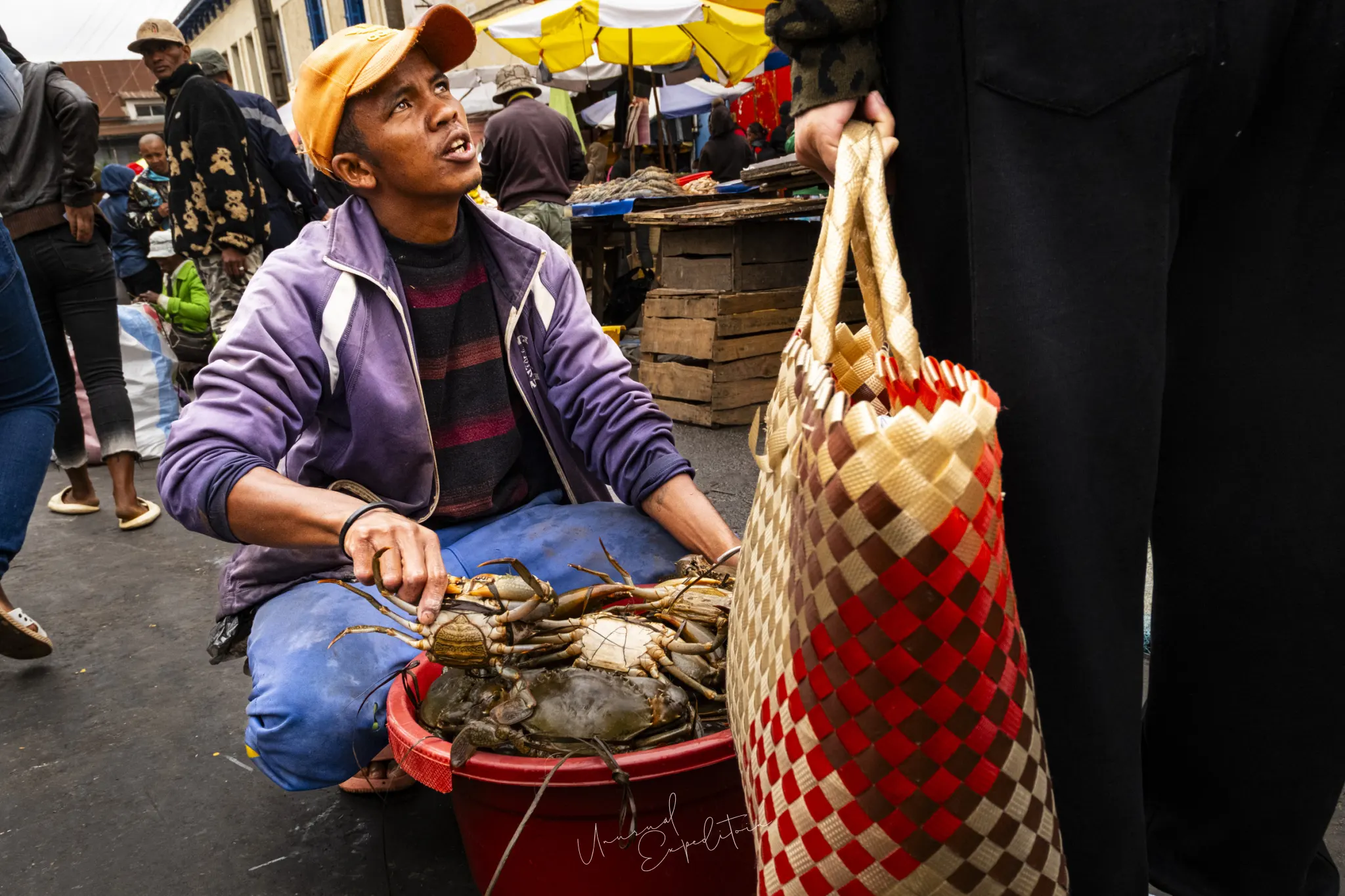
The pictures in Analakely come in layers. The first is colour and pattern: walls of sneakers and plastic sandals hanging from bamboo frames, stacks of folded cloth, baskets of chillies and dried fish. The second is work: porters with sacks, sellers lifting goods onto the top rails of their stalls, cooks at street counters, men slicing koba, the rolls of peanut and rice cake wrapped in banana leaf that are sold by the slice all over Tana. The third is faces, and those come last, after you have spent time at a stall. Analakely sellers mostly answer a camera with a joke or a shrug; a few say no, and that is the end of it. Look up as well: the stalls are often stacked two levels high, and a seller on a ladder hanging shoes makes a better picture than a seller standing behind a counter.
Shoes, clothes and the second-hand trade
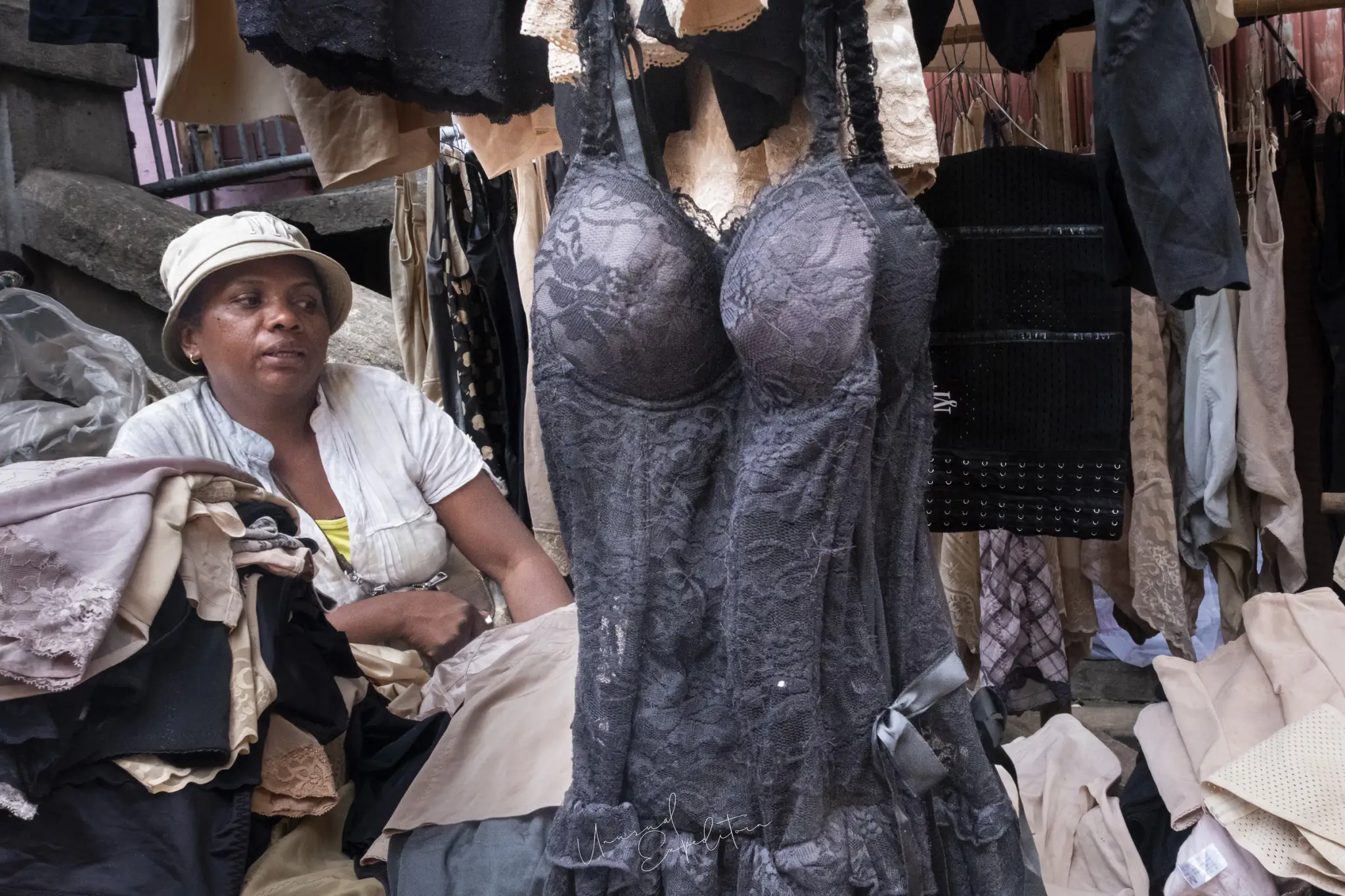
A large part of the Antananarivo market is clothes and shoes, much of it second-hand, sold from frames hung so high and dense that a stall becomes a wall of pattern. These are among the easiest frames in the market to make strong: a person reaching up into the hanging goods, a shopper turning a sneaker in the light, a seller sitting among mannequins. Shoot slightly from below to fill the top of the frame with the hanging goods, and wait for the hand that breaks the pattern.
Street food and koba
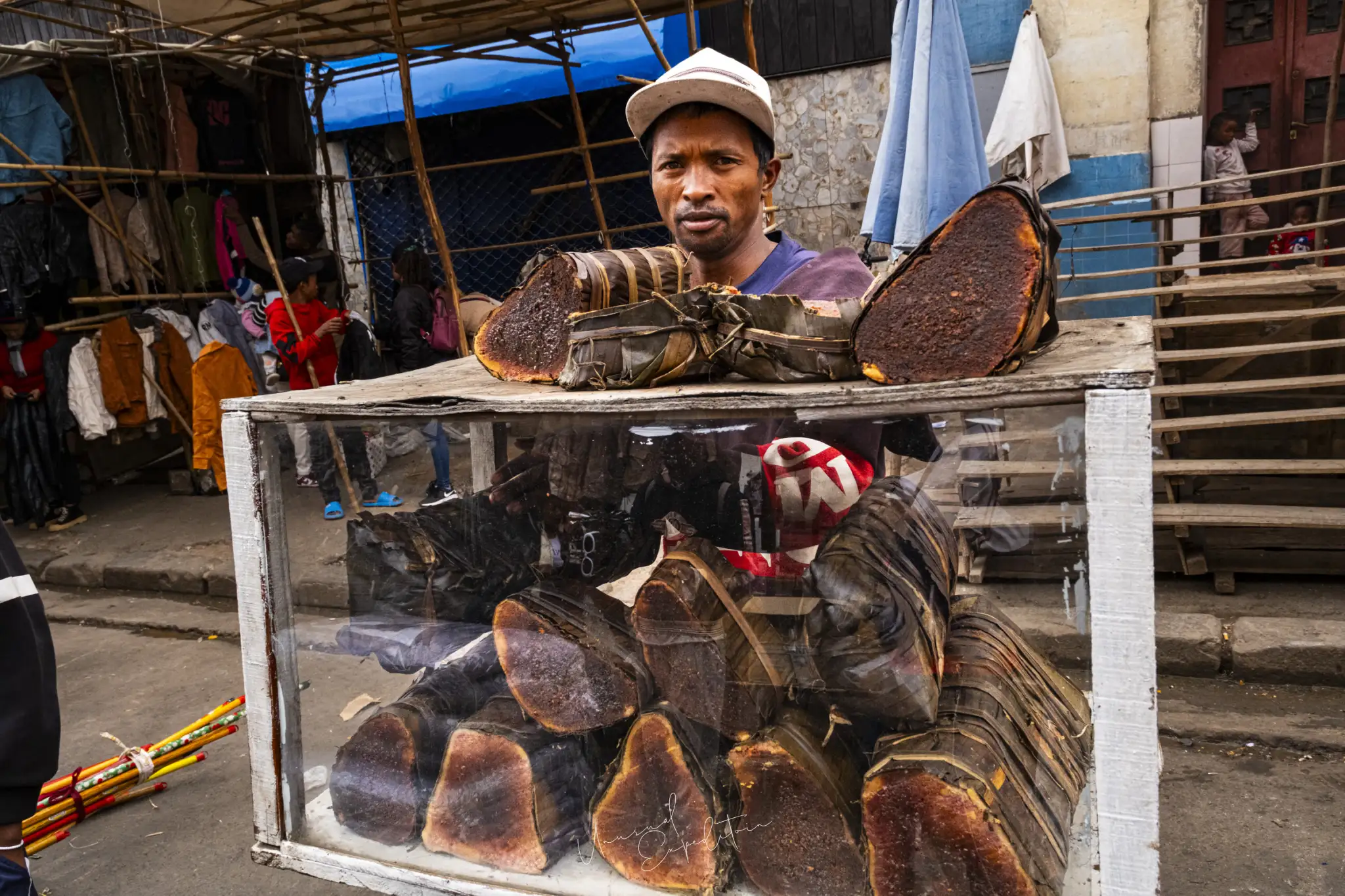
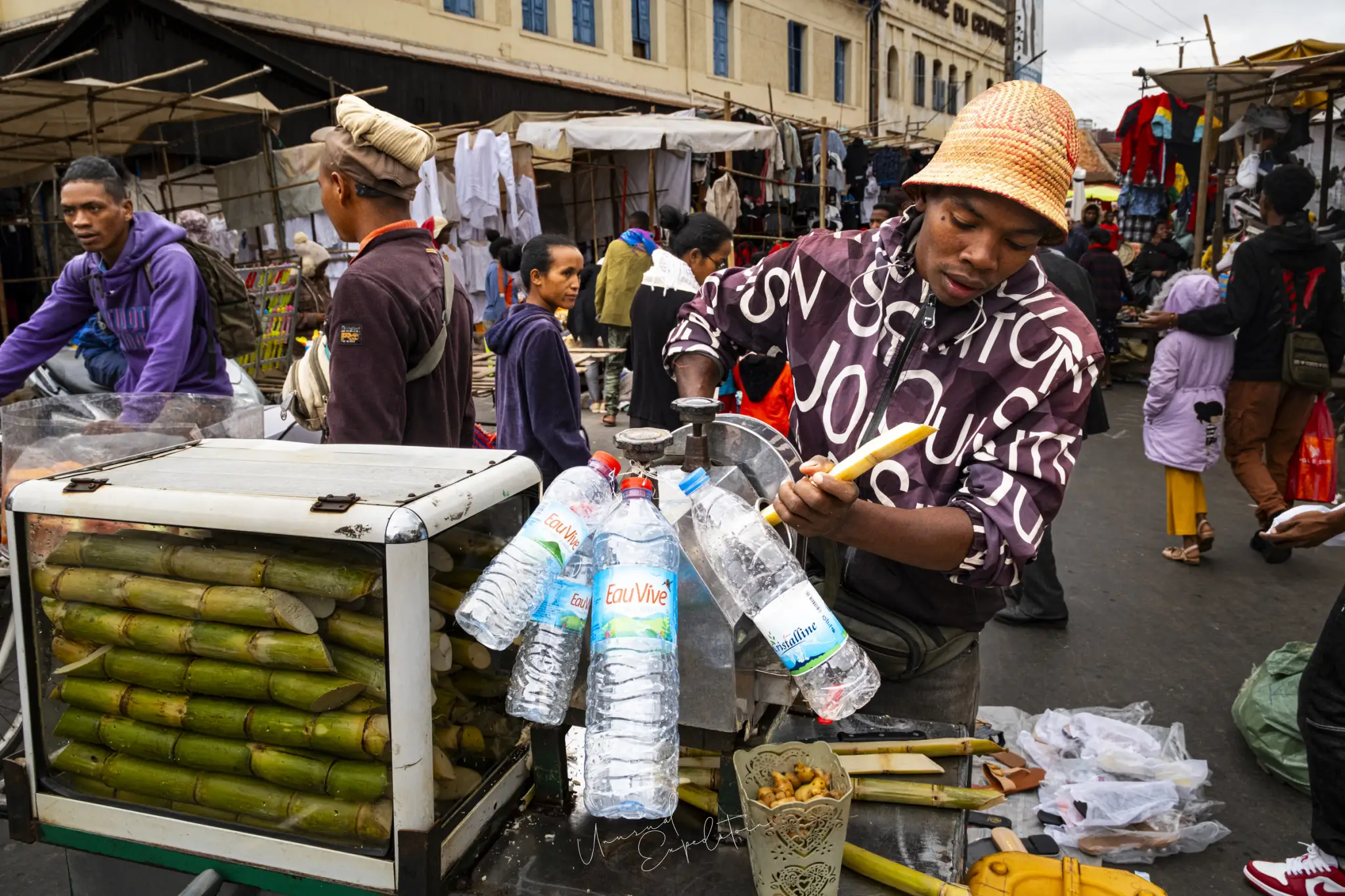
Food in the Antananarivo market is a subject in itself. Koba sellers stand behind glass cases of dark brown rolls, cut open to show the sugar and peanut inside. Street counters sell rice with meat and greens under painted signs, and juice sellers work carts of sugarcane and bottled drinks. The light at these stalls is usually what makes them: a white awning overhead, a glass case catching the sky, a steaming pot against a dark doorway. Buy a slice, eat it there, then ask. Nobody objects to a customer with a camera.
In Analakely the first ten minutes are always bad pictures. People are watching you. Buy something, stand at one stall, talk, and after a while the market forgets you are there. That is when it starts.
Joseph Mak, tour leader, Unusual Expedition
Asking before a portrait
In the Antananarivo market most sellers will agree to a portrait if you ask, and the words help: "Azafady" is please and excuse me in Malagasy, and "Misaotra" is thank you; French also works everywhere in the city. Canada's official travel advice asks visitors to seek permission before photographing people in Madagascar, and it is the right habit in a market where many sellers are poor and some are tired of being a subject. Show the picture on the screen afterwards. Never pay for a photograph; buy something instead, which is the same courtesy without turning portraits into a trade.
Lenses and settings for Analakely
| Situation | Lens | Settings to start from |
|---|---|---|
| Wide scenes of the stalls and crowd | 24-70mm at the wide end | f/8, auto ISO, 1/250 s |
| Portraits of sellers | 35mm or 50mm | f/2.8 to f/4, expose for the face |
| Under awnings and in the covered halls | 35mm | ISO 1600 to 3200, f/2.8 |
| Detail of goods and hands | 24-70mm at the long end | f/5.6, 1/500 s |
One small body and one lens is the right kit here; a second camera swinging at the hip only gets in the way.
When to photograph the Antananarivo market
Mornings are the best time to photograph Analakely, when the stalls are being set up, deliveries are coming in and the light is still low enough to come under the awnings. By the middle of the day the streets are at their most crowded and the light overhead is hard, which suits the shade of the covered halls and the food counters. Late afternoon brings warm light along the streets that run east and west. The market sits next to the stairways up to the upper town, so a morning in the market leads naturally to the climb described in Antananarivo street photography.
Keeping your camera safe in the market
Analakely is crowded, and crowded markets are where pickpockets work. Canada's travel advice names Analakely among the areas of Antananarivo that need extra vigilance, along with the Rova steps and the Avenue de l'Independance. Carry one camera on a short strap, keep the bag in front, leave the phone in a zipped pocket when you are not using it, and do not change lenses in the middle of the crowd. Go with a local guide if it is your first visit. None of this should stop you going; it is how every photographer who works there behaves. The longer answer is in Is Antananarivo safe for tourists with a camera?
Shoot the market with us
Our Madagascar photo tour spends a full day in Antananarivo, with the morning in the market streets and a local guide beside the group. Photographers join from any country; see the Madagascar photography tours page for dates.
Join the Antananarivo photography tour
Madagascar Photo Tour – Madagascar departs 11 Apr 2027 To 19 Apr 2027, led by Joseph Mak. Small group, photography first. All Antananarivo photography tours.
Explore Antananarivo in depth
- Antananarivo Photography Tour Guide: Photos of Tana, Markets and Lemur ParkMadagascar
- Lemur Park Antananarivo: Photographing Sifakas up CloseMadagascar
- Is Antananarivo Safe for Tourists with a Camera?Madagascar
- Antananarivo Street Photography: A Day in TanaMadagascar
Upcoming Photo Tours
- Egypt Photo Tour – EgyptEgypt 12 Dec 2026 To 20 Dec 2026
- Inner Mongolia Winter Owl Photo Tour – ChinaChina 01 Jan 2027 To 04 Jan 2027
- Inner Mongolia Winter Photo Tour – ChinaChina 05 Jan 2027 To 11 Jan 2027
- Mekong And Central Highland Vietnam Photo Tour - VietnamVietnam 16 Jan 2027 To 24 Jan 2027