
Lemur Park Antananarivo: Photographing Sifakas up Close
Lemur Park Antananarivo for photographers: which lemurs live there, sifaka lenses and settings, clean backgrounds and how a visit works.
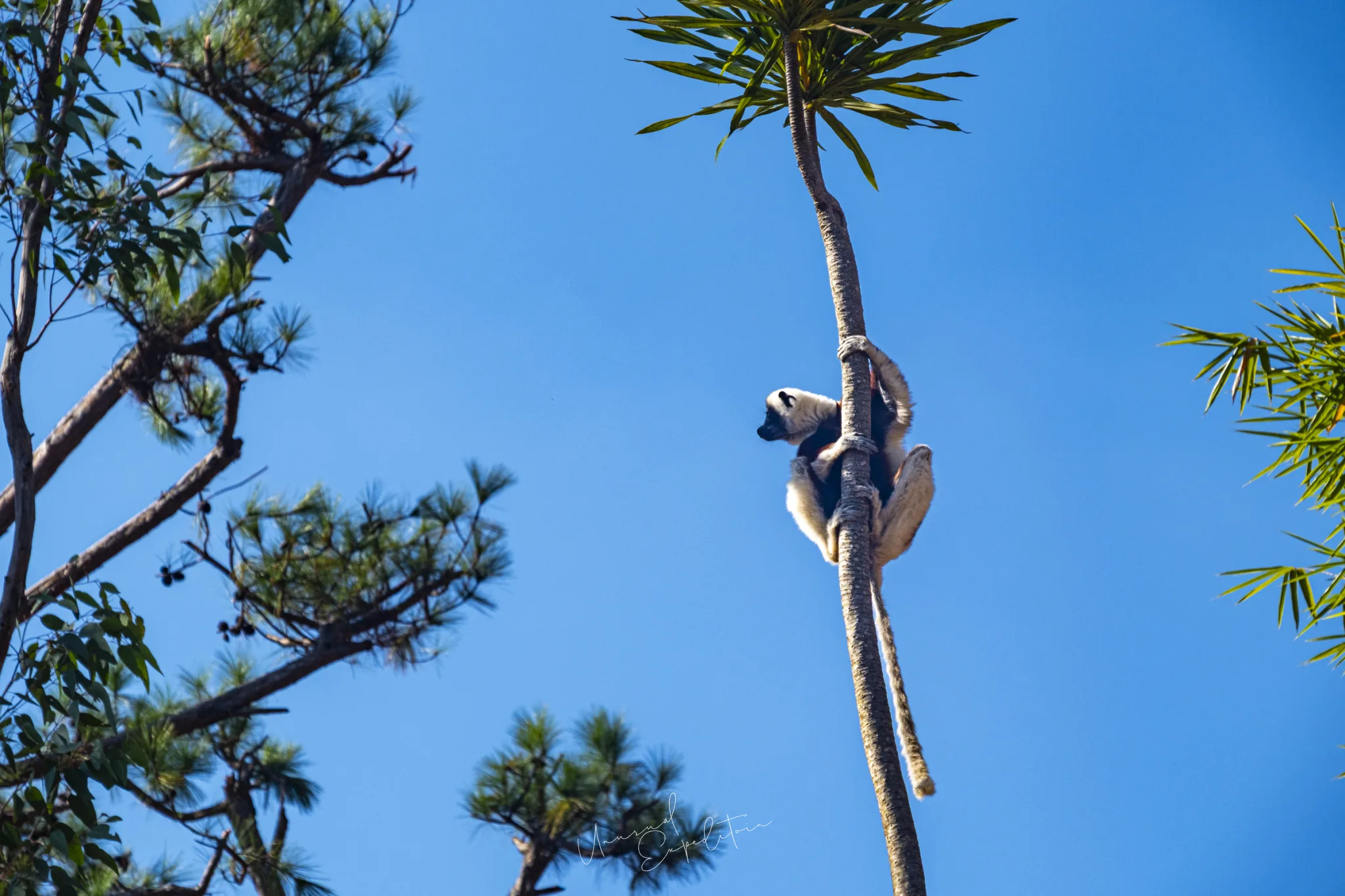
Lemur Park Antananarivo is a private botanical park and lemur reserve about 22 kilometres west of the capital on the RN1, where nine species of lemur live, most of them free-ranging in the trees. For photographers it is the easiest place in Madagascar to get close, clean portraits of sifakas, the white, long-legged lemurs that sit upright in the branches and cross the ground in sideways bounds. A 70-200mm, a morning visit and patience under the trees are all it needs.
Lemur Park is part of the city day in our Antananarivo photography tour guide, and one of three very different lemur sessions on our Madagascar trip.
What is Lemur Park, Madagascar?
Lemur Park, known in French as Lemurs' Park, was set up around 2000 as a private reserve and botanical garden near the village of Imerintsiatosika, on about five hectares of trees beside the Katsaoka river. According to the park and the account summarised on Wikipedia, it holds nine lemur species and more than seventy endemic plant species, and most of its lemurs are confiscated pets handed over by the Ministry of Water and Forests, rehabilitated and bred there. The animals are not in cages: most move freely through the trees, and visitors walk the paths with a park guide. It is a conservation project that pays for itself through visitors, which is worth knowing before you dismiss it as a zoo.
Lemur Park Antananarivo: which lemurs you will see
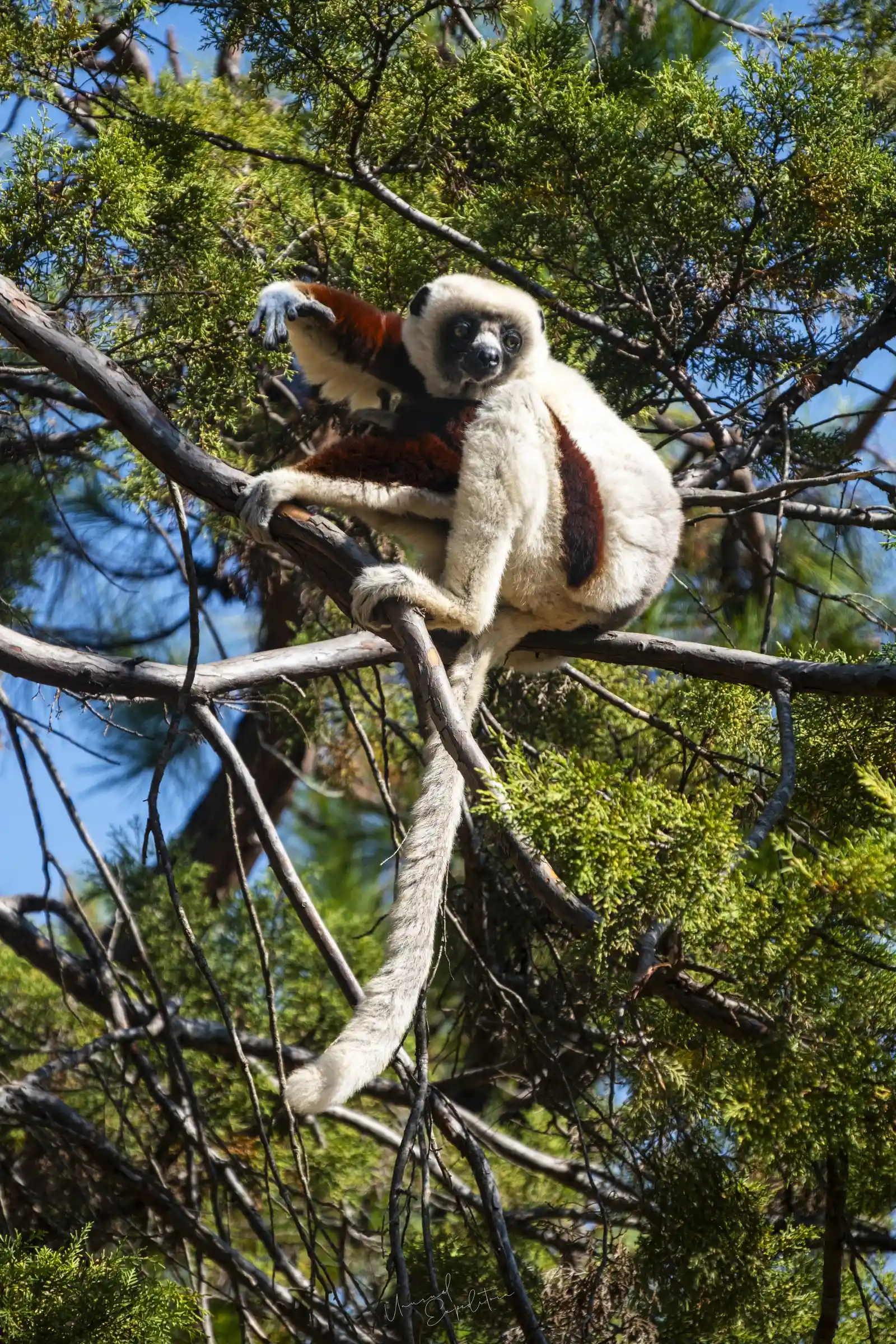
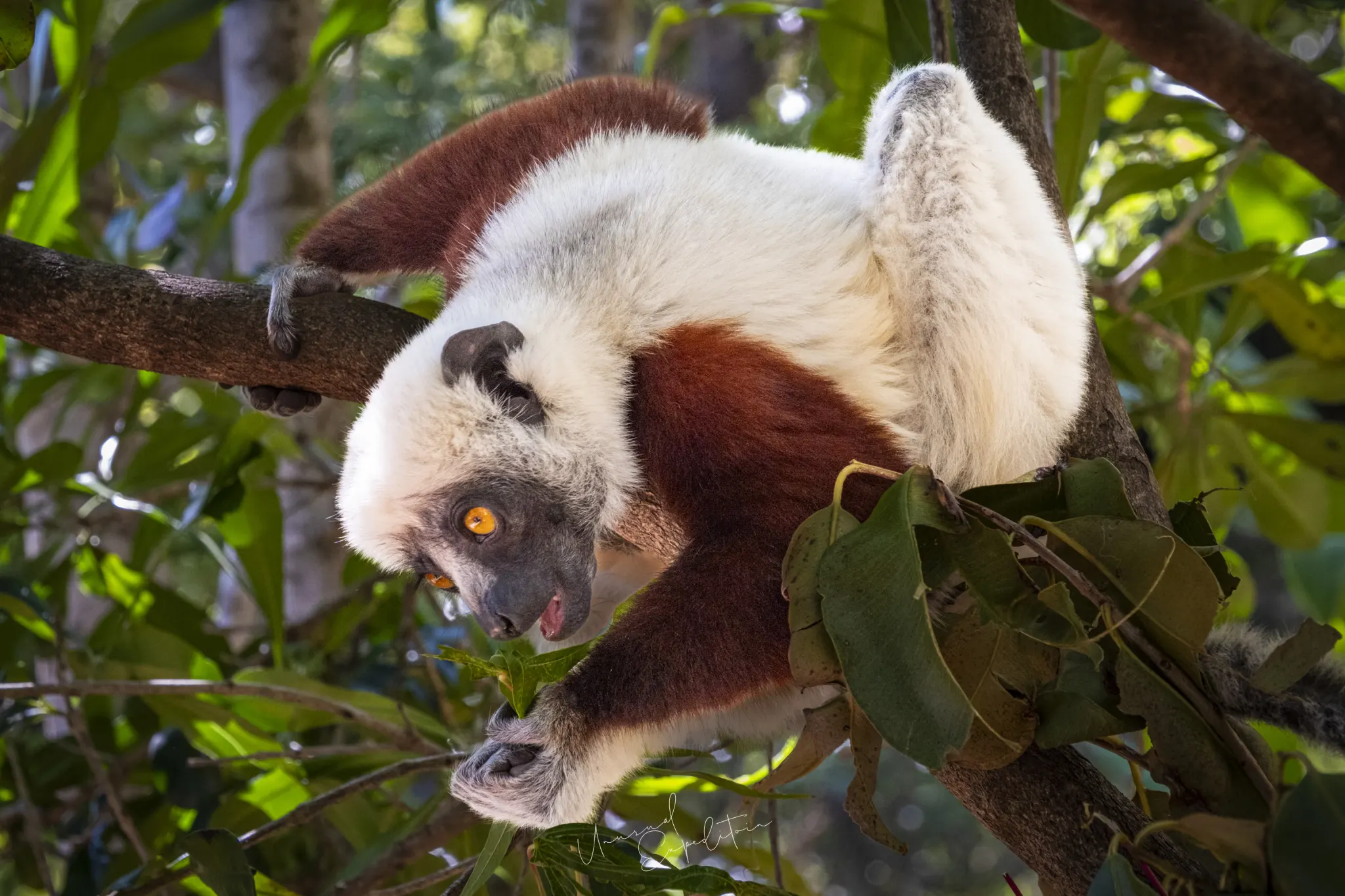
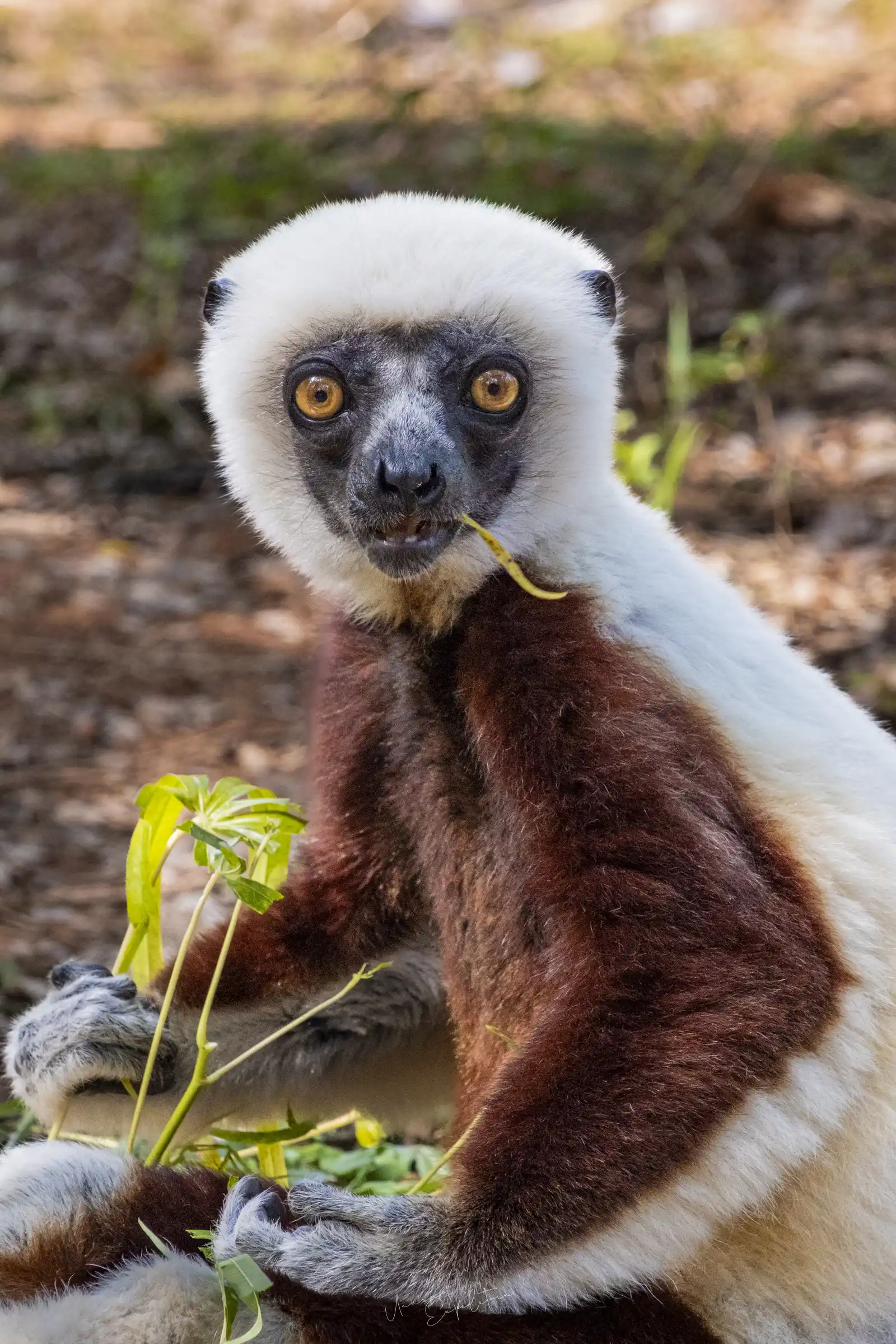
The species list at Lemur Park includes two sifakas, Coquerel's sifaka and the crowned sifaka, both threatened species on the IUCN Red List, plus ring-tailed lemurs, common brown lemurs, mongoose lemurs, black-and-white ruffed lemurs and eastern lesser bamboo lemurs. The Duke Lemur Center, which has studied Coquerel's sifaka for decades, describes it as a species of the dry deciduous forests of the northwest, found wild in reserves such as Ankarafantsika, so seeing it in the highlands is a product of the park, not of nature. For the camera the sifakas are the main event. Coquerel's sifaka is white with maroon arms and chest and a dark bare face with orange eyes, which makes exposure easy in shade and tricky in sun.
Sifaka photography: lenses and settings
Sifakas at Lemur Park are often three to ten metres away, sometimes higher in the pines, so a 70-200mm is the lens for most frames and a 100-400mm helps for animals at the top of a tree. Under the canopy the light is broken into hot spots and deep shade. Expose for the white fur, not the face: in sun, take a third to two thirds of a stop off so the white keeps texture, and lift the face later. In even shade you can let the camera do its work. Shutter speeds of 1/500 of a second freeze a sifaka chewing or turning its head; for a leap between trees you want 1/1600 or faster and continuous autofocus with animal eye detection, started before the jump. An aperture of f/4 to f/5.6 separates the animal from a busy background of branches.
Making Lemur Park pictures look wild
The difference between a park picture and a good one at Lemur Park is the background. Paths, fences, signs and other visitors are all within a few metres of the animals, so work the angle before the shutter. Move sideways until a tree trunk or dark foliage sits behind the sifaka. Shoot from low when an animal is on the ground so the frame fills with grass, not gravel. When a sifaka climbs high, use the blue sky as a clean field and let the animal be small in it. Watch for behaviour: feeding with the hands, mothers carrying young, grooming, the moment a resting sifaka opens its eyes. Those pictures read as natural history; a sifaka staring at a lens a metre away reads as a visit.
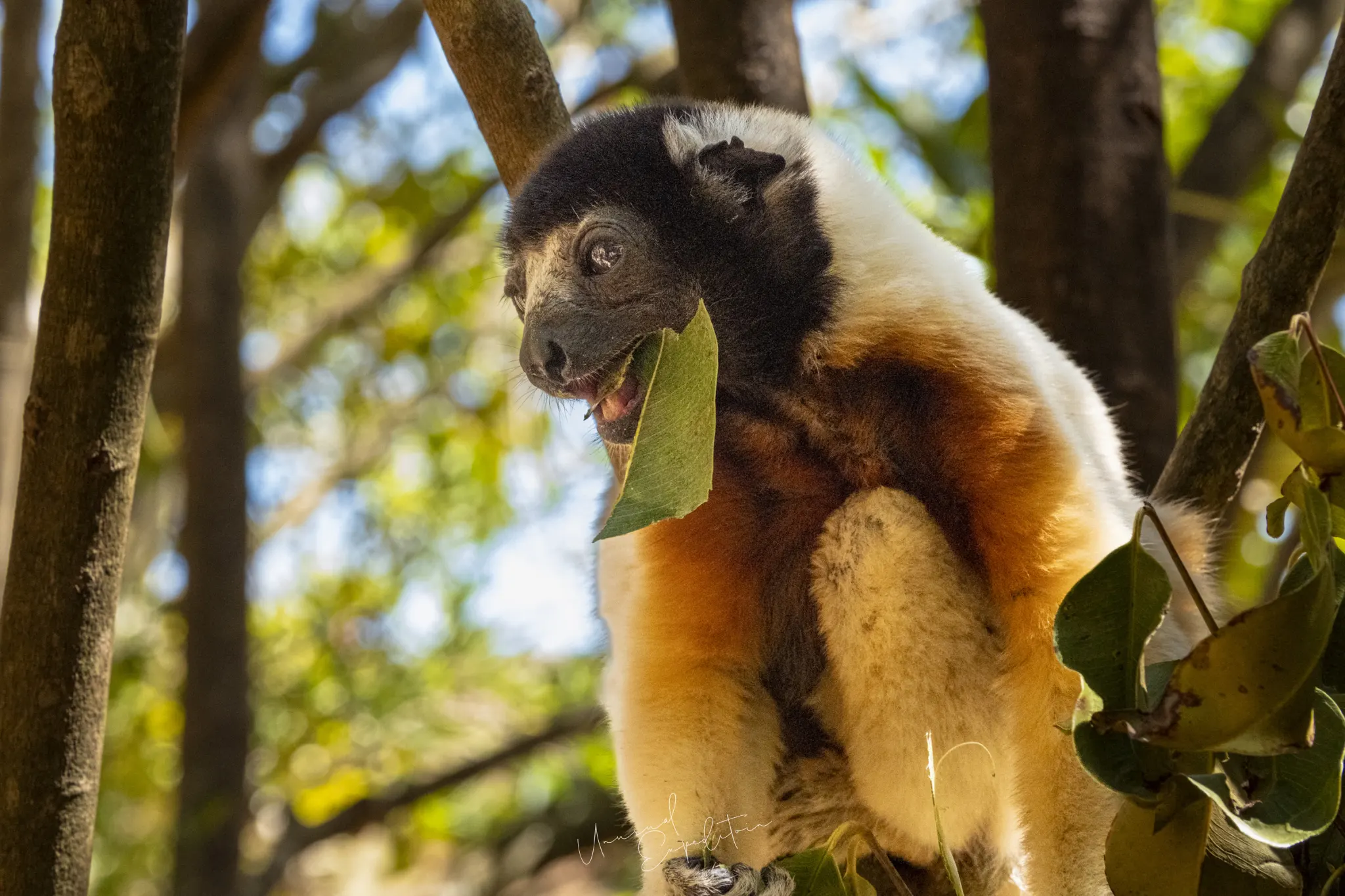
Everyone gets the close portrait at Lemur Park in the first ten minutes. Then I tell people to put the long lens on and wait for a sifaka to climb into the sky. That is the picture people do not expect from a park.
Joseph Mak, tour leader, Unusual Expedition
Lemur Park, Andasibe and Vakona compared
Lemur Park is one of three kinds of lemur session on our trip, and they suit different pictures.
| Place | Lemurs | Distance | Best for |
|---|---|---|---|
| Lemur Park, near Antananarivo | Sifakas, ring-tailed, brown, ruffed and others | Close, habituated | Portraits and sifakas in the trees |
| Andasibe-Mantadia National Park | Indri, diademed sifaka, brown lemurs | Wild, often high in the canopy | The real forest, the indri call |
| Vakona lemur island, near Andasibe | Brown, ruffed, bamboo lemurs | Very close, playful | Behaviour and leaps |
| Andasibe night walk | Mouse lemurs | A few metres, by torchlight | Small nocturnal species |
Lemur Park is the warm-up and the indri is the test, and the whole set is compared in Lemur photography at Andasibe and beyond.
Is Lemur Park worth it?
Lemur Park is worth it if you want sifaka portraits without the long drive to the west or the south, and if Antananarivo is the only place you have a free morning. It is not worth it if you are expecting wild animals in a forest: the trees are planted, the paths are close, and the lemurs know people. As part of a city day it works well, because it puts a completely different subject next to the markets. For the market side of that day, see Antananarivo market photography.
Lemur Park opening hours and how a visit works
Lemur Park is open daily, with guided walks through the reserve; the park lists its opening times and a shuttle from Analakely in the city centre on its own pages, and the shuttle needs a reservation. Feeding times bring the lemurs down to the guides, which is when the close pictures are easiest and the backgrounds are worst. Arrive early, before the groups, if you can. The guide sets the distance: no touching, no feeding by visitors, flash off. Check the current opening hours and fees with the park before you go, because they change.
What else to pack for the lemurs
Lemur Park asks little of your bag: the long zoom, a second body or a 24-70mm for wider frames with the trees, and a cloth for the dust. Highland mornings are cool, so a light layer helps if you arrive early. If you are carrying the macro lens for the Andasibe night walk later in the trip, Lemur Park is not the place for it. The whole kit list for the trip is in What to pack for a Madagascar photo tour.
See the sifakas with us
Lemur Park is part of the Antananarivo day on our Madagascar photo tour, which also covers the Avenue of the Baobabs, Belo sur Mer and the rainforest at Andasibe. Photographers join from any country; dates are on the Madagascar photography tours page.
Join the Antananarivo photography tour
Madagascar Photo Tour – Madagascar departs 11 Apr 2027 To 19 Apr 2027, led by Joseph Mak. Small group, photography first. All Antananarivo photography tours.
Explore Antananarivo in depth
- Antananarivo Photography Tour Guide: Photos of Tana, Markets and Lemur ParkMadagascar
- Is Antananarivo Safe for Tourists with a Camera?Madagascar
- Antananarivo Market Photography: Analakely and the Street StallsMadagascar
- Antananarivo Street Photography: A Day in TanaMadagascar
Upcoming Photo Tours
- Egypt Photo Tour – EgyptEgypt 12 Dec 2026 To 20 Dec 2026
- Inner Mongolia Winter Owl Photo Tour – ChinaChina 01 Jan 2027 To 04 Jan 2027
- Inner Mongolia Winter Photo Tour – ChinaChina 05 Jan 2027 To 11 Jan 2027
- Mekong And Central Highland Vietnam Photo Tour - VietnamVietnam 16 Jan 2027 To 24 Jan 2027