
Antananarivo Photography Tour Guide: Photos of Tana, Markets and Lemur Park
Antananarivo photos and things to do with a camera: the Rova and upper town, Analakely market, street food, Lemur Park and blue hour.
Antananarivo photos are about hills and people: a capital of red-brick houses stacked on a ring of ridges, the Rova palace on the highest one, markets packed into the valleys and stairways climbing between them. For a photographer, Tana gives three subjects inside one city day: the upper town from above in low light, the street life of Analakely and the market lanes, and habituated sifakas at Lemur Park on the edge of town. Most visitors pass straight through. We stop and shoot it.
Antananarivo is the capital chapter of our complete Madagascar photography tour guide, and the start and finish of every trip we run there. This page is the guide to the city itself, with links to everything we have written about it.
What is Antananarivo known for?
Antananarivo, shortened by everyone to Tana, is the political and commercial capital of Madagascar and the old seat of the Merina kingdom, which ruled much of the island in the nineteenth century from the Rova on the city's highest hill. It sits in the central highlands at around 1,280 metres, which is why mornings are cool even when the coast is hot. The city is known for its stepped streets, its rice paddies that reach almost into the centre, Lake Anosy with its ring of jacarandas, and its markets. For a visitor with a camera it is known for something else: almost nobody photographs it seriously, so the streets feel fresh in a way the Avenue of the Baobabs no longer does.
Photos of Antananarivo: the city from above
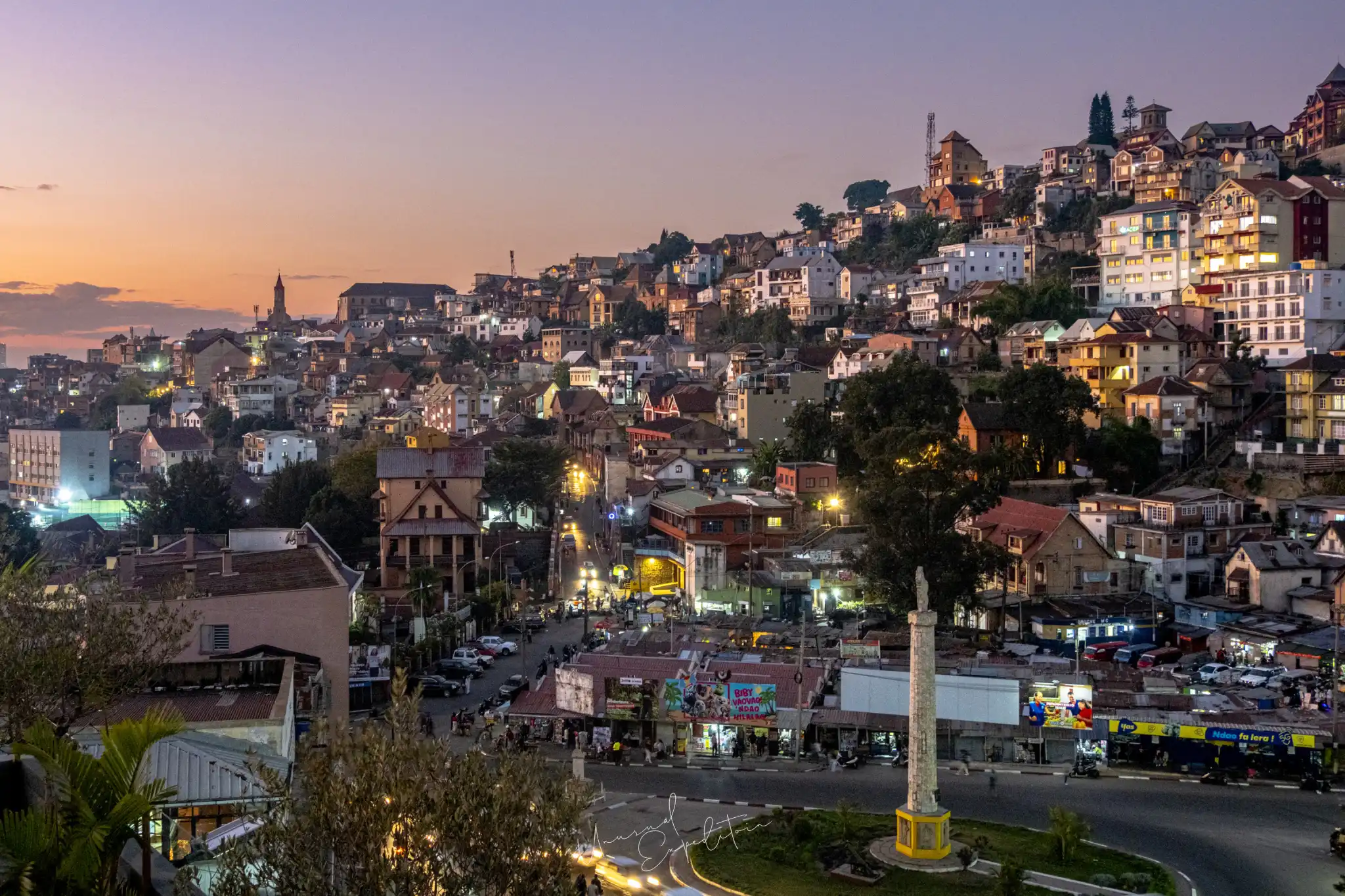
The defining picture of Tana is a tiered one: houses, church towers and tin roofs climbing a ridge, shot from a terrace or a road across the valley. The Rova and the upper town give the classic views, and the slopes opposite them give the view back. Low light matters more here than in most cities because the hillsides face different ways; in the morning one side glows and the other is flat, and by late afternoon it reverses. Blue hour is the best moment of the day for the whole city: the sky holds colour for a few minutes while the lights come on in the houses, and the haze over the lower town softens the clutter. A 24-70mm covers most of it, and a 70-200mm pulls single towers and stairways out of the tiers.
Things to do in Antananarivo with a camera
Things to do in Antananarivo, for a photographer, sort into a short list. Walk the Rova hill and the upper town in the first light. Spend the busy hours in Analakely and the street stalls around it, where Tana's people pictures come from. Eat at a street counter and photograph the cooks. Take the RN1 out to Lemur Park for sifakas at arm's length. Come back for the stairways and blue hour. Each of those has its own article, listed at the end of this page. The street day as a whole, from the Rova to the dusk on the steps, is in Antananarivo street photography.
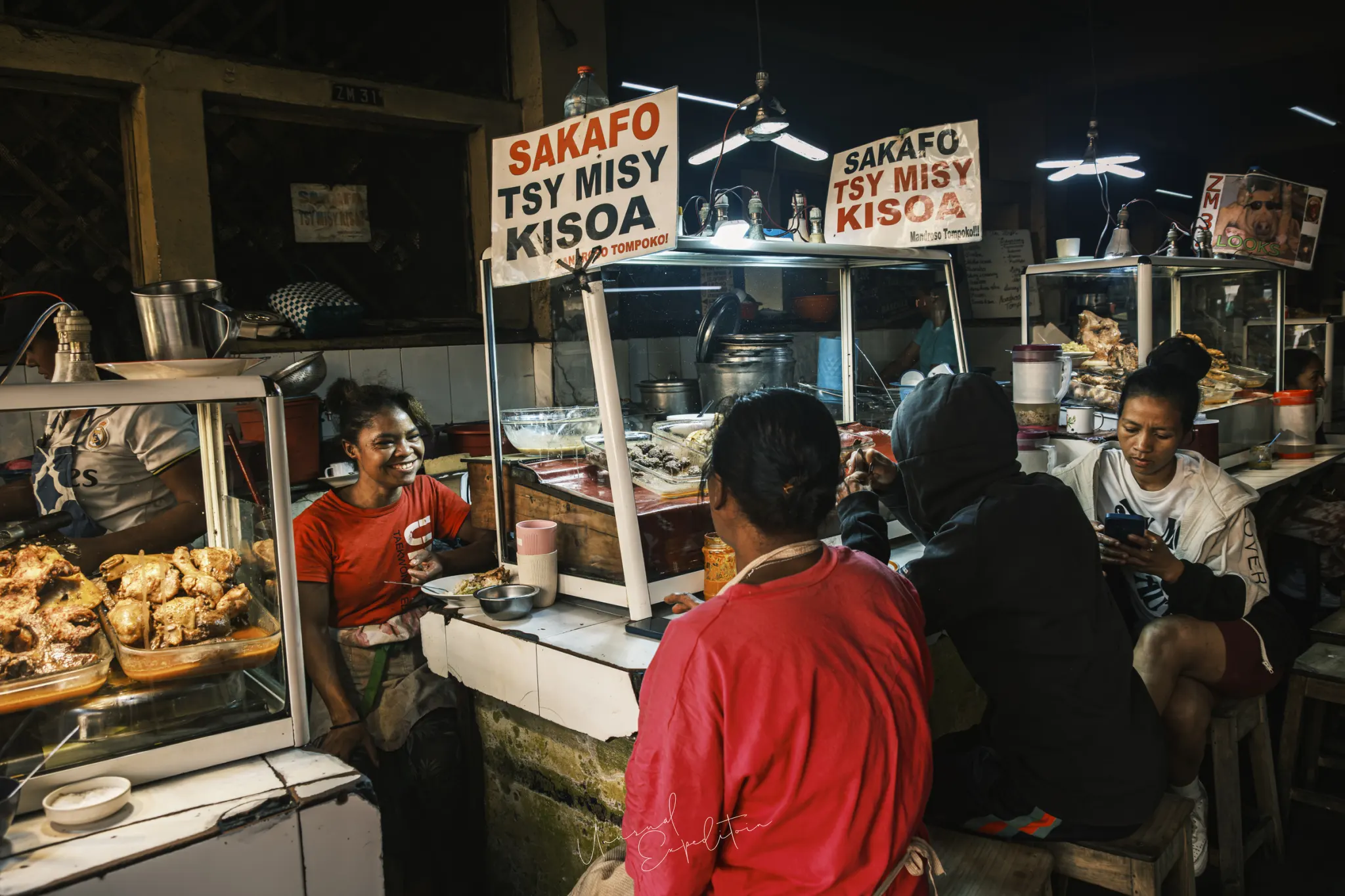
The markets and the street food
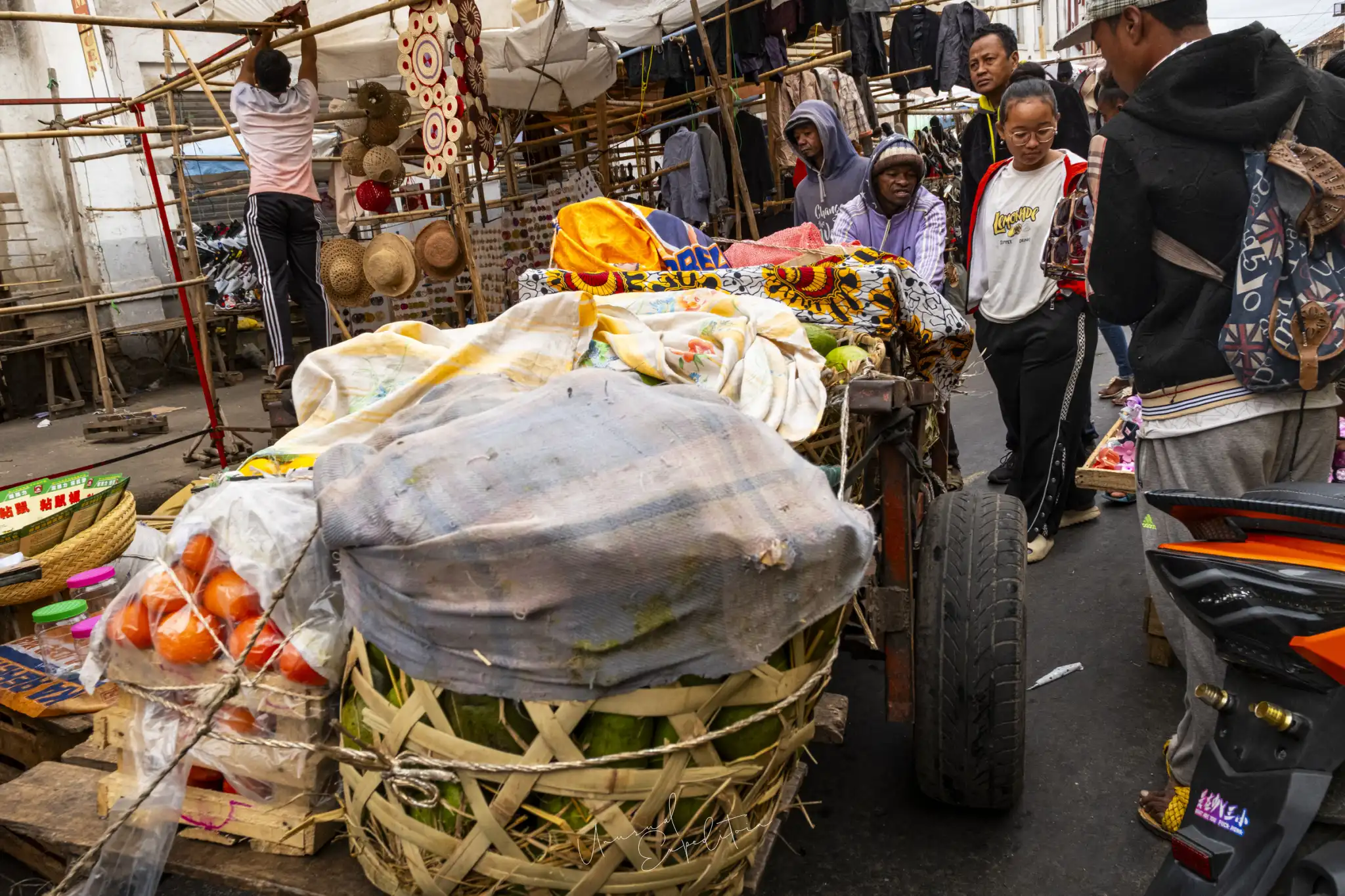
Analakely is the big market in the lower town, below the Avenue de l'Independance, and it spills into the streets around it: stalls of sandals and sneakers hanging from bamboo frames, crab sellers with woven baskets, carts piled with fruit and wrapped bundles, men slicing koba, the dark peanut and rice cake that is sold in rolls wrapped in banana leaf. Street food counters with hand-painted signs in Malagasy sit next to the stalls, and the light under their awnings is warm and close. Ask before portraits, buy something, keep the camera low. The market is covered in depth, with what to shoot and how to behave, in Antananarivo market photography.
Lemur Park, outside the city
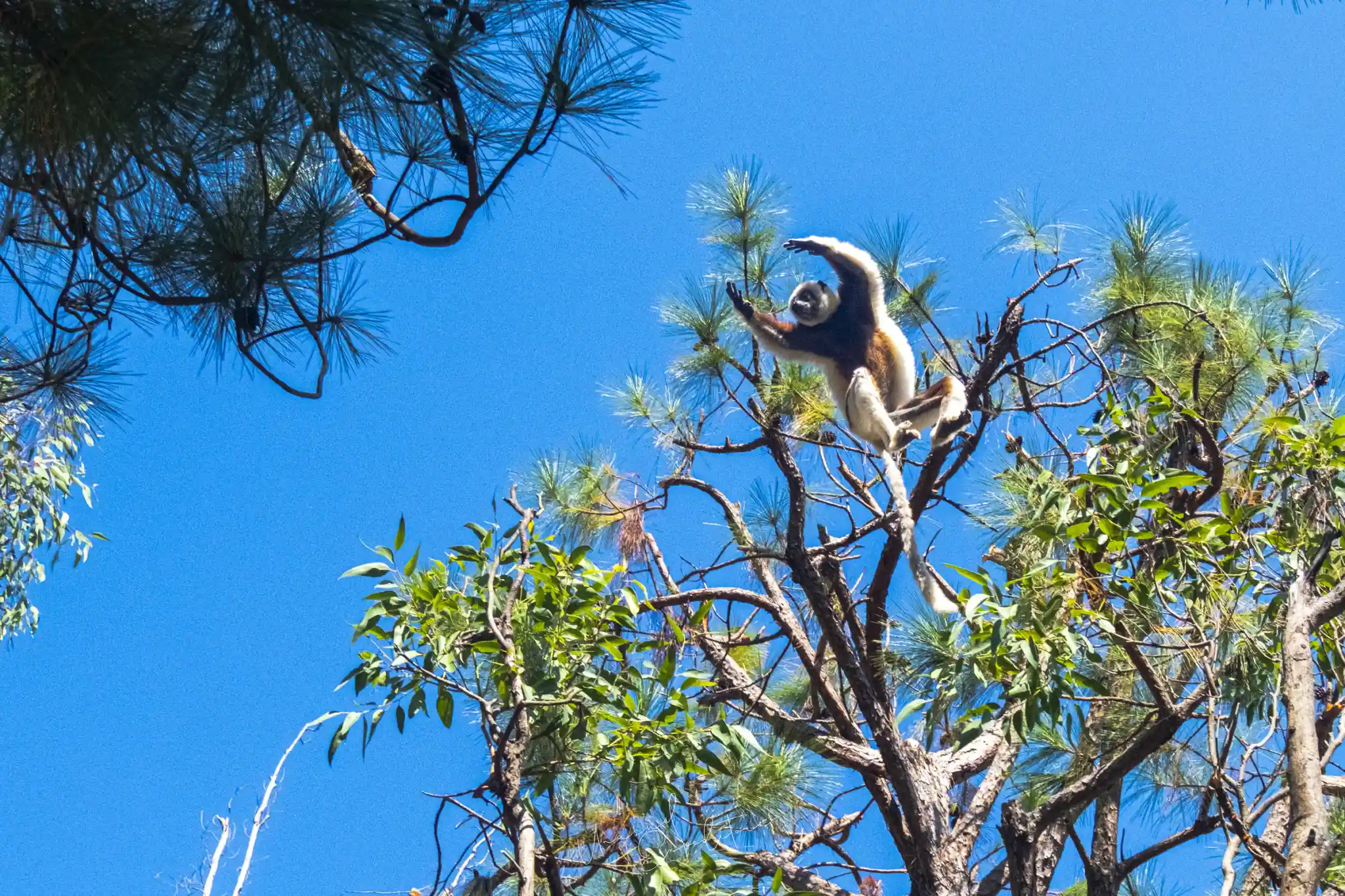
Lemur Park is a private botanical park and lemur reserve about 22 kilometres west of the centre on the RN1, where most of the lemurs range free in the trees along a river. The sifakas are the stars: white, long-legged lemurs that sit in the pines and cross open ground in sideways bounds. It is the easiest close lemur encounter in Madagascar and a complete change of subject after the streets. Species, lenses and how to make it look less like a park are in Lemur Park Antananarivo: photographing sifakas up close.
Craftsmen and workshops
Away from the main market, Tana works in small spaces: shoe repairers under stairways surrounded by offcuts of leather, tailors at treadle machines in doorways, carpenters and metalworkers on the pavement. These are some of the most rewarding pictures in the city because the light is usually one shaft from a doorway or a gap in a roof, and the person is busy and relaxed. Stand back, ask with a gesture, and give them time to forget you. A 35mm or the wide end of a 24-70mm, at a high ISO, is enough.
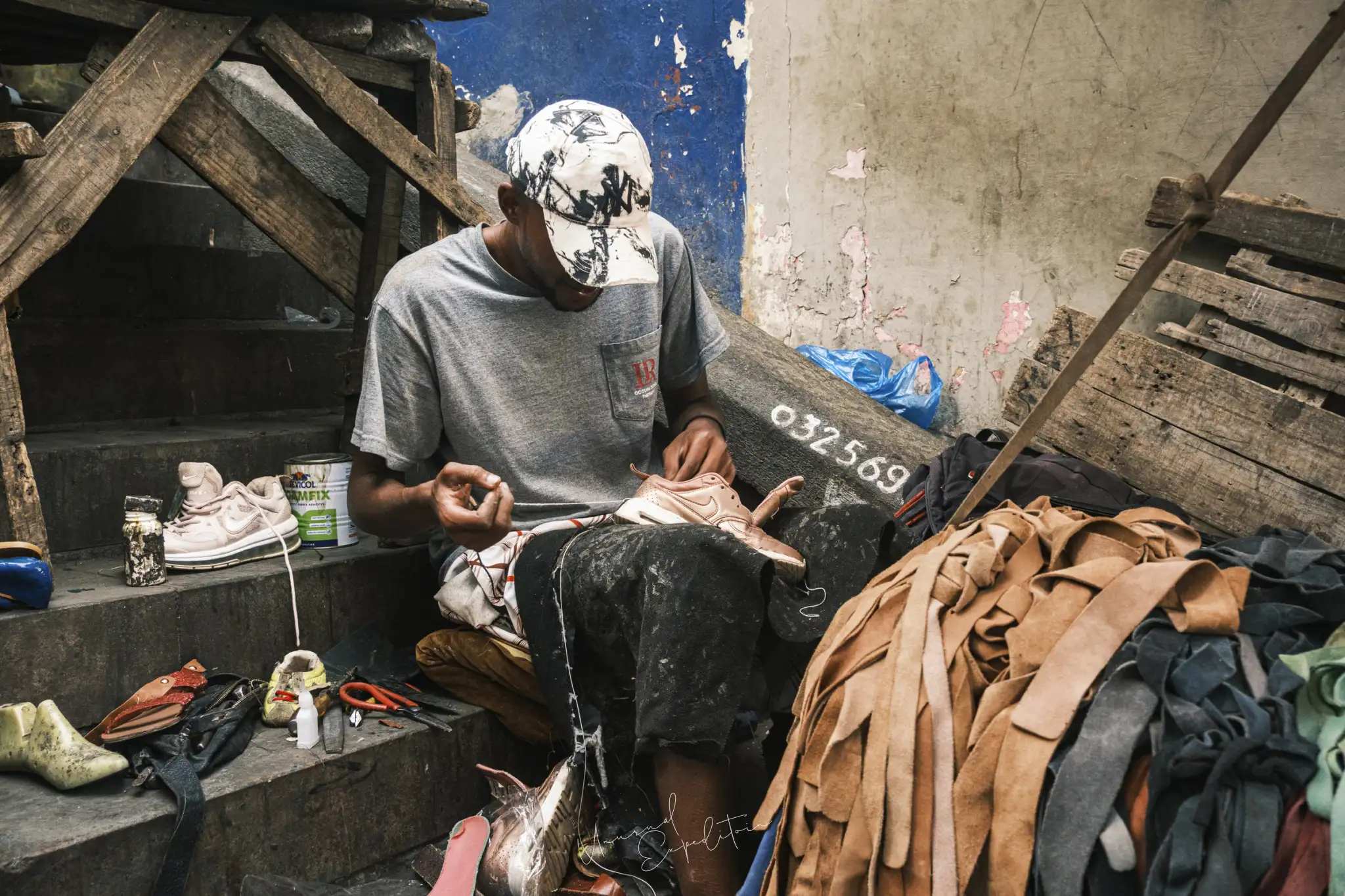
Tana is the city people try to escape on their first morning. Give it one full day and it gives you the portraits the rest of the trip cannot: people at work, close, in their own light.
Joseph Mak, tour leader, Unusual Expedition
Is Antananarivo safe for a photographer?
Antananarivo is fine for a photographer by day in the busy areas, with ordinary big-city care, and not a place to walk alone with a camera after dark. Government advice, including the UK Foreign, Commonwealth and Development Office, describes robbery and theft as common across Madagascar and names Tana for keeping car doors locked; Canada's travel advice lists the steps up to the Rova, the Avenue de l'Independance and Analakely market as places for extra vigilance. The full answer, with the habits we use with a group, is in Is Antananarivo safe for tourists with a camera?
Antananarivo at a glance for photographers
| Subject | Best light | Lens | Notes |
|---|---|---|---|
| Rova hill and upper town | Early morning | 24-70mm, 70-200mm | Views over the tiers of houses |
| Analakely and market streets | Morning to midday | 24-70mm, 35mm | Busiest, most people pictures |
| Street food counters | Any time, light under awnings | 35mm | Buy something first |
| Lemur Park | Morning | 70-200mm, 100-400mm | Habituated sifakas, free-ranging |
| Stairways and the lower town | Late afternoon | 24-70mm | Light along the lanes |
| City panorama | Blue hour | 24-70mm, tripod | Lights coming on in the houses |
The city rewards the edges of the day and the markets in between, so the useful hours are almost all of them.
When to photograph Antananarivo
Antananarivo sits in the highlands, so its seasons are milder than the coast's. The dry months from about April to October bring clear mornings and cool nights, and the jacarandas around Lake Anosy flower purple in October and November. The wet season, roughly December to March, brings afternoon storms and dramatic skies but heavy, slippery streets. Our April departure catches the start of the dry season, with green hills and clean air after the rains. How the light differs between the highlands, the west coast and the eastern forest is in Madagascar light and weather, region by region.
Getting to Antananarivo
Every international visitor to Madagascar lands at Ivato International Airport, on the northern edge of Antananarivo, so the city is where every trip begins. Visa rules, routings from Asia, Europe and Africa, health and money are covered once, for the whole country, in how to get to Madagascar. On our tour the city day comes before the flight west to Morondava and again on the way out, so Tana is shot twice, fresh and then with a week of practice behind you.
Explore Antananarivo in depth
- Antananarivo street photography: a day in Tana
- Antananarivo market photography: Analakely and the street stalls
- Lemur Park Antananarivo: photographing sifakas up close
- Is Antananarivo safe for tourists with a camera?
- The complete guide to a Madagascar photography tour
Photograph Tana with us
Our Madagascar photo tour gives Antananarivo a full day of its own, with Lemur Park, before and after the west coast and the rainforest. The fare is indicatively S$6,450 to S$7,000 per person depending on the room, and photographers join from any country. Dates and the current rate are on the Madagascar photography tours page.
Join the Antananarivo photography tour
Madagascar Photo Tour – Madagascar departs 11 Apr 2027 To 19 Apr 2027, led by Joseph Mak. Small group, photography first. All Antananarivo photography tours.
Explore Antananarivo in depth
- Lemur Park Antananarivo: Photographing Sifakas up CloseMadagascar
- Is Antananarivo Safe for Tourists with a Camera?Madagascar
- Antananarivo Market Photography: Analakely and the Street StallsMadagascar
- Antananarivo Street Photography: A Day in TanaMadagascar
Upcoming Photo Tours
- Egypt Photo Tour – EgyptEgypt 12 Dec 2026 To 20 Dec 2026
- Inner Mongolia Winter Owl Photo Tour – ChinaChina 01 Jan 2027 To 04 Jan 2027
- Inner Mongolia Winter Photo Tour – ChinaChina 05 Jan 2027 To 11 Jan 2027
- Mekong And Central Highland Vietnam Photo Tour - VietnamVietnam 16 Jan 2027 To 24 Jan 2027