
Aswan Places to Visit with a Camera: Seven Photo Spots from the Nile to Abu Simbel
Aswan places to visit with a camera: Abu Simbel at sunrise and night, Lake Nasser, felucca terraces, Philae and a Nubian village.
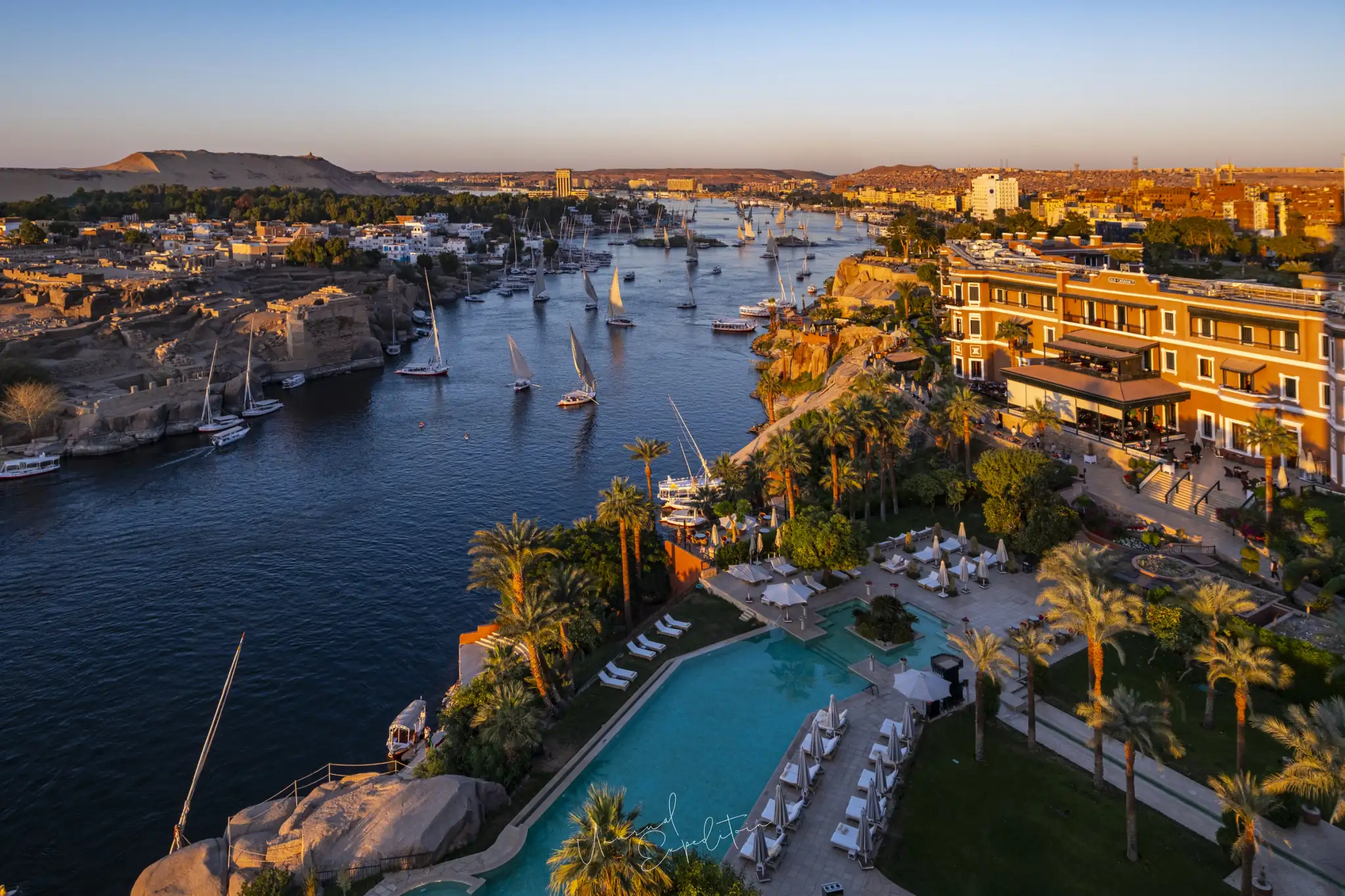
The Aswan places to visit with a camera come down to seven spots: the facades of Abu Simbel at sunrise, the same temples floodlit after dark, the shore of Lake Nasser at sunset, the high terraces above the Nile where the feluccas pass below, the water around Elephantine Island, the island temple of Philae and the painted Nubian villages of the West Bank. Each has its own hour, and most of the work is being in the right one. These notes sit under our Aswan and Abu Simbel photography tour guide.
The photographs are our own, taken on our Egypt trips; we hold the rights to them, and the advice comes from standing in these places ourselves.
Aswan places to visit for photographers at a glance
| Spot | Best light | Lens | Notes |
|---|---|---|---|
| Abu Simbel facades | Sunrise and early morning | 16-35mm, 24-70mm | The facades face east |
| Abu Simbel after dark | Blue hour and night | 16-35mm, tripod where allowed | During the evening show |
| Lake Nasser shore | Sunset | 24-70mm | Palms and still water |
| East Bank terraces | Late afternoon | 70-200mm | Sails from above |
| Elephantine from the water | Late afternoon | 24-70mm | From a felucca |
| Philae | Morning, or after dark | 16-35mm, 24-70mm | Reached by boat |
| Nubian village | Morning or late afternoon | 24-70mm | Colour and people, ask first |
Put the temples in the morning and the river in the afternoon, and the light is on your side at almost every stop.
Abu Simbel at sunrise: the facades in first light
Abu Simbel is the reason most photographers come this far south. Britannica describes the two rock temples of Ramesses II: the Great Temple fronted by four seated colossi about 20 metres high, and the Small Temple of Hathor and Nefertari with six standing figures. UNESCO records how both were cut into blocks and moved to higher ground in the 1960s, when Lake Nasser rose behind the High Dam. The facades face east, so the first sun comes straight off the lake and lights the faces one after another. Stand on the forecourt slightly off axis with a 16-35mm to keep all four colossi and the lake edge in frame, then switch to a 24-70mm for a single head in raking light. The visitors who arrive with the morning convoys fill the forecourt quickly, so the quiet frames come early.
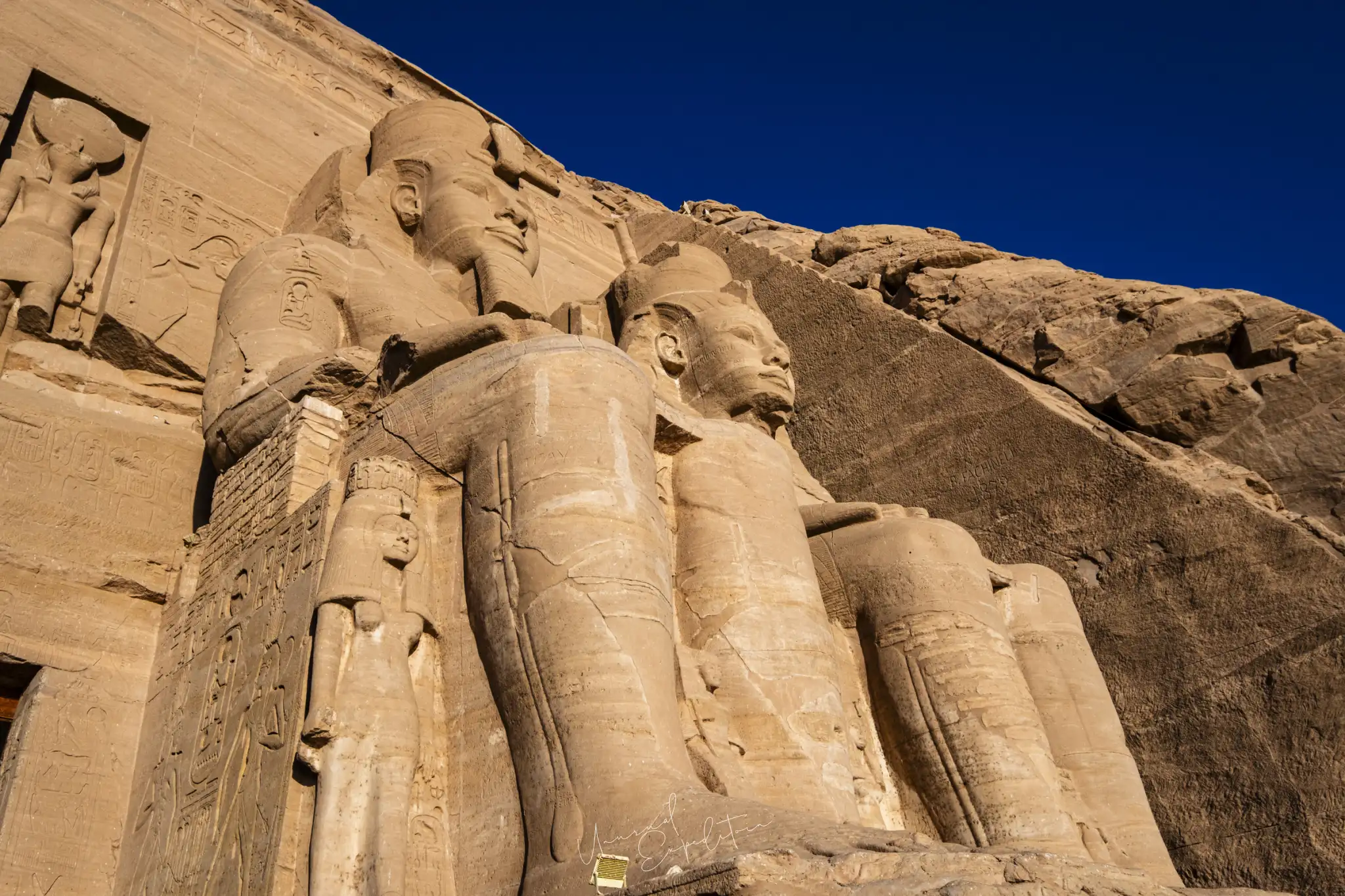
Personal photography without flash is allowed at sites of Egypt's Ministry of Tourism and Antiquities, and that includes the halls inside. Our Abu Simbel temple photos piece covers the facades frame by frame.
Abu Simbel after dark: the sound and light show
Abu Simbel after dark is a second photo spot on the same ground. The temples are floodlit during the evening sound and light show, and the colours change through the programme, from warm gold to red and back. A wide lens from the back of the seating gets both facades with the rock above them and the stars over the top. Tripods are not always welcome during the show, so brace on a wall or raise the ISO and accept a little noise. Shows run in rotating languages, and the schedule is set on the day, so check it locally.
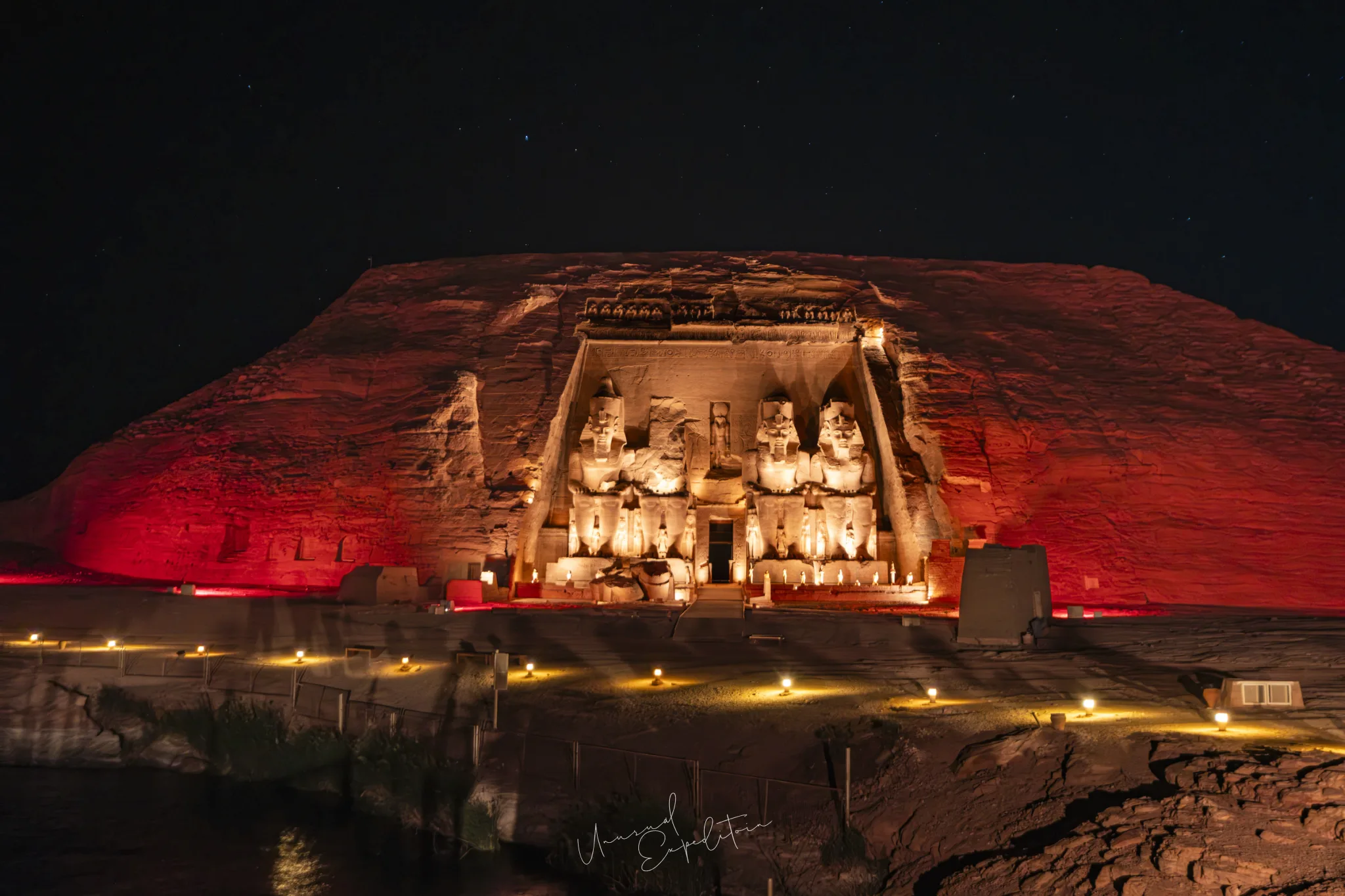
The full programme and the best seats are in our Abu Simbel sound and light show article.
Lake Nasser at sunset
The shore of Lake Nasser near the temples is the place for the last light at Abu Simbel. The lake is the reservoir held back by the Aswan High Dam, and from the town side the sun goes down over water that is often flat calm in the evening. Palms along the shore give a silhouette, and a pool or a still inlet will double them. A 24-70mm is enough here. Shoot through the colour after the sun has gone, because the sky over the desert keeps glowing for a while after the light has left the water.
Feluccas from the East Bank terraces
The high terraces on the East Bank are where the classic Aswan sail picture is made. From above, the white lateen sails stand out against dark water, and the granite boulders of the First Cataract and the ruins of Elephantine give the frame its texture. In late afternoon the sun is in the west, over the far bank, so the sails are backlit or side lit and glow. Bring a 70-200mm and pick out one boat, or wait for two sails to cross. Hotel terraces and cafes along the corniche give the height; ask before you set up a tripod on private ground.
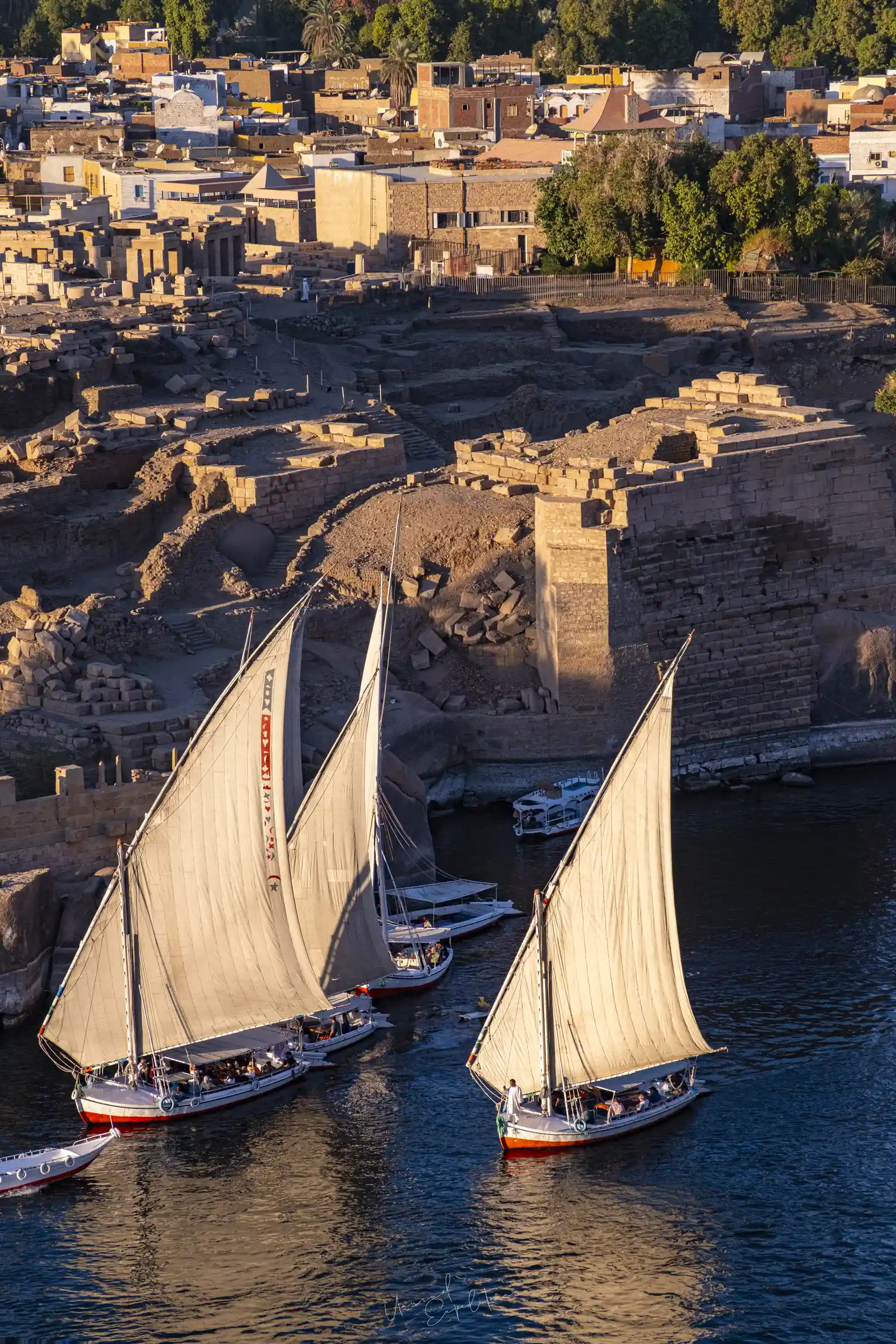
For the ride itself and the angles from the water, see Aswan felucca.
Elephantine Island from the water
Elephantine Island is best photographed from a felucca. The German Archaeological Institute has excavated the ruins of ancient Abu at its southern end, with the temple of Khnum and a Nilometer, and the Aswan Museum stands on the island. From the water the ruins sit low on granite, with the sails of other boats crossing in front. A late afternoon sail puts the sun behind the West Bank dunes and rims the ruins and the rocks. A 24-70mm covers most of it, and a polariser helps with glare off the river.
Philae temple: by boat, morning or night
Philae is the island temple of Isis, moved stone by stone to the higher island of Agilkia in the 1970s, according to UNESCO, when the old site was flooded between the two dams. Boats leave from the Shellal landing. In the morning the light comes across the water onto the first pylon and the Kiosk of Trajan on the east side. After dark the outer court is floodlit for the evening show, and the long colonnades lead the eye straight to the pylon. A 16-35mm from the centre of the court gives that symmetry; keep the verticals straight.
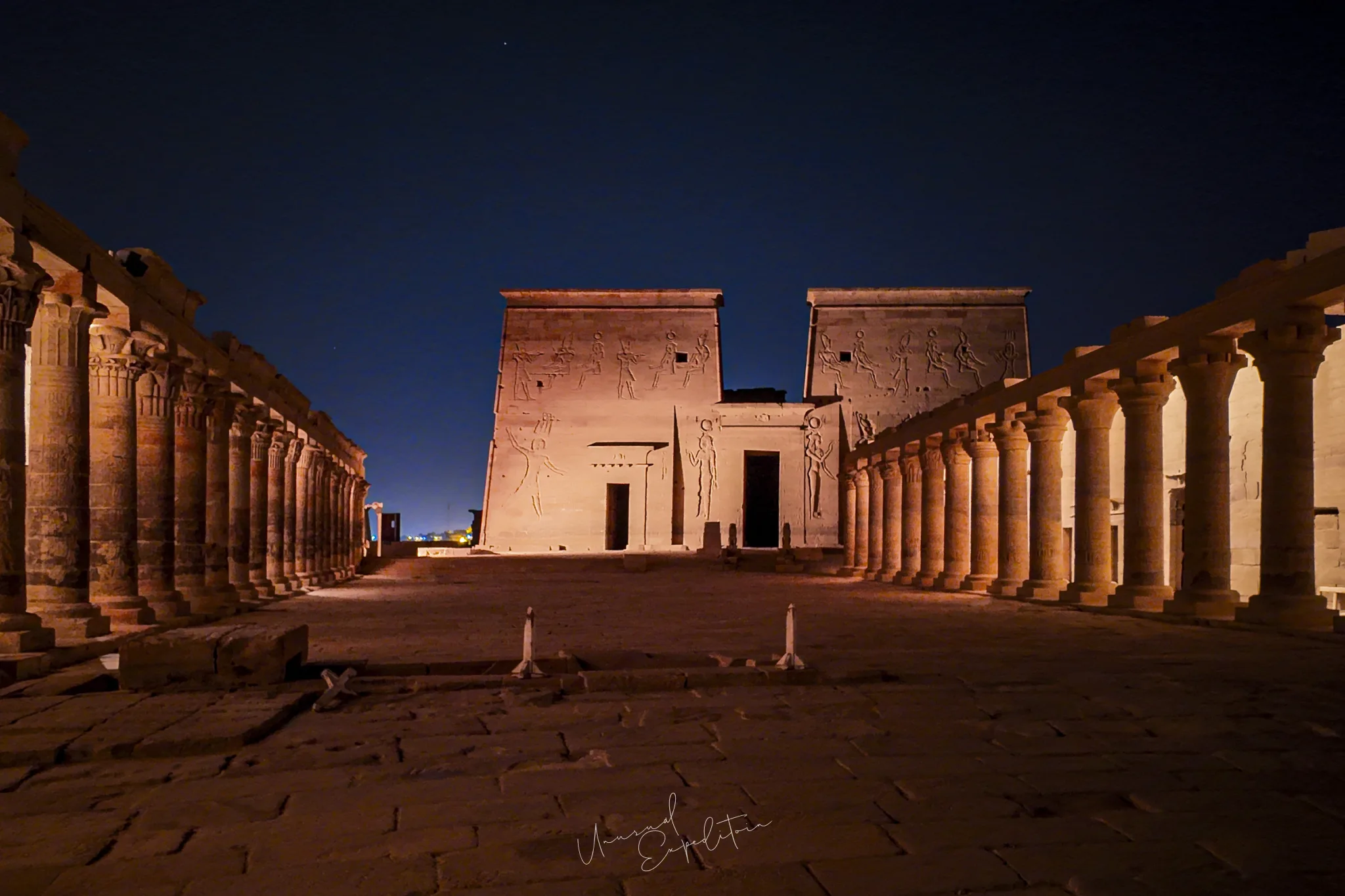
More on the island in Philae temple.
A Nubian village on the West Bank
The Nubian villages on the West Bank are the colour stop. Houses are painted blue, yellow and pink, doorways carry patterns, and lanes of craft stalls run down towards the river. Gharb Soheil is the best known village visitors reach, by boat or by road. Morning and late afternoon give soft light on the walls. People are part of the picture here, and many hosts are used to cameras, but ask before photographing anyone and accept a no. The Nubian Museum in town is the place to learn about the flooding of old Nubia before you go. Our Nubian village Aswan guide covers the walk.
"At Abu Simbel I put everyone on the forecourt before the sun clears the lake. The faces light up one after another, and that first stretch of light is the picture people come home with."
Joseph Mak, tour leader, Unusual Expedition
Rules, crowds and safety around Aswan
Personal photography without flash is free at Ministry of Tourism and Antiquities sites, though rules can change and staff at individual sites can ask you to stop. Drones need prior permission from the Egyptian Civil Aviation Authority, and photographing security personnel or checkpoints is not allowed. A permit is needed for professional photography or film equipment, according to the UK Foreign, Commonwealth and Development Office, which does not advise against travel to Aswan or Abu Simbel. High summer is very hot, so the winter months are the comfortable season for long days outdoors. Crowds follow the convoy and cruise timetables: arrive early at the temples and keep the river for the afternoon.
Photograph Aswan and Abu Simbel with us
Our Egypt Photo Tour takes in Abu Simbel, Aswan and Philae as well as Luxor, Cairo and Giza, and photographers from any country are welcome. The current departure and rate are on the Egypt photography tours page, and we also arrange private tours at your own pace.
Join the Aswan and Abu Simbel photography tour
Egypt Photo Tour – Egypt departs 12 Dec 2026 To 20 Dec 2026, led by Joseph Mak. Small group, photography first. All Aswan and Abu Simbel photography tours.
Explore Aswan and Abu Simbel in depth
- Aswan and Abu Simbel Photography Tour Guide: Temples, Sails and VillagesEgypt
- Philae Temple, Aswan: Photographing the Temple of Isis by Day and NightEgypt
- Nubian Village, Aswan: Photographing Colour and People with RespectEgypt
- Inside Abu Simbel Temple: The Great Hall, the Sanctuary and the CustodiansEgypt
- Best Time to Visit Aswan and Abu Simbel: Weather, Winter and the Sun FestivalEgypt
- Aswan Felucca: Photographing the Sails of the Nile and Elephantine IslandEgypt
- Abu Simbel Photos: Photographing the Great Temple and the Temple of NefertariEgypt
- Abu Simbel Sound and Light Show: Photographing the Temples at NightEgypt
Upcoming Photo Tours
- Egypt Photo Tour – EgyptEgypt 12 Dec 2026 To 20 Dec 2026
- Inner Mongolia Winter Owl Photo Tour – ChinaChina 01 Jan 2027 To 04 Jan 2027
- Inner Mongolia Winter Photo Tour – ChinaChina 05 Jan 2027 To 11 Jan 2027
- Mekong And Central Highland Vietnam Photo Tour - VietnamVietnam 16 Jan 2027 To 24 Jan 2027