
Best Time to Visit Ha Giang: Blossom, Mist and Buckwheat
Best time to visit Ha Giang: spring blossom and mist, autumn buckwheat and clear passes, the rainy months, and the best month for the loop.
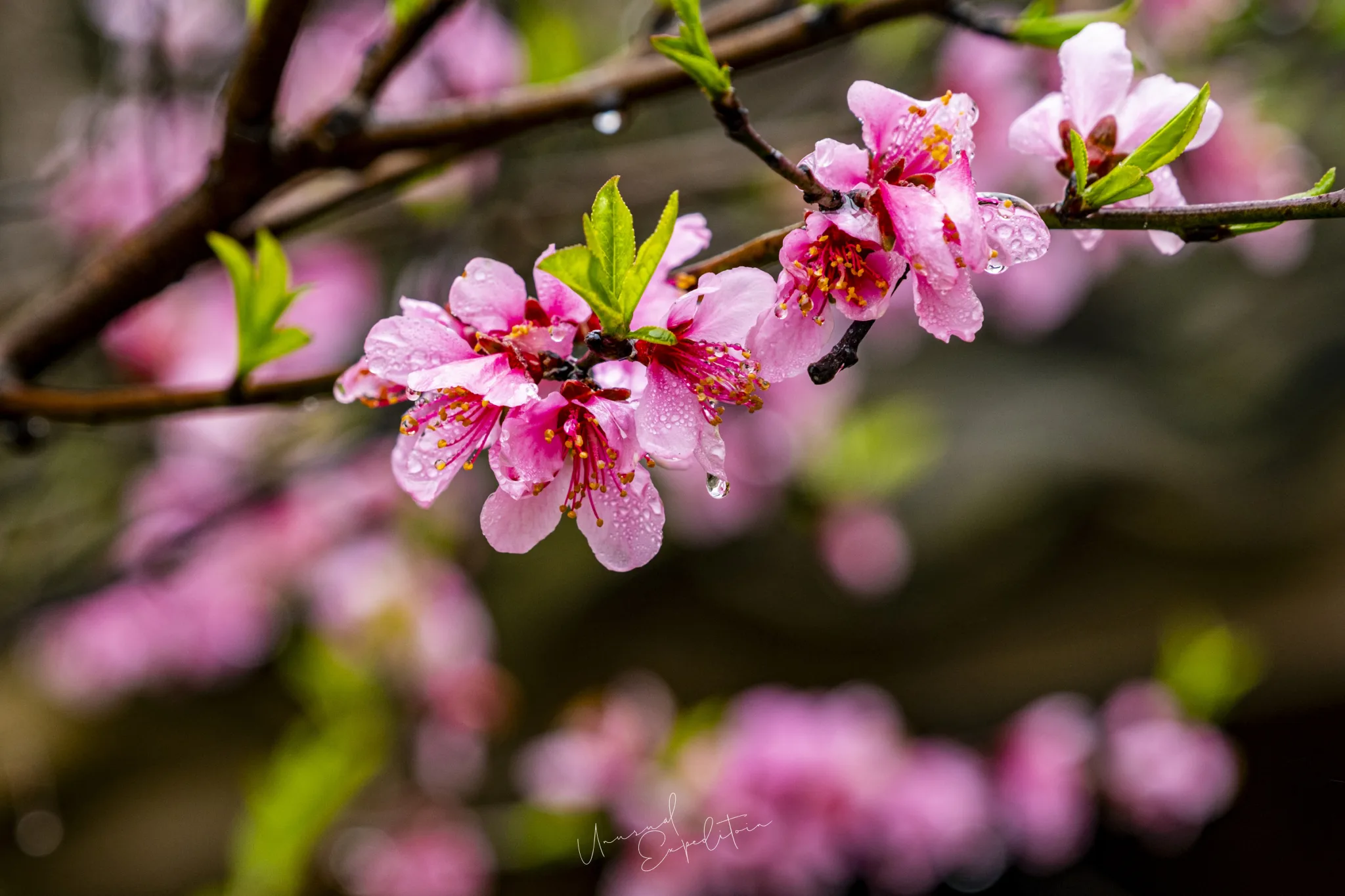
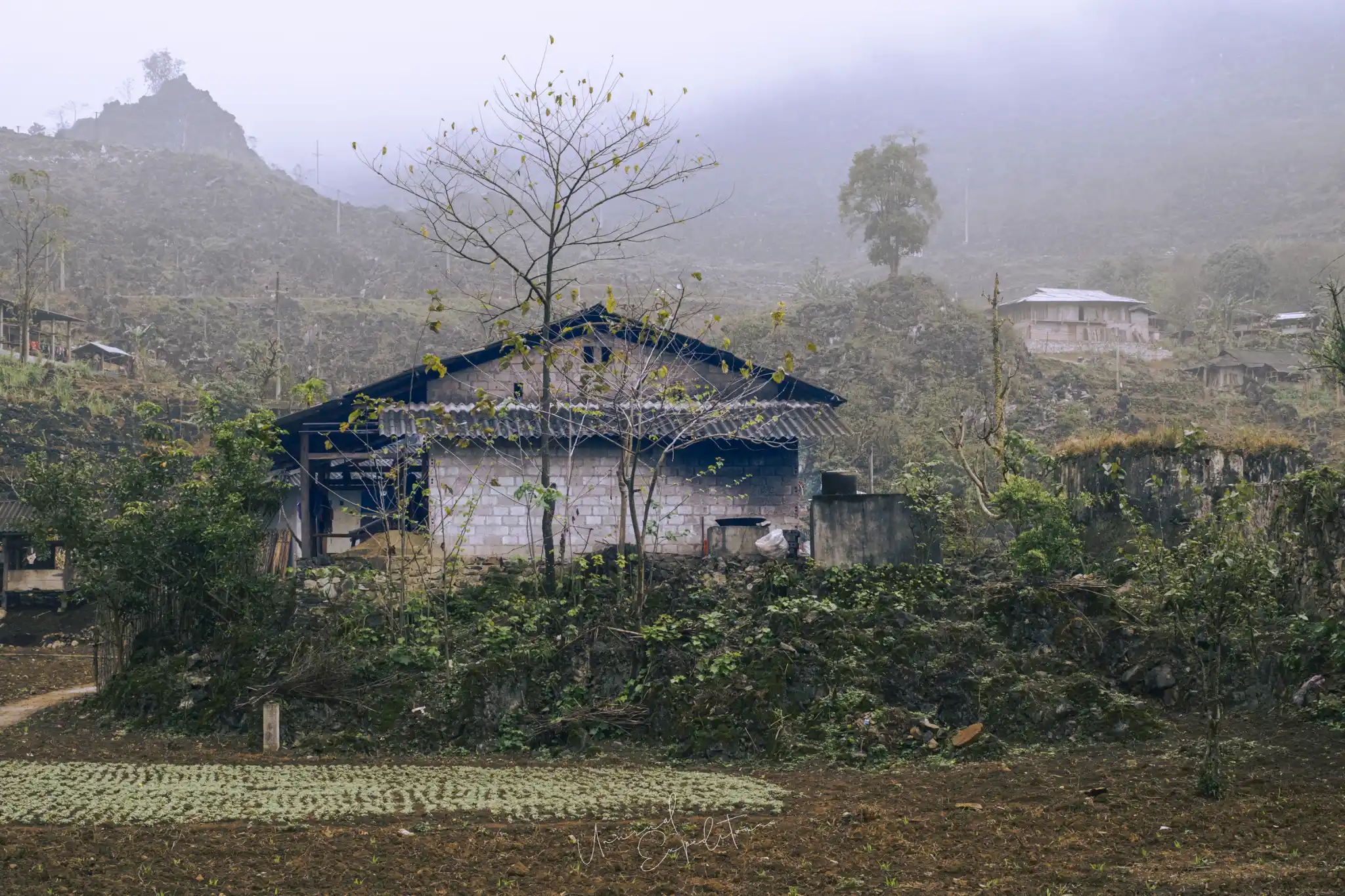
The best time to visit Ha Giang for photography is spring, from late February to April, when peach and plum trees flower beside the earth houses, yellow mustard fills the terraces and mist hangs over the karst. October and November are the other strong window, drier and clearer, with buckwheat in flower. Summer brings heavy rain and landslide risk on the passes, and winter can be bitterly cold on the plateau. Our own Ha Giang frames are from March.
Ha Giang is one half of the area covered in our Ha Giang and Mu Cang Chai photography tour guide. Below are the seasons month by month, what each one looks like through a camera, and the question many riders ask first: the best month to do the Ha Giang loop.
Best time to visit Ha Giang, season by season
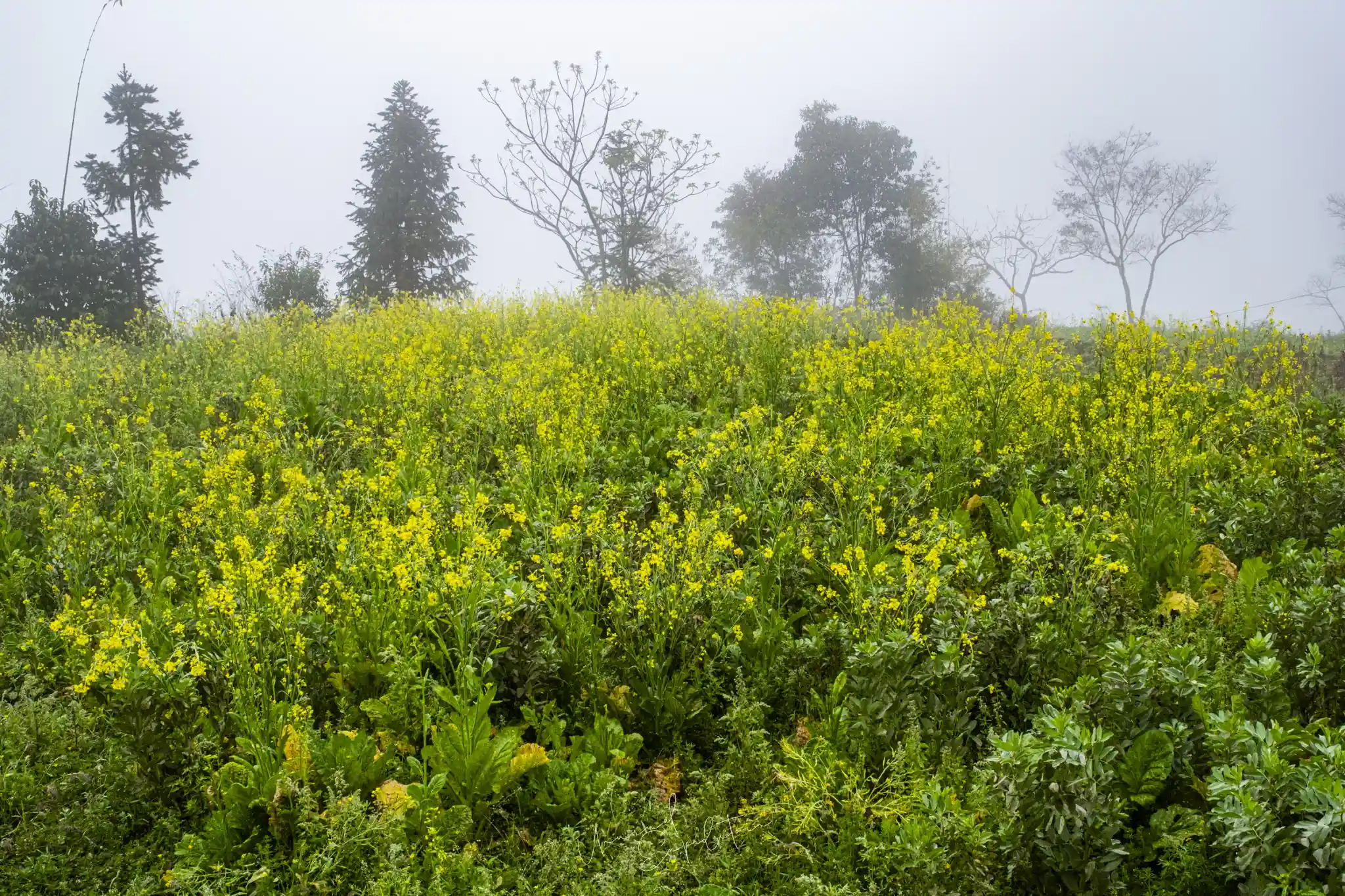
Ha Giang has four distinct seasons, which surprises visitors who know only southern Vietnam. The plateau around Dong Van is high, and its weather is closer to southern China than to Hanoi. Spring is the season of blossom and mist. Summer is hot in the valleys, wet everywhere, and the time when roads are most often blocked by slips. Autumn is the clearest season, with the buckwheat flowers that Vietnamese travellers love and the rice harvest in the lower valleys. Winter is cold, sometimes frosty, with bare trees and short days, and the mustard flower season that local news reports describe arriving around December. Each season suits a different kind of picture, so choose by what you want to photograph.
Ha Giang by month for photographers
| Month | What you see | Weather | Photography |
|---|---|---|---|
| January | Bare trees, first blossom in sheltered valleys, Lunar New Year preparations in some years | Cold, often grey | Villages and markets, smoke from hearths |
| February to March | Peach and plum blossom, mustard flowers, young rice in the lower valleys | Cool, mist and drizzle | Blossom with earth houses, layered karst in mist |
| April | Late blossom, fields being prepared | Warming, still misty at times | Farm work, greener slopes |
| May to September | Green growth, water in the lower terraces, maize on the plateau | Hot and wet, landslide risk | Lush but unreliable; plan spare days |
| October to November | Buckwheat in flower, rice harvest in the lower valleys | Dry, clearest air of the year | Long views from the passes, colour in the fields |
| December | Mustard flowers, late buckwheat, frost on the high ground | Cold, clear spells | Crisp mornings, smoke and side light |
Spring and autumn give the two different Ha Giangs: soft and close in the mist, or sharp and far in the dry air.
Best time to do Ha Giang loop
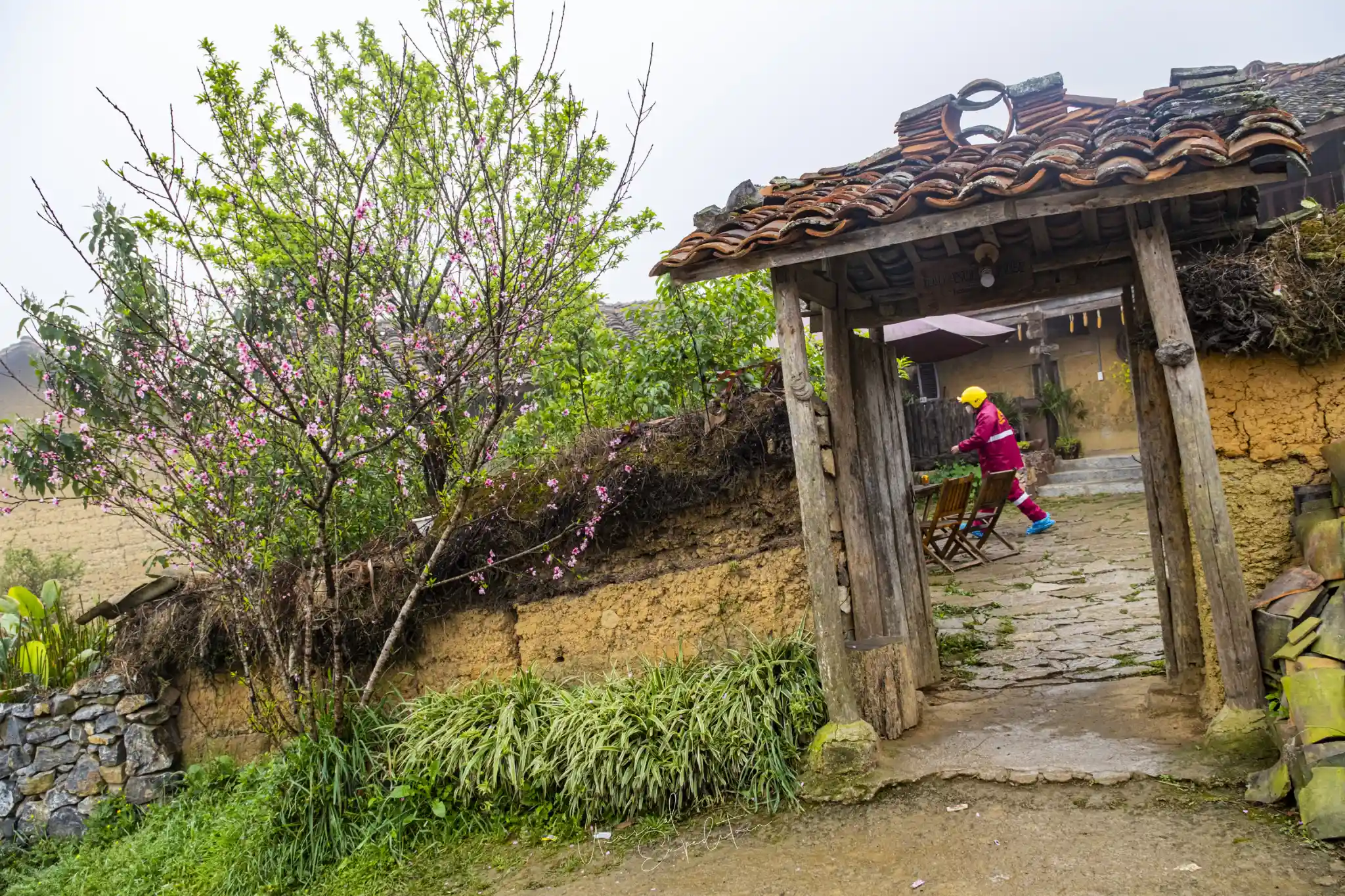
For the Ha Giang loop itself, the best time is October and November if you want clear views from the passes, and March if you want blossom and mood. Ma Pi Leng pass above the Nho Que gorge needs a clear day to show its depth, and autumn gives the most of those. The villages and lanes, on the other hand, are at their most photogenic in spring, when a peach tree in flower stands against a grey earth wall. Riders on motorbikes should also weigh comfort: winter is cold on an open bike, and summer rain makes the roads slick and slips more likely. We avoid the loop in the heaviest rains for that reason.
Ha Giang loop in March
March is the month we know best in Ha Giang, and it delivered what spring promises: blossom in the villages, mustard flowers among the terraces and mist on most mornings. In the colder valleys the blossom lingers well into March, and VietNamNet and other Vietnamese outlets describe peach and plum blossom running from late February into early April depending on the year. Expect drizzle. Ha Giang weather in March is cool rather than cold, but the damp gets into everything, so a light rain shell and a lens cloth matter more than a heavy jacket. When the mist thinned we went to the viewpoints over the valleys; the rest of the time we worked in the villages and at the markets.
"March in Ha Giang gave us a lot of grey and only a few clear spells. I would go back in March anyway. The mist hides the big views but it makes every peach tree and every earth wall look painted, and the markets are full."
Joseph Mak, tour leader, Unusual Expedition
Buckwheat season in autumn
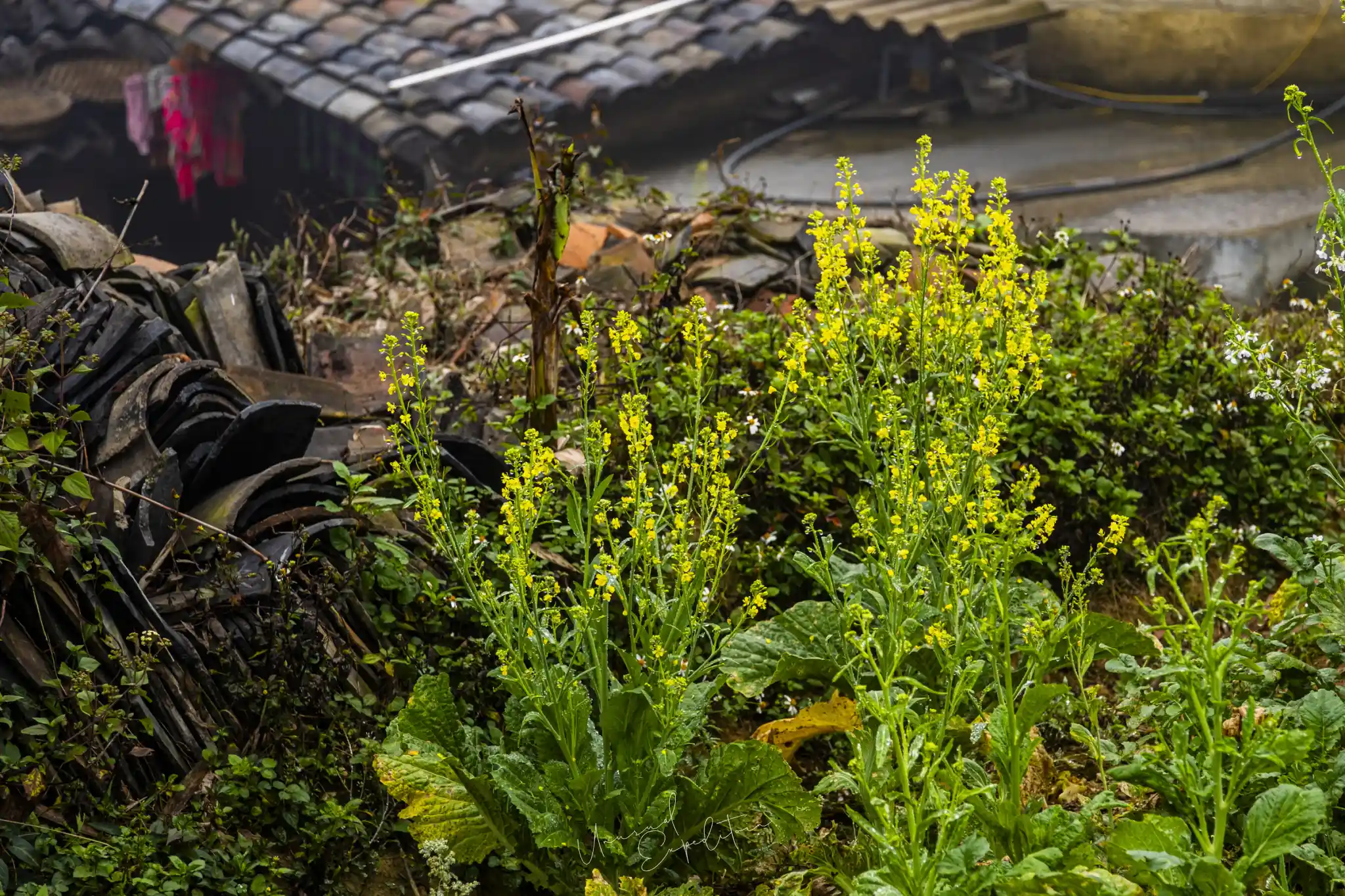
Buckwheat is the flower that made Ha Giang famous inside Vietnam. The small white and pink flowers cover terraces on the plateau in autumn, and the province has held a buckwheat flower festival around it. Reports in the Vietnamese press place the season roughly from October into December, with the peak varying by altitude and year, so check local bloom reports before you travel. For photographers, the buckwheat is best in soft side light, close enough to show the colour, with an earth house or a karst peak behind it. October and November also bring the rice harvest in the lower valleys, which adds gold to the green.
When to avoid Ha Giang
The rainy months, roughly May to September, are the hardest for a photography trip. The landscape is at its greenest, but rain closes viewpoints for days and landslides block the passes after heavy storms. Midwinter can also be difficult: frost and occasional snow on the highest ground have made national news in cold years, roads ice up, and the trees are bare. Vietnamese public holidays, especially the Lunar New Year and the long weekends of spring and early autumn, bring crowds of domestic travellers onto the loop, so we plan around them.
Matching the season to your pictures
Choose spring if your pictures are villages, people and blossom; the Ha Giang market photos article shows how full the spring markets are. Choose autumn for views, buckwheat and long roads; the Ha Giang loop photos article shows the passes and villages along the road. If your heart is set on golden rice terraces, Ha Giang is not the main place for them: Mu Cang Chai in late September is, as described in Mu Cang Chai rice terraces photography.
Pick your month with us
We run Ha Giang privately and time each trip to the blossom, the buckwheat or the clear autumn air. Any scheduled northern departure is announced on our Vietnam photography tours page. Tell us when you can travel and we will tell you what Ha Giang will look like then.
Join the Ha Giang and Mu Cang Chai photography tour
Mekong And Central Highland Vietnam Photo Tour - Vietnam departs 16 Jan 2027 To 24 Jan 2027, led by Joseph Mak. Small group, photography first. All Ha Giang and Mu Cang Chai photography tours.
Explore Ha Giang and Mu Cang Chai in depth
- Ha Giang and Mu Cang Chai Photography Tour Guide: Vietnam's Northern MountainsVietnam
- Long Coc Tea Hill: The Tea Country on the Road to Mu Cang ChaiVietnam
- Is the Ha Giang Loop Worth It? And How to Get to Ha Giang from HanoiVietnam
- Ha Giang Market Photos: Photographing a Hmong Market with RespectVietnam
- Ha Giang Loop Photos: Passes, Villages and Fields Along the RoadVietnam
- Sapa, Mu Cang Chai or Ha Giang: Which Northern Mountains to PhotographVietnam
- Mu Cang Chai Rice Terraces: Photography, Best Time and How to Get ThereVietnam
Upcoming Photo Tours
- Egypt Photo Tour – EgyptEgypt 12 Dec 2026 To 20 Dec 2026
- Inner Mongolia Winter Owl Photo Tour – ChinaChina 01 Jan 2027 To 04 Jan 2027
- Inner Mongolia Winter Photo Tour – ChinaChina 05 Jan 2027 To 11 Jan 2027
- Mekong And Central Highland Vietnam Photo Tour - VietnamVietnam 16 Jan 2027 To 24 Jan 2027