
Ha Giang Market Photos: Photographing a Hmong Market with Respect
Ha Giang market photos: livestock, food stalls and highland traders, with market etiquette, where to stand and which lens to use.
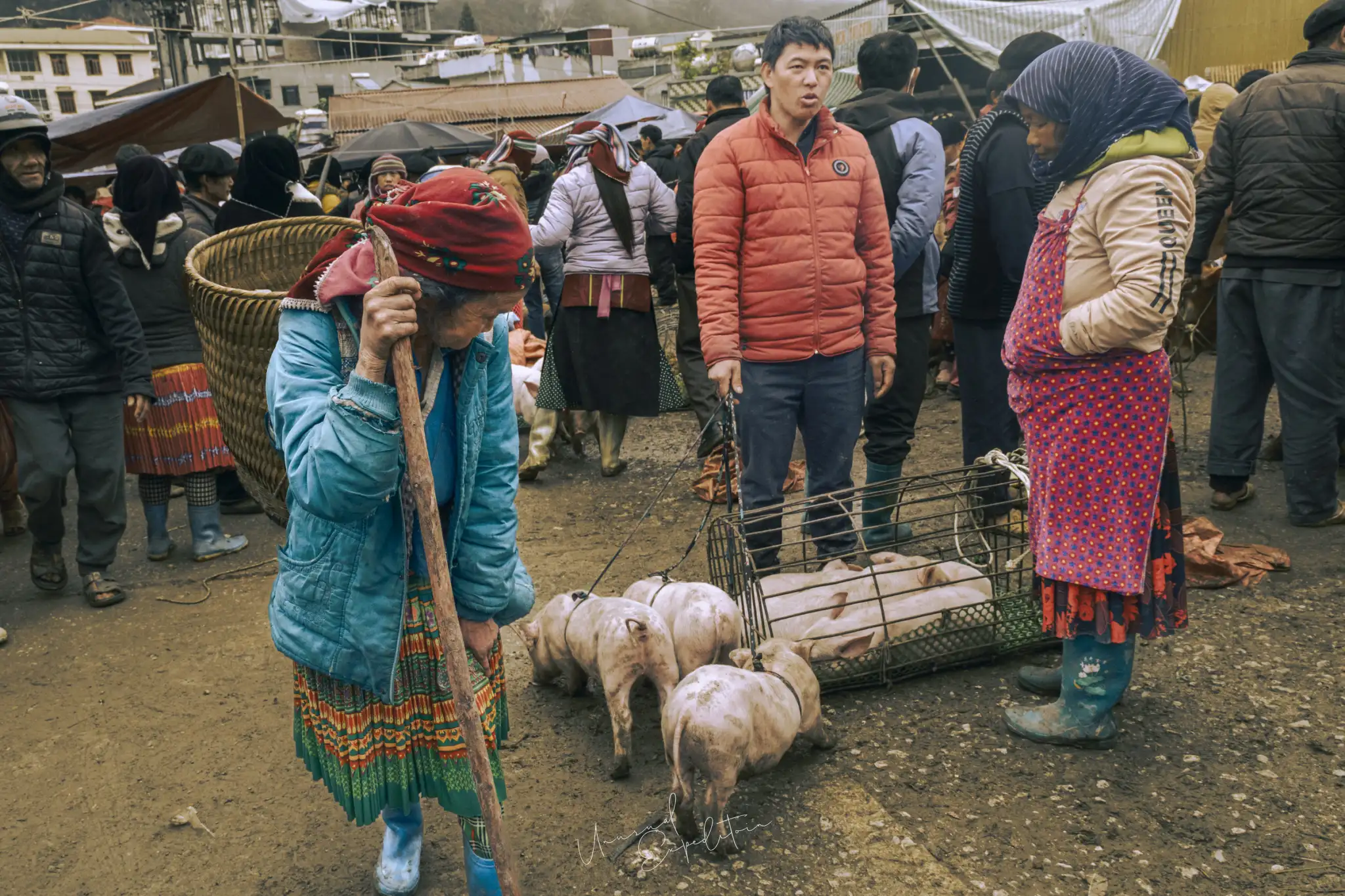
A Ha Giang market is a weekly gathering where Hmong, Lo Lo, Tay, Dao and other highland families come to trade livestock, seed, tools, cloth and food, and it is the best place in northern Vietnam to photograph people. The rules are simple and they matter: buy something, ask before a close portrait, never pay children for pictures, and keep out of the way of the trading. These are our own Ha Giang market photos from a spring trip, with what we learned making them.
Markets are one of the reasons we send people to the far north, as our Ha Giang and Mu Cang Chai photography tour guide explains. This article stays in the market: when to go, where to stand, which lens to use and how to be a guest with a camera.
What happens at a Ha Giang market?
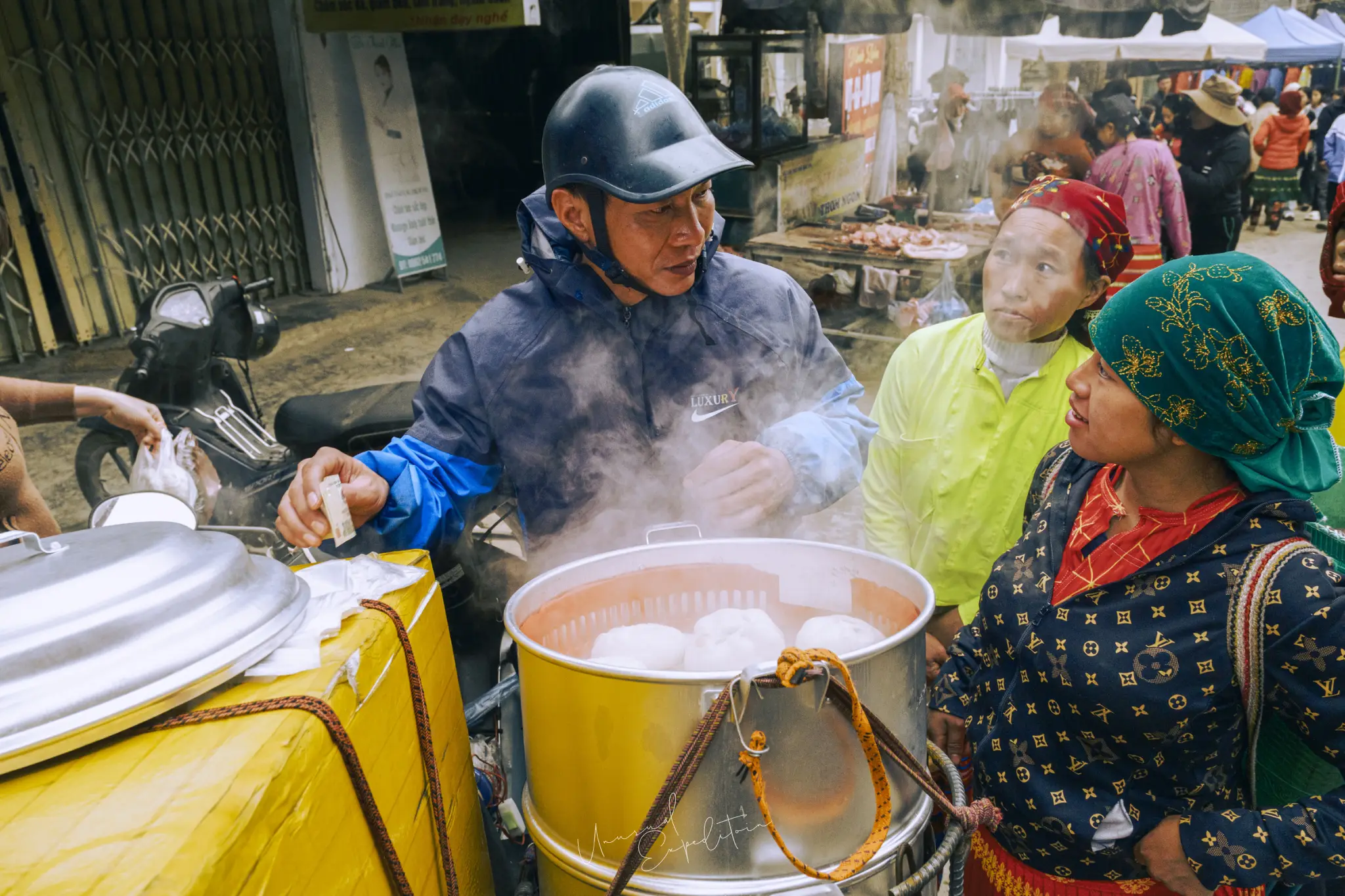
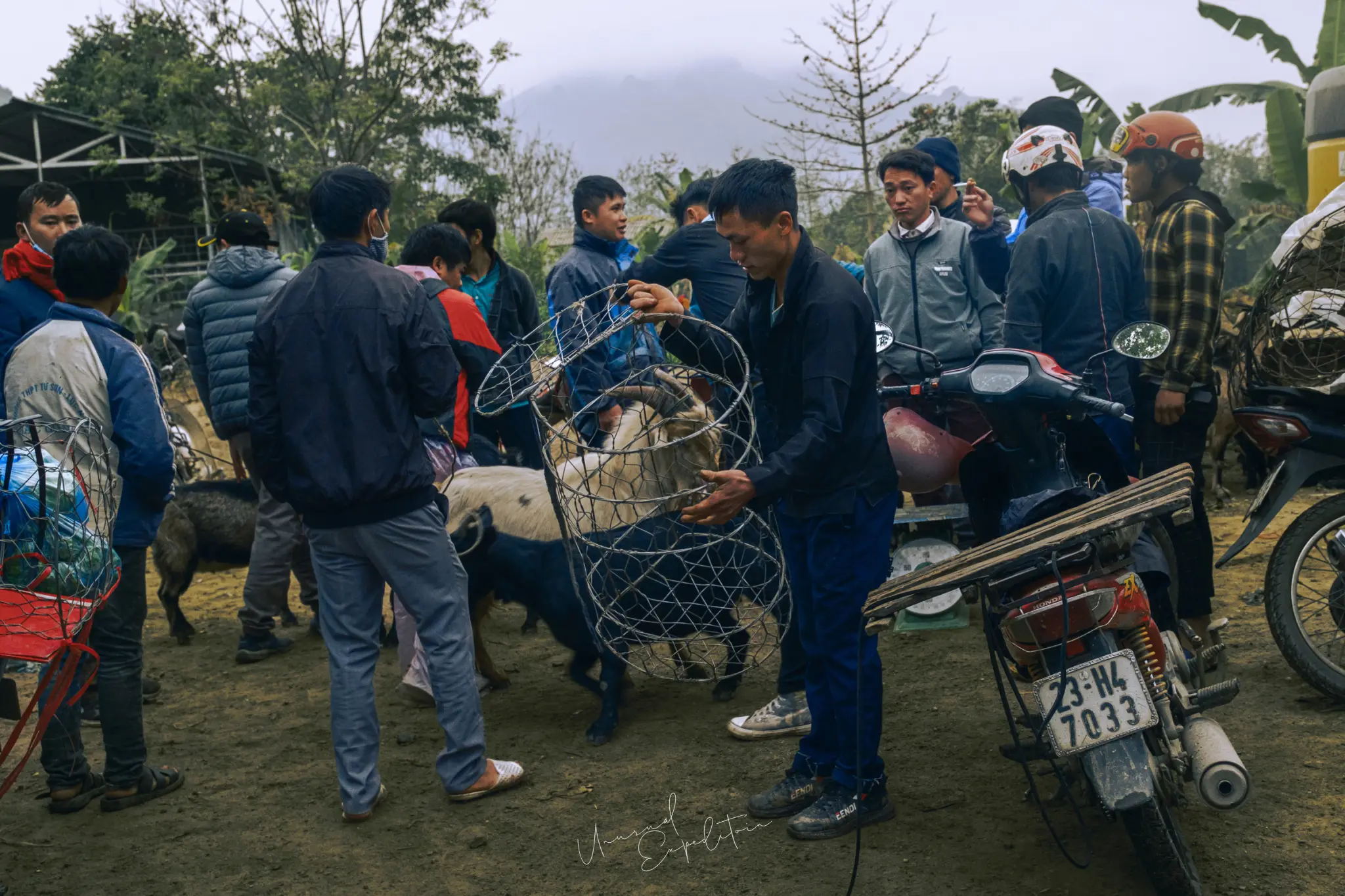
A Ha Giang market is first a livestock fair. In one corner piglets are lifted by their back legs, weighed by eye and carried away in baskets; in another, men crowd around chickens and goats in wire cages. Beyond the animals come the stalls: tools, seed, plastic buckets, cloth, bright pleated skirts, phones, tobacco and the spices of the highlands. Then the food: big pots of steaming broth, rice wine, sticky rice cakes and grilled meat. The Dong Van Karst Plateau, according to UNESCO, is home to 17 ethnic groups, and on market day many of them meet in one street. People come to buy and sell, and just as much to see friends and drink with them.
Which Ha Giang market should you visit?
Markets in the Ha Giang highlands run on a weekly cycle, and many of the larger ones fall on a Sunday, including the well-known markets of Dong Van and Meo Vac; smaller communes hold theirs on other days. Days can shift with the lunar calendar in some places and change over the years, so check with a local guide or your hotel before you plan around one. Our frames come from two weekly markets on consecutive days in March. We are not naming them, because what made them good was the timing and the crowd, not the address. Any busy market on the plateau gives you the same subjects if you arrive early and stay.
Hmong market etiquette for photographers
The dress that brings photographers to a Hmong market is everyday clothing, and the people wearing it are shopping, selling and working. Treat the market as their space. Buy something from the stalls you photograph, even a small bag of spice or a bowl of soup. Show your camera, smile and wait for a nod before a close portrait; a shake of the head means no, and that is the end of it. Do not pay children for pictures, and do not photograph inside homes without an invitation. Avoid the livestock deals at the moment of bargaining, when money changes hands. Most refusals we had were gentle, and many people were curious enough to ask to see the picture.
Where to stand and when
A Ha Giang market is busiest in the morning, when people arrive from the hamlets on foot and by motorbike. The livestock trading starts early and is often finished before the food stalls reach their peak, so go to the animals first. Find a spot at the edge of the livestock area or by a food stall and stay there; after a while people stop noticing you, and that is when the natural frames come. The street where motorbikes squeeze through the crowd is good for movement and colour. By the afternoon the crowd thins and the drinking starts, which is a sign to put the camera away.
Lenses and settings at the market
| Subject | Lens | Approach |
|---|---|---|
| Livestock corner | 24-70mm at the wide end | Low, close, include the people with the animals |
| Food stalls | 24-70mm | Buy a bowl, shoot the steam against a darker background |
| Portraits | 24-70mm at the long end | Ask first, fill the frame, eye level |
| Crowd and motorbikes | 24-70mm or 70-200mm from a step | Slight height, compress the street |
| Stalls and goods | 24-70mm | Look for colour and handwritten signs |
A 24-70mm covers almost every frame here; the long lens is only for the crowd from above.
Under the market roofs the light falls off fast, so raise the ISO before you need it and keep shutter speeds high enough for moving hands. Spring mist outside gives flat, even light on faces, which suits portraits well.
Subjects to look for
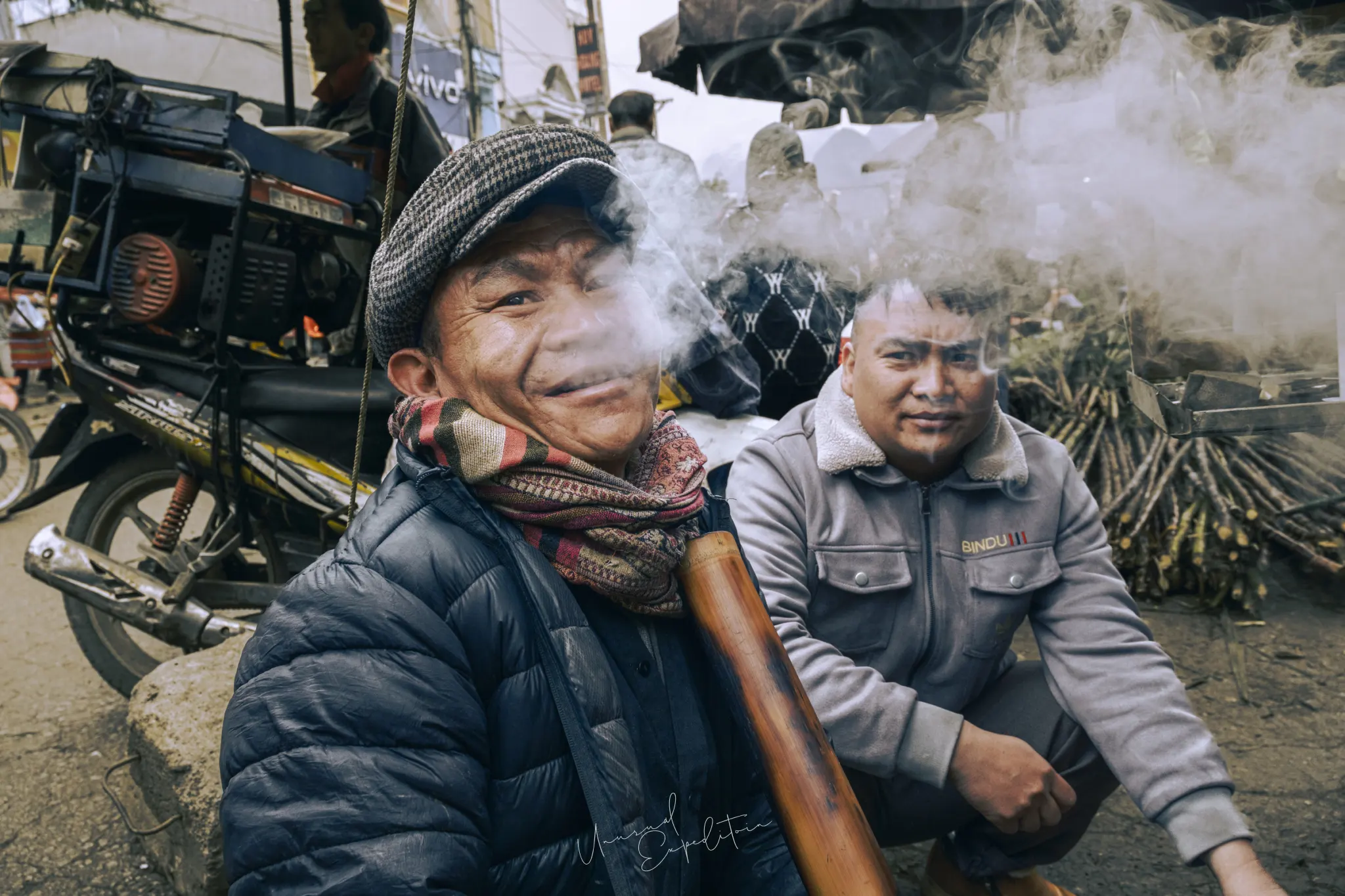
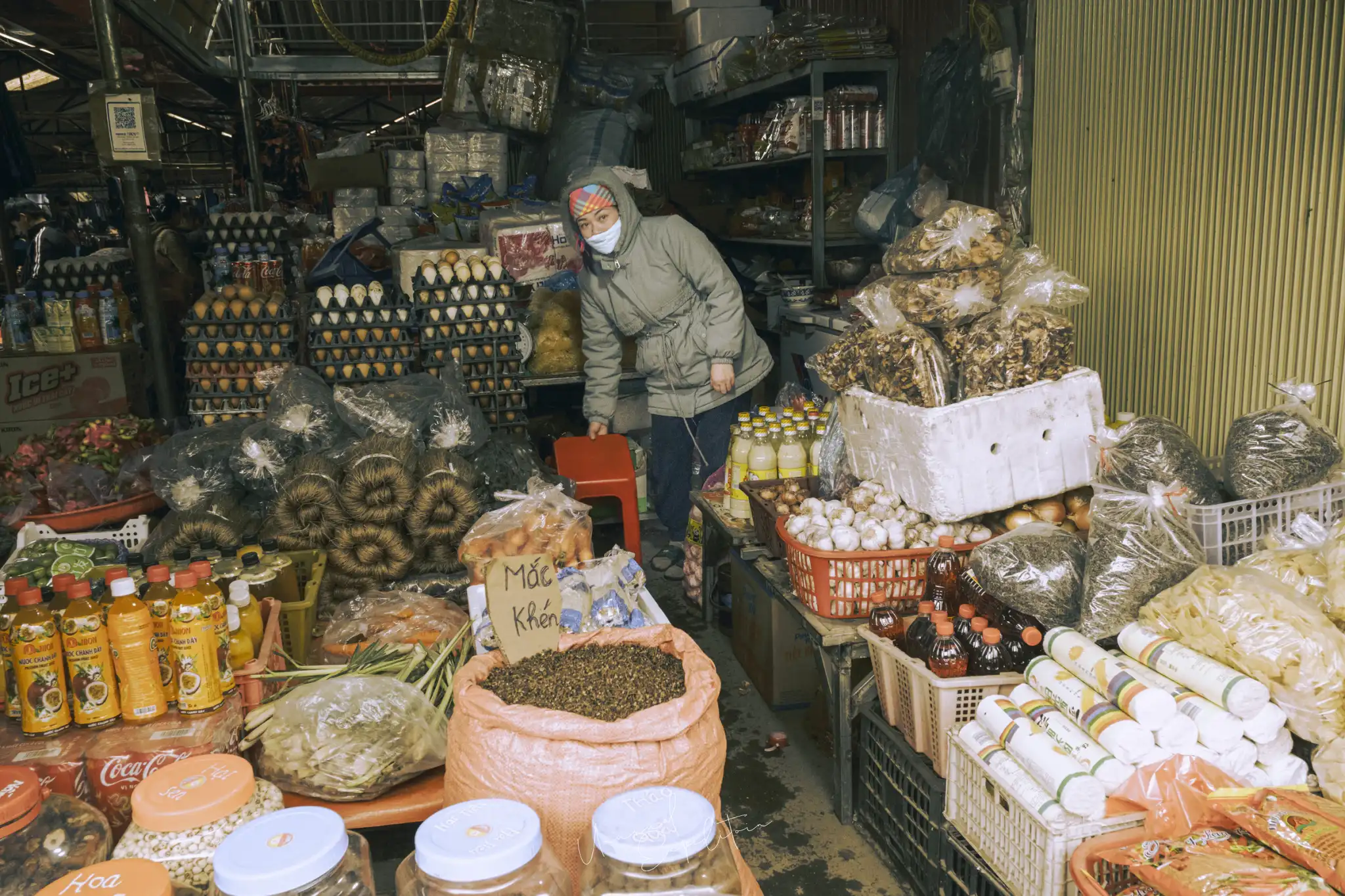
Beyond the obvious portraits, the Ha Giang market has small stories. Women in pleated skirts carrying piglets in back baskets. Men sharing a bamboo water pipe, the smoke hanging in the cold air. A roadside barber with a mirror nailed to a post. Stalls selling sacks of mac khen, the wild mountain pepper of the north, beside eggs, noodles and bottled juice. Steam from the soup pots, which photographs beautifully against the dark interior of a stall. Each of these makes a frame that says more about the place than a posed portrait, and none of them needs anyone to stop what they are doing.
"The best market frames came after I had eaten at the stall and bought a bag of spice. By then I was part of the furniture. People went back to their business, and I could photograph the business."
Joseph Mak, tour leader, Unusual Expedition
Combining markets with the loop
Markets set the shape of a Ha Giang trip, because you plan the route around the days they fall on and fill the other days with the passes and villages shown in Ha Giang loop photos. Spring is the fullest season at the markets, as explained in best time to visit Ha Giang. If you would rather compare the north's regions first, our Sapa, Mu Cang Chai or Ha Giang comparison weighs the markets against the terraces.
Photograph a highland market with us
We run Ha Giang as a private photography trip and plan it around the market days, with a local guide who speaks the languages of the villages. Any scheduled northern departure is announced on our Vietnam photography tours page; write to us for a private plan.
Join the Ha Giang and Mu Cang Chai photography tour
Mekong And Central Highland Vietnam Photo Tour - Vietnam departs 16 Jan 2027 To 24 Jan 2027, led by Joseph Mak. Small group, photography first. All Ha Giang and Mu Cang Chai photography tours.
Explore Ha Giang and Mu Cang Chai in depth
- Ha Giang and Mu Cang Chai Photography Tour Guide: Vietnam's Northern MountainsVietnam
- Long Coc Tea Hill: The Tea Country on the Road to Mu Cang ChaiVietnam
- Is the Ha Giang Loop Worth It? And How to Get to Ha Giang from HanoiVietnam
- Ha Giang Loop Photos: Passes, Villages and Fields Along the RoadVietnam
- Best Time to Visit Ha Giang: Blossom, Mist and BuckwheatVietnam
- Sapa, Mu Cang Chai or Ha Giang: Which Northern Mountains to PhotographVietnam
- Mu Cang Chai Rice Terraces: Photography, Best Time and How to Get ThereVietnam
Upcoming Photo Tours
- Egypt Photo Tour – EgyptEgypt 12 Dec 2026 To 20 Dec 2026
- Inner Mongolia Winter Owl Photo Tour – ChinaChina 01 Jan 2027 To 04 Jan 2027
- Inner Mongolia Winter Photo Tour – ChinaChina 05 Jan 2027 To 11 Jan 2027
- Mekong And Central Highland Vietnam Photo Tour - VietnamVietnam 16 Jan 2027 To 24 Jan 2027