
Sapa, Mu Cang Chai or Ha Giang: Which Northern Mountains to Photograph
Sapa photos vs Mu Cang Chai vs Ha Giang: terraces, markets, fog, access and best months compared from our own trips, with a plain verdict.
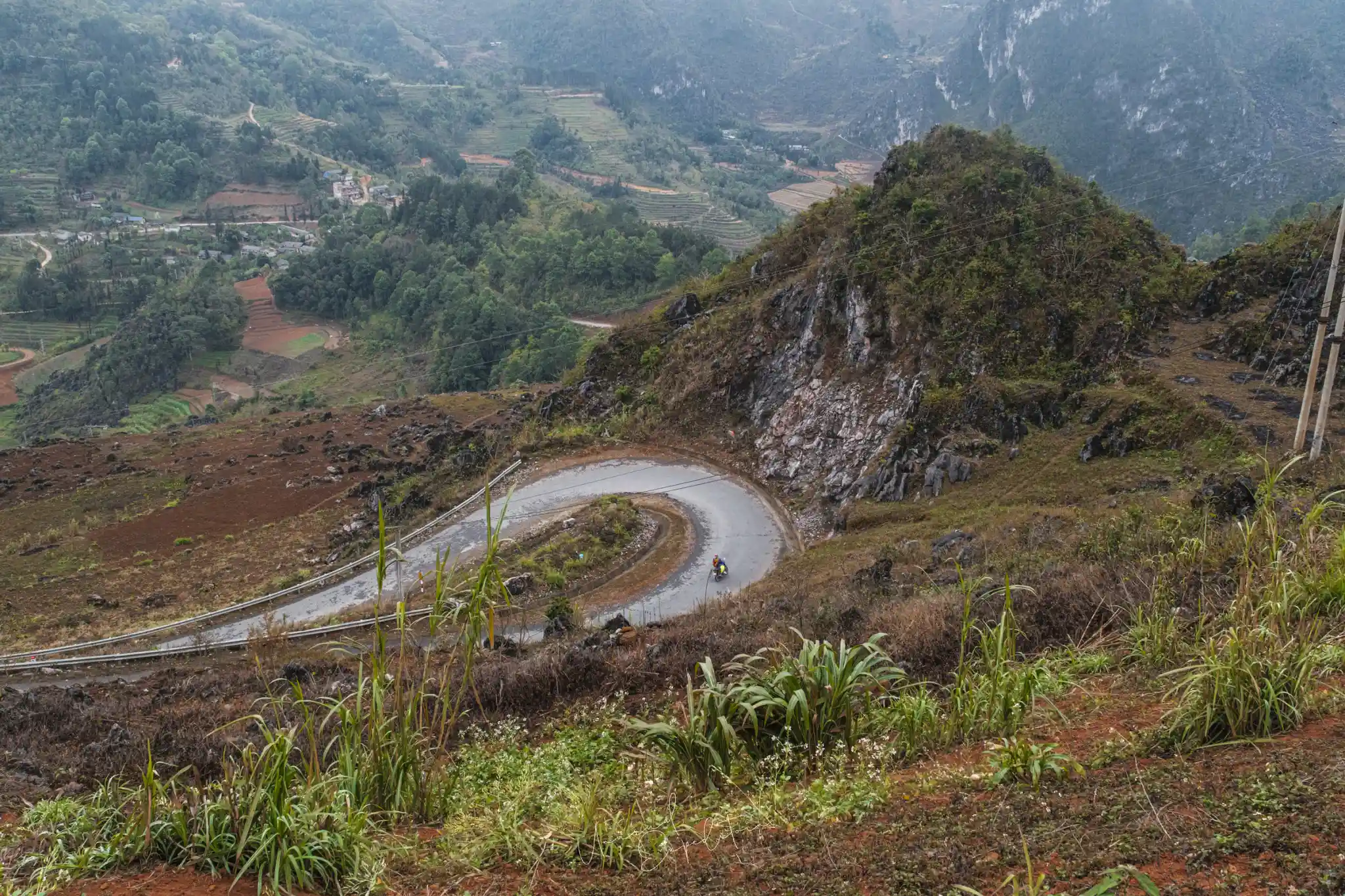
Sapa, Mu Cang Chai and Ha Giang are the three northern Vietnam mountain regions people search for when they want terrace and hill tribe photos, and they are not interchangeable: Sapa is the most developed and the most often fogged in, Mu Cang Chai has the purest terraces for two windows a year, and Ha Giang has the wildest karst roads and the busiest ethnic markets. This comparison is written from our own trips and sits inside the Vietnam photography tour guide. One honesty note first: our published frames are from Mu Cang Chai and Ha Giang; we have no Sapa photos of our own to show you.
Sapa photos: what you actually get
Sapa town sits at about 1,500 metres under Fansipan, Vietnam's highest mountain, with the Muong Hoa valley terraces below it and Hmong and Red Dao villages such as Cat Cat, Lao Chai and Ta Van within walking distance. The terraces are real and large, and the cable car to Fansipan gives a view on a clear day. The problems are the town itself, which has grown into a resort with high rise hotels, and the weather: Sapa is the foggiest of the three, with cloud sitting in the valley for days at a time in winter and spring. Sapa photo spots that people search for, the terraces at Ta Van and the valley from the road, work in late May to June and in September, when Mu Cang Chai is also at its best. Sapa has the easiest access, by overnight train or expressway to Lao Cai then a short road, which is why it stays the most visited.
Mu Cang Chai: the purest terraces
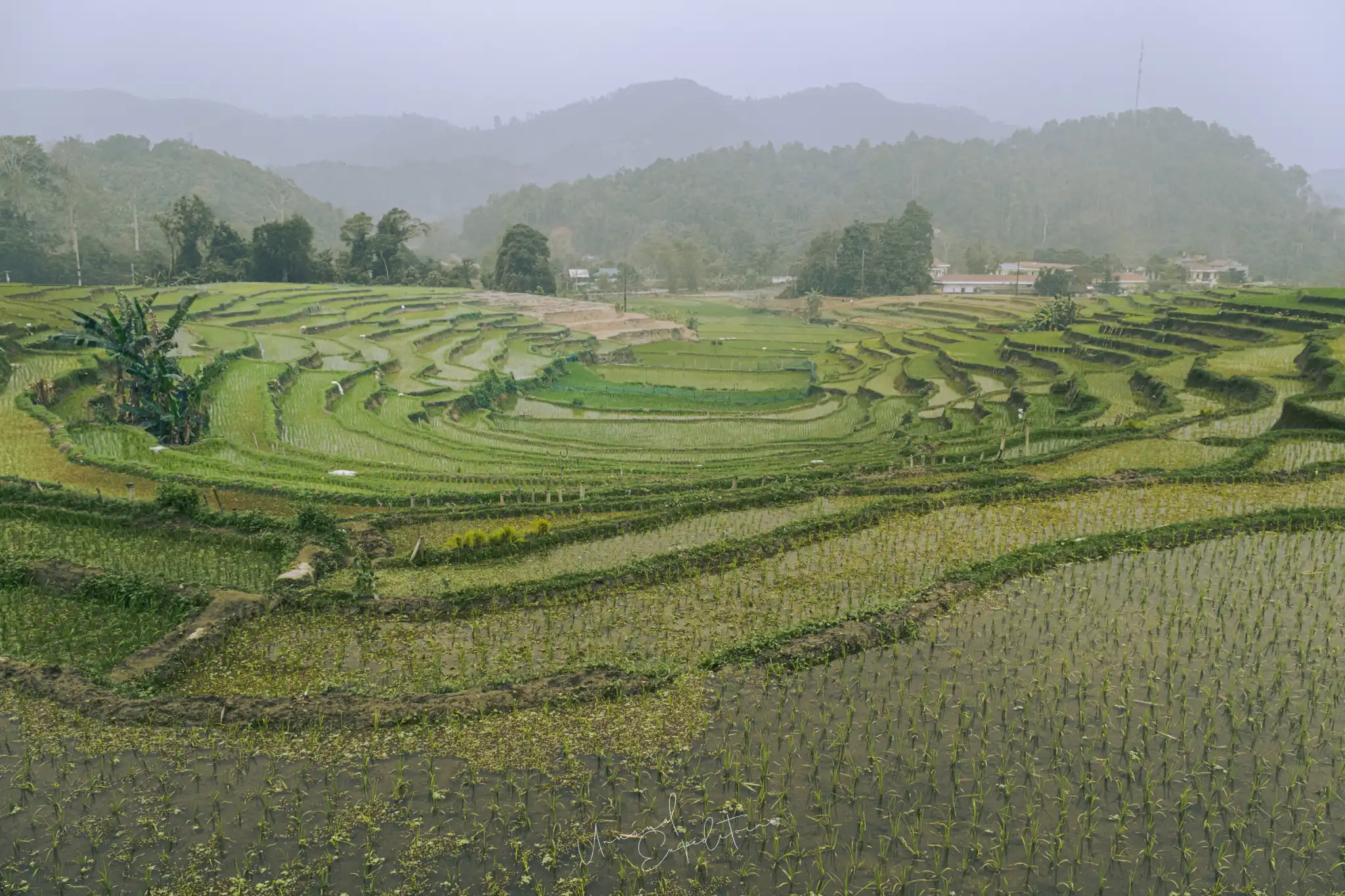
Mu Cang Chai in Yen Bai province has no town to speak of and terraces that cover entire mountainsides at La Pan Tan, Che Cu Nha and De Xu Phinh. It is further from Hanoi than Sapa, over the Khau Pha pass, and it is a landscape rather than a culture destination: the Hmong farmers are in the fields, but there are no big markets. Go in the harvest window from mid September to early October or the water season in late May and June, and nothing in Vietnam matches it. Outside those weeks it is brown or plain green. Full detail is in Mu Cang Chai rice terraces photography.
Ha Giang: roads, karst and markets
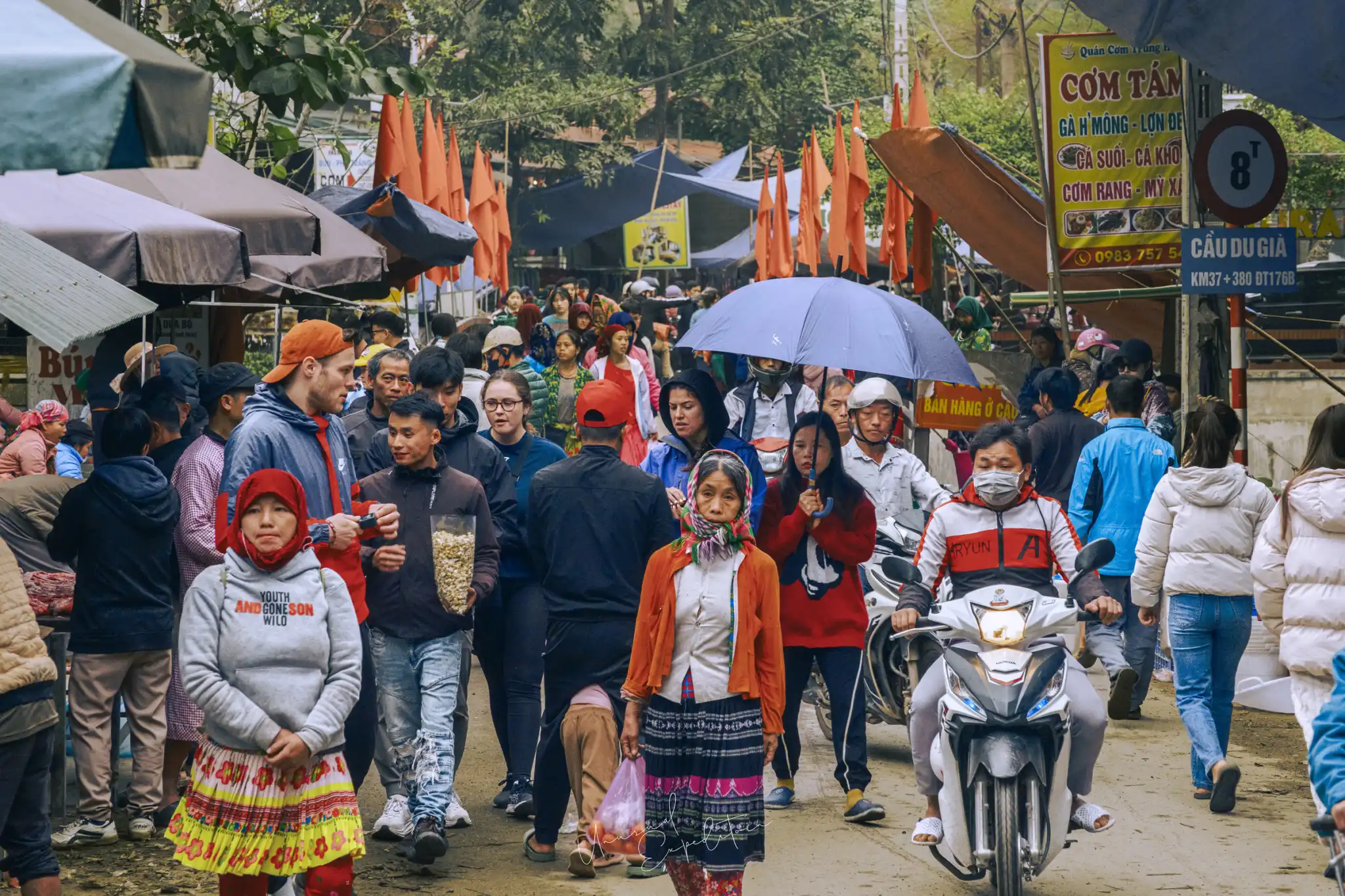
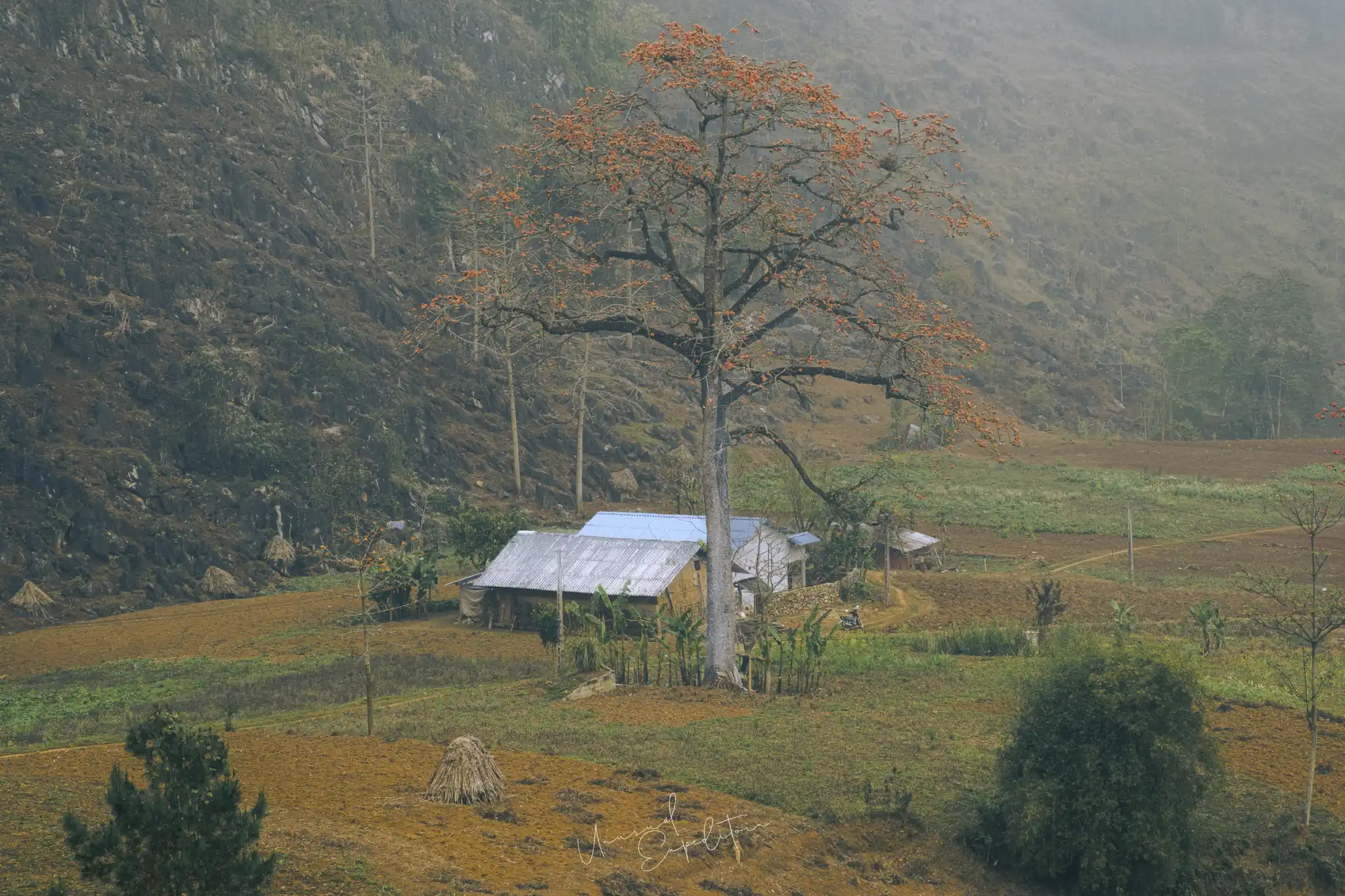
Ha Giang is the far north, a karst plateau against the Chinese border with the Dong Van geopark, the Ma Pi Leng pass above the Nho Que river, and Hmong, Lo Lo, Tay and Dao communities whose weekly markets are the best people photography in the country. The terraces are smaller and the hills are stone, not rice, so the landscape frames are about roads bending through karst and villages of rammed earth houses with plum and peach blossom in spring. The famous "Ha Giang loop" is a motorbike circuit; we do it by car with stops where the light is. Spring, from late February to April, brings blossom and the big markets; autumn brings buckwheat flowers and clear air. Our Ha Giang frames are from March, in mist and blossom.
Sapa, Mu Cang Chai or Ha Giang: the comparison
| Sapa | Mu Cang Chai | Ha Giang | |
|---|---|---|---|
| Main picture | Terraced valley under Fansipan, hill tribe villages | Terraces covering whole mountainsides | Karst roads, markets, earth houses, blossom |
| Best months | Late May to June, September | Mid September to early October, late May to June | Late February to April, October to November |
| Weather risk | High: fog and cloud for days | Medium: valley mist, clear ridges | Medium: mist and drizzle in spring |
| People photography | Good, but commercialised in town | Farmers in the fields | Excellent: weekly markets, villages |
| Access from Hanoi | Easiest, train or expressway | Long road, no rail | Longest road, no rail |
| Crowds | Heavy | Heavy only at the main viewpoints in harvest | Motorbike travellers on the loop, few photographers |
| Our verdict | Skip unless time is short | Go in the windows | Go for people and roads |
If the trip is about terraces, Mu Cang Chai in season; if it is about people, Ha Giang; Sapa only when the calendar leaves nothing else.
"People ask me for Sapa because it is the name they know. I send them to Mu Cang Chai for the terraces and Ha Giang for the faces, and I tell them the truth about the fog. Nobody has come back disappointed from either."
Joseph Mak, tour leader, Unusual Expedition
Can you combine them?
Mu Cang Chai and Sapa sit on the same side of the Red River and can be joined by road in a loop from Hanoi through Nghia Lo, Mu Cang Chai, the Khau Pha pass and Lao Cai. Ha Giang is a separate trip to the north-east, and the roads between it and the others are long. A week does one region properly or two at a push. A northern photo trip of ours is usually Hanoi and its villages, then one mountain region chosen by the month, then Ninh Binh on the way back, described in the Hanoi photo tour and Ninh Binh photos.
Photographing the hill tribe markets respectfully
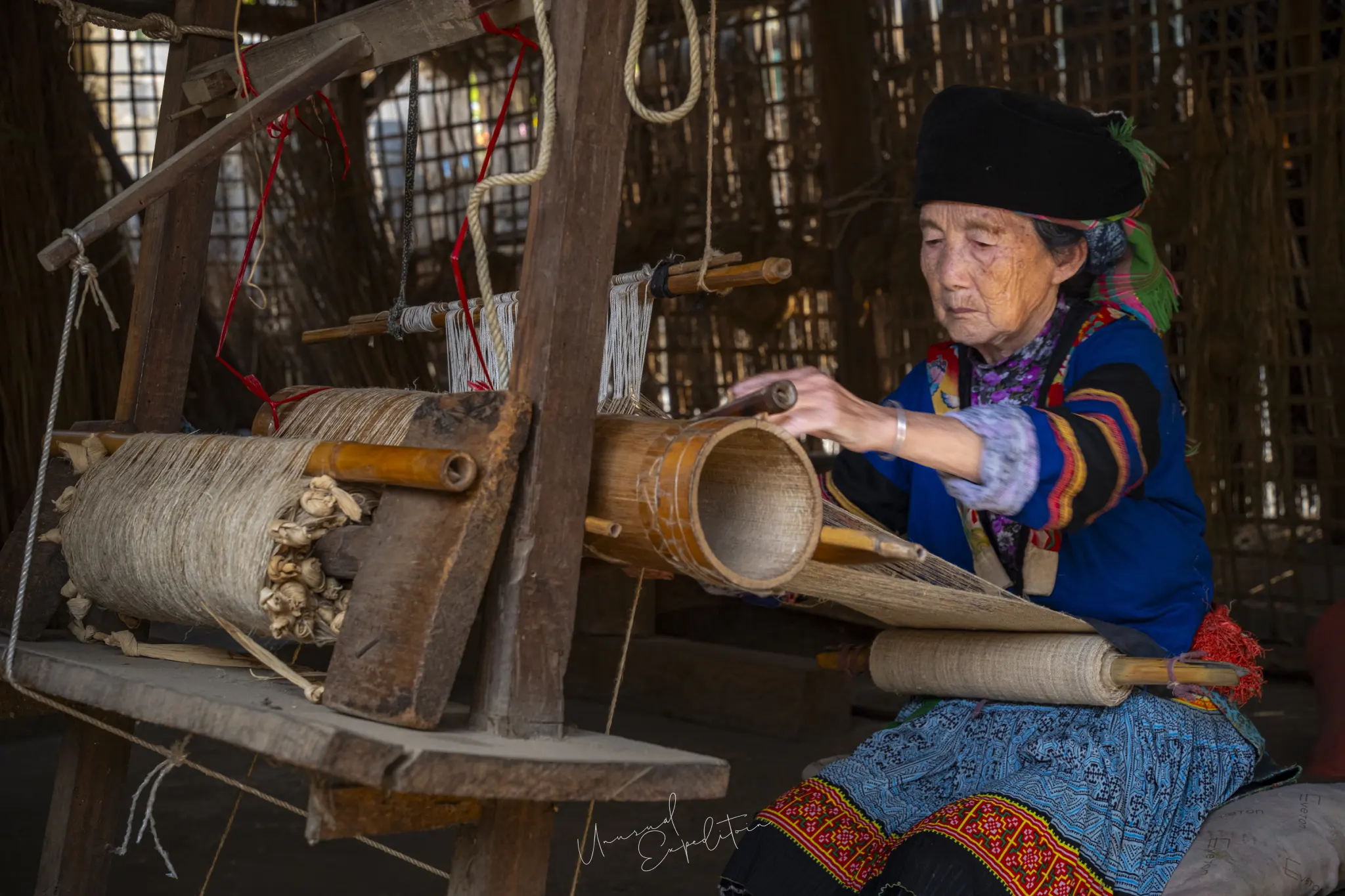
The markets of Ha Giang and the villages around Sapa are where the Hmong, Dao, Lo Lo and Tay communities trade, eat and meet, and the dress that draws photographers is everyday clothing, not a costume. Buy from the stalls, ask before close portraits, do not pay children for pictures and do not photograph inside homes without an invitation. A 24-70mm in the crowd and a 70-200mm from the edge of the market cover it. In the villages, the Lo Lo weavers and the Hmong hemp makers will show their work if you arrive through a local guide and not at random.
Choose your mountains with us
The northern mountains are a private trip for us, built around the month you can travel: terraces in the harvest, markets and blossom in spring. Our scheduled departures run from Saigon and are listed on the Vietnam photography tours page, with fares indicatively S$2,700 to S$3,300 per person depending on the room; a northern trip is quoted for your dates.
Join the Vietnam photography tour
Mekong And Central Highland Vietnam Photo Tour - Vietnam departs 16 Jan 2027 To 24 Jan 2027, led by Joseph Mak. Small group, photography first. All Vietnam photography tours.
Explore Vietnam in depth
- Vietnam Photography Tour: The Complete GuideVietnam
- Vietnam Photography Trip FAQVietnam
- The Best Time to Visit Vietnam for Photography, Region by RegionVietnam
- Vietnam Tour from Singapore: Flights, Visa and What to ExpectVietnam
- Mu Cang Chai Rice Terraces: Photography, Best Time and How to Get ThereVietnam
- Ninh Binh Photos: Is It Worth Visiting and How to Get There from HanoiVietnam
- Hue Photo Tour: the Citadel, the Tombs and the LagoonVietnam
- Dalat and the Central Highlands: Photos of Mist, Farms and the Elephant VillagesVietnam
- Vietnam Salt Fields and Fishing Villages: Photos from the South Central CoastVietnam
- Mekong Delta Photography Tour: the Can Tho Floating Market and the WaterwaysVietnam
- Saigon Photos: Markets, the River and the City at NightVietnam
- Saigon Photo Tour: Where We Shoot in Ho Chi Minh CityVietnam
Upcoming Photo Tours
- Egypt Photo Tour – EgyptEgypt 12 Dec 2026 To 20 Dec 2026
- Inner Mongolia Winter Owl Photo Tour – ChinaChina 01 Jan 2027 To 04 Jan 2027
- Inner Mongolia Winter Photo Tour – ChinaChina 05 Jan 2027 To 11 Jan 2027
- Mekong And Central Highland Vietnam Photo Tour - VietnamVietnam 16 Jan 2027 To 24 Jan 2027