
Birds of Paradise Papua New Guinea: A Photographer's Guide
Birds of paradise Papua New Guinea: the Blue bird-of-paradise display, Ribbon-tailed astrapia, Superb and Magnificent, and the gear.
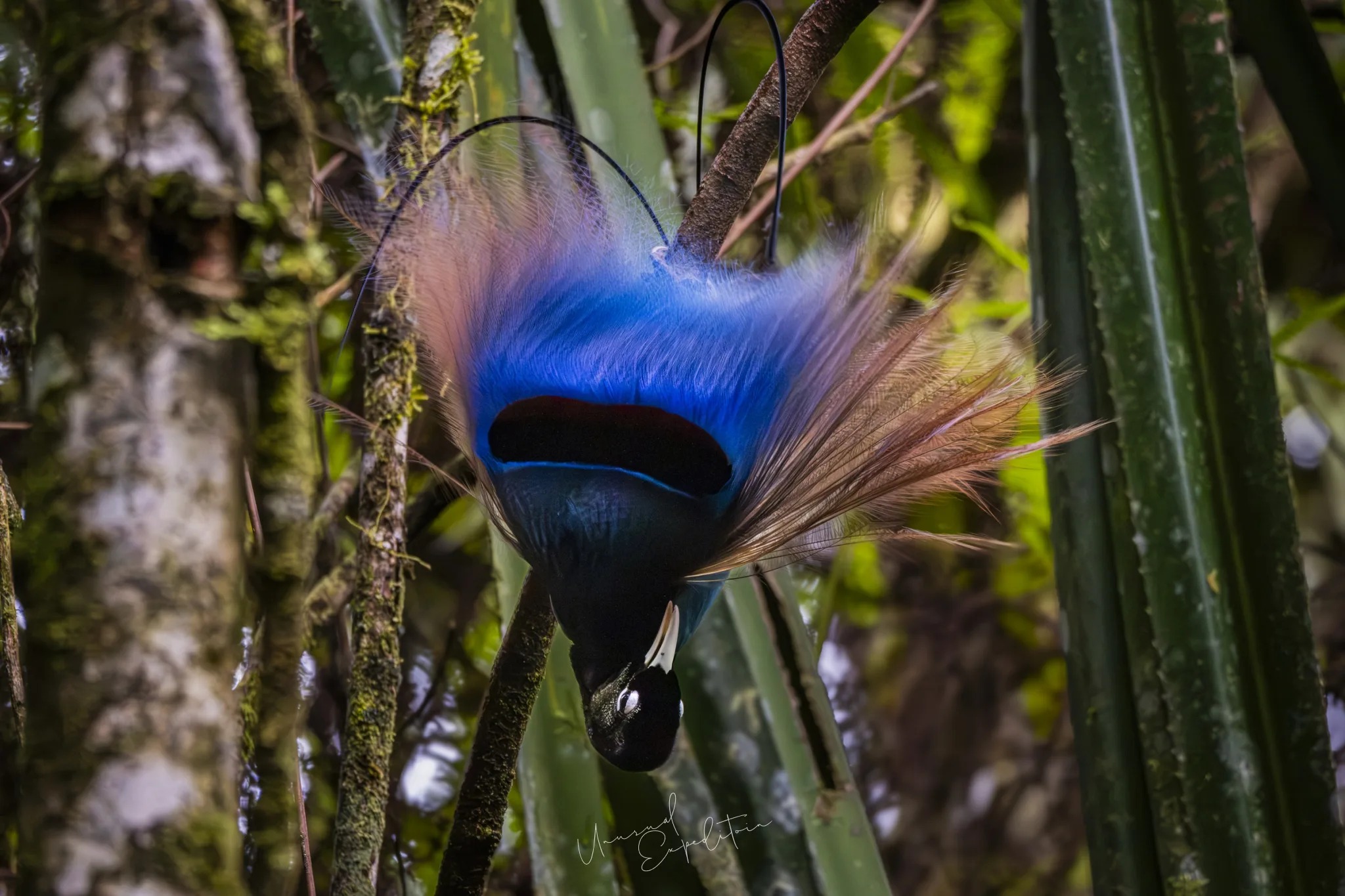
Birds of paradise in Papua New Guinea live mainly in the forests of the island of New Guinea, and the montane forests of the Highlands are one of the best places to photograph them: the Blue bird-of-paradise hanging upside down in display, the Ribbon-tailed astrapia with its long white tail ribbons, the Superb and Magnificent birds-of-paradise, and sicklebills at forest feeders. You need local guides, early mornings and a long lens. Here are our pictures and how we made them, part of our Papua New Guinea Highlands guide.
Birds of paradise Papua New Guinea: how many species?
The birds-of-paradise family, Paradisaeidae, has around 40 species, and most of them live only on New Guinea and nearby islands. The Cornell Lab of Ornithology's Birds-of-Paradise Project, led by photographer Tim Laman and biologist Edwin Scholes, spent years photographing all 39 species recognised when the project began; their work in the All About Birds archive is the best introduction to the family. In Papua New Guinea the birds are a national symbol: the Raggiana bird-of-paradise appears on the national flag and the coat of arms, and plumes have been part of Highlands ceremonial dress for centuries.
Bird of paradise pictures Papua New Guinea: the species we photographed
| Species | What to look for | Habitat |
|---|---|---|
| Blue bird-of-paradise | Male hangs upside down and spreads a fan of blue plumes around a black oval | Mid-altitude Highlands forest |
| Ribbon-tailed astrapia | Male's two white tail ribbons, among the longest tail feathers of any bird relative to its size | Highland montane forest |
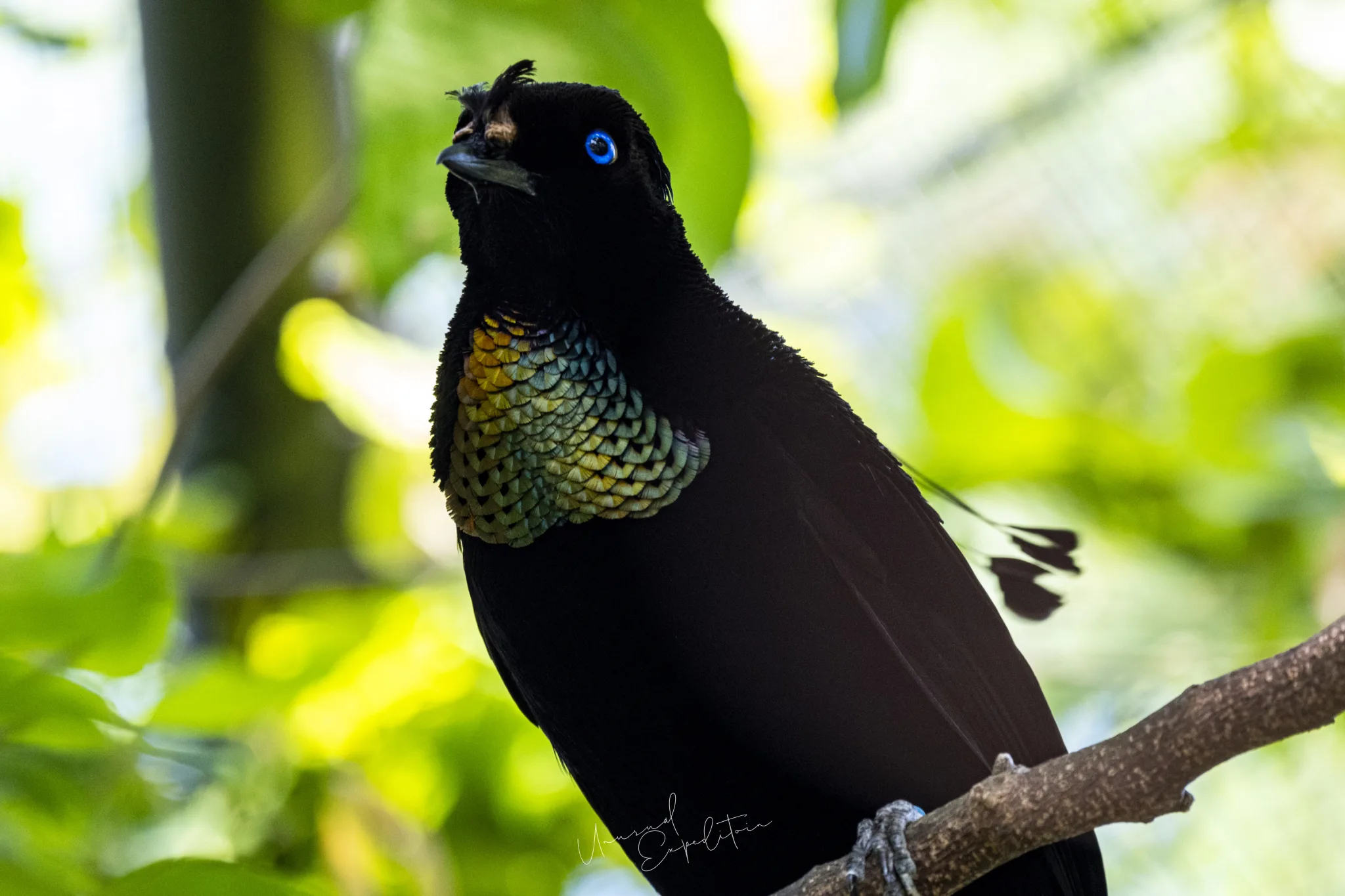
| Superb bird-of-paradise | Black male with a blue-green breast shield | Montane forest |
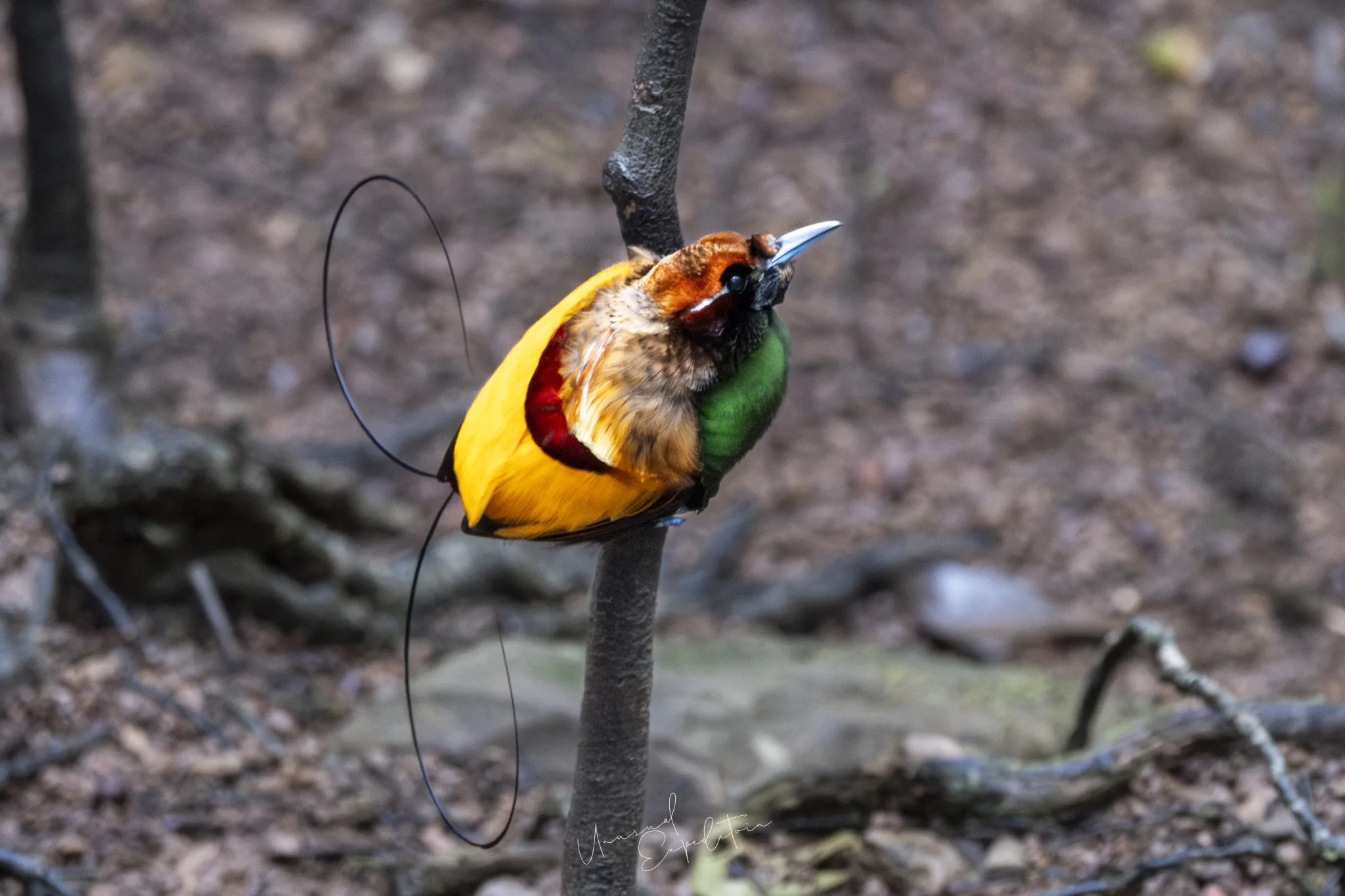
| Magnificent bird-of-paradise | Yellow cape, green breast and two curled wire tail feathers | Hill and lower montane forest, display court on the ground |
| Sicklebill | Long downcurved bill | Montane forest, comes to feeders |
Five birds-of-paradise on two short trips is a good return; dedicated birding trips record many more.
Blue bird of paradise display
The Blue bird-of-paradise is one of the most beautiful and least easy to see. The male displays by hanging upside down from a branch, spreading a fan of blue plumes around a black oval edged in red, and swaying while it makes a buzzing call. It lives in a narrow band of mid-altitude forest in the Highlands, and much of that habitat has become gardens, so finding a displaying male depends entirely on local guides who know the perches. Our frames of the display were made at a perch our guides knew.
Ribbon tailed astrapia
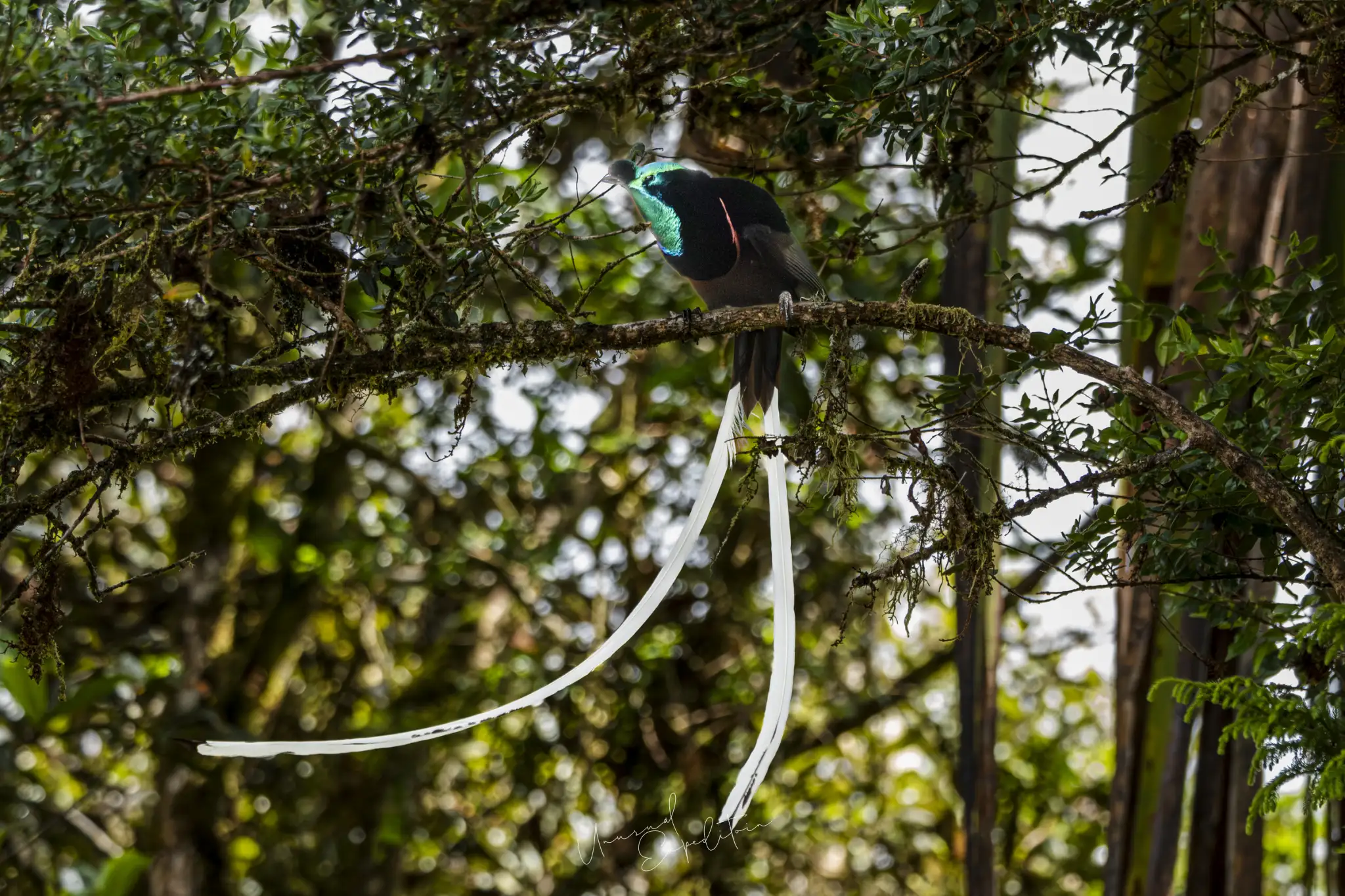
The Ribbon-tailed astrapia lives in high montane forest in the central Highlands. The male's two white tail ribbons can be about a metre long, three times the length of the bird's body, and they trail behind it as it moves through the canopy. Its feathers are traditional decoration in Highlands headdresses. Photographing it means patience at fruiting trees, where the bird comes and goes, and a long lens: we used a 150-600mm.
"With birds-of-paradise you trust the local guide and you wait. When the astrapia finally lands, the white ribbons hang down through the green like two strokes of paint, and the waiting is forgotten."
Joseph Mak, tour leader, Unusual Expedition
Birds of paradise tour Papua New Guinea: how it works
A birds of paradise tour in Papua New Guinea is mostly early mornings. Many males display in the first hours of light at the same perch or court, and local guides know where. We walk to hides or viewing points before sunrise, wait quietly, and work the display while it lasts; later in the morning the forest feeders, where lodges put out fruit, bring in sicklebills, honeyeaters and parrots at close range. Afternoons are for portraits in the villages.
Raggiana bird of paradise Papua New Guinea
The Raggiana bird-of-paradise, with its cascade of red-orange flank plumes, is the national bird of Papua New Guinea and the one on the flag. It is a bird of lower altitudes and is widespread, including near Port Moresby, where birding guides take visitors to lekking trees at first light. If you have a spare morning in Port Moresby at the start or end of a Highlands trip, ask about a Raggiana outing.
Camera gear for birds-of-paradise
- Lens: 150-600mm or 100-400mm, with a teleconverter if you have one. Display perches are often high and far.
- Support: a monopod or a light tripod with a gimbal head for long waits.
- Settings: forest light is dim at dawn; expect high ISO and shoot bursts during the display.
- Clothing: dark, quiet layers; Highland mornings are cool and damp.
Sicklebills and forest feeders
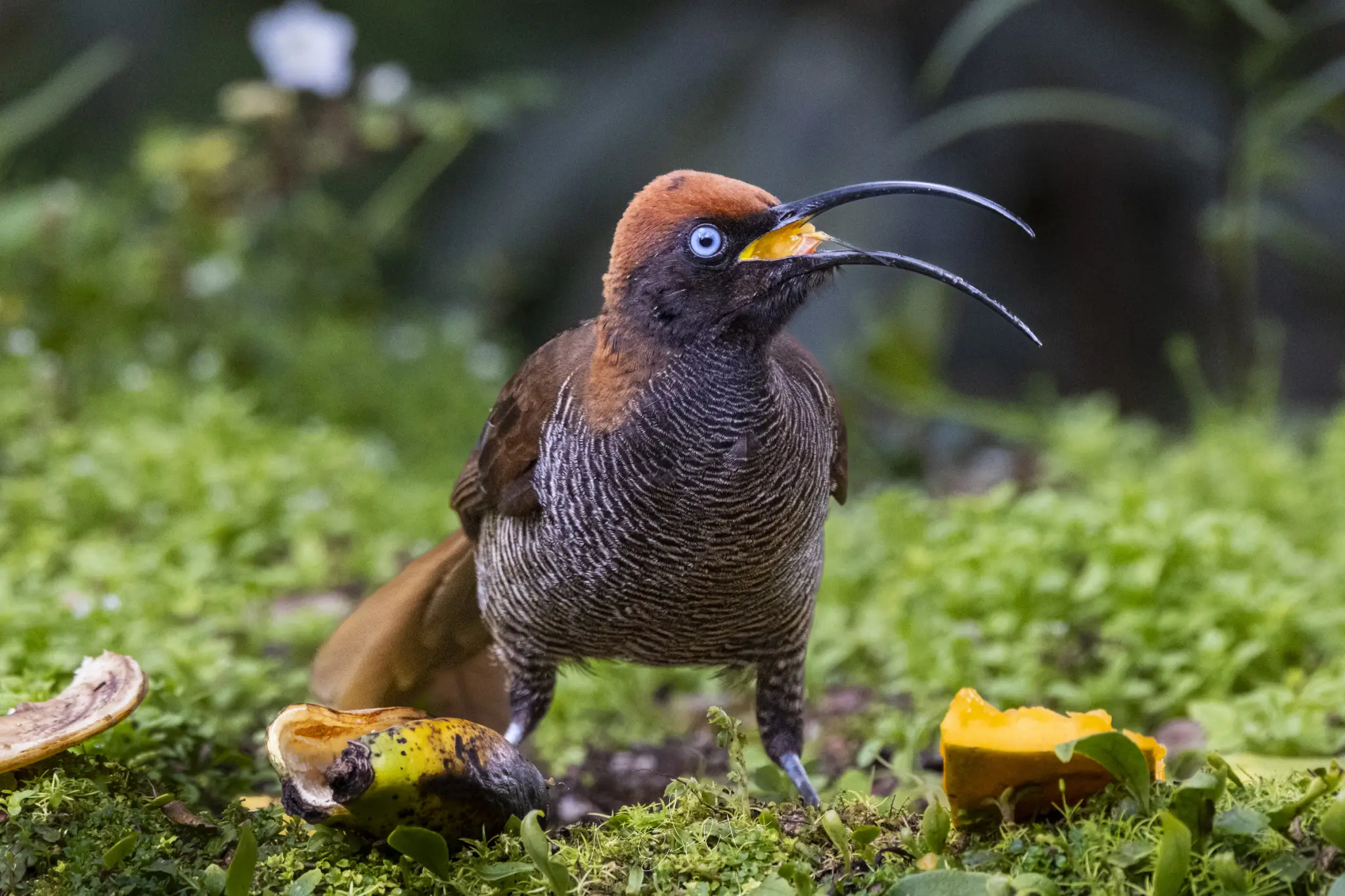
Not every bird-of-paradise needs a long wait. Sicklebills, with their long downcurved bills, come to fruit feeders at some Highland lodges and give close, well-lit frames, together with smoky honeyeaters with their orange faces and tiger parrots. Feeder photography is a good way to practise before the harder display work.
Birds-of-paradise and Highlands culture
Plumes of birds-of-paradise have been traded and worn in the Highlands for generations, and you will see them on Huli wigs and in women's headdresses at every sing-sing. Many families keep plumes for years and pass them down. Today the birds are protected, and in the villages we visit the feathers in the headdresses are heirlooms, not new. Photographing the living birds in the morning and the plumes in a portrait in the afternoon is one of the threads that ties a Highlands trip together.
Ethics in the forest
Display perches are sensitive. We keep to the hides and positions the guides choose, stay quiet and still, never use playback or flash at a display, and leave when the guide says the bird has had enough.
When to photograph birds-of-paradise
Birds display through much of the year, and the drier months from about May to October make early forest walks easier. See best time to visit Papua New Guinea for the full calendar, and combine the birds with the Huli wigmen, whose wigs carry the same plumes.
Photograph birds-of-paradise with us
Early bird mornings are part of every Papua New Guinea trip we run. Planned departures are on the Papua New Guinea photography tours page.
Papua New Guinea Highlands photography tours
The next Papua New Guinea Highlands departure is announced on the Papua New Guinea Highlands photography tours page, with previous expeditions and all the planning guides.
Explore Papua New Guinea Highlands in depth
- Papua New Guinea Highlands Photography Guide: Tribes, Markets and BirdsPapua New Guinea
- Skeleton Tribe Papua New Guinea: Photographing the Chimbu Skeleton DancersPapua New Guinea
- Asaro Mudmen Photos: the Mud Masks of the Eastern HighlandsPapua New Guinea
- Huli Wigmen Photos: Photographing the Huli of Papua New GuineaPapua New Guinea
Upcoming Photo Tours
- Egypt Photo Tour – EgyptEgypt 12 Dec 2026 To 20 Dec 2026
- Inner Mongolia Winter Owl Photo Tour – ChinaChina 01 Jan 2027 To 04 Jan 2027
- Inner Mongolia Winter Photo Tour – ChinaChina 05 Jan 2027 To 11 Jan 2027
- Mekong And Central Highland Vietnam Photo Tour - VietnamVietnam 16 Jan 2027 To 24 Jan 2027