
Huli Wigmen Photos: Photographing the Huli of Papua New Guinea
Huli wigmen photos: who the Huli of Hela are, the wig schools, the dance and face paint, and how we photograph the Huli wigmen.
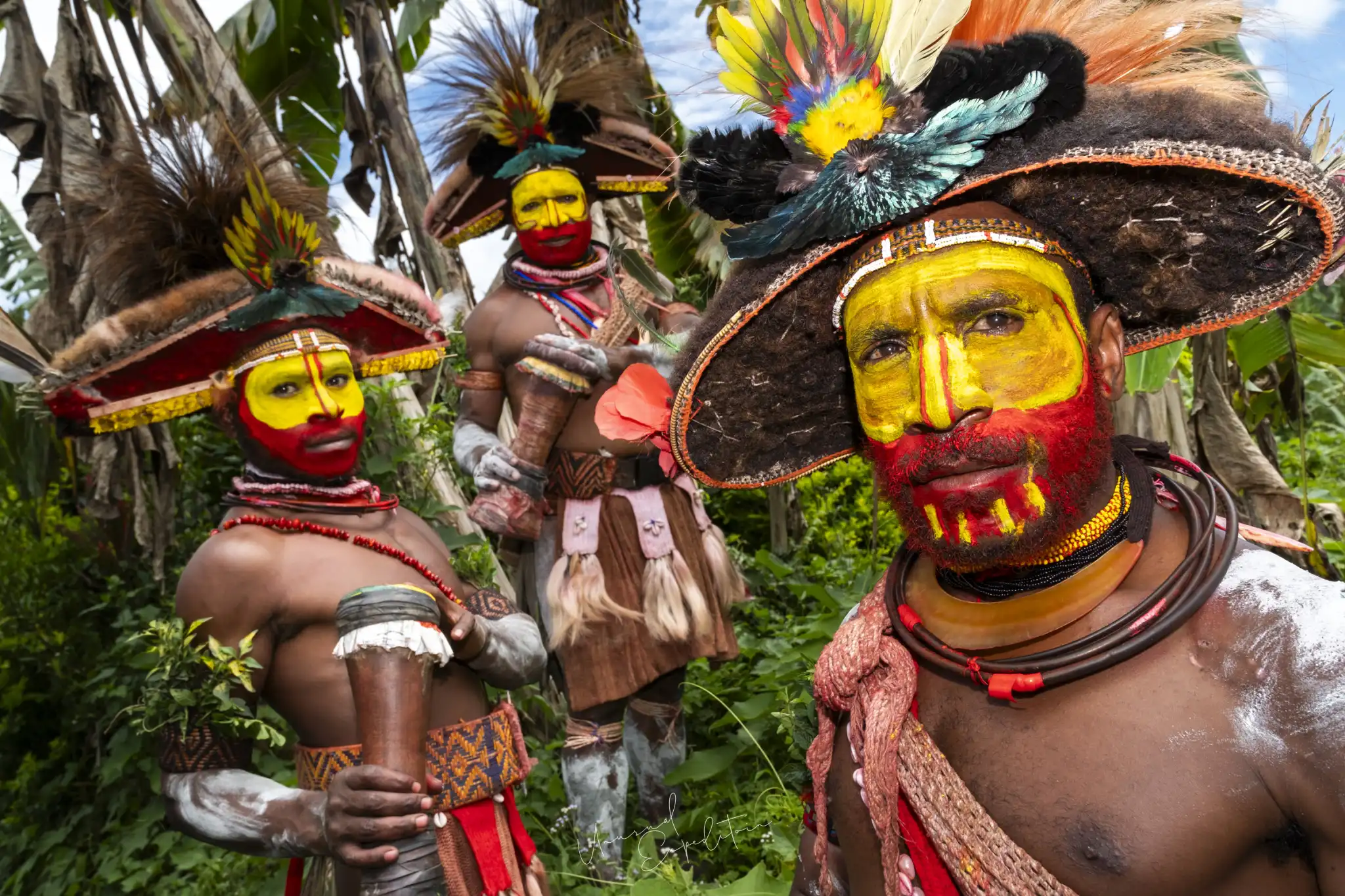
Huli wigmen are men of the Huli people of Hela Province in the Papua New Guinea Highlands, famous for ceremonial wigs woven from their own hair and decorated with feathers and everlasting flowers, worn with yellow and red face paint. They are the most photographed people in Papua New Guinea and among the most rewarding portrait subjects anywhere. Here are our own Huli wigmen images, what the wigs and paint mean, and how we photograph the Huli, as part of our Papua New Guinea Highlands guide.
Huli wigmen of Papua New Guinea: who they are
The Huli are one of the largest groups in the Highlands, living in the valleys around Tari in Hela Province. Their land is a patchwork of gardens enclosed by deep ditches and earth walls, with homesteads scattered rather than gathered in villages. Men traditionally lived apart from women in their own houses, and much of Huli ceremonial life, including the wigs, belongs to the men. The name "wigmen" was given by outsiders, but the Huli wear it with pride, and their dress has become a symbol of Papua New Guinea itself.
Huli wigmen culture: the wig schools
A Huli wig is made from the wearer's own hair. Young men enter a wig school, where they live under the guidance of a wig master and grow their hair for a long period, around eighteen months for a first wig, keeping it damp and shaped and following rules about food and contact with others. When the hair is ready it is cut and woven over a frame into a wig. The Pitt Rivers Museum in Oxford holds Huli wigs decorated with cassowary feathers and purple and yellow everlasting flowers, the same ornaments you still see today.
The everyday wig is a rounded shape; the ceremonial wig, worn for sing-sings, is broader and upturned at the sides like a hat, crowned with feathers of birds-of-paradise and parrots. On top of that comes the face paint: a yellow ochre mask, red on the cheeks and nose, and white lines, together with necklaces of shells and seeds, aprons of leaves and a woven belt.
Huli wigmen dance in which province?
The Huli wigmen dance belongs to Hela Province, which was created in 2012 from the western part of Southern Highlands Province, with Tari as its capital. Huli groups also travel to perform at the Mount Hagen Show in the Western Highlands and the Goroka Show in the Eastern Highlands, so you may photograph Huli wigmen far from Tari. In the dance, men move in lines with a bouncing step, chanting and beating kundu drums, the plumes on their wigs nodding in time.
Huli wigmen images: how we photograph them
We photograph the Huli in a session arranged with a community through a local guide, in their own gardens. The best Huli wigmen images come from three settings:
- Among banana and taro leaves. Green leaves around a yellow face are the classic Huli picture. Shoot from slightly below with a 24-70mm so the wig rises against the sky.
- In shade with a dark background. At the forest edge the sun comes from one side and the trees behind go black, and the yellow paint glows.
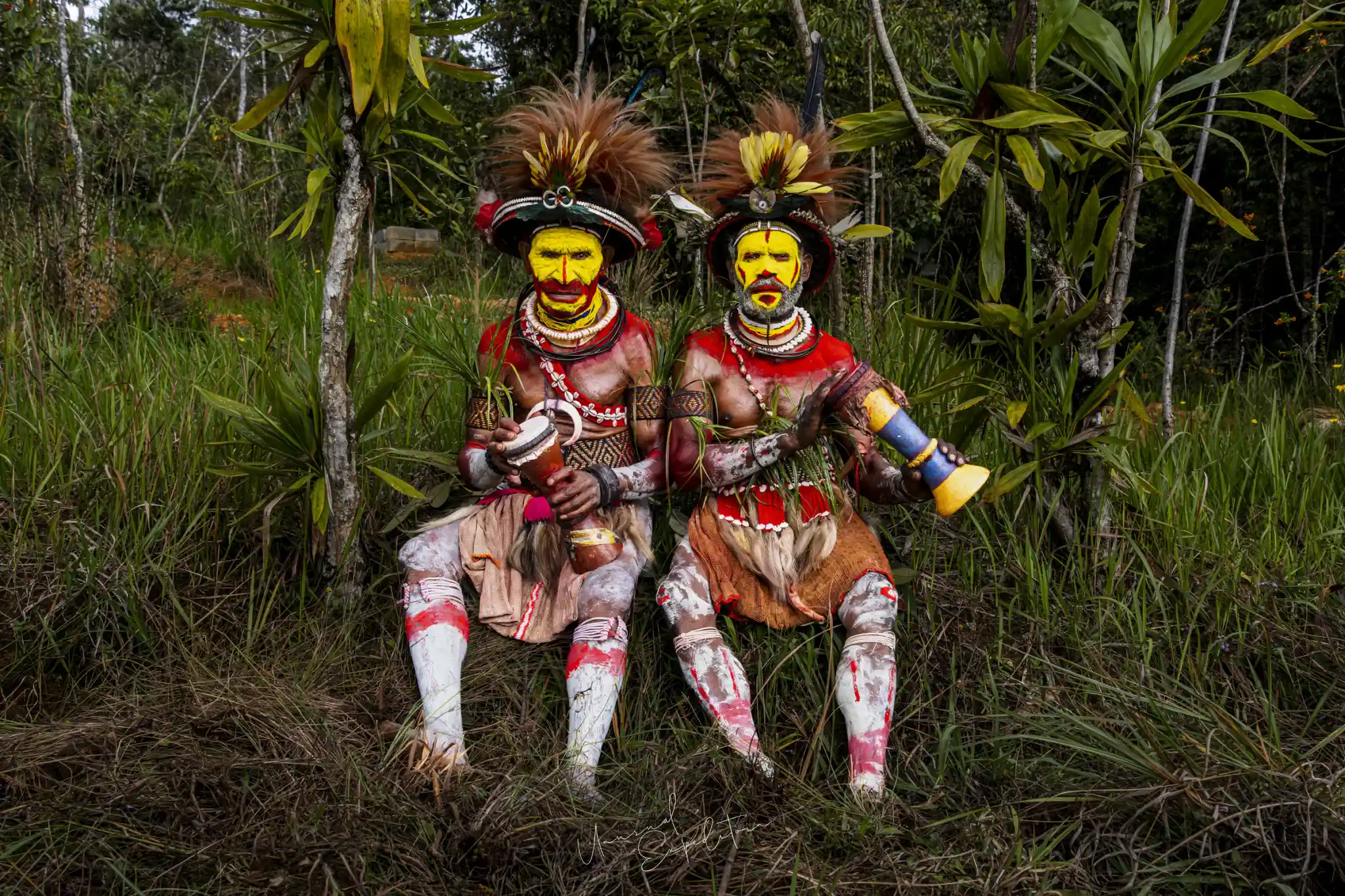
- By water. Huli men seated on rocks in a forest stream give a quieter, more natural picture than the posed portrait.
Most Huli men hold their pose with complete stillness and a direct, serious gaze; you do not need to ask for a smile. Ask instead for a slight turn of the head toward the light.
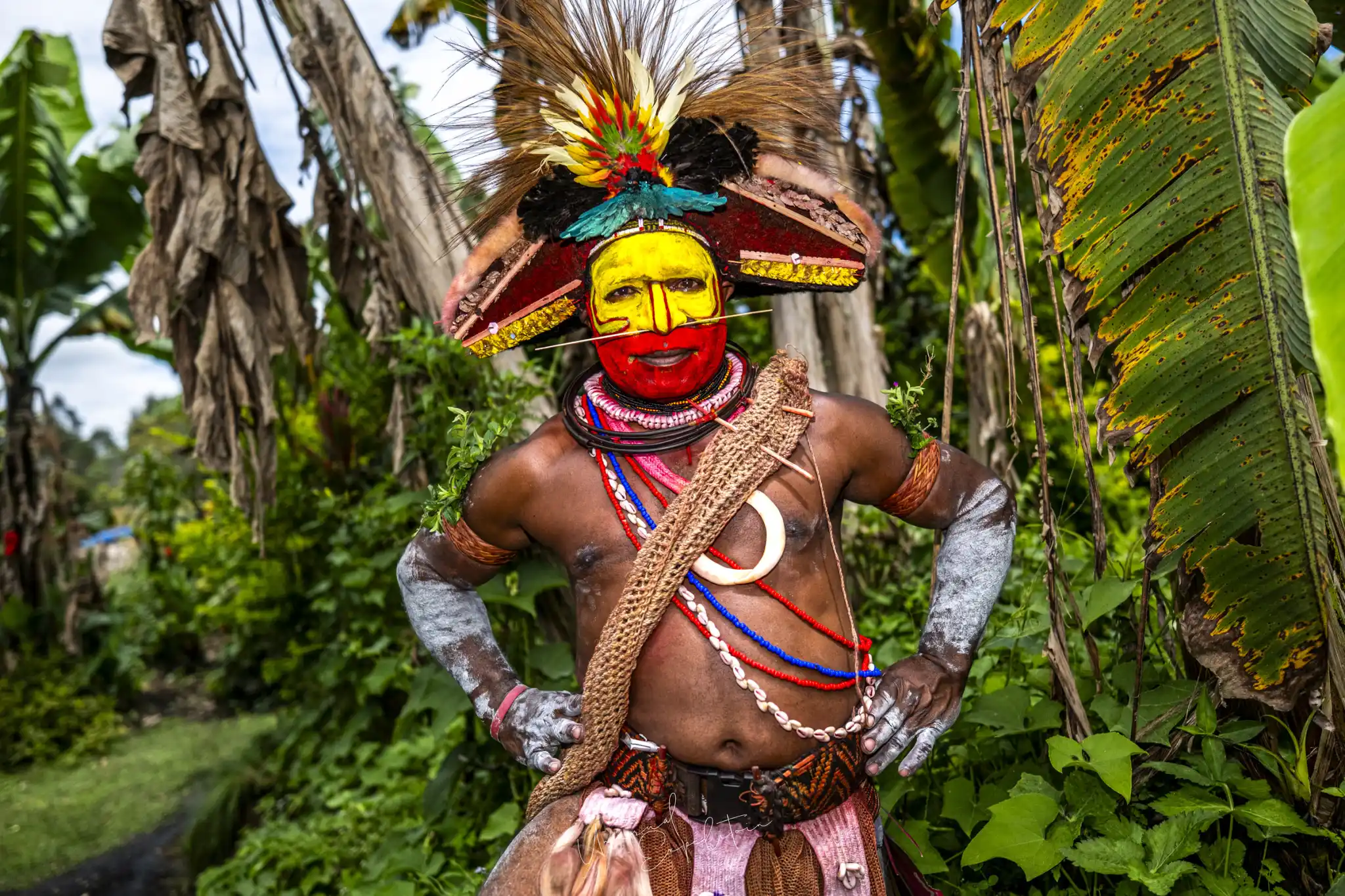
"The Huli are the most patient subjects I have ever photographed. A man will stand in the banana leaves for twenty minutes without moving while you get the light right, and then he will tell you how he wants to be shown."
Joseph Mak, tour leader, Unusual Expedition
Huli wigmen women
Huli women do not wear the wigs, which are men's regalia. For sing-sings, women in the Highlands wear their own dress: grass skirts, shell necklaces, face paint and, in many groups, tall headdresses of feathers. In Huli tradition women once wore mourning dress of grey clay and many strings of seeds. On our trips the women's sessions are often with other Highlands groups, and some of our strongest portraits are of women in red and white face paint under towers of cassowary feathers.
Huli wigmen tribe: the face painting
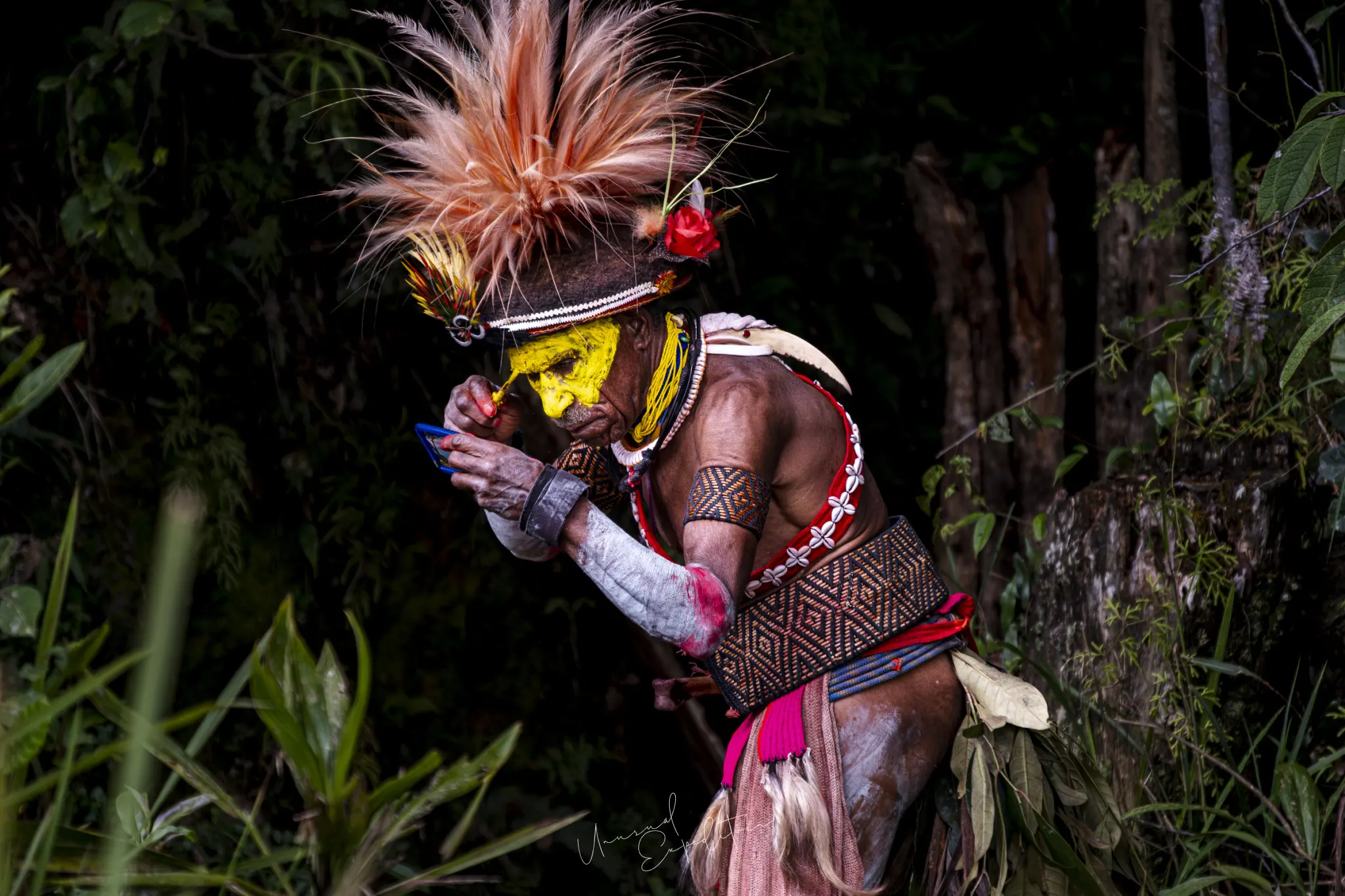
Watching a Huli man paint his face is a subject in itself. He works with a small mirror and a stick or his fingers, building the yellow mask first and then the red. Ask the guide whether the group is happy for you to photograph the preparation; most are, and the close frames of hands, mirror and paint often say more than the finished portrait. A 70-200mm lets you work close without crowding him.
Camera settings for Huli wigmen photos
| Setting | Lens | Exposure note |
|---|---|---|
| Garden, open shade | 24-70mm | Expose for the face; the sky can go bright |
| Forest edge, dark background | 24-70mm or 70-200mm | Underexpose slightly so the background stays black |
| Stream, groups | 16-35mm | Slow shutter for silky water if the men are still |
| Face painting close-ups | 70-200mm | Wide aperture, focus on the eyes or the mirror |
Yellow paint clips easily in sun, so watch the highlights more than the shadows.
Huli wigmen in the wider Highlands
Huli dress has influenced how the whole country presents itself: you will see Huli wigs on tourism posters and the covers of travel guides. In Hela itself, life outside the sing-sing is farming, family and church, and many men only wear the full ceremonial wig for occasions that matter. That is worth remembering when you photograph them: the wig is regalia, not costume, and the portrait is better when you treat it that way.
More Highlands portraits
The Huli are one of several groups we photograph. Compare them with the clay-masked Asaro mudmen and the painted Chimbu skeleton dancers, both from the eastern Highlands.
Photograph the Huli wigmen with us
Huli sessions are a fixed part of our private Papua New Guinea photography trips. Upcoming departures are on the Papua New Guinea photography tours page.
Papua New Guinea Highlands photography tours
The next Papua New Guinea Highlands departure is announced on the Papua New Guinea Highlands photography tours page, with previous expeditions and all the planning guides.
Explore Papua New Guinea Highlands in depth
- Papua New Guinea Highlands Photography Guide: Tribes, Markets and BirdsPapua New Guinea
- Birds of Paradise Papua New Guinea: A Photographer's GuidePapua New Guinea
- Skeleton Tribe Papua New Guinea: Photographing the Chimbu Skeleton DancersPapua New Guinea
- Asaro Mudmen Photos: the Mud Masks of the Eastern HighlandsPapua New Guinea
Upcoming Photo Tours
- Egypt Photo Tour – EgyptEgypt 12 Dec 2026 To 20 Dec 2026
- Inner Mongolia Winter Owl Photo Tour – ChinaChina 01 Jan 2027 To 04 Jan 2027
- Inner Mongolia Winter Photo Tour – ChinaChina 05 Jan 2027 To 11 Jan 2027
- Mekong And Central Highland Vietnam Photo Tour - VietnamVietnam 16 Jan 2027 To 24 Jan 2027