
Cairo Photo Spots: From the Giza Panoramic Viewpoint to the Citadel
Cairo photo spots: the Giza Panoramic Viewpoint, the Sphinx, Nazlet el-Samman rooftops, the Citadel, Al Muizz Street and the Nile.
The Cairo photo spots worth planning around are the Giza Panoramic Viewpoint, the Sphinx terrace below the pyramids, the rooftops of Nazlet el-Samman at dusk, the Citadel with the Mosque of Muhammad Ali, Al Muizz Street in Islamic Cairo, the coffeehouses around Khan el Khalili and the Nile corniche after dark. Giza wants the late sun, the old city wants the early hours, and the river wants the night. This guide belongs to our Cairo and Giza photography tour guide.
Every photograph here is our own, taken on our Egypt trips, and we hold the rights to it.
Cairo photo spots at a glance
| Spot | Best light | Lens | Notes |
|---|---|---|---|
| Giza Panoramic Viewpoint | Late afternoon | 24-70mm, 70-200mm | All the pyramids in one line |
| The Sphinx terrace | Morning to midday | 24-70mm | The Sphinx faces east |
| Nazlet el-Samman rooftops | Dusk and night | 16-35mm, 24-70mm | Pyramids over the town |
| Citadel and Muhammad Ali Mosque | Any time inside | 16-35mm | Lamps and domes |
| Al Muizz Street | Early morning | 24-70mm | Minarets above quiet lanes |
| Khan el Khalili coffeehouses | Evening | 24-70mm | People, ask first |
| Nile corniche | Blue hour | 24-70mm | City lights on the water |
A good Cairo day starts in the old city, gives the middle hours to museums and interiors, and ends at Giza.
Giza Panoramic Viewpoint: all the pyramids in one frame
The Giza Panoramic Viewpoint sits on the desert rise south west of the three main pyramids, and it is the one place where Khufu, Khafre and Menkaure line up with the smaller queens' pyramids in front. The Great Pyramid is the oldest of the Seven Wonders and the only one still standing, some four and a half thousand years old. From the viewpoint, cameleers ride across the foreground and give the scale. In late afternoon the sun swings round behind you and warms the faces of the pyramids; earlier in the day the light is flat and the haze over the city comes up. A 24-70mm takes the whole line, and a 70-200mm compresses a rider against one pyramid.
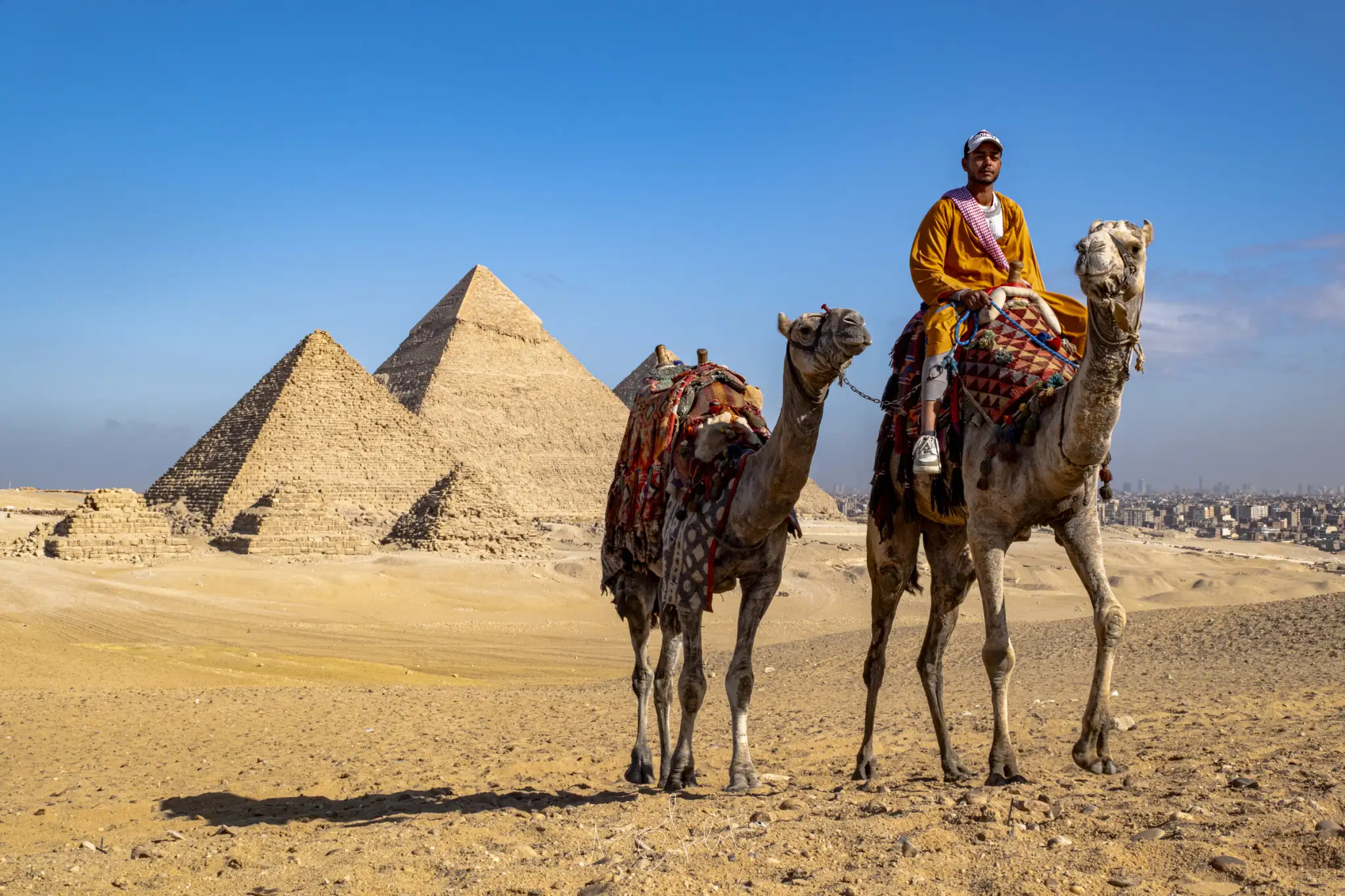
Cameleers here work for tips or agreed fees, so settle the terms before anyone poses. Our Giza pyramids photos article walks the plateau spot by spot.
The Sphinx terrace
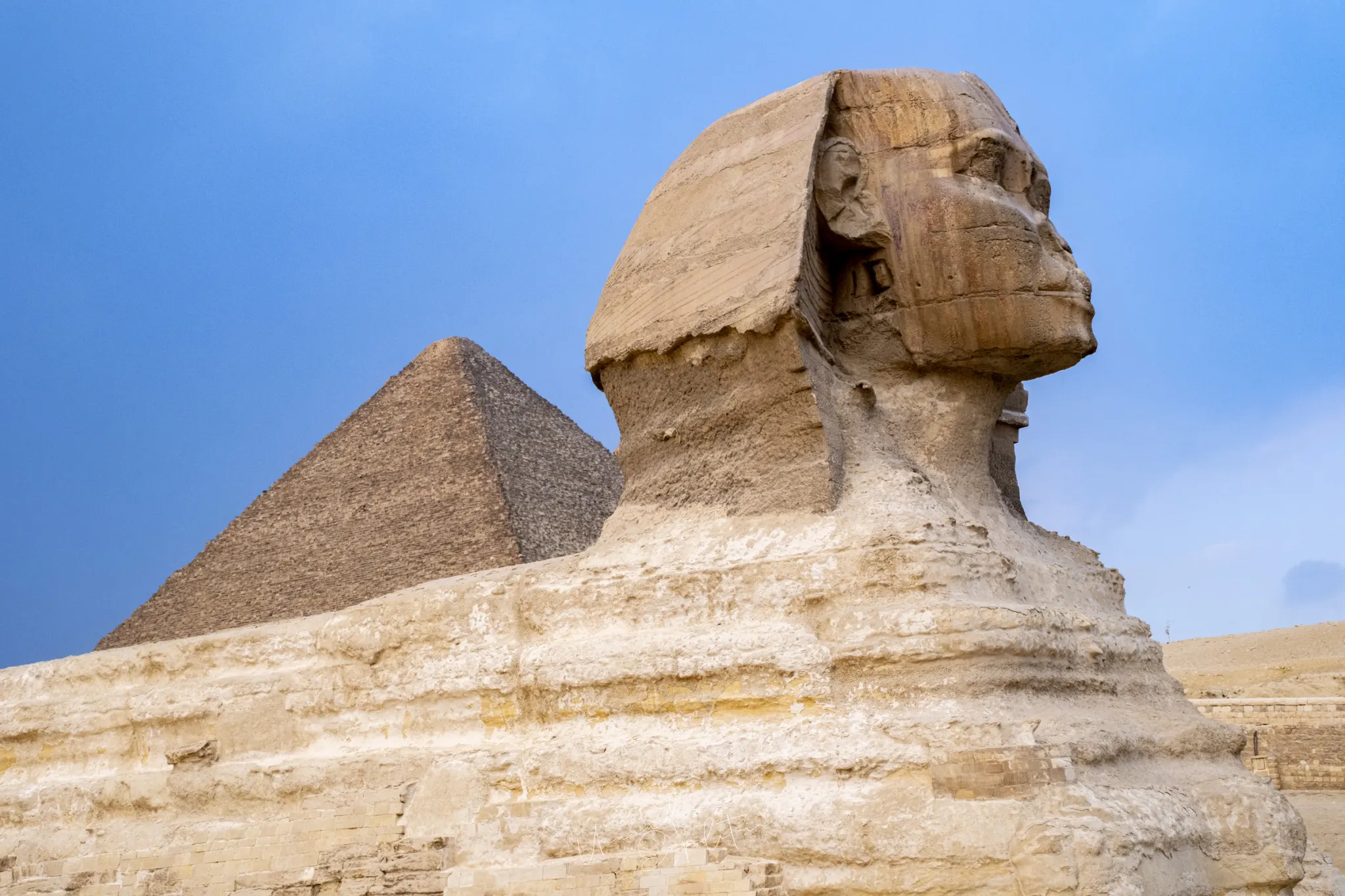
The Great Sphinx is cut from the bedrock beside the causeway to Khafre's pyramid, and it looks east towards the city. That orientation decides the light: the face is lit in the morning and falls into shadow as the afternoon goes on. From the viewing terrace beside the valley temple, a 24-70mm at the long end lines the head up against Khafre's pyramid behind, which is the picture on every postcard for a reason. The terrace is narrow and busy, so be patient for a gap in the crowd at the rail.
Nazlet el-Samman rooftops at dusk
Nazlet el-Samman is the village at the eastern foot of the plateau, facing the Sphinx, and its rooftop terraces are where the pyramids meet ordinary Cairo. At dusk the sky behind the pyramids turns violet and the lights of the cafes and houses come on below. After dark the pyramids are floodlit and sit above the town like a stage set. A tripod and a 16-35mm or 24-70mm work well here; many terraces belong to cafes and guesthouses, so buy a drink and ask.
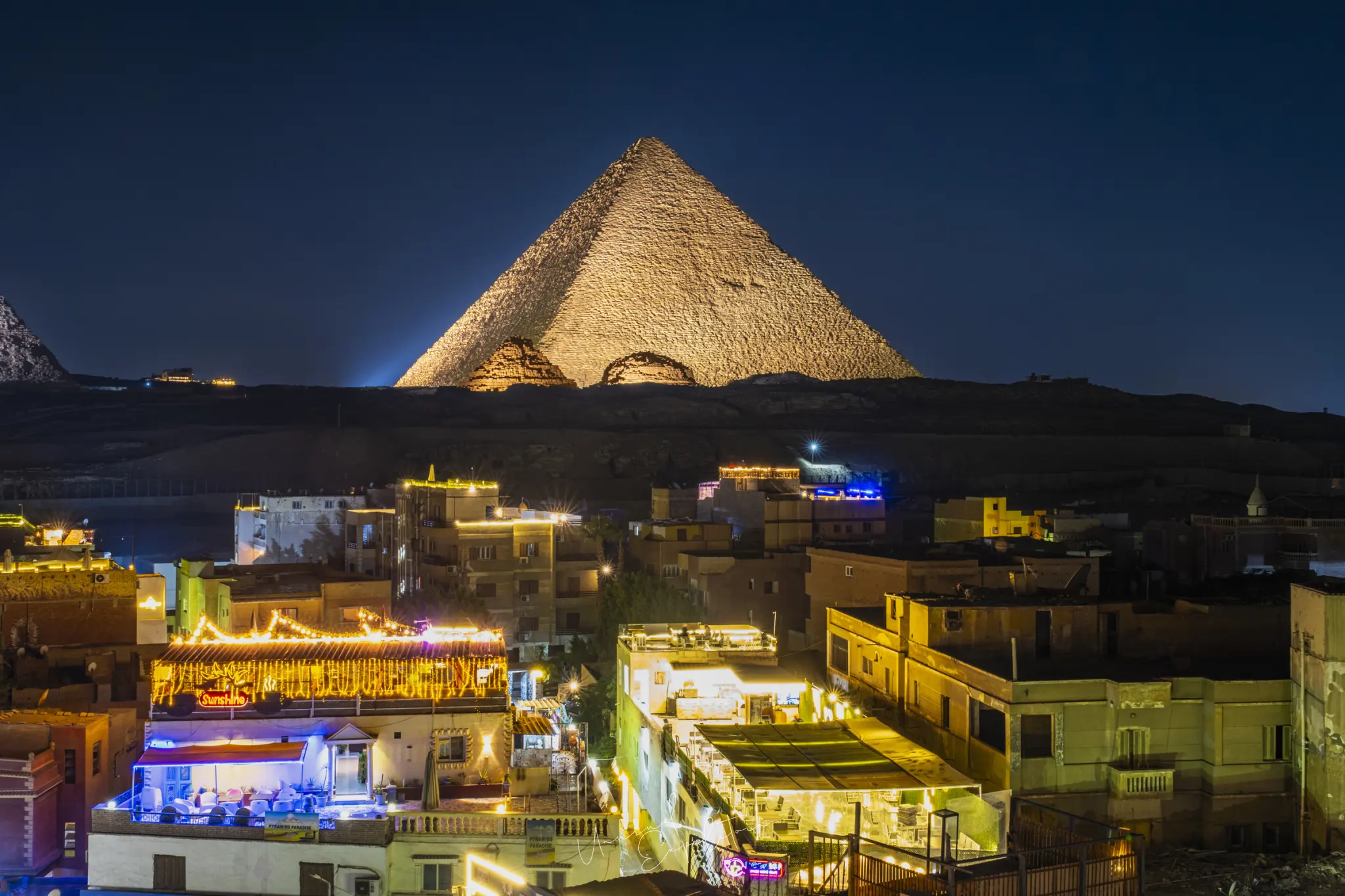
For exposures and the best terraces, read Giza pyramids at night.
The Citadel and the Mosque of Muhammad Ali
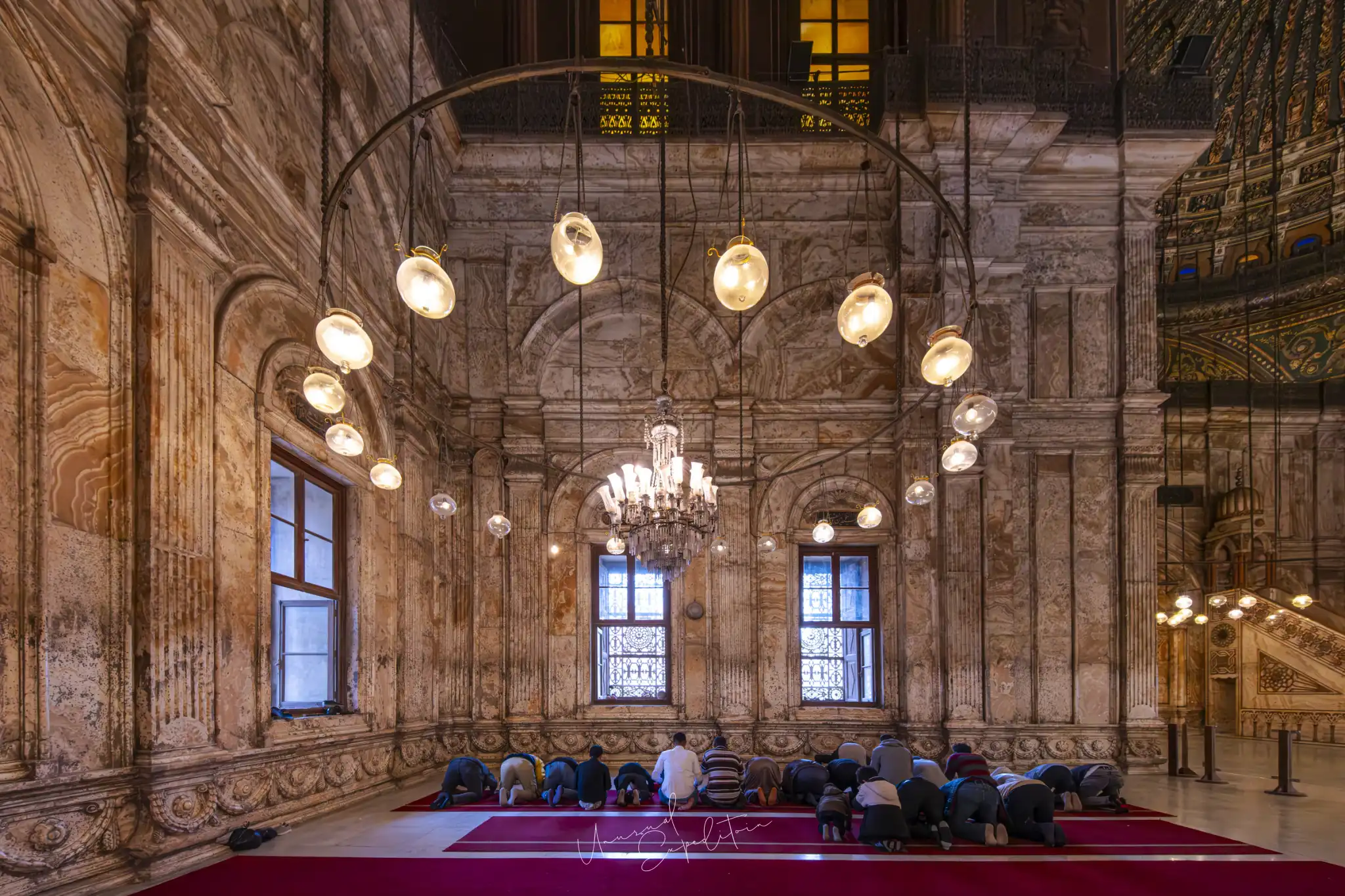
The Cairo Citadel was begun by Salah al-Din in the twelfth century and was the seat of Egypt's rulers for some seven hundred years. Its landmark is the Mosque of Muhammad Ali, built in the Ottoman style of the Istanbul mosques in the first half of the nineteenth century, clad in alabaster, with a central dome and four half domes. Inside, rings of hanging lamps fill the prayer hall under the painted dome. A 16-35mm from the back of the hall takes in the lamps and the arches; lie the camera on its back for the dome if nobody is in the way. Dress modestly and take your shoes off at the door. From the terrace outside, on a clear day, the city spreads west towards Giza.
Al Muizz Street in Islamic Cairo
Al Muizz Street was the main street of the Fatimid city, running from Bab al-Futuh and Bab al-Nasr in the north to Bab Zuweila in the south. UNESCO lists Historic Cairo as one of the world's oldest Islamic cities. The northern stretch is restored and largely closed to traffic, with the Mamluk complexes of Sultan Qalawun and Sultan Barquq at Bayn al-Qasrayn. Come early, before the shutters go up, when the low sun catches the minarets and the lanes are empty enough to see the facades. A 24-70mm is enough; look up as often as ahead.
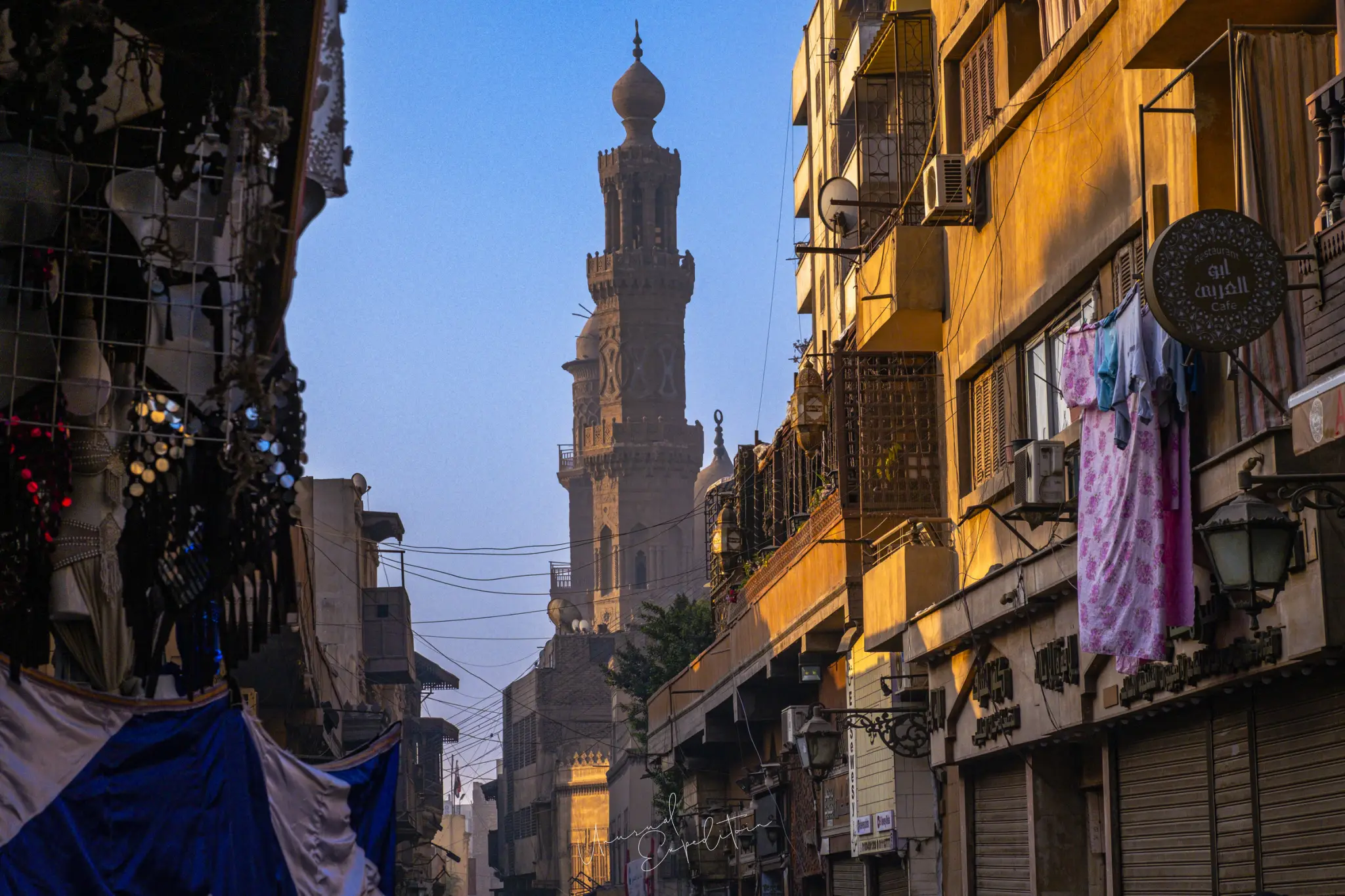
The old city has its own guide in Islamic Cairo photography.
Khan el Khalili and the coffeehouses
Khan el Khalili grew up as a trading quarter in the Mamluk period and is still a working bazaar. For photographers the draw is the coffeehouses on its edges, where men play tawla over glasses of tea, and the lamp sellers whose shops glow after dark. Evening is the time. Ask before you photograph anyone at close range; a nod and a smile usually settle it, and a few people will say no. Our Cairo street photography article has more on working with people here.
The Nile corniche after dark
The Nile corniche runs past Garden City, Downtown and Zamalek, and at blue hour the hotel towers and the Cairo Tower on Gezira Island reflect in the river. The bridges give the best height. Keep the shutter speed long enough to smooth the water and short enough to hold the feluccas that still sail at night.
"In Cairo I spend the morning in the old city and the evening at Giza. Get that order right and the city gives you its best light twice in one day."
Joseph Mak, tour leader, Unusual Expedition
Rules for cameras in Cairo
Egypt's Ministry of Tourism and Antiquities allows personal photography without flash at its sites. Drones need prior permission from the Egyptian Civil Aviation Authority, and photographing security personnel, checkpoints and government buildings is not allowed. The UK Foreign, Commonwealth and Development Office notes that professional equipment needs a permit. Keep the camera down near police posts and you will have no trouble.
Photograph Cairo and Giza with us
Cairo and Giza open our Egypt Photo Tour, which continues south to Aswan, Abu Simbel and Luxor. The current departure is on the Egypt photography tours page, and photographers from anywhere are welcome.
Join the Cairo and Giza photography tour
Egypt Photo Tour – Egypt departs 12 Dec 2026 To 20 Dec 2026, led by Joseph Mak. Small group, photography first. All Cairo and Giza photography tours.
Explore Cairo and Giza in depth
- Cairo and Giza Photography Tour Guide: Pyramids, the Old City and the NileEgypt
- Where to Eat in Cairo, Egypt: Five Restaurants and the Dishes to TryEgypt
- Islamic Cairo Photography: Al Muizz Street and the CitadelEgypt
- Giza Pyramids Photos: Viewpoints, Camels and CameleersEgypt
- Giza Pyramids at Night: Sunset, Dusk and the Sound and Light ShowEgypt
- Cairo Street Photography: Coffeehouses, Markets and FacesEgypt
Upcoming Photo Tours
- Egypt Photo Tour – EgyptEgypt 12 Dec 2026 To 20 Dec 2026
- Inner Mongolia Winter Owl Photo Tour – ChinaChina 01 Jan 2027 To 04 Jan 2027
- Inner Mongolia Winter Photo Tour – ChinaChina 05 Jan 2027 To 11 Jan 2027
- Mekong And Central Highland Vietnam Photo Tour - VietnamVietnam 16 Jan 2027 To 24 Jan 2027