
Where Are the Best Photo Spots in Central Mongolia
Central Mongolia photo spots: Ulaanbaatar from above, the railway, herding valleys, Hustai, Elsen Tasarkhai dunes, Terelj and Orkhon.
The best photo spots in central Mongolia are Ulaanbaatar seen from above and along its railway, the herding valleys of the steppe, the deer and wild-horse hills of Hustai National Park, the sand dunes of Elsen Tasarkhai with their camels, the granite of Gorkhi-Terelj National Park and the old capital in the Orkhon Valley. In winter the light is low all day, the snow cleans up the land, and the hours around sunrise and sunset give the strongest pictures at every one of them.
This guide belongs to our central Mongolia photography tour guide, which explains how the region fits a trip. Here we cover where to stand, which way the light falls, the lens and the access rules for each spot. The places we photographed on our early-winter trip lead; the others are described from public sources and named as such.
Where are the photo spots in central Mongolia?
Central Mongolia is the belt of steppe, hills and river valleys around and west of Ulaanbaatar, where most of the country's people and herds live. It has no single postcard view. The photographs come from wide, open ground with something living on it, and from the capital, which is a subject in itself in winter. Distances are large and the tracks are rough, so a local driver chooses the valley and the angle on the day. The table below sets the spots side by side.
| Spot | Subject | Best light | Lens | We photographed it |
|---|---|---|---|---|
| Ulaanbaatar from above | City, haze, mountains | Sunrise and dusk | 24-70mm and 70-200mm | Yes |
| Ulaanbaatar railway | Trains, snow, apartment blocks | Clear morning | 24-70mm | Yes |
| Herding valleys | Horse herds, riders, flocks | Morning and late afternoon | 70-200mm | Yes |
| Hustai National Park | Takhi, red deer, steppe hills | Early and late | 100-400mm | Deer on the steppe hills only |
| Elsen Tasarkhai dunes | Sand, camels, sunset | Sunset and blue hour | 24-70mm | Dunes of the centre, not named |
| Gorkhi-Terelj National Park | Granite, larch, rivers | Morning side light | 24-70mm | No |
| Orkhon Valley and Kharkhorin | Monastery walls, river valley | Late afternoon | 24-70mm | No |
The first five carry most of the pictures on a winter trip; the last two suit a summer route.
Ulaanbaatar from above
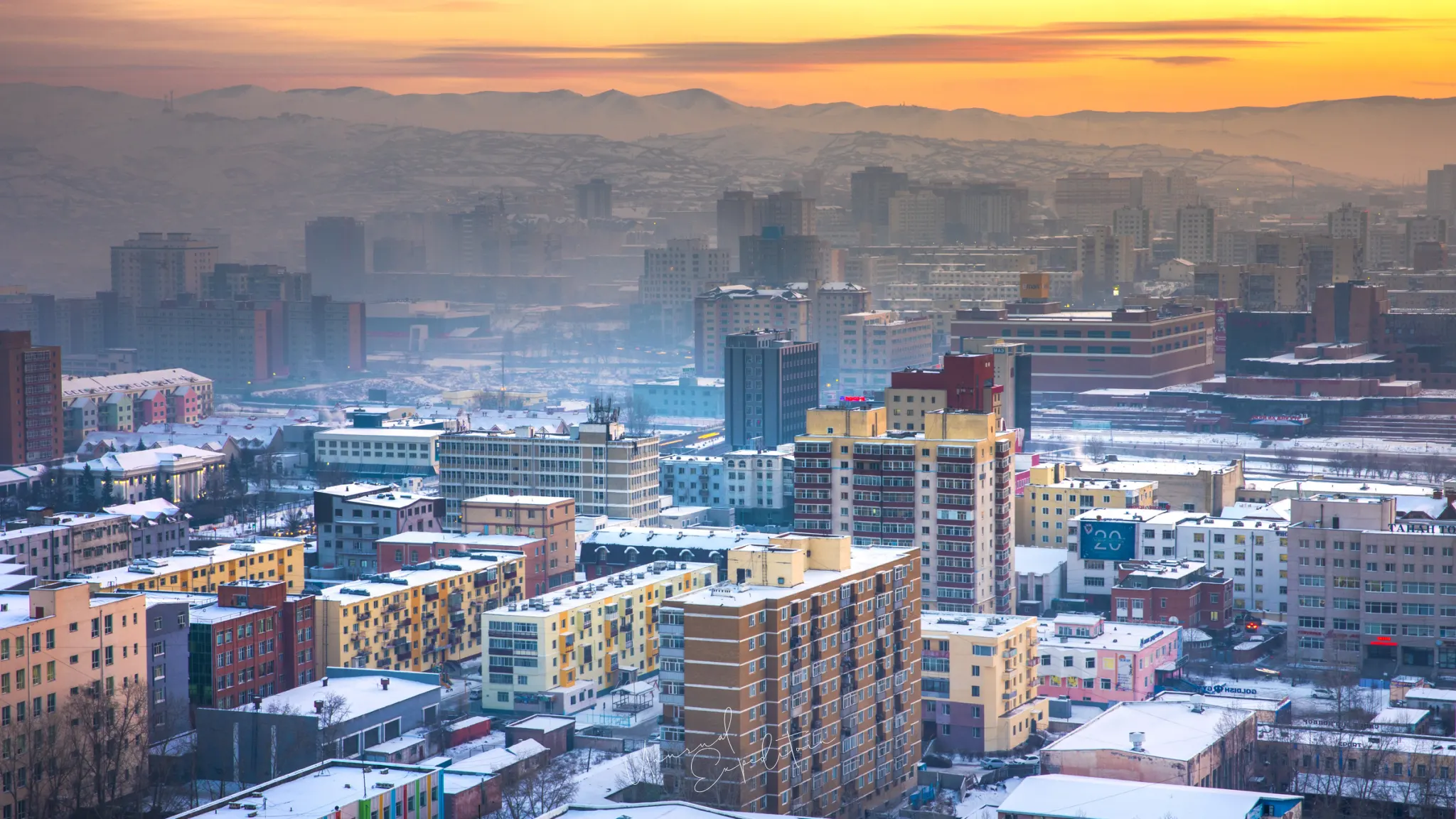
Ulaanbaatar lies in the valley of the Tuul river with mountains on every side, and in winter a high window or a hillside turns the whole city into one frame. At sunrise the ranges behind the city catch colour while the streets below are still blue, and the haze from the ger districts, which UNICEF Mongolia describes as among the worst air pollution in the world in winter, softens the layers. A 70-200mm compresses tower blocks against the mountains; a 24-70mm takes the full sweep. Zaisan Hill, south of the centre, is the public viewpoint that Lonely Planet lists, with its Soviet-era memorial. Our Ulaanbaatar in winter guide covers the city in more detail.
The railway through Ulaanbaatar
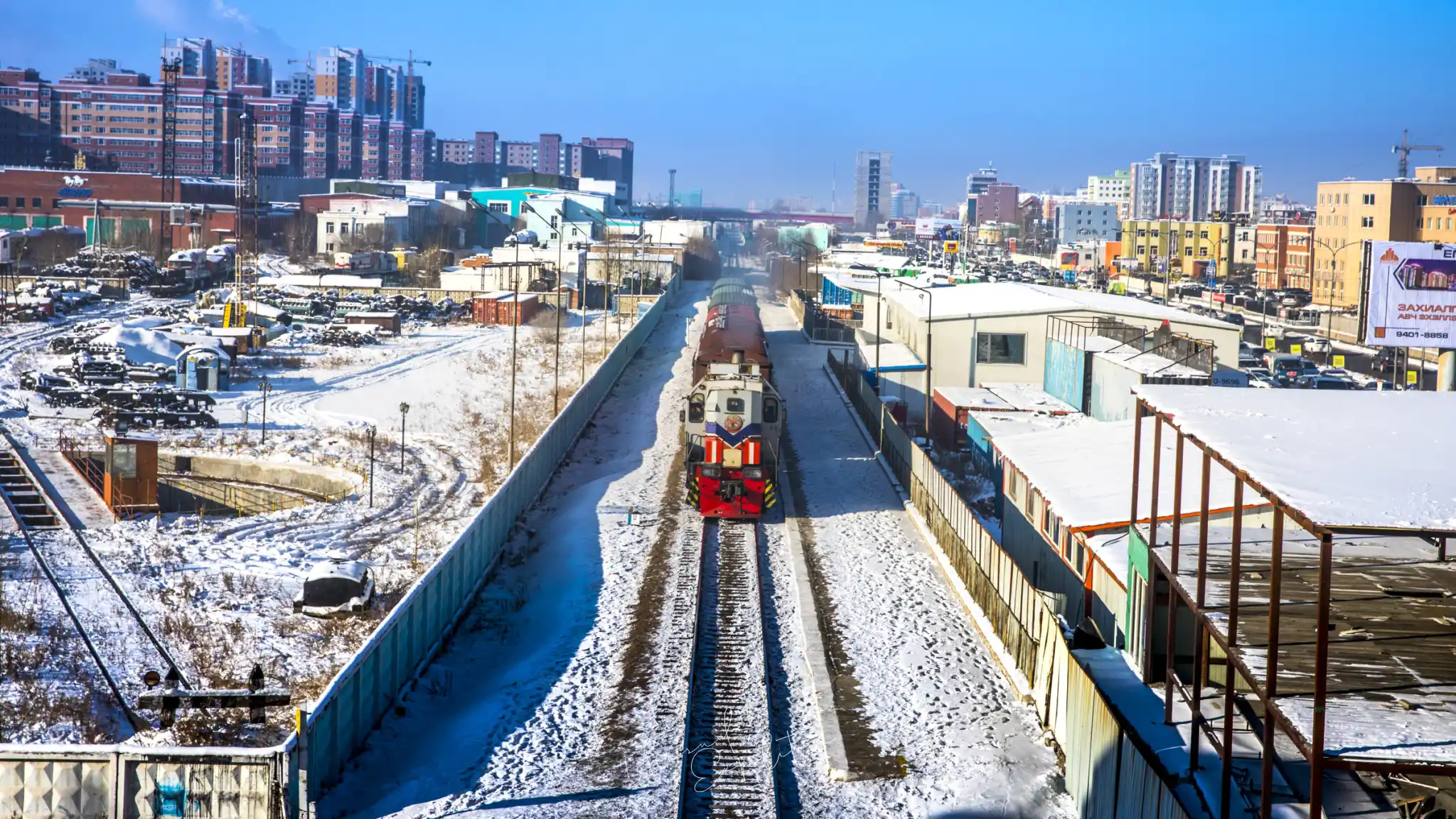
The Trans-Mongolian Railway runs through Ulaanbaatar on its way between Russia and China, and the tracks cut a long straight line through the snowy city. From a footbridge or a raised road above the lines, the rails make leading lines towards the apartment blocks, and a red locomotive in fresh snow is a frame that says winter in Mongolia as clearly as any herd. Morning light on a clear day gives the cleanest colour. Stay on public bridges and roads, never on the tracks, and be ready to stop if railway staff ask you to: rail yards are sensitive places in many countries.
Herding valleys on the steppe
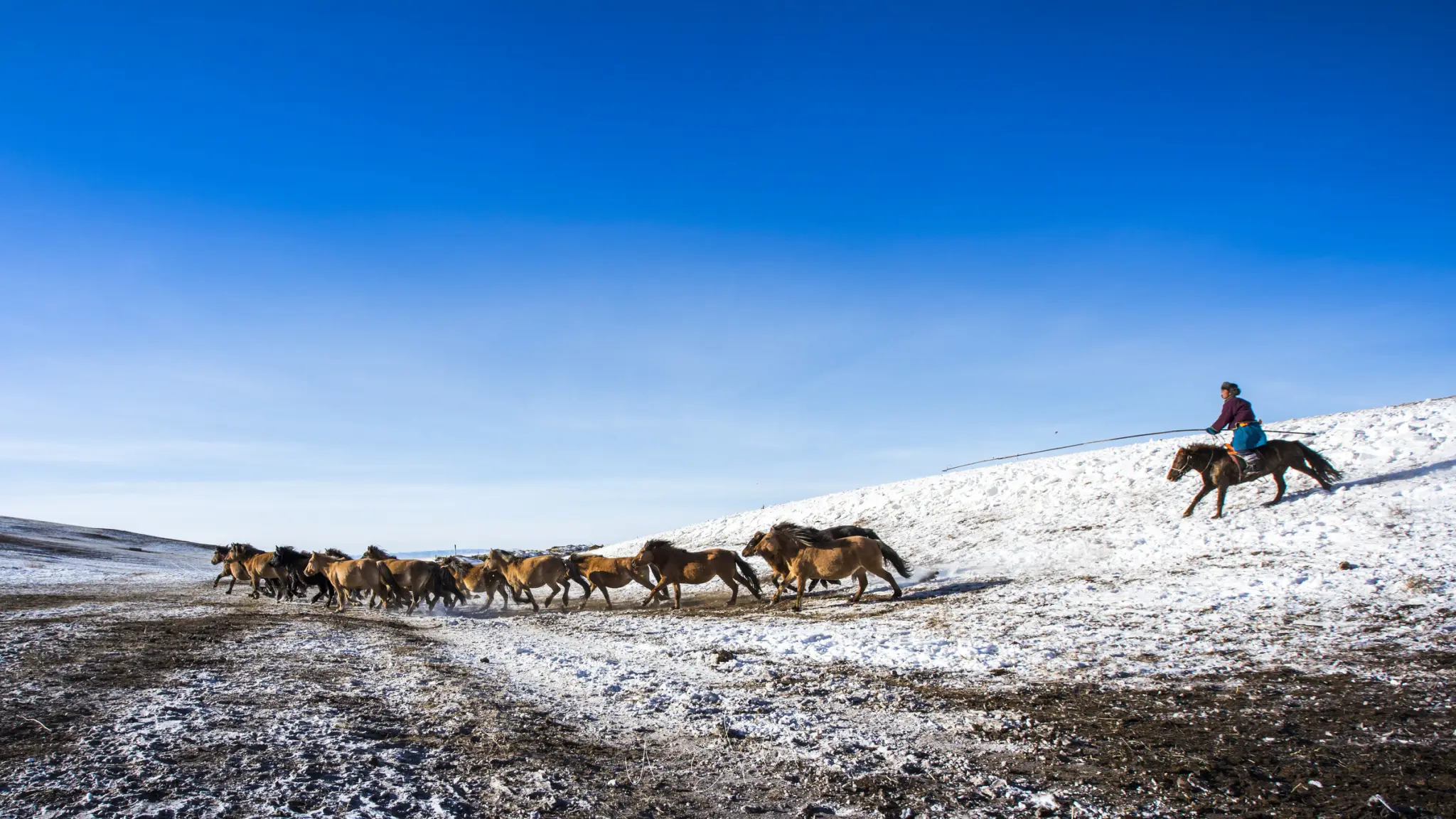
Outside the capital, the photo spots are wherever a family moves its animals. Horse herds driven by a rider across a snowy slope, flocks streaming out of a corral at first light and cattle crossing a frozen stream are the pictures of the central steppe, and you find them by staying with a herding family, not by driving to a viewpoint. Stand to the side of the herd's path with a 70-200mm, keep the vehicle well back, and let the rider set the pace. The winter sun stays low, so the morning and late afternoon both give long shadows on the snow. Our Mongolia winter tour guide explains what a winter trip on the steppe involves.
Hustai National Park and the deer hills
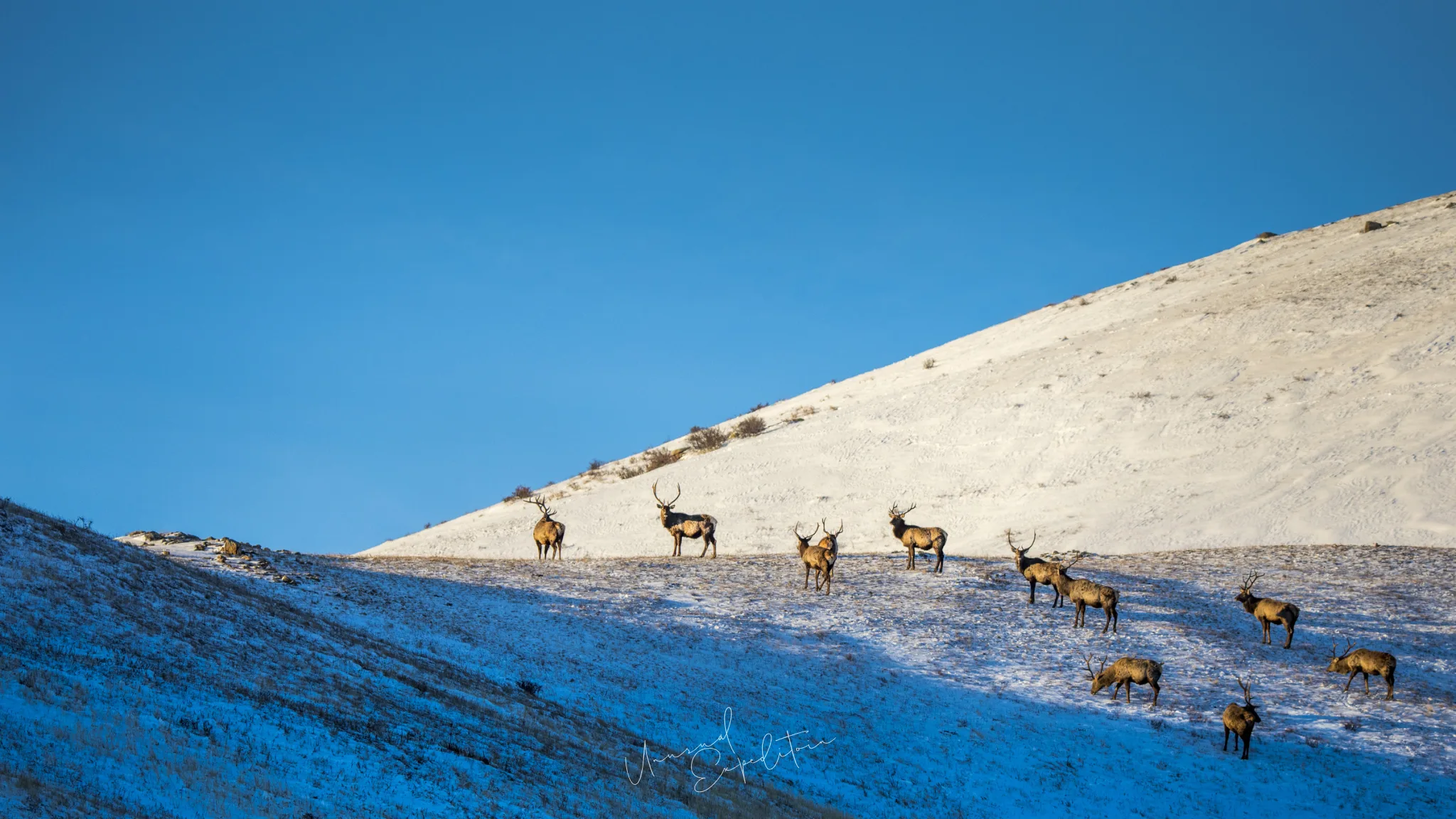
Hustai National Park, west of Ulaanbaatar, is where the Przewalski's horse, the takhi, was brought back to Mongolia: the IUCN records that the first horses arrived in 1992 and the park now holds one of the largest free-ranging herds. The steppe hills there also carry red deer and marmots in the warmer months. We did not photograph the takhi; our frames are of red deer strung along a snowy ridge on the central steppe. For both, a 100-400mm and patience matter more than position, and early and late light brings the animals out onto the open slopes. Stay on the park's tracks and follow the rangers' rules on approach distances. More on the animals is in our Mongolia wildlife guide.
"Central Mongolia taught me to stop driving and start waiting. Find a ridge, find a family that is moving its animals, and the steppe will bring the picture to you."
Joseph Mak, tour leader, Unusual Expedition
Elsen Tasarkhai sand dunes
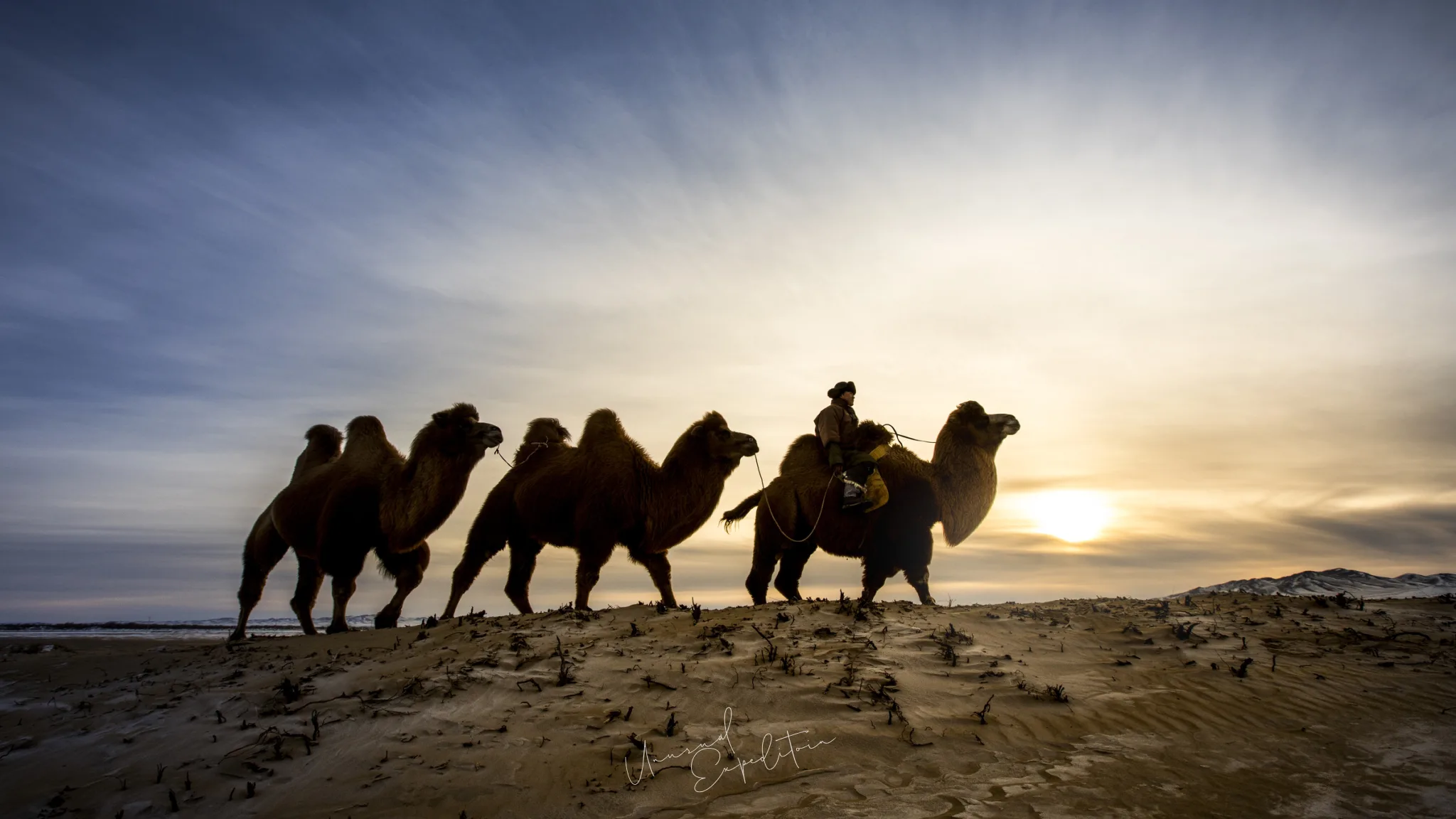
The Elsen Tasarkhai sand dunes, which visitors call the "mini Gobi", run as a long belt beside the Khögnö Khan mountains in the centre of the country, and they are the easiest place to photograph sand and camels without going to the south. Our own dune frames are from the dunes of central Mongolia and we do not caption them with this name. The spot works at sunset: walk up a low crest, put the sun behind a line of Bactrian camels and expose for the sky so they turn to silhouettes. A 24-70mm is enough. In winter, snow lies in the hollows between the dunes, which gives a picture the Gobi rarely does. For the animals themselves, read camels in Mongolia.
Gorkhi-Terelj National Park
Gorkhi-Terelj National Park lies north-east of Ulaanbaatar, and Lonely Planet describes it as alpine scenery of granite outcrops, larch forest and river valleys, with Turtle Rock as its best-known formation. It is the closest wild landscape to the capital, so it is busy in summer with ger camps and day visitors. For photographs, the granite works best in side light in the morning, with a 24-70mm and a person or a horse for scale. We have not photographed Terelj, so treat this as a pointer, not a field report.
Which of the most beautiful places in Mongolia sit in the Orkhon Valley?
The Orkhon Valley Cultural Landscape is a UNESCO World Heritage Site, inscribed in 2004, that covers pasture along the Orkhon river, the ruins of Kharkhorum, the capital of the Mongol Empire, and Erdene Zuu, which UNESCO and other sources call the earliest surviving Buddhist monastery in Mongolia, founded in 1586 and ringed by a wall of stupas. The wall and its stupas in late afternoon light are the classic frame; herders still graze the valley. It is a summer subject and further from Ulaanbaatar than the other spots, and we have not photographed it ourselves.
Photograph central Mongolia with us
We run central Mongolia as a private trip on request, built around herding families and the winter light. See private tours and the Mongolia photography tours page.
Central Mongolia photography tours
The next Central Mongolia departure is announced on the Central Mongolia photography tours page, with previous expeditions and all the planning guides.
Explore Central Mongolia in depth
- Central Mongolia Photography Tour Guide: Steppe, Herders and Dunes near UlaanbaatarMongolia
- Ulaanbaatar in Winter: Photographing the Coldest CapitalMongolia
- Mongolian Nomads Today: Photographing a Herding FamilyMongolia
- Mongolian Ger: Inside and Outside the Nomad's HomeMongolia
- Mongolia Winter Tour: Herding, Snow and Cold on the SteppeMongolia
- Mongolia Wildlife: Red Deer, Vultures and Yaks on the Winter SteppeMongolia
- Is Mongolia Mostly Desert? Sand Dunes, Snow and FirelightMongolia
- Camels in Mongolia: Photographing Bactrian Camels in WinterMongolia
Upcoming Photo Tours
- Egypt Photo Tour – EgyptEgypt 12 Dec 2026 To 20 Dec 2026
- Inner Mongolia Winter Owl Photo Tour – ChinaChina 01 Jan 2027 To 04 Jan 2027
- Inner Mongolia Winter Photo Tour – ChinaChina 05 Jan 2027 To 11 Jan 2027
- Mekong And Central Highland Vietnam Photo Tour - VietnamVietnam 16 Jan 2027 To 24 Jan 2027