
Cho Lon Chinatown Saigon: Photos of the Temples, Shops and Dragon Dances
Cho Lon, Chinatown Saigon, in photos: incense halls, the On Lang assembly hall, dragon dances, Binh Tay market and old shophouses.
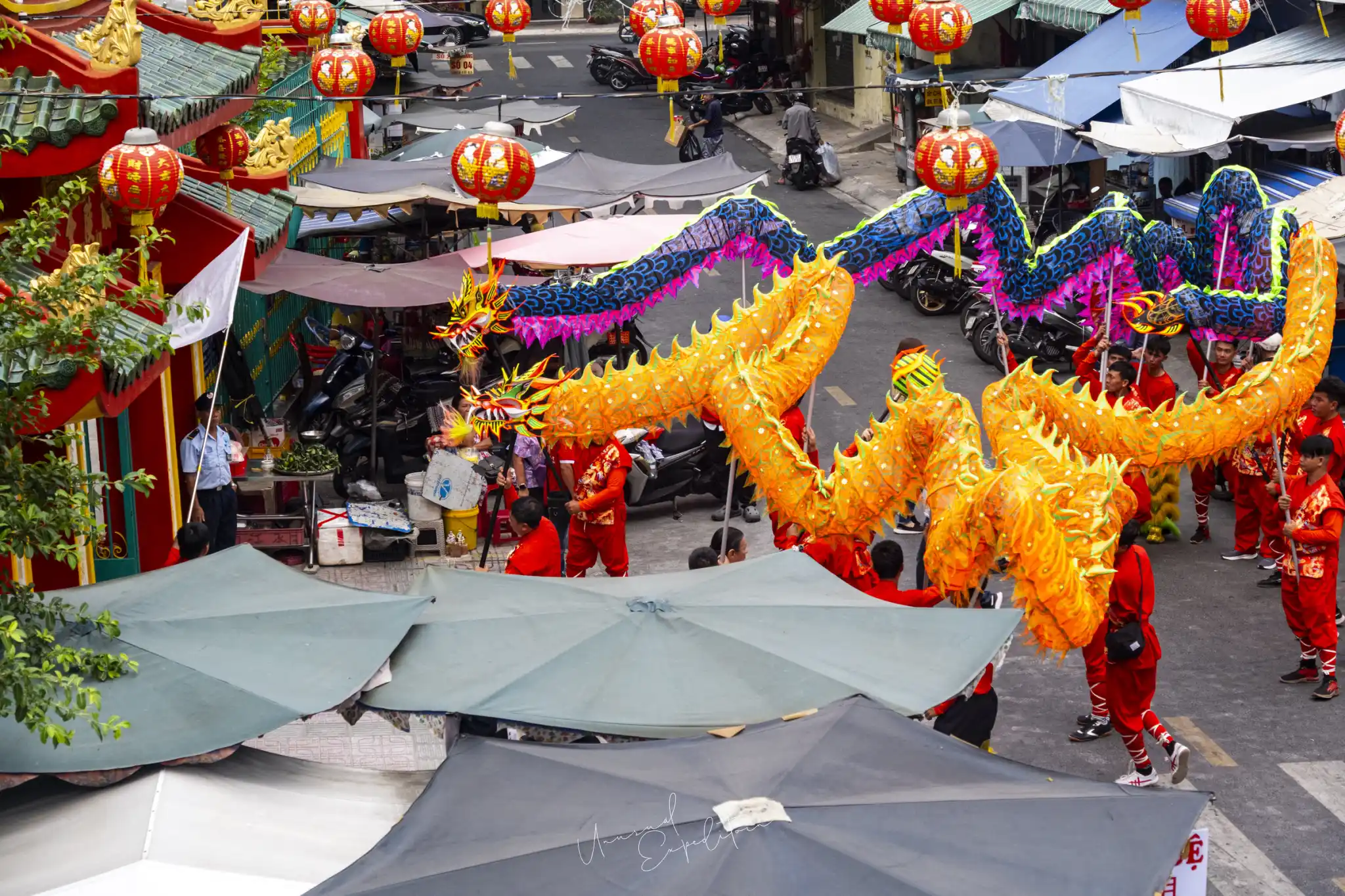
Cho Lon Chinatown Saigon is the old Chinese quarter of Ho Chi Minh City, spread across what were Districts 5 and 6, and it is the richest morning a photographer can spend in the city. The pictures are in the temples and assembly halls full of incense, the shophouses where calligraphers and herbalists still work, the kitchens open to the street and, on festival and feast days, the dragon and lion dances that stop the traffic. These are our own Cholon photos and how they were made.
Cholon is one part of our Saigon photography tour guide, which places it among the city's markets, alleys and night streets. The name means big market, and the quarter grew from the trading community of Chinese families who settled here from the eighteenth century, mostly Cantonese, Fujianese, Teochew and Hakka. Their guild halls are still the landmarks.
Cholon Vietnam: what the quarter looks like today
Cholon does not announce itself. There is no gate and no themed street, just a long grid of three and four storey shophouses with Chinese characters on the signboards above Vietnamese ones, wholesale shops spilling sacks of dried goods onto the pavement, and a temple or assembly hall every few blocks. The streets are busy with wholesale trade from early morning, motorbikes loaded impossibly high, and the light comes down between the buildings in narrow strips. For a photographer that means two kinds of picture: the street from a corner, with signage and traffic as layers, and the interiors, where incense smoke turns the low sun into solid beams. A 24-70mm covers the street; a 16-35mm earns its place inside the halls.
Chinatown Ho Chi Minh City: the temples and assembly halls
The assembly halls were built by the old dialect communities as temple, meeting room and charity in one. Thien Hau temple on Nguyen Trai street, dedicated to the sea goddess Mazu, is the best known; most sources, including the Vietnam Airlines travel guide, date its first building to around 1760 and credit the Cantonese community. Huge incense coils hang from its roof beams, and on a clear morning the sun enters the courtyard at an angle that lights the smoke. Our Saigon photo tour article explains where to stand there. Quieter halls nearby, such as the On Lang assembly hall, better known as the Quan Am pagoda, have the same carved roofs and fewer visitors. Stand to the side of the altar, use no flash, and wait for someone to walk into the light rather than placing them there.
Dragon and lion dances in Cholon
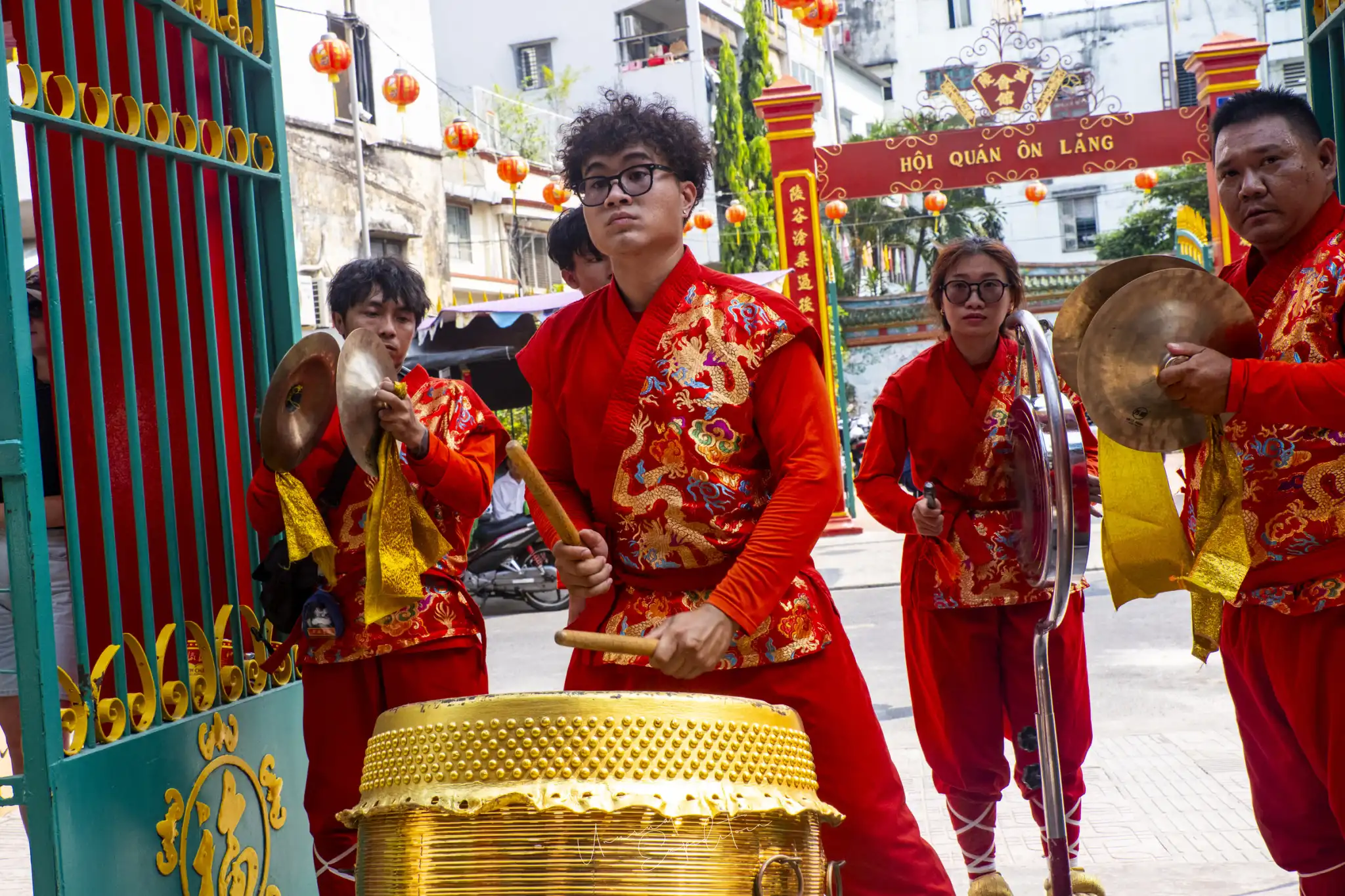
Cholon is where Saigon dances. Around Tet, the Lantern Festival and the feast days of individual temples, troupes in red uniforms carry long dragons on poles through the streets, drummers and cymbal players set the pace, and lion dancers visit shops to bring luck for the year. The dance in these frames was part of a temple celebration in the quarter, with the drummers playing at the gate of the On Lang assembly hall. The best position is a balcony or an upper floor over the street, which turns the dragon into a curve over the market umbrellas; at street level, stay behind the drummers and use a fast shutter, because the dragon changes direction without warning. Ask at the temple for the date of its own celebrations, which follow the lunar calendar and move every year.
Binh Tay market and the wholesale streets
Binh Tay market is the wholesale heart of Cholon, a courtyard building from the late 1920s with a clock tower and galleries on the upper floor. It closed for a two year restoration and reopened in November 2018, as VnExpress and Tuoi Tre reported at the time, with more than a thousand stalls inside. The building photographs best from the upper gallery looking down into the courtyard, where the sellers sit among their sacks. The streets around it are just as good: rows of shops selling paper offerings, joss sticks, dried fish and ceramics, each with its own colour, and porters moving goods on bikes and trolleys. Visit early, keep the bag small, and remember that this is a working market where you are in the way of people earning a living.
Shophouses, calligraphers and kitchens
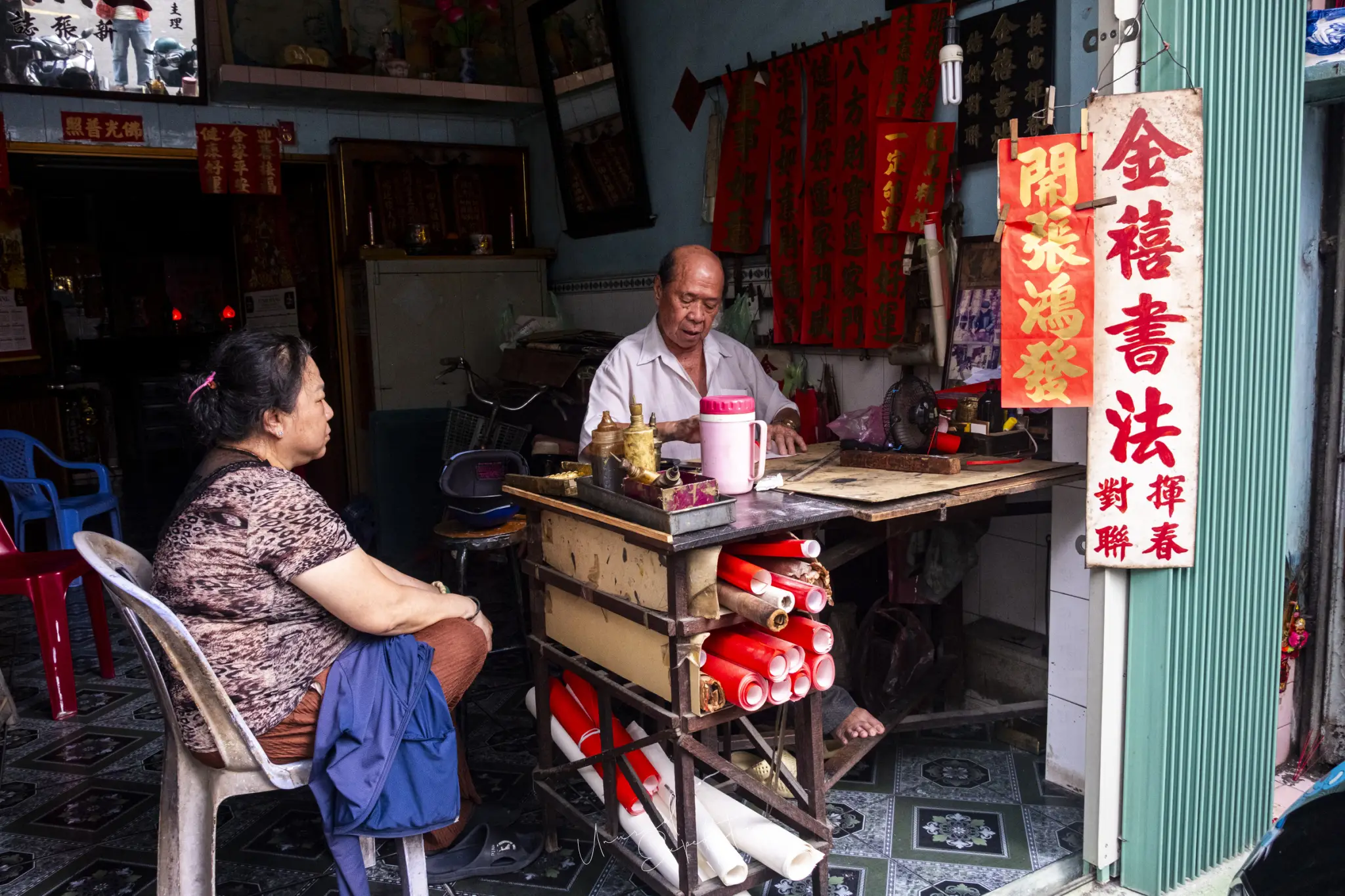
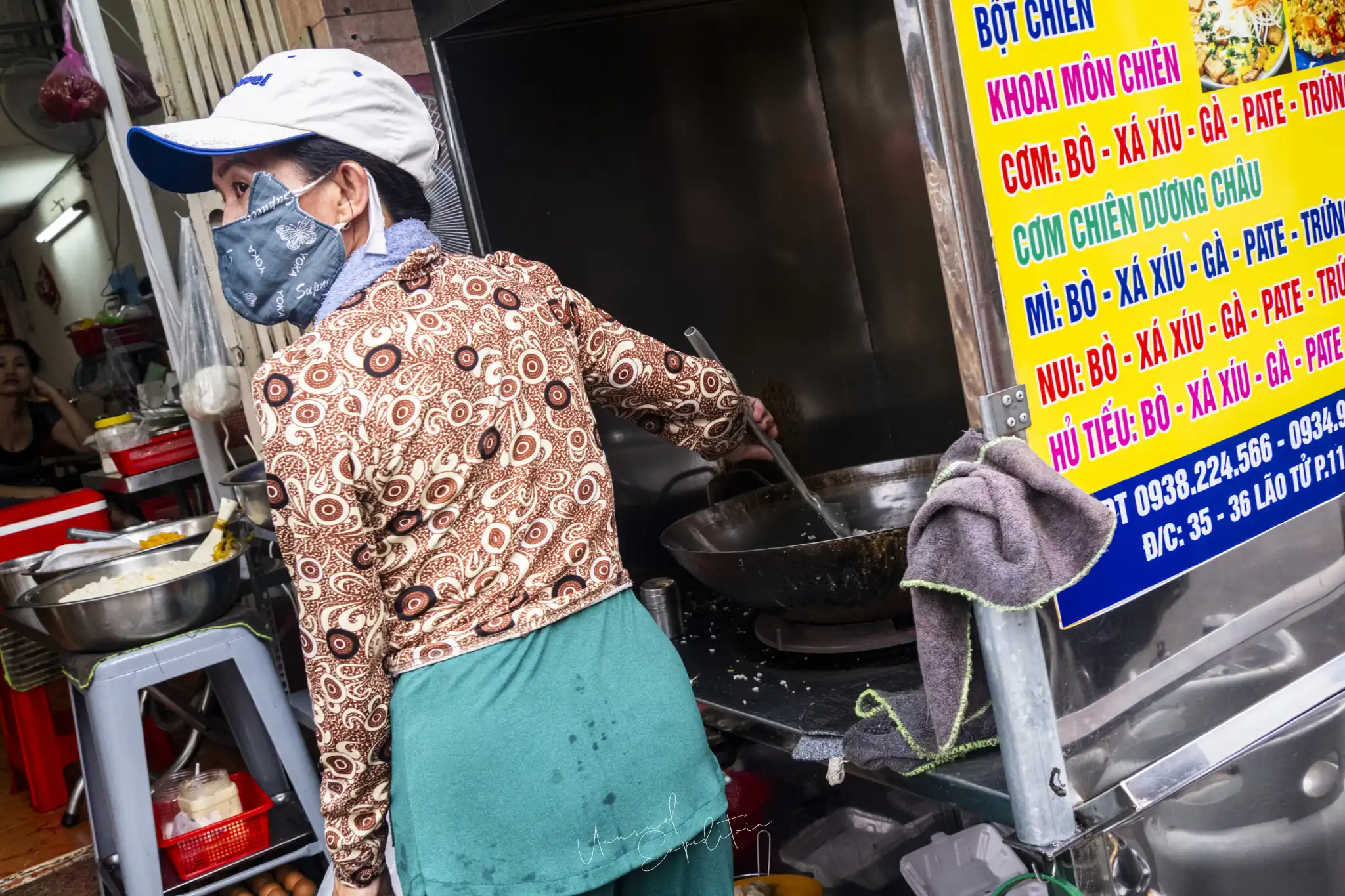
Between the temples, Cholon still keeps trades that have gone from the rest of the city. Calligraphers write couplets in red and gold for weddings and Tet, herbalists weigh roots on brass scales along Hai Thuong Lan Ong, and family kitchens cook in the front room with the shutter rolled up. These make quiet frames: a doorway, a counter, the owner and a customer, the signboard above. They also need the most courtesy. Greet first, show the camera, and if the owner is busy come back later. A shop that let you photograph it once will often wave you in on the next visit.
Cholon tourist Vietnam: when to go and how to move around
Cholon is at its best in the hours after sunrise, when the wholesale trade is loudest and the temple light is lowest. By late morning the heat and the traffic flatten everything. Festival weeks around Tet are the most colourful but also the most crowded, and some shops close for the holiday itself. A taxi or ride hailing app from the centre is the simple way in; once there, walk, because the distances between temples are short and the street between them is half the picture.
| Subject | Where | Best time |
|---|---|---|
| Incense coils and light | Thien Hau temple, Nguyen Trai street | Clear mornings, low sun |
| Quiet hall interiors | On Lang assembly hall and other halls nearby | Morning |
| Wholesale trade from above | Binh Tay market upper gallery | Early morning |
| Dragon and lion dances | Temple streets | Tet, Lantern Festival, temple feast days |
| Shops and kitchens | Side streets between the halls | Morning and late afternoon |
If you only have one morning, combine the temples with the streets around them and leave the market for a second visit.
"In Cholon I keep the camera down for the first ten minutes in any hall. People are praying. Once they have seen you stand quietly at the side, nobody minds the shutter, and the smoke does the rest."
Joseph Mak, tour leader, Unusual Expedition
Cholon among the rest of Saigon
Cholon pairs well with the markets and the alleys, which share its working rhythm. Our Saigon street photography piece covers the approach to people in the lanes, and the Saigon flower market photos show the other great morning subject in the city.
See Cholon with us
Every Vietnam photography tour we run starts in Saigon, and Cholon is the morning we protect in the plan. The current departures are on the Vietnam photography tours page.
Join the Saigon photography tour
Mekong And Central Highland Vietnam Photo Tour - Vietnam departs 16 Jan 2027 To 24 Jan 2027, led by Joseph Mak. Small group, photography first. All Saigon photography tours.
Explore Saigon in depth
- Saigon Photography Tour Guide: Ho Chi Minh City for PhotographersVietnam
- Saigon Street Photography: the Alleys, the Pavements and the PeopleVietnam
- Flower Market Saigon: Photographing Ho Thi Ky and the Tet Flower StreetsVietnam
- Bui Vien Walking Street at Night: Photographing Saigon's Backpacker StreetVietnam
- Best Time to Visit Saigon for Photography, Month by MonthVietnam
- Saigon Photos: Markets, the River and the City at NightVietnam
- Saigon Photo Tour: Where We Shoot in Ho Chi Minh CityVietnam
Upcoming Photo Tours
- Egypt Photo Tour – EgyptEgypt 12 Dec 2026 To 20 Dec 2026
- Inner Mongolia Winter Owl Photo Tour – ChinaChina 01 Jan 2027 To 04 Jan 2027
- Inner Mongolia Winter Photo Tour – ChinaChina 05 Jan 2027 To 11 Jan 2027
- Mekong And Central Highland Vietnam Photo Tour - VietnamVietnam 16 Jan 2027 To 24 Jan 2027