
Saigon Street Photography: the Alleys, the Pavements and the People
Saigon street photography: where the alleys are, how to approach people, Vietnam's image law, settings for the hem and street food.
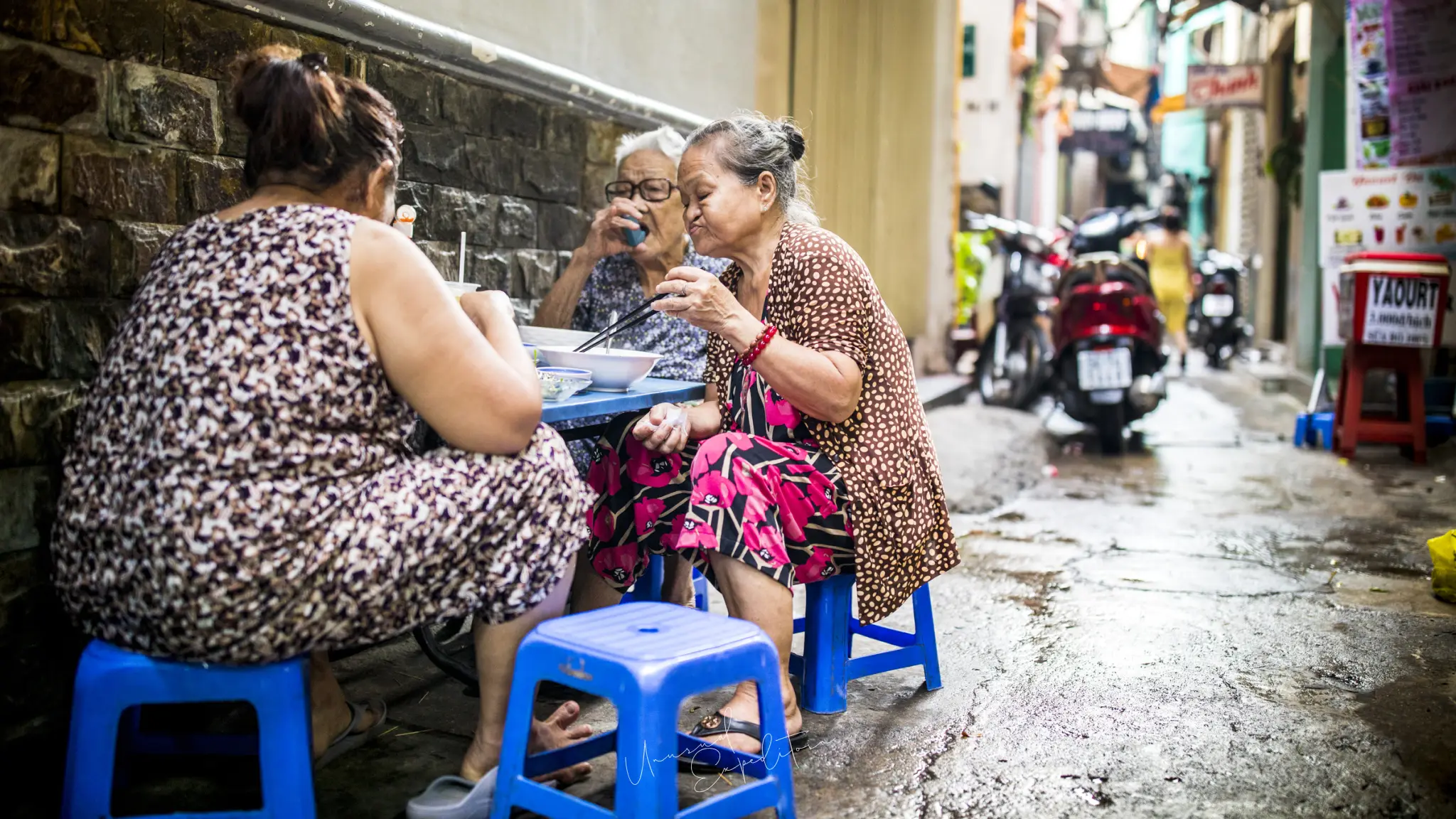
Saigon street photography is about the hem, the narrow alleys behind every boulevard of Ho Chi Minh City, and about the pavement, where the city cooks, sews, trades and rests in the open. The approach that works is slow: choose a lane, stay in it, let people see the camera and wait for the moment instead of chasing it. Here is where to go, how to work with people, which settings help in the alleys and what Vietnamese law says about photographing strangers.
Street work is the backbone of our Saigon photography tour guide. The places in it, Cholon, the markets, Bui Vien, all come down to the same skill: photographing people who are busy with their own day.
Saigon street photography: why the alleys
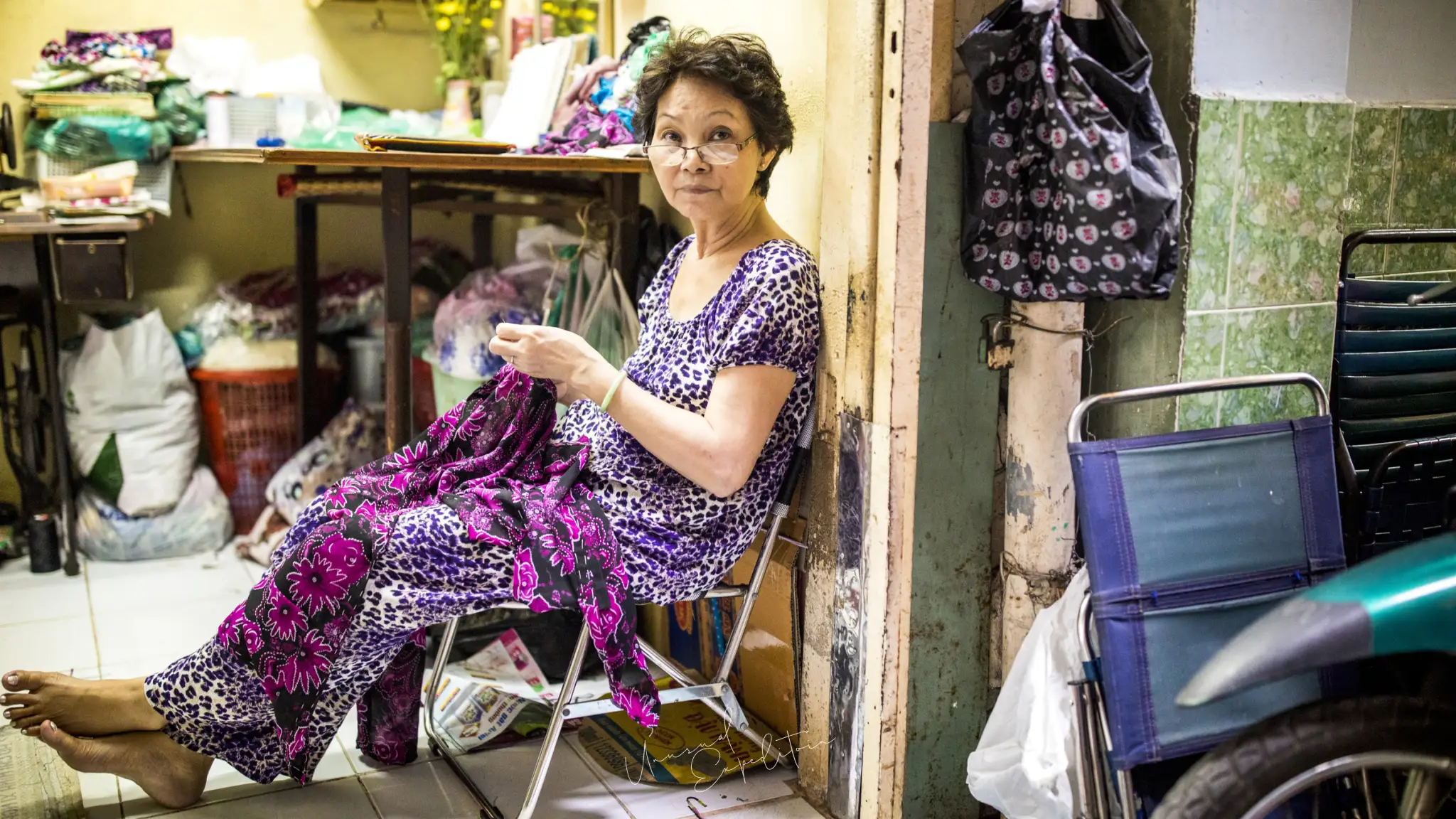
The boulevards of central Saigon are wide, loud and full of traffic, and the life on them is hard to isolate. Step one turn into a hem and the scale changes completely. An alley a motorbike wide holds a breakfast stall, a tailor in a front room, a grandmother on a plastic stool, a barber with a mirror on the wall and a family's motorbikes parked inside the living room. Everything happens within a few metres, the walls bounce soft light, and the same people sit in the same places every day. That is the ideal stage for a street photographer: predictable enough to plan, alive enough that no two minutes are the same.
Ho Chi Minh City photos: where the street pictures are
Most of the good street frames in Ho Chi Minh City come from four kinds of place. The residential alleys of the old districts 1, 3 and 4, where people live with their doors open. The old apartment blocks, whose galleries and stairwells look down on courtyards and lanes. The local markets, wet and dry, at first light. And the pavements of the main roads, where cooks set up carts and riders stop to eat sitting on their motorbikes. We do not publish addresses of alleys: a lane that works one year becomes a cafe the next, and a stream of photographers is not a gift to the people who live there. Walk, turn into anything that looks lived in, and leave when you are no longer welcome.
How to approach people in the hem
Vietnamese street life is generous with strangers, and a smile and a nod do most of the work. Make eye contact before you raise the camera. Show it. If the person looks away or waves a hand, lower it and move on. If they smile, take the picture and show them the result, which usually leads to a second, better frame. Older people are often delighted; younger people may be shy or simply busy. Never photograph children without a parent's clear agreement, and do not step into a home, even one with its whole front open, without being invited. Buying something from a stall, a coffee or a skewer, is the simplest way to earn a place on the pavement.
Is street photography legal in Vietnam?
Taking a picture in a public street in Vietnam is normal and widely tolerated. Using it is a different matter. Article 32 of Vietnam's Civil Code of 2015 gives every person rights over their own image and requires consent for its use, with payment expected for commercial use unless agreed otherwise; the legal summaries on LawNet set out the narrow exceptions. In practice, that means asking before a close portrait you may publish, and never selling a stranger's face to an advertiser. Separately, signs reading no photography mark military areas, some government buildings and police posts: obey them without argument. Neither rule gets in the way of ordinary street work if you are polite and open about the camera.
Camera settings for the alleys
The hem is darker than it looks. Sun reaches the floor only near midday, and the rest of the time the light comes off the walls, warm and soft and a few stops below the street outside. A 24-70mm or a 35mm prime is the right lens: wide enough to show the person in their space, short enough to stay close without filling the alley. Set an aperture around f/4 to f/5.6 so the face and the hands are sharp, keep the shutter at a hundred and twenty fifth or faster, and let auto ISO carry the rest. Expose for faces, not for the bright end of the lane, which will blow out whatever you do.
| Street subject | Where in Saigon | Lens and setting | Best light |
|---|---|---|---|
| Doorway life | Residential alleys | 35mm, f/4 | Late afternoon |
| Street cooks and carts | Pavements of the main roads | 24-70mm, f/5.6 | Early morning, after dark |
| Courtyards from above | Old apartment blocks | 24-70mm, f/8 | Morning |
| Shopkeepers and craftsmen | Market streets, Cholon | 35mm, f/4 | Morning |
| Motorbike life | Junctions and alley mouths | 24-70mm, slow shutter | Dusk |
Most of these work with the same lens and only a turn of the aperture ring between them.
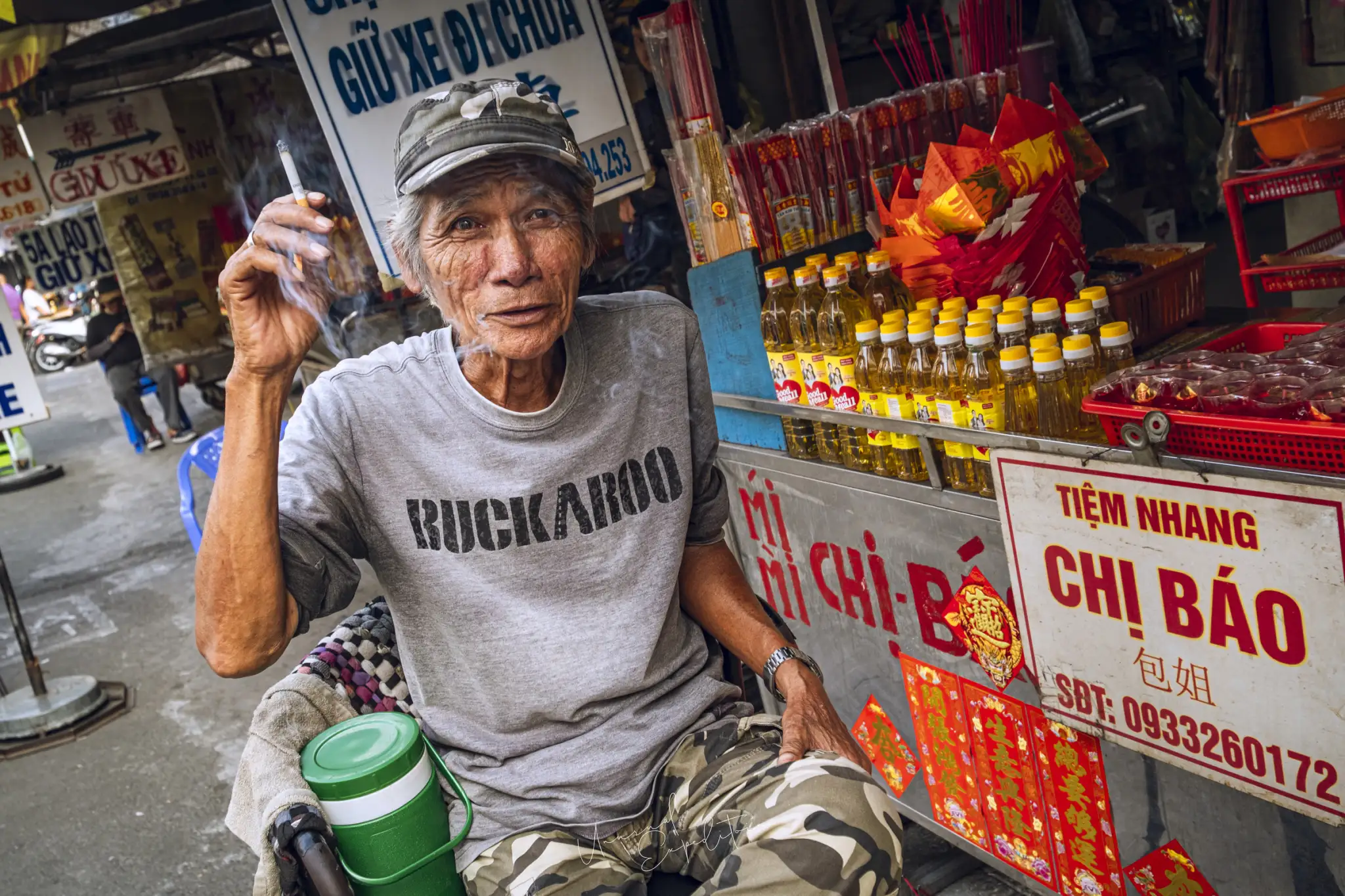
"In a Saigon alley the first frame is never the picture. The picture comes after the old man has looked at you, decided you are harmless and gone back to his cigarette. You have to earn the second frame by being patient with the first."
Joseph Mak, tour leader, Unusual Expedition
Saigon street food as a subject
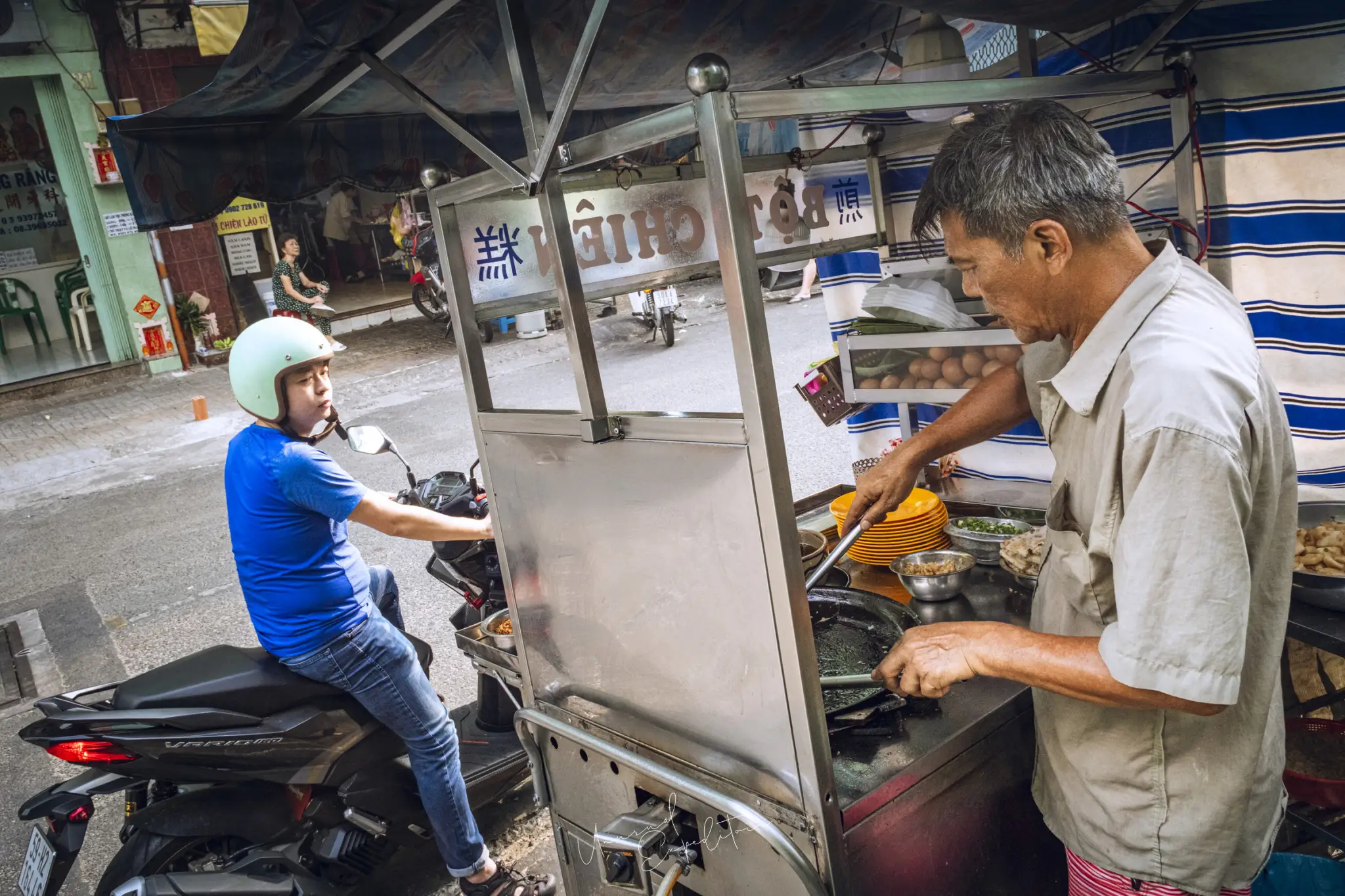
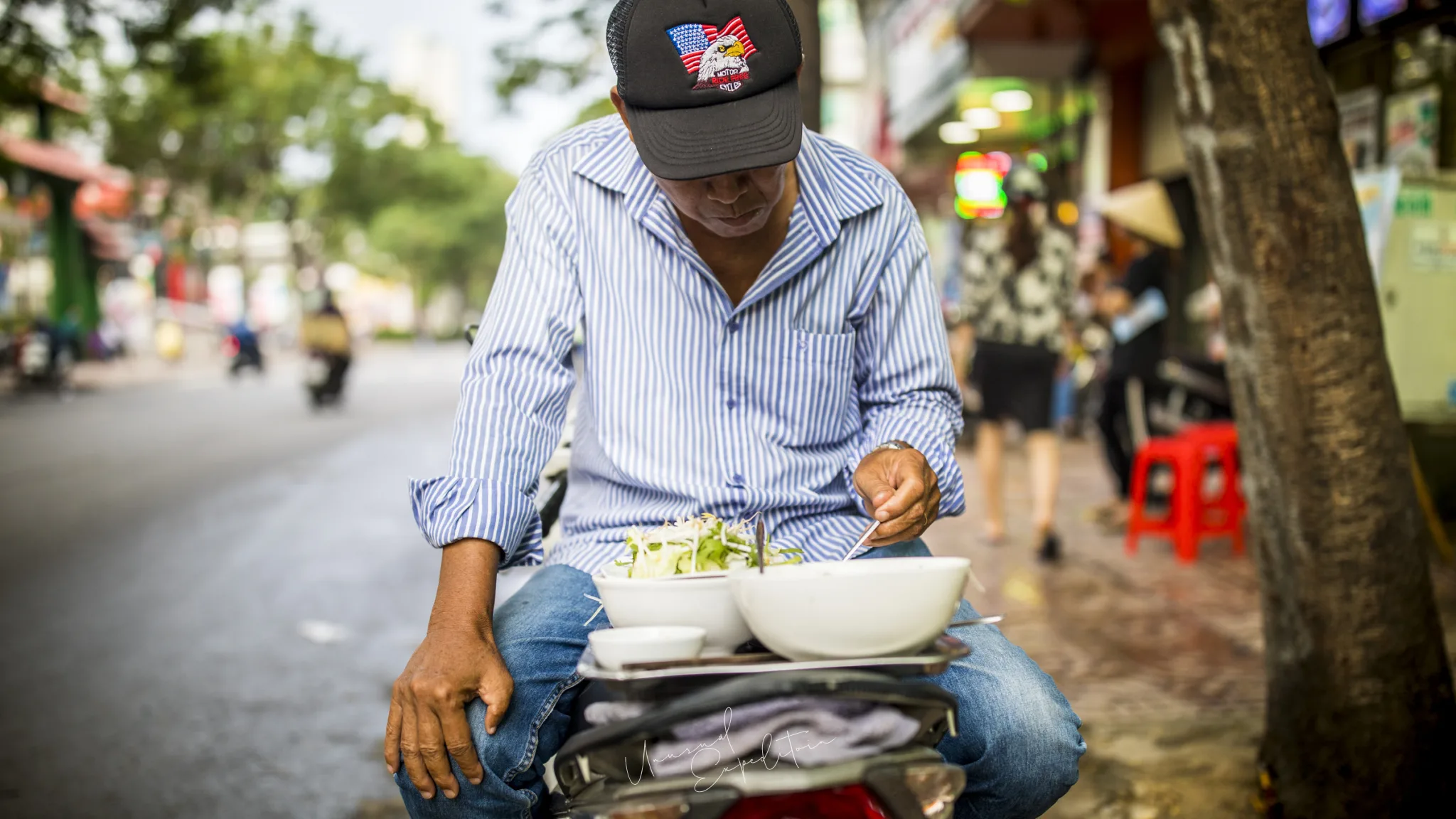
Food is the easiest way into Saigon street life, because it happens in the open from early morning to late at night and because cooks are proud of what they make. A rider eating a bowl of noodles balanced on his own motorbike, a woman frying rice cakes under a tarpaulin, a cart lit by one bulb at a corner: these are everyday scenes that say more about the city than any landmark. Stand downwind of the smoke with the light behind it. Order first, eat if you can, and photograph while you wait.
Where to go next
The same approach works in the Chinese quarter: see the Cholon Chinatown photos. After dark, the street moves to the neon of Bui Vien walking street, and our Saigon photo tour article puts the alleys into a walking plan with the river and the markets.
Walk the alleys with us
Every Vietnam photography tour we run starts in Saigon, with an afternoon in the alleys whenever the flights allow. Departures are on the Vietnam photography tours page.
Join the Saigon photography tour
Mekong And Central Highland Vietnam Photo Tour - Vietnam departs 16 Jan 2027 To 24 Jan 2027, led by Joseph Mak. Small group, photography first. All Saigon photography tours.
Explore Saigon in depth
- Saigon Photography Tour Guide: Ho Chi Minh City for PhotographersVietnam
- Flower Market Saigon: Photographing Ho Thi Ky and the Tet Flower StreetsVietnam
- Cho Lon Chinatown Saigon: Photos of the Temples, Shops and Dragon DancesVietnam
- Bui Vien Walking Street at Night: Photographing Saigon's Backpacker StreetVietnam
- Best Time to Visit Saigon for Photography, Month by MonthVietnam
- Saigon Photos: Markets, the River and the City at NightVietnam
- Saigon Photo Tour: Where We Shoot in Ho Chi Minh CityVietnam
Upcoming Photo Tours
- Egypt Photo Tour – EgyptEgypt 12 Dec 2026 To 20 Dec 2026
- Inner Mongolia Winter Owl Photo Tour – ChinaChina 01 Jan 2027 To 04 Jan 2027
- Inner Mongolia Winter Photo Tour – ChinaChina 05 Jan 2027 To 11 Jan 2027
- Mekong And Central Highland Vietnam Photo Tour - VietnamVietnam 16 Jan 2027 To 24 Jan 2027