
Saigon Photography Tour Guide: Ho Chi Minh City for Photographers
Saigon photography tour guide: Cholon, flower markets, the alleys, Bui Vien at night, best light, lenses and the right season.
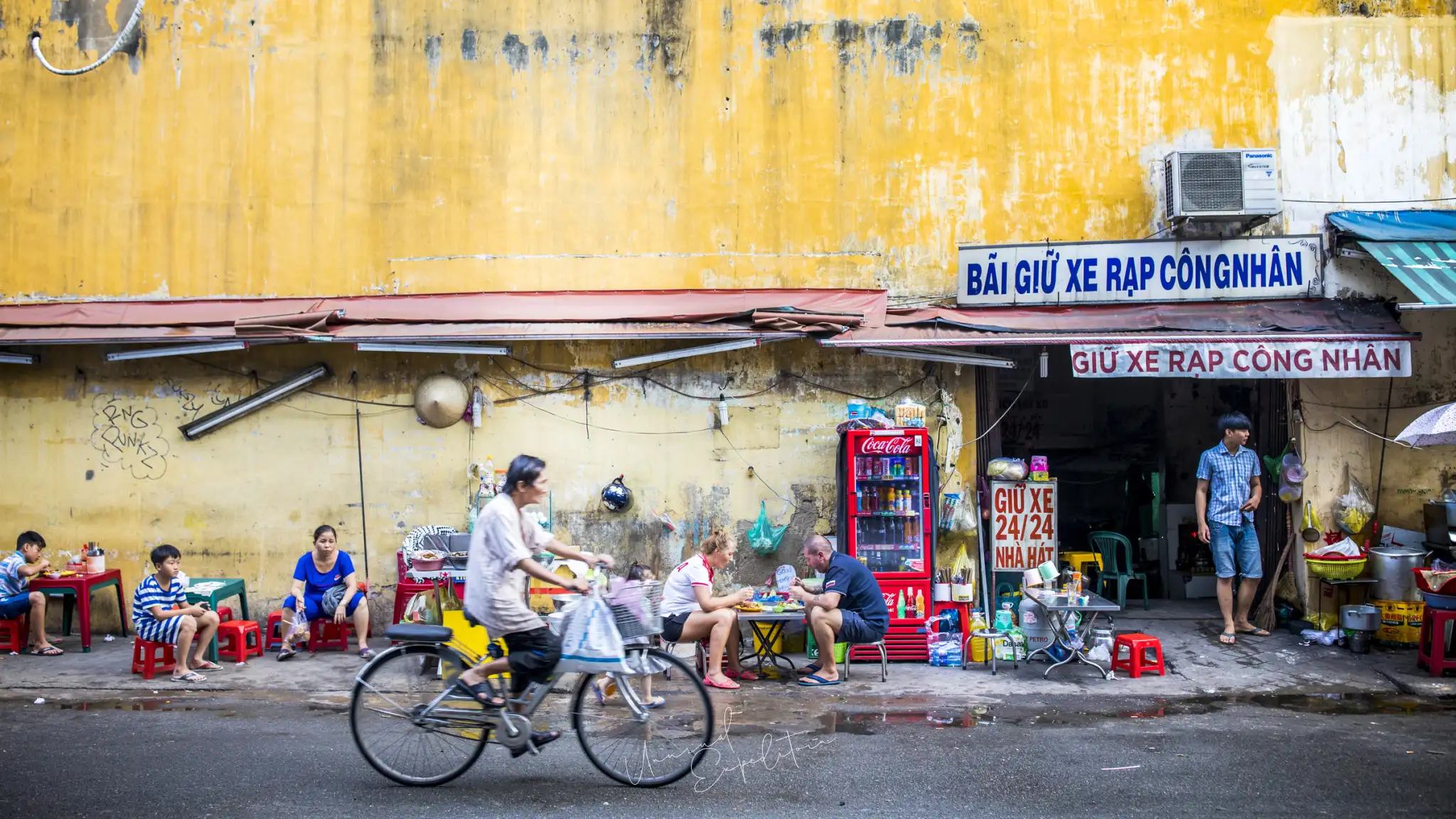
A Saigon photography tour is a few days on foot in Ho Chi Minh City, built around the places where the city lives outdoors: the Chinese temples and shophouses of Cholon, the flower and wet markets before the heat, the alleys behind the boulevards and the neon of Bui Vien after dark. Both of our scheduled Vietnam departures start and end here, and this guide gathers everything we have written about photographing the city in one place.
Saigon is one area of a longer country, and the Vietnam photography tour guide covers the coast, the delta, the highlands and the north. What follows is the city alone: where to go, when the light works, what to carry and how to work with people who are going about their day while you raise a camera.
Saigon photography: what kind of city it is for a camera
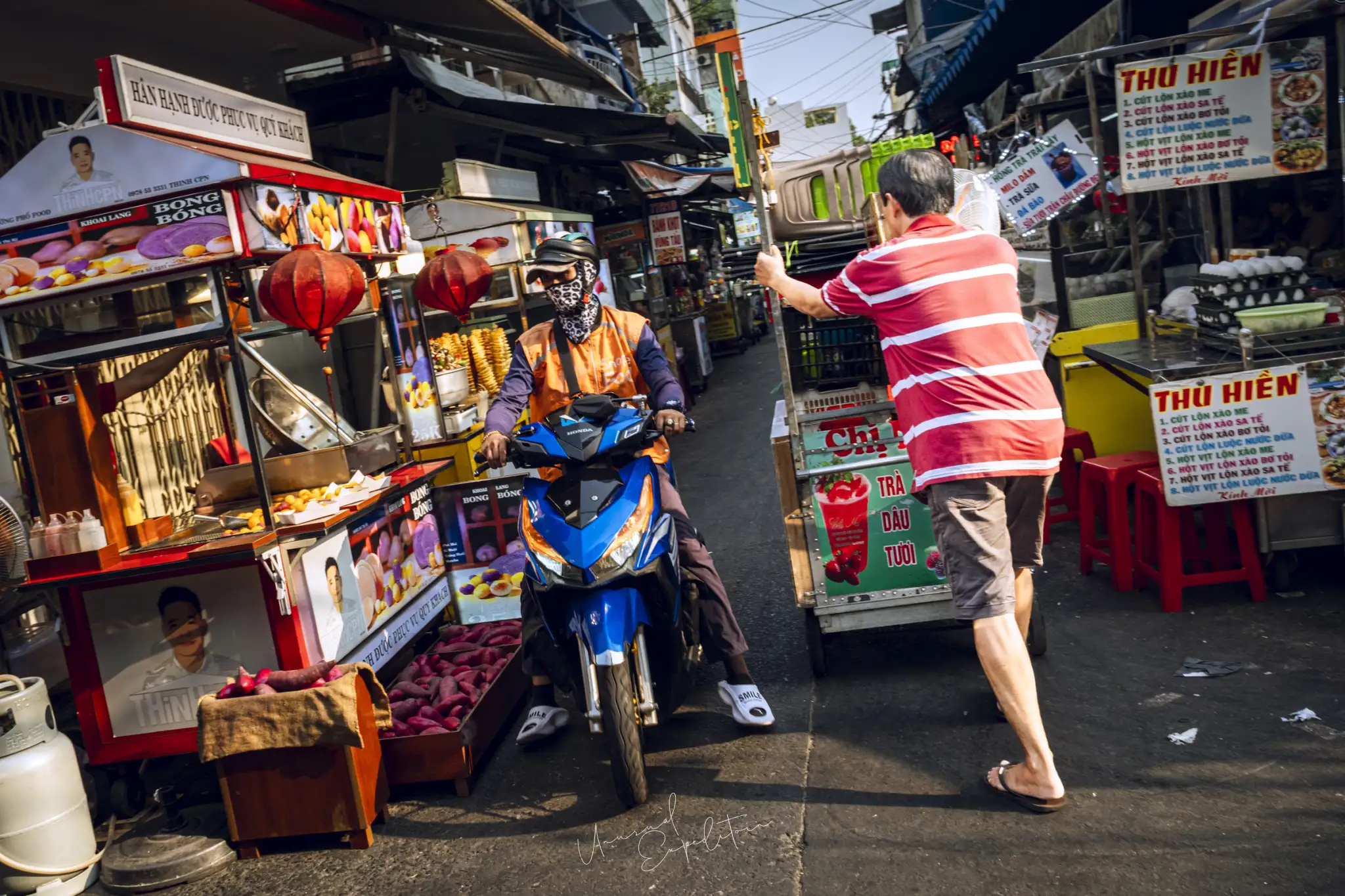
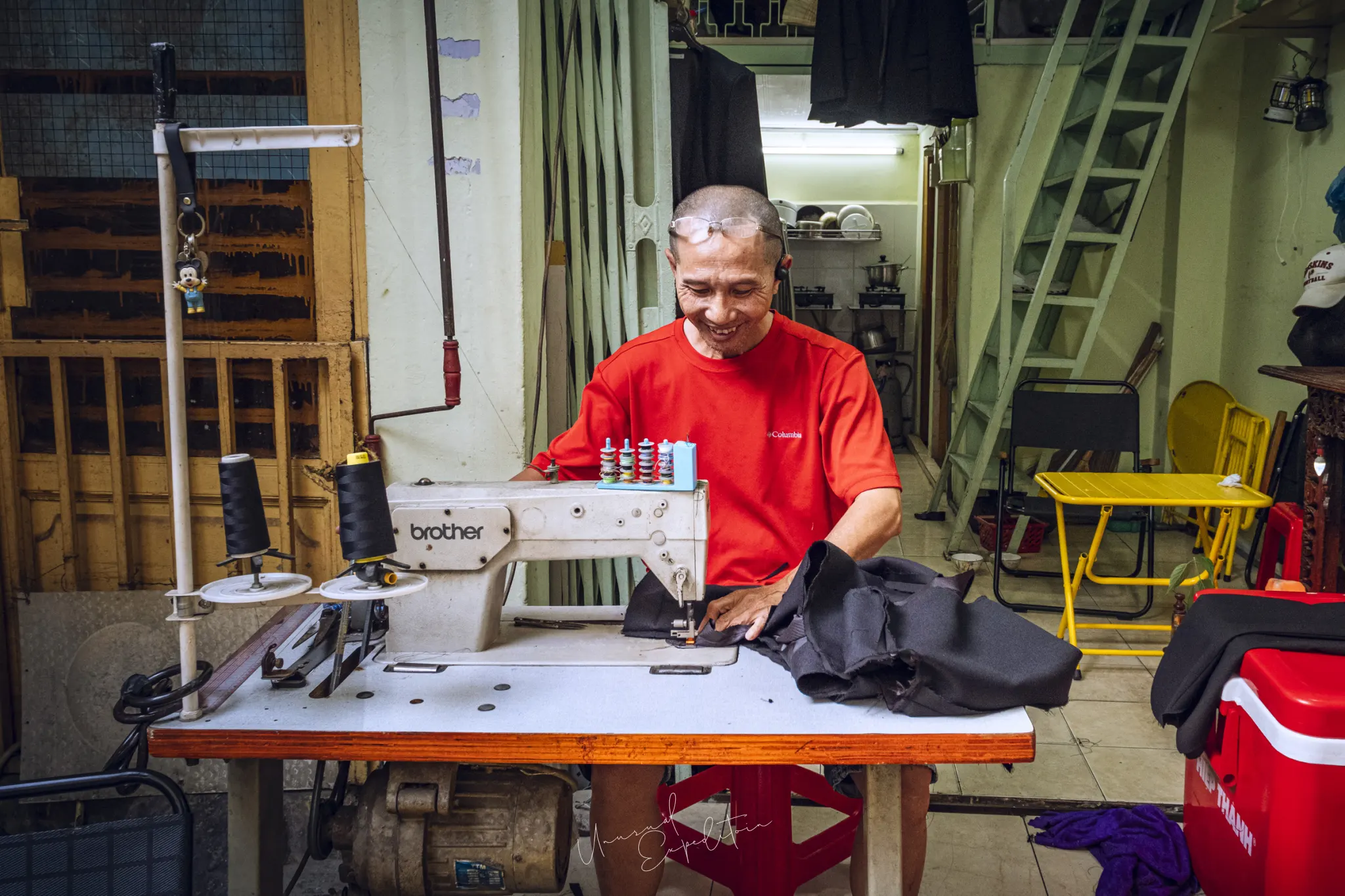
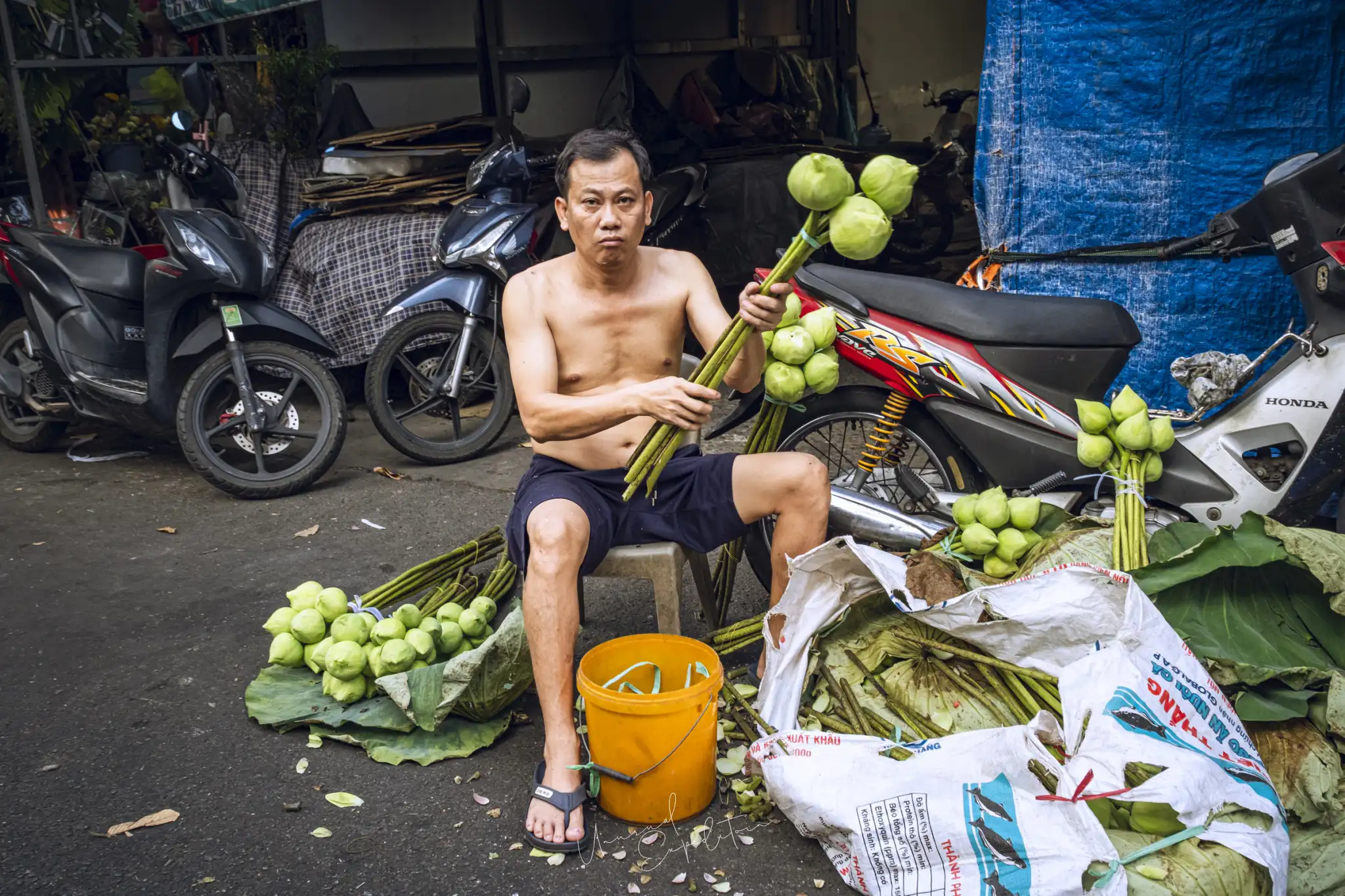
Ho Chi Minh City has landmarks, and most of them are disappointing in a photograph. The cathedral has spent years under scaffolding, the Central Post Office is a queue, and the towers along the river look like towers anywhere. What Saigon has instead is density and a habit of living on the pavement. People cook, sew, repair motorbikes, sell lotus pods and sleep in the open, often on the same metre of concrete across one day. That makes it a street photography city first and a landscape city a distant second. Plan by neighbourhood and by the hour, carry one body and one or two lenses, and expect the best frames to come from standing still in the right lane rather than walking fast between sights.
Ho Chi Minh City photography by area
The city photographs as a handful of distinct areas, each with its own subject and its own best hour.
- Cholon, the old Chinese quarter to the west of the centre: incense halls, assembly halls, herbalists, calligraphers and, on festival and feast days, dragon and lion dances. Our Cho Lon Chinatown photos show what a morning there gives.
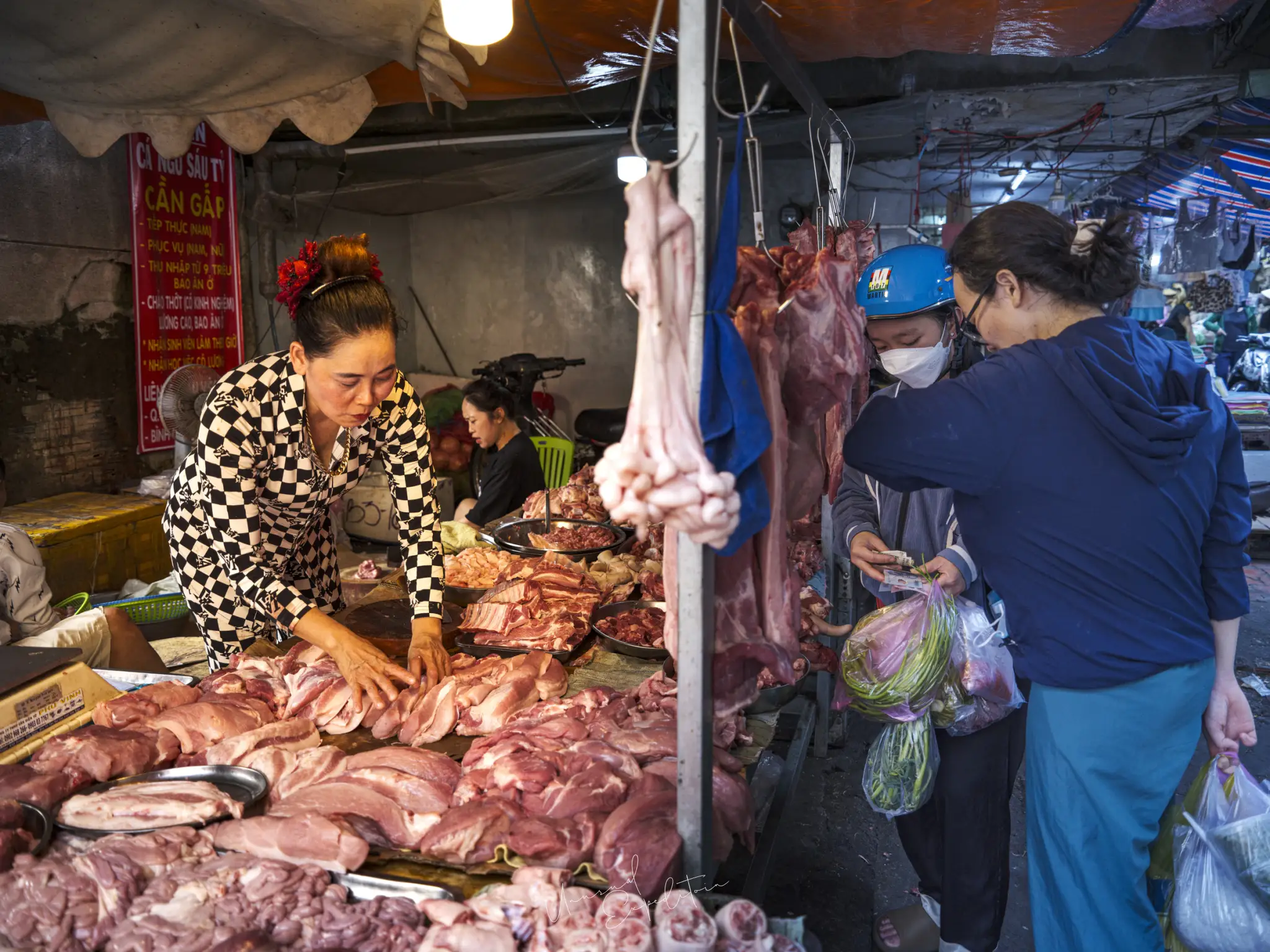
- The flower and wet markets: Ho Thi Ky and the street markets in the residential wards, at their best at first light. See Saigon flower market photos.
- The alleys, called hem, behind every boulevard: kitchens on the step, tailors in doorways, old apartment blocks with galleries. Our piece on Saigon street photography covers how to work them.
- Bui Vien and the centre after dark: neon, bars, food carts and crowds. Bui Vien walking street at night is the guide to it.
- The river and the skyline: the Thu Thiem bank at dusk, covered in our Saigon photos.
Old names still rule here. Vietnam removed its district tier of local government in mid 2025, so District 1 and District 5 are now officially groups of wards, but every driver, cafe and map in the city still uses the district names, and so do we.
Saigon photography tour: how we run the city
The Saigon part of our Vietnam tours is not a checklist of monuments. We plan one first light in a market, one morning in Cholon, one afternoon in the alleys and one evening in the centre, and we fit them around arrival and departure so nobody spends the best light in a hotel lobby. The route we usually walk, with the photo spots we return to, is in our Saigon photo tour article. Everyone in the group shoots their own pictures; the tour leader's job is to put you in the right lane at the right moment, help with settings when the light goes strange, and do the talking when a portrait needs a polite word first.
When to photograph Saigon
Saigon is tropical, warm all year, with a dry season and a wet one. Most travel references, Lonely Planet among them, put the dry months from December to April and the rains from May to November, with short heavy storms in the afternoons rather than days of drizzle. The dry season gives clean light and clear dusk skies; the run up to Tet, the lunar new year, adds the flower markets and the Nguyen Hue flower street. The wet season gives reflections, umbrellas and a washed city after each storm. Our month by month answer is in the best time to visit Saigon. Within any day the rule does not change: markets at first light, temples in the low sun after sunrise, alleys in the late afternoon, neon after dark, and the middle of the day off.
| Subject | Best light | Lens |
|---|---|---|
| Wet and flower markets | First light, before the heat | 24-70mm |
| Cholon temples and assembly halls | Low sun after sunrise | 16-35mm |
| Alleys and shopfronts | Late afternoon bounce light | 24-70mm or a 35mm prime |
| Bui Vien and the centre | After dark | Fast 35mm |
| River skyline | Dusk and blue hour | 70-200mm |
A 24-70mm covers almost everything in the city; the other lenses are for people who already know they want those frames.
Photographing people in Saigon
Saigon people are used to cameras and mostly relaxed about them, but the city is not a set. A vendor sorting pork at a wet market is working, and a lens pushed into her face slows her down. Buy something first, stand still long enough to become part of the scenery, and raise the camera once she has seen it. For a close portrait, ask with a gesture and a smile; a shake of the head is final. Older people in the alleys are often happy to be photographed and pleased to see the frame on the back of the camera. Leave children alone unless a parent is there and agrees. In temples, no flash and never step between a worshipper and the altar.
"Saigon rewards the photographer who stops walking. I pick a lane, find a step to sit on, and give it half an hour. By the end the street has forgotten me, and that is when the tailor looks up or the lotus seller laughs at her neighbour."
Joseph Mak, tour leader, Unusual Expedition
Practical notes for Saigon
Singapore passport holders enter Vietnam visa free for up to 30 days, according to the Singapore Ministry of Foreign Affairs; other nationalities should check the Vietnamese immigration rules for their passport before booking. The city is safe for photographers with ordinary care. The one real risk is a phone or camera snatched from a passing motorbike, so keep the strap across the body and the phone away from the kerb side. Cross roads at a slow, steady walk and the traffic flows around you. Cash is still the language of markets and street food, while cards work in cafes and hotels. Drones need permission and should not be flown over the city; ask us before you pack one.
Explore Saigon in depth
- Saigon photo tour: where we shoot in Ho Chi Minh City
- Saigon photos: markets, the river and the city at night
- Cho Lon Chinatown Saigon: photos of the temples, shops and dragon dances
- Flower market Saigon: photographing Ho Thi Ky and the Tet flower streets
- Saigon street photography: the alleys, the markets and the people
- Bui Vien walking street at night: photographing the backpacker street
- Best time to visit Saigon for photography
Photograph Saigon with us
Our January departure leaves Saigon for the Mekong Delta, the south central coast and the Central Highlands; the late May departure follows the coast north to Hoi An and Hue. Both begin and end in the city, fares are indicatively S$2,700 to S$3,300 per person depending on the room, and photographers join from any country. The current departures are on the Vietnam photography tours page.
Join the Saigon photography tour
Mekong And Central Highland Vietnam Photo Tour - Vietnam departs 16 Jan 2027 To 24 Jan 2027, led by Joseph Mak. Small group, photography first. All Saigon photography tours.
Explore Saigon in depth
- Saigon Street Photography: the Alleys, the Pavements and the PeopleVietnam
- Flower Market Saigon: Photographing Ho Thi Ky and the Tet Flower StreetsVietnam
- Cho Lon Chinatown Saigon: Photos of the Temples, Shops and Dragon DancesVietnam
- Bui Vien Walking Street at Night: Photographing Saigon's Backpacker StreetVietnam
- Best Time to Visit Saigon for Photography, Month by MonthVietnam
- Saigon Photos: Markets, the River and the City at NightVietnam
- Saigon Photo Tour: Where We Shoot in Ho Chi Minh CityVietnam
Upcoming Photo Tours
- Egypt Photo Tour – EgyptEgypt 12 Dec 2026 To 20 Dec 2026
- Inner Mongolia Winter Owl Photo Tour – ChinaChina 01 Jan 2027 To 04 Jan 2027
- Inner Mongolia Winter Photo Tour – ChinaChina 05 Jan 2027 To 11 Jan 2027
- Mekong And Central Highland Vietnam Photo Tour - VietnamVietnam 16 Jan 2027 To 24 Jan 2027