
Delhi Photo Spots: Where to Take the Best Pictures of Delhi
The best pictures of Delhi: Jama Masjid, Chandni Chowk, the railway platforms, an akhara and the tombs, with light, lens and rules.
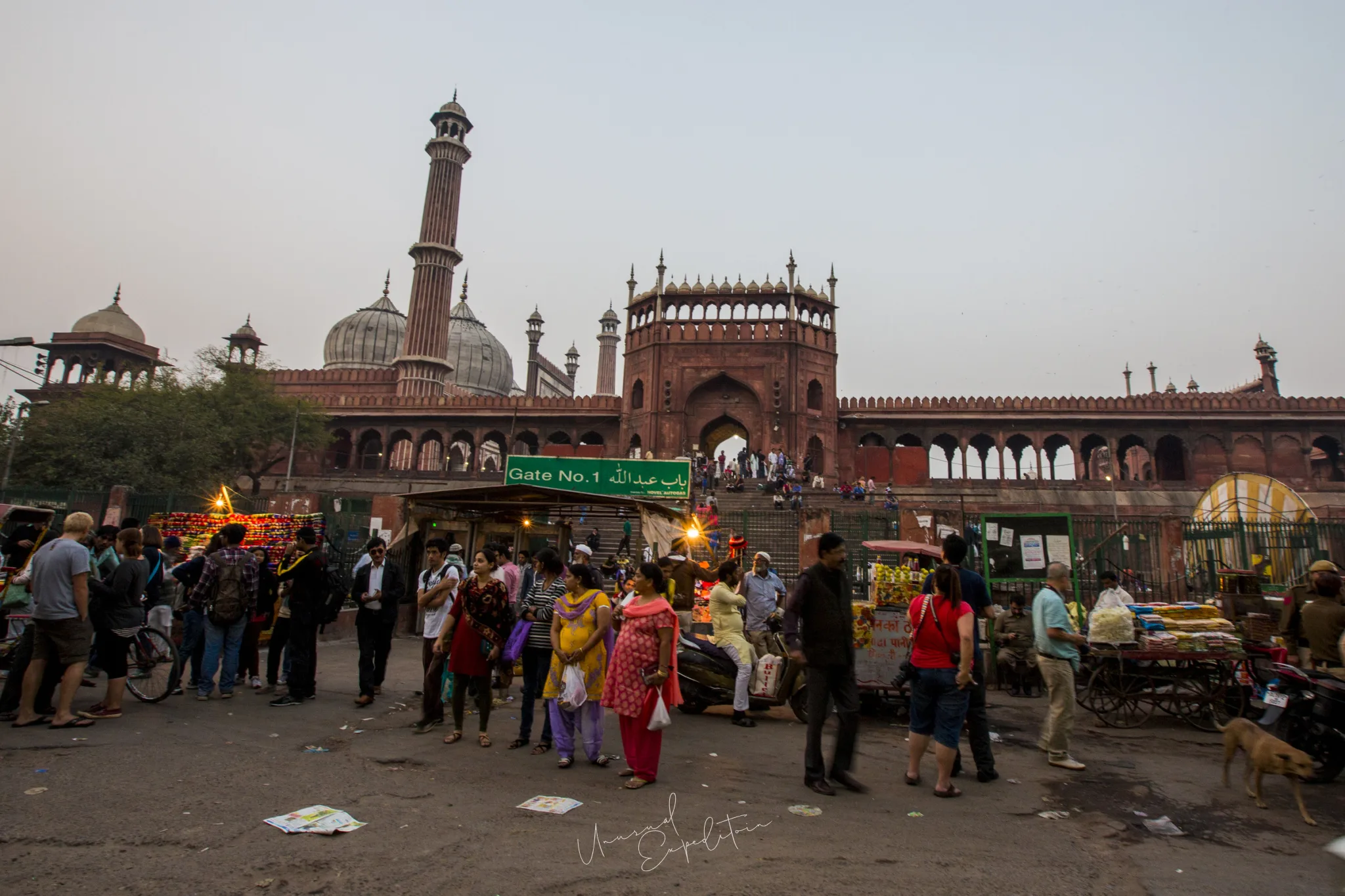
The best pictures of Delhi are made in seven places: the courtyard and gate steps of Jama Masjid, the bazaar lanes of Chandni Chowk, the big railway platforms, a working akhara, Humayun's Tomb, the Qutb Minar and the long view down Kartavya Path to India Gate. The old city gives faces, trade and crowds; the monuments give clean Mughal and Sultanate architecture. Mornings suit most of them, and late afternoon suits the mosque and the tombs.
This spot guide sits under our Delhi photography tour guide, which covers seasons, air quality and how Delhi fits a wider trip, and the India photography tour guide for entry and money. The photographs here are our own, taken on our trips through Delhi; we hold the rights to them, and the notes come from knowing these streets first hand.
Best pictures of Delhi: how to choose your spots
Delhi is two cities for a photographer. Old Delhi, the walled city Shah Jahan built as Shahjahanabad, is about people at close range: porters, rickshaws, shop fronts a metre wide. New Delhi and the older sites to the south are about space, symmetry and sandstone. Most visitors try to do both in a day and come away with neither. Pick one side per half day. Old Delhi wants an early start, before the lanes jam; the tombs and the minaret want the softer light of late afternoon, when the stone turns warm.
Jama Masjid: the courtyard and the gate steps
Jama Masjid is the great congregational mosque of Old Delhi, built under Shah Jahan, and Delhi Tourism lists it among the city's main sights. The prayer hall stands on the west side of a vast courtyard, so its facade faces east and takes the morning sun; in late afternoon the domes are backlit and the gates glow instead. Entry is free, but visitors with a camera, phone included, are usually charged a camera fee at the gate, and tourists are kept out at prayer times. Cover shoulders and knees, take your shoes off, and hire a robe at the gate if you need one.
The steps outside the gates are a photo spot in their own right. Barbers, sellers and men waiting for prayer sit there all day, and the view back up to the gate frames them well with a 24-70mm.
Chandni Chowk and the Old Delhi bazaar lanes
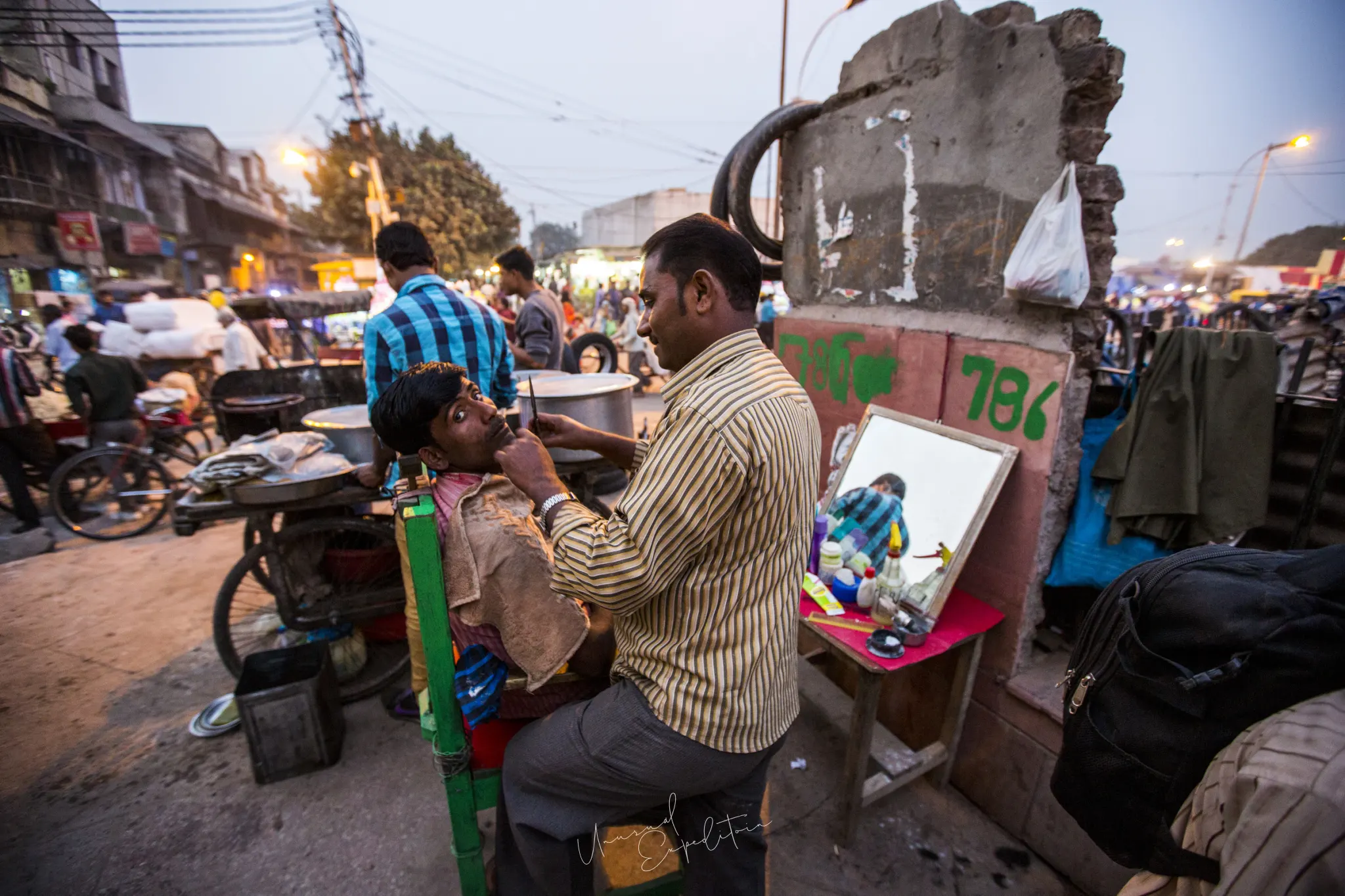
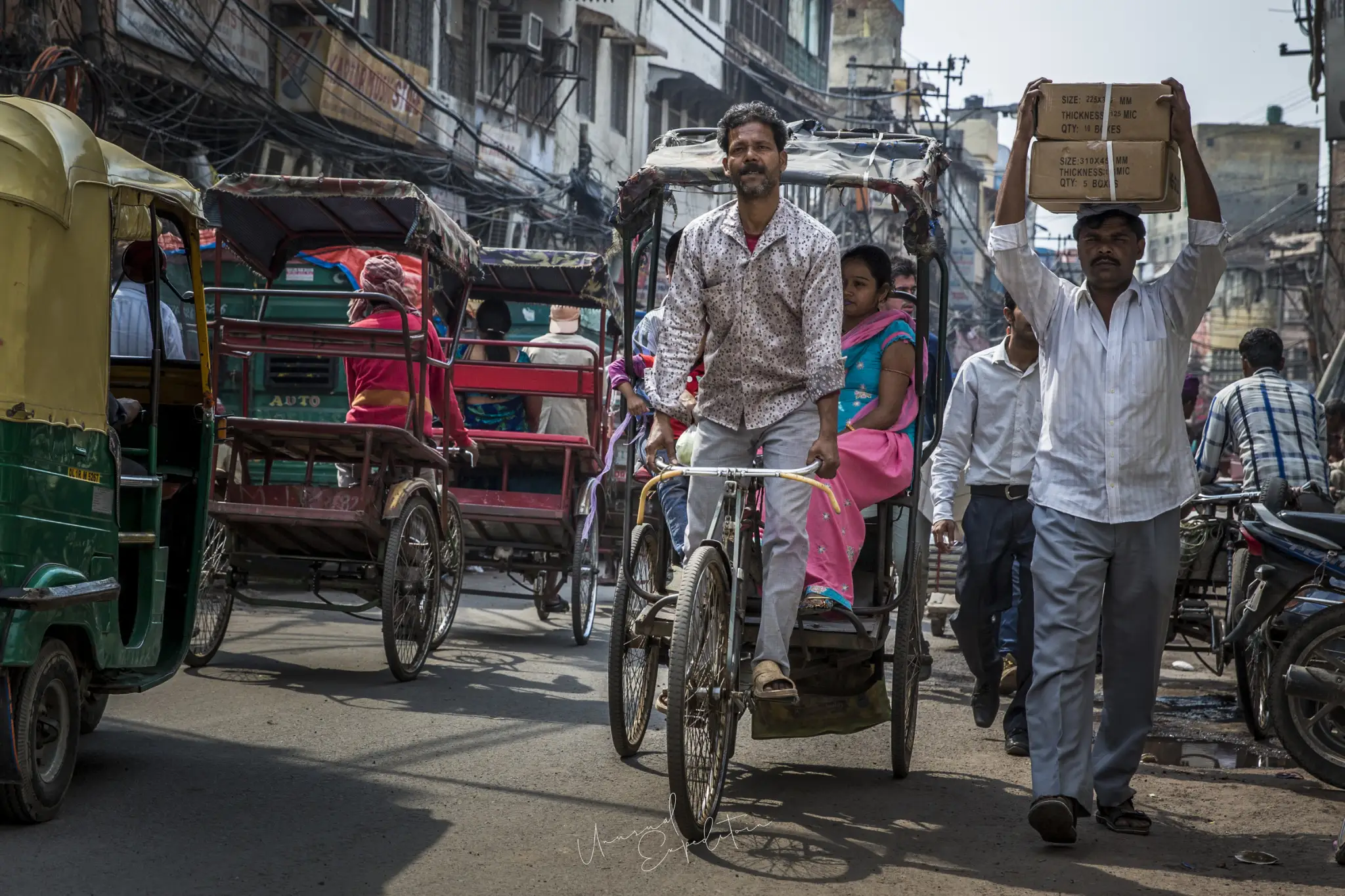
Delhi Tourism calls Chandni Chowk one of the oldest and busiest markets in Delhi, laid out under Shah Jahan in the 17th century. The main street has been rebuilt for pedestrians, but the pictures are in the side lanes that run off it: cloth, spices, paper, silver and books, each lane with its own trade. Cycle rickshaws and handcarts move through all day. Stand in a doorway or on a shop step rather than in the flow, let the street come to you, and shoot at a slow enough shutter to show movement when the light falls. Mornings are calmer, and the light comes down between the buildings in shafts. Our Delhi street photography guide covers the etiquette of these lanes in more detail.
Delhi's railway platforms
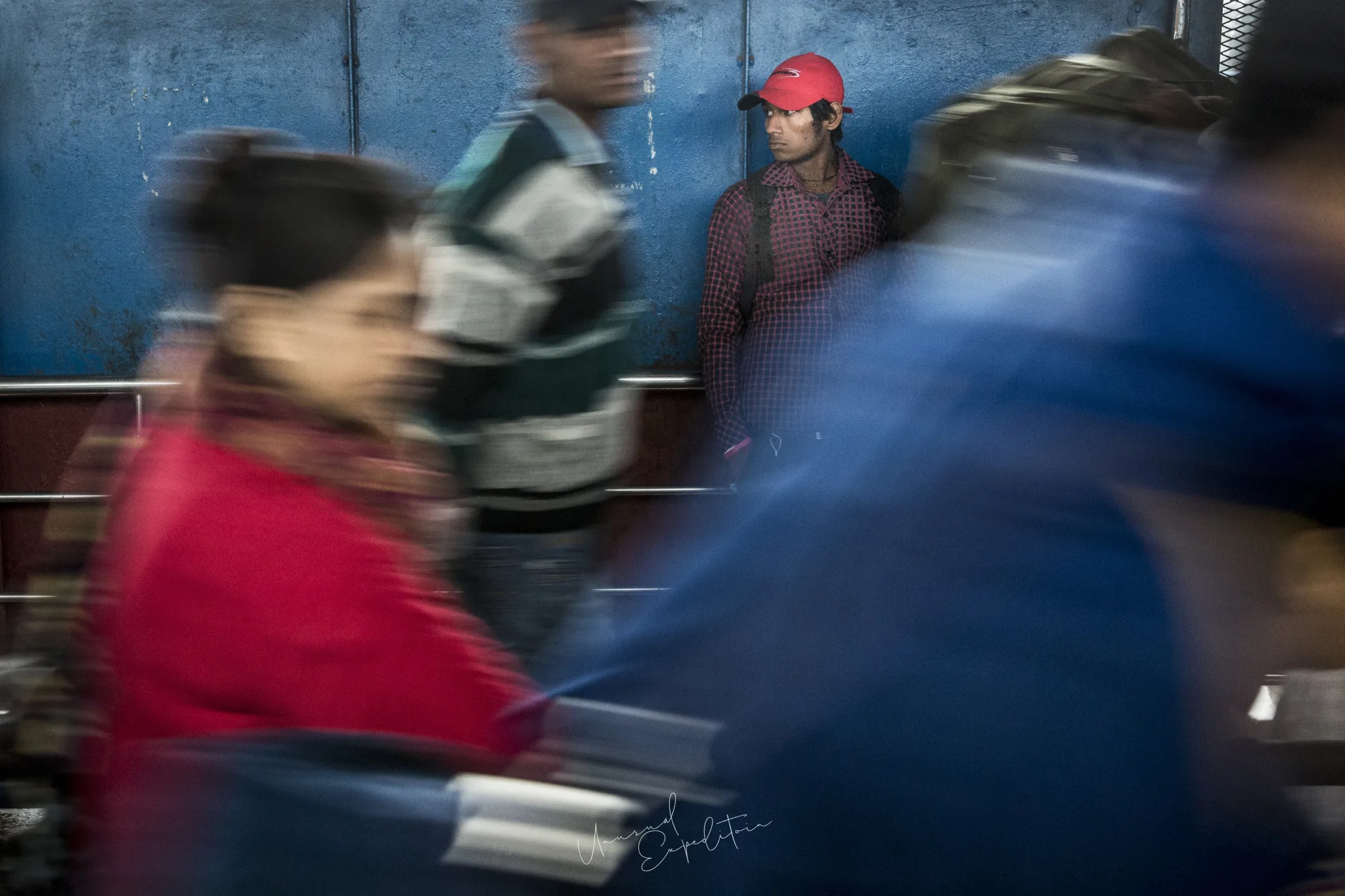
Delhi's big stations are among the most photographed places in India for a reason: every journey in the country seems to pass through them. Porters in red, families on their luggage, tea sellers, sweepers and the long blue and red trains make a moving stage. The Railway Board's guidelines say photography on railway premises needs permission, so plan this one through someone who can arrange it, keep to the platforms, never block a door or a porter, and put the camera down if staff ask. Overcast mornings and the shade under the platform roofs give the most even light.
An akhara: kushti wrestling in the earth pit
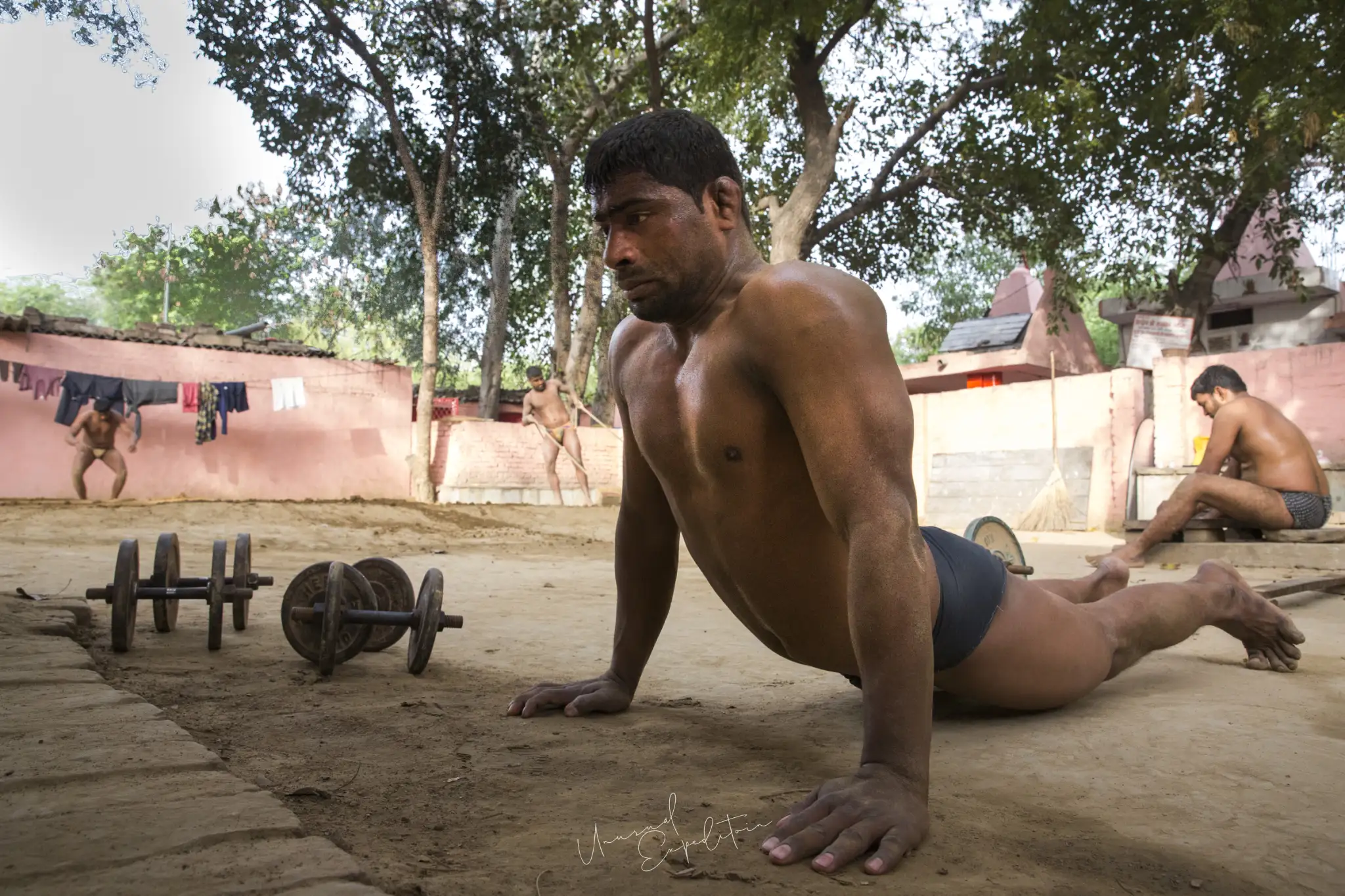
A traditional wrestling school, the akhara, is the least known of these spots and often the most rewarding. Wrestlers train in a pit of soft earth under a guru, with press-ups, rope work and heavy clubs before the bouts. Early morning is training time, and the low sun through dust makes the pictures. Go only with an introduction, ask the guru first, and keep to the edge of the pit. Our kushti wrestling in Delhi guide explains how to visit with respect.
"In Old Delhi I tell people to stop walking. Find a step, sit for ten minutes, and the street forgets you. The best frames come after that, never in the first minute."
Joseph Mak, tour leader, Unusual Expedition
Humayun's Tomb
Humayun's Tomb, a UNESCO World Heritage Site, is the first garden tomb of the Indian subcontinent and, in UNESCO's words, a step on the way to the Taj Mahal: red sandstone and white marble on a high platform in the middle of a four-part garden. The usual approach is from the west gate, so the west face is the one you see first, and it takes the late afternoon light. Walk the axial paths for symmetry, then step off them to frame the dome through the garden's arches and trees. Tickets are sold at the entrance. Check the Archaeological Survey of India rules on tripods at the gate and plan to shoot handheld; drones are not allowed without permission.
The Qutb Minar
The Qutb Minar complex, also on the UNESCO list, is built around a fluted red sandstone tower of the early 13th century, with the ruins of what UNESCO calls the oldest mosque in northern India beside it. The tower is tall enough that a wide lens and a step back across the lawns works better than craning upward at its foot. Carved bands of calligraphy reward a longer focal length. Late afternoon warms the stone; winter haze can soften the top of the tower, which suits a moody frame more than a postcard.
Kartavya Path and India Gate
The ceremonial avenue of New Delhi, Kartavya Path, runs between the government buildings on Raisina Hill and India Gate, the war memorial arch. The classic frame is the long axis with the arch at the end, best at dusk when the arch is lit and families come out to walk. Security is visible here and drones are not an option in central Delhi, where the airspace is controlled; the DGCA's Digital Sky airspace map shows the zones.
Delhi photo spots at a glance
| Spot | Best light | Lens | Crowds and rules |
|---|---|---|---|
| Jama Masjid | Morning for the facade, late afternoon for the gates | 24-70mm | Camera fee, no entry at prayer times, modest dress |
| Chandni Chowk lanes | Early morning | 24-70mm | Very busy by late morning |
| Railway platforms | Overcast or under the roofs | 24-70mm | Permission needed on railway premises |
| Akhara | Early morning | 24-70mm | Introduction and the guru's permission |
| Humayun's Tomb | Late afternoon | 16-35mm and 24-70mm | Ticketed, no tripod without permission |
| Qutb Minar | Late afternoon | 16-35mm and 70-200mm | Ticketed, busy at weekends |
| India Gate | Dusk | 24-70mm | Security, no drones |
The old city rewards patience and an early alarm; the monuments reward a late start and a slow walk round the garden.
Photograph Delhi with us
We run Delhi as a private trip on request, on its own or as the start of a journey to Agra, Mathura and Vrindavan or Varanasi. Private tours suit individuals, families, couples and photographers who want their own pace; we arrange all the logistics, the cost can be lower than our group tours because no tour leader travels, and a photographer or photography coaching can be added at extra cost. Ask at least two months ahead if you can, though last-minute trips can be arranged. See private tours and our India photography tours page.
Delhi photography tours
The next Delhi departure is announced on the Delhi photography tours page, with previous expeditions and all the planning guides.
Explore Delhi in depth
- Delhi Photography Tour Guide: Old Delhi, Akharas and Railway PlatformsIndia
- Where to Eat in Delhi, India: Old Delhi Near the Photo SpotsIndia
- Kushti Wrestling in Delhi: Photographing an AkharaIndia
- Delhi Street Photography: Railway Platforms, Porters and PilgrimsIndia
Upcoming Photo Tours
- Egypt Photo Tour – EgyptEgypt 12 Dec 2026 To 20 Dec 2026
- Inner Mongolia Winter Owl Photo Tour – ChinaChina 01 Jan 2027 To 04 Jan 2027
- Inner Mongolia Winter Photo Tour – ChinaChina 05 Jan 2027 To 11 Jan 2027
- Mekong And Central Highland Vietnam Photo Tour - VietnamVietnam 16 Jan 2027 To 24 Jan 2027