
Kushti Wrestling in Delhi: Photographing an Akhara
Kushti wrestling in a Delhi akhara: what pehlwani is, the earth pit and the training, and how to photograph it with consent.
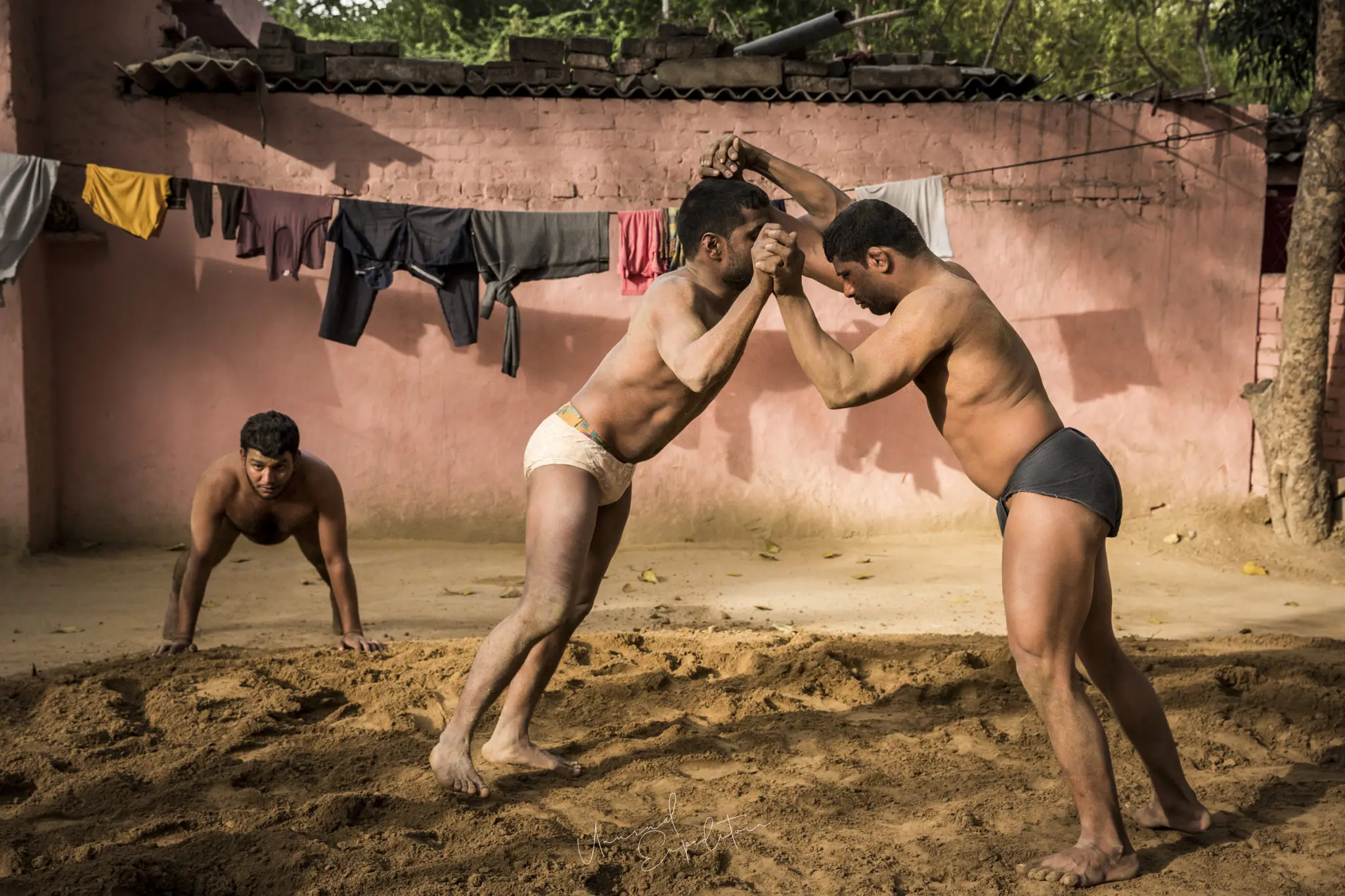
Kushti wrestling, also called pehlwani, is the traditional wrestling of north India, practised in akharas: walled yards with a pit of soft, dug earth, a shrine, a few weights and a guru who trains the wrestlers. Delhi still has working akharas, and an early-morning session there, with wrestlers grappling in the dirt and light falling through the trees, is one of the most memorable things you can photograph in the city, provided you ask the guru first.
This guide is part of our Delhi photography tour guide. We photographed a Delhi akhara on one of our India trips; the photographs here are our own, and we hold the rights to them.
What kushti wrestling is
Kushti, or pehlwani, is described in Wikipedia's article on the sport as a form of folk wrestling practised across the Indian subcontinent. Trainees join an akhara, a traditional wrestling school, and are apprenticed to its guru, sometimes called the ustad. They train on earth, not mats: the pit is dug and softened, and water is added to keep it at the right consistency. Wrestlers wear only a loincloth for training, and the usual result of a bout is two men coated from head to foot in the same red-brown earth. Competitions are called dangal, and according to the same article a bout is won by pinning the opponent's shoulders and hips to the ground. For the wider world of the akhara, the anthropologist Joseph Alter's study The Wrestler's Body, published by the University of California Press, describes kushti as a whole discipline of life, with its own diet, routine and devotion, as much as a sport.
Inside a Delhi akhara
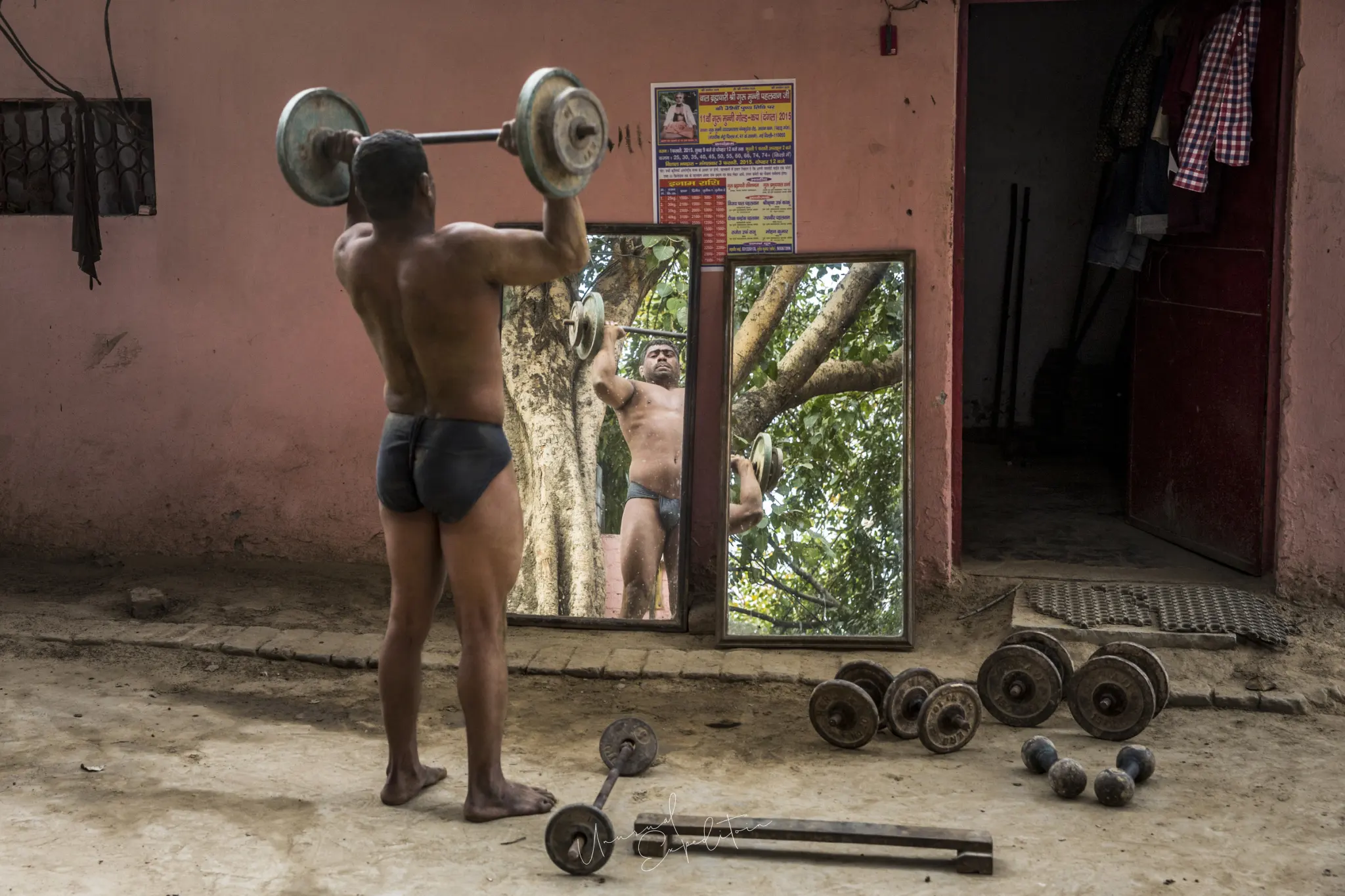
A Delhi akhara looks modest from the street: a gate, a wall painted in faded pink or ochre, a big tree for shade. Inside are the pit, often a small shrine, washing hung on a line, and a corner of old-fashioned weights: barbells, dumbbells, clubs and stone rings. Mirrors lean against the walls. Wrestlers arrive early, warm up, and work through a long routine of exercises before they wrestle. Nothing is staged for visitors. That is the appeal for a photographer, and the reason to behave as a guest in someone else's training hall.
The training: dand, bethak and the earth pit
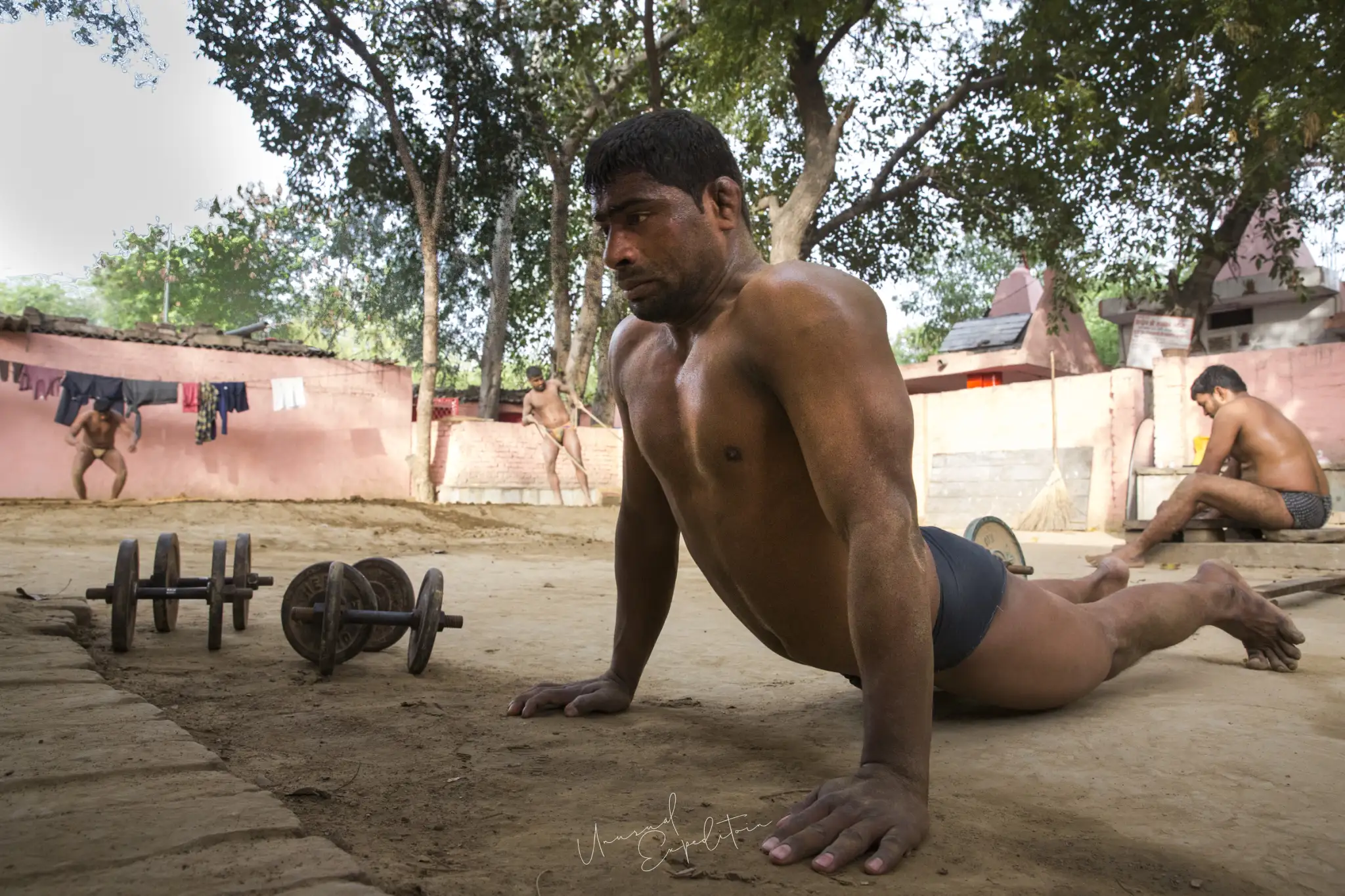
Kushti training is built on repetition. Wikipedia lists the classic exercises as dand, a sweeping press-up that arches the back, and bethak, a deep squat, done in hundreds; the gada, a heavy stone fixed to the end of a bamboo staff, swung around the body; and Indian clubs, the mugdar. Then comes the wrestling itself, bout after bout in the pit, with the guru calling corrections from the side. For photographs, each stage gives you something different: the rhythm of the dand in low side light, the strain of a lift, and finally the knot of two bodies in the dirt.
How to photograph kushti wrestling
The light in an akhara is usually soft and directional: early sun through the trees, open shade under a veranda, dust hanging in the air. Shoot from low, near the edge of the pit, so the earth fills the foreground and the wrestlers rise against the wall. A 24-70mm covers the yard; a 70-200mm lets you stay back from the bouts and isolate faces and hands. Use a fast shutter for the throws and accept some grain; the dust and the movement are the picture. Protect the camera: fine earth gets everywhere, and you will want a cloth and a blower for the lens at the end of the session.
"In the akhara you are a guest at someone else's prayer. I ask the guru, I take my shoes off, I stay out of the pit and I keep still. After a while they forget you are there, and that is when the real pictures start."
Joseph Mak, tour leader, Unusual Expedition
Permission, etiquette and respect
An akhara is a private training ground and often a religious space. Ask the guru before you photograph anything, and accept the answer. Take your shoes off where the wrestlers do, never step into the pit, and keep your bag clear of the training area. Wrestlers train in loincloths, so photograph with the same respect you would want yourself: athletes at work, not bodies on display, and nothing that a wrestler would be embarrassed to see. Many akharas also train boys and teenagers; we do not photograph minors, and we ask you not to. Offer to send the guru a few pictures afterwards; it is the best thank-you you can give.
What to photograph in an akhara
| Moment | What to look for | Lens | Settings to start from |
|---|---|---|---|
| Arrival and preparation | Oiling, dusting with earth, the shrine | 24-70mm | Open aperture, high ISO in shade |
| Dand and bethak | Rhythm, arched backs, dust | 24-70mm, low angle | Fast shutter or a deliberate blur |
| Weights and clubs | Strain, reflections in the mirrors | 24-70mm | Expose for skin in the light |
| Bouts in the pit | Grips, faces, earth flying | 70-200mm | Fast shutter, continuous focus |
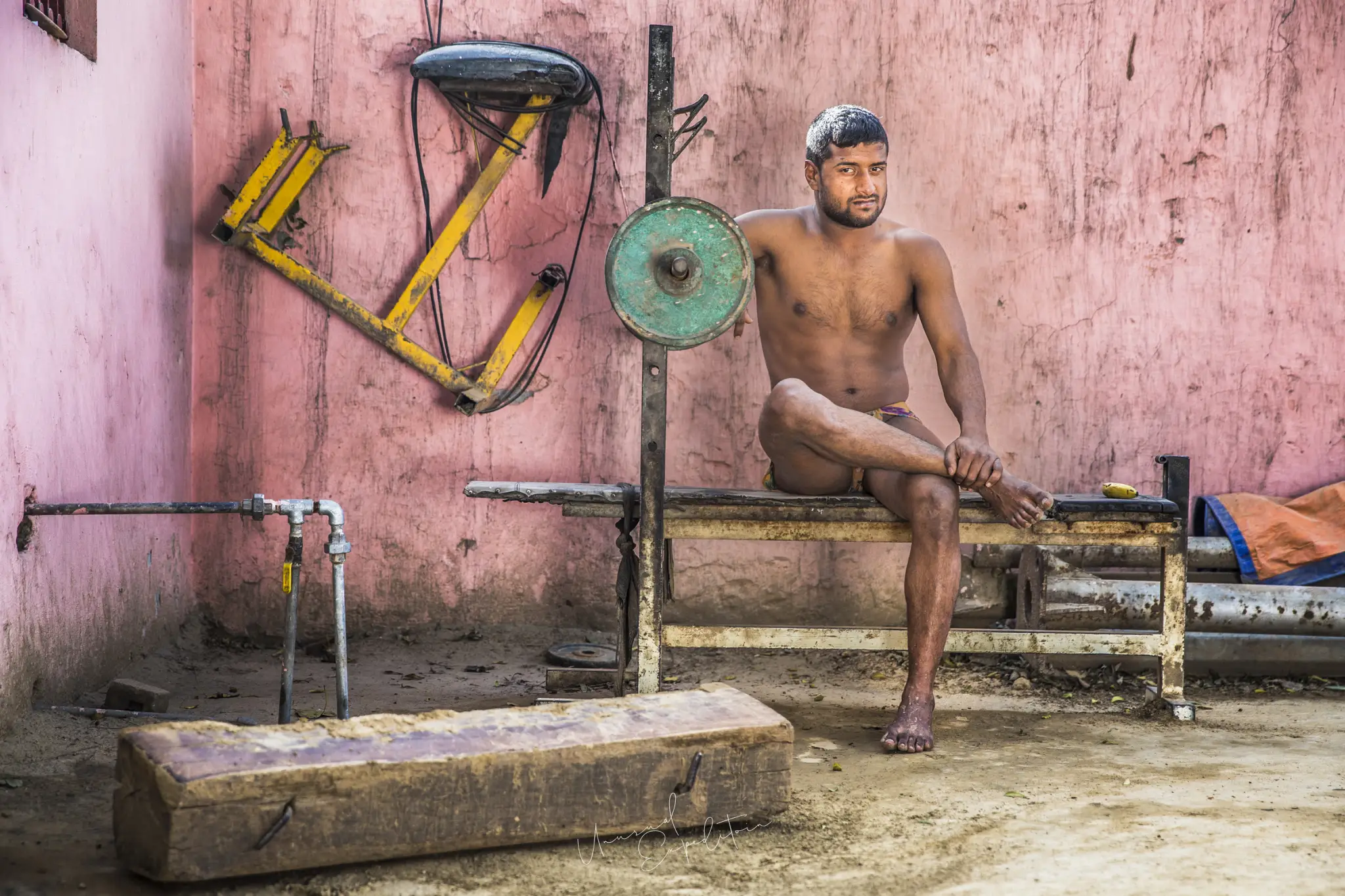
| Rest | Quiet portraits on the benches | 24-70mm | Ask first, eye-level |
The bouts are the obvious subject, but the quiet minutes around them often make the stronger portraits.
When to visit an akhara in Delhi
Akhara sessions start early in the morning. The cool months from October to March are the comfortable time for both you and them; by the hot season the morning session moves earlier still. Visits depend on introductions, so plan them through someone who knows the akhara; turning up unannounced rarely works. Pair the morning with the old city's lanes in our Delhi street photography guide, or with Holi further south in Mathura and Vrindavan. Our Agra photography tour guide covers the next stop on the route.
Visit an akhara with us
We run Delhi as a private trip on request and can ask for an introduction to an akhara as part of it, for individuals, families, couples and photographers. We arrange all the logistics, and a photographer or photography coaching can be added at extra cost. See private tours and our India photography tours page.
Ask us about photographing kushti in Delhi
Delhi photography tours
The next Delhi departure is announced on the Delhi photography tours page, with previous expeditions and all the planning guides.
Explore Delhi in depth
- Delhi Photography Tour Guide: Old Delhi, Akharas and Railway PlatformsIndia
- Delhi Street Photography: Railway Platforms, Porters and PilgrimsIndia
Upcoming Photo Tours
- Egypt Photo Tour – EgyptEgypt 12 Dec 2026 To 20 Dec 2026
- Inner Mongolia Winter Owl Photo Tour – ChinaChina 01 Jan 2027 To 04 Jan 2027
- Inner Mongolia Winter Photo Tour – ChinaChina 05 Jan 2027 To 11 Jan 2027
- Mekong And Central Highland Vietnam Photo Tour - VietnamVietnam 16 Jan 2027 To 24 Jan 2027