
Delhi Photography Tour Guide: Old Delhi, Akharas and Railway Platforms
Photography in Delhi beyond the monuments: Old Delhi lanes and porters, the akharas, railway platforms, the light and the seasons.
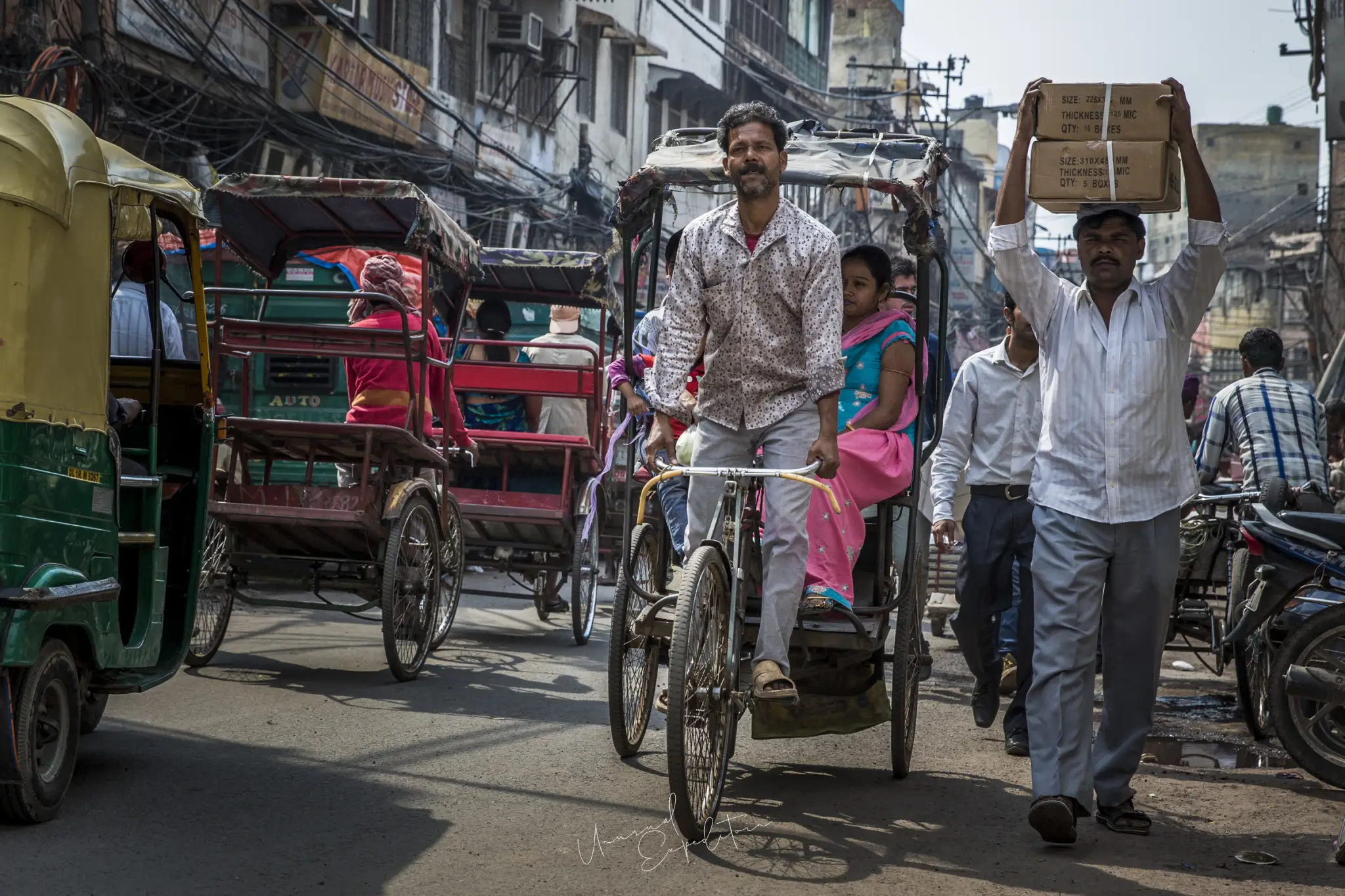
Photography in Delhi, for us, means people more than monuments: the porters and cycle rickshaws of Old Delhi's lanes, the pavement workshops, the kushti wrestlers training in the earth pit of an akhara, and the crowds on the railway platforms. The Red Fort, Jama Masjid and Humayun's Tomb are all here and well worth a visit, but Delhi's best pictures are in its streets, in the cool months from October to March, in the soft light of early morning.
This is the Delhi area guide within our India photography tour guide, which covers visas, money, flights and the rest of the country. Delhi is where most of our India trips begin and end, and we have photographed it between the festivals and the Taj. The photographs in this guide are our own, taken on those trips; we hold the rights to them, and the notes come from knowing the city first hand.
Photography in Delhi: where to start
Delhi is a huge city of several cities, from the Mughal walled town to the wide avenues of New Delhi and the suburbs beyond. For a photographer the old walled city in the north, Shahjahanabad, now called Old Delhi, is the place to start, because it is dense, busy and full of trades still worked by hand. Beyond it, three subjects have given us the most: the akharas, the traditional wrestling schools; the railway stations, where all of India passes through; and the small workshops on the pavements, where repairmen fix bicycles, rickshaws and everything else. Each is covered in its own guide, and each needs the same approach: arrive early, slow down, ask before you photograph.
Old Delhi photos: the lanes of the old city
Old Delhi photos are mostly about movement. Delhi Tourism describes Chandni Chowk, the old city's main street, as one of the oldest and busiest markets in Delhi, built by the Mughal emperor Shah Jahan in the 17th century. Off it, narrow lanes specialise in one trade each: cloth, spices, paper, books, brass. Cycle rickshaws, handcarts and porters carrying loads on their heads move through all of them at once. Stand at a corner where a lane meets the main road and let the traffic come to you, with a 24-70mm at a shutter speed fast enough to freeze a face. Morning, before the shops fully open, is calmer and the light is softer between the buildings.
Pavement workshops and repairmen
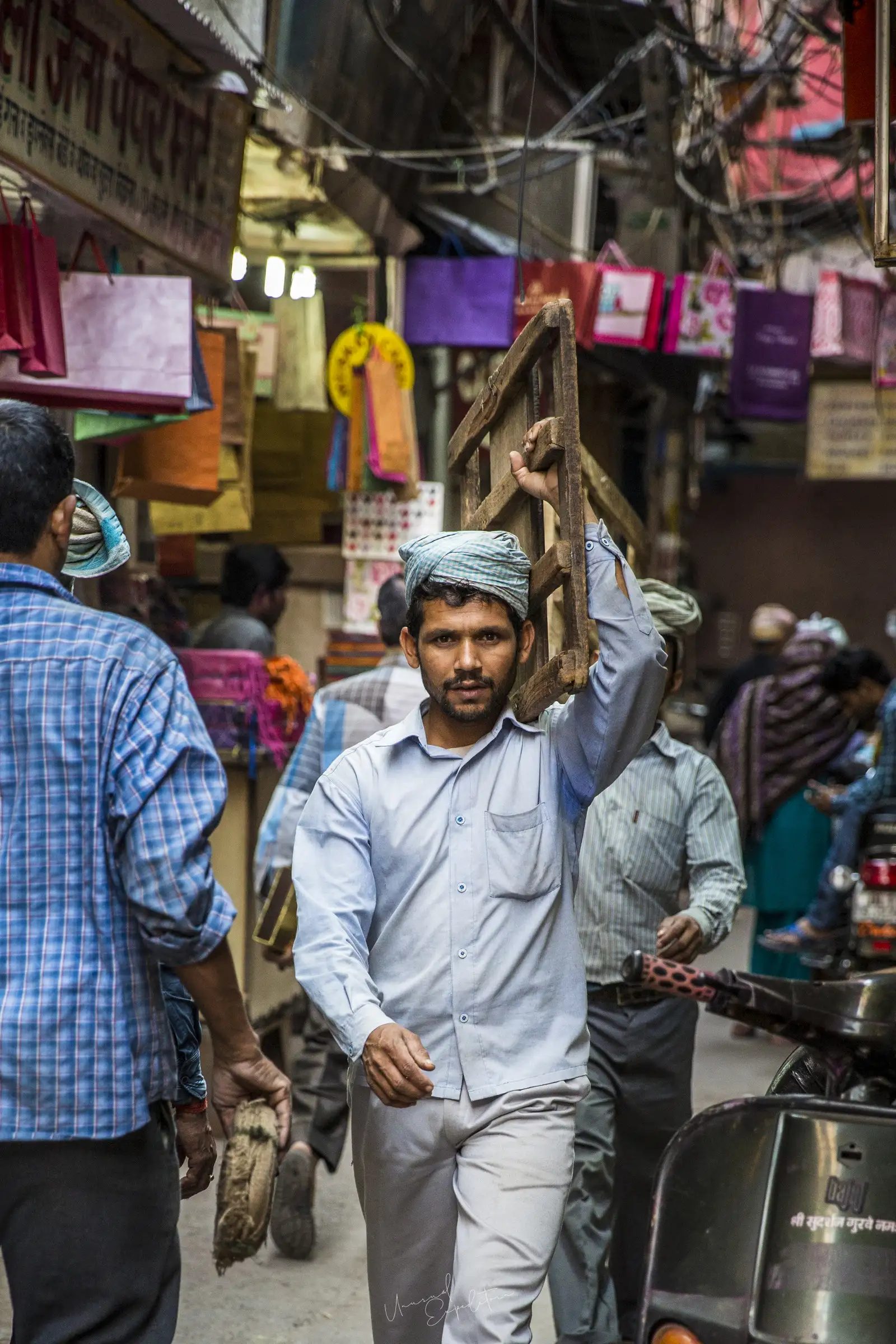
Delhi runs on repairs. On almost any street a man sits on the pavement with a bicycle wheel, a box of spanners and a wall of hanging parts behind him, fixing tyres, chains and the cycle rickshaws that carry goods and people through the old city. These pavement workshops make quiet, detailed portraits: a working face, tools laid out on the stones, a wall of patina. A 24-70mm at the short end, from a step back, keeps the context; ask first and you will often be invited to sit down.
The akharas and kushti wrestlers
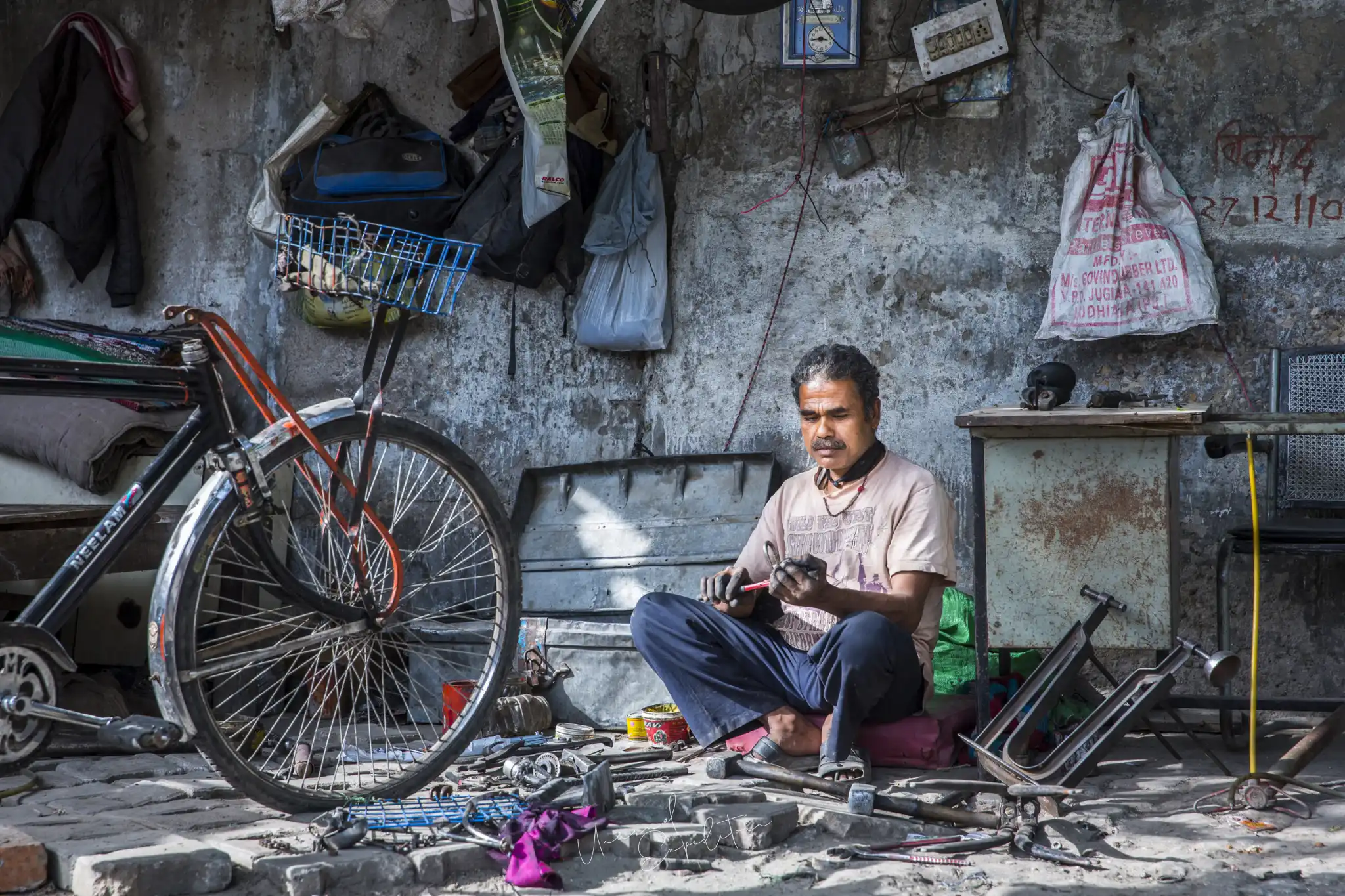
Delhi still has akharas, traditional wrestling schools where pehlwans, the wrestlers of kushti, train under a guru in a pit of soft earth. Sessions start early, with exercises, weights and bouts in the dirt, and the light filtering through the trees onto dust and skin is extraordinary. It is a private training ground, not a performance, so visits depend on the guru's permission. Our kushti wrestling in Delhi guide explains what happens in an akhara and how to photograph it with respect.
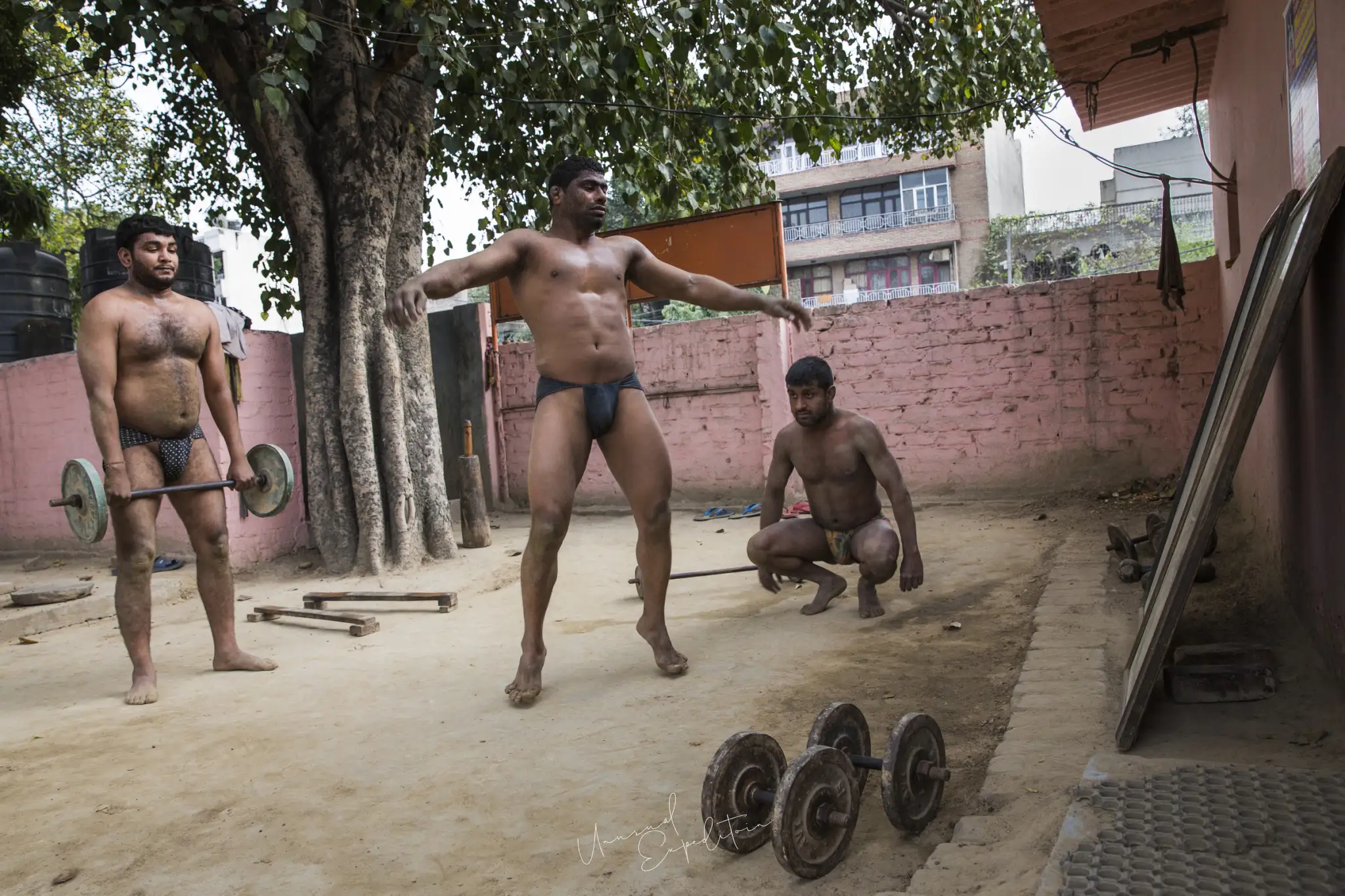
"Delhi wears people out because they try to see everything in it. I would rather spend one morning in the old city and one in an akhara than tick off five monuments in the traffic. The city gives you its best pictures when you stand still."
Joseph Mak, tour leader, Unusual Expedition
Railway platforms
Delhi's big railway stations are a whole country in motion: families with bundles, porters in red, travellers asleep on benches, sweepers between trains, elderly travellers waiting patiently for theirs. They are also governed by rules, because Indian Railways requires permission for photography on its premises. Our Delhi street photography guide covers the platforms and the lanes, the light and how to work there without trouble.
Where to photograph in Delhi
| Place | Subject | Best light | Lens |
|---|---|---|---|
| Old Delhi lanes and Chandni Chowk | Porters, rickshaws, trades | Early morning | 24-70mm |
| Pavement workshops | Repairmen, tools, portraits | Open shade, any time | 24-70mm |
| An akhara | Wrestlers training in the earth pit | Early morning | 24-70mm, 70-200mm |
| Railway platforms | Passengers, porters, sweepers | Morning, light under the platform roofs | 24-70mm, 16-35mm |
Almost every Delhi subject is best early, before the heat, the traffic and the haze build up.
When to photograph Delhi
The cool, dry months from October to March are the season for photography in Delhi, as across the northern plains. The India Meteorological Department counts January and February as winter, and winter mornings often bring fog, which can delay trains and flights but softens the streets beautifully. Air quality is the other factor. In late autumn and winter Delhi's air often falls into the poor categories, and the Commission for Air Quality Management runs a graded action plan for the National Capital Region, with restrictions that step up as the air quality index rises. Check the daily index, carry a mask if you are sensitive, and work with the hazy light instead of fighting it. From April the heat builds, and the monsoon follows from June to September.
Delhi with Agra, Mathura and Vrindavan
Most international flights to north India land in Delhi, and the city is the natural start for the classic photography route south: Holi in Mathura and Vrindavan, then the Taj Mahal and the Yamuna in our Agra photography tour guide. Give Delhi a full morning at each end of the trip, not a rushed afternoon between flights, because the old city rewards a slow walk.
Explore Delhi in depth
- Kushti wrestling in Delhi: photographing an akhara
- Delhi street photography: railway platforms, porters and pilgrims
Photograph Delhi with us
We run Delhi as a private trip on request, on its own or as the start of an Agra, Holi or Varanasi trip, for individuals, families, couples and photographers who want their own pace. We arrange all the logistics, the cost can be lower than our group tours because no tour leader travels, and a photographer or photography coaching can be added at extra cost. Ask at least two months ahead if you can; last-minute trips can be arranged. See private tours and our India photography tours page.
Delhi photography tours
The next Delhi departure is announced on the Delhi photography tours page, with previous expeditions and all the planning guides.
Explore Delhi in depth
- Kushti Wrestling in Delhi: Photographing an AkharaIndia
- Delhi Street Photography: Railway Platforms, Porters and PilgrimsIndia
Upcoming Photo Tours
- Egypt Photo Tour – EgyptEgypt 12 Dec 2026 To 20 Dec 2026
- Inner Mongolia Winter Owl Photo Tour – ChinaChina 01 Jan 2027 To 04 Jan 2027
- Inner Mongolia Winter Photo Tour – ChinaChina 05 Jan 2027 To 11 Jan 2027
- Mekong And Central Highland Vietnam Photo Tour - VietnamVietnam 16 Jan 2027 To 24 Jan 2027