
Delhi Street Photography: Railway Platforms, Porters and Pilgrims
Delhi street photography on the railway platforms and in Old Delhi: what to look for, the light, the permission rules and etiquette.
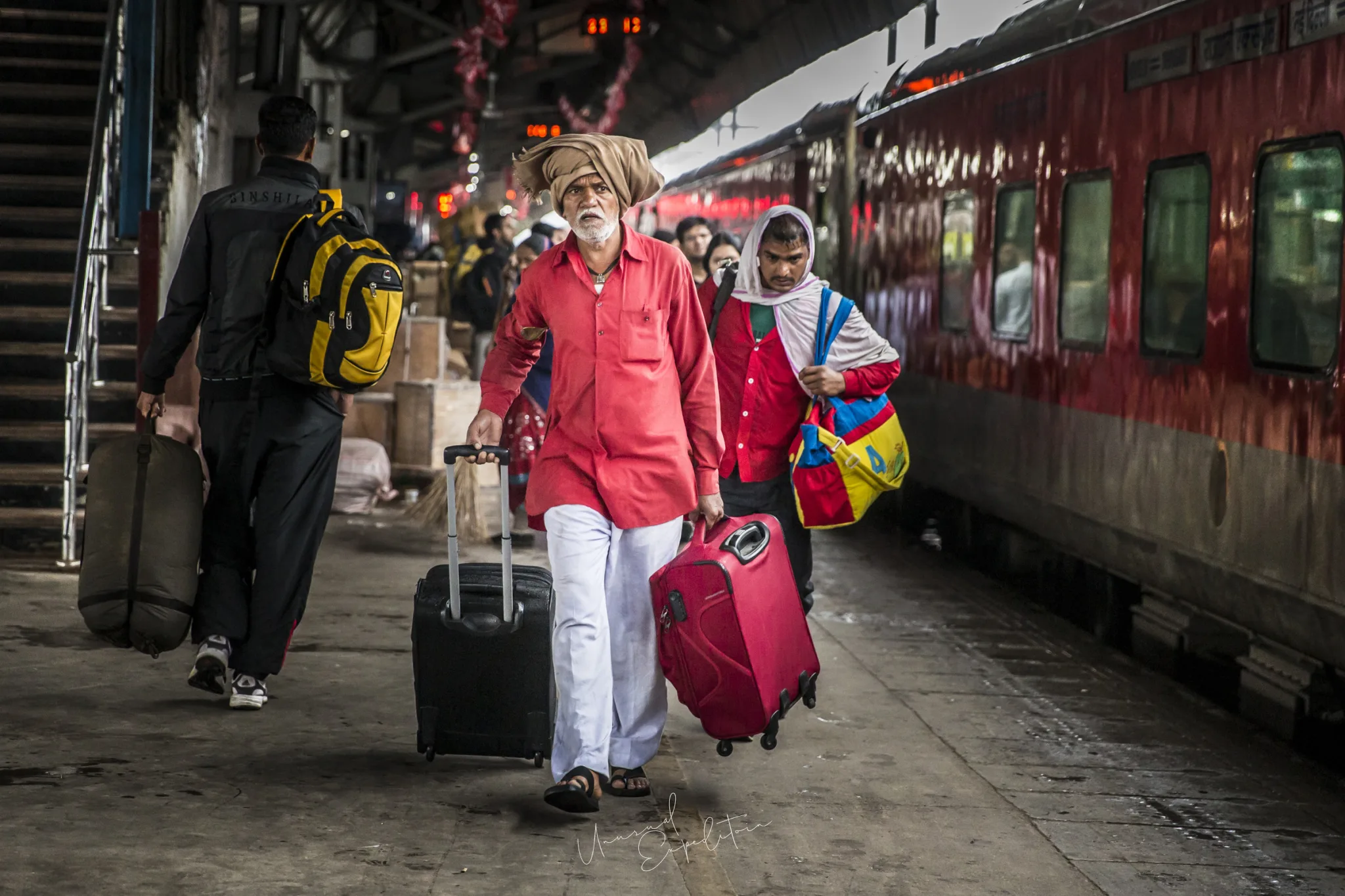
Delhi street photography is at its richest in two places: the old city's lanes around Chandni Chowk and the long platforms of the city's big railway stations, where porters, families, sweepers and travellers from every corner of India pass in a few minutes. Go early, carry one zoom, ask before close portraits and know the railway rules, because Indian Railways requires permission for photography on its premises. The reward is a whole country in motion in one frame.
This guide belongs to our Delhi photography tour guide. The photographs are our own, taken on our trips through Delhi; we hold the rights to them, and the notes come from knowing these places first hand.
Street photography Delhi: the railway platforms
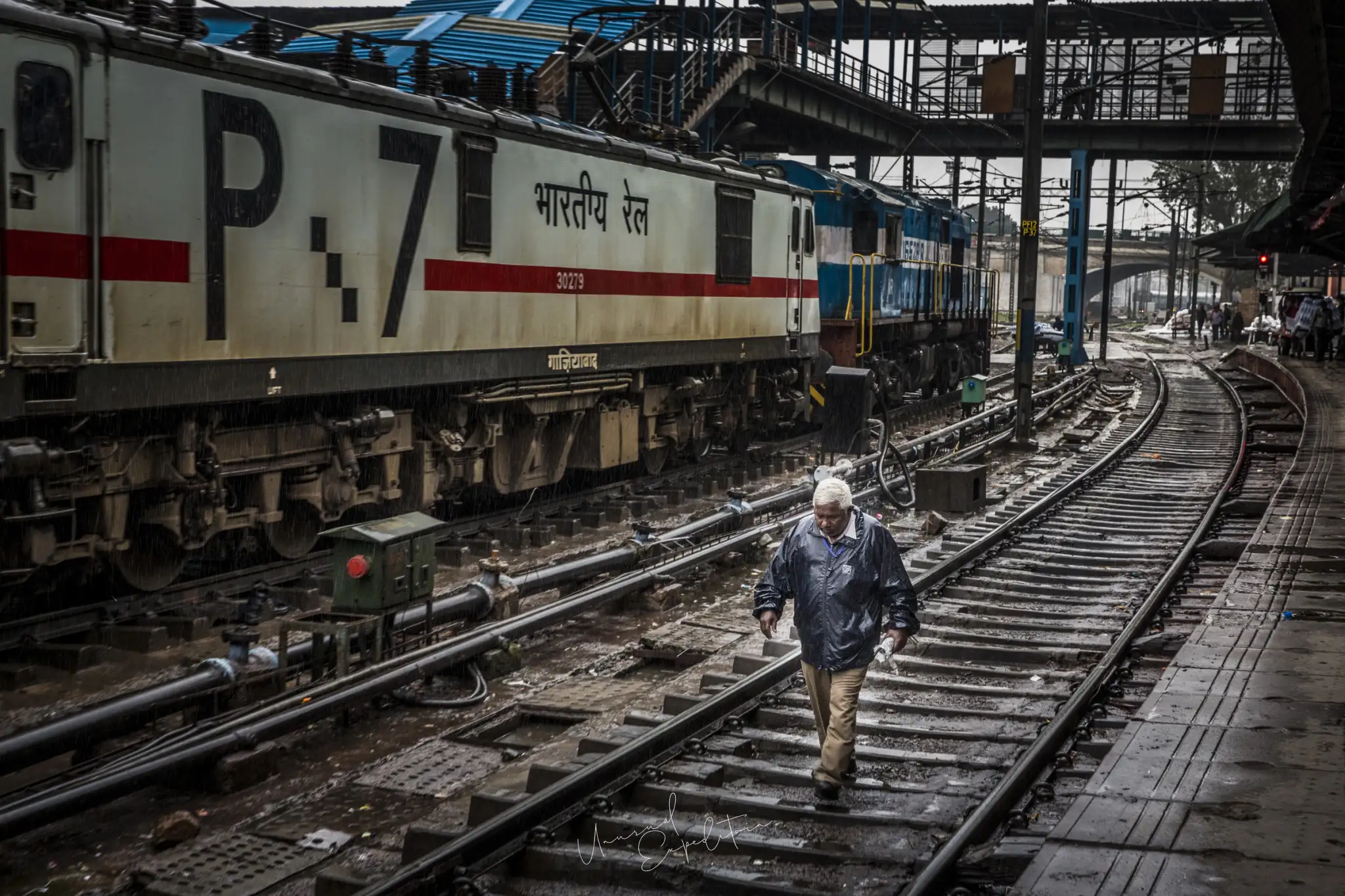
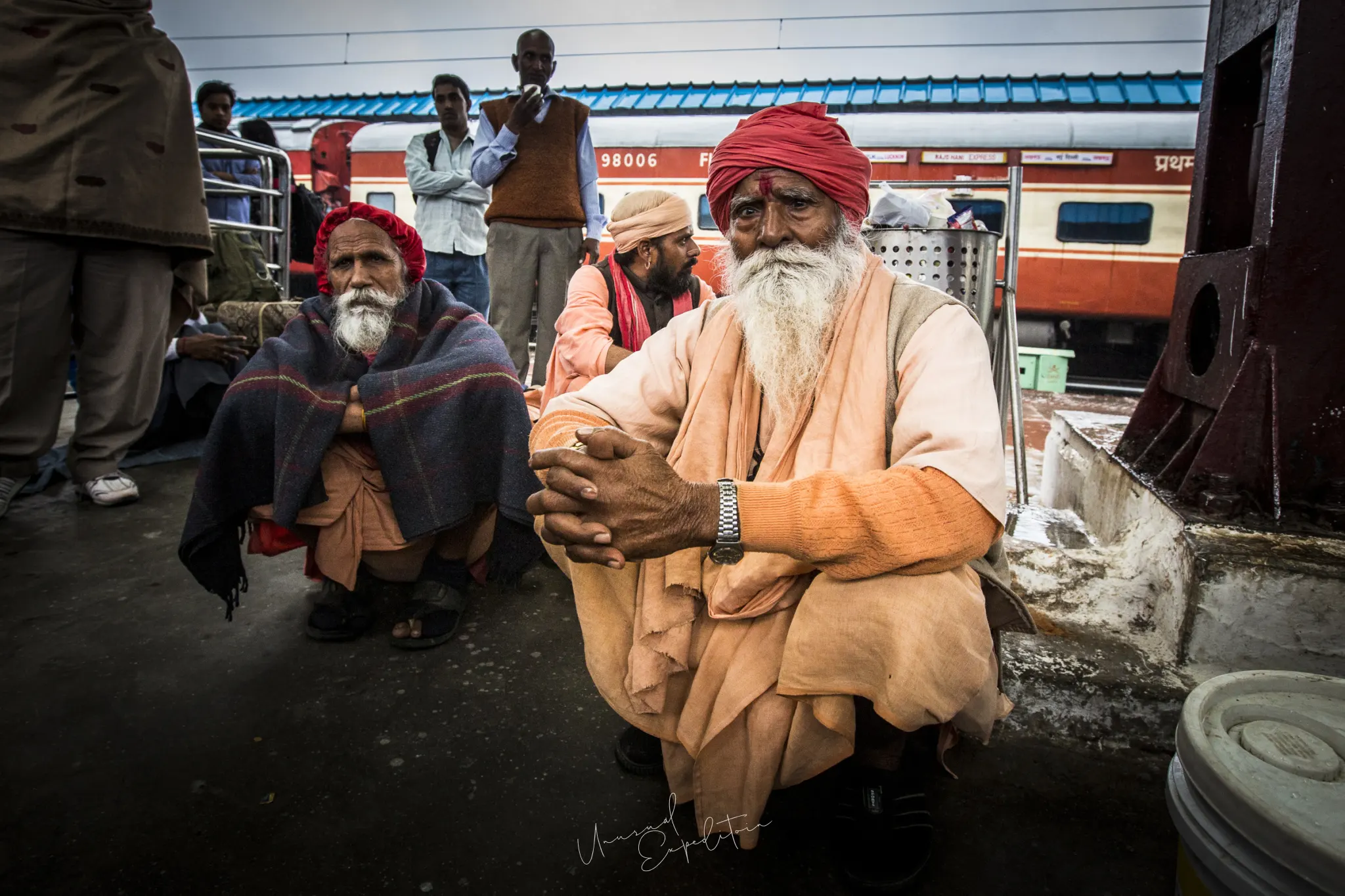
A Delhi railway platform is street photography with a roof. Long-distance trains pull in from every direction, and for the few minutes before they leave, the platform fills with everything at once: elderly men in turbans and shawls guarding their bundles, families with suitcases bigger than their children, porters loading luggage onto handcarts, sweepers pushing a broom along the wet stone between trains. The platform roofs cut the light into strips, and the red and blue carriages make a strong, saturated background. Find a pillar to lean on, let the crowd come past, and work with a 24-70mm at the wide end. The best moments are arrivals and departures, when everyone is moving with purpose and no one is watching you.
The railway rules for photographers
Before you raise a camera at a station, know the rules. The Railway Board's general guidelines for still and video photography state that photography on railway premises needs permission. For Indian nationals it is granted by the public relations office of each zonal railway; for foreign nationals, by the Public Relations Directorate of the Railway Board. The guidelines add that permission is conditional on photography staying within railway premises and trains, not affecting normal working and not inconveniencing other passengers, and that the holder must show the permission letter to railway officials on demand. In practice many people photograph on platforms with phones, but a large camera draws attention. Keep to the public areas, never step onto a track, avoid photographing police, soldiers and security checks, and if an official asks you to stop, stop politely and move on.
What to look for on the platforms
| Subject | Where on the platform | Light | Approach |
|---|---|---|---|
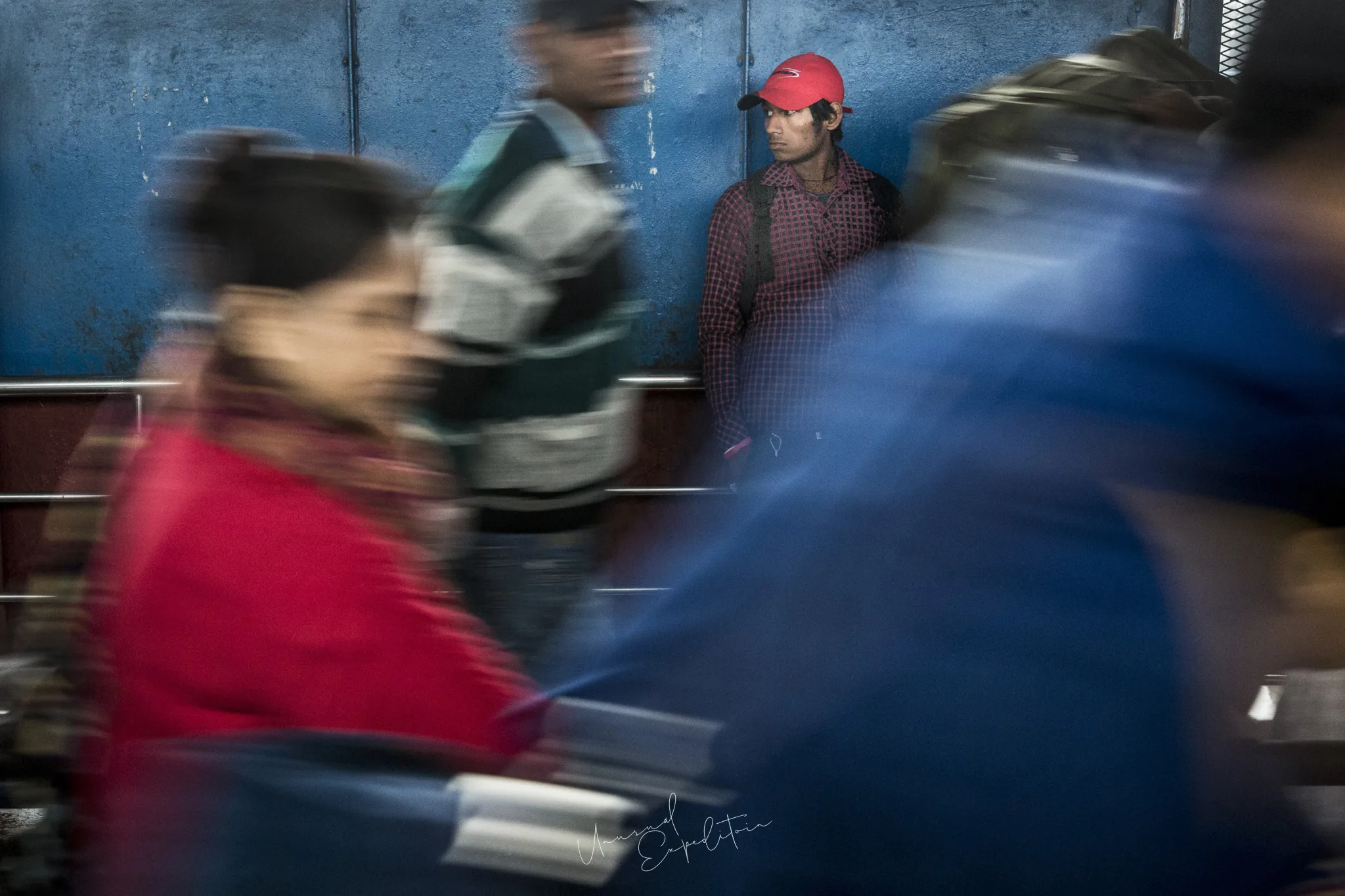
| Passengers with luggage | Near the stairs and footbridges | Strips of light under the roof | Wide, let them walk into the frame |
| Porters and handcarts | Parcel areas and train doors | Open shade | Ask, show the picture |
| Sweepers and workers | Between trains | Reflections on wet stone | From a distance, unobtrusive |
| Waiting travellers | Benches and pillars | Soft, directional | Sit nearby, ask for a portrait |
| Locomotives and tracks | Platform ends | Morning, low sun | Stay behind the platform edge |
The quiet subjects, the waiting and the sweeping, often make better pictures than the rush.
Railway station night photo tips
A railway station at night is a different subject. The platforms are lit by overhead lamps and the glow of the trains, the crowd thins to a few groups sleeping on bundles, and the light is hard and patchy. Use a fast lens or a high ISO, expose for the lamps, and let the shadows fall to black. Wire mesh and glass on footbridges can become a soft foreground if you shoot through them with a wide aperture. Respect sleepers: a person asleep on a platform has no way of consenting to a photograph, and we leave them be unless the frame shows no face.
"Stations are where I tell people to put the camera down for the first few minutes. Watch the rhythm: when the train comes, who waits, who runs, where the light falls. Then you know where to stand, and you stop chasing."
Joseph Mak, tour leader, Unusual Expedition
Photography walks Delhi: the old city lanes
For photography walks in Delhi, the old walled city is the classic route. Delhi Tourism describes Chandni Chowk as one of the oldest and busiest markets in Delhi, built by Shah Jahan in the 17th century, and the lanes that run off it each specialise in a trade: cloth, paper, books, spices, metalwork. Porters carry towers of boxes on their heads, cycle rickshaws weave between handcarts, and shopkeepers sit cross-legged among their stock. Walk slowly with a 24-70mm, stop at a corner, and let the traffic pass. Early morning, before the shutters are all up, is calmer and the light is still soft between the buildings. Our Delhi photography tour guide shows the lanes and the pavement workshops.
Etiquette for street photography in Delhi
Delhi is used to cameras, but courtesy still opens doors. Greet people before close portraits, show them the result, and accept a refusal without argument. Be especially careful photographing women; many are happy to be photographed when asked, and some are not. We do not photograph children, and we suggest you do not either. Avoid photographing people in distress, the very poor in ways they would not choose, and anyone asleep. If someone asks for money for a portrait, decide before you take it. A small gesture, sending a print or a picture by phone, is usually appreciated more than cash.
Light, seasons and safety
The cool months from October to March suit street photography in Delhi. Winter mornings can bring fog, which softens the lanes but also delays trains, so build slack into any plan that depends on a departure. Air quality in late autumn and winter is often poor, and the Commission for Air Quality Management steps up restrictions across the National Capital Region as the air quality index worsens; check the daily index and carry a mask if you need one. Keep a small bag in front of you in crowds, and keep your camera strap on. The akharas, where wrestlers train early in the morning, are the other side of Delhi's street life; see kushti wrestling in Delhi. For the onward route south, read our Agra photography tour guide.
Walk Delhi's streets with us
We run Delhi as a private trip on request, with time in the old city, on the platforms and in an akhara, for individuals, families, couples and photographers. We arrange all the logistics, and a photographer or photography coaching can be added at extra cost. See private tours and our India photography tours page.
Ask us about street photography in Delhi
Delhi photography tours
The next Delhi departure is announced on the Delhi photography tours page, with previous expeditions and all the planning guides.
Explore Delhi in depth
- Delhi Photography Tour Guide: Old Delhi, Akharas and Railway PlatformsIndia
- Kushti Wrestling in Delhi: Photographing an AkharaIndia
Upcoming Photo Tours
- Egypt Photo Tour – EgyptEgypt 12 Dec 2026 To 20 Dec 2026
- Inner Mongolia Winter Owl Photo Tour – ChinaChina 01 Jan 2027 To 04 Jan 2027
- Inner Mongolia Winter Photo Tour – ChinaChina 05 Jan 2027 To 11 Jan 2027
- Mekong And Central Highland Vietnam Photo Tour - VietnamVietnam 16 Jan 2027 To 24 Jan 2027