
Where Are the Best Guizhou Photo Spots: Xijiang, Basha and the Terraces
Guizhou photo spots: Xijiang decks and bridges, Basha, the rice terraces, Zhaoxing and the karst waterfalls, with light and lenses.
The best Guizhou photo spots are the observation decks above Xijiang Miao village, the lit wind and rain bridges and lanes of Xijiang after dark, the forest paths of Basha, the rice terraces of the south east in evening light, the drum towers of Zhaoxing and, further west, the karst waterfalls of Xiaoqikong and Huangguoshu. Villages reward dawn and blue hour; terraces reward late afternoon; waterfalls reward soft, overcast light.
This guide works through the province spot by spot. For how a trip fits together, the seasons and getting there, read our Guizhou photography tour guide first.
Where are the best Guizhou photo spots?
Guizhou is a large, mountainous province, and its photo spots fall into two groups. In the south east, around Kaili and Leishan, are the Miao and Dong villages: timber houses packed onto slopes, covered bridges, terraces cut into the hills. In the west the landscape turns to karst, with turquoise rivers, peak forests and waterfalls. Most photographers spend the larger share of their time in the villages, where the people and the architecture are, and the spots below lead with the places we photographed ourselves. The karst sites are described from public information.
Xijiang observation decks
Xijiang Qianhu Miao Village, at the foot of Leigong Mountain, has close to 1,300 Miao households across more than ten hamlets, according to the Guizhou provincial government, and China Daily calls it the largest Miao village in China. The picture that sells it comes from the observation decks on the hillside opposite the main village. From there the whole valley fills the frame: dark roofs, brown timber, the river at the bottom. A 24-70mm covers it; a 70-200mm picks out one cluster of houses. At first light, mist sometimes lies in the valley and the roofs rise out of it. In daytime, cloud shadows moving over the slopes give the picture depth.
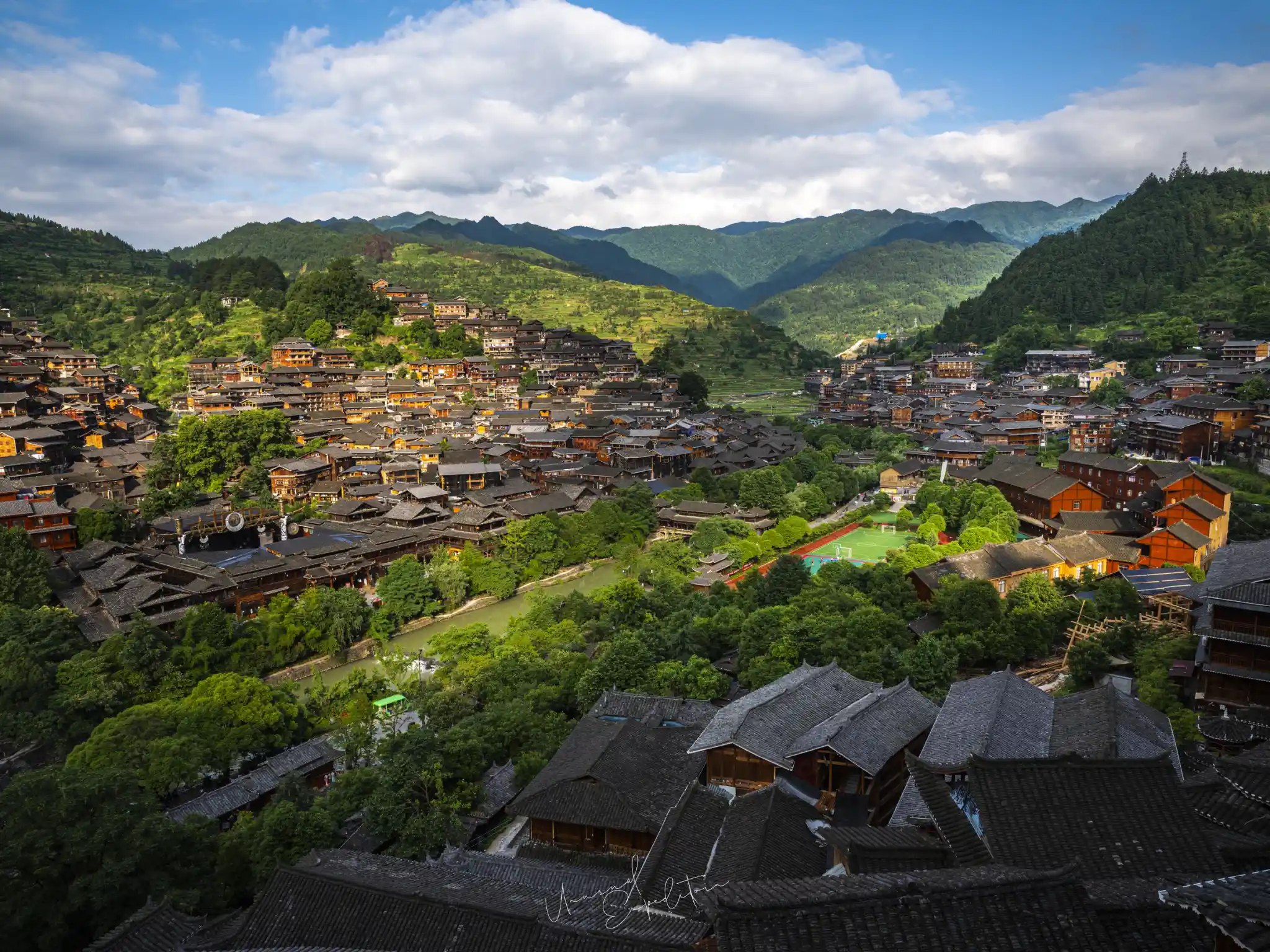
The decks are popular at blue hour, when the whole village lights up. Arrive early to claim a place at the rail; our Xijiang Miao village night view guide covers the evening session in detail.
Xijiang Miao village viewpoint by the river: the wind and rain bridges
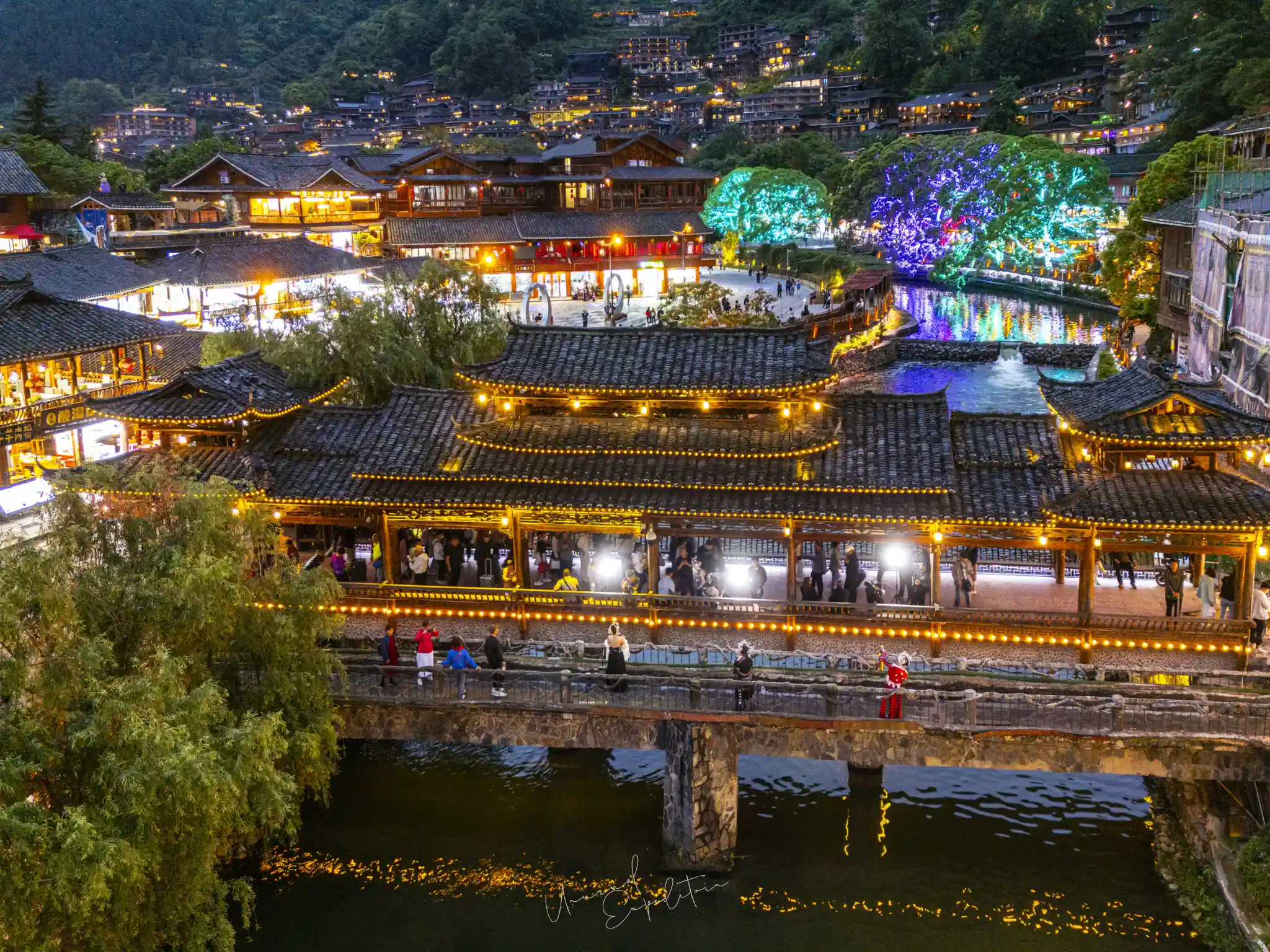
Down in the valley, the covered wind and rain bridges cross the river that runs through Xijiang. These timber galleries on stone piers are a Miao and Dong building form, and after dark they glow along their whole length. Shoot them from the riverbank or from the lanes above, where you can include the lit trees and houses around them. Blue hour is the time, before the sky goes black. Earlier in the evening the bridges are full of visitors, which can add life if you use a slow shutter and let them blur.
The lanes and night stalls of Xijiang
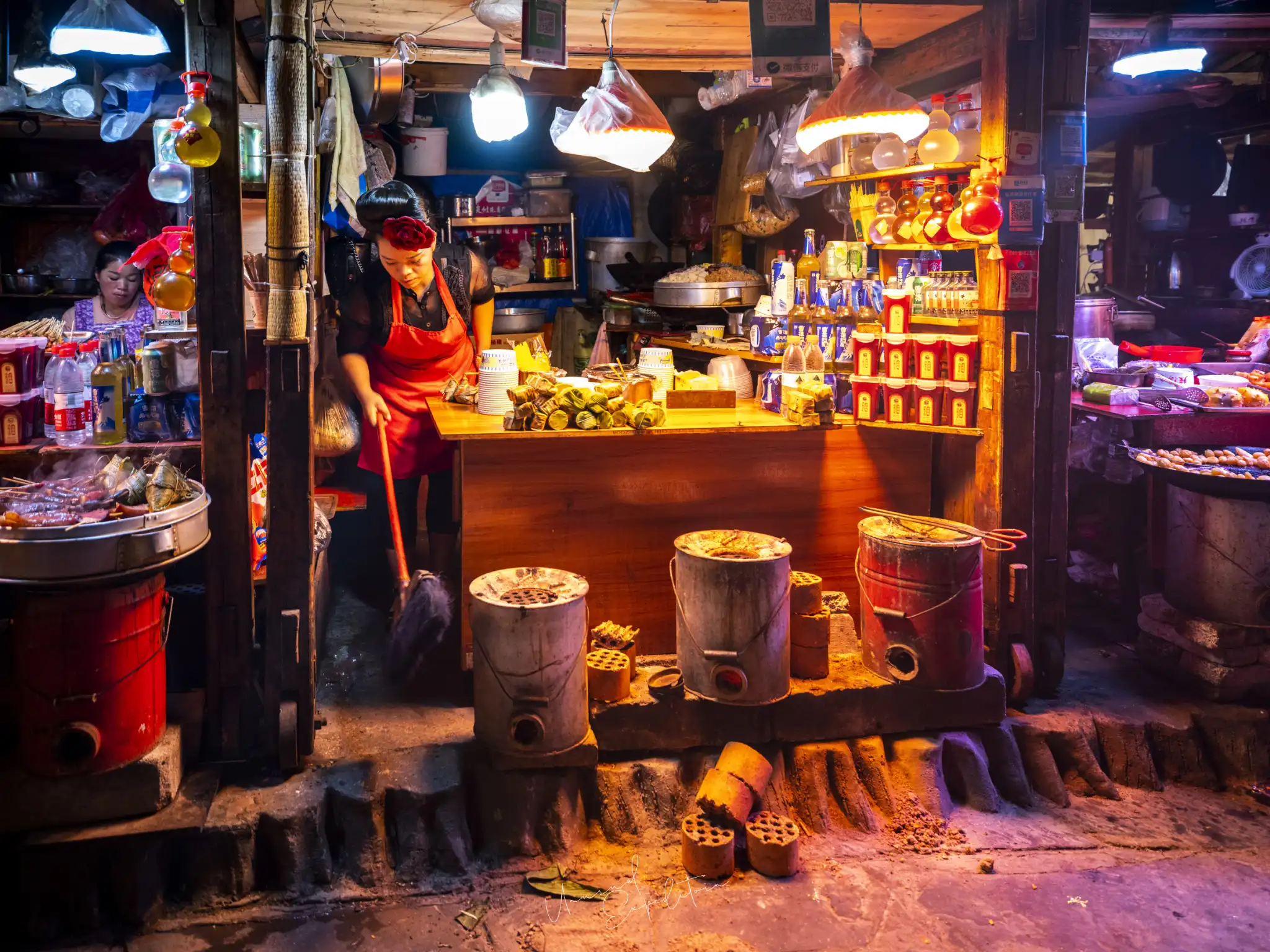
The stone lanes that climb between the houses are the other half of Xijiang. In the evening, snack stalls and small shops light up along them, and the warm light on old timber makes good close frames. A 24-70mm at a wide aperture and a raised ISO handle it without a tripod. Ask before you photograph a stallholder; most are busy, and a purchase opens conversation.
Basha Miao village
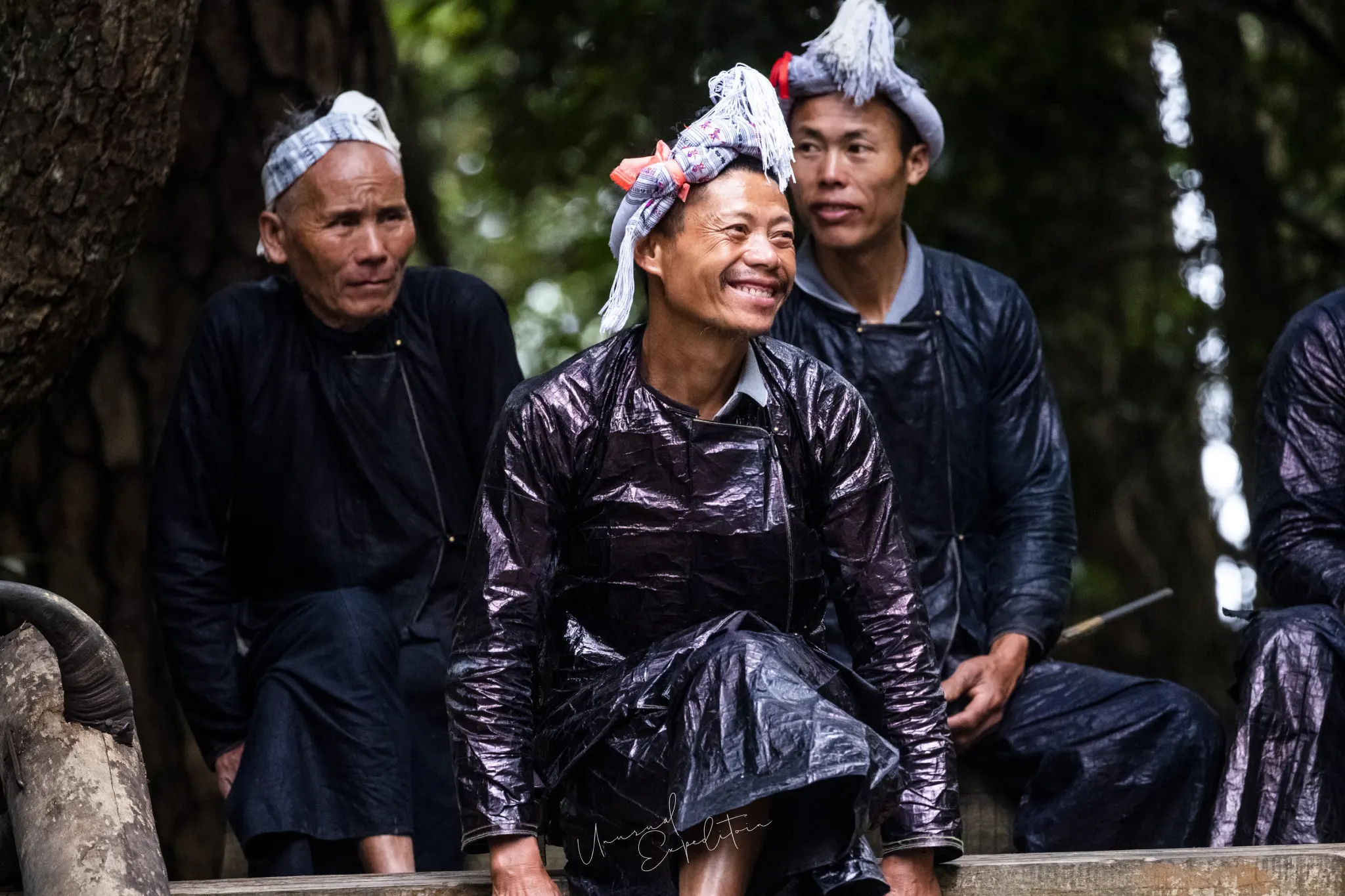
Basha, near Congjiang, is home to Miao men who wear their hair in a topknot and are allowed to carry hunting guns within their mountains by special permission, as China Daily has reported. The village sits in old forest, and the best photo spots are its gates, the stone steps between the houses and the clearings under the trees where welcome performances take place. Light under the canopy is low and green, so use a fast lens or raise the ISO, and look for side light where the trees open. Portraits are the reason to come; ask, and accept a no. Our Basha Miao village photography guide goes deeper into the people and the etiquette.
The rice terraces of south east Guizhou
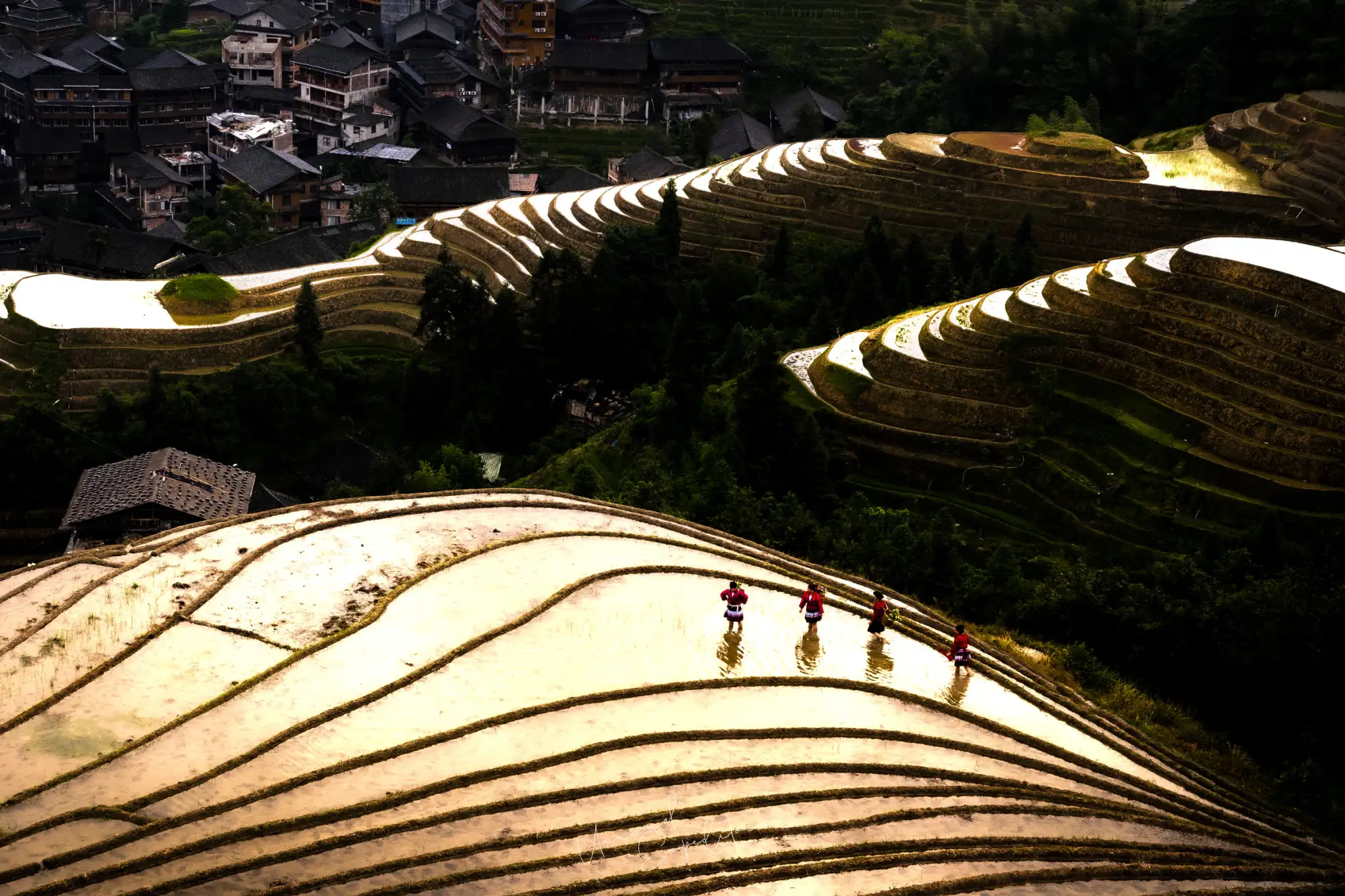
Terraces curve around the hills between the villages of the south east, with Jiabang among the best known. When the paddies are flooded before planting they hold the sky like mirrors; in summer they are bright green; in autumn they turn gold. Late afternoon is the hour to be there, with the sun low enough to light the water and throw the terrace walls into relief. Small figures crossing the banks give scale. A 70-200mm compresses the curves; a drone, where it is allowed, shows the pattern from above.
Zhaoxing Dong village
Zhaoxing is one of the largest Dong villages in Guizhou, with a drum tower for each of its clans and covered bridges built in timber. We describe it here from public information. The drum towers photograph well from the streets around them, and from raised ground the towers stand out among the roofs. Evening, when the village lights up and the day visitors thin out, is a good time; so is first light with mist on the paddies around the village.
Xiaoqikong and Huangguoshu in the karst west
West of the villages, the landscape becomes limestone. Xiaoqikong, in Libo county, has turquoise pools, small waterfalls and an old stone bridge in the forest. Huangguoshu is one of the largest waterfalls in Asia. Both are busy, managed scenic areas with paths and fixed viewpoints. Overcast light suits them best, because sun on white water and dark forest gives too much contrast. Bring a polariser for the pools and a neutral density filter for silky water.
In Guizhou the village is the picture, but the people make it. I would rather spend an hour on one lane in Xijiang after dark than run to every viewpoint in the guidebook.
Joseph Mak, tour leader, Unusual Expedition
Guizhou photo spots at a glance
| Spot | Best light | Lens | Note |
|---|---|---|---|
| Xijiang observation decks | Dawn, blue hour | 24-70mm, 70-200mm | Crowded at blue hour |
| Xijiang wind and rain bridges | Blue hour | 24-70mm | Shoot from the bank |
| Xijiang lanes and stalls | Evening | 24-70mm | Ask before portraits |
| Basha | Soft daylight under the trees | 24-70mm, fast lens | Portrait etiquette matters |
| Rice terraces | Late afternoon | 70-200mm | Flooded in spring |
| Zhaoxing | Evening, first light | 24-70mm | Drum towers |
| Xiaoqikong, Huangguoshu | Overcast | 24-70mm, filters | Managed scenic areas |
The village spots need an overnight stay to catch both ends of the day; the waterfalls can be done in one visit.
Practical notes
Xijiang is a developed scenic area with an entry ticket and shuttle buses inside; rules and prices change, so check locally. Drone flying is controlled in most scenic areas. Singapore passport holders can currently enter mainland China visa free for short stays under the mutual exemption in force since February 2024, according to Singapore's ICA; check before you travel. For seasons, see the best time to visit Guizhou.
Photograph Guizhou with us
Our Guizhou Blossom Photo Tour runs in spring, with Xijiang, Zhaoxing, Basha and the karst west along the way. Current departures and fares are on our China photography tours page.
Join the Guizhou photography tour
Inner Mongolia Winter Owl Photo Tour – China departs 01 Jan 2027 To 04 Jan 2027, led by Joseph Mak. Small group, photography first. All Guizhou photography tours.
Explore Guizhou in depth
- Guizhou Photography Tour: The Complete Guide to Miao Villages, Terraces and KarstChina
- How to Get to Guizhou: Flights, Entry, Season and What to ExpectChina
- Miao Silver and Embroidery in Guizhou: A Photographer's GuideChina
- Guizhou Rice Terraces Photography: Cloud, Villages and the SeasonsChina
- Xijiang Miao Village Photos: Photographing the Thousand Household VillageChina
- Xijiang Miao Village Night View: How to Photograph the Lit ValleyChina
- Best Time to Visit Guizhou for Photography: Blossom, Terraces and MistChina
- Basha Miao Village Photography: The Gunmen of GuizhouChina
Upcoming Photo Tours
- Egypt Photo Tour – EgyptEgypt 12 Dec 2026 To 20 Dec 2026
- Inner Mongolia Winter Owl Photo Tour – ChinaChina 01 Jan 2027 To 04 Jan 2027
- Inner Mongolia Winter Photo Tour – ChinaChina 05 Jan 2027 To 11 Jan 2027
- Mekong And Central Highland Vietnam Photo Tour - VietnamVietnam 16 Jan 2027 To 24 Jan 2027