
Holi Photography Tips: Protect Your Camera and Work the Crowd in Braj
Holi photography tips from Mathura and Vrindavan: protecting the camera, one lens, settings for powder and water, consent and safety.
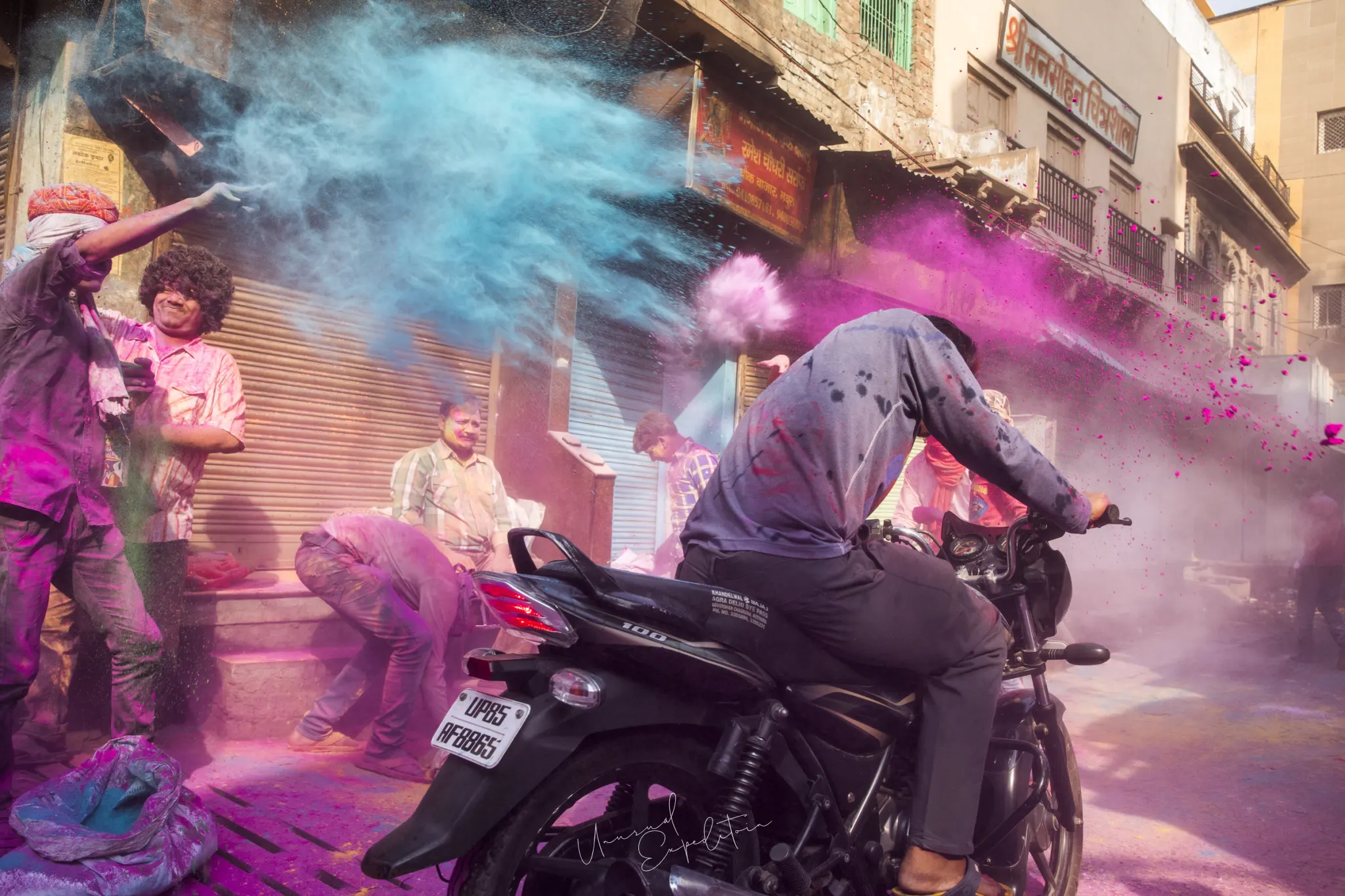
The best Holi photography tips come down to four things: protect the camera from fine powder and water, choose one lens and stop changing it, pick your vantage point before the colour starts, and ask people before close portraits. In Mathura and Vrindavan, where Holi runs for days in temples and streets, those habits decide whether you come home with pictures or a ruined sensor. Below is the kit, the settings and the street craft we use on our Holi trips to Braj.
These tips come from our Mathura Vrindavan tour guide, where the temples, ghats and lanes of Braj are introduced; read the Holi in Mathura and Vrindavan guide for what happens where.
How to protect your camera at Holi
Holi powder is finer than dust and gets into everything, and the coloured water that comes with it carries the powder deeper. Protect the camera before you leave your room, not in the street. A fitted rain cover or a clear plastic sleeve sealed with tape around the lens hood keeps the body clean; a clear UV or protection filter on the lens takes the hits and can be wiped or replaced. Seal the gaps around the card and battery doors with gaffer tape. Never change lenses or cards in the open during Holi; do it indoors after cleaning the outside of the camera. At the end of the day, blow the powder off with a hand blower before you wipe anything, because rubbing grinds the powder into the coatings.
One lens, chosen well
Because you cannot change lenses safely, choose one and live with it. A 24-70mm covers most of Holi in Braj: wide enough for the crowd and the temple arches, long enough for a portrait across a lane. A 16-35mm is better on the temple floor and in the narrowest lanes, where people are close. Longer lenses are hard to protect and hard to use in a crowd, and you rarely need them. Many photographers carry a second, weather-sealed body or a small waterproof camera in a pocket for the moments when the main camera is covered.
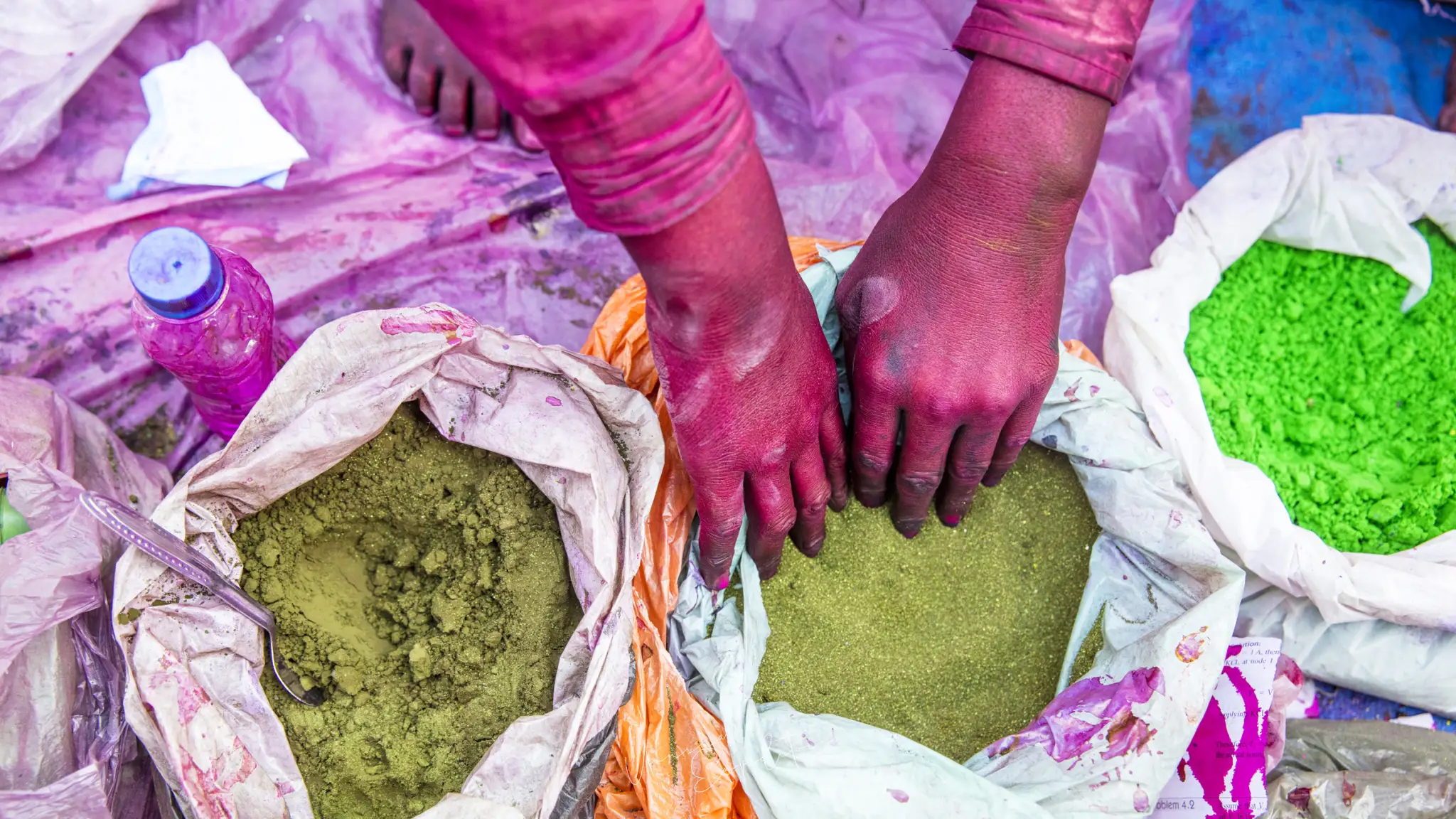
Camera settings for Holi
Holi in Mathura and Vrindavan mixes deep shade in the lanes with bright sun on the main streets, and the powder itself throws exposure off. These settings work for us.
| Situation | Shutter | Aperture | Notes |
|---|---|---|---|
| Powder thrown in sunlight | 1/500 s or faster | f/5.6 to f/8 | Freezes the cloud; backlight makes it glow |
| Temple courtyard in haze | 1/250 s | f/4 | Expose for the light shafts, let the crowd go dark |
| Portraits in the lanes | 1/250 s | f/2.8 to f/4 | Auto ISO, focus on the nearest eye |
| Motorbikes and water | 1/1000 s | f/5.6 | Continuous focus, burst mode |
Shoot raw: coloured haze shifts the white balance, and raw files recover it.
Holi street photography in Braj
Holi street photography in Mathura and Vrindavan is about position. On the colour day, groups gather at doorways and on steps with buckets and sacks, and every passing scooter or bicycle gets a cloud. Find a doorway or a raised step with the sun behind the action, and wait for the throw. Backlight is everything: a cloud of powder lit from behind glows, the same cloud lit from the front looks flat. Narrow lanes work best when the sun cuts across them and leaves the rest in shade. The water fights are harder to photograph than the powder, because water spots the filter; a lens hood and a cloth help.
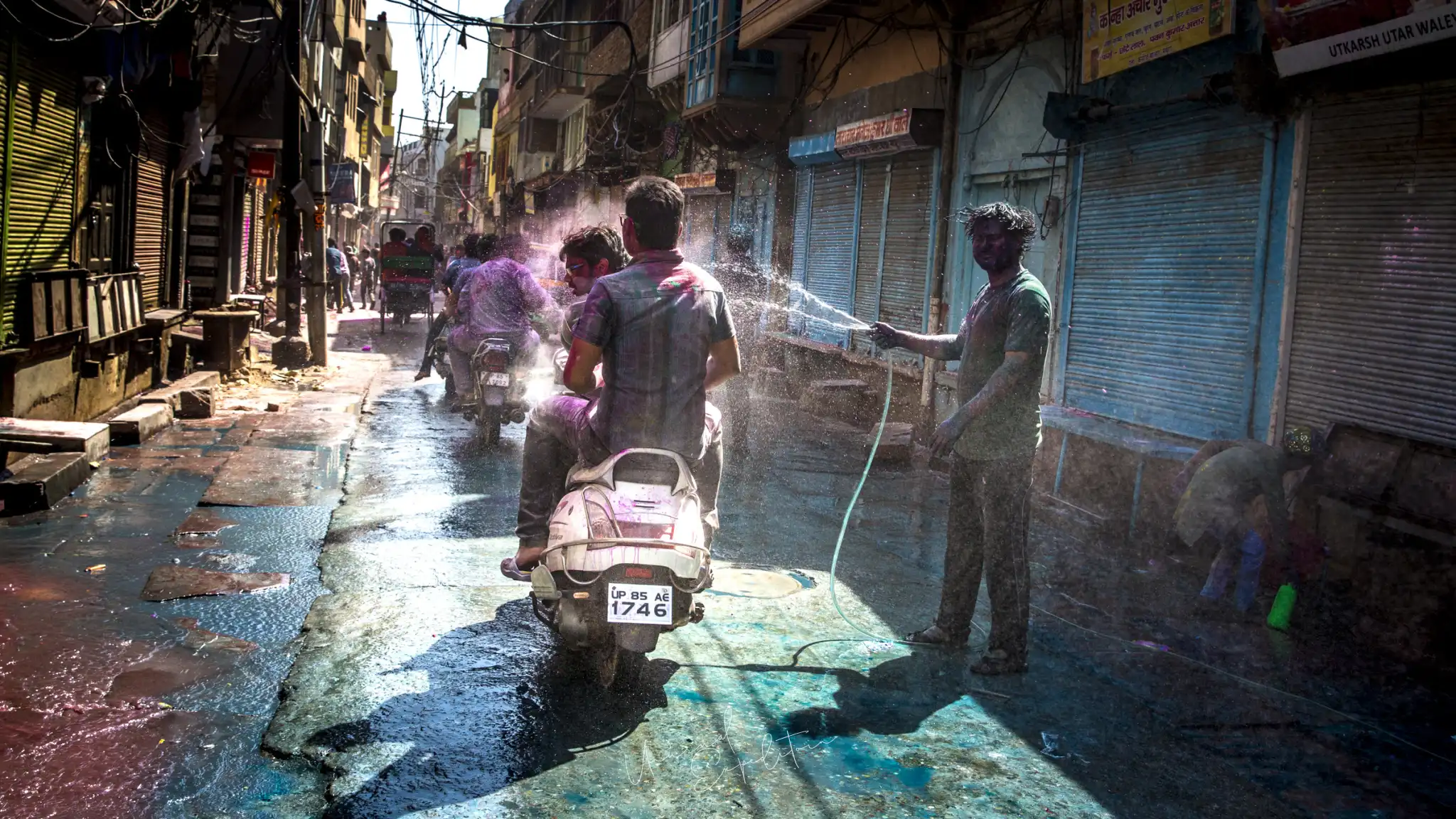
"My rule at Holi: if I cannot see the light behind the colour, I do not lift the camera. Powder in front light is just a mess. Powder with the sun behind it is a picture. So I spend most of the day looking for the light and very little of it shooting."
Joseph Mak, tour leader, Unusual Expedition
What to wear, and what to keep off your skin
Wear old cotton clothes you will throw away, closed shoes and a cap or headscarf, and leave jewellery and anything you value behind. Oil your hair and exposed skin before you go out; the colour comes off far more easily afterwards. Sunglasses or clear safety glasses protect your eyes from powder thrown at the face, which happens often. The Banke Bihari temple trust describes the natural, chemical-free colours it uses, but powders sold in the street vary, and some stain or irritate. Keep a mask or scarf for the thickest clouds, and wash off the same day.
Consent, respect and safety in the crowd
Holi gives people licence to paint each other, not to be photographed without limits. Ask before close portraits, and accept a no. Never photograph anyone in distress, being harassed or being pushed, and never photograph children. Women travellers should work in company: the UK Foreign, Commonwealth and Development Office notes that women in India can face harassment in crowded places, and Holi crowds are some of the most crowded of all. Singapore's Ministry of Foreign Affairs asks Singaporeans in India to avoid large gatherings, so choose your streets, keep the group together, and leave when a crowd turns rough. Carry little cash and a phone in a sealed bag.
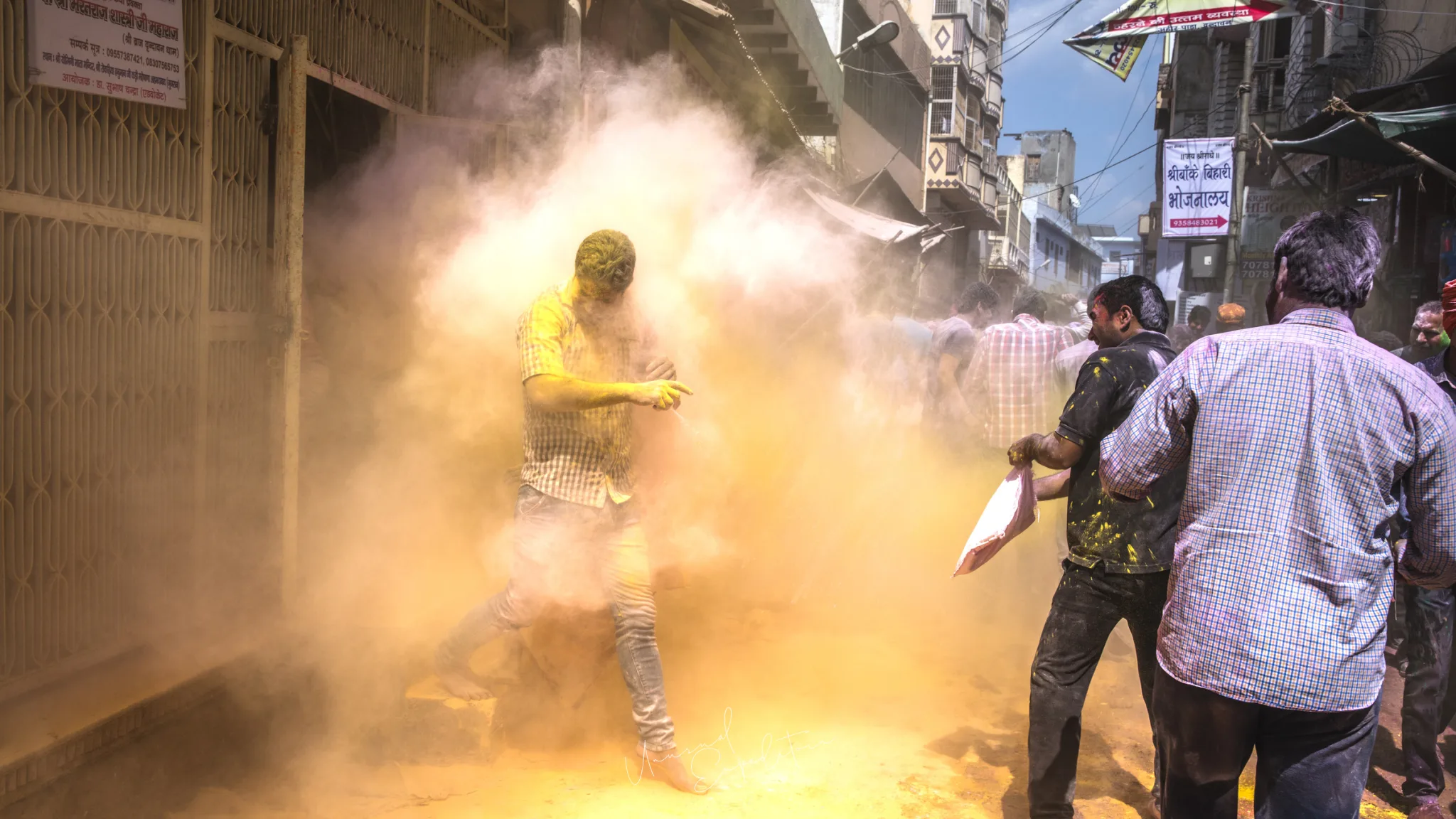
Holi photography tips for temples, streets and bonfires
The temples and the streets need different habits. Inside the Banke Bihari temple photography of the deity is forbidden and the crowd is dense, so you work from a fixed spot on the light and the faces. In the Dwarkadhish temple courtyard there is more room for singers and dancers. The bonfire night of Holika Dahan is a night-light problem, not a powder one. Plan which you want, and pack once for all of them.
Photograph Holi with us
We run Holi in Mathura and Vrindavan as a private trip on request, for individuals, couples, families and photographers who want to work at their own pace. We arrange the logistics, the vantage points and the timing around you; a photographer or photography coaching can be added at extra cost, and the cost can be lower than a group tour because no tour leader travels. Ask at least two months ahead. Scheduled departures, when announced, are on our India photography tours page.
Ask us about photographing Holi
Mathura and Vrindavan photography tours
The next Mathura and Vrindavan departure is announced on the Mathura and Vrindavan photography tours page, with previous expeditions and all the planning guides.
Explore Mathura and Vrindavan in depth
- Mathura and Vrindavan Photography Tour Guide: Holi, Temples and GhatsIndia
- Mathura Vrindavan Photos: Temples, Lanes, Ghats and HoliIndia
- Holika Dahan: The Bonfire Night Before Holi in Mathura and VrindavanIndia
- Holi in Mathura and Vrindavan: The Braj Holi Calendar and Where to BeIndia
- Dwarkadhish Temple, Mathura: Holi Songs, Colour and Where to StandIndia
- Best Time to Visit Mathura Vrindavan: Weather, Holi and Festivals by MonthIndia
- Banke Bihari Temple, Vrindavan: History, Holi and Photography RulesIndia
Upcoming Photo Tours
- Egypt Photo Tour – EgyptEgypt 12 Dec 2026 To 20 Dec 2026
- Inner Mongolia Winter Owl Photo Tour – ChinaChina 01 Jan 2027 To 04 Jan 2027
- Inner Mongolia Winter Photo Tour – ChinaChina 05 Jan 2027 To 11 Jan 2027
- Mekong And Central Highland Vietnam Photo Tour - VietnamVietnam 16 Jan 2027 To 24 Jan 2027