
Hue Photography Tour Guide: the Lagoon, the Craft Villages and the Imperial City
Hue photography from the lagoon star and net fishermen to paper flower and hat villages, the Citadel, light, drones and when to go.
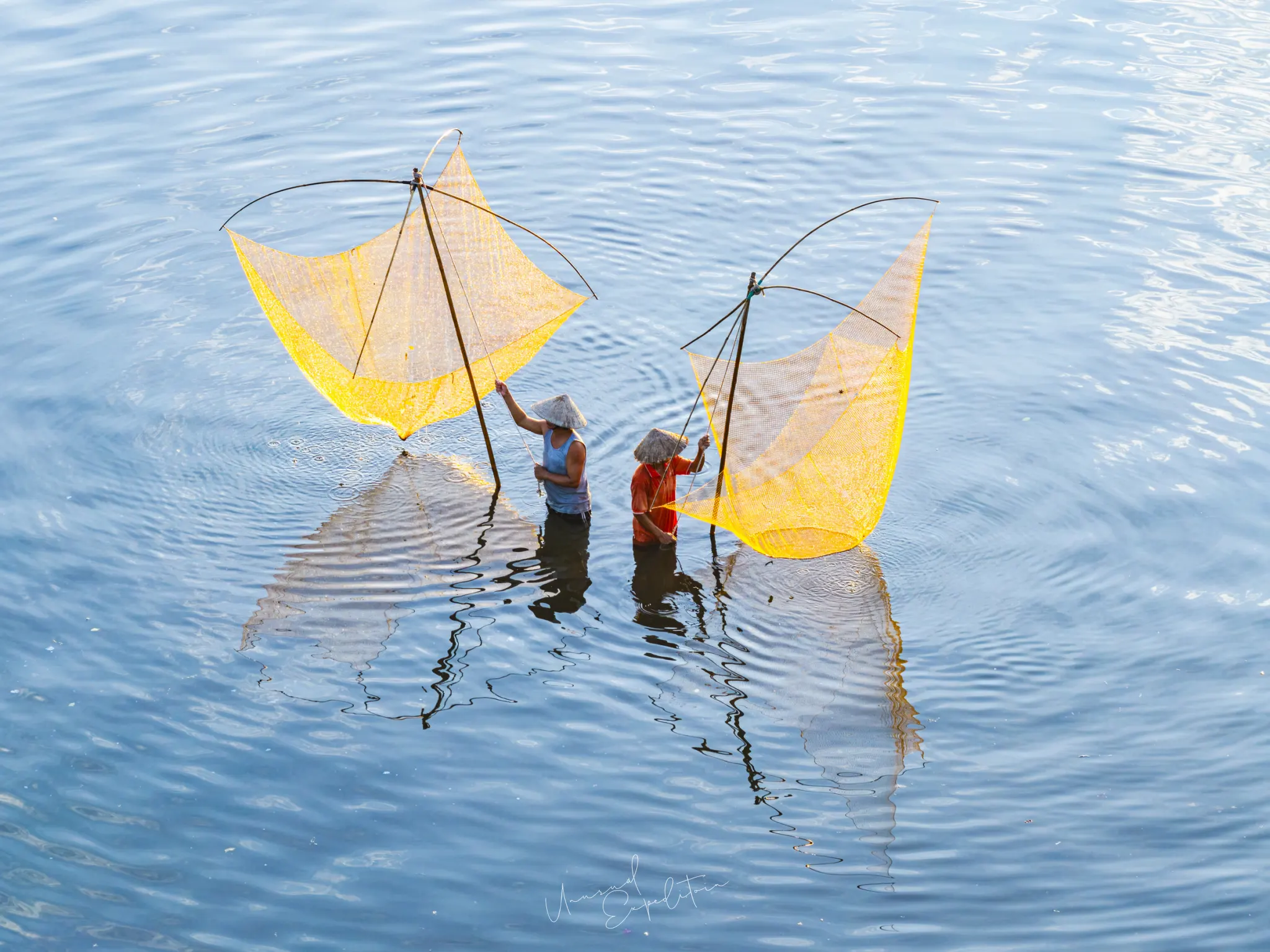
Hue photography is mostly about water and hands. The former imperial capital of Vietnam has the Citadel, the royal tombs and the Perfume River, but the frames photographers bring home come from Tam Giang lagoon at dawn, where fishermen lift square nets and gather their sampans into a star, and from the craft villages around the city, where paper flowers and conical hats are still made by hand. Below is the whole area, what each place gives you and when it works.
Hue sits in the middle of the country, between the northern mountains and the long southern coast, and it is one of nine areas in our Vietnam photography tour guide. For the exact spots we stand at and why, read where we shoot on a Hue photo tour first; this page is the map of everything else.
Hue photography: what the area holds
Hue was the seat of the Nguyen emperors, and the Complex of Hue Monuments has been on the UNESCO World Heritage List since 1993. Since the start of 2025 the whole of the former Thua Thien Hue province has been governed as Hue city, so the lagoon villages, the hat makers and the paper flower lanes all sit inside one municipality, a short drive from the walls. For a photographer the area splits into four kinds of subject: the lagoon and its fishermen, the craft villages, the monuments, and arranged portrait sessions in ao dai that we set up with local models at temples and on the water. The lagoon carries the strongest pictures and needs the most patience. The villages are about people at work, close in, with permission. The monuments want early light before the groups arrive. Everything here is within reach of the city, which is why Hue suits a slow, unhurried way of working.
Tam Giang lagoon: the reason to come
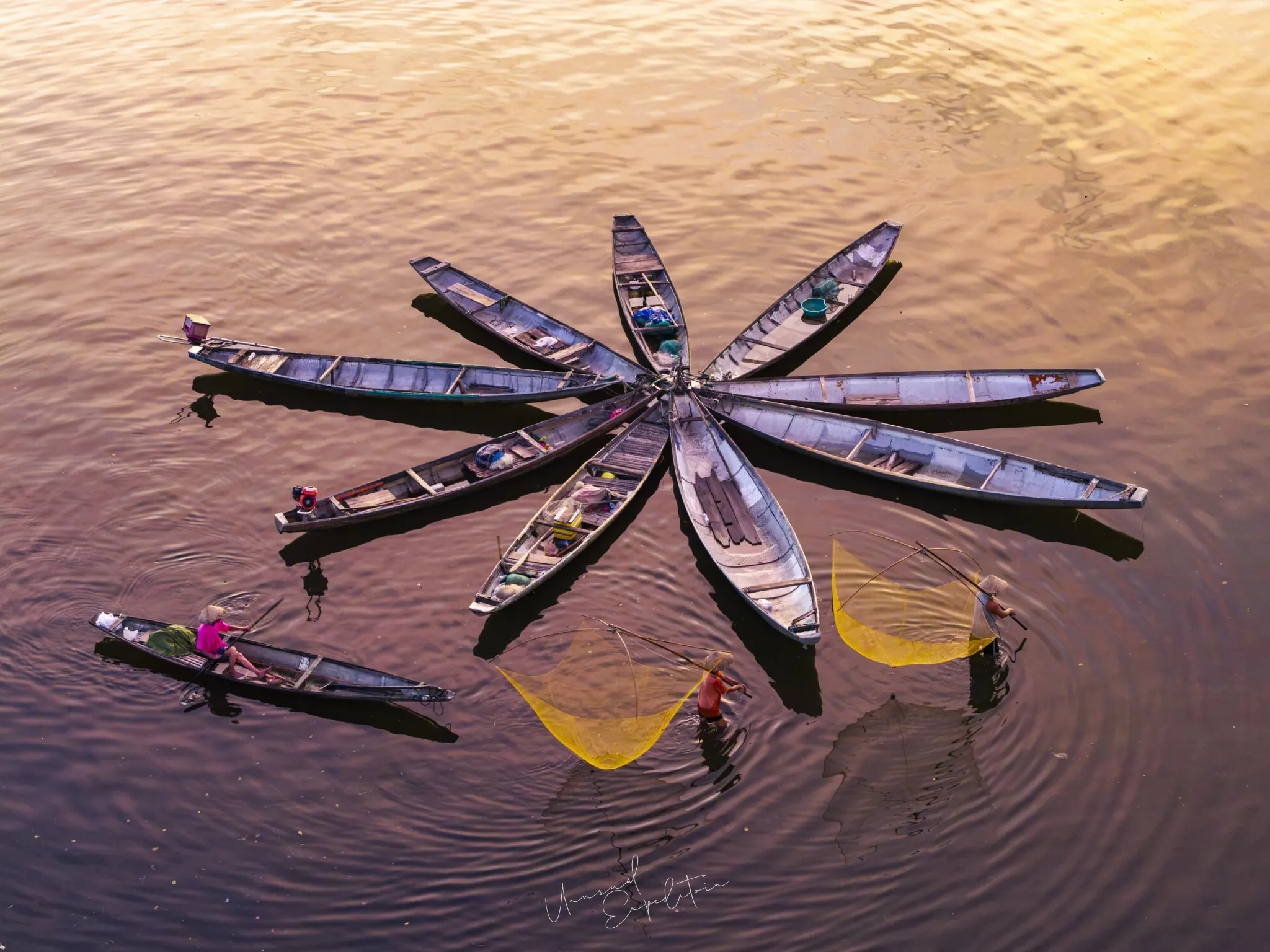
Tam Giang lagoon is the northern part of the Tam Giang to Cau Hai system, which the FAO and the Hue city government both describe as the largest lagoon in Southeast Asia, with roughly 22,000 hectares of water behind a long sand bar. Thousands of small boats work it. At first light in the fishing villages along the shore, sampans come together bow to bow so that from above they form a star, and the fishermen wade out with square lift nets on long poles. On a still morning the water is the colour of the sky and the nets glow when the sun clears the trees. At sunset the same lagoon gives silhouettes: men waist deep, casting, with the boats dark behind them. Our full piece on Tam Giang lagoon and how to get to it covers the light, the boatmen and the etiquette in detail.
The craft villages around Hue
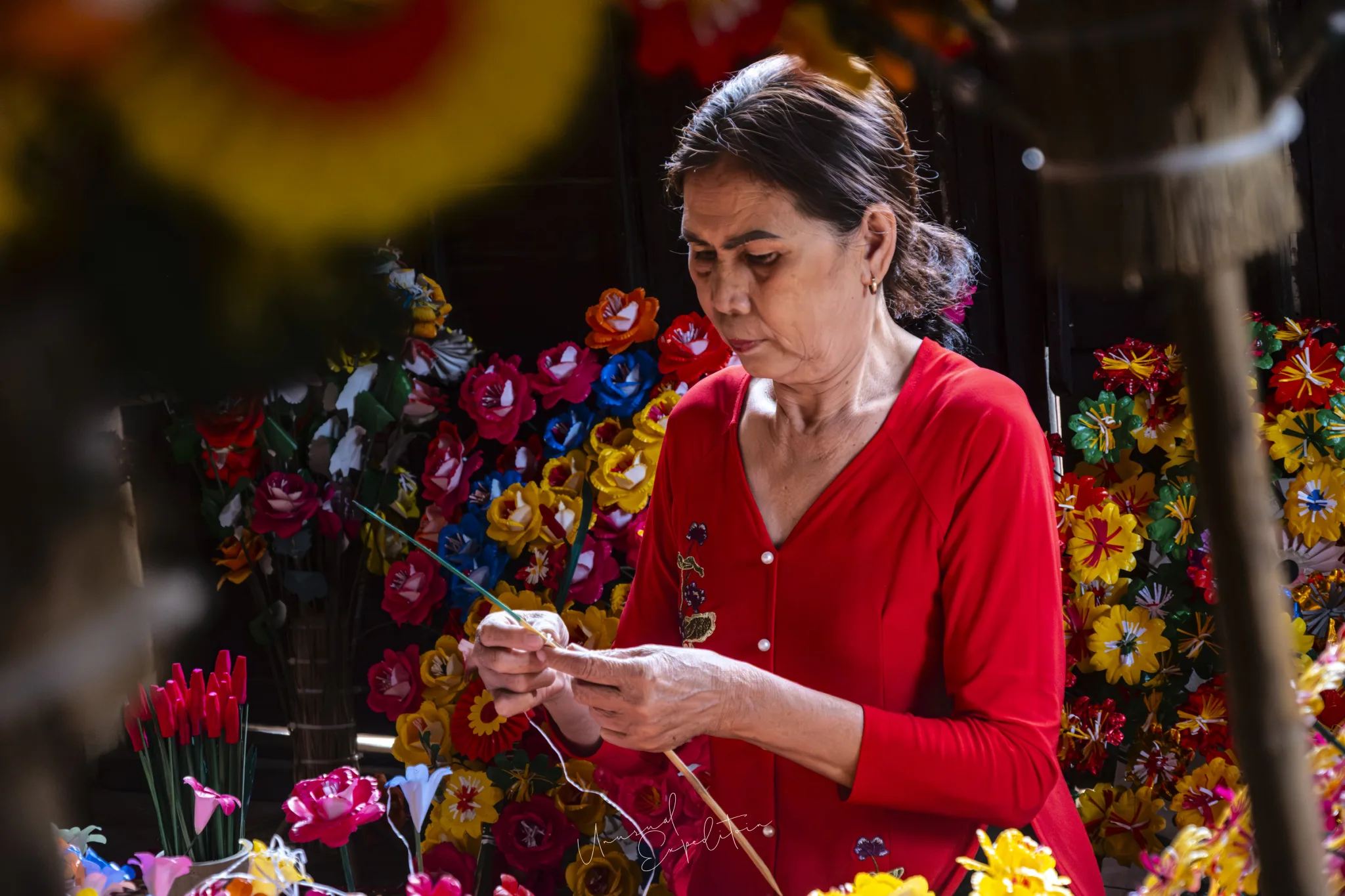
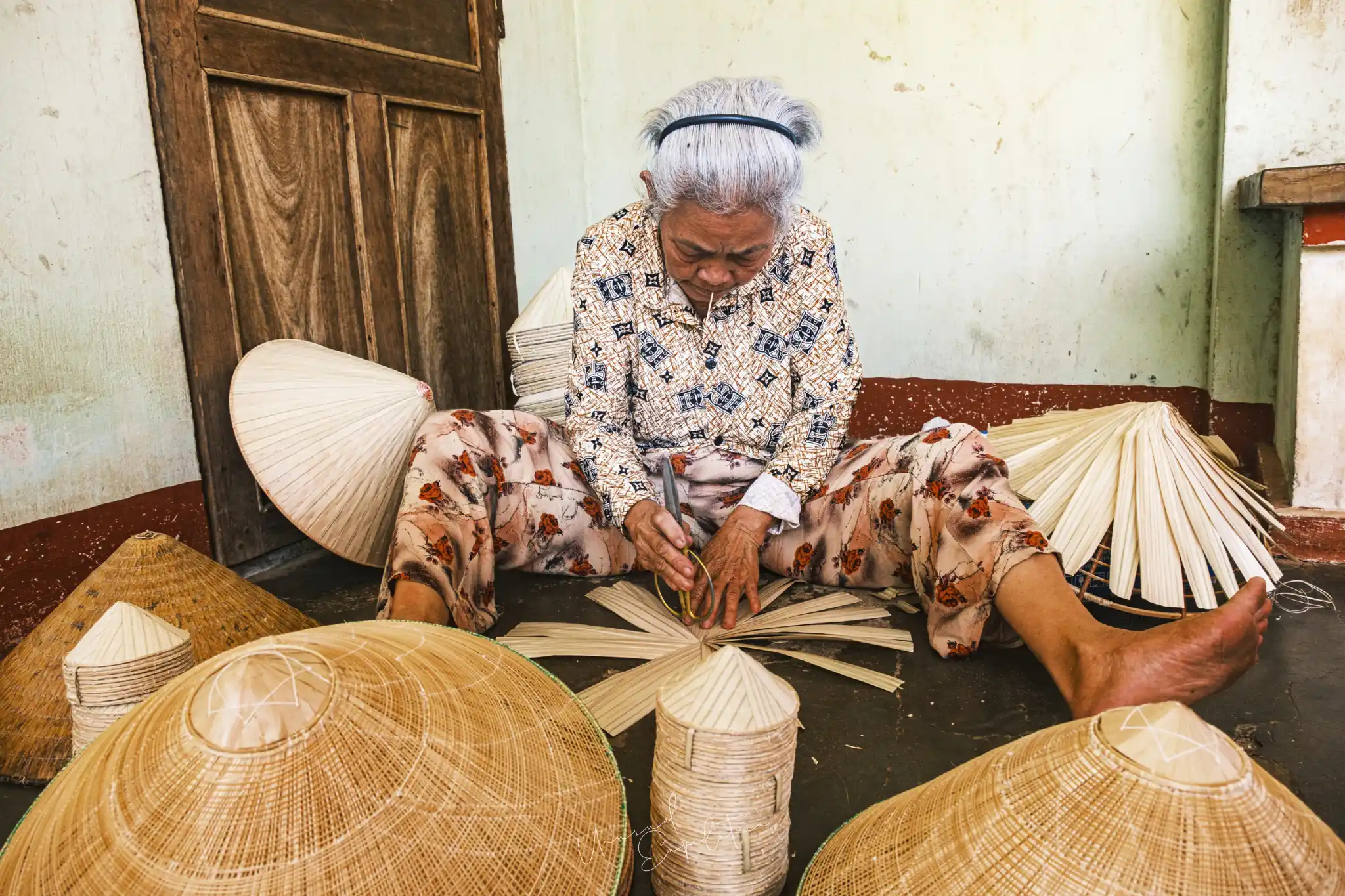
The villages are the second reason to stay more than a night. Thanh Tien, downriver on the Perfume River, has made paper flowers for household altars for around three centuries according to reports by VietnamPlus and Vietnamnet, and before Tet the workshops are stacked to the ceiling. Women cycle the lanes between the rice fields with bunches tied to the back of their bicycles. Not far away, conical hat makers sit in their doorways stitching palm leaf over bamboo frames, and Hue is the home of the poem hat, with verses or pictures hidden between two layers of leaf that show when the hat is held to the light. Villages near the city also dry noodles and rice paper on trays in the sun. Our piece on the Thanh Tien paper flower village and the conical hat villages explains how to photograph the workshops without getting in the way.
The Citadel, the tombs and the Perfume River
The Imperial City inside the Citadel is still being restored, and its gates, moats and long walls photograph best soon after opening and under a light overcast that holds the red and gold lacquer. The royal tombs south of the city each have their own character: Tu Duc with its lake and pine trees, Minh Mang laid out in strict symmetry, Khai Dinh in grey concrete with a mosaic interior that is mostly an indoor subject. Thien Mu pagoda stands above the Perfume River and is best from the water late in the day. We have no Citadel frames of our own to show you on this page, so we will not pretend otherwise; our pictures of Hue come from the lagoon and the villages, and the monuments are where we go when the weather closes the lagoon.
Arranged ao dai sessions on the water and at temples
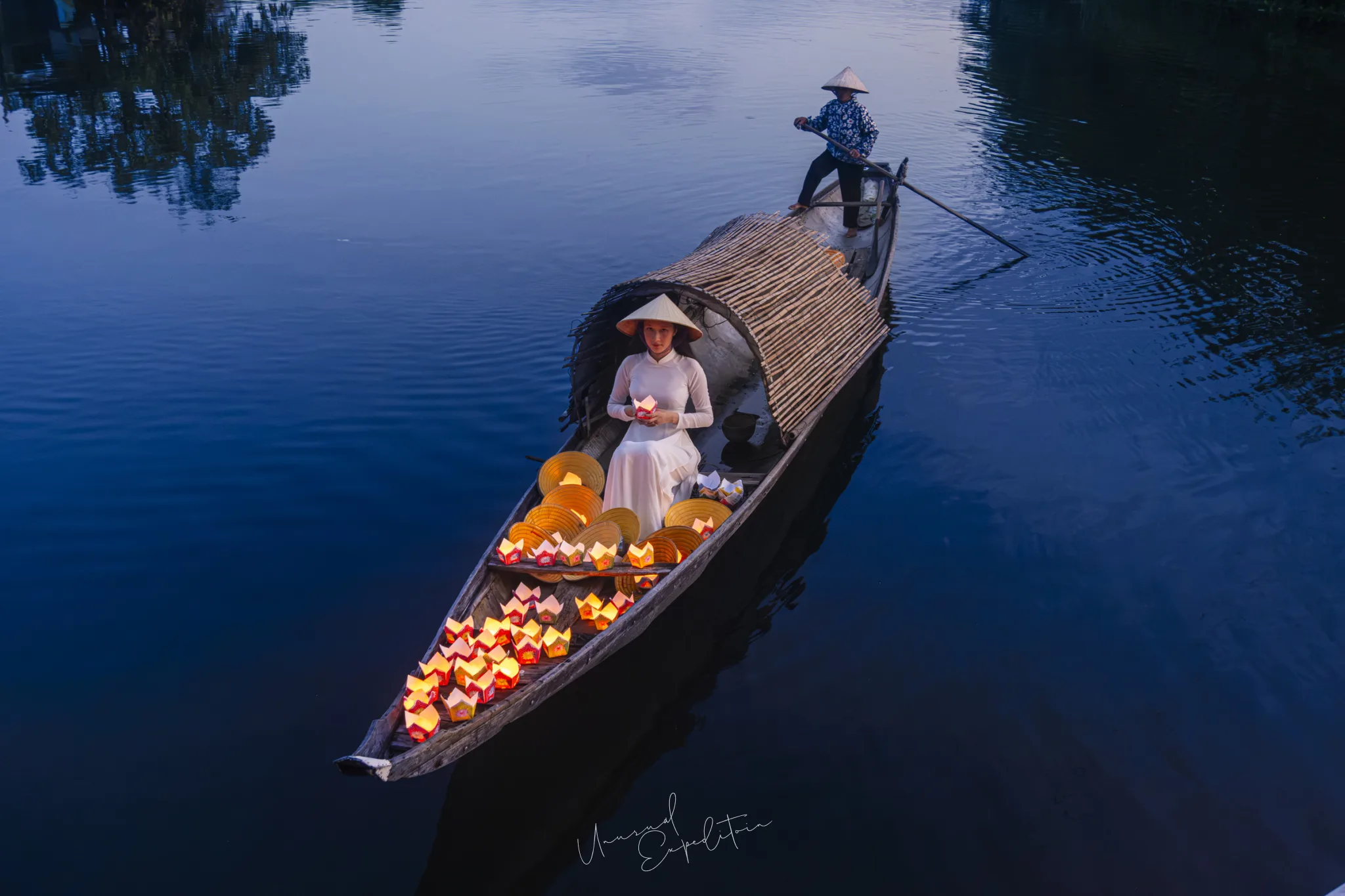
Hue is closely tied to the ao dai and the conical hat, and a portrait session with local models is part of how we work here: two women in white on sampans at dusk, or a boat filled with candle lanterns at blue hour, or a pair standing between the mosaic dragon pillars of a village temple. These are arranged, the models are paid, and our captions say so every time. Shot well, the place carries the picture as much as the dress does: the dark water, the woven boat roofs, the lacquer and tile behind the figures. A 70-200mm from a second boat gives the faces, a 24-70mm from the bank gives the scene, and a drone gives the reflections.
Hue photo tour subjects at a glance
| Subject | Best light | Lens or tool | Read more |
|---|---|---|---|
| Sampan star and lift nets | First light, still air | Drone, 70-200mm | Tam Giang lagoon |
| Net fishermen in silhouette | Last hour before dark | 70-200mm, 24-70mm | Tam Giang lagoon |
| Paper flower workshops | Door light, mid morning | 24-70mm | Thanh Tien village |
| Conical hat makers | Soft daylight in doorways | 24-70mm | Thanh Tien and the hat villages |
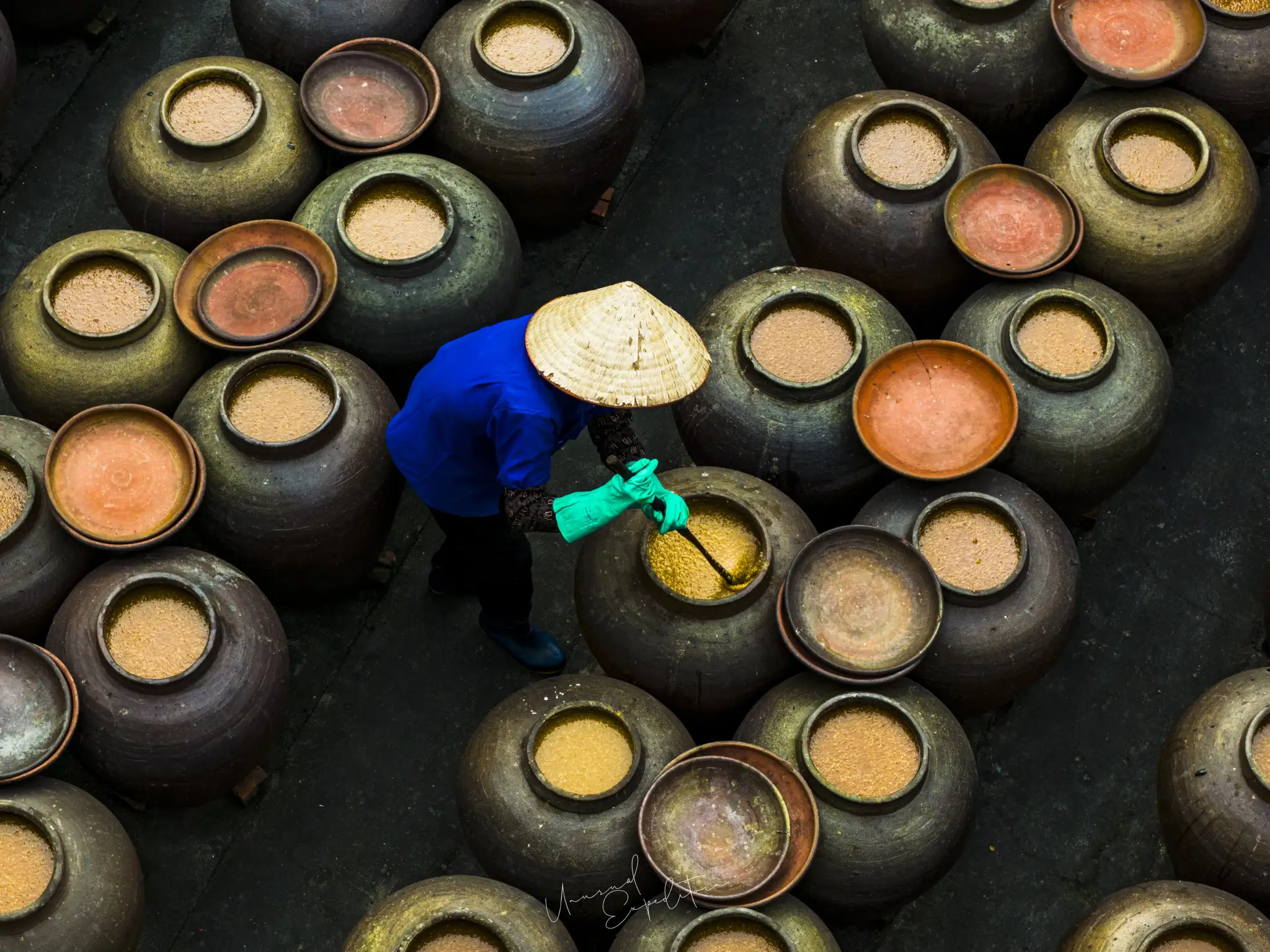
| Fish sauce yards and drying trays | Late afternoon side light | Drone, 24-70mm | Is Hue worth visiting |
| Citadel and tombs | Soon after opening, overcast | 16-35mm, 24-70mm | Hue photo tour |
Two of the six need a drone or a boat, so plan your kit around the water first.
"I have photographed the lagoon in spring and again at the start of summer, and both times the best morning was the second one, after we knew where the boatmen would gather. Hue rewards anyone who stays put. The Citadel will wait for a grey day; the lagoon will not."
Joseph Mak, tour leader, Unusual Expedition
When to photograph Hue
Hue has a dry season from around March to August and a rainy season that sets in from September, with October and November usually the wettest months, according to the monthly averages published by Climates to Travel and Weather2Travel. The lagoon needs calm, clear mornings, so spring and early summer are the safest months. High summer is clear but hot, and the light turns hard soon after sunrise. The full month by month picture, including what still works in the rain, is in the best time to visit Hue. If you are weighing Hue against Hoi An or a longer stay in the south, our answer to is Hue worth visiting lays out the case for and against, and the Hue Vietnam photos gallery shows what a few mornings here produce.
Drones, permits and working with people
Most of the strongest Hue pictures are taken from the air, and drones in Vietnam need registration and flight permission, with no flying near military or government sites; the Citadel area is not a place to launch. Ask us before you bring one and we will tell you what is currently allowed. In the villages, ask before you lift the camera, buy something if you have spent time in a workshop, and keep the lens out of faces that turn away. Fishermen who cast for photographers expect a fee, agreed before the light goes.
Explore Hue in depth
- Hue photo tour: the Citadel, the tombs and the lagoon
- Tam Giang lagoon: the net fishermen and how to get there
- Thanh Tien paper flower village and the conical hat villages
- The best time to visit Hue for photography
- Is Hue worth visiting
- Hue Vietnam photos
Photograph Hue with us
Hue is where our Central Vietnam photo tour ends, after the salt fields, the fishing villages and Hoi An, and the trip runs indicatively S$2,700 to S$3,300 per person depending on the room. Photographers join from any country. The current departure and the full route are on the Vietnam photography tours page.
Join the Hue photography tour
Mekong And Central Highland Vietnam Photo Tour - Vietnam departs 16 Jan 2027 To 24 Jan 2027, led by Joseph Mak. Small group, photography first. All Hue photography tours.
Explore Hue in depth
- Thanh Tien Paper Flower Village and the Conical Hat Villages of HueVietnam
- Tam Giang Lagoon: Photographing Hue's Net Fishermen and How to Get ThereVietnam
- Is Hue Worth Visiting? A Photographer's AnswerVietnam
- Hue Vietnam Photos: the Lagoon, the Fishermen and the Flower VillageVietnam
- Best Time to Visit Hue: Weather by Month for PhotographersVietnam
- Hue Photo Tour: the Citadel, the Tombs and the LagoonVietnam
Upcoming Photo Tours
- Egypt Photo Tour – EgyptEgypt 12 Dec 2026 To 20 Dec 2026
- Inner Mongolia Winter Owl Photo Tour – ChinaChina 01 Jan 2027 To 04 Jan 2027
- Inner Mongolia Winter Photo Tour – ChinaChina 05 Jan 2027 To 11 Jan 2027
- Mekong And Central Highland Vietnam Photo Tour - VietnamVietnam 16 Jan 2027 To 24 Jan 2027