
Tam Giang Lagoon: Photographing Hue's Net Fishermen and How to Get There
Tam Giang lagoon near Hue: the sampan star at dawn, lift nets, sunset fishermen, the best months and how to get to the lagoon.
Tam Giang lagoon is the wide, shallow body of brackish water that runs along the coast north and east of Hue, and for photographers it is the best reason to visit the city. At dawn the fishermen gather their sampans into a star and lift square nets on long poles; at sunset they wade out and cast against the sky. You reach it by road from Hue, then by boat with a local fisherman, ideally on a still morning before first light.
The lagoon is the centre of our Hue photography tour guide, and this page goes deeper into the water itself: what the fishermen do, how the light behaves, and how to get onto the lagoon without disturbing the people who work it.
What is Tam Giang lagoon?
Tam Giang is the northern basin of the Tam Giang to Cau Hai lagoon system, which the FAO describes as the largest lagoon ecosystem in Southeast Asia, with about 22,000 hectares of water. The Hue city government gives its length as more than 68 kilometres, behind a sand bar that separates it from the South China Sea, which Vietnam calls the East Sea. Rivers including the Perfume River drain into it, so the water is brackish and shallow, and much of it can be waded. Villages line both shores, and their livelihood is fish, shrimp and crab caught with fixed traps, lift nets and cast nets. Part of the lagoon has been a nature reserve since 2020, according to Vietnam's national biodiversity portal. For a photographer that means a working landscape: poles, nets, boats and people at every scale, and almost no high ground except what you bring with a drone.
The sampan star at first light
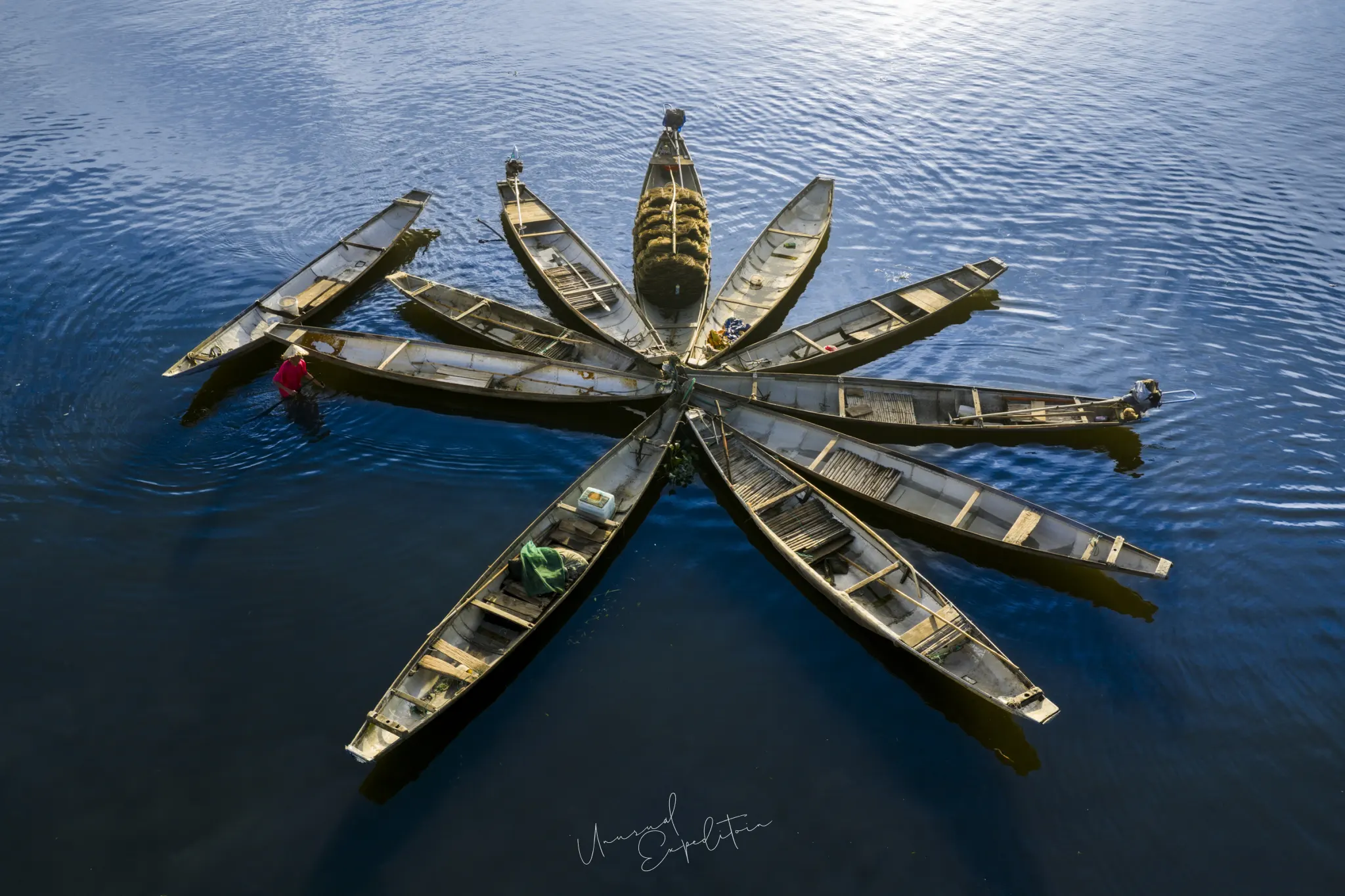
The picture people come for is the star. Fishermen bring their narrow wooden sampans together bow to bow so the hulls radiate from a centre, and one or two men stand in the middle or wade around the edge with square nets. Seen from the shore it reads as a cluster of boats. Seen from above it becomes one of the most graphic frames in Vietnam, especially when the water is still enough to hold the sky. On the Tam Giang shore the star is a set piece, arranged for photographers by the boatmen, and they expect to be paid for their time; that is fair, because it costs them a morning of fishing. The best of it lasts from the first colour in the sky until the sun is a hand's width above the trees. After that the light turns white and the water starts to ripple. If the first morning is windy, the star can wait a day.
Lift nets and working boats
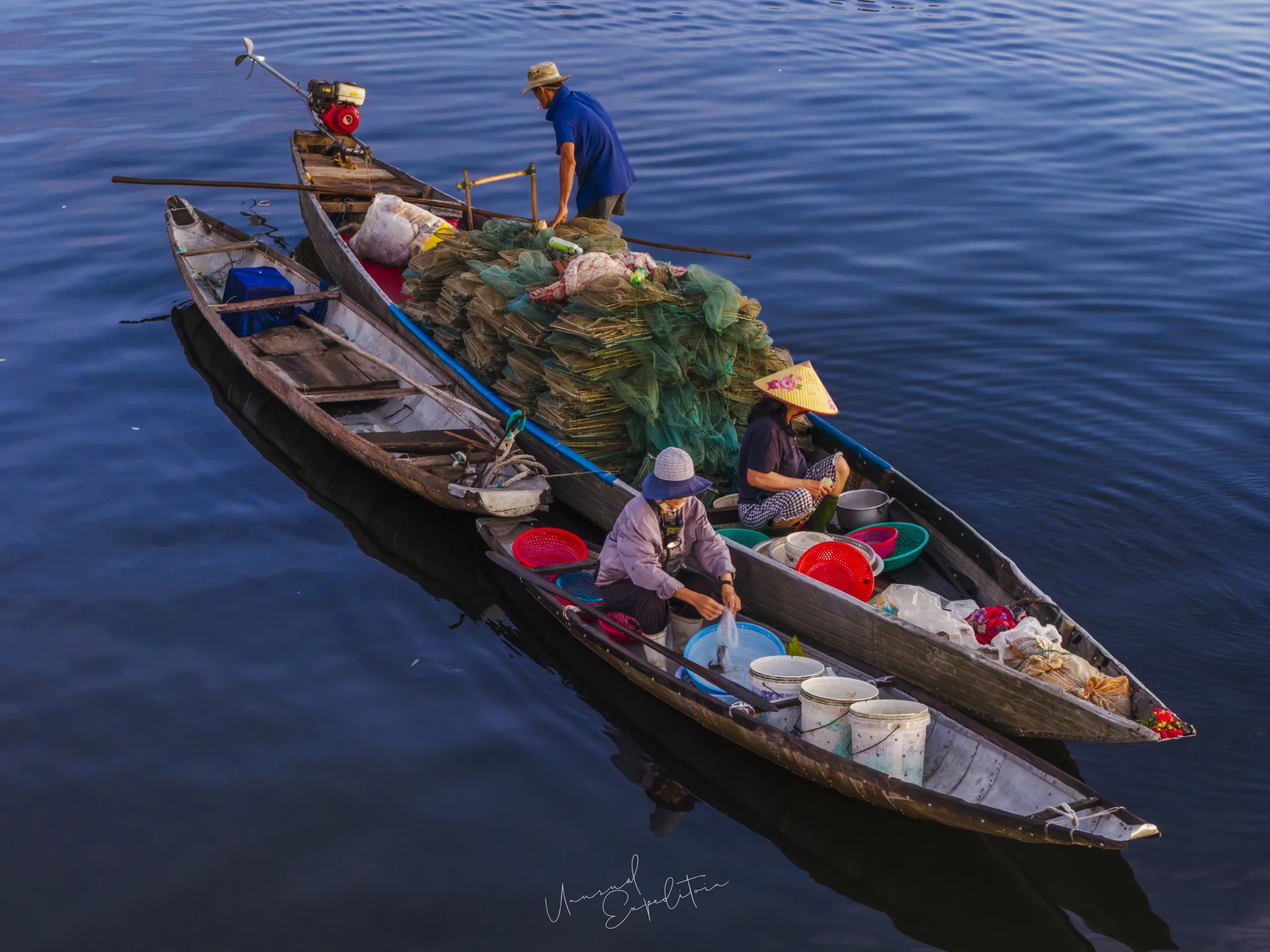
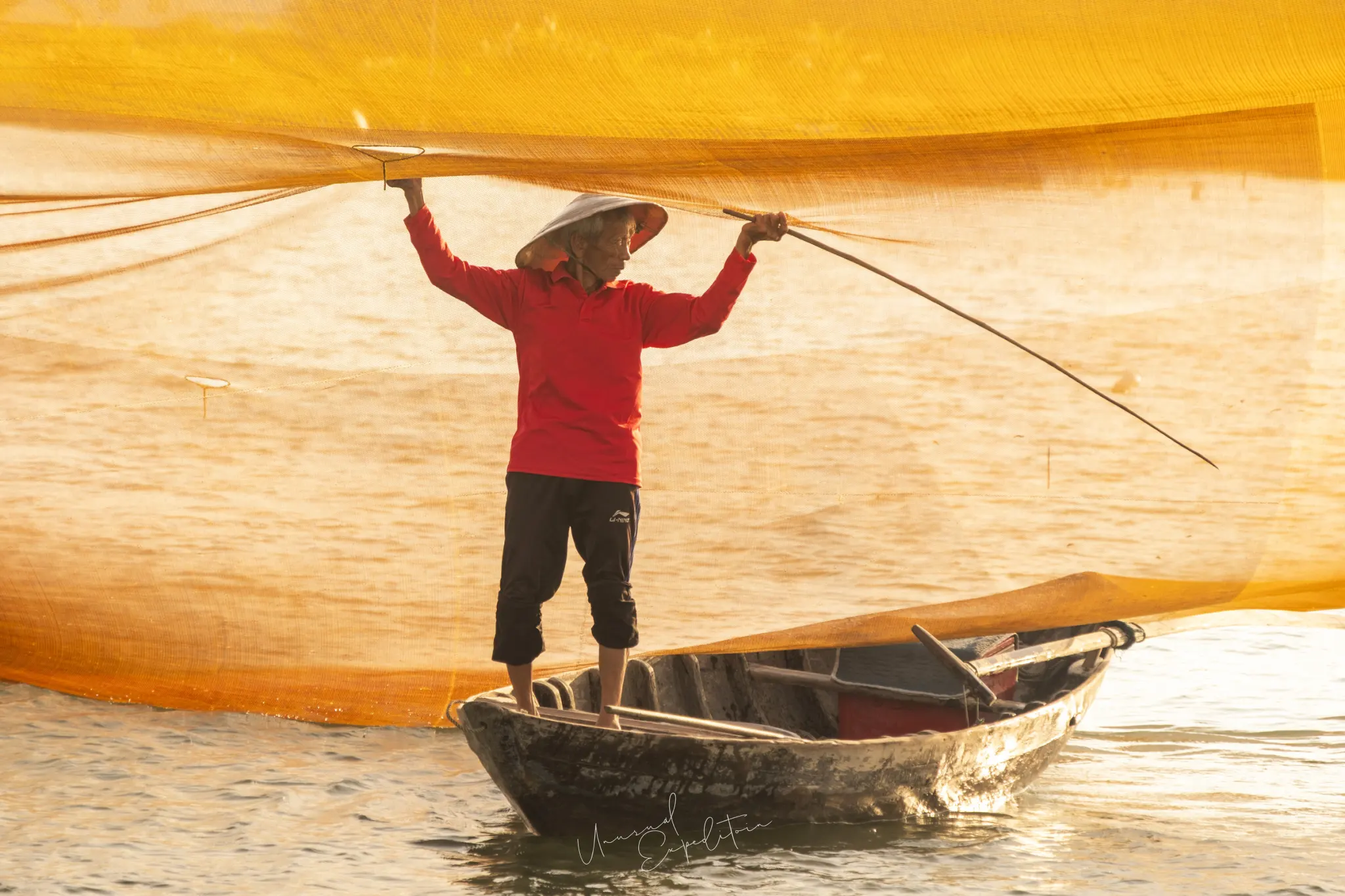
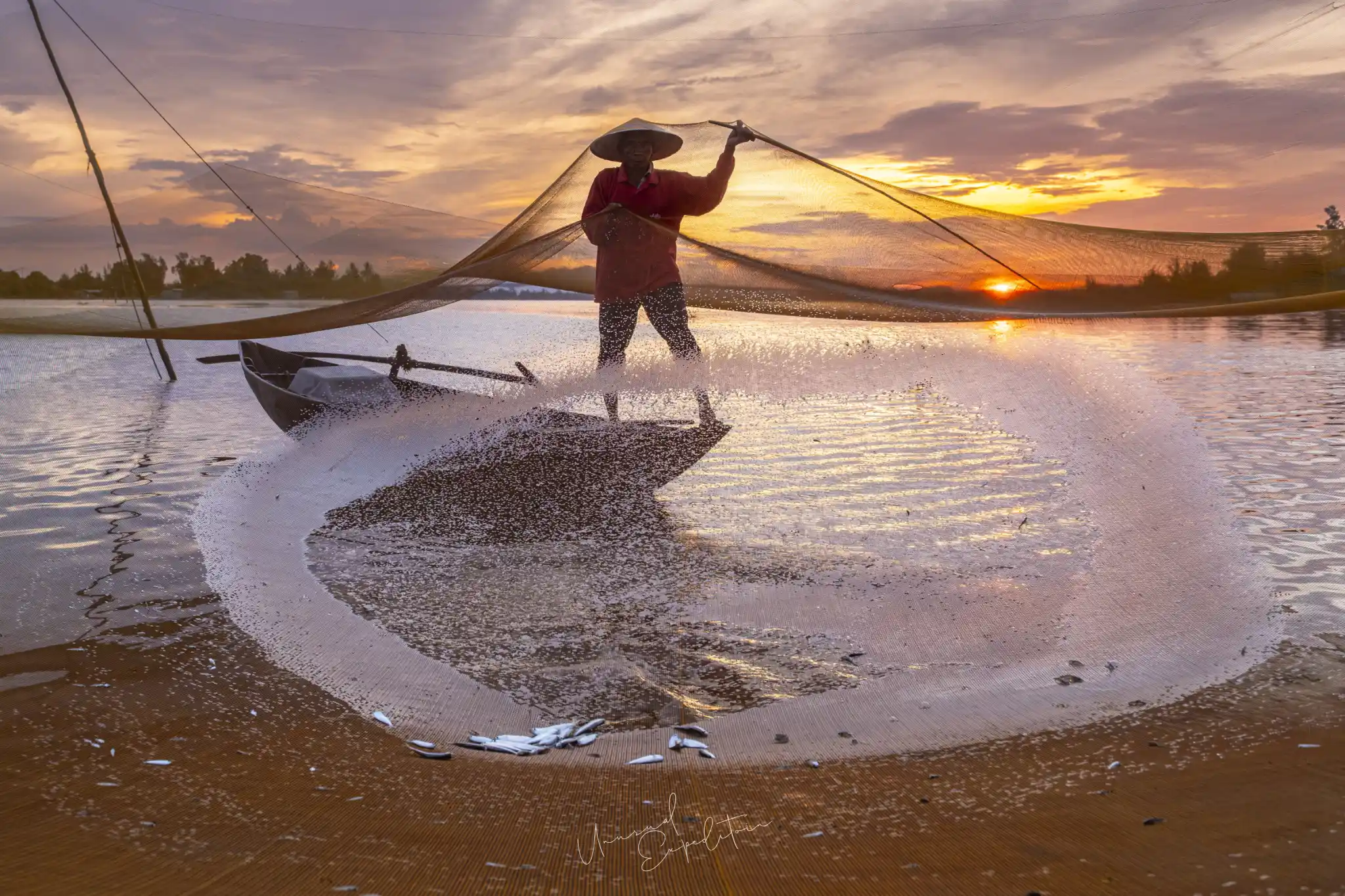
Away from the star, the lagoon is simply at work. Square lift nets hang from poles on the bows of small boats, and the fishermen lower and raise them with a slow rhythm that suits a 70-200mm from a second boat. Larger sampans come in loaded with folded nets, plastic baskets and bowls of the catch, and from above they make tidy, colourful compositions against the dark water. Some fishers hang fine nets to dry and lift them overhead to shake them out, which against a low sun turns the mesh into a sheet of orange. Ask before you photograph faces, and keep your boat out of the way of anyone hauling.
Net fishermen at sunset
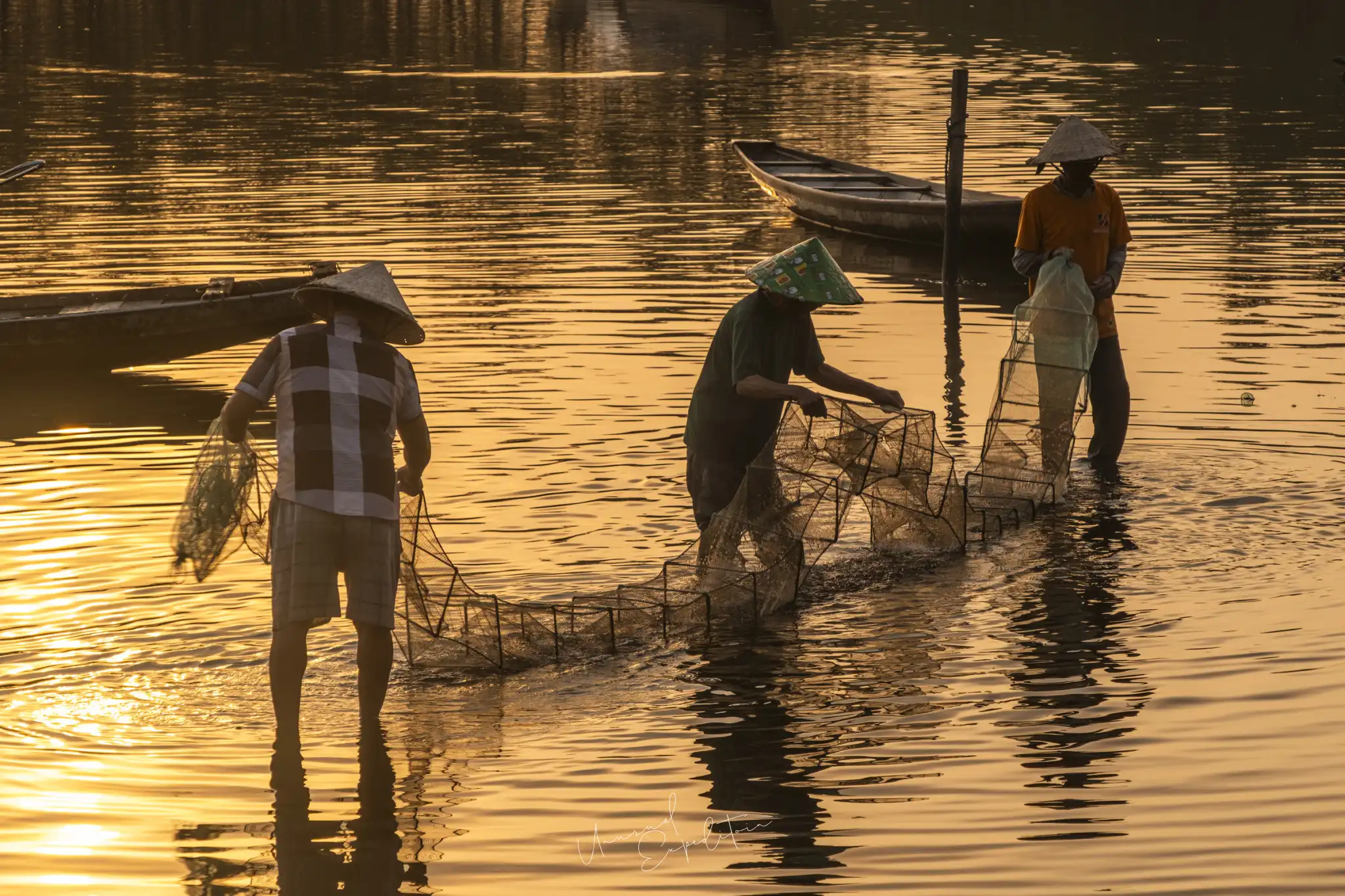
Evening on Tam Giang lagoon is the opposite of dawn. The sun goes down over the land side, so the fishermen stand between you and the light, and the frame becomes silhouettes: men waist deep with cast nets, reflections in gold water, boats as dark shapes behind. From the shore, a 70-200mm compresses the figures and the sky; from a boat, a 24-70mm takes in the whole scene. Underexpose a little to keep the colour in the clouds. A lift-net fisherman on a small boat, raising a net with water pouring from it, gives the most movement, and a fast shutter freezes the spray. The light lasts until the colour goes, and the blue that follows is short.
"On the lagoon I tell people to stop shooting for a minute when the boats come together, and just watch where the light falls. Then you know where to put the drone. The men out there have done this every morning of their lives, and they are very patient with us."
Joseph Mak, tour leader, Unusual Expedition
How to get to lagoon Hue Vietnam
The question people type is how to get to lagoon Hue Vietnam, and the answer is by road from Hue to one of the fishing villages on the shore, then by boat with a local fisherman. Tam Giang lies north and east of the city, towards the coast at Thuan An, and several villages along the lagoon take visitors out. There is no public boat service for photographers: you arrange a sampan with a fisherman, through your hotel, a local guide or someone who already knows the families. Settle the fee, the meeting place and the plan the evening before, because you will be leaving in the dark. Bring a head torch, a dry bag and shoes you do not mind getting wet; boarding is often from the mud at the edge. On our trips we arrange the boats, the boatmen and the drone permission, which is the part that takes local relationships.
Tam Giang lagoon light, subject by subject
| Subject | Light | Where you stand | Lens |
|---|---|---|---|
| Sampan star | First colour to low sun | Drone overhead, or a boat at water level | Drone, 24-70mm |
| Lift nets | Low sun, either end of the day | A second boat | 70-200mm |
| Working boats from above | Soft morning light | Drone | Drone |
| Cast nets in silhouette | Sunset into dusk | Shore or boat, facing the sun | 70-200mm, 24-70mm |
Mornings are for the shapes, evenings for the silhouettes; most people need one of each.
Best months for the lagoon
Tam Giang lagoon needs calm water, and calm water in Hue comes mostly in the dry months, from around March to August. Spring gives the gentlest light and the most still mornings; early summer is clear but the sun climbs quickly and the air heats up. From September the rains and the storms of the central coast make the lagoon unreliable, and October and November are usually the wettest months. The full pattern, with what each month is good for, is in the best time to visit Hue. For the craft subjects that fill the middle of the day while the lagoon rests, see the Thanh Tien paper flower village, and for a gallery of what the lagoon looks like across seasons, our Hue Vietnam photos.
Shoot Tam Giang lagoon with us
The lagoon is the last morning of our Central Vietnam photo tour, and it is usually the frame people remember. Departures and the full route are on the Vietnam photography tours page.
Join the Hue photography tour
Mekong And Central Highland Vietnam Photo Tour - Vietnam departs 16 Jan 2027 To 24 Jan 2027, led by Joseph Mak. Small group, photography first. All Hue photography tours.
Explore Hue in depth
- Hue Photography Tour Guide: the Lagoon, the Craft Villages and the Imperial CityVietnam
- Thanh Tien Paper Flower Village and the Conical Hat Villages of HueVietnam
- Is Hue Worth Visiting? A Photographer's AnswerVietnam
- Hue Vietnam Photos: the Lagoon, the Fishermen and the Flower VillageVietnam
- Best Time to Visit Hue: Weather by Month for PhotographersVietnam
- Hue Photo Tour: the Citadel, the Tombs and the LagoonVietnam
Upcoming Photo Tours
- Egypt Photo Tour – EgyptEgypt 12 Dec 2026 To 20 Dec 2026
- Inner Mongolia Winter Owl Photo Tour – ChinaChina 01 Jan 2027 To 04 Jan 2027
- Inner Mongolia Winter Photo Tour – ChinaChina 05 Jan 2027 To 11 Jan 2027
- Mekong And Central Highland Vietnam Photo Tour - VietnamVietnam 16 Jan 2027 To 24 Jan 2027