
Is Mui Ne Worth Visiting? A Photographer's Answer
Is Mui Ne worth visiting? Yes as a base: dunes, the fishing harbour, salt, fish drying, Ke Ga and Phan Rang. What to skip and when.
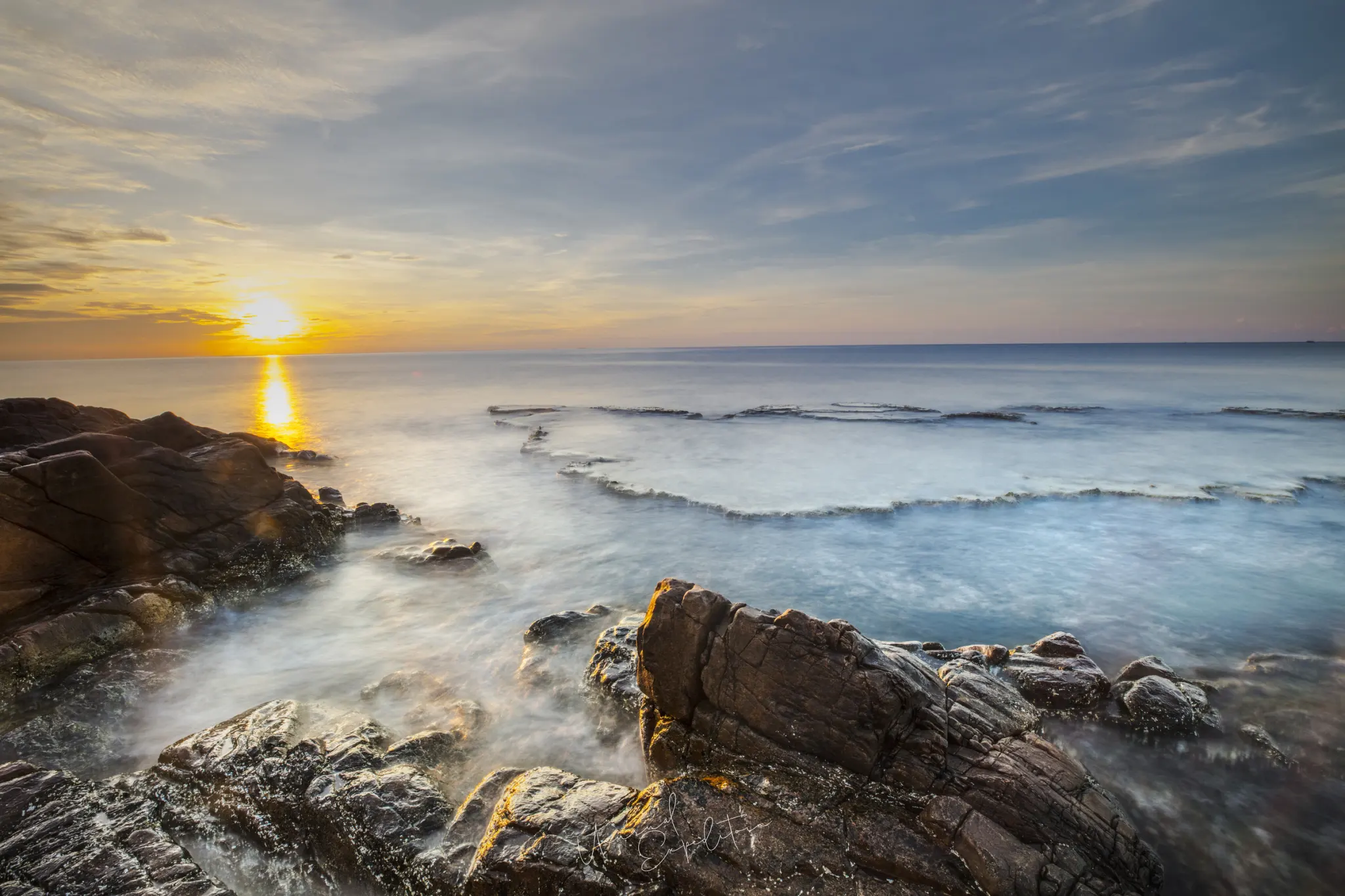
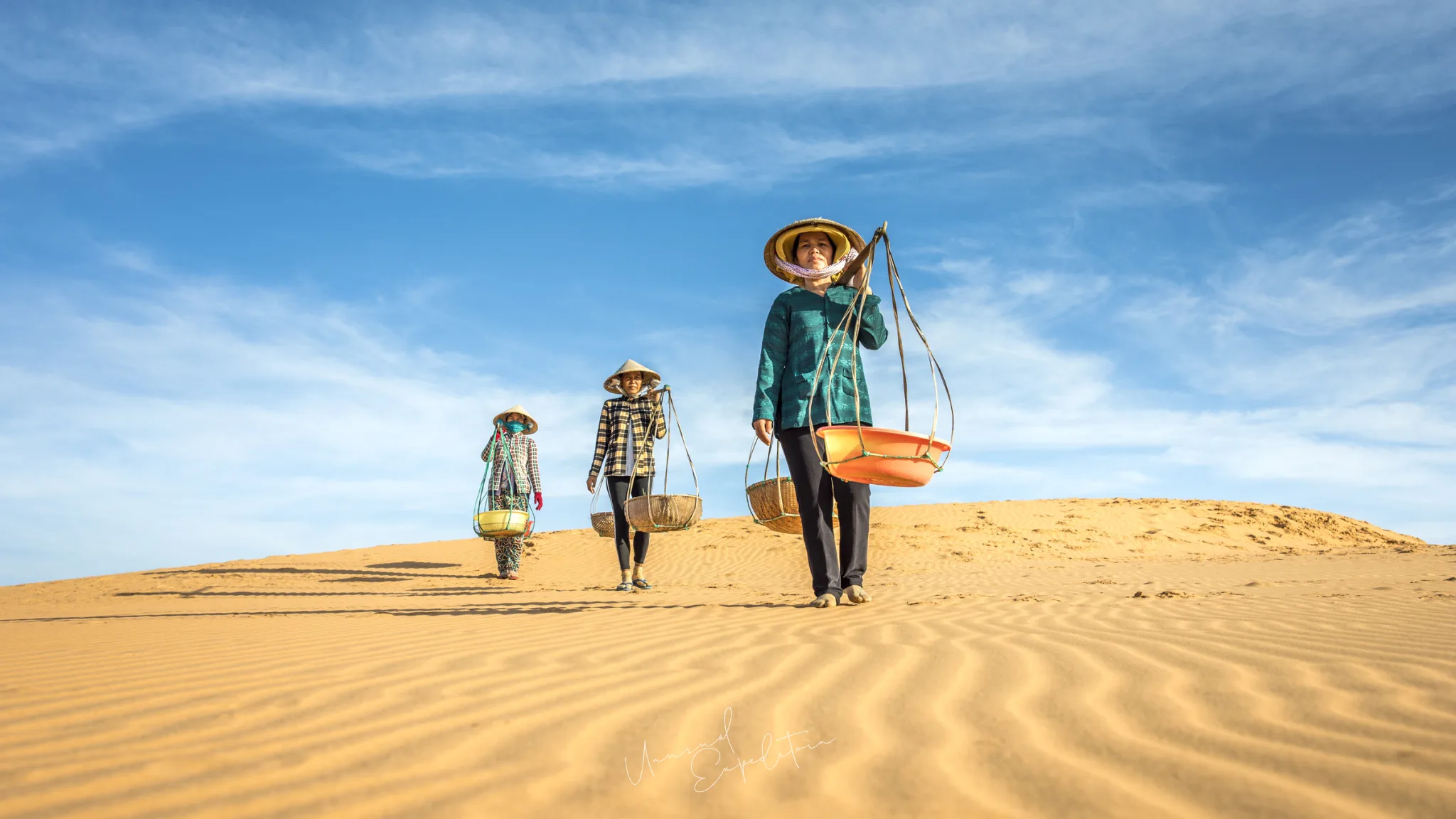
Is Mui Ne worth visiting? For a photographer, yes, as long as you treat the resort strip as a bed and spend your time a short way off it. Within easy reach are the white and red sand dunes, a fishing harbour that lands its catch by basket boat at dawn, salt pans, fish drying yards, rice paper workshops, the Ke Ga lighthouse and, further north, the Cham country of Phan Rang. Plan around sunrise and sunset and it is one of the most varied coasts in Vietnam.
We have put the whole area together in our Mui Ne and Phan Rang photography tour guide. This piece is the short, practical case for and against, with what we would skip.
Is Mui Ne worth visiting? The case against first
Mui Ne grew up as a kitesurfing and beach resort town, and the long road of hotels, restaurants and bars along the beach is the part most visitors see. Beach erosion has eaten into parts of that strip over the years, the sea there is often rough and windy in the dry months, and the jeep tours to the dunes and the Fairy Stream run to a set pattern that puts everyone at the same place at the same time. VnExpress has written about how fast tourism has reshaped the town. If you want a quiet tropical beach, there are better choices in Vietnam. If you want a photography base on a coast full of working life and strong landscapes, the picture changes completely.
Things to do in Mui Ne with a camera
The list of things to do in Mui Ne for a photographer is short and strong. The white dunes at sunrise are the landscape; our Mui Ne sand dunes guide covers them, along with the red dunes for the evening. The fishing harbour at dawn is the people subject, explained in Mui Ne fishing village. Along the coast either side of town, the salt pans, fish drying yards and rice paper workshops give you work in good light, and the granite shore gives you seascapes. The middle of the day is for editing and sleeping. That rhythm, two sessions and a long break, is what makes Mui Ne work.
What to do in Mui Ne beyond the jeep tour
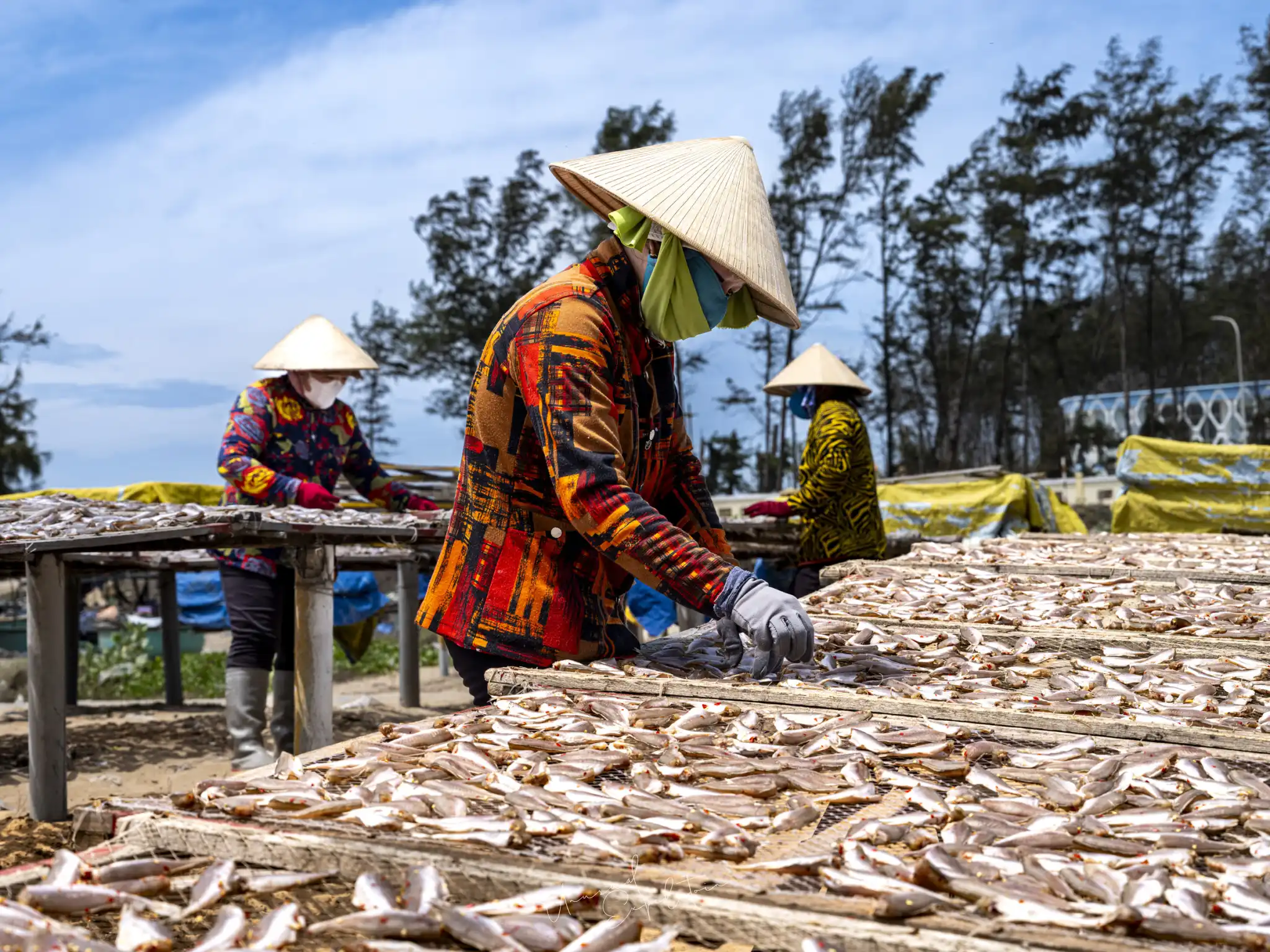
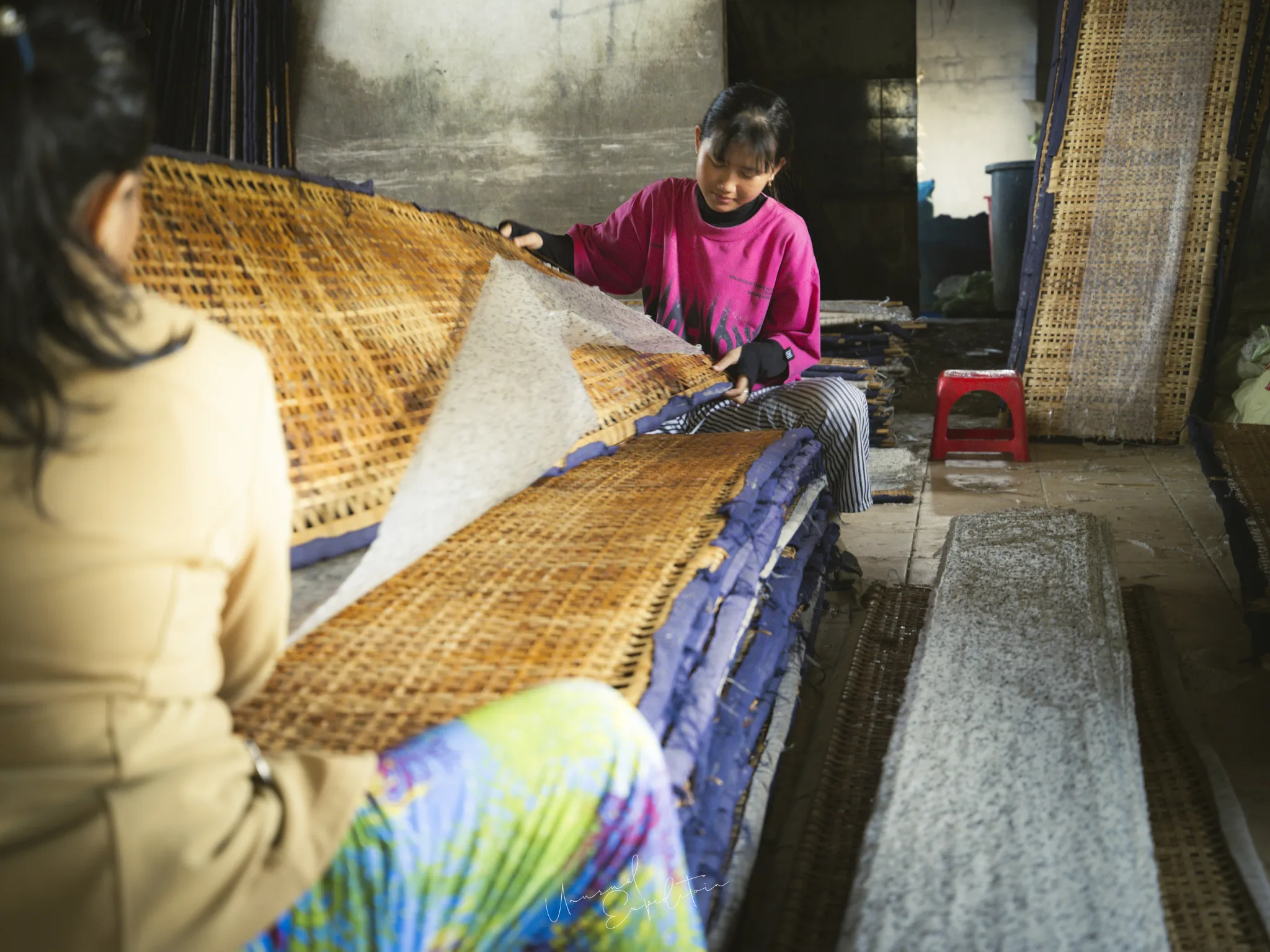
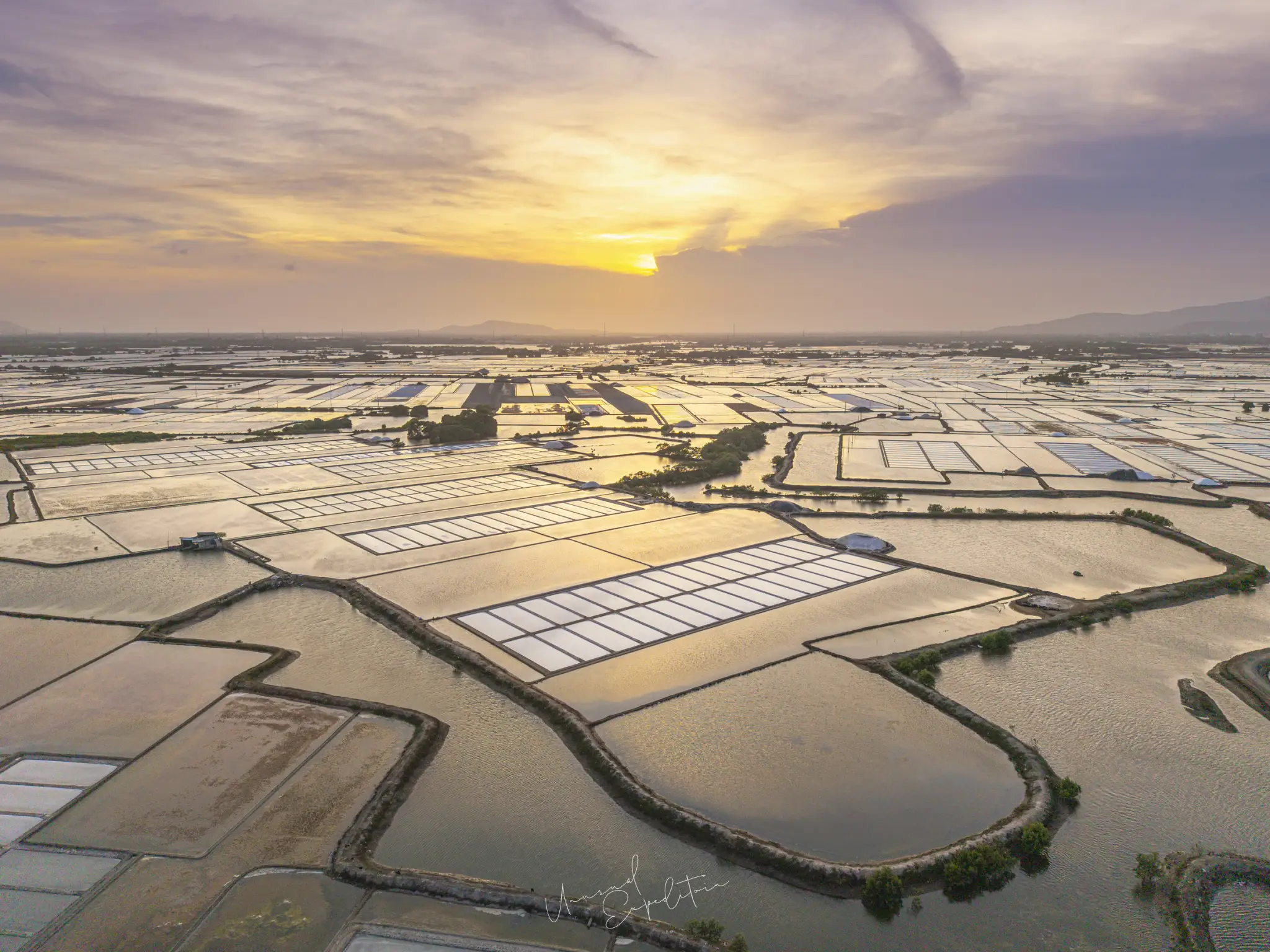
The working coast around Mui Ne is where the area pays off. Fish drying yards along the beaches lay out anchovy and small fish on mesh racks in long rows, and families turn them by hand through the morning; from ground level that is a people picture, from the air a pattern. Inland, small workshops steam rice paper and dry it on woven mats. Salt pans fill the flats near the coast in the dry season, raked into rows at first light. None of these are attractions with ticket offices, so go with a guide who knows the families, ask before you photograph and buy something when you leave. Our Vietnam salt fields and fishing villages article goes deeper into the salt and the landing beaches.
The coast south and north: Ke Ga and Phan Rang
Mui Ne is also the obvious base for the coast on either side. South of Phan Thiet the Ke Ga lighthouse sits on its granite island, a quiet place for long exposures at dawn or dusk. North, the land dries out towards Phan Rang, where the sheep, the Cham potters of Bau Truc and the towers of Po Klong Garai make a different kind of day; see Phan Rang Vietnam photos. Together they turn Mui Ne from a beach stop into a coast trip, and they are why we route our scheduled departures this way.
Where is Mui Ne, and how to get from Ho Chi Minh to Mui Ne
Mui Ne is on the south central coast, east of the city of Phan Thiet, between Saigon and Nha Trang. Since the provincial merger of 1 July 2025 it has been part of the enlarged Lam Dong province, though signs and most travel sites still say Binh Thuan. Most visitors come from Ho Chi Minh City by road, either by private car or on the many coaches; there is also a rail route to Phan Thiet. Connections change, so check current options before you travel. Visitors on a Singapore passport can enter Vietnam visa-free for up to 30 days, according to the Singapore Ministry of Foreign Affairs; other nationalities should check the official Vietnam e-visa rules. On our tours the transport is arranged and we arrive in time for the light.
Is Mui Ne worth it compared with other coast stops?
| Place | Strongest subject | Weak side | Verdict for photographers |
|---|---|---|---|
| Mui Ne | Dunes, fishing harbour, working coast | Tired resort strip, crowds on tours | Worth it, as a base |
| Ke Ga | Granite shore and lighthouse | One subject | Worth a dawn or a dusk |
| Phan Rang | Sheep, Cham culture, Vinh Hy | Spread out, needs a guide | Worth a full visit |
| Nha Trang | Po Nagar towers, rocky shore | Big resort city | Pass through |
Mui Ne earns its place because so much sits within reach of it, not because of the town itself.
"People tell me Mui Ne is finished, and if you only see the beach road at noon I understand why. Then I take them to the dunes in the dark and to the harbour an hour later, and nobody says it again."
Joseph Mak, tour leader, Unusual Expedition
When Mui Ne is worth it most
The dry season, from about the turn of the year into early summer, is when Mui Ne is at its best for pictures: clear skies, wind-sharpened dunes and the salt harvest running. The wind is strong early in the year, which kitesurfers love and which means care with lenses on the dunes. Later in the year brings showers and the risk of storms. For a country-wide view, read the best time to visit Vietnam for photography.
Make Mui Ne worth it with us
Our scheduled Vietnam departures use Mui Ne as a base for the dunes, the harbour and the working coast, indicatively S$2,700 to S$3,300 per person depending on the room. Current dates are on the Vietnam photography tours page.
Join the Mui Ne and Phan Rang photography tour
Mekong And Central Highland Vietnam Photo Tour - Vietnam departs 16 Jan 2027 To 24 Jan 2027, led by Joseph Mak. Small group, photography first. All Mui Ne and Phan Rang photography tours.
Explore Mui Ne and Phan Rang in depth
- Mui Ne and Phan Rang Photography Tour Guide: Dunes, Fishing Coast and Cham CountryVietnam
- Phan Rang Vietnam Photos: Sheep, Rice Paper, Dragon Temples and Vinh Hy BayVietnam
- Mui Ne Sand Dunes: White Dunes at Sunrise, Red Dunes at SunsetVietnam
- Mui Ne Fishing Village: the Basket Boat Landing at SunriseVietnam
- Ke Ga Lighthouse: Photographing the Granite Cape at Dawn and DuskVietnam
- Bau Truc Pottery Village and Po Klong Garai: Photographing Cham Phan RangVietnam
- Vietnam Salt Fields and Fishing Villages: Photos from the South Central CoastVietnam
Upcoming Photo Tours
- Egypt Photo Tour – EgyptEgypt 12 Dec 2026 To 20 Dec 2026
- Inner Mongolia Winter Owl Photo Tour – ChinaChina 01 Jan 2027 To 04 Jan 2027
- Inner Mongolia Winter Photo Tour – ChinaChina 05 Jan 2027 To 11 Jan 2027
- Mekong And Central Highland Vietnam Photo Tour - VietnamVietnam 16 Jan 2027 To 24 Jan 2027