
Mui Ne Sand Dunes: White Dunes at Sunrise, Red Dunes at Sunset
Mui Ne sand dunes for photographers: white dunes of Bau Trang at sunrise, red dunes at sunset, arranged scenes, wind and lenses.
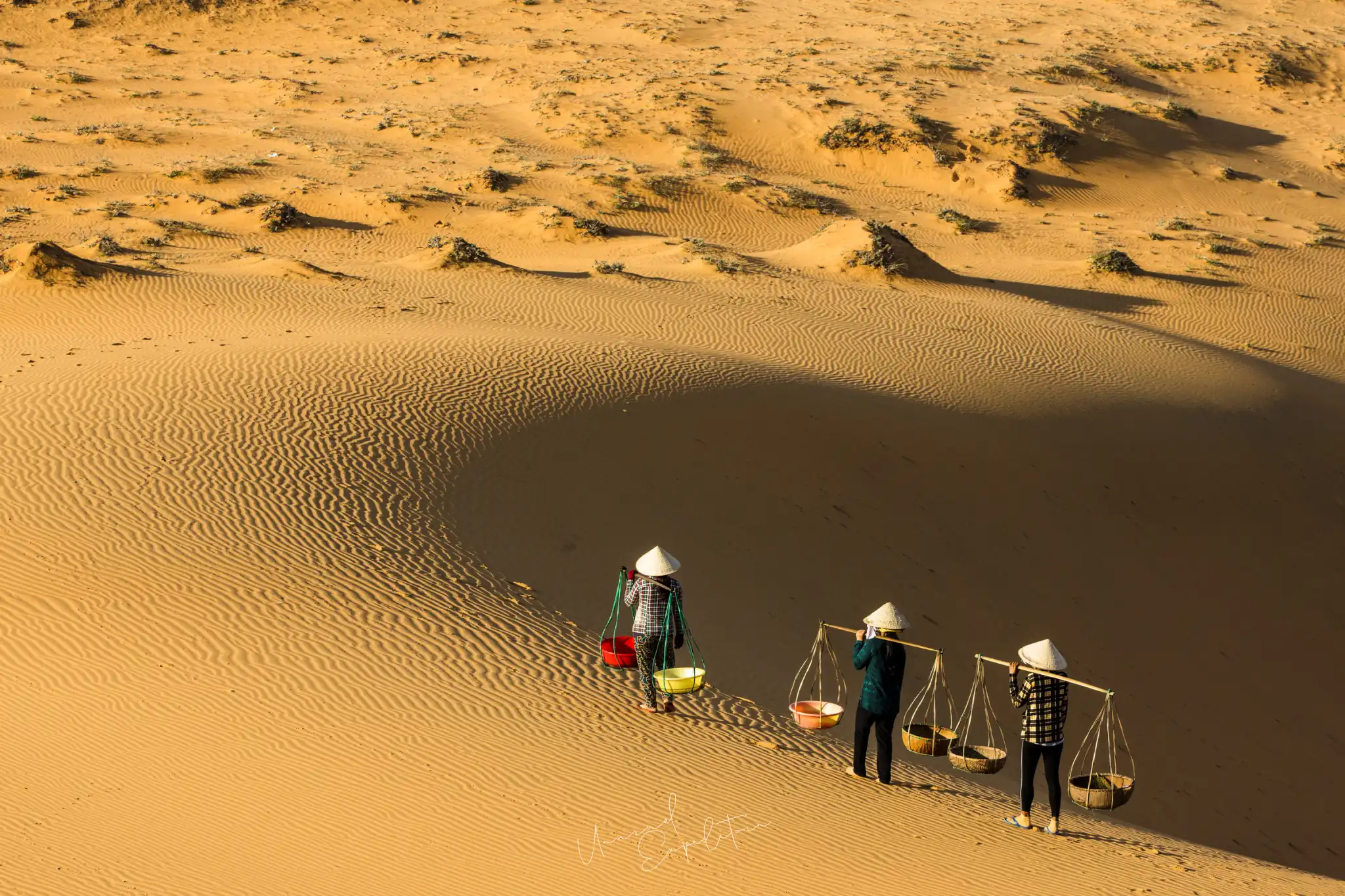
The Mui Ne sand dunes are two different places: the red dunes, low ochre hills right behind the coast near Mui Ne town, and the white dunes of Bau Trang, a much larger field of pale sand further northeast with a lotus lake at its foot. For photography the white dunes belong to sunrise, when the night wind has wiped the tracks, and the red dunes to the late afternoon, when the sand glows. Go early, walk away from the jeeps and use people for scale.
The dunes are one chapter of our Mui Ne and Phan Rang photography tour guide, which sets them beside the fishing village, the Ke Ga lighthouse and the Cham country around Phan Rang. Below is how we photograph them and what to expect when you arrive.
Mui Ne sand dunes: what you are actually visiting
Mui Ne sits on a coast where the wind blows hard off the sea for months at a time, and the sand it moves has piled up into dune fields behind the beaches. The Vietnam Airlines travel guide to the area lists the red dunes and the white dunes as separate sights, and they feel separate on the ground. The red dunes are small enough to walk across, close to the road and busy at sunset with sledders and families. The white dunes are a proper landscape: long ridges, deep bowls and ripple fields that run to the horizon, with scrub and a few casuarina trees at the edges. Both shift with the wind, so the shapes you see in other people's photographs will not be where they left them.
White sand dunes Mui Ne: sunrise is the session
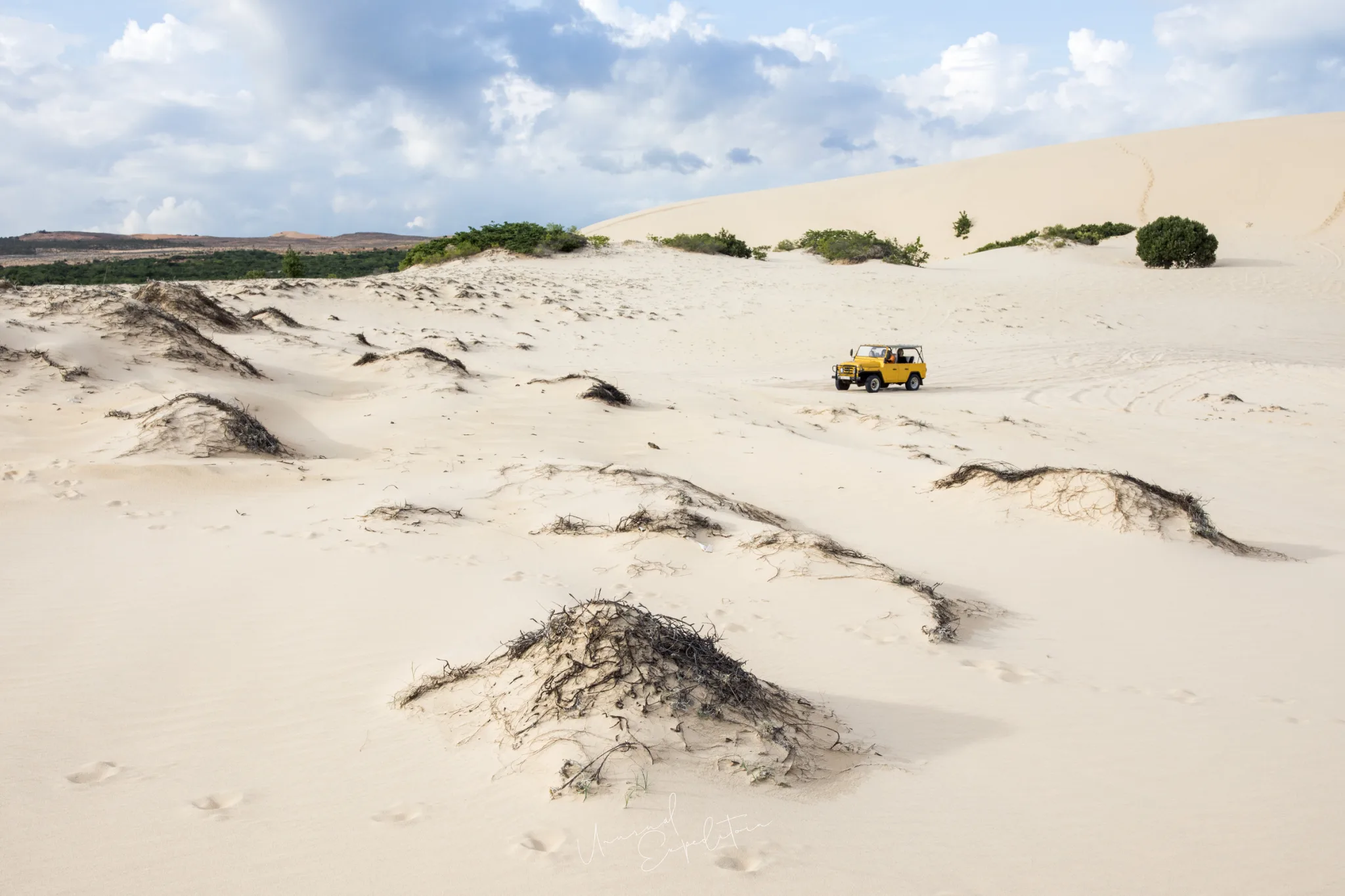
At the white dunes of Bau Trang, sunrise is the only time the sand is clean. Through the night the wind erases footprints and quad tracks; by mid morning the field is criss-crossed again and the light has gone flat and white. Arrive in the dark, walk past the first ridge where the jeeps park and climb to a crest that looks back along the dune line towards the light. The first sun picks out every ripple from the side, which is where the texture comes from. A 16-35mm low to the sand makes ripples into leading lines; a 70-200mm from a crest compresses ridges into layers. Expose for the bright side of the sand. The lotus lake below the dunes is worth a few frames on the way out, when the light is still soft.
Red sand dunes in Mui Ne at the end of the day
The red sand dunes in Mui Ne are lower, rounder and closer to town, and their colour depends on the sun being low. In the last hour before sunset the sand goes from beige to deep orange and the curves throw long shadows that you can use as shapes in their own right. The dunes fill up with visitors at that hour, so we work the edges and the back slopes, waiting for a figure to walk the crest in the right place. A 70-200mm is the lens here: it isolates one curve and one person and hides the crowd. Our is Mui Ne worth visiting piece explains why we fit the red dunes around other subjects instead of making them the main event.
The basket carriers: arranged scenes on the dunes
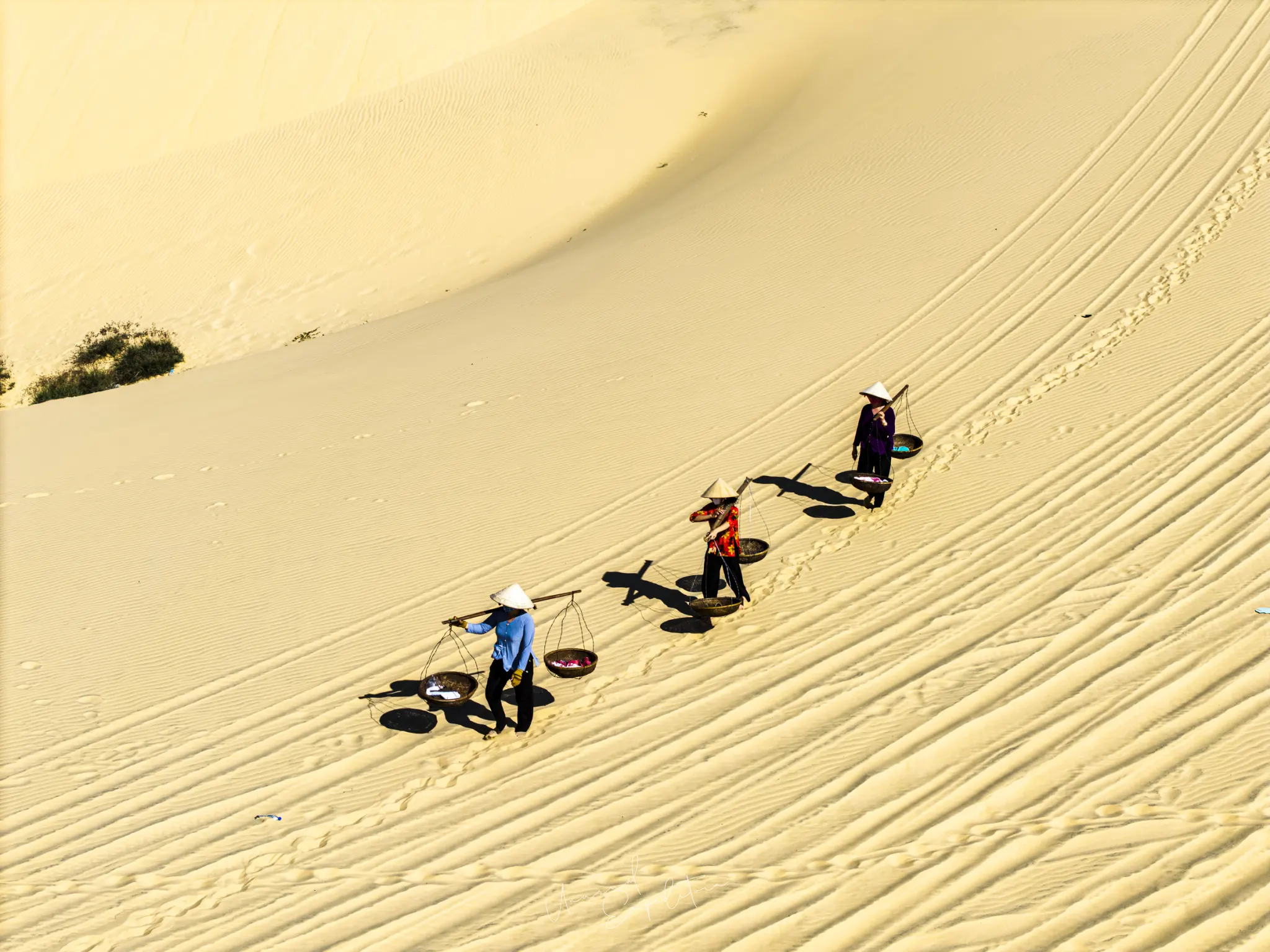
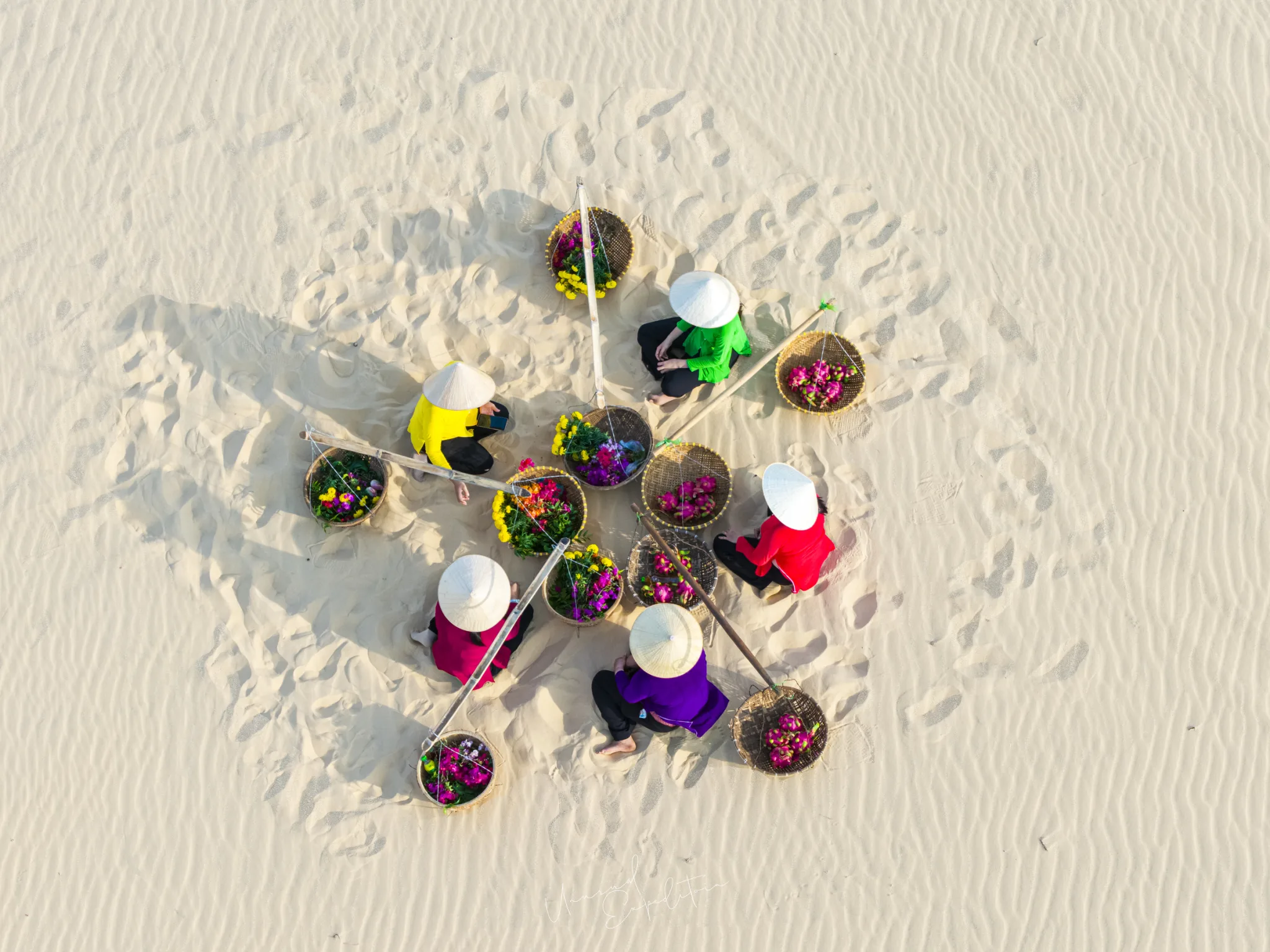
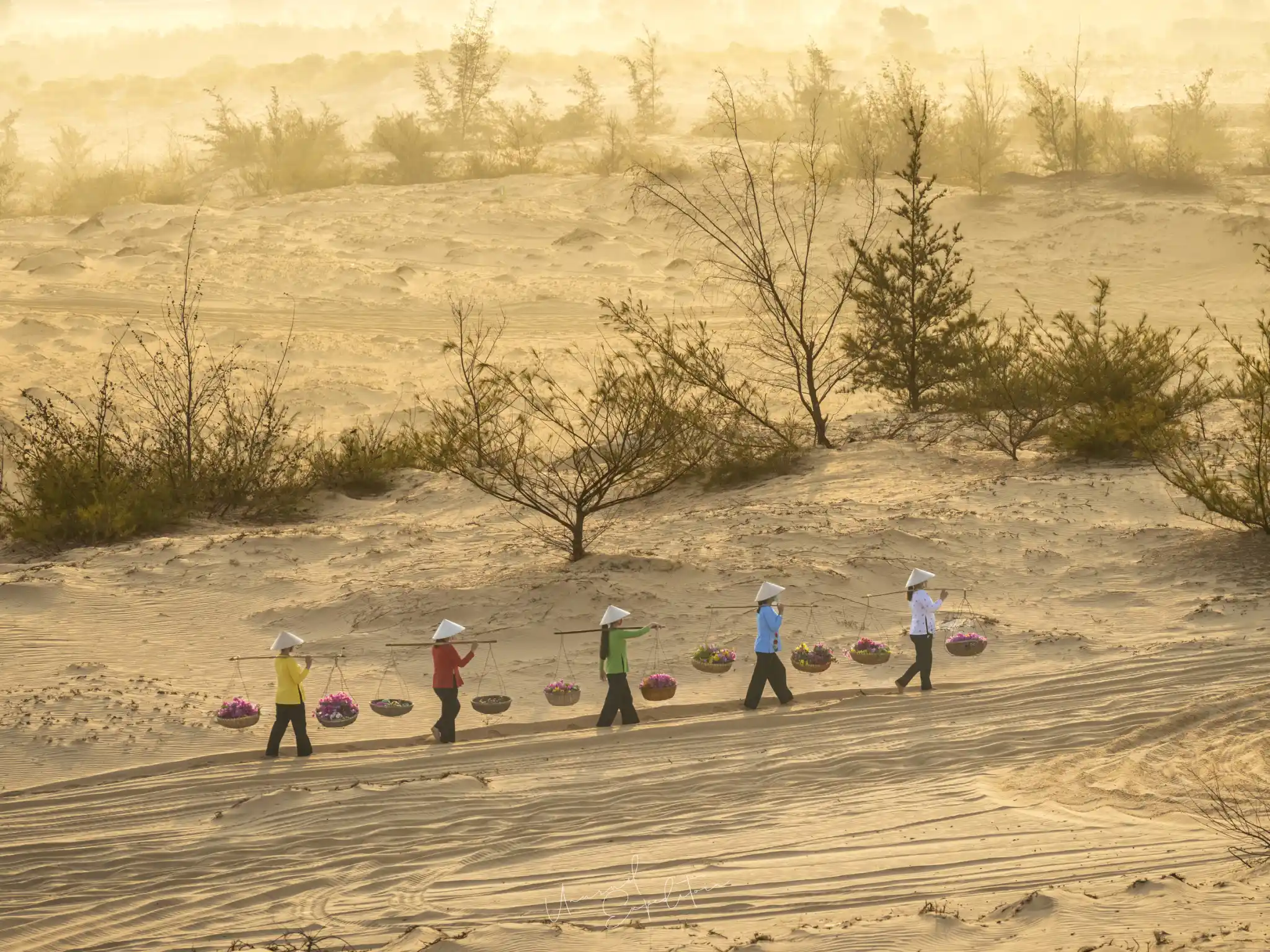
Almost every famous picture of the Mui Ne sand dunes shows women in conical hats carrying shoulder baskets of flowers across the sand. Those scenes are arranged. Local women are paid to walk for photographers, and there is nothing wrong with that as long as it is said plainly and the women are treated as the professionals they are. On our trips we tell the group which sessions are arranged, keep them short, and caption the results as arranged. They are useful for scale and colour: a line of figures far away on an empty dune, a circle of baskets seen from above. What we avoid is passing them off as daily life. On the dunes nobody carries flowers for a living.
Mui Ne sand dunes tour or on your own?
A Mui Ne sand dunes tour usually means a jeep that collects you from your hotel strip in the dark, drives to the white dunes for sunrise, then visits the red dunes, the Fairy Stream and the fishing harbour. It is good value and it gets you there on time, but it moves on when the group moves on. Quad bikes and jeep rides on the white dunes are sold on the spot; they will take you deep into the field, though they also make the noise and the tracks you will be trying to avoid. If photography is the point, ask for the earliest pickup, skip the ride and walk. Our own sessions are planned around the light, and the red dunes sit close to the Mui Ne fishing village, so a dune evening and a harbour morning fit together easily.
Wind, sand and your camera
The wind that makes the dunes is also their main hazard for equipment. On the white dunes in the dry months it gets up through the morning and by the afternoon carries a fine haze of sand at ankle and knee height. Change lenses inside a bag or not at all, keep a blower and a cloth in a sealed pocket, and use a rain cover as a sand cover. Drones need care: launch from a clean mat, keep the take-off brief, and check current drone rules before you bring one, because Vietnam requires permission for flying. Sand also fools meters. A bright dune reads as grey unless you add exposure, so check the histogram and push it right.
When to photograph the dunes
| Dune field | Best light | What you get | Lens |
|---|---|---|---|
| White dunes, Bau Trang | Sunrise and the first hour | Clean ripples, long side light, layered ridges | 16-35mm, 70-200mm |
| White dunes, Bau Trang | Late afternoon | Warm light but tracks everywhere, stronger wind | 70-200mm |
| Red dunes, Mui Ne | Last hour before sunset | Orange sand, curves and shadows, crowds | 70-200mm |
| Red dunes, Mui Ne | Sunrise | Quiet, cooler colour | 24-70mm |
| Either, from a drone | Early morning | Patterns, figures as dots | Drone, permission needed |
If you only have one session, give it to the white dunes at sunrise.
"Everyone wants the dune with the women and the flowers. I would rather have the empty ridge ten minutes before the sun, when you can see every ripple and there is not one footprint. Then put a person in it, small, and you have scale."
Joseph Mak, tour leader, Unusual Expedition
Season on the Mui Ne dunes
The south central coast is at its driest from about the turn of the year into early summer, and the Mui Ne sand dunes are at their sharpest then, with clear skies and a strong wind that keeps the ripples crisp. Later in the year brings showers and softer skies, which can be beautiful over the white dunes but less reliable. The salt pans and fish drying yards along the same coast work in the same dry window, and we usually combine them; see Vietnam salt fields and fishing villages for that side of the coast.
Come and photograph the dunes with us
Our Mekong and Central Highlands departure spends an evening on the white dunes, and both scheduled Vietnam departures work the coast around Mui Ne. Dates and details are on the Vietnam photography tours page.
Join the Mui Ne and Phan Rang photography tour
Mekong And Central Highland Vietnam Photo Tour - Vietnam departs 16 Jan 2027 To 24 Jan 2027, led by Joseph Mak. Small group, photography first. All Mui Ne and Phan Rang photography tours.
Explore Mui Ne and Phan Rang in depth
- Mui Ne and Phan Rang Photography Tour Guide: Dunes, Fishing Coast and Cham CountryVietnam
- Phan Rang Vietnam Photos: Sheep, Rice Paper, Dragon Temples and Vinh Hy BayVietnam
- Mui Ne Fishing Village: the Basket Boat Landing at SunriseVietnam
- Ke Ga Lighthouse: Photographing the Granite Cape at Dawn and DuskVietnam
- Is Mui Ne Worth Visiting? A Photographer's AnswerVietnam
- Bau Truc Pottery Village and Po Klong Garai: Photographing Cham Phan RangVietnam
- Vietnam Salt Fields and Fishing Villages: Photos from the South Central CoastVietnam
Upcoming Photo Tours
- Egypt Photo Tour – EgyptEgypt 12 Dec 2026 To 20 Dec 2026
- Inner Mongolia Winter Owl Photo Tour – ChinaChina 01 Jan 2027 To 04 Jan 2027
- Inner Mongolia Winter Photo Tour – ChinaChina 05 Jan 2027 To 11 Jan 2027
- Mekong And Central Highland Vietnam Photo Tour - VietnamVietnam 16 Jan 2027 To 24 Jan 2027