
Mui Ne Fishing Village: the Basket Boat Landing at Sunrise
Mui Ne fishing village at sunrise: how the basket boat landing works, where to stand, people etiquette, lenses and the lanes behind.
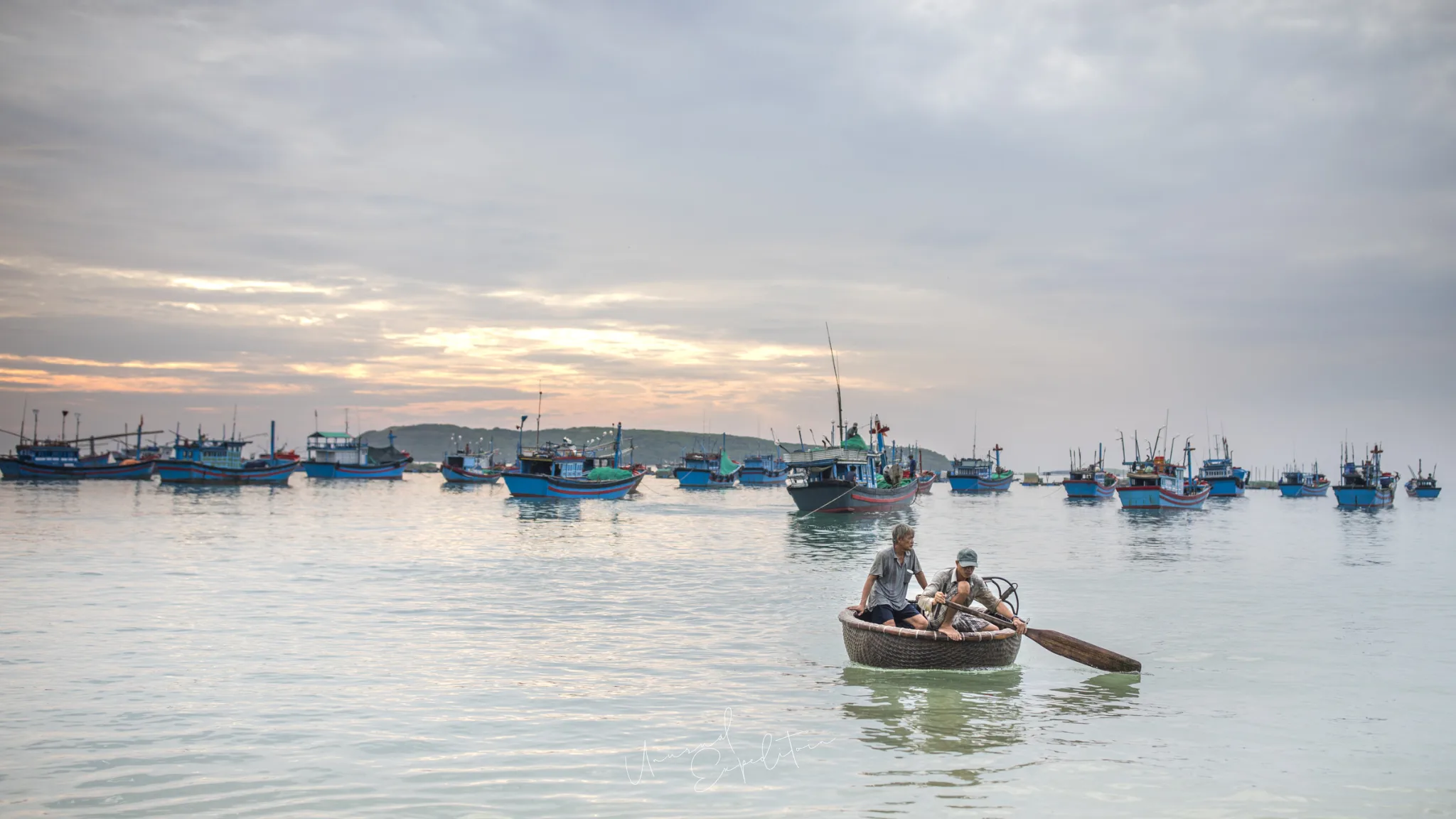
The Mui Ne fishing village is the harbour end of Mui Ne town, where hundreds of blue wooden boats anchor in the bay and the night's catch comes ashore by round basket boat around sunrise. For about an hour the beach becomes a market: buyers wade out to meet the basket boats, fish is sorted into crates on the sand and motorbikes carry it away. It is the best people subject on this coast. Arrive before first light, stay at the edges and use a long lens.
The village is part of our Mui Ne and Phan Rang photography tour guide, which places it among the dunes, the salt pans and the Cham country further north. Below is how the morning landing works and how we photograph it.
Mui Ne fishing village: how the morning landing works
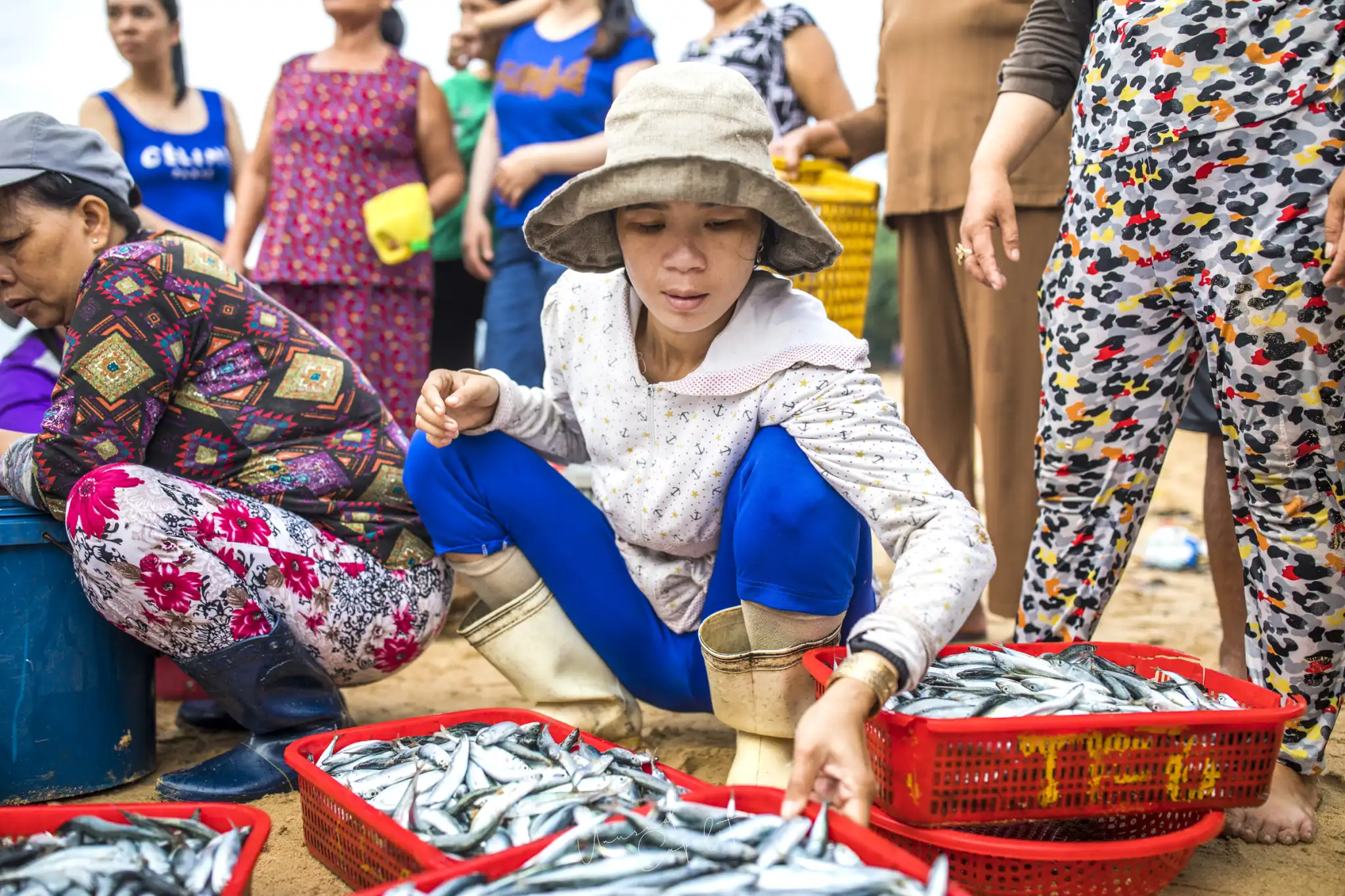
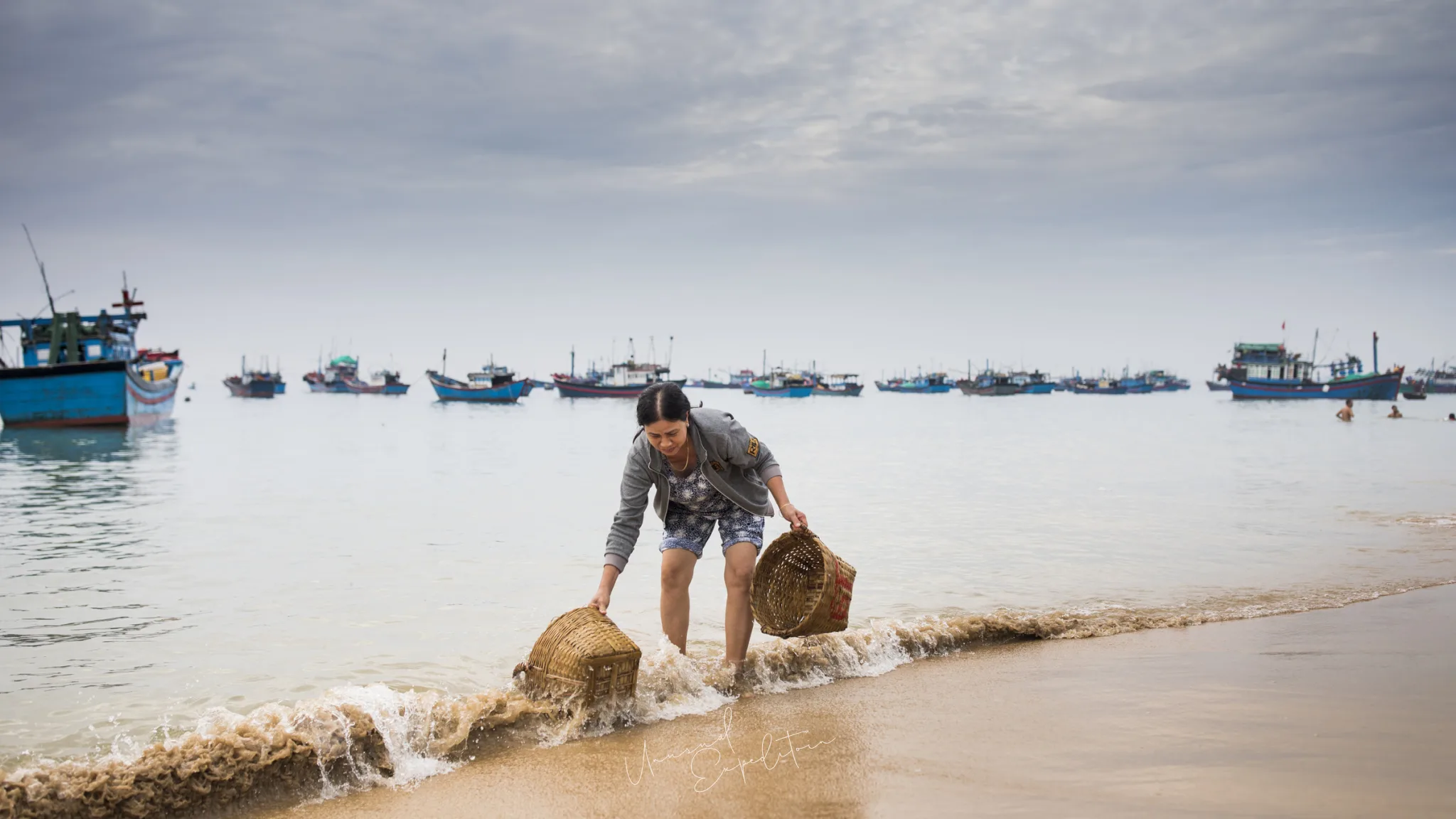
The bay at Mui Ne is shallow and open, so the bigger boats stay offshore at anchor and everything moves between them and the beach in basket boats, the round woven craft called thung chai that you see all along the central coast. In the last of the dark, the basket boats start to shuttle crates and nets in; buyers, many of them women who run the small trading businesses, wait at the waterline with scales, baskets and ice. Fish, squid, crabs and shellfish are sorted on the spot, haggled over and loaded onto motorbikes or into trucks at the top of the beach. By mid morning it is over and the sand is left to the gulls and the scraps. Being a working market, nobody is performing for you, which is exactly its value.
Mui Ne sunrise over the bay
A Mui Ne sunrise over the fishing harbour is worth seeing even without the market. The bay faces the open sea, the sun comes up over the water and behind the anchored boats, and in still air the whole fleet sits on a pale, almost white surface. That calm is when the cleanest pictures happen: a single basket boat being paddled across the bay, a fisherman standing in the shallows, rows of hulls receding into haze. Arrive while it is still blue and shoot the boats against the brightening sky before you turn to the crowd. Once the sun clears the horizon the contrast climbs fast, and from then on the crowd on the sand is the subject.
Photographing the people on the beach
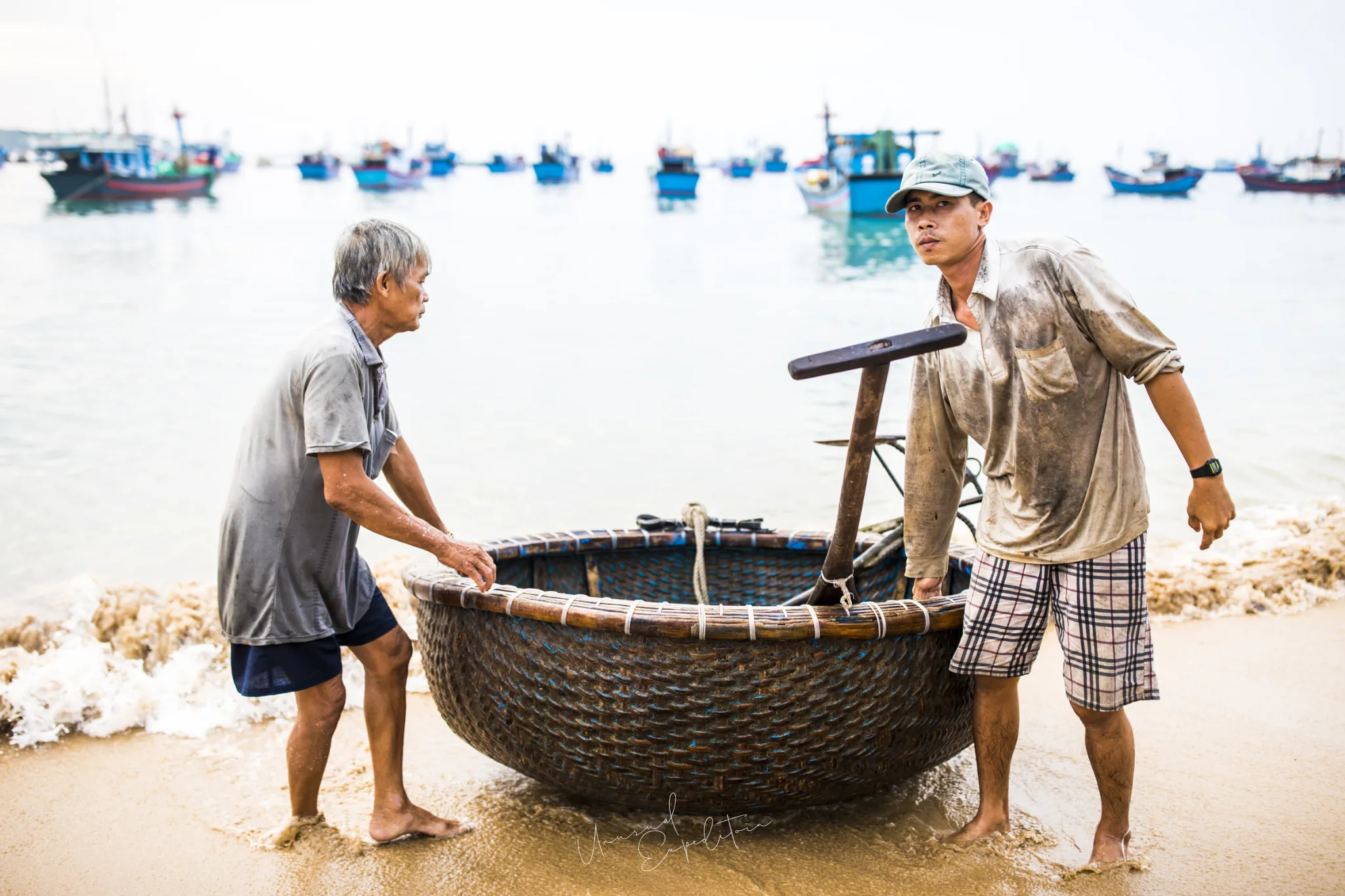
Most of the pictures at the Mui Ne fishing village are of people at work, and the way to get them is to be unobtrusive and patient. Stand back on the dry sand with a 70-200mm and let the scene come to you: a woman bending over a crate, two men carrying a basket boat between them, a buyer weighing squid. When you want to go closer with a 24-70mm, ask with a gesture and a smile; most people nod and get on with it, some wave you off, and that is their right. Never stand between a basket boat and the people waiting for it, and keep your bag off the sorting areas. The fish sellers are also customers of each other, so a few purchases or a coffee at a stall at the top of the beach is a decent way to say thank you.
Basket boats: shapes, colour and motion
The thung chai are what make this coast look like nowhere else. Upturned on the sand they are graphic circles; on the water they spin rather than glide, and a fisherman standing in one with a single oar makes a strong silhouette at dawn. Slow shutter speeds help here. At around a fifteenth of a second with a steady hand, the oar and the ripples blur while the boat stays sharp. From higher ground, or with a drone where permitted, the circles scattered among the anchored boats make a pattern that reads instantly. The same boats work the beaches all the way up to Phan Rang and beyond; our Vietnam salt fields and fishing villages article shows them at other landings on the coast.
Above the beach: the lanes and the local market
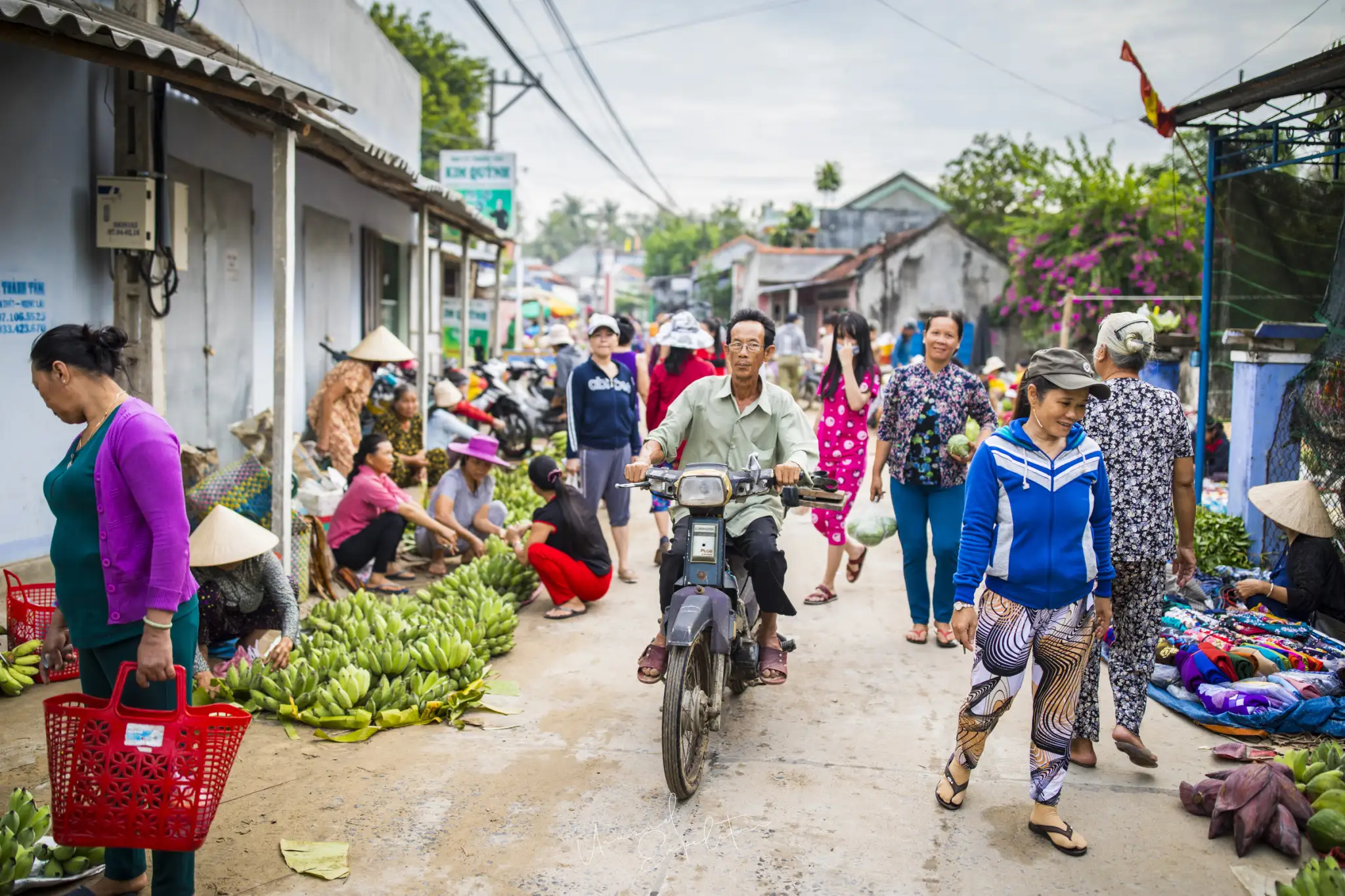
Behind the Mui Ne fishing village beach the town is an ordinary coastal settlement: narrow lanes, fish sauce smells, houses with nets drying outside and a small morning market where the same families buy vegetables, rice and dried fish. After the landing winds down, walking up into those lanes gives you a second set of pictures in kinder light, from vendors under umbrellas to grandmothers on stools. A 24-70mm at the wider end works in the lanes. Keep it relaxed; this is where people live, not a sight.
Where to stand and what to bring
| Moment | Where | Subject | Lens and setting |
|---|---|---|---|
| Blue hour | Along the beach, facing the bay | Fleet at anchor, first basket boats | 24-70mm, tripod or high ISO |
| Sunrise | Waterline, off to one side | Basket boats arriving, silhouettes | 70-200mm, slow shutter for oars |
| Early morning | Dry sand above the sorting | Buyers, crates, faces | 70-200mm |
| Mid morning | Lanes behind the beach | Market, homes, nets | 24-70mm |
| Any calm morning | Above the bay, where permitted | Patterns of boats | Drone, permission needed |
Sandals and a small bag beat boots and a big backpack on a wet, crowded beach.
"At the Mui Ne landing I spend the first part of the morning just watching who passes what to whom. Once you understand the flow, you know where the next picture is going to happen, and you are not standing in anyone's way when it does."
Joseph Mak, tour leader, Unusual Expedition
Mui Ne fishing village and the rest of the coast
Most visitors reach the Mui Ne fishing village on a jeep tour that also takes in the dunes and the Fairy Stream, and they arrive after the landing has peaked. If you base yourself in Mui Ne, you can walk or ride to the harbour in the dark and have the best of it, then spend the late afternoon on the red dunes nearby; see our Mui Ne sand dunes guide for that session. The Vietnam Airlines travel guide to the village sends visitors there at dawn too, and advises a life jacket and staying seated if you take a basket boat ride; Lao Dong newspaper has described the same early market, sold by the basket rather than by weight. With more visitors every year, the earliest part of the morning matters more and more. Further down the coast the Ke Ga lighthouse makes a quieter dawn alternative on days when the sea is too rough for the boats to come in.
Join us at the harbour
The coast around Mui Ne is part of our scheduled Vietnam departures, with dawn sessions at the fishing beaches built in. See the Vietnam photography tours page for the current dates.
Join the Mui Ne and Phan Rang photography tour
Mekong And Central Highland Vietnam Photo Tour - Vietnam departs 16 Jan 2027 To 24 Jan 2027, led by Joseph Mak. Small group, photography first. All Mui Ne and Phan Rang photography tours.
Explore Mui Ne and Phan Rang in depth
- Mui Ne and Phan Rang Photography Tour Guide: Dunes, Fishing Coast and Cham CountryVietnam
- Phan Rang Vietnam Photos: Sheep, Rice Paper, Dragon Temples and Vinh Hy BayVietnam
- Mui Ne Sand Dunes: White Dunes at Sunrise, Red Dunes at SunsetVietnam
- Ke Ga Lighthouse: Photographing the Granite Cape at Dawn and DuskVietnam
- Is Mui Ne Worth Visiting? A Photographer's AnswerVietnam
- Bau Truc Pottery Village and Po Klong Garai: Photographing Cham Phan RangVietnam
- Vietnam Salt Fields and Fishing Villages: Photos from the South Central CoastVietnam
Upcoming Photo Tours
- Egypt Photo Tour – EgyptEgypt 12 Dec 2026 To 20 Dec 2026
- Inner Mongolia Winter Owl Photo Tour – ChinaChina 01 Jan 2027 To 04 Jan 2027
- Inner Mongolia Winter Photo Tour – ChinaChina 05 Jan 2027 To 11 Jan 2027
- Mekong And Central Highland Vietnam Photo Tour - VietnamVietnam 16 Jan 2027 To 24 Jan 2027